Sea Oats (Uniola paniculata)
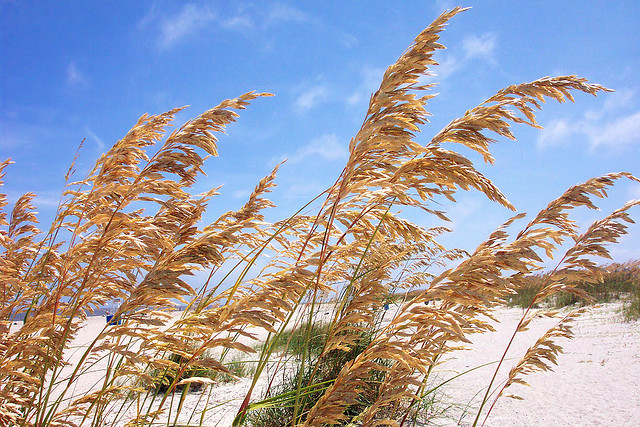
Uniola paniculata, commonly called Sea Oats, is a tall, clump-forming perennial grass native to the barrier islands, foredunes, and beaches of the Atlantic and Gulf coasts of the southeastern United States. It is the single most important dune-building plant along its range, sending out long rhizomes that knit loose sand into stable, storm-resistant dunes. Few plants are as closely tied to the character of a southeastern beach as the drooping, oat-like seed plumes of this grass, swaying above the dune line from late summer into winter.
Sea oats grows 3 to 6 feet tall from a tough, fibrous crown, with narrow blue-green blades and a one-sided, nodding panicle of flattened spikelets that ripen from green to straw-gold. Because its root system is so effective at trapping windblown sand and resisting erosion, sea oats is the backbone of nearly every dune-restoration and beach-stabilization project on the Atlantic and Gulf coasts, and it is planted by the millions of plugs after hurricanes and beach renourishment projects.
Sea oats is legally protected in most of the states where it grows. Florida, Georgia, North Carolina, South Carolina, and several other coastal states make it illegal to pick, cut, dig, or otherwise disturb sea oats growing on public beaches and dunes, because its roots are what hold the dune — and the beach behind it — in place. If you want sea oats for your own garden, buy nursery-propagated plants or seed; do not harvest from the wild.
Identification
Sea oats is easy to recognize once its seed heads appear, but the plant has a distinctive look even before flowering, forming loose, upright clumps of narrow leaves that catch every pass of ocean wind.
Growth Form
Sea oats grows as an erect, clump-forming grass 3 to 6 feet tall (occasionally more where sand continues to build around the crown), spreading by long, cord-like rhizomes that can extend many feet from the parent clump. This rhizomatous habit lets a single planting knit together into a continuous dune-stabilizing colony over a few growing seasons.
Leaves
The leaf blades are narrow — generally ¼ to ½ inch wide — flat to inrolled, blue-green to gray-green, and rough-edged, tapering to a fine point. They arch gracefully from upright stems and can reach 1 to 2 feet long, giving the clump a loose, fountain-like shape even without the seed heads.
Flowers & Seed Heads
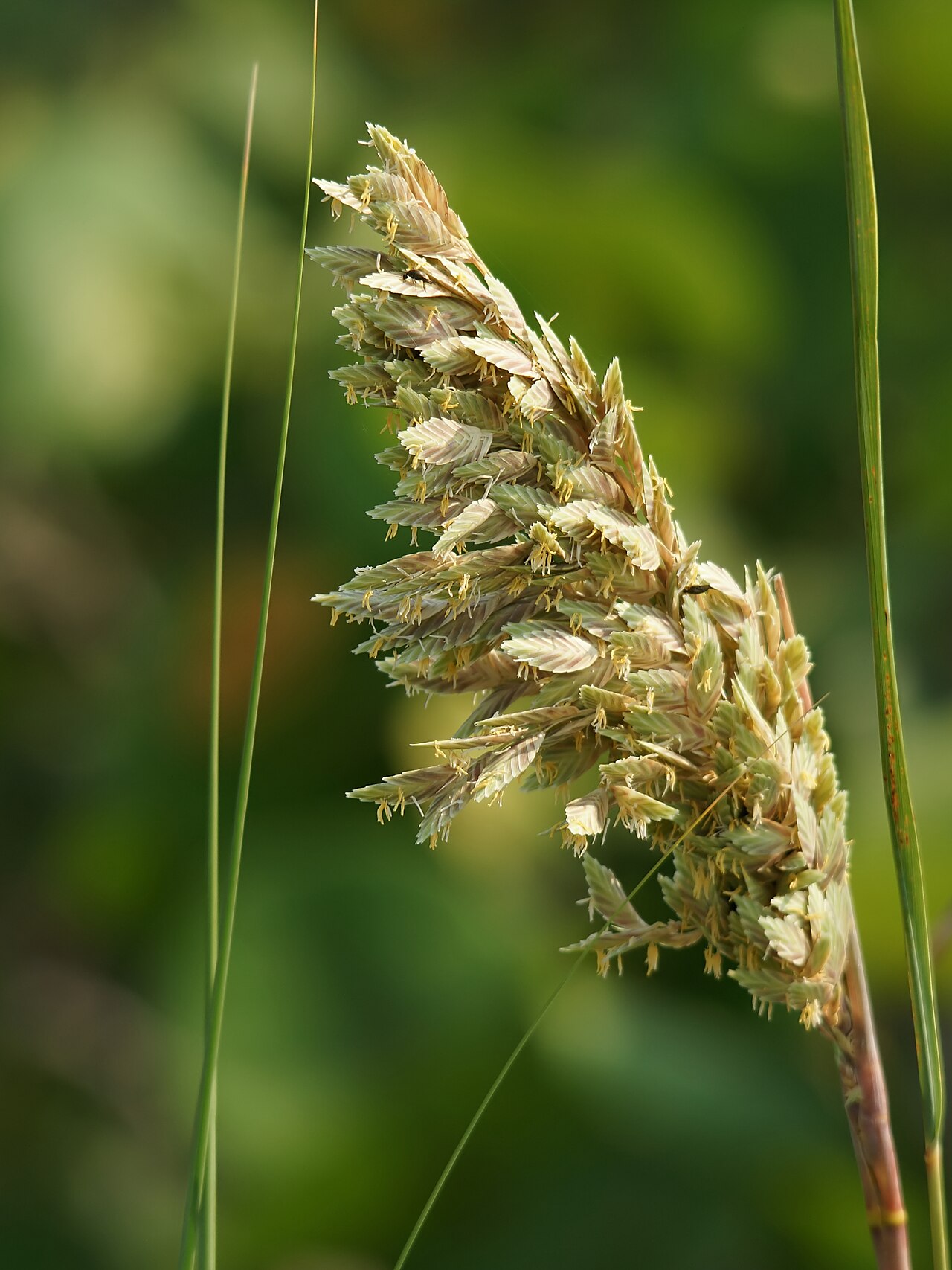
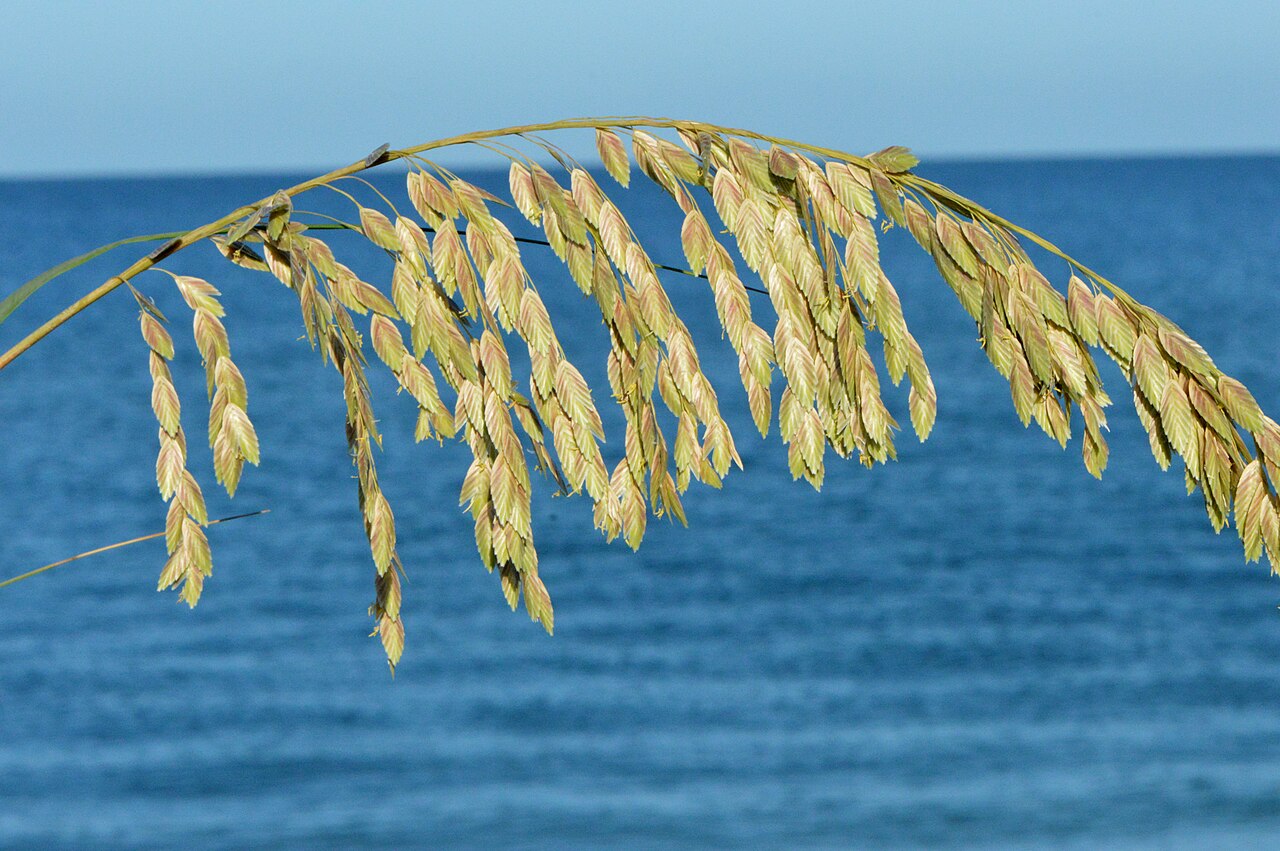
From roughly July through October, sea oats sends up flowering stems well above the foliage, topped with a narrow, one-sided (secund) panicle 6 to 16 inches long made up of large, flattened, drooping spikelets. The spikelets are green at first, maturing to a warm tan or golden-bronze that is the plant’s most recognizable feature — the “oat” look that gives the species its common name. The seed heads persist well into winter, rattling in onshore wind and shedding seed gradually, which helps the species recolonize disturbed dune sand.
Quick Facts
| Scientific Name | Uniola paniculata |
| Family | Poaceae (Grass) |
| Plant Type | Perennial rhizomatous grass |
| Mature Height | 3–6 ft (foliage); flowering stems taller |
| Mature Spread | Spreads indefinitely by rhizome in open sand |
| Growth Rate | Moderate to fast in loose, sunny sand |
| Sun Exposure | Full Sun |
| Water Needs | Low; tolerates salt spray and overwash |
| Soil Type | Loose, well-drained beach sand, low fertility |
| Soil pH | Neutral to alkaline (shell-influenced sand) |
| Bloom Time | July – October |
| Flower Color | Green ripening to golden-tan |
| Fall Color | Tan/straw seed heads persist through winter |
| Fruit | Grain (caryopsis) within the spikelet |
| Deer Resistant | Yes |
| USDA Hardiness Zones | 8–11 |
Native Range
Sea oats is native to the barrier islands and mainland beaches of the Atlantic coast from southeastern Virginia south through the Carolinas, Georgia, and Florida, and along the Gulf coast from Florida west through Alabama, Mississippi, Louisiana, and into coastal Texas. It is strictly a coastal species, essentially confined to the foredune and backdune zone within sight and salt-spray reach of open water.
Within that narrow coastal band, sea oats occupies the most exposed, driest, and most frequently disturbed ground on the beach: primary (fore) dunes closest to the water, secondary dunes, and the sandy overwash flats left behind after storms. It tolerates salt spray, burial by blowing sand, and occasional saltwater overwash better than almost any other coastal plant, which is exactly why its rhizomes are so effective at holding dunes together.
Sea oats is not native inland, and is not a dune or garden plant for areas away from the immediate coast — its wild range stops where the maritime influence does. Many beach towns far outside its native range have nonetheless planted it as an ornamental grass; gardeners inland should look for regionally native bunchgrasses instead.
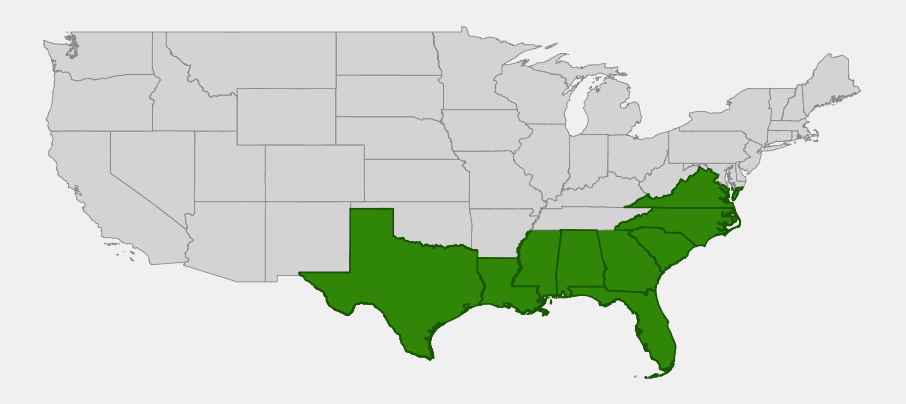
📋 Regional plant lists featuring Sea Oats: Maryland, Virginia & West Virginia · North Carolina & South Carolina · Georgia, Alabama & Mississippi · Arkansas, Louisiana, Eastern Oklahoma & Eastern Texas
Growing & Care Guide
Sea oats is built for one job: thriving in loose, sun-baked, salty sand where almost nothing else will grow. In a coastal garden it needs very little beyond sun and room to spread, but it is not a plant for ordinary garden soil or for sites away from the immediate coast.
Light
Give sea oats full sun. It is a true dune pioneer and will not perform well in shade or even light competition from taller plants; part of what makes it so effective on open beaches is that nothing else there can out-compete it for light.
Soil & Water
Sea oats wants loose, fast-draining, low-fertility sand, and actually grows best where sand is periodically added around the crown — burial encourages new rooting rather than harming the plant. It needs very little supplemental water once established and tolerates salt spray, brief saltwater overwash, and drought that would kill most other grasses. Rich garden soil or regular irrigation are not necessary and can make the clump floppy.
Planting Tips
Plant container-grown plugs in fall or early spring, spacing them roughly 18 to 24 inches apart so rhizomes can knit together into a continuous dune cover within two or three growing seasons. Always buy sea oats from a nursery — wild collection is illegal in most of its range and digging plants damages the dune system the species protects. Many coastal counties and conservation groups run sea oats planting programs after storms; check locally before planting on public dune land, since permits are often required even for approved restoration plantings.
Pruning & Maintenance
Sea oats needs almost no maintenance. Leave the dried seed heads and foliage standing through winter — they continue trapping sand and provide food for birds. Cutting back is rarely necessary; if desired, trim old foliage in late winter before new growth starts, but avoid disturbing the crown or root system.
Landscape Uses
Sea oats earns its place in a very specific set of coastal landscapes:
- Dune stabilization and beach restoration — its primary and most important use
- Coastal gardens within sight of salt water, as an ornamental accent grass
- Erosion control on sandy slopes exposed to salt spray
- Wildlife plantings that support beach-nesting birds and small mammals
- Naturalized beachfront borders paired with other true dune natives
Wildlife & Ecological Value
Beyond its role as the premier dune-builder of the southeastern coast, sea oats supports a modest but important slice of coastal wildlife.
For Birds
Seed-eating birds, including sparrows and finches that winter along the coast, feed on the ripe grain through fall and winter. The dense clumps also provide cover for beach-nesting and shorebird species moving between the open beach and vegetated dune.
For Mammals
Small mammals such as beach mice shelter and forage among sea oats clumps, using the root mass and surrounding sand mounds as burrow sites. In Florida, several endangered beach mouse subspecies depend heavily on intact sea oats dunes for both food and cover.
Ecosystem Role
Sea oats’ real ecological value is physical: its deep, extensive rhizome network is what builds and holds dunes against wind and storm. By trapping blowing sand around its stems and leaves, sea oats raises and widens the dune line, which in turn protects everything landward of the beach — roads, buildings, and back-dune plant communities — from storm surge and wind erosion. Losing sea oats cover is one of the clearest predictors of accelerated dune erosion on developed coastlines.
Cultural & Historical Uses
Sea oats has long been recognized by coastal communities as the plant that makes a beach a beach — its swaying golden plumes are a visual signature of the Atlantic and Gulf coasts, appearing in regional art, state symbolism, and tourism imagery throughout the Southeast.
Its practical importance, however, has always been protective rather than ornamental or culinary. Coastal residents have relied on sea oats dunes for storm protection for generations, well before formal dune-management science existed, and traditional beach communities generally avoided disturbing dune vegetation long before modern protection laws made picking it illegal.
That protective reputation led directly to the legal status sea oats holds today. Beginning in the mid-20th century, as beachfront development accelerated and dune loss became a visible problem, Florida, Georgia, the Carolinas, and other coastal states passed laws making it illegal to cut, pick, dig, or otherwise damage sea oats on public dunes and beaches — recognizing that the plant’s root system, not its seed heads, is what actually keeps a beach from washing away.
Frequently Asked Questions
Is it illegal to pick sea oats?
In most of its native range, yes. Florida, Georgia, North Carolina, South Carolina, and other coastal states prohibit cutting, picking, or digging sea oats on public beaches and dunes because its roots stabilize the dune system. Enjoy the seed plumes where they grow and buy nursery-grown plants if you want them in a coastal garden.
Can I grow sea oats away from the beach?
Not successfully as a true native planting. Sea oats is adapted to loose, salty, low-fertility sand and full coastal sun; it is not a garden grass for inland yards or typical garden soil, and it is not native away from the immediate coast.
How is sea oats different from inland sea oats?
They are unrelated grasses that happen to share a common name. Inland Sea Oats (Chasmanthium latifolium) is a shade-tolerant woodland grass native to much of the eastern and central U.S., with broad, flat, dangling spikelets — a different genus entirely from the true coastal Uniola paniculata described here.
How fast does sea oats spread?
Once established in open sand with full sun, sea oats spreads at a moderate to fast rate by rhizome, often knitting a planted area into a continuous stand within two to three growing seasons — faster where sand continues to accumulate around the crowns.
Does sea oats need fertilizer?
No. It is adapted to nutrient-poor beach sand and generally performs best without fertilizer; excess nutrients can produce weak, floppy growth that is less effective at trapping sand.

Looking for a nursery that carries Sea Oats?
Browse our native plant nursery directory: Virginia, South Carolina & Texas · North Carolina · Georgia · Alabama · Mississippi & Louisiana