
Tolmie’s Pussy Ears (Calochortus tolmiei)
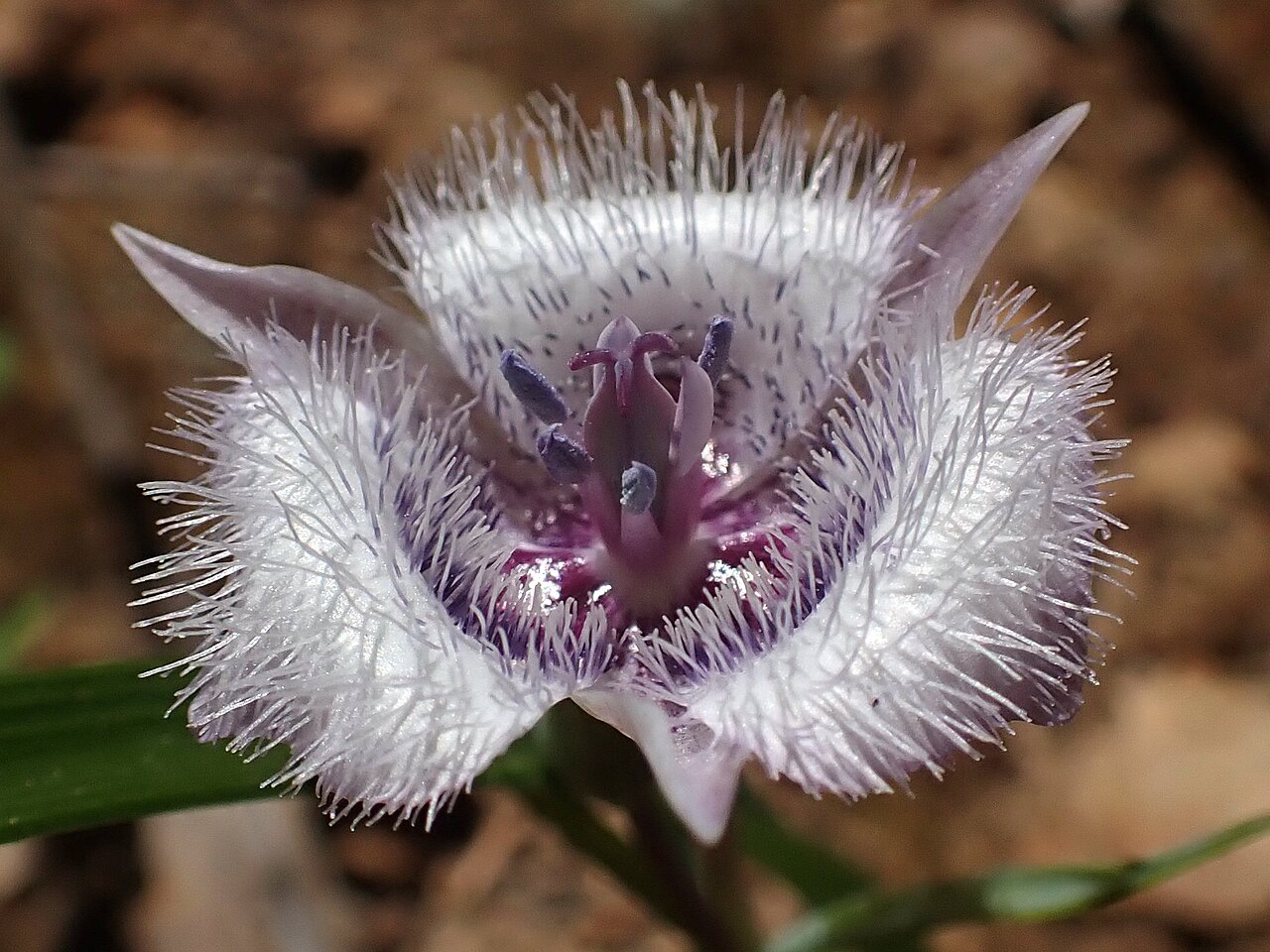
Calochortus tolmiei, known as Tolmie’s Pussy Ears (USDA: Tolmie star-tulip), is a small spring-blooming bulb of the Pacific Coast, native to Washington, Oregon and northern California. It belongs to the genus Calochortus, the mariposa lilies, star-tulips and fairy lanterns, in the lily family (Liliaceae). Its cup-shaped flowers are white to pale lavender, and the inside of each of the three petals is covered with long, soft hairs, so the bloom looks like a kitten’s ear. That gives it the common names pussy ears and cat’s ears.
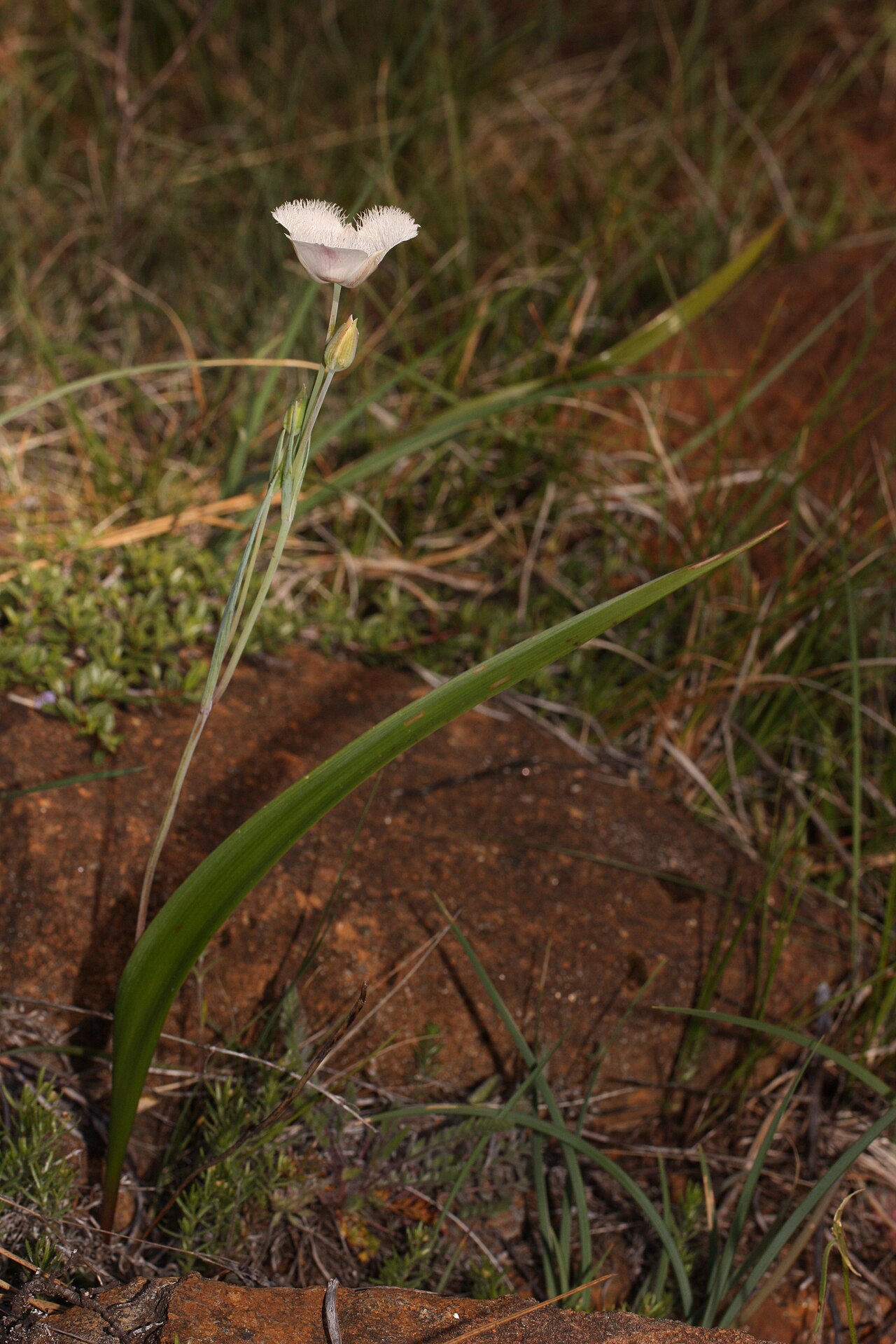
Each plant grows from a small, deep bulb. It sends up one long, grass-like leaf and a slender stem usually 4 to 16 inches tall, with one to several upward-facing flowers from April into July depending on elevation. It grows in grassy openings, oak woodland, open conifer forest, chaparral edges and rocky slopes, including serpentine soils, from near the coast into the mountains. Where it is happy it can be common, scattering hundreds of fuzzy flowers through a meadow.
Like other Calochortus, it is adapted to wet winters and dry summers, and it goes completely dormant after its seeds ripen. It is a plant for seed-raised pots, rock gardens and naturalized meadow plantings in summer-dry climates, not for watered beds. Never dig wild bulbs. They are deep, rarely survive transplanting, and digging damages native meadows. Buy seed or nursery-grown bulbs instead.
Identification
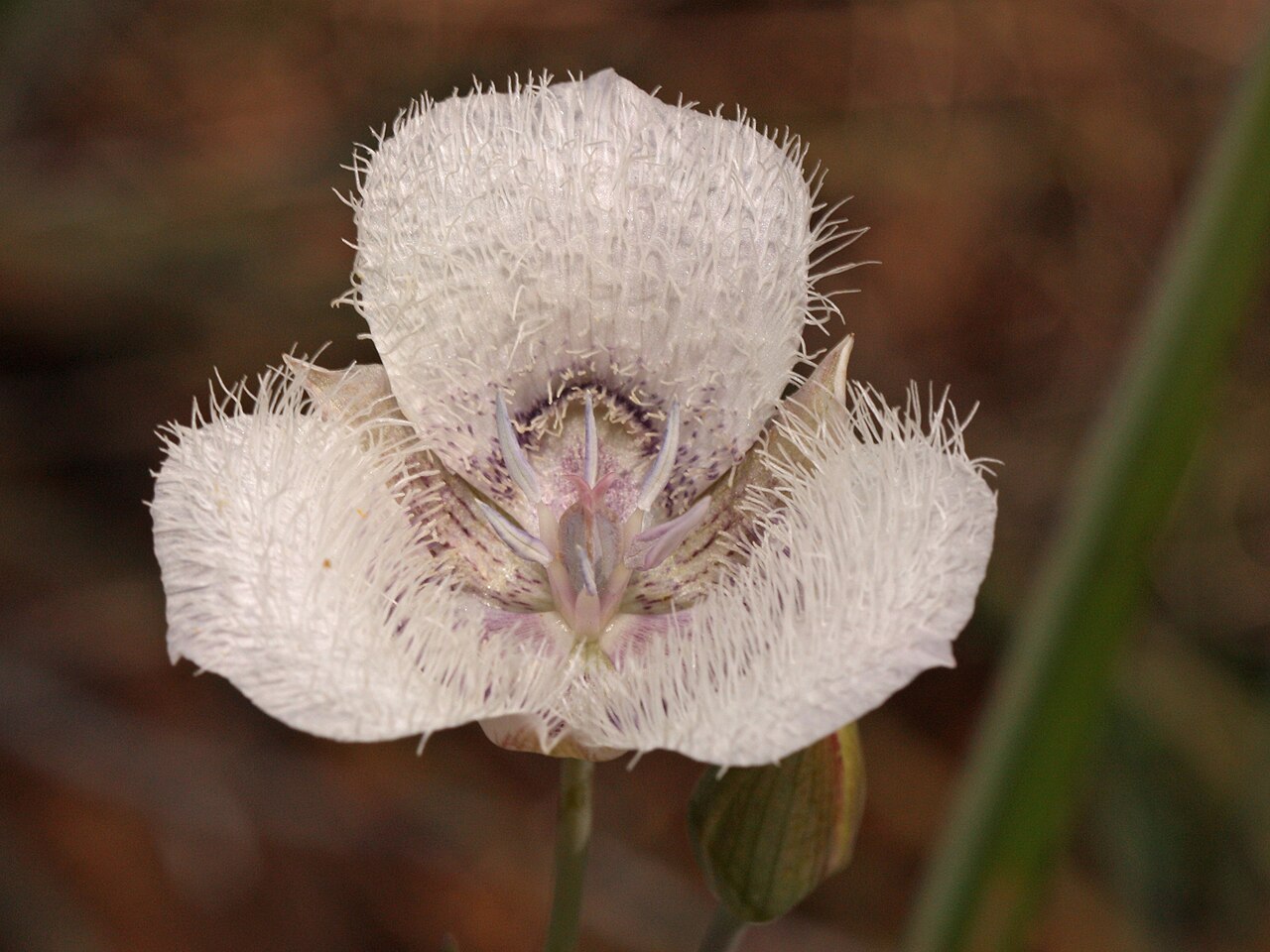
Tolmie’s pussy ears is easy to recognize when in bloom. Look for small, upturned white to lavender cups whose petals are densely hairy on the inside, held a few inches above the ground on a thin stem, with a single long leaf at the base.
Bulb & Stem
The plant grows from a small, egg-shaped bulb with a fibrous or membranous coat, usually several inches deep in the soil. The stem is slender and often slightly zigzag, unbranched or branched, and up to about 16 inches (40 cm) tall. Many plants in dry, rocky sites are only 3 or 4 inches tall.
Leaves
There is one main basal leaf, flat and grass-like, up to about 16 inches long and often longer than the stem. Unlike many mariposa lilies, the basal leaf usually does not wither by flowering time. A smaller, narrow leaf is often present higher on the stem, below the flowers.
Flowers
The flowers are erect, open cups or bells about 1 inch across. There are three broad, fan-shaped petals up to about 1 inch (2.5 cm) long, white, cream, pale pink or lavender, often with a purplish zone toward the base. The inner face of each petal is densely covered with long, soft hairs, and the edges are fringed. Below the petals are three narrower, smooth sepals, often tinged purple. Near the base of each petal is a nectar gland, mostly hidden by hairs. Flowering runs from April at low elevations into July in the mountains.
Fruit & Seeds
After flowering, each flower forms an upright, three-winged capsule about 1 inch (2 to 3 cm) long. It dries and splits in early summer to release flat, dark brown seeds. By midsummer, the leaf and stem have withered and the bulb is dormant underground until the fall rains.
Look-alikes
Several other cat’s ears and star-tulips have hairy petals. Elegant cat’s ears (Calochortus elegans) of southwest Oregon and the inland Northwest has smaller, greenish-white flowers with a purple crescent at the base of each petal. Subalpine mariposa lily (C. subalpinus) of the Cascades has creamy, less hairy flowers. Mariposa lilies such as Butterfly Mariposa Lily have larger, mostly smooth petals, and fairy lanterns such as White Fairy Lantern have closed, nodding globes.
Safety & Conservation
Tolmie’s pussy ears is not known to be toxic, and its bulbs were eaten by some Indigenous peoples. Don’t harvest them, though. Wild bulbs grow slowly, and digging damages fragile meadows. The species is widespread and not considered at risk overall, but its grassland and oak savanna habitats have shrunk greatly in the Willamette Valley and elsewhere. Buy seed or bulbs from nurseries that propagate them.
Quick Facts
| Scientific Name | Calochortus tolmiei |
| Family | Liliaceae (lily family) |
| Plant Type | Bulb-forming herbaceous perennial; summer-dormant |
| Mature Height | 4–16 in |
| Mature Spread | 2–4 in |
| Growth Rate | Slow; 3–5 years from seed to flower |
| Sun Exposure | Full sun to part shade |
| Water Needs | Low; moist in winter and spring, dry in summer |
| Soil Type | Well-drained loam, gravel, rocky or clay soils, including serpentine |
| Soil pH | About 5.5–7.5 |
| Bloom Time | April–July |
| Flower Color | White, pale pink or lavender, densely hairy inside |
| Fall Color | None; dormant from midsummer until fall rains |
| Fruit | Upright, three-winged capsule with flat brown seeds |
| Deer Resistant | No; deer browse the flowers, and gophers eat the bulbs |
| USDA Hardiness Zones | 7–9 |
Native Range
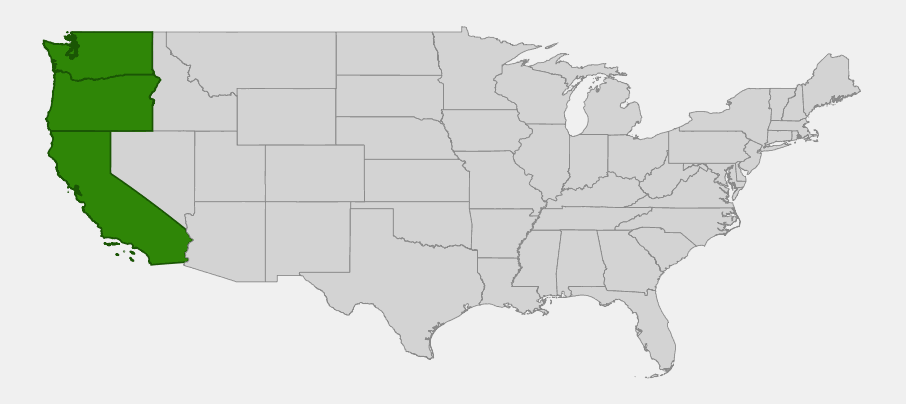
Tolmie’s pussy ears is native to the Pacific Coast states. USDA PLANTS lists it as native in California, Oregon and Washington. It is not recorded from Canada. In California it grows in the northern half of the state, in the Coast Ranges south to about Santa Cruz County, the Klamath and Siskiyou Mountains and the northern Sierra Nevada foothills and Cascades.
In Oregon it is widespread west of the Cascades, in the Willamette Valley, the Coast Range, the Umpqua and Rogue valleys and the Siskiyous. In Washington it is less common and found mainly in the southern part of the state. It is one of the most common Calochortus in southwest Oregon and northwestern California.
It grows in many open habitats: grassy meadows and balds, Oregon white oak savanna, mixed evergreen and conifer forest openings, chaparral edges, road banks and rocky, gravelly slopes, from near sea level to roughly 6,500 feet (2,000 m). It is common on serpentine soils in the Klamath region. The common thread is winter moisture and summer drought.
📋 Regional plant lists featuring Tolmie’s Pussy Ears: Western Oregon & Western Washington · California & Nevada
Growing & Care Guide
Tolmie’s pussy ears can be grown from seed by patient gardeners in summer-dry climates, especially west of the Cascades and in northern California. It is a bulb for pots, rock gardens and unwatered meadows, and it rewards you with flowers after a few years. Buy seed or nursery-grown bulbs; never dig plants from the wild.
Light
Give it full sun to light shade. In nature it grows in open grassland and in dappled light at the edges of oak and conifer woods. In hot inland gardens, a little afternoon shade helps.
Soil & Water
It needs sharply drained soil: a gritty mix in pots, or a slope, raised bed or rocky, gravelly ground outdoors. It tolerates heavier soils in nature where they dry out in summer. Water during the cool season if rains are short, then stop when the leaf starts to yellow after flowering. Summer water rots the bulbs, so keep it away from irrigated beds and lawns.
Planting Tips
Sow seed in fall in deep pots of gritty, well-drained mix and leave them outside in the winter rain. Plant dormant bulbs about 3 to 4 inches deep in fall. In regions with wet summers, grow it in pots that can be moved under cover after flowering. In meadow plantings, scatter seed among low bunchgrasses where the soil is not heavily mulched.
Pruning & Maintenance
Little is needed. Let the leaves die back on their own so the bulb can store energy, and let the seed capsules ripen if you want self-sown seedlings. Protect bulbs from gophers with wire baskets and flowers from deer if browsing is heavy. Keep pots dry from midsummer until fall.
Propagation
Seed is the usual method. Fresh seed sown in fall germinates in late winter or early spring after a cool, moist period. Seedlings make a single grass-like leaf for the first year or two and need about 3 to 5 years to flower. Some plants produce small offset bulbs or bulblets that can be separated when dormant.
Landscape Uses
- Rock gardens: a tiny, fuzzy-flowered bulb for gritty, summer-dry pockets
- Meadow and prairie restoration: part of the native wildflower mix in Willamette Valley and northern California grasslands
- Oak savanna plantings: under and around Oregon white oak, with camas and native bunchgrasses
- Pots and bulb frames: for gardeners who collect Calochortus and other western bulbs
- Pollinator gardens: an early-season nectar and pollen source for native bees
Wildlife & Ecological Value
Tolmie’s pussy ears is part of the spring wildflower display of Pacific Coast grasslands and open woods, and many animals use it.
For Pollinators
The open, upturned cups and nectar glands attract small native bees, flies and beetles, which often crawl among the hairs while collecting pollen. The hairs may help guide visitors and hold pollen.
For Birds
The plant offers little direct food for birds. It grows in oak savanna and grassland habitats that support western bluebirds, western meadowlarks and other birds that depend on open, native meadows.
For Mammals
Pocket gophers and other rodents eat the bulbs, and deer and elk browse the flowers and seed heads. Where browsing is heavy, many plants never set seed.
Ecosystem Role
As a native bulb, it is part of the diverse, summer-dormant flora of western grasslands and oak savannas. These ecosystems have declined greatly through farming, development, fire suppression and invasion by non-native grasses. Healthy populations of pussy ears and other native bulbs are a sign of high-quality remnant prairie and meadow.
Cultural & Historical Uses
The species was named for William Fraser Tolmie (1812–1886), a Scottish surgeon and naturalist who worked for the Hudson’s Bay Company in the Pacific Northwest, notably at Fort Nisqually on Puget Sound, and collected plants in the Pacific Northwest. The genus name Calochortus comes from Greek words meaning “beautiful grass,” referring to the grass-like leaves.
Many Calochortus bulbs were dug and eaten by Indigenous peoples of the West, raw or cooked, and Tolmie’s pussy ears is reported among them. Bulb harvesting was often done with digging sticks in a way that loosened and tended the soil. Today, with most native meadows lost, wild bulbs should be left alone.
Names such as pussy ears and cat’s ears are shared by several hairy-flowered Calochortus species, which is one reason botanists and gardeners rely on the scientific name. Calochortus is a large genus of about 70 species centered in California, and its relatives on this site include Butterfly Mariposa Lily and White Fairy Lantern.
Frequently Asked Questions
Why is it called pussy ears?
The inside of each petal is covered with long, soft hairs, so the small, upturned flowers look like a kitten’s furry ears. Cat’s ears is another common name.
Can I dig Tolmie’s pussy ears from the wild?
No. The bulbs are deep and rarely survive transplanting, and digging damages native meadows. Buy seed or nursery-grown bulbs.
How long does it take to bloom from seed?
Usually about 3 to 5 years. Seedlings make only a single grass-like leaf for the first year or two while the bulb grows.
Why did my plant disappear in summer?
That is normal. It is summer-dormant and dies back to the bulb after the seeds ripen. Keep it dry until the fall rains.
Is it the same as a mariposa lily?
It is in the same genus, Calochortus. Mariposa lilies have larger, mostly smooth, cup-shaped flowers. Cat’s ears and star-tulips like this one have smaller, upturned flowers with hairy petals.

Looking for a nursery that carries Tolmie’s Pussy Ears?
Browse our native plant nursery directory: California · Oregon · Washington