Harvest Brodiaea (Brodiaea elegans)
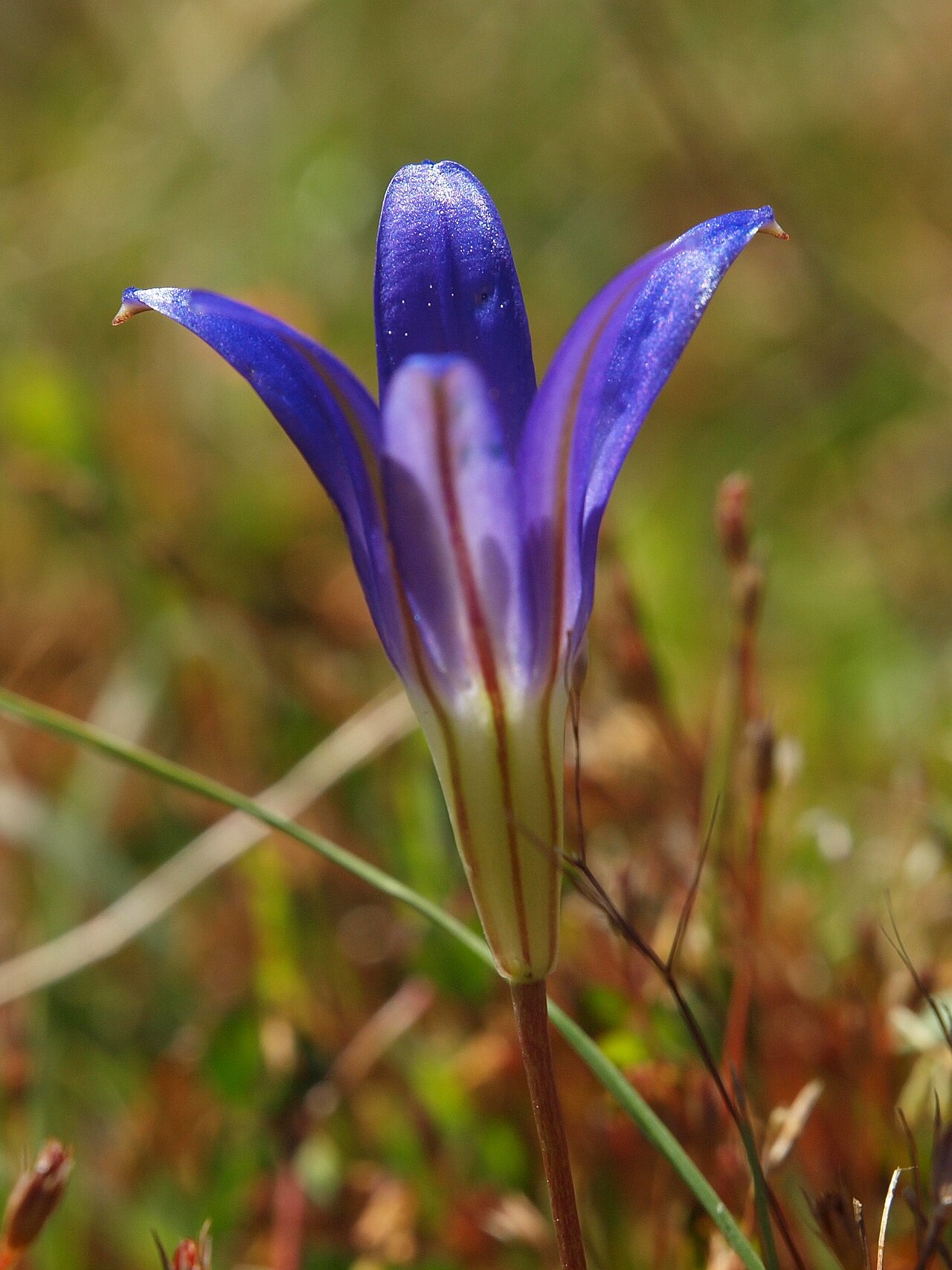
Brodiaea elegans, commonly called harvest brodiaea or elegant cluster-lily, is a late-spring to summer wildflower of California and southwestern Oregon grasslands, named for its habit of blooming right around harvest time, after most other spring wildflowers have already gone to seed. It belongs to the Themidaceae (brodiaea) family, a group of western American bulb plants closely related to the true lilies, and produces one of the most saturated violet-blue flowers of any California native bulb.
Like its relatives — the ithuriel’s spears, blue dicks, and other “brodiaeas” of the West — harvest brodiaea grows from a small underground corm that stores energy through the dry season and sends up a leafless flowering stalk each year. What sets it apart is timing: while most California bulbs finish blooming by April or May, harvest brodiaea often waits until June or July, opening its deep purple-blue, funnel-shaped flowers just as the surrounding grassland has already dried to gold. This late bloom period makes it an important late-season nectar source and a striking accent in a native garden that would otherwise be finished flowering for the summer.
Harvest brodiaea favors heavy clay soils that are seasonally wet in winter and rock-hard by summer — vernal swales, clay flats, and grassy slopes throughout the Coast Ranges, Sierra Nevada foothills, and scattered sites in the Klamath-Siskiyou region of southwestern Oregon. In the garden it is a reliable, low-maintenance bulb for unirrigated native plantings, especially valuable for the color and pollinator activity it brings to the garden in the heat of early summer.
Identification
Harvest brodiaea is a perennial herb that grows 6 to 20 inches tall from a small, fibrous-coated corm. Like other brodiaeas, it produces one or two narrow, grass-like basal leaves early in the season that typically wither before or during flowering, leaving a bare, wiry stalk topped by a cluster of flowers.
Flowers
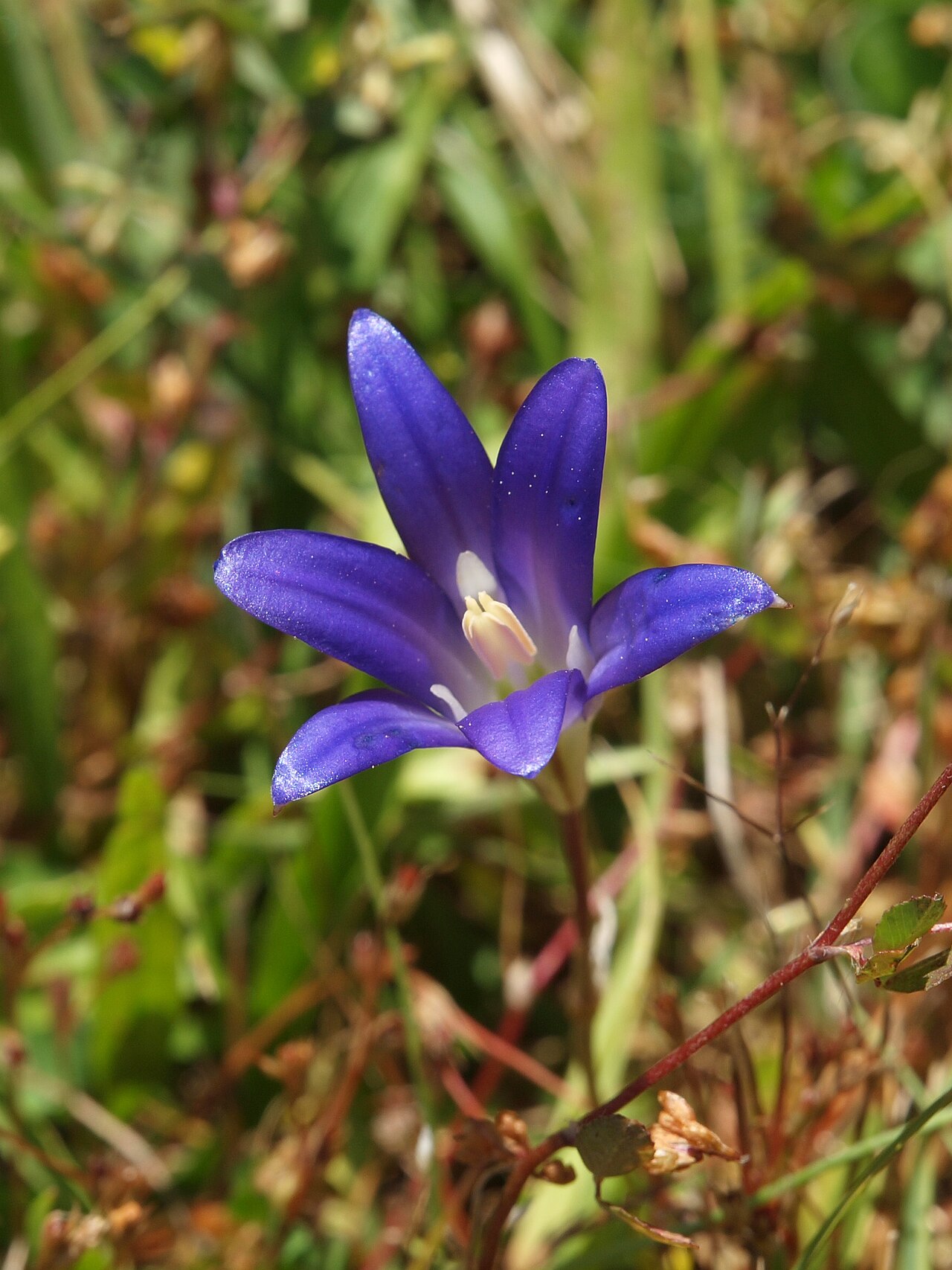
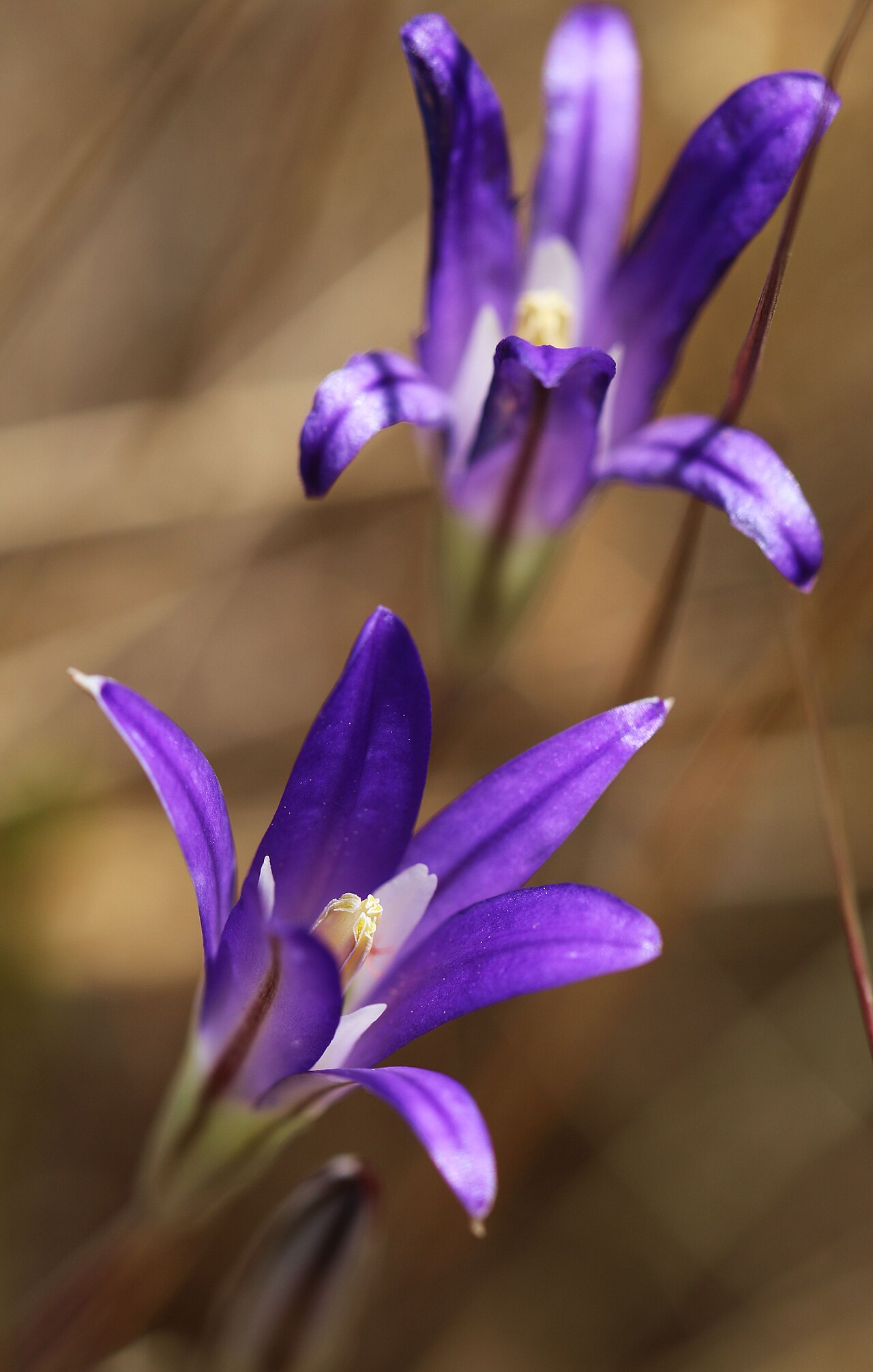
The flowering stem (scape) ends in an umbel of 2 to 15 flowers on slender stalks (pedicels) of unequal length, giving the cluster a loose, open look. Each flower is funnel-shaped, ¾ to 1½ inches long, in rich violet-blue to deep purple, with darker midveins running down each of the six tepals and a paler, often whitish throat at the base. Three fertile stamens alternate with three broad, white, petal-like staminodia (sterile stamens) that curve inward over the throat — a key identification feature distinguishing Brodiaea from the similar genus Dichelostemma (blue dicks and ithuriel’s spear), which lacks these staminodia. Bloom time runs from May into August depending on elevation, generally later than most other California spring bulbs.
Leaves & Stem
One or two linear, channeled leaves, 4 to 12 inches long, emerge from the base in late winter or early spring and usually dry up by flowering time. The flowering stalk itself is leafless, smooth, and wiry, rising straight up from the corm.
Fruit
Following pollination, each flower matures into a small, three-chambered capsule containing black, angular seeds. Capsules dry and split open in late summer, well after the rest of the plant has gone dormant.
Quick Facts
| Scientific Name | Brodiaea elegans |
| Family | Themidaceae (Brodiaea) |
| Plant Type | Perennial bulb (corm) |
| Mature Height | 6–20 in (15–50 cm) |
| Growth Rate | Slow |
| Sun Exposure | Full Sun |
| Water Needs | Low; wet winters, dry summers |
| Soil Type | Clay or heavy loam; tolerates seasonal wetness |
| Soil pH | 6.0–7.5 (neutral) |
| Bloom Time | May – August |
| Flower Color | Violet-blue to deep purple |
| Dormancy | Summer and fall (corm only) |
| Deer Resistant | Mostly yes; corms attract rodents |
| USDA Hardiness Zones | 7–9 |
Native Range
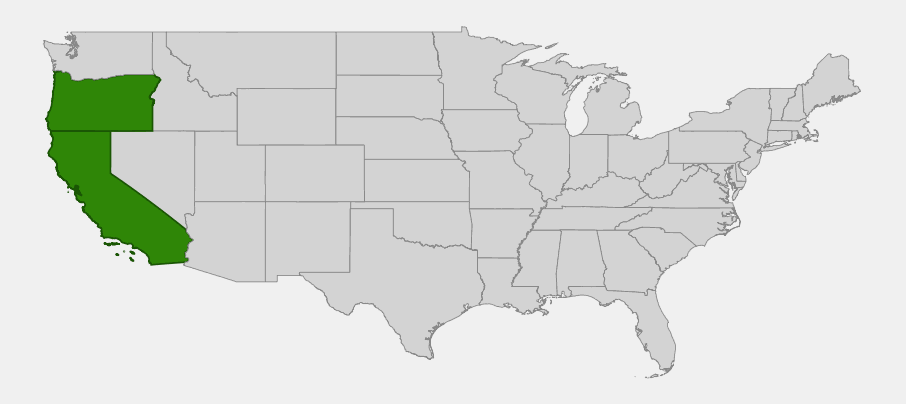
Harvest brodiaea is native to California, where it occurs widely through the Coast Ranges, the Sierra Nevada foothills, and scattered inland valleys, and it extends a short distance north into the Klamath Mountains and Siskiyou region of southwestern Oregon. It typically grows from near sea level up to around 5,000 feet elevation, most commonly on heavy clay soils in grassland and oak savanna that are saturated in winter and completely dry by summer — conditions often described as vernal swale or clay-flat habitat.
Harvest brodiaea is not native to Nevada, Washington, or states further east; where it is offered for sale outside California and southwestern Oregon, it should be treated as a garden plant rather than a regional native.
📋 Regional plant lists featuring harvest brodiaea: California & Nevada · Western Oregon & Western Washington
Growing & Care Guide
Harvest brodiaea is an easy, trouble-free bulb for a California or southwestern Oregon native garden, prized for blooming later than almost anything else in a dry-summer landscape.
Light
Plant in full sun. In the wild it grows in open grassland with little competition from shrubs or trees, and it blooms best without shade.
Soil & Water
Unlike many California bulbs that demand sharp drainage, harvest brodiaea is naturally adapted to heavy clay that holds winter moisture — making it a good choice for gardeners dealing with clay soil that is hard to plant. Water during fall through spring if rainfall is light, then withhold water through summer dormancy. Established plantings need no supplemental irrigation once the growing season ends.
Planting Tips
Plant corms in fall, about 3 inches deep, directly in clay or heavy loam soil. Because the flowering stalk is leafless and emerges late, mark the planting location so it isn’t disturbed by other garden work in late spring. Harvest brodiaea combines well with summer-dormant bunchgrasses that mask the bare ground once the brodiaea’s own leaves have withered.
Pests & Problems
Gophers and ground squirrels will dig and eat the corms. Otherwise the species is largely free of pests and disease, and overwatering in summer is the main cultivation mistake to avoid.
Landscape Uses
Good uses for harvest brodiaea include:
- Clay-soil wildflower meadows, where many other bulbs struggle
- Late-season color in a dry native garden after spring bloomers finish
- Vernal swale and seasonal wetland-edge restoration
- Bunchgrass prairie plantings, interspersed with native grasses
- Pollinator gardens needing nectar sources into summer
Wildlife & Ecological Value
Harvest brodiaea’s late bloom time makes it disproportionately valuable to pollinators in California’s dry-summer landscape, when few other native wildflowers are still flowering.
For Pollinators
The deep funnel-shaped flowers are visited by native bees, including long-tongued bees able to reach nectar at the base of the tube, as well as butterflies and occasionally hummingbirds. Because it blooms in June and July, after most grassland wildflowers have set seed, harvest brodiaea provides one of the few remaining nectar sources in open grassland habitat during the early summer gap.
For Mammals
Ground squirrels, pocket gophers, and other burrowing rodents dig up and eat the starchy corms, a significant source of natural mortality in wild populations and the main reason gardeners in gopher-prone areas often protect plantings with wire baskets.
Ecosystem Role
As a geophyte of seasonally wet clay grassland, harvest brodiaea is part of the native bulb flora that once dominated California’s vernal grasslands alongside annual wildflowers and perennial bunchgrasses. Its tolerance of heavy, poorly drained clay lets it persist in grassland remnants that are too wet in winter for many other native bulbs, making it a useful indicator and restoration species for vernal swale habitat.
Cultural & Historical Uses
The corms of Brodiaea species, including harvest brodiaea, were historically gathered and eaten by California Indigenous peoples, who harvested them in late summer after the plants had finished flowering and the corms had stored their energy for the following year — a timing reflected in the common name “harvest brodiaea.” The corms were typically roasted or boiled, with a texture and flavor compared to chestnuts by early ethnobotanical accounts. As with other native bulbs, digging wild corms today is neither legal on most public lands nor necessary, since harvest brodiaea is available from California native plant nurseries.
Frequently Asked Questions
Why does harvest brodiaea bloom so much later than other California bulbs?
Its late bloom time (May through August) is an adaptation to clay soils that stay cool and moist well into late spring; the plant waits to flower until the soil has had time to warm, which also places its bloom later in the season than most sandy-soil bulbs.
How is harvest brodiaea different from blue dicks?
Both have violet-blue, umbel-shaped flower clusters, but true Brodiaea species like this one have three white, petal-like staminodia curving over the flower’s throat, a feature blue dicks (Dichelostemma capitatum) lack. Blue dicks also bloom earlier in spring.
Does harvest brodiaea need good drainage?
No — unlike many California native bulbs, it is naturally suited to heavy clay soil that holds winter moisture, as long as the soil dries out completely by summer.
Is harvest brodiaea deer resistant?
Deer generally leave the foliage and flowers alone, though gophers and ground squirrels will dig up and eat the corms.
Can I grow harvest brodiaea from seed?
Yes, though as with most native bulbs it takes several years for seed-grown plants to reach flowering size; planting corms gives faster results.

Looking for a nursery that carries harvest brodiaea?
Browse our native plant nursery directory: California · Oregon