Sierra Fawn Lily (Erythronium multiscapoideum)
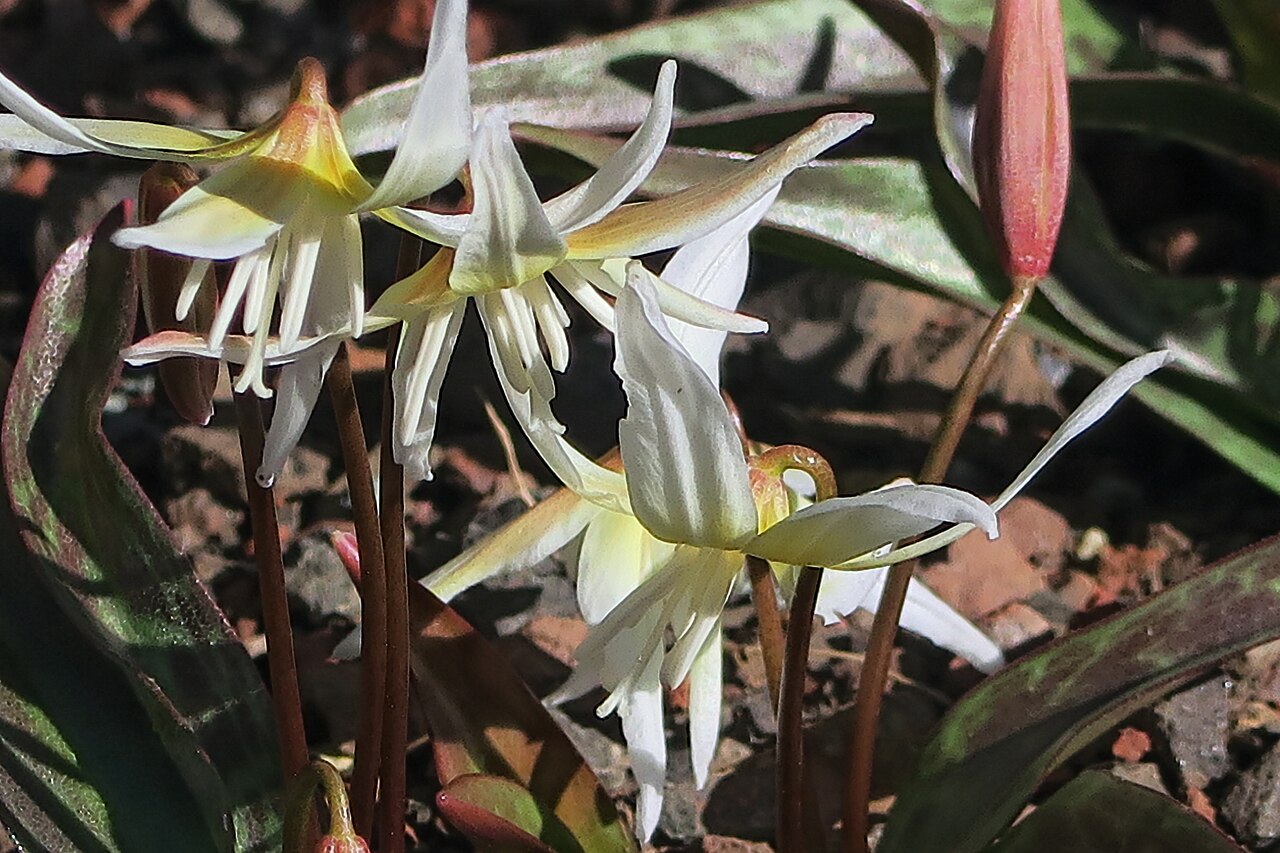
Erythronium multiscapoideum, commonly known as the Sierra fawn lily, is one of California’s most delicate spring wildflowers, a small lily-family bulb that pushes up a pair of handsomely mottled leaves and one or more nodding, swept-back white-to-cream flowers each spring in the foothills of the Sierra Nevada. The common name “fawn lily” refers to the leaf pattern, which is often marked with bronze, maroon, or silvery mottling reminiscent of a young deer’s dappled coat, while the species name multiscapoideum (“many-stalked”) nods to its habit of producing multiple flowering stems (scapes) from a single bulb — an unusual trait among western fawn lilies, most of which send up only one flower stalk per bulb.
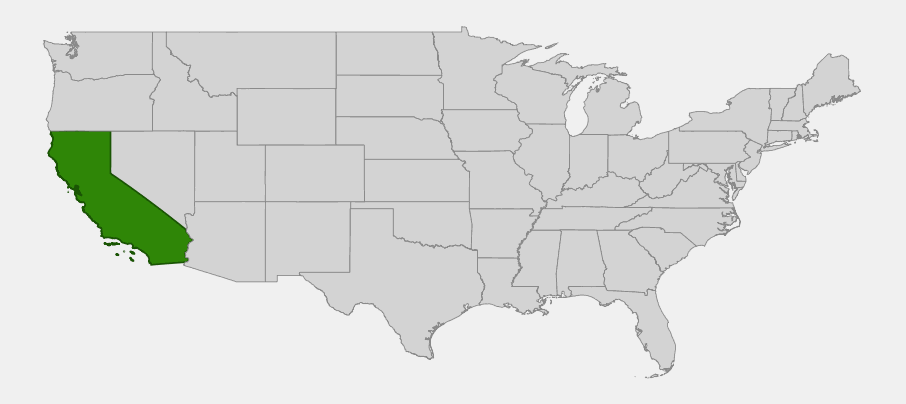
Sierra fawn lily is a true California endemic, found only in the state, concentrated in the western foothills of the Sierra Nevada and nearby inner Coast Range country, typically growing on rocky or gravelly slopes in open woodland and chaparral margins. Like other fawn lilies, it is an early-spring ephemeral: the whole above-ground plant emerges, flowers, sets seed, and vanishes again within a few weeks each year, spending the rest of the year as a dormant bulb buried in rocky soil.
Because of its small size, early bloom, and habit of persisting as an unseen bulb for most of the year, Sierra fawn lily is easy to overlook in the wild and relatively uncommon in cultivation compared to showier native bulbs. It is best suited to dedicated rock gardens or naturalized woodland plantings where its brief but charming spring display can be appreciated up close.
Identification
Sierra fawn lily is a small perennial herb, typically only 3 to 8 inches tall at flowering, growing from a narrow, deep-set bulb (corm).
Flowers
Each bulb typically sends up one to three (occasionally more) slender flowering stalks, each bearing a single nodding flower, true to the “many-stalked” meaning of the species name. The flower has six strongly recurved (swept-back) tepals, white to pale cream on the outer surface with a yellow base, often blushed with pink or bronze on the reverse as the flower ages. Prominent yellow to cream-colored stamens hang beneath the recurved petals. Flowers open in February and March at lower elevations, slightly later higher in the foothills, and each bloom lasts only a few days.
Leaves
Each bulb produces a pair of basal leaves, elliptic to lance-shaped, 3 to 6 inches long, with a distinctive mottled pattern of bronze, maroon, or silvery-gray blotching over green — the “fawn” pattern that gives the genus its common name. The leaves emerge before or with the flowers and wither along with the rest of the plant by late spring.
Fruit
After flowering, each bloom develops into a small, three-chambered capsule that matures and splits to release seed in late spring, by which time the foliage has usually already begun to yellow and collapse as the plant enters summer dormancy.
Quick Facts
| Scientific Name | Erythronium multiscapoideum |
| Family | Liliaceae (Lily) |
| Plant Type | Perennial bulb (spring ephemeral) |
| Mature Height | 3–8 in (7–20 cm) |
| Growth Rate | Slow |
| Sun Exposure | Partial Shade |
| Water Needs | Low; dry in summer dormancy |
| Soil Type | Well-drained, rocky or gravelly |
| Soil pH | 6.0–7.0 (neutral) |
| Bloom Time | February – March |
| Flower Color | White to cream with yellow base |
| Dormancy | Spring through fall (bulb only) |
| Deer Resistant | Mostly yes; bulbs attract rodents |
| USDA Hardiness Zones | 7–9 |
Native Range
Sierra fawn lily is endemic to California, found primarily in the western foothills of the Sierra Nevada from around Butte and Yuba counties south to Mariposa and Tuolumne counties, with additional populations in parts of the northern inner Coast Range. It grows at low to moderate elevations, generally below about 3,000 feet, on rocky or gravelly slopes, often in the partial shade of blue oak and foothill pine woodland, and on serpentine or other rocky-derived soils where competing vegetation is sparse.
Because this is a narrow California endemic, it is not native anywhere outside the state, including Nevada and Oregon; gardeners elsewhere should treat it strictly as a specialty bulb rather than a regional native.
📋 Regional plant lists featuring Sierra fawn lily: California & Nevada
Growing & Care Guide
Sierra fawn lily is a specialty bulb for California rock gardens and woodland edges, small and fleeting in bloom but worth growing for its delicate form and mottled foliage.
Light
Give it partial shade, similar to the dappled light under open foothill woodland. Deep shade reduces flowering, while hot, exposed full sun can scorch the foliage and shorten an already brief bloom period.
Soil & Water
Plant in well-drained, rocky or gravelly soil that mimics its native foothill habitat. Water during the brief winter-to-spring growing season if rainfall is light, then allow the soil to dry out completely once the foliage withers in spring — the bulb needs a genuinely dry summer and fall dormancy to persist.
Planting Tips
Plant bulbs in fall, 3 to 4 inches deep, in a rock garden, raised bed, or the edge of an oak woodland planting that will not be watered in summer. Because the plant is small and disappears completely by late spring, mark its location to avoid disturbing the dormant bulb. Sierra fawn lily is slow to establish and best left undisturbed once planted.
Pests & Problems
Gophers and other burrowing rodents will eat the bulbs. The plant’s main cultivation challenge is simply providing the right combination of winter moisture, good drainage, and complete summer dryness.
Landscape Uses
Sierra fawn lily works well in:
- Rock gardens with sharp drainage and light shade
- Foothill oak woodland gardens, naturalized at the woodland edge
- California native bulb specialty collections
- Serpentine or rocky-soil restoration plantings in its native foothill range
Wildlife & Ecological Value
As one of the earliest wildflowers to bloom in the Sierra Nevada foothills, Sierra fawn lily plays a small but meaningful role for early-season pollinators.
For Pollinators
The nodding, recurved flowers are visited by early-emerging native bees and other insects, providing one of the first nectar and pollen sources of the year in foothill woodland habitat, well before most other wildflowers begin blooming.
For Mammals
Ground squirrels and other burrowing rodents dig up and eat the bulbs, a natural source of mortality that also helps disperse bulblets to new locations within a population.
Ecosystem Role
As a true spring ephemeral, Sierra fawn lily completes its entire above-ground life cycle in just a few weeks, taking advantage of the brief window of moist soil and open light before surrounding grasses and shrubs fully leaf out. This strategy allows it to persist in rocky, competition-limited sites in the foothill woodland understory where longer-lived perennials often cannot establish.
Cultural & Historical Uses
Specific ethnobotanical records for Sierra fawn lily are limited, but other California Erythronium species were historically used by Indigenous peoples in parts of the state, with bulbs sometimes eaten after cooking. Given the Sierra fawn lily’s narrow range, small bulb size, and relatively limited populations, there is little documented history of large-scale use, and modern gardeners should rely on nursery-propagated bulbs rather than wild collection.
Frequently Asked Questions
Why is it called “Sierra fawn lily”?
The “fawn lily” part of the name comes from the mottled pattern on the leaves, which resembles the spotted coat of a young deer. “Sierra” reflects its concentration in the western Sierra Nevada foothills, where it is most commonly found.
How is Sierra fawn lily different from other fawn lilies?
Its species name, multiscapoideum (“many-stalked”), reflects its tendency to produce more than one flowering stalk per bulb — a trait that is less common among western North American fawn lilies, most of which produce a single flower stalk per bulb each year.
How long does Sierra fawn lily bloom?
Not long — typically just a few weeks in February and March, with individual flowers lasting only a few days each. This brief bloom window is typical of spring-ephemeral bulbs.
Can I grow Sierra fawn lily outside California?
It can be grown elsewhere if you can replicate rocky, well-drained soil, partial shade, and a dry summer dormancy, but it will not be a regional native outside its narrow California foothill range and should not be labeled as one.
Does Sierra fawn lily need to be divided or replanted?
No — once established in a suitable spot, it is best left undisturbed. The bulb is slow-growing and resents disturbance during its active growth or dormancy.
How can I tell Sierra fawn lily apart from other California fawn lilies?
Several Erythronium species overlap in California, but Sierra fawn lily’s combination of a foothill (not high-mountain) range, multiple flowering stalks per bulb, and relatively small, white-to-cream recurved flowers helps distinguish it. Higher-elevation Sierra Nevada fawn lilies, such as Erythronium purpurascens, generally grow at much higher elevations near receding snowmelt and typically produce a single flower stalk per bulb, flowering later in the season as the snowpack retreats.
Is Sierra fawn lily rare or at risk?
It is not formally listed as threatened or endangered, but as a narrow California endemic restricted to foothill habitat that has seen substantial land conversion for agriculture and development, local populations can be vulnerable to habitat loss. Growing nursery-propagated plants in a home garden supports appreciation of the species without pressuring wild populations.

Looking for a nursery that carries Sierra fawn lily?
Browse our native plant nursery directory: California