
Side-flowering Skullcap (Scutellaria lateriflora)
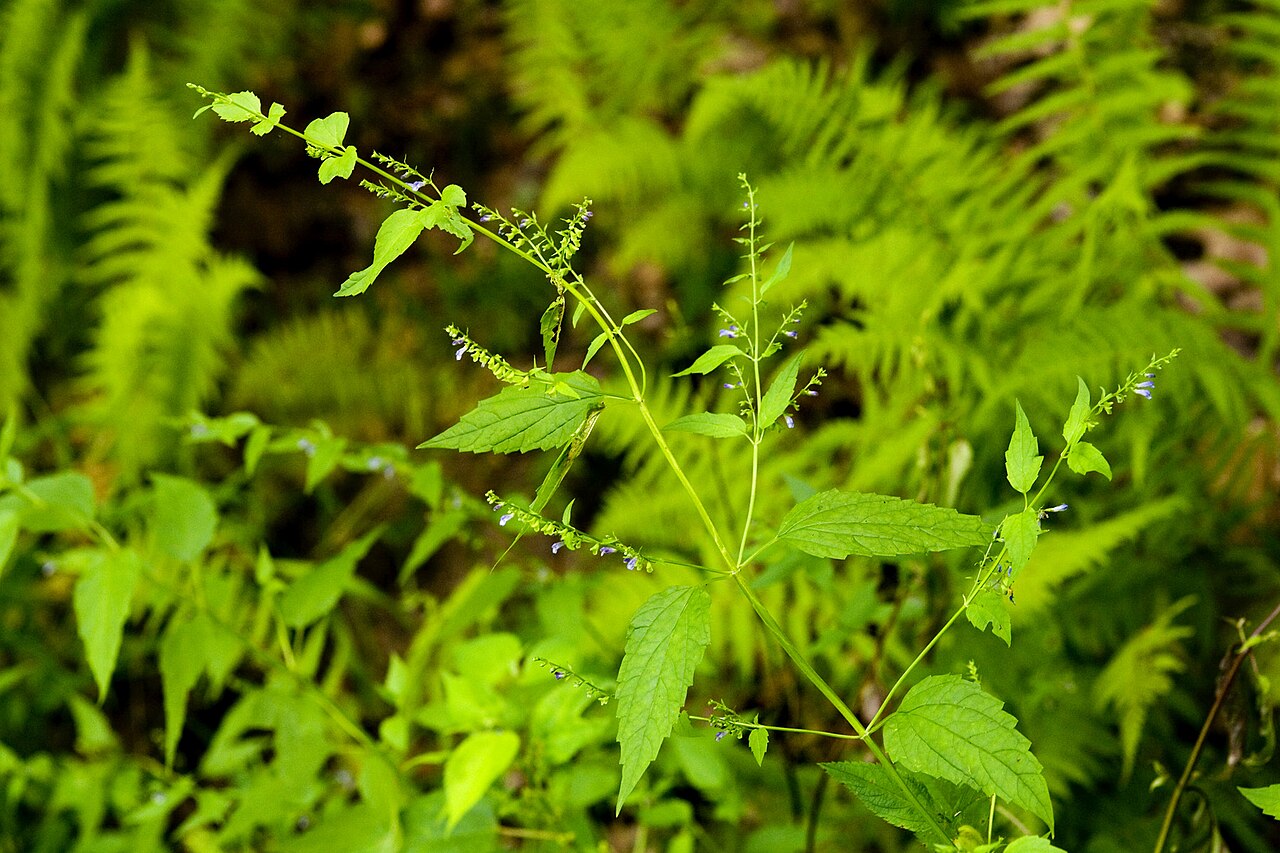
Scutellaria lateriflora, known as Side-flowering Skullcap, mad-dog skullcap or blue skullcap, is a perennial wildflower of the mint family (Lamiaceae) that grows in wet places across most of the United States and southern Canada. Its slender stems, usually 1 to 3 feet tall, carry pairs of toothed leaves and, from midsummer into fall, narrow one-sided spikes of small blue to violet flowers that grow from the leaf axils along the sides of the stems. That side-on arrangement gives the plant its common and scientific names.
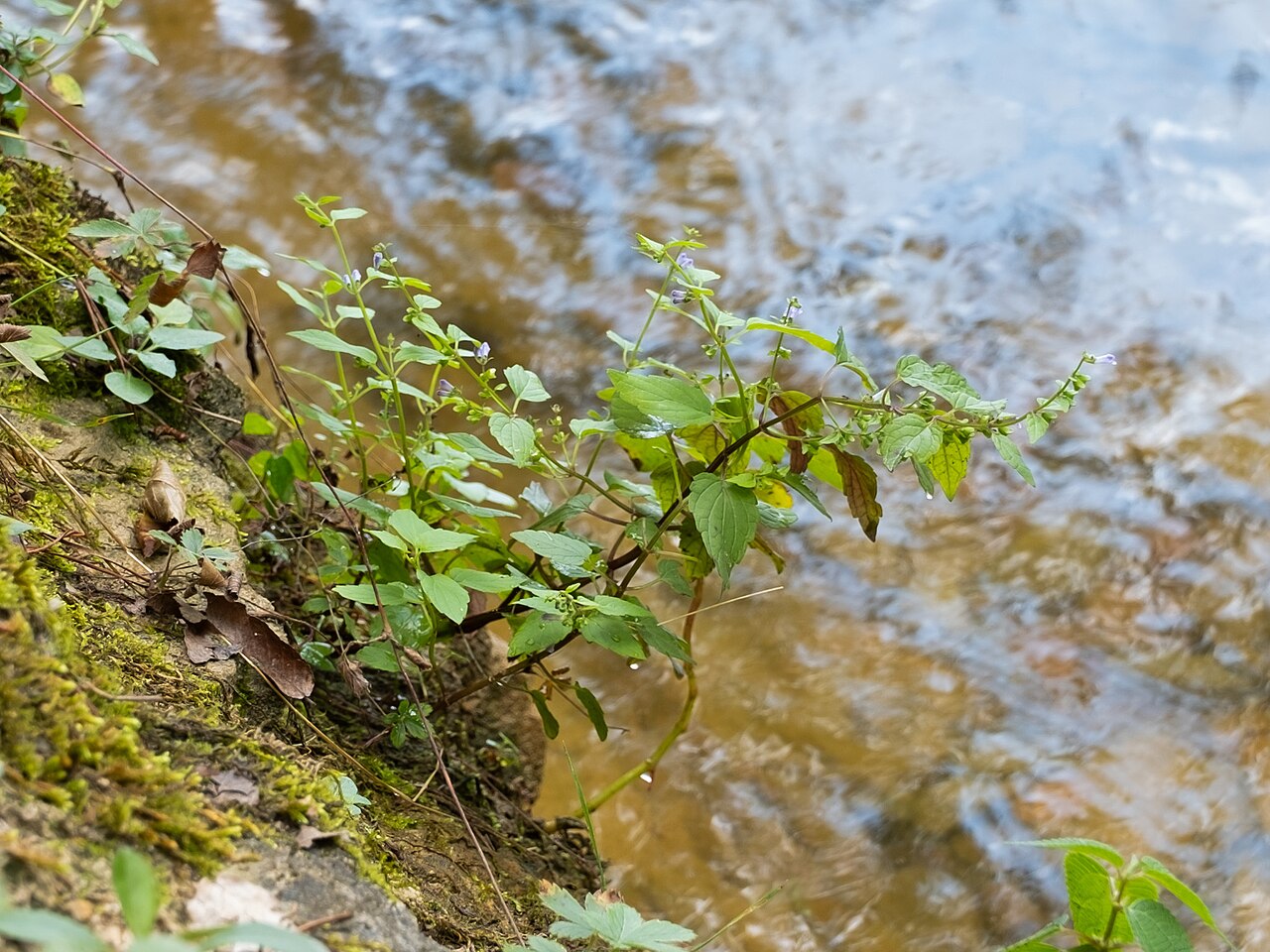
It grows in marshes, wet meadows, swamps, stream and pond banks, ditches, seeps and floodplain forests, usually in partial shade. It spreads by thin rhizomes into loose colonies and is a fine plant for rain gardens, pond edges and moist woodland gardens. Small bees visit the flowers.
Side-flowering skullcap is also a well-known herb in North American folk medicine and the modern supplement trade. This page covers it as a native garden plant; it does not give medical advice. Skullcap supplements have been linked to cases of liver injury, often because products were contaminated or substituted with germander (Teucrium), so talk to a health professional before using any skullcap product.
Identification
Look for a slender, square-stemmed mint-family plant in wet ground, with toothed, opposite leaves and many small blue flowers lined up on one side of short spikes that grow from the leaf axils.
Growth Habit
Side-flowering skullcap is an upright to sprawling perennial, 1 to 3 feet tall (occasionally to 4 feet), with square, branching stems that may be smooth or finely hairy. It grows from slender rhizomes and often forms loose patches. Unlike many mints, it has little or no scent when crushed.
Leaves
The leaves are opposite, 1 to 4 inches long, ovate to lance-shaped, with a pointed tip and coarsely toothed edges. They have short stalks, which helps separate this species from several other skullcaps with stalkless upper leaves.
Flowers
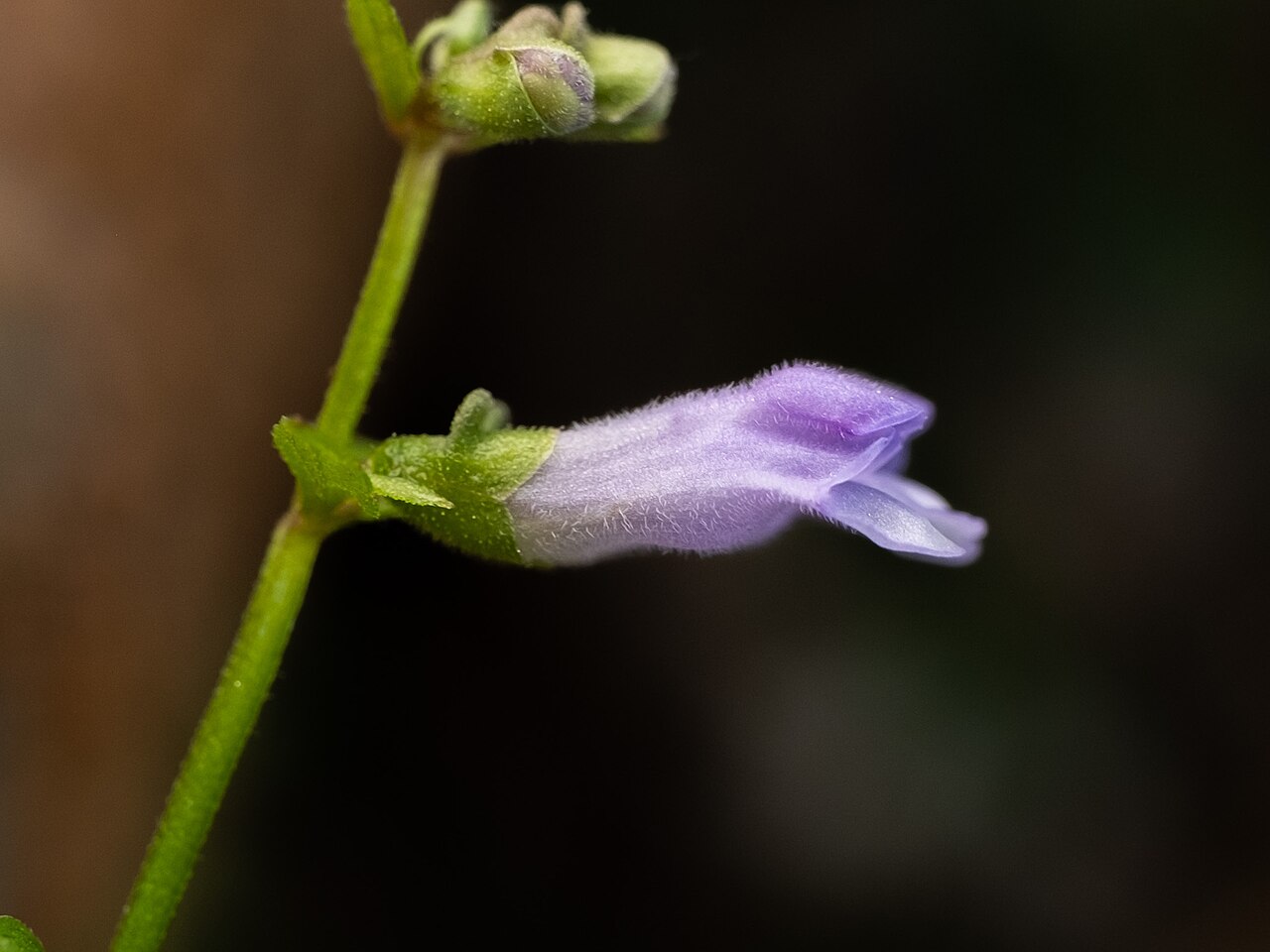
The flowers are borne in slender, one-sided racemes 1 to 4 inches long that grow from the leaf axils, so the flowers seem to come off the side of the stem rather than the top. Each flower is small, about 1/4 to 1/3 inch long, two-lipped and tubular, blue to violet with a white patch on the lower lip; pink and white forms are rare. The calyx has a small raised ridge or cap on its upper side, the “scutellum” that gives the genus its name. Bloom time is July to September, sometimes into October.
Fruit & Seeds
After flowering, the calyx closes over four tiny nutlets. When the seeds are ripe, the calyx splits apart and drops them near the parent plant.
Look-alikes
Most other skullcaps carry their flowers in spikes at the tips of the stems, not in the leaf axils. Helmet skullcap (Scutellaria integrifolia) grows in drier, open ground and has larger flowers and narrow, mostly untoothed upper leaves. Marsh skullcap (S. galericulata) also grows in wetlands but has larger, single flowers in the leaf axils. Germander (Teucrium) has flowers with a reduced upper lip and no cap on the calyx.
Quick Facts
| Scientific Name | Scutellaria lateriflora |
| Family | Lamiaceae (mint family) |
| Plant Type | Rhizomatous herbaceous perennial |
| Mature Height | 1–3 ft |
| Mature Spread | 1–2 ft; spreads slowly |
| Growth Rate | Moderate |
| Sun Exposure | Part shade to full sun |
| Water Needs | High; moist to wet soil |
| Soil Type | Moist to wet loam, sand or muck |
| Soil pH | Acidic to neutral (about 5.0–7.5) |
| Bloom Time | July–September |
| Flower Color | Blue to violet, rarely pink or white |
| Fall Color | None |
| Fruit | Four small nutlets in a capped calyx |
| Deer Resistant | Moderate; seldom browsed heavily |
| USDA Hardiness Zones | 3–9 |
Native Range
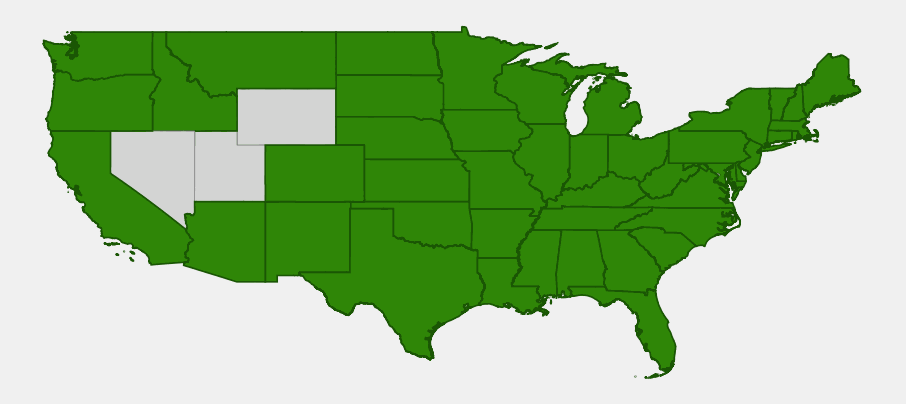
Side-flowering skullcap has one of the widest ranges of any North American skullcap. It grows from British Columbia east to Newfoundland and south through most of the United States to Florida, Texas, Arizona and California. It is most common in the eastern half of the country and in the Pacific Northwest, and becomes scattered in the dry interior West.
It is native in 45 states plus the District of Columbia; only Nevada, Utah, Wyoming, Hawaii and Alaska lack it on this page’s map. (USDA PLANTS also flags Alaska, but we could find no herbarium specimens or verified observations from there, so the state is not mapped.) In Texas it is known mainly from the northeast and the Panhandle, and in the Pacific Northwest it is most frequent west of the Cascades, with scattered populations in Idaho and eastern Washington.
Its habitats are wet: marshes, wet meadows, fens, swamps and wooded wetlands, the banks of streams, rivers and ponds, floodplain forests, seeps, ditches and wet thickets. It usually grows in partial shade or among taller wetland plants.
📋 Regional plant lists featuring Side-flowering Skullcap: New York, Pennsylvania & Northern New Jersey · Idaho, Eastern Oregon & Eastern Washington · Ohio & Indiana · Montana & Wyoming · Michigan, Wisconsin & Eastern Minnesota · Kentucky & Tennessee · Nebraska, Kansas & Eastern Colorado · Connecticut, Massachusetts & Rhode Island · New Hampshire, Maine & Vermont · Maryland, Virginia & West Virginia · Delaware, Southern New Jersey & Long Island · Arizona & New Mexico · Illinois, Iowa & Missouri · Alabama, Georgia & Mississippi · North & South Florida · North & South Carolina · Arkansas, Louisiana, Eastern Oklahoma & Eastern Texas · North Dakota, South Dakota & Western Minnesota · Western Oregon & Western Washington · California & Nevada
Growing & Care Guide
Side-flowering skullcap is easy to grow in moist soil and is often sold by native plant and herb nurseries. It is a modest, fine-textured plant rather than a showy one, best used in groups along water or in rain gardens.
Light
Part shade is ideal. It tolerates full sun if the soil stays wet, and fairly deep shade, though it flowers less there.
Soil & Water
Grow it in consistently moist to wet soil rich in organic matter. It tolerates periodic flooding and saturated soil. It wilts and declines quickly in dry soil, so water during droughts unless it is planted by water.
Planting Tips
Plant divisions or container plants in spring or fall, 12 to 18 inches apart. It looks best in drifts along pond and stream edges, in rain gardens and in low spots, mixed with other wetland perennials such as cardinal flower and great blue lobelia.
Pruning & Maintenance
Little care is needed. Cut stems back in late winter or early spring. It spreads by rhizomes and self-sows, but gently; pull extra plants if needed. Plants can look floppy in rich soil and shade; neighbors help hold them up.
Propagation
Grow it from seed sown in fall, or in spring after a few weeks of cold, moist stratification; seed germinates readily. Divide clumps in spring, or root stem cuttings in early summer.
Landscape Uses
- Rain gardens: tolerates both standing water and short dry spells
- Pond and stream edges: a fine-textured plant for wet banks
- Moist woodland gardens: late-summer blue flowers in part shade
- Wetland restoration: included in seed mixes for wet meadows and stream banks
- Herb gardens: grown as a historical medicinal plant
Wildlife & Ecological Value
Side-flowering skullcap adds late-summer flowers to wetland plant communities.
For Pollinators
Small bees, including small carpenter bees, sweat bees and leafcutter bees, visit the flowers for nectar and pollen. The small, narrow flowers are too small for many larger bees.
For Birds
It is not an important bird food, but it adds to the dense cover of wetland edges used by nesting and foraging birds.
For Mammals
Mammals rarely eat it. Its dense patches give cover to small animals, frogs and invertebrates along wetland edges.
Ecosystem Role
Its rhizomes help hold soil on stream banks and in wet ditches. It is part of the diverse plant communities of wet meadows and floodplains and is used in wetland restoration.
Cultural & Historical Uses
The genus name Scutellaria comes from the Latin scutella, a small dish or shield, for the cap-like ridge on the calyx. The species name lateriflora means “side-flowering.”
The name “mad-dog skullcap” comes from the late 18th century, when it was promoted as a cure for rabies. That claim was never supported. The plant later became a popular herb in American folk medicine and is still sold as a dried herb and supplement.
If you are considering skullcap products, talk to a health professional first. Cases of liver injury have been reported in people taking skullcap products, and some were linked to contamination or substitution with germander (Teucrium), which is known to be toxic to the liver. Never gather wild plants for internal use.
Frequently Asked Questions
Why is it called side-flowering skullcap?
Its flowers grow on short spikes from the leaf axils along the side of the stem, rather than only at the top. “Skullcap” refers to the small cap-like ridge on the calyx.
Is side-flowering skullcap invasive?
No. It is native across most of the United States and spreads only modestly by rhizomes and seed.
Does side-flowering skullcap need wet soil?
Yes. It grows best in moist to wet soil and tolerates periodic flooding. It does poorly in dry soil.
Is it safe to use skullcap as an herb?
This page gives no medical advice. Skullcap products have been linked to liver injury, often from contamination with germander. Consult a health professional before using any herbal product.
When does side-flowering skullcap bloom?
From July to September, sometimes into October, when many wetland plants are in flower.

Looking for a nursery that carries Side-flowering Skullcap?
Browse our native plant nursery directory: Alabama, Arizona & Arkansas · California · Colorado, Connecticut, Delaware, Florida & Georgia · Idaho, Illinois, Indiana, Iowa & Kansas · Kentucky, Louisiana, Maine, Maryland, Massachusetts, Michigan, Minnesota, Mississippi, Missouri & Montana · Nebraska, New Hampshire, New Jersey, New Mexico, New York, North Carolina, North Dakota, Ohio & Oklahoma · Oregon · Pennsylvania, Rhode Island, South Carolina, South Dakota, Tennessee, Texas, Vermont & Virginia · Washington · West Virginia & Wisconsin