
Large-flowered Triteleia (Triteleia grandiflora)
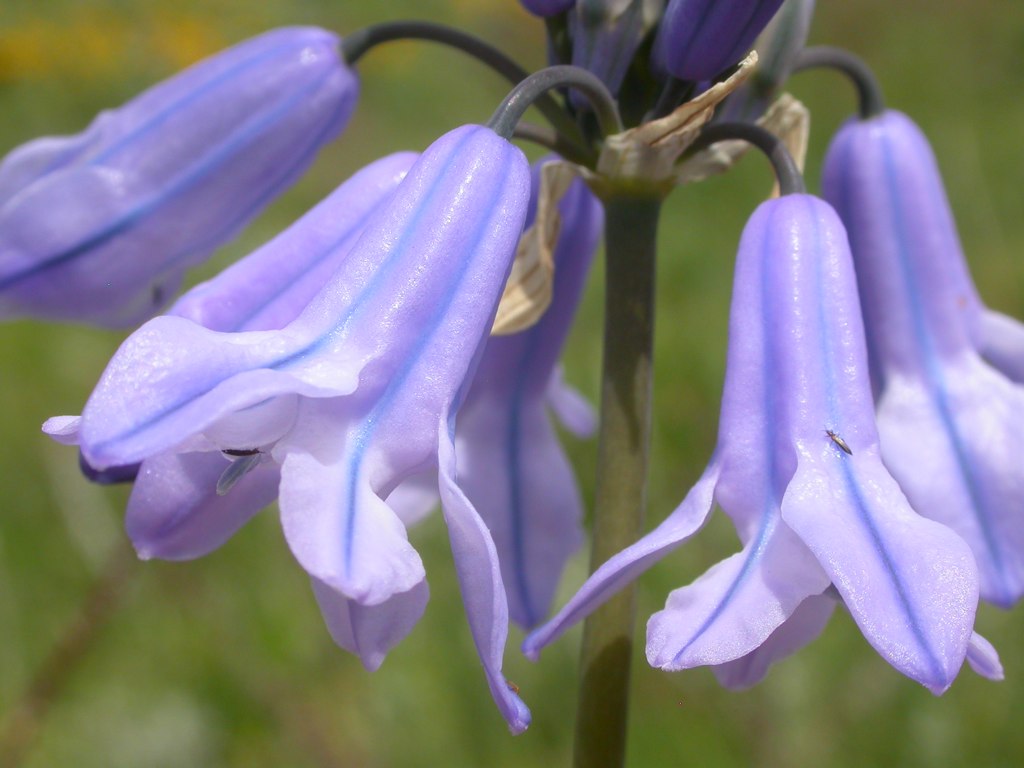
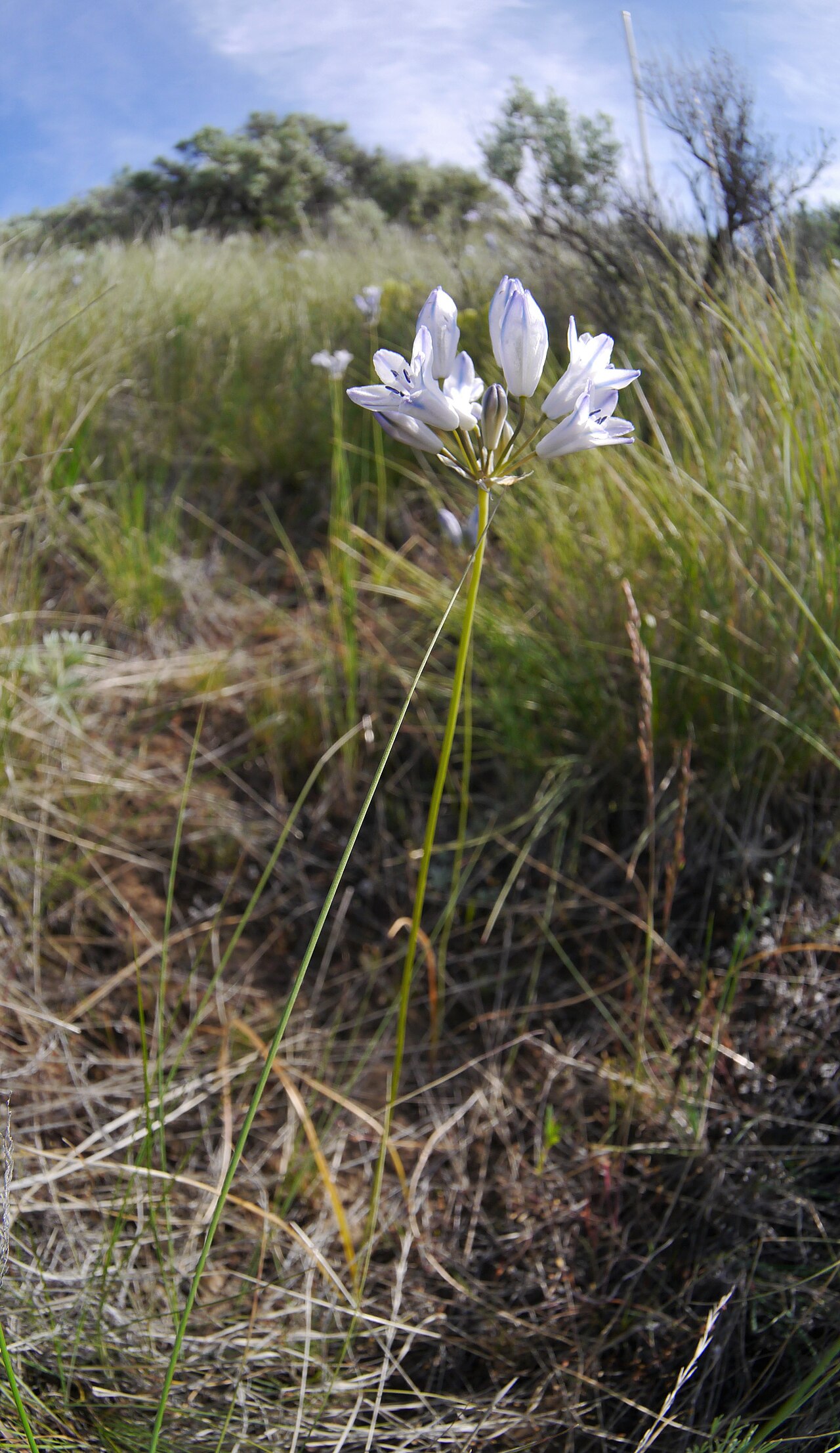
Triteleia grandiflora, known as Large-flowered Triteleia (USDA: largeflower triteleia; also Douglas’ brodiaea and wild hyacinth), is a spring-blooming perennial that grows from a corm, a small bulb-like underground stem. In April to June it sends up a slender, leafless stalk 8 to 30 inches tall topped by a loose cluster of bell-shaped, blue-violet to pale blue flowers. Its few narrow, grass-like leaves wither around flowering time, and by midsummer the plant is dormant underground.
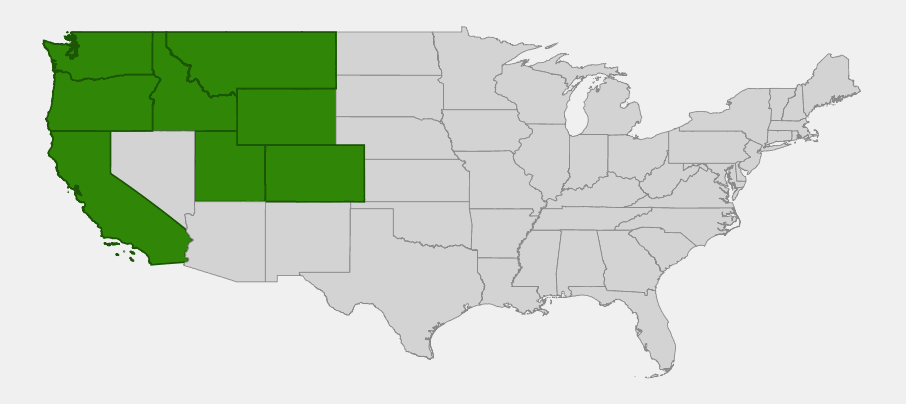
It is a member of the brodiaea group (family Themidaceae, formerly included in the lily family) and one of the most widespread triteleias. It grows from southern British Columbia south through Washington, Oregon and Idaho to northern California, and east to Montana, Wyoming and Utah, with outlying records in southwestern Colorado. It is most common east of the Cascades, in sagebrush steppe, bunchgrass prairies and open pine woodlands, but it also grows on prairies and rocky balds in the north Puget Sound area.
In gardens it is a delightful native “bulb” for dry, sunny meadows, rock gardens and steppe plantings, where it needs dry summers to thrive. Bumble bees and other native bees visit its flowers. Buy corms or plants from native plant nurseries; do not dig them from the wild.
Identification
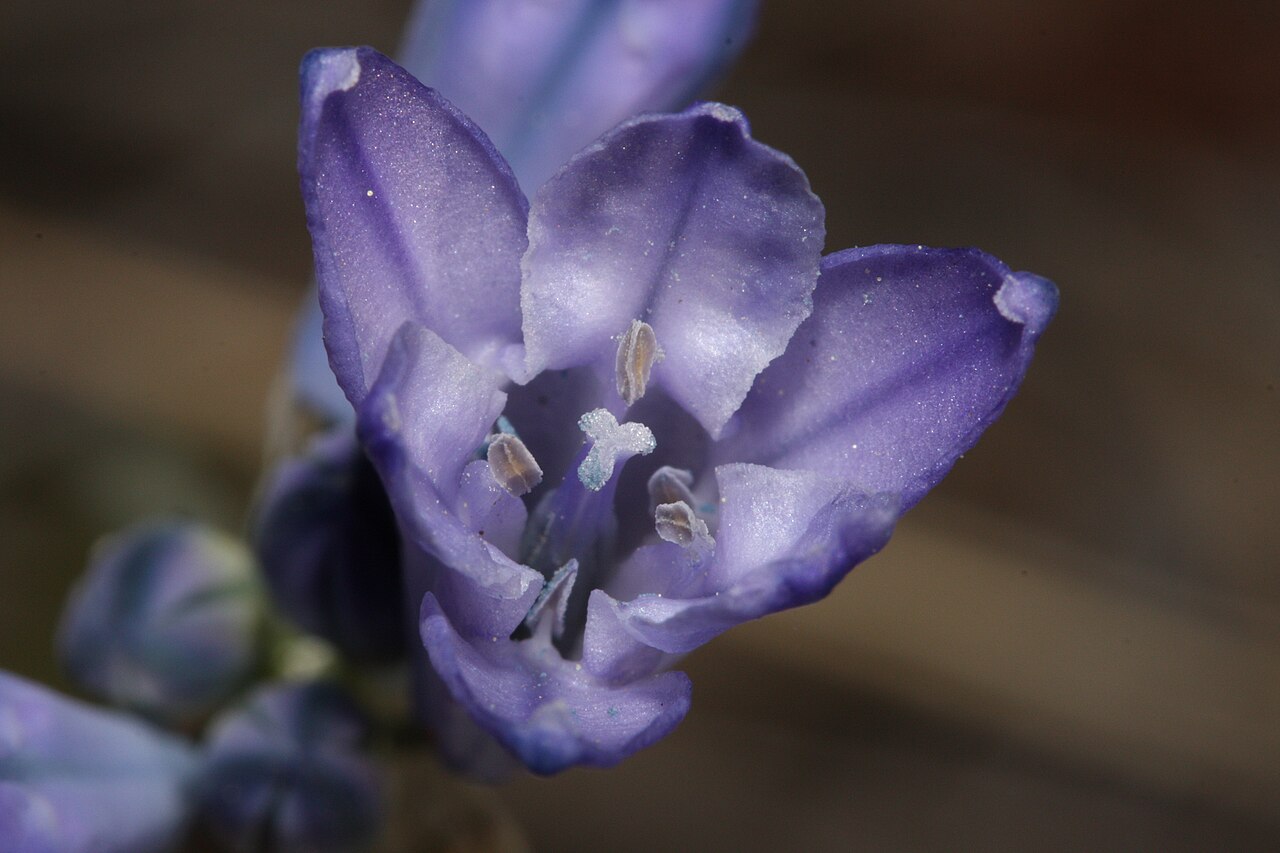
Large-flowered triteleia is recognized by its umbel of fairly large, blue, bell-shaped flowers on a leafless stalk in spring, with one or two narrow leaves at the base. Unlike many brodiaeas, its flowers have six fertile stamens attached at two levels inside the tube.
Growth Habit
A perennial that grows each year from a small, fibrous-coated corm buried several inches deep. It produces one to three basal leaves and one flowering stem (scape) about 8 to 30 inches tall. After seeds ripen in early summer, the plant dies back and stays dormant through the dry summer, fall and winter, sprouting again with the cool-season rains or snowmelt.
Leaves
Usually two or three narrow, grass-like basal leaves, about 8 to 28 inches long and less than 1/2 inch wide. They appear in late winter or early spring and often begin to wither by the time the flowers open.
Flowers
From about April to June, the stalk bears a loose umbel of 5 to 20 or more flowers on stalks 1/2 to 1 1/2 inches long. Each flower is 3/4 to 1 1/2 inches long, bell- or funnel-shaped, with a tube that is rounded at the base and six spreading lobes. Colors range from deep blue-violet to light blue or nearly white, usually with a darker midvein on each lobe. There are six stamens attached at two levels inside the tube, with yellow or purple anthers.
Fruit & Seeds
The fruit is a small, three-parted capsule that splits lengthwise when ripe in early summer to release many small black seeds. The dried stalk and capsules often remain standing for a while.
Varieties & Look-alikes
Two varieties are often recognized: var. grandiflora, with blue flowers, widespread east of the Cascades; and var. howellii (Howell’s triteleia), with white to bicolored flowers, mostly west of the Cascades and in southwestern Oregon. White Brodiaea (Triteleia hyacinthina) has flat, white, star-shaped flowers. Ithuriel’s Spear (T. laxa) of California has longer, funnel-shaped flowers with a pointed tube base. Blue Camas has flowers in a long spike, not an umbel, and grows in wetter meadows.
Safety
Large-flowered triteleia is not known to be toxic. Several Native American peoples ate the corms. However, do not dig wild plants, and never eat wild bulbs unless you are certain of their identity: deadly death camas (Toxicoscordion) grows in the same habitats and has similar grass-like leaves.
Quick Facts
| Scientific Name | Triteleia grandiflora |
| Family | Themidaceae (brodiaea family) |
| Plant Type | Perennial from a corm; summer-dormant |
| Mature Height | 8–30 in (flowering stalk) |
| Mature Spread | 3–6 in |
| Growth Rate | Slow (multiplies slowly from cormlets and seed) |
| Sun Exposure | Full sun to light shade |
| Water Needs | Low; moist in spring, dry in summer |
| Soil Type | Well-drained loam, sandy, gravelly or rocky soil |
| Soil pH | Slightly acidic to slightly alkaline (about 6.0–8.0) |
| Bloom Time | April–June |
| Flower Color | Blue-violet to pale blue or white |
| Fall Color | None; dormant by summer |
| Fruit | Small three-parted capsule with black seeds |
| Deer Resistant | Moderately; flowers may be browsed |
| USDA Hardiness Zones | 4–9 |
Native Range
Large-flowered triteleia is native to the Pacific Northwest and northern Intermountain West. USDA PLANTS lists it as native in Canada (British Columbia) and in California, Colorado, Idaho, Montana, Oregon, Utah, Washington and Wyoming.
It is most common east of the Cascades in Washington and Oregon and across Idaho, especially in the Columbia Basin, the Blue Mountains and the Snake River Plain. In Washington it also occurs in the north Puget Sound area west of the Cascades, according to the Burke Herbarium. It reaches western Montana, western Wyoming and northern Utah, and northeastern California. In Colorado it is known only from a few outlying herbarium records in Montezuma County in the southwest corner of the state.
It grows in sagebrush steppe, bunchgrass prairies, meadows, rocky balds and open ponderosa pine and oak woodlands, usually where the soil is moist in spring and dries out in summer. It ranges from low elevations in the Columbia Basin to middle elevations in the mountains.
📋 Regional plant lists featuring Large-flowered Triteleia: Idaho, Eastern Oregon & Eastern Washington · Montana & Wyoming · Utah & Western Colorado · Western Oregon & Western Washington · California & Nevada
Growing & Care Guide
Large-flowered triteleia is easy to grow if you give it what it has in the wild: sun, good drainage, moisture in spring and a dry summer rest. Buy corms or potted plants from native plant nurseries or grow it from seed. Never dig corms from the wild.
Light
Full sun is best. It tolerates light shade, such as the dappled shade of open pines, but flowers less in deeper shade.
Soil & Water
Plant it in well-drained loam, sandy, gravelly or rocky soil. It needs moisture from fall through spring while it grows, then a dry summer. Avoid regular summer irrigation, which can rot the dormant corms; place it away from watered lawns and beds, or in a rock garden or dry meadow.
Planting Tips
Plant corms in fall, about 3 to 4 inches deep and 3 to 4 inches apart, in groups of a dozen or more for a good show. They look best scattered among bunchgrasses and other spring wildflowers, or in rock gardens where their flowers rise above low plants. In cold-winter areas they are fully hardy; in containers, keep pots dry in summer.
Pruning & Maintenance
Little care is needed. Let the leaves die back naturally after flowering so the corm can store energy. You can cut off the dried stalks once the seeds have dropped. Protect plantings from pocket gophers and voles, which eat the corms, by using wire baskets if needed.
Propagation
Grow it from seed sown outdoors in fall; seeds need a cold, moist winter to germinate. Seedlings take three or more years to reach flowering size. Established clumps slowly form small offset corms (cormlets), which can be separated when the plants are dormant in late summer and replanted.
Landscape Uses
- Dry meadow and steppe gardens: spring blue flowers among bunchgrasses
- Rock gardens: a slender native bulb for sunny, well-drained spots
- Pollinator gardens: spring nectar for bumble bees and other native bees
- Prairie and steppe restoration: part of native spring wildflower mixes
- Naturalized plantings: under open pines or oaks with summer-dry soil
Wildlife & Ecological Value
Large-flowered triteleia is one of the spring wildflowers that feed native pollinators in the steppe and prairies of the inland Northwest.
For Pollinators
The Burke Herbarium lists bumble bees, other bees, flies and beetles as pollinators. The open bell-shaped flowers give easy access to nectar and pollen in mid- to late spring, when many steppe wildflowers bloom.
For Birds
Birds rarely eat the plant directly, but the insects it attracts feed sagebrush and grassland birds and their young in spring.
For Mammals
Pocket gophers, ground squirrels and other rodents dig and eat the corms, and deer may nip off the flowers and stalks.
Ecosystem Role
As a summer-dormant corm plant, it is part of the diverse community of geophytes and spring wildflowers that make up healthy, native bunchgrass steppe. It returns year after year in intact habitat but declines where steppe is converted, heavily grazed or invaded by annual grasses.
Cultural & Historical Uses
Native American peoples of the inland Northwest, including the Nez Perce, Okanagan and others, traditionally dug and ate the corms of triteleias and brodiaeas, along with camas and other root foods. Root gathering was managed carefully, often in family harvesting grounds.
The plant was collected in the Pacific Northwest by the Scottish botanist David Douglas in the 1820s and described by John Lindley in 1830, which is why it is also called Douglas’ brodiaea; it was long known as Brodiaea douglasii. The name Triteleia refers to the flower’s parts in threes, and grandiflora means “large-flowered.”
Today it is a familiar spring wildflower of the steppe and foothills in Washington, Oregon, Idaho and Montana, and is grown by native bulb enthusiasts in dry Western gardens.
Frequently Asked Questions
Is large-flowered triteleia a true lily?
No. It was once included in the lily family, but it is now placed in the brodiaea family (Themidaceae), with brodiaeas and bluedicks.
When does it bloom?
Mainly from April to June, depending on elevation and latitude. The leaves often wither by the time the flowers open.
Why do my triteleia corms rot?
Usually because of summer watering or poorly drained soil. They need a dry summer dormancy. Plant them in well-drained soil away from irrigated areas.
Can I grow it west of the Cascades?
Yes, in sunny, well-drained sites with dry summers. A white or bicolored form, var. howellii, is native west of the Cascades.
Is it the same as wild hyacinth?
Wild hyacinth is one of its common names, but that name is also used for other plants, including Camassia scilloides in the East. The scientific name Triteleia grandiflora avoids confusion.

Looking for a nursery that carries Large-flowered Triteleia?
Browse our native plant nursery directory: California · Colorado · Idaho · Montana · Oregon · Utah · Washington · Wyoming