
Dotted Smartweed (Polygonum punctatum)
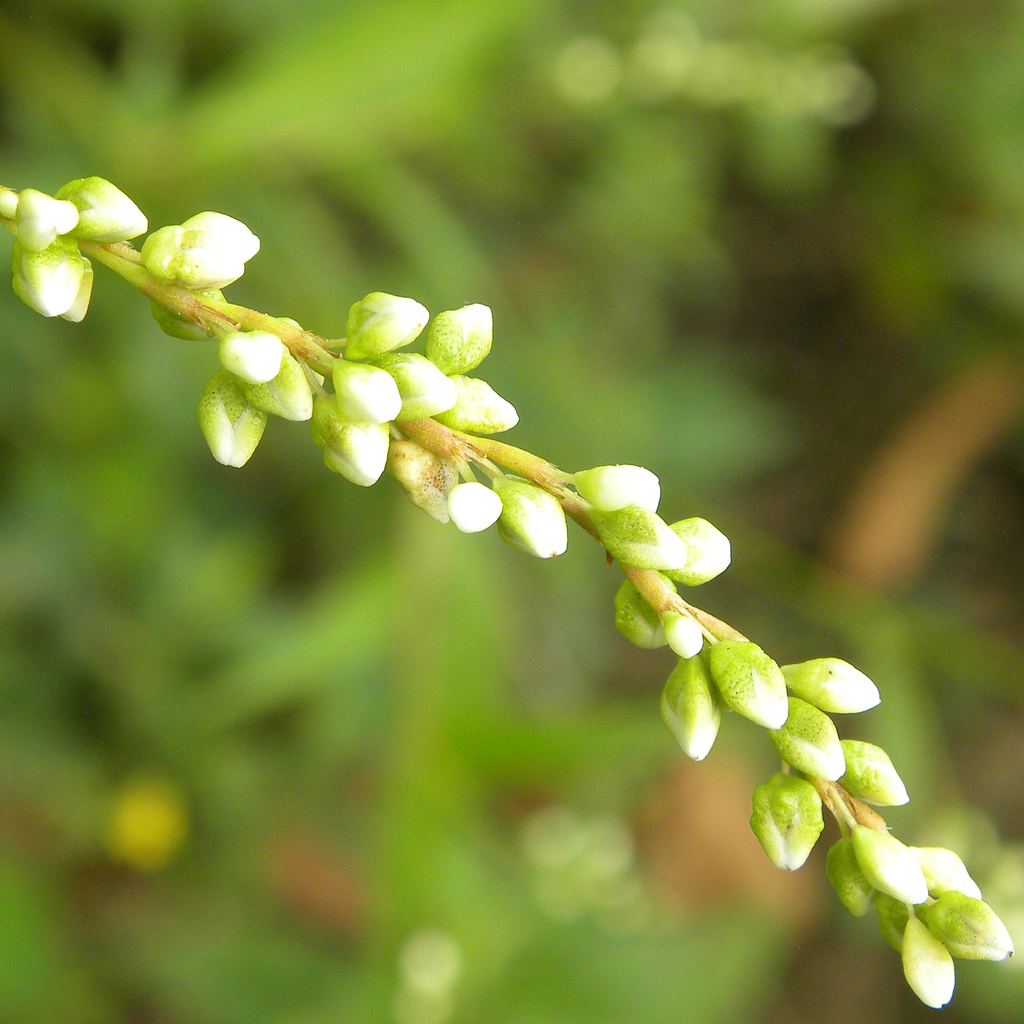
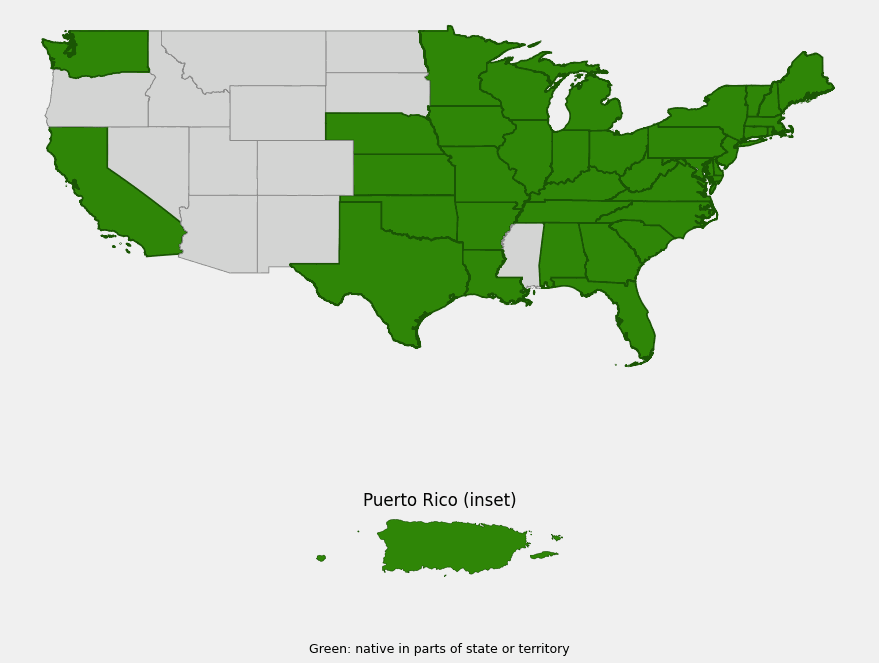
Polygonum punctatum, known as Dotted Smartweed (also called Persicaria punctata), is a native wetland plant of the buckwheat family (Polygonaceae). It grows in marshes, swamps, wet woods, ditches and the muddy shores of ponds, lakes and streams across most of the United States, from New England and the Great Lakes to Florida, Texas, California and Washington, as well as in Puerto Rico and much of Canada. It is also widespread in Central and South America and the Caribbean.
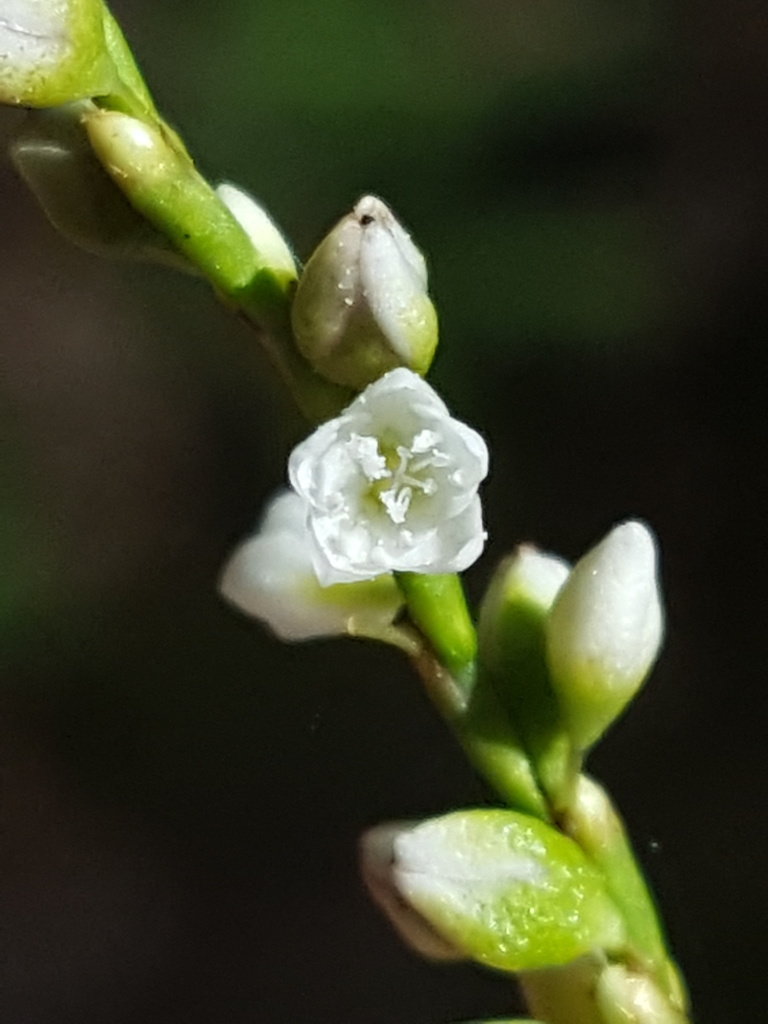
Dotted smartweed is an annual or short-lived perennial, usually 1 to 3 feet tall, with narrow, lance-shaped leaves and jointed stems wrapped at each node by a papery sheath. From midsummer to fall it bears thin, often nodding spikes of small greenish-white flowers. The leaves and flowers are dotted with tiny glands, which give the plant its names, and the foliage has a sharp, peppery taste that “smarts” in the mouth, the origin of the name smartweed.
Although it is too weedy for formal gardens, dotted smartweed is valuable in rain gardens, pond edges and wetland restorations. Its seeds are an important food for ducks, rails and songbirds, and its stems and roots help stabilize muddy shores. In Puerto Rico it grows along streams and in wet ground, and it is native there as well.
Identification
Dotted smartweed is one of several similar wetland smartweeds. Look for slender, interrupted spikes of small greenish-white flowers with tiny dark dots, narrow leaves with a peppery taste, and fringed sheaths at the leaf nodes.
Growth Habit
It grows as an upright or sprawling plant 1 to 3 feet tall, sometimes taller in rich wet soil. The smooth, green to reddish stems have swollen joints and often lie on the mud at the base, rooting at the lower nodes, so plants can form loose colonies. In the South it can live for more than one year; in the North it usually behaves as an annual.
Leaves
The leaves are alternate, narrow, lance-shaped, 2 to 6 inches long, with smooth edges and short stalks. They are dotted with small, translucent glands that can be seen when a leaf is held up to the light. Each leaf base is wrapped around the stem by a tubular sheath (ocrea) fringed at the top with short bristles. Chewing a leaf gives a peppery burning taste.
Flowers
From about July to October (longer in the South), the plant produces slender, erect to arching spikes 1 1/2 to 4 inches long at the stem tips and in the upper leaf axils. The small flowers are greenish white, sometimes tinged pink, and are often spaced apart along the spike so that it looks interrupted. The outer tepals are covered with tiny dark glandular dots.
Fruit & Seeds
Each flower produces one small, shiny, dark brown to black achene, about 1/8 inch long, either three-sided or lens-shaped, enclosed by the dried tepals. The seeds fall into water or mud and can float, which helps spread the plant along shores and streams.
Look-alikes
Water pepper (Persicaria hydropiper), a Eurasian plant that is common in the United States, is very similar and also peppery, but its seeds are dull rather than shiny and its spikes are usually nodding and denser at the tip. Swamp Smartweed (Polygonum hydropiperoides) has no glandular dots and no peppery taste. Water Smartweed (Polygonum amphibium) has thick, short, bright pink flower spikes and often floating leaves.
Safety
The peppery juice can irritate the mouth and sensitive skin, and large amounts are not recommended for people or animals. Livestock usually avoid it. It is not considered seriously toxic, but do not use it as a food or remedy without expert knowledge.
Quick Facts
| Scientific Name | Polygonum punctatum (syn. Persicaria punctata) |
| Family | Polygonaceae (buckwheat family) |
| Plant Type | Annual or short-lived perennial wetland herb |
| Mature Height | 1–3 ft (occasionally to 4 ft) |
| Mature Spread | 1–3 ft; can form colonies |
| Growth Rate | Fast |
| Sun Exposure | Full sun to partial shade |
| Water Needs | High; wet soil to shallow standing water |
| Soil Type | Mud, wet loam, sand, silt or muck |
| Soil pH | About 5.0–7.5 |
| Bloom Time | July–October (year-round in the tropics) |
| Flower Color | Greenish white, sometimes pink-tinged |
| Fall Color | Stems and leaves often redden |
| Fruit | Small, shiny black achene |
| Deer Resistant | Yes; peppery foliage is rarely browsed |
| USDA Hardiness Zones | 3–11 |
Native Range
Dotted smartweed is one of the most widespread native smartweeds of the Americas. USDA PLANTS lists it as native in the lower 48 states, Puerto Rico and Canada, and as introduced in Hawaii, which is not included here. It records the species from 36 states and Puerto Rico. In Canada it grows from British Columbia and Saskatchewan east through Manitoba, Ontario and Quebec to the Maritime provinces.
It is most common in the eastern and central United States, from Maine and Minnesota south to Florida and Texas, including the Gulf Coast, the Mississippi Valley, and the Edwards Plateau and South Texas, where it grows along streams and springs. In the West it is scattered in California and in Washington, where it occurs chiefly east of the Cascades. In Puerto Rico it grows in wet soils along streams and ditches.
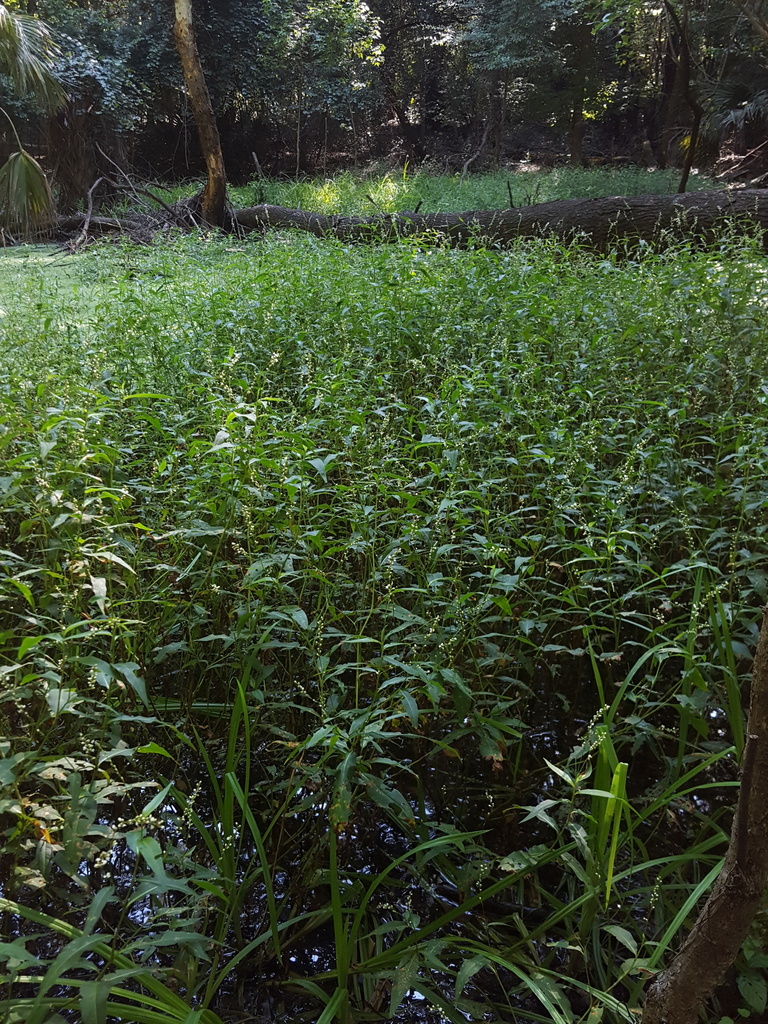
Habitats include freshwater marshes, swamps, wet woods and floodplains, the muddy margins of ponds, lakes, rivers and streams, wet ditches, wet meadows and seasonally flooded fields. It tolerates both sun and partial shade and can grow in shallow standing water.
📋 Regional plant lists featuring Dotted Smartweed: New York, Pennsylvania & Northern New Jersey · Idaho, Eastern Oregon & Eastern Washington · Ohio & Indiana · Michigan, Wisconsin & Eastern Minnesota · Kentucky & Tennessee · Nebraska, Kansas & Eastern Colorado · Connecticut, Massachusetts & Rhode Island · New Hampshire, Maine & Vermont · Maryland, Virginia & West Virginia · Delaware, Southern New Jersey & Long Island · Illinois, Iowa & Missouri · Alabama, Georgia & Mississippi · North & South Florida · Puerto Rico · North & South Carolina · Arkansas, Louisiana, Eastern Oklahoma & Eastern Texas · South & West Texas · North Dakota, South Dakota & Western Minnesota · California & Nevada
Growing & Care Guide
Dotted smartweed is rarely sold as a nursery plant, but seed is available from some native wetland seed suppliers, and it often arrives on its own in wet spots. Use it where you want a fast, wildlife-friendly cover on wet ground, not in tidy borders.
Light
Full sun to partial shade. It flowers most in sun but grows well along shaded streams and in wet woods.
Soil & Water
It needs constantly moist to wet soil and tolerates shallow standing water and periodic flooding. Mud, silt, sand and muck all work. It does not survive in dry garden soil.
Planting Tips
Sow seed in fall on wet mud or in shallow water at the edge of a pond, rain garden or wetland. Seeds need a cold, wet winter to germinate. Plant it with other native wetland plants such as pickerelweed, rice cut grass, rushes and beggarticks for a natural shoreline.
Pruning & Maintenance
No pruning is needed. It self-sows readily on wet ground; pull seedlings where they are not wanted. Leave the seed heads standing into winter for birds.
Propagation
Grow it from seed, sown outdoors in fall or after cold, moist stratification in the refrigerator for about two months. Stems also root easily at the nodes when laid in mud.
Landscape Uses
- Rain gardens: the wettest zone of a rain garden or bioswale
- Pond and stream edges: fast cover for muddy shores
- Wetland restoration: a native annual for seeding marshes and wet meadows
- Waterfowl habitat: seeds for ducks, rails and other wetland birds
- Erosion control: roots and rooting stems help hold mud and silt
Wildlife & Ecological Value
Smartweeds are among the most important native wildlife plants of wetlands, and dotted smartweed is one of the most widespread.
For Pollinators
The small flowers are visited by small bees, wasps, flies and butterflies, which take nectar from the open flowers in late summer and fall.
For Birds
Smartweed seeds are a major food for ducks, including mallards, wood ducks, teal and pintails, and for rails, sparrows, red-winged blackbirds and other songbirds. Wetland managers often encourage smartweeds in moist-soil management units for migrating waterfowl.
For Mammals
Muskrats and other small mammals eat the stems and seeds, and the dense stands give cover to small animals.
Ecosystem Role
Dotted smartweed quickly colonizes exposed mud when water levels drop, stabilizing the soil and producing large crops of seeds. Its stems shelter aquatic insects and small fish when flooded, and it is part of the native vegetation that filters runoff along streams and ponds.
Cultural & Historical Uses
The name “smartweed” comes from the burning, peppery taste of several species, which makes the mouth smart. Stephen Elliott described Polygonum punctatum from the southeastern United States in the early 1800s. Later botanists moved it, along with most smartweeds, to the genus Persicaria, so it is now often listed as Persicaria punctata. Both names are widely used.
Smartweeds were used in traditional medicine in the Americas, and a plate of the related Polygonum acre, now treated as part of this species, appears in Charles Millspaugh’s American Medicinal Plants (1887). These uses are historical; the plant is not a safe home remedy.
For duck hunters and wetland managers, smartweeds are among the most valued natural foods for waterfowl. Their seeds are rich in energy and last well in water through fall and winter.
Frequently Asked Questions
Is dotted smartweed native?
Yes. It is native across most of the United States, Puerto Rico and southern Canada, and in much of Latin America. USDA lists it as introduced only in Hawaii.
Why is it called dotted smartweed?
Its leaves and flower parts are covered with tiny glandular dots, and the peppery juice “smarts” in the mouth.
Is it the same as Persicaria punctata?
Yes. Polygonum punctatum and Persicaria punctata are two names for the same plant. Many botanists now place smartweeds in Persicaria.
Is it good for wildlife?
Yes. Its seeds are an important food for ducks and other wetland birds, and its flowers feed small pollinators.
How is it different from water pepper?
Water pepper is a similar, peppery plant from Eurasia. Dotted smartweed has shiny seeds and more open, often upright flower spikes.

Looking for a nursery that carries Dotted Smartweed?
Browse our native plant nursery directory: Alabama & Arkansas · California · Connecticut, Delaware, Florida & Georgia · Illinois, Indiana, Iowa & Kansas · Kentucky, Louisiana, Maine, Maryland, Massachusetts, Michigan, Minnesota & Missouri · Nebraska, New Hampshire, New Jersey, New York, North Carolina, Ohio & Oklahoma · Pennsylvania, Rhode Island, South Carolina, Tennessee, Texas, Vermont & Virginia · Washington · West Virginia & Wisconsin