
Desert Yellow Fleabane (Erigeron linearis)
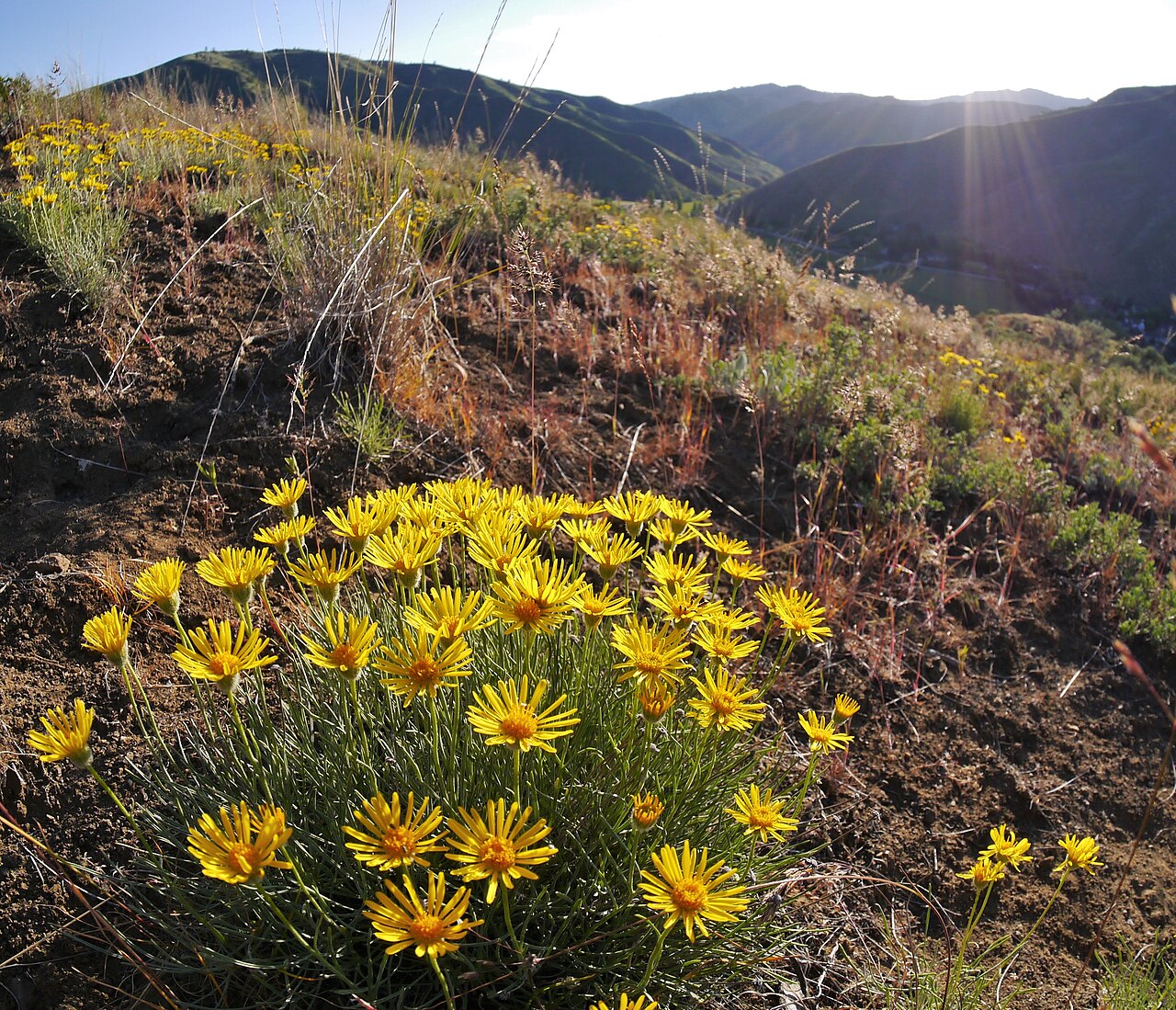
Erigeron linearis, known as Desert Yellow Fleabane, desert yellow daisy or lineleaf fleabane, is a low, tufted perennial in the aster family (Asteraceae). It forms a dense cushion of narrow, gray-green leaves only a few inches high, and in spring it covers itself with bright yellow daisies about an inch across on short stems. It is one of the few fleabanes with yellow rather than white, pink or purple rays.
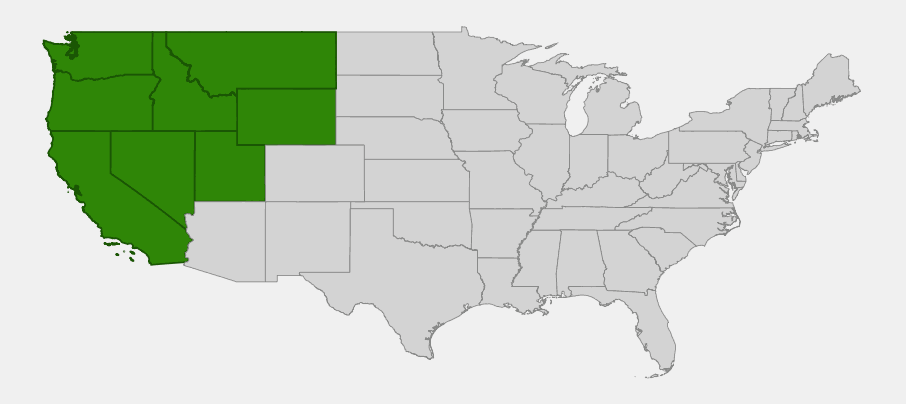
Desert yellow fleabane is native to the dry interior of the Pacific Northwest and the northern Great Basin, from southern British Columbia south through eastern Washington and Oregon, Idaho and western Montana to northeastern California, northern Nevada, northern Utah and western Wyoming. It grows on dry, rocky or sandy ground in sagebrush steppe, scablands, open ridges and the edges of open pine woods.
It blooms from April to July and lights up bare, rocky slopes when the surrounding bunchgrasses are still green. For gardeners in the dry West it is an excellent small plant for rock gardens, troughs and xeriscapes, needing only sun, sharp drainage and very little water.
Identification
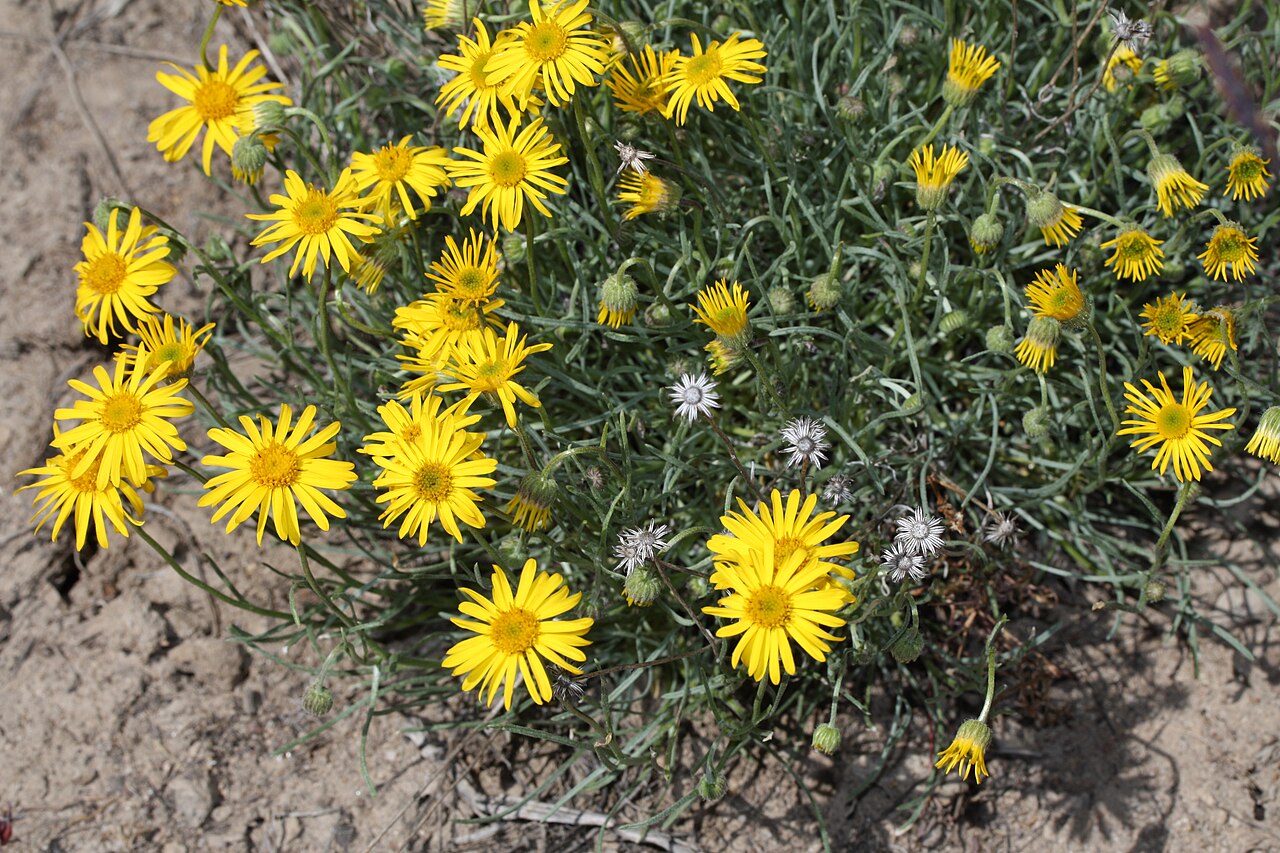
Look for a low cushion of very narrow, gray-green leaves topped with yellow daisies, each with many slender yellow rays around a yellow center, on dry, open ground east of the Cascades.
Growth Habit
Desert yellow fleabane grows from a stout taproot and a branched, woody base (caudex), forming a tight tuft or cushion. Plants are usually 4 to 10 inches tall in flower and 4 to 12 inches across. Old plants can form broad mats on rocky ground.
Leaves
The leaves are mostly basal and very narrow, almost grass-like, 1 to 3 inches long and less than 1/8 inch wide. They are gray-green and covered with fine, flat-lying hairs, which reflect sunlight and help the plant save water. The species name linearis, “linear,” refers to these long, narrow leaves.
Flowers
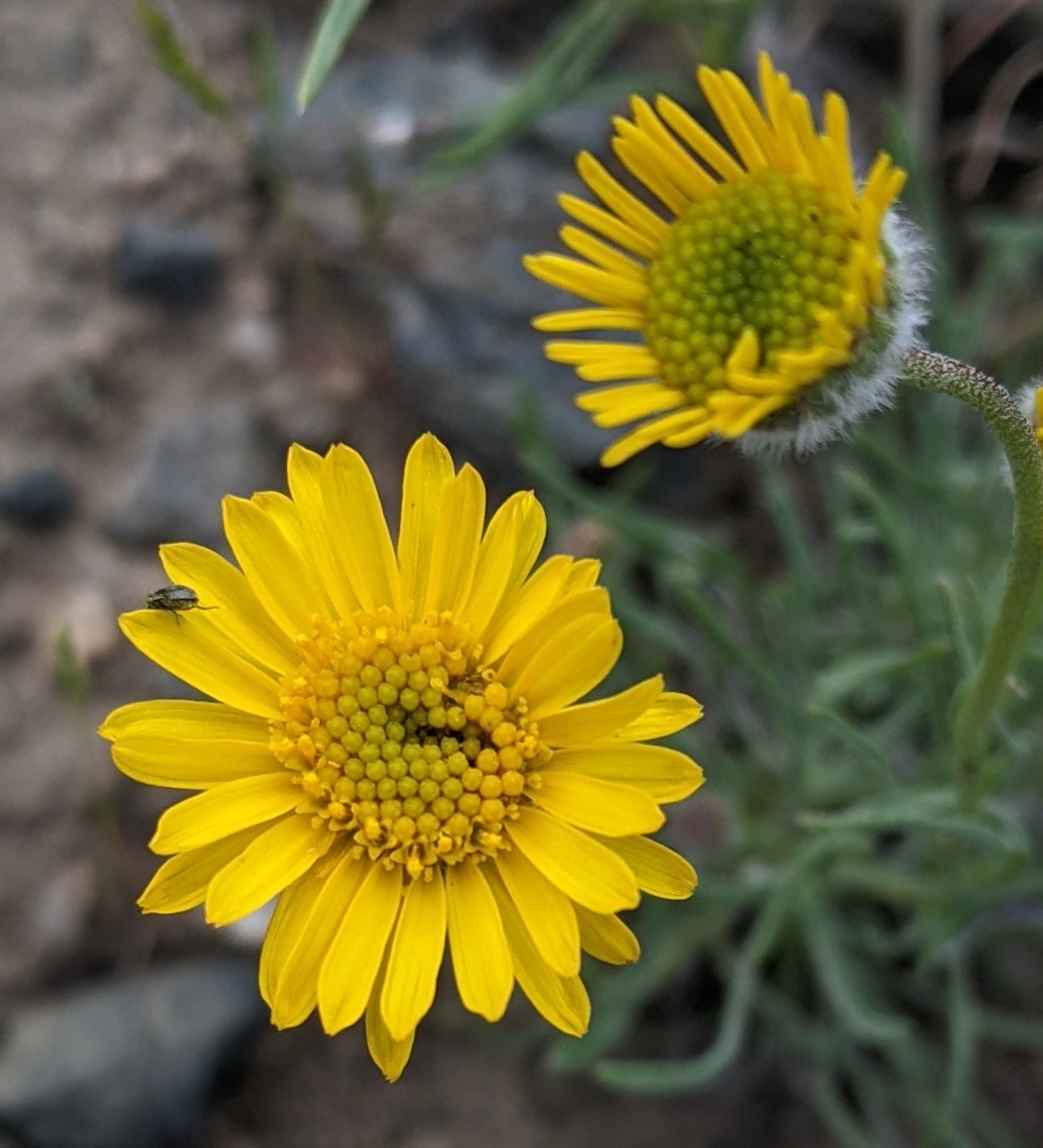
Each flowering stem carries a single flower head (rarely two) about 3/4 to 1 1/4 inches across. The head has 15 to 35 or more narrow, bright yellow rays around a yellow disc. The bracts below the head are hairy. Flowering runs from April to July, depending on elevation.
Fruit & Seeds
The small seeds (achenes) have a tuft of fine bristles (pappus) and are carried away by wind in early summer, leaving pale, fluffy seed heads.
Look-alikes
Cut-leaf daisy (Erigeron compositus) often grows nearby, but it has white, pink or bluish rays (or none) and finely divided leaves. Woolly sunflower (Eriophyllum lanatum) has yellow daisies but broader, white-woolly leaves and fewer, wider rays. Stemless mock goldenweed (Stenotus acaulis) forms similar yellow-flowered cushions, but its leaves are broader and it has fewer rays per head.
Quick Facts
| Scientific Name | Erigeron linearis |
| Family | Asteraceae (aster family) |
| Plant Type | Low, tufted herbaceous perennial |
| Mature Height | 4–10 in |
| Mature Spread | 4–12 in |
| Growth Rate | Slow |
| Sun Exposure | Full sun |
| Water Needs | Very low; very drought tolerant |
| Soil Type | Rocky, gravelly, sandy or thin clay; well drained |
| Soil pH | Neutral to alkaline (about 6.5–8.5) |
| Bloom Time | April–July |
| Flower Color | Bright yellow |
| Fall Color | None notable; foliage stays gray-green |
| Fruit | Small achenes with fluffy bristles |
| Deer Resistant | Moderately |
| USDA Hardiness Zones | 4–8 |
Native Range
USDA PLANTS lists desert yellow fleabane as native in California, Idaho, Montana, Nevada, Oregon, Utah, Washington and Wyoming, and in British Columbia in Canada.
It is most common east of the Cascades in Washington and Oregon, on the Columbia Plateau and in the foothills of the Wenatchee, Blue and Ochoco mountains, and across southern and central Idaho. It reaches its southern and eastern edges in northeastern California, northern Nevada and Utah, western Montana and western Wyoming.
It grows on dry, open, rocky or sandy ground: sagebrush and bunchgrass steppe, basalt scablands, lithosols, rocky ridges and talus, and openings in ponderosa pine and juniper woodland, from low valleys to mountain slopes.
📋 Regional plant lists featuring Desert Yellow Fleabane: Idaho, Eastern Oregon & Eastern Washington · Montana & Wyoming · Utah & Western Colorado · California & Nevada
Growing & Care Guide
Desert yellow fleabane is a small, long-lived perennial for dry gardens in the interior West. It is grown by some native plant nurseries and conservation nurseries in Washington, Oregon and Idaho, and it is easy to raise from seed.
Light
Full sun. It will not flower well or stay compact in shade.
Soil & Water
It needs fast-draining, lean soil: gravel, rocky soil, sand or thin clay over rock. Water seedlings until they are established, then water only occasionally or not at all. Overwatering and rich soil cause rot and floppy growth. It tolerates cold winters well as long as the soil drains.
Planting Tips
Use it in a rock garden, crevice garden, trough, gravel bed or along a dry path, where its small size can be appreciated. Plant it with other low steppe plants such as buckwheats, phlox and small bunchgrasses, spacing plants about 8 to 12 inches apart.
Pruning & Maintenance
Very little is needed. Remove spent flower stems after seeding if you want a tidier look. Keep tall, aggressive plants and weeds away, since it competes poorly with them.
Propagation
Grow it from seed sown in fall outdoors or after a few weeks of cold, moist stratification. Seedlings often bloom in their second year. Conservation nurseries grow it from wild-collected native seed for steppe restoration projects.
Landscape Uses
- Rock and crevice gardens: a compact cushion of yellow daisies
- Xeriscapes: thrives on very little water once established
- Pollinator gardens: spring flowers for native bees and butterflies
- Steppe restoration: a native forb of sagebrush and bunchgrass communities
- Troughs and containers: small enough for alpine-style plantings
Wildlife & Ecological Value
Desert yellow fleabane is one of the spring wildflowers that feed insects across the sagebrush steppe and scablands of the interior Northwest.
For Pollinators
The yellow flower heads attract native bees, flower flies, beetles and butterflies, which visit for nectar and pollen. Its early bloom is valuable in dry habitats where few flowers are open after early summer.
For Birds
Sage-grouse and other steppe birds depend on native forbs and the insects they support in spring, and wildflowers like this one are part of that habitat. Small birds may eat the seeds.
For Mammals
Deer, pronghorn and small mammals may graze the leaves and flowers lightly. Its low, tough cushions withstand light grazing.
Ecosystem Role
As a long-lived, deep-rooted cushion plant, desert yellow fleabane helps hold thin, rocky soils and adds to the diversity of native forbs in sagebrush steppe, a habitat threatened by invasive annual grasses and fire.
Cultural & Historical Uses
The genus name Erigeron comes from Greek words meaning “early” and “old man,” perhaps referring to the early flowers and the white, fluffy seed heads. The name fleabane comes from an old belief that dried plants of the genus repelled fleas.
Most of the more than 150 North American fleabanes have white, pink, lavender or blue rays, which makes the bright yellow rays of desert yellow fleabane and a few close relatives stand out.
Desert yellow fleabane is a favorite of rock gardeners in the Northwest, and it is part of the native seed mixes used in restoration of sagebrush steppe and scabland habitats in Washington and Oregon.
Frequently Asked Questions
Are there yellow fleabanes?
Yes. Desert yellow fleabane is one of the few fleabanes with yellow rays. Most fleabanes have white, pink, lavender or blue rays.
Where does desert yellow fleabane grow?
On dry, rocky and sandy ground in sagebrush steppe and scablands, mainly east of the Cascades in Washington and Oregon and across Idaho, south to northeastern California, Nevada and Utah and east to Montana and Wyoming.
When does desert yellow fleabane bloom?
From April to July, earliest at low elevations and later in the mountains.
Can I grow desert yellow fleabane in my garden?
Yes, in full sun and very well-drained, lean soil with little water. It is ideal for rock gardens, crevice gardens and xeriscapes in the interior West.
Is desert yellow fleabane a perennial?
Yes. It is a long-lived perennial with a deep taproot and a woody base that forms a small cushion.

Looking for a nursery that carries Desert Yellow Fleabane?
Browse our native plant nursery directory: California · Idaho · Montana · Nevada · Oregon · Utah · Washington · Wyoming

