Cut-leaf Daisy (Erigeron compositus)
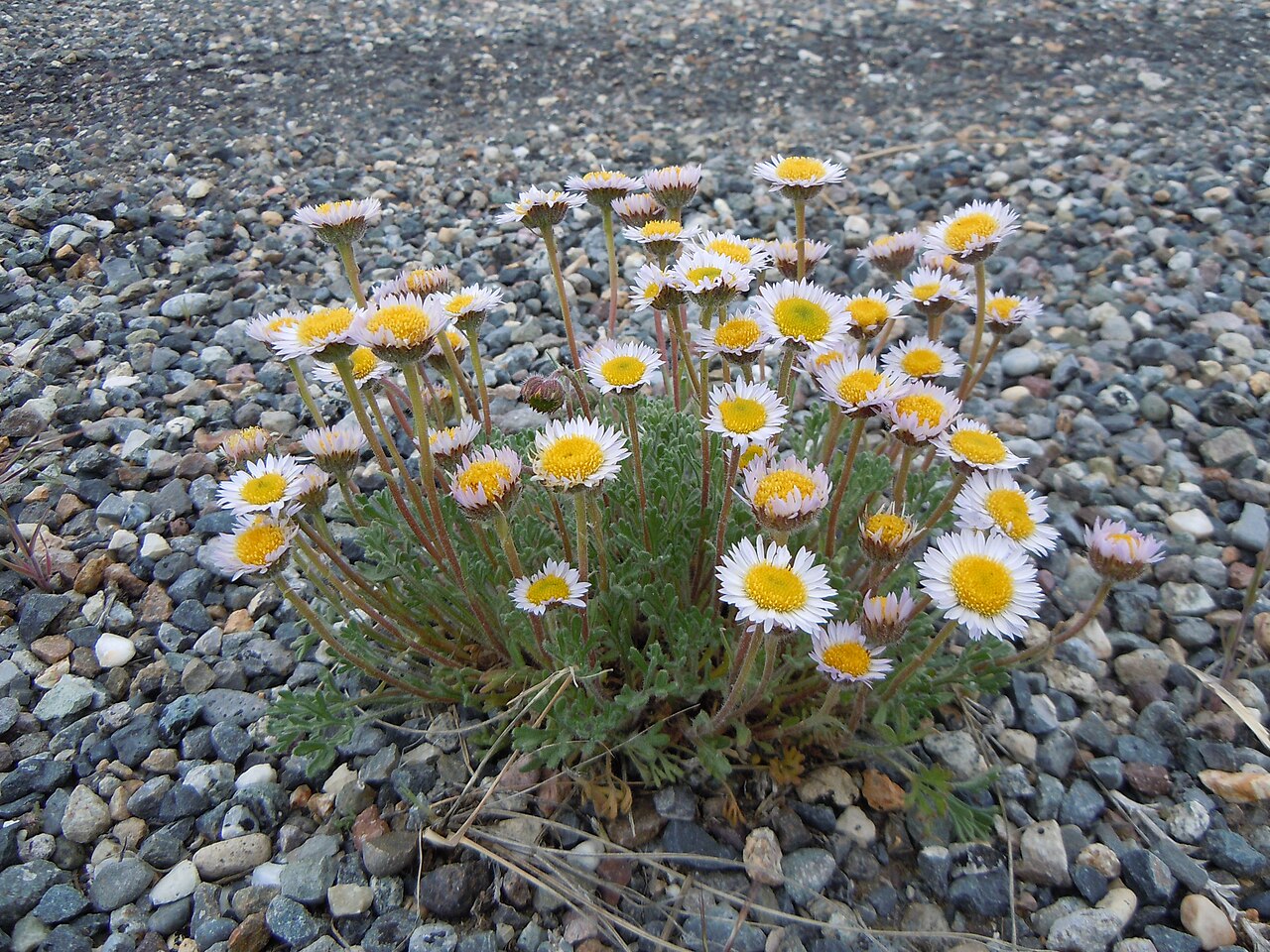
Cut-leaf daisy is a small western and northern native with the proportions of a rock-garden plant: a low cushion of divided leaves carrying white, pale lavender, or occasionally pink daisy heads. Its scientific name is Erigeron compositus. Look closely at the foliage before identifying it; the finely divided basal leaves are much more informative than a distant view of the flowers. It belongs to the aster family, not to the unrelated garden plants sometimes sold under the broad name alpine daisy.
This is an excellent plant to consider for sunny gravel gardens, rocky borders, and open slopes within its native region. It is not a substitute for a tall meadow daisy and is easily hidden by larger grasses or dense ground covers. In the Idaho, eastern Oregon, and eastern Washington list, the traditional six-inch height describes a useful small garden form. The species as a whole is variable, commonly about 2–6 inches tall and sometimes approaching 10 inches in flower.
Its apparent delicacy is deceptive. Wild populations occupy exposed gravel, mountain meadows, and cold northern landscapes, but a plant adapted to those sites still needs the right garden conditions. Good drainage, space around the crown, and a source suited to your climate matter more than rich soil or frequent fertilizer. This guide treats the species broadly; it does not assume that a high-alpine seed source and a low-elevation Idaho seed source will behave identically in cultivation.
Identification
Crown, roots and flowering stems
Cut-leaf daisy is a perennial with a taproot and a persistent, often branching crown. Old leaf bases remain around the short, thickened crown branches. Flowers rise on slender stems that are largely leafless compared with the conspicuous basal foliage. The plant forms a tuft or low cushion rather than a tall leafy stalk. Avoid digging up wild plants to inspect the root: the visible foliage and flower structure, location, and a regional key normally supply the information needed for identification.
Leaves
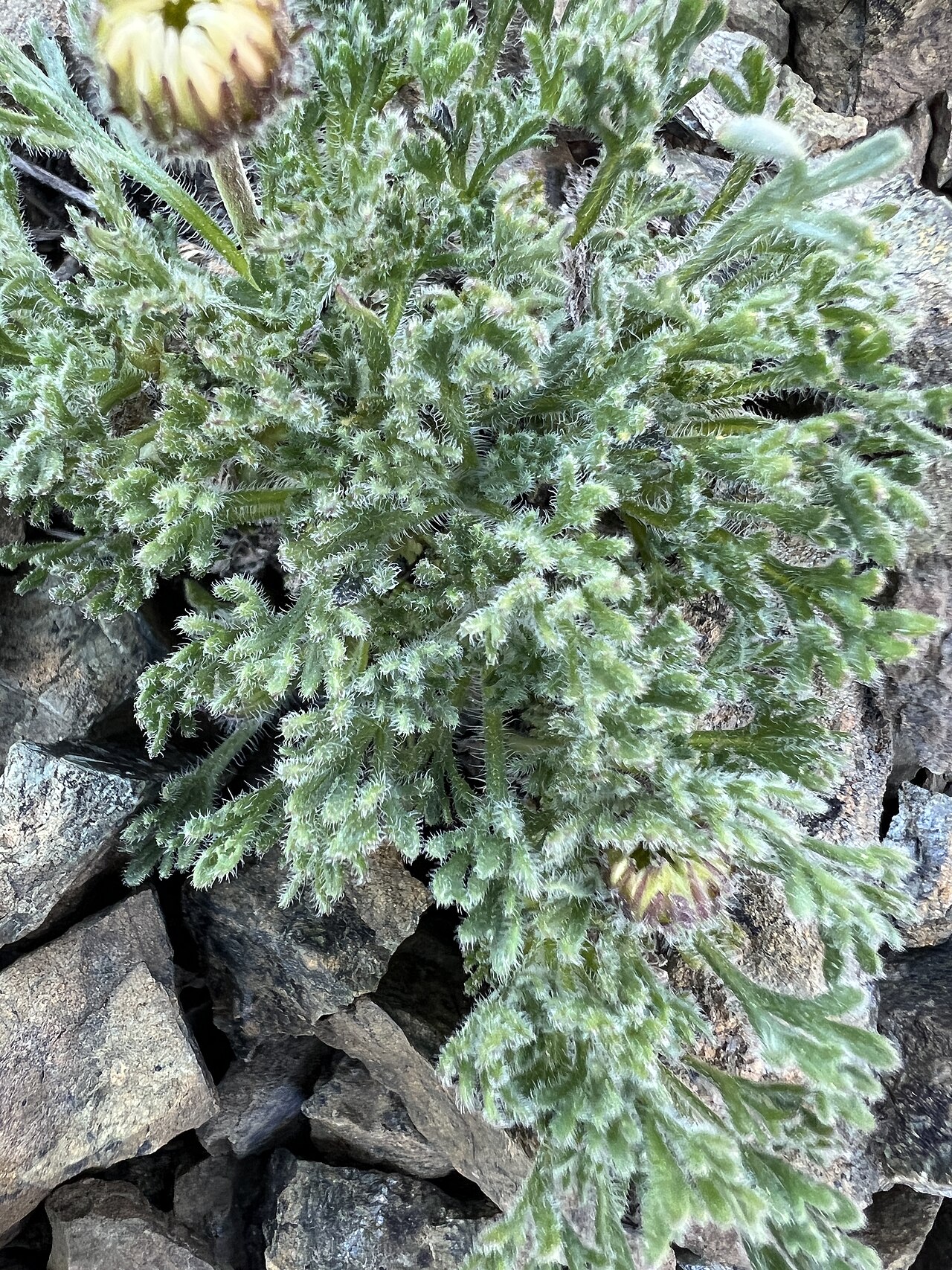
Most leaves sit near the ground. Their blades divide into three main portions or into further narrow divisions, giving a fernlike or hand-shaped appearance. Small stem leaves, when present, may be simple and linear. Hairiness varies, and some plants have glandular hairs. The combination of divided basal leaves and solitary daisy heads is important. A white flower with undivided, broad leaves should not be assigned to this species just because a nearby nursery label says fleabane.
Flowers
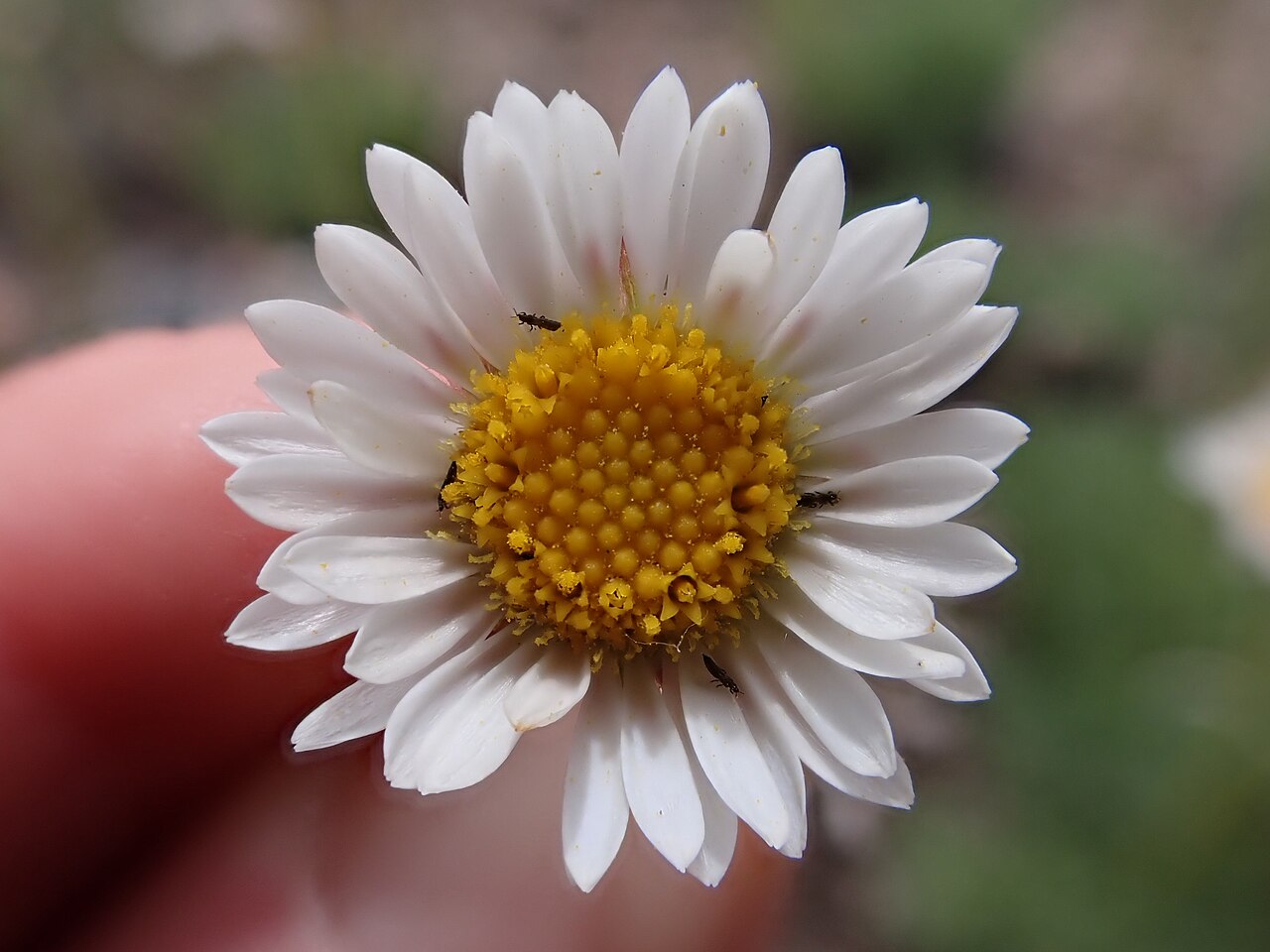
Each apparent daisy is a composite head containing numerous small florets. Yellow disk florets occupy the center, with white or pale-colored ray florets around the edge in many populations. Some plants lack conspicuous rays and look like small yellow buttons; this variation is documented within the species. Heads are borne singly on their stalks. Flowering varies with snowmelt and elevation, so spring in an Idaho foothill garden and summer on a mountain are both reasonable seasons.
Fruit, seed and similar species
After flowering, small dry fruits mature with a tuft of bristles that helps their movement. Several fruits can ripen at different times within a planting. Do not identify a seedling from its first seed leaves alone: wait for the divided true leaves. Other Erigeron species, including compact alpine forms, require a regional key where ranges overlap. Historical names such as Erigeron compositus var. discoideus or var. glabratus describe variation included in this species by Flora of North America, not automatic reasons to create separate garden identities.
Quick Facts
| Scientific Name | Erigeron compositus |
| Family | Asteraceae (aster family) |
| Plant Type | Low, taprooted herbaceous perennial |
| Mature Height | Usually 2–6 inches; flowering stems occasionally to about 10 inches |
| Mature Spread | Low tuft or cushion; allow roughly 6–12 inches as an initial garden spacing, then adjust to stock |
| Growth Rate | Seedlings can establish readily with suitable conditions; adult size varies by provenance |
| Sun Exposure | Full sun; open conditions are preferable to dense shade |
| Water Needs | Dry to moderately moist during establishment; well-drained and drought-tolerant once rooted |
| Soil Type | Gravelly, sandy or rocky soils; drainage more important than high fertility |
| Soil pH | Variable; occurs on several rock types, including calcareous substrates |
| Bloom Time | Spring into summer, strongly dependent on elevation and snowmelt |
| Flower Color | Usually white, sometimes pale pink or lavender, with yellow centers; rayless forms occur |
| Fall Color | Not a showy autumn-color plant |
| Fruit | Small dry fruits with bristly pappus |
| Deer Resistant | Not deer-proof; browsing has been documented |
| USDA Hardiness Zones | Cold hardy to zones 3–4 in horticultural references; choose regionally adapted stock |
Native Range
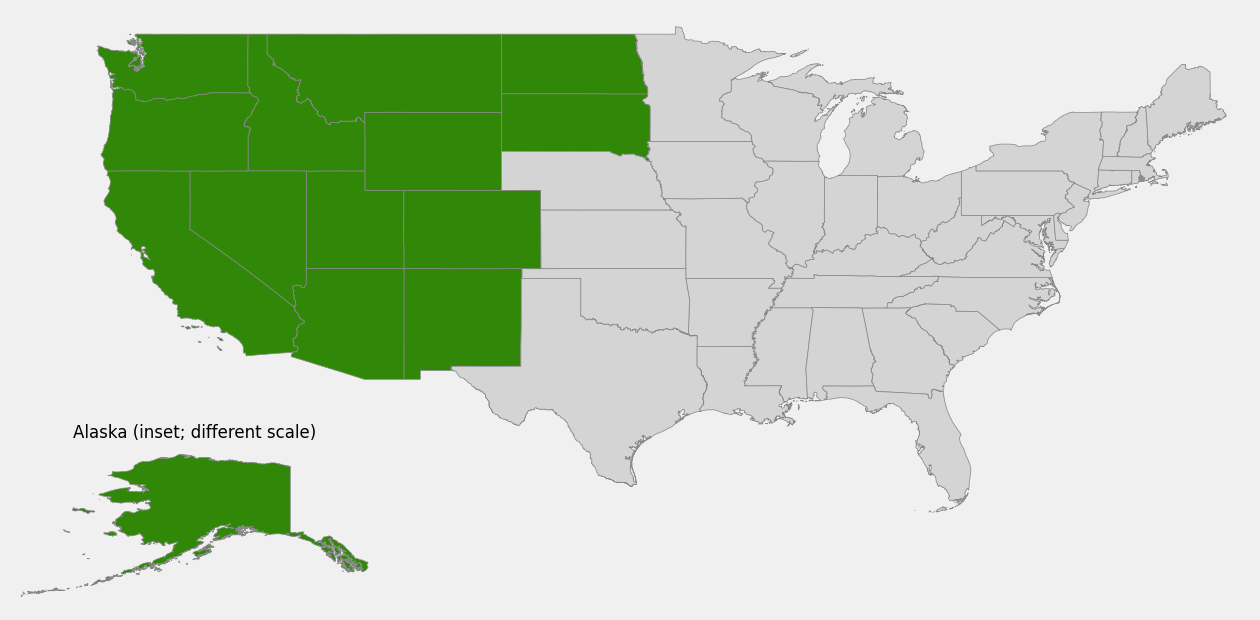
Cut-leaf daisy has a much wider native distribution than its small size suggests. It occurs across Alaska and much of the western United States, as well as in northern Canada, Greenland, and the Russian Far East. Within the contiguous United States it is associated with western mountains, interior grasslands, and exposed rocky ground. It is native in the Idaho, Oregon, and Washington region represented by this plant list, but that does not mean it grows in every county or every habitat there.
The state map combines the U.S. distribution given by Kew with New Mexico, which is explicitly included in the USDA Forest Service species review. Kew lists Arizona but not New Mexico; those differences are retained here as source differences rather than interpreted as evidence of a continuous southern range. State shading is a coarse orientation tool. A specimen-based local flora is a better guide for choosing material for a particular restoration site, especially near a distribution boundary.
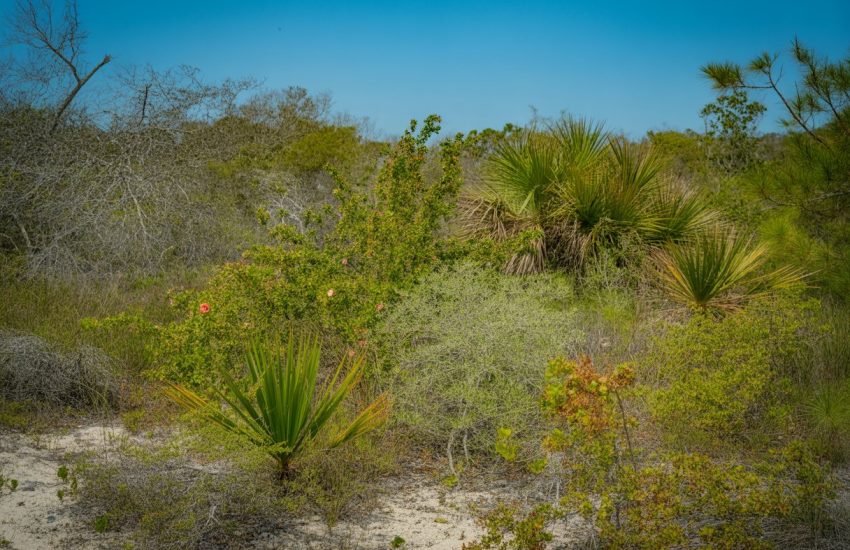
Open conditions recur across its varied habitats. Plants grow in sagebrush and bunchgrass communities, rocky forest openings, disturbed gravel, and alpine settings. A single elevation band would be misleading: northern populations can occur much lower than southern mountain populations. The Forest Service review describes mountain occurrences reaching about 14,100 feet, while documenting substantially lower sites in Alaska. Matching the habitat and climate of the seed source is therefore as important as matching the state name.
📋 Regional plant list: Idaho, Eastern Oregon and Eastern Washington
Growing & Care Guide
Light
Choose an open site receiving direct sun for much of the day. A small plant can disappear surprisingly quickly beneath taller neighbors, even when the bed itself is described as sunny. Position it near the front of a border or beside a stone where its crown remains visible. Sparse overhead tree cover may resemble some wild habitats, but dense understory shade is not a good default for a garden planting. Judge the site in midsummer, when neighboring perennials and shrubs are fully leafed out.
Soil and water
Drainage is the first priority. A rocky or gravelly bed with rooting depth below the surface suits this species better than a shallow pocket that alternates between standing water and complete desiccation. The Forest Service review notes horticultural guidance for at least about 10 inches of rooting depth. Water new plugs thoroughly and then check the actual root zone before repeating. Once rooted, plants are tolerant of dry conditions, but a newly transplanted seedling has not yet acquired the resilience of a mature wild plant.
Planting tips
Use nursery-propagated plants or responsibly produced seed. Plant a plug at its original crown level and settle the soil around its roots without burying the basal leaves. Keep neighboring mulch from covering the crown. Spring planting after the soil is workable or cool-season planting appropriate to the local climate gives roots time to grow before severe heat or frozen ground. If using several plants, begin with enough space to see each cushion and adjust as their actual mature spread becomes apparent.
Pruning and maintenance
No heavy pruning is needed. Remove dead flower stalks selectively if a tidier appearance is wanted, leaving some heads to mature when seed is desired. Avoid shearing away the low crown or treating the planting as a lawn. Hand-remove competing annual weeds while they are small, especially seedlings rooted close to the daisy. A low-growing native is not necessarily resistant to trampling: place stepping stones so that routine garden access does not cross the plant.
Propagation
The tiny seed is best surface-sown on a well-drained medium rather than buried deeply. Research summarized by the Forest Service found good germination in light and warm conditions near 70°F, with responses affected by seed age and source. Some lots germinate without cold stratification; a universal requirement for several months of chilling would be inaccurate. Keep the surface from drying during germination, then gradually let the medium dry somewhat between waterings as seedlings develop. Label seed origin and sowing date so that a slow lot is not confused with a failed one.
Troubleshooting and provenance
A lush but weak plant often calls for reassessing light, irrigation, and competition before adding fertilizer. A crown that declines during a wet period needs a drainage check, not automatically more water. In very hot lowland gardens, source selection is particularly important: high-mountain stock may not perform like stock from an interior grassland. For restoration, use the appropriate seed-transfer guidance and local expertise rather than treating the broad species range as permission to move any population anywhere.
Landscape Uses
- A low foreground plant in a sunny native rock garden.
- Small groups between stones where roots have access to deeper, draining soil.
- Open dry-meadow edges with low-growing, locally appropriate companions.
- A fine-textured contrast to bunchgrasses without placing it inside dense grass crowns.
- Locally sourced material in approved restoration plantings on suitable open sites.
Wildlife & Ecological Value
For pollinators
Bees visit the flower heads, and bumblebee use is documented in subalpine Utah. The species includes both sexual and apomictic populations; those reproductive differences do not make its flowers irrelevant to insects. Keeping a group of plants and avoiding insecticide sprays on open flowers gives visitors a useful patch rather than an isolated bloom. Pair it with later-flowering natives so that the garden does not offer food only during this daisy’s relatively short local season.
For birds
The Forest Service review documents gray-crowned rosy finches eating cut-leaf daisy seed in the Sierra Nevada. That is a specific observation, not a promise that the same bird will appear in a lowland garden. Leaving some seed heads also maintains a more natural seasonal structure. The plant is too small to function as nesting cover by itself; combine it with other appropriate native vegetation when planning a broader habitat garden.
For mammals
Browsing has been recorded, including use by mountain goats and small amounts in mule deer diets. It should therefore not be sold as guaranteed deer-resistant. Its modest biomass limits its role as forage compared with larger shrubs and grasses. Protect young garden plugs if rabbits or deer are actively removing them, and assess whether the damage is browsing or physical disturbance before choosing a response.
Ecosystem role
Cut-leaf daisy is one of the small forbs that adds diversity to open western landscapes. It can occur on disturbed rocky ground and in later-stage vegetation where openings remain. Those observations support its consideration in suitable revegetation work but do not make it a universal erosion-control solution. Retaining intact native plant communities remains preferable to disturbing a site and expecting a few planted daisies to replace all of its ecological functions.
Cultural & Historical Uses
The Forest Service review traces a Lewis and Clark collection to 1805 near the Clearwater River in Idaho. That collecting history connects this small plant directly to the interior Northwest. The botanical name was published by Frederick Pursh in the early nineteenth century. Botanical documentation records when a scientific collection was made; it does not imply that the plant was previously unknown to the Indigenous peoples of its range.
The same review summarizes documented medicinal uses by the Nlaka’pamux, described as Thompson Indians in older source literature. Those records are historical and culturally specific. They are not evidence for a universal Indigenous practice, and this garden guide does not turn them into instructions for self-treatment. Responsible interpretation keeps the community and source attached to the information rather than repeating a generic medicinal claim.
Today the plant is valued in native horticulture and in research on reproduction, ecology, and restoration. Gardeners can contribute by buying propagated material with a known origin, keeping records of how it performs, and avoiding removal of wild cushions. A small alpine or steppe plant may have survived many years in a place where replacing it is difficult, even though a nursery can raise suitable stock from seed.
Frequently Asked Questions
Is cut-leaf daisy the same as a Shasta daisy?
No. Erigeron compositus is a low native fleabane with divided basal foliage. Shasta daisies are different garden plants in Leucanthemum. Flower color alone is not a reliable identification.
Why are there no white petals on my plant?
Some populations have inconspicuous or absent ray florets. Check the divided leaves, crown, locality and other features before assuming it is a different species or a sick plant.
Does it need winter stratification?
Not all seed lots do. Published germination work reports successful warm germination, with age and source influencing results. Follow the supplier’s protocol for the particular lot and sow shallowly.
Can I plant it in a six-inch-deep trough?
A very shallow container may restrict the taproot and dry abruptly. Provide a deeper, freely draining rooting space and monitor moisture carefully. Wild drought tolerance is not the same as unlimited tolerance of shallow containers.
Will it spread like an invasive lawn weed?
It can produce seedlings in suitable open ground, but it is not a turf-forming lawn substitute. Within its native range, allow useful seedlings where there is space and remove extras selectively rather than mowing the crown.
Sources & Further Reading
- USDA Forest Service: Cutleaf daisy species review, Gucker and Shaw (2024)
- University of Washington Burke Herbarium: Erigeron compositus
- Kew Plants of the World Online: taxonomy and distribution
Find Native Plants
Ask growers about nursery propagation and regional provenance. Browse our ID native plant nurseries, OR native plant nurseries, WA native plant nurseries directory for suppliers. Explore the native nursery finder.