Moisture-loving Plants for Wetlands Essential Species and Growing Tips
Last updated: November 22, 2026
Wetlands need plants that love consistently wet or even saturated soil. Moisture-loving plants for wetlands are those that thrive in waterlogged spaces and help keep the ecosystem ticking.
These plants filter water, prevent erosion, and provide habitat for wildlife.
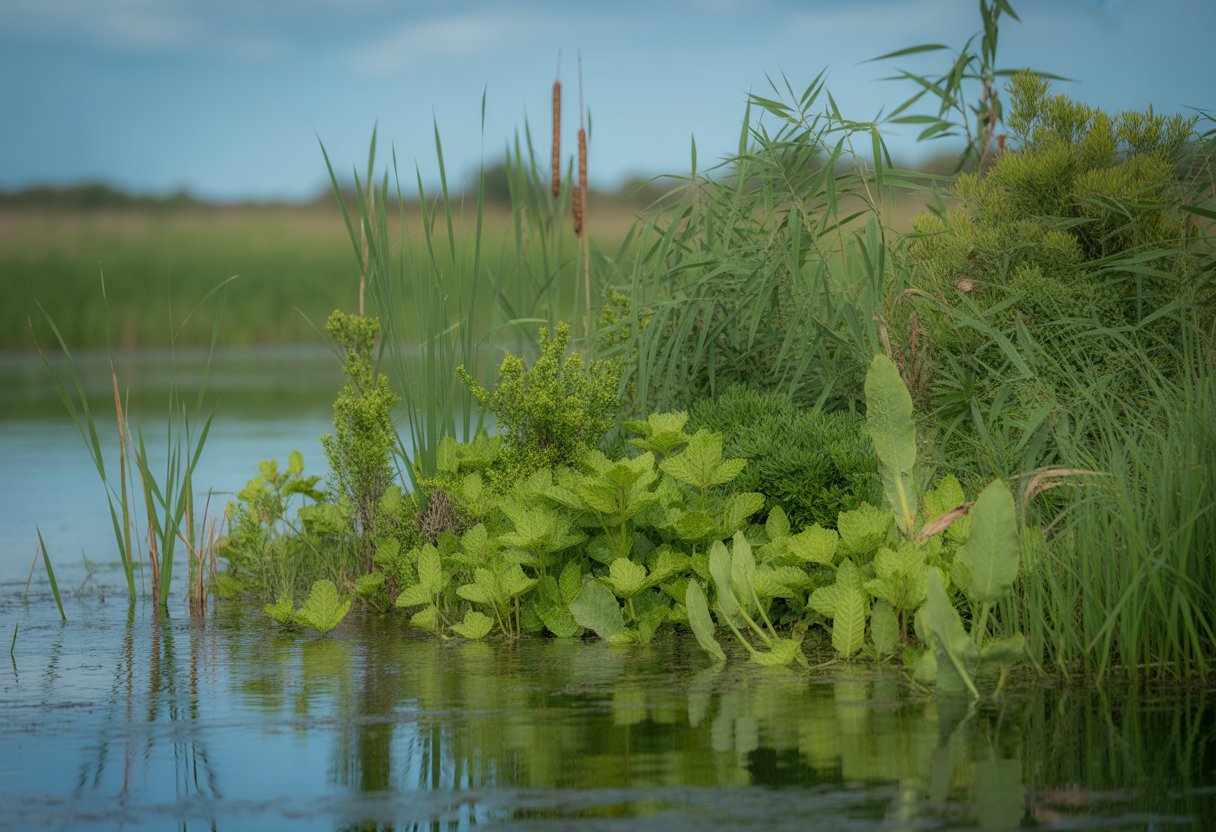
Picking the right wetland plants depends on things like water depth, soil, and sunlight. Cattails, sedges, and marsh marigolds are all solid choices, since they’re built for these soggy, sometimes tricky places.
Knowing what they need lets gardeners and conservation folks help wetlands bounce back and stay diverse.
Understanding Wetlands and Their Unique Environment
Wetlands are always changing, shaped by water, soil, and plants. Some spots have standing water, others drain slowly, and some just have wet soils—these factors decide which plants can make it.
Water flow (or lack of it) gives a wetland its personality.
Types of Wetlands
There are marshes, swamps, bogs, and fens—each one with its own quirks. Marshes are full of grasses and reeds, usually with slow or still water.
Swamps have trees and shrubs, and they stay wet for ages.
Bogs and fens both have peat soils, but bogs are acidic and not very rich in nutrients. Fens are a bit friendlier, with more minerals and less acid.
If you know the wetland type, it’s way easier to pick moisture-loving plants that’ll actually thrive.
Hydrology and Drainage Patterns
Hydrology is basically how water moves through a wetland. It shapes soil moisture and what can grow there.
Most wetlands don’t drain well, so water just hangs around, making the ground perfect for certain plants.
Water comes and goes with the seasons—from rain, groundwater, or runoff. How water drains affects how much oxygen gets into the soil, which in turn matters for roots and nutrients.
Flooding and Water Management
Flooding can hit wetlands at random or just when the seasons change. Some plants have cool tricks, like aerenchyma tissues, to survive with their roots underwater.
People sometimes manage water levels—flooding or draining on purpose—to keep wetlands healthy. It’s a balancing act: too much or too little water can throw things off for moisture-loving plants.
Top Native Moisture-Loving Plants for Wetlands
Wetland plants need to handle wet feet and changing water levels. Picking species that naturally thrive in these conditions helps wetlands stay healthy.
Trees, shrubs, and perennials all have a part to play in keeping wetland habitats going.
Trees for Wetland Habitats
Bald cypress and red maple are go-to native trees for wetlands. Bald cypress deals with long-term flooding and grows those funky “knees” for getting air.
Red maple is super adaptable, handling all sorts of wet spots and giving shade and shelter.
Sweetbay magnolia loves swampy soils and has sweet-smelling white flowers that pollinators dig. Blackgum handles wet soils well and puts on a show with its fall leaves.
These trees help keep soil in place, clean up water, and create homes for wildlife.
Showy Shrubs and Small Trees
If you want shrubs that can handle wet feet, try winterberry and inkberry. Both are evergreen and do well in wet, acidic soil.
Winterberry’s bright red berries are a hit with birds in winter. Inkberry keeps its leaves all year and makes great cover for small critters.
Possumhaw stands out with its colorful berries and doesn’t mind soggy ground. Elderberry is another winner for wetlands, drawing in pollinators with bunches of white flowers.
These shrubs add color, food, and shelter, all while thriving in damp spots.
Favorite Perennials and Flowering Plants
Hibiscus coccineus loves wet soil and puts out big red flowers that pull in butterflies and hummingbirds. It’s hard to miss in a wetland garden.
Swamp milkweed and marsh marigold are other native perennials built for saturated soils. They help pollinators and keep soil from washing away.
Going with native perennials for wet spots really boosts biodiversity and keeps the ecosystem humming.
Designing and Planting Wetland Gardens
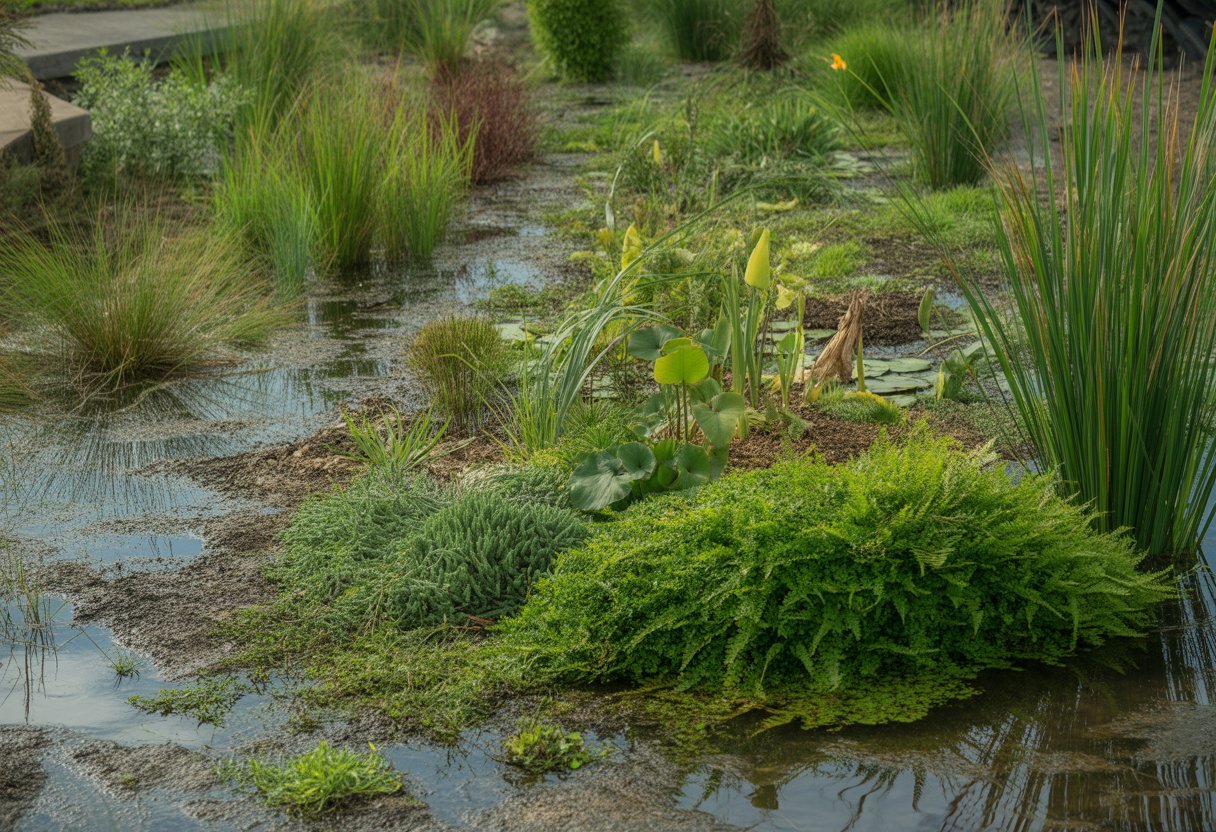
Creating a wetland garden takes a bit of planning—think about water flow, soil, and what you want to plant. Checking out the site and mixing up the plant choices makes for a healthier, better-looking wetland.
Planning a Rain Garden
Start by spotting where water naturally collects, and make sure there’s a way for it to drain. You want a spot that gets runoff but doesn’t stay underwater forever.
A shallow dip or gentle slope usually works best.
Soil matters—a lot. If water won’t soak in after a day or two, you might need to mix in sand or compost.
How big should the rain garden be? Usually, 10-20% of the area that drains into it is a safe bet.
It’s smart to add an overflow outlet, just in case you get a downpour.
Creating Diversity with Plant Selection
Mixing up your plant choices helps wetlands stay stable and friendly to wildlife. Pair deep-rooted perennials, sedges, and native grasses to keep soil in place and stop erosion.
Go for plants with different water needs—some for the soggy spots, some for areas that dry out faster. Carex (sedges), Iris versicolor, and Joe-Pye weed are all solid picks.
Toss in a mix of flowering and non-flowering plants to attract pollinators and keep things interesting all year. Skip the invasives and stick with local natives for the best results.
Standout Wetland Species and Their Benefits
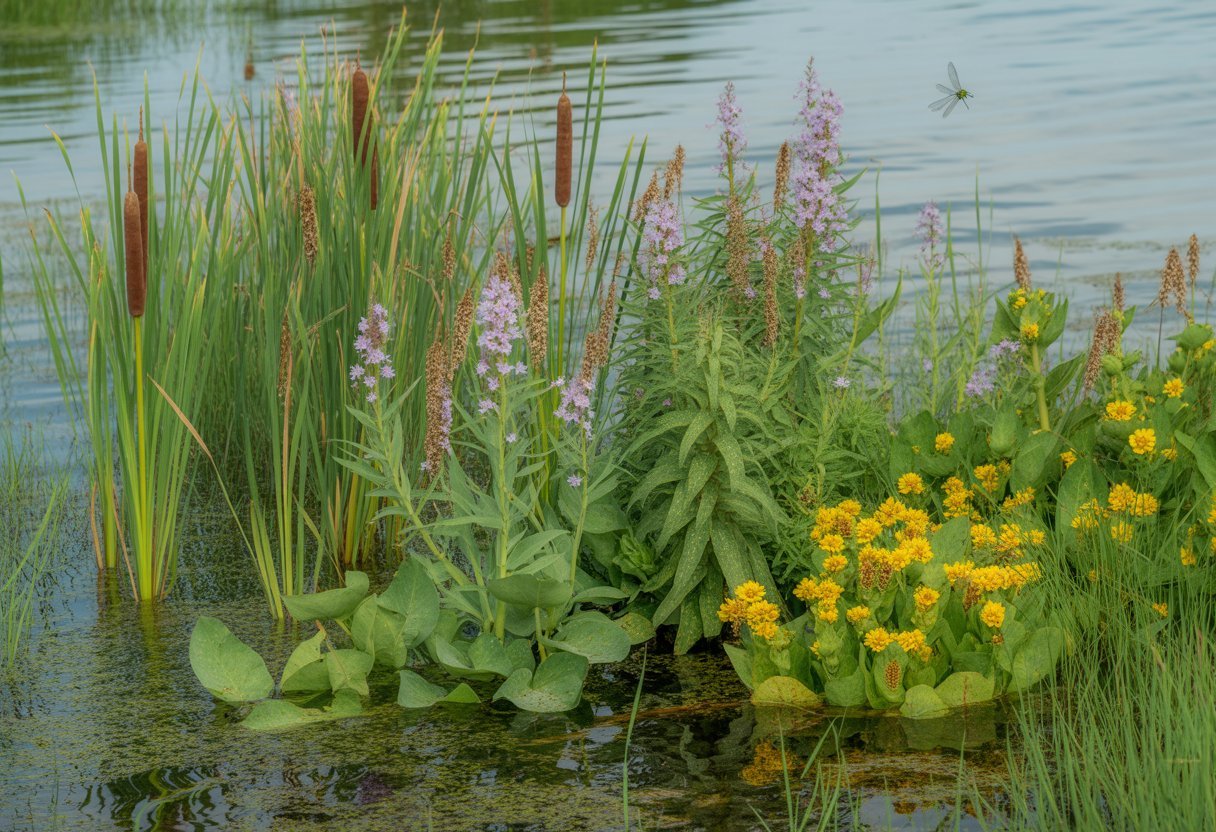
Some moisture-loving plants are just built for wetlands—they’ve got features that let them thrive where others can’t. These species help with erosion control and give wildlife a boost.
Joe Pye Weed and Ironweed
Joe Pye Weed (Eutrochium spp.) stands tall with clusters of pinkish-purple flowers. It’s a magnet for butterflies and bees, which is always a plus for biodiversity.
Its deep roots keep wet soils from washing away, especially along water’s edge.
Ironweed (Vernonia spp.) puts out vivid purple flowers in late summer. It’s surprisingly drought-tolerant for a wetland plant, and adds some height and texture to the landscape.
Ironweed also feeds butterflies, offering nectar when other flowers are done for the season.
Both of these plants like full sun or partial shade and can handle standing water. If you’re restoring wetlands or just want a natural vibe, they’re great choices.
Eupatorium, Turtlehead, and Cinnamon Fern
Eupatorium—people often call it white snakeroot or boneset—really thrives in saturated soils. These plants crank out nectar and their thick foliage gives small wildlife a place to hide or forage.
Turtlehead (Chelone glabra) gets its name from flowers that sort of look like a turtle’s head. It likes its soil moist and rich, and pollinators seem to love it.
Plus, turtlehead’s tough roots help stop erosion along streams and ponds. It’s a pretty solid pick if you’re trying to keep your soil in place.
Cinnamon Fern (Osmundastrum cinnamomeum) is hard to miss with those cinnamon-colored fronds. It prefers acidic, wet soils and its leaf litter actually helps build healthier soil.
The dense ferns throw some welcome shade, creating cool little microhabitats for amphibians and invertebrates. Kind of amazing how much life gathers under their leaves.