
Scouler’s St. John’s Wort (Hypericum scouleri)
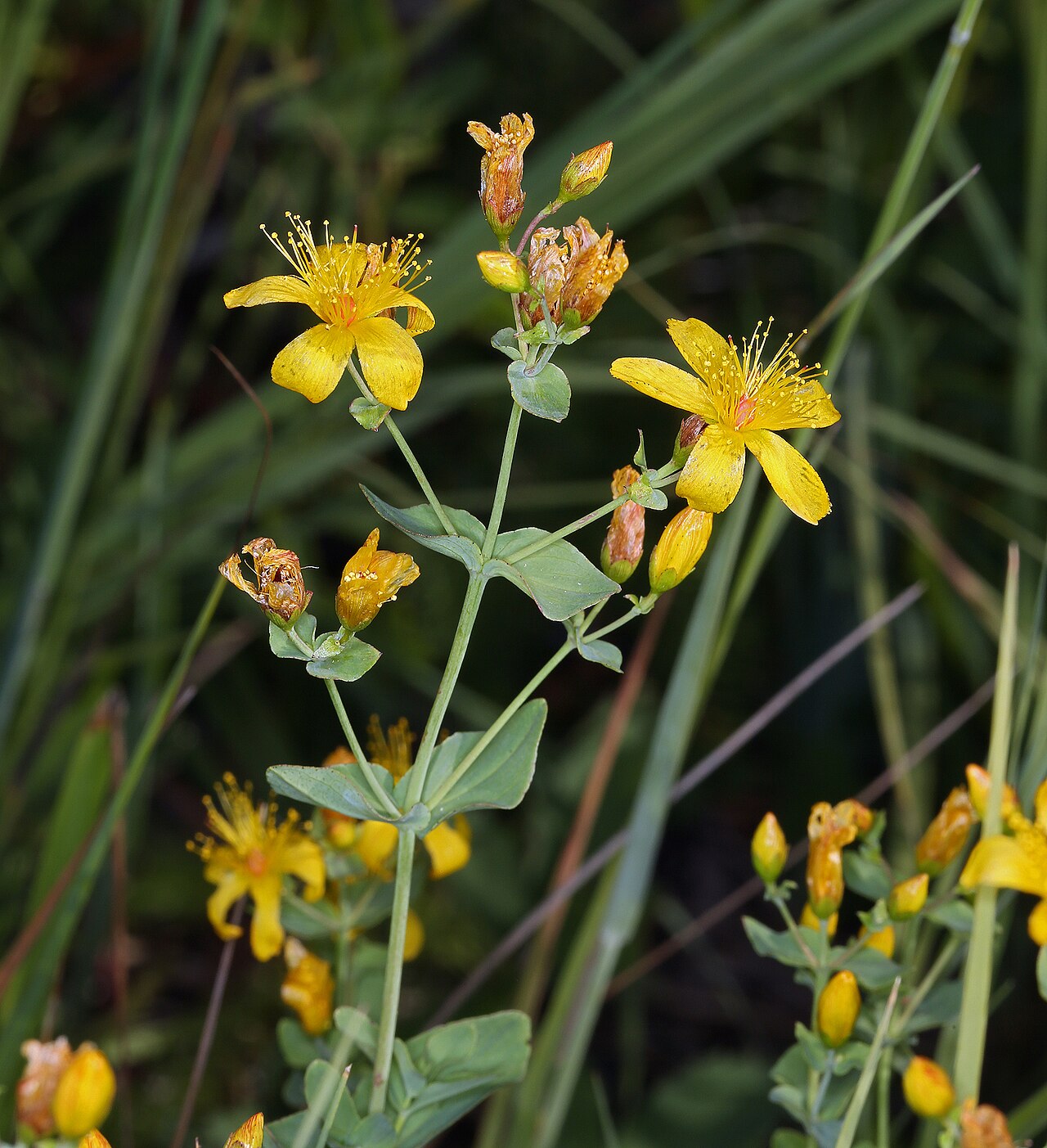
Hypericum scouleri, Scouler’s St. John’s Wort (also called western St. John’s wort), is a native wildflower of moist mountain meadows, streambanks and seeps across the western United States and southwestern Canada. From early to late summer its leafy stems carry clusters of bright yellow, star-shaped flowers, each with a burst of long stamens and a row of tiny black dots along the petal edges. It was long treated as a variety of Hypericum formosum (H. formosum var. scouleri), a name still found in older books.
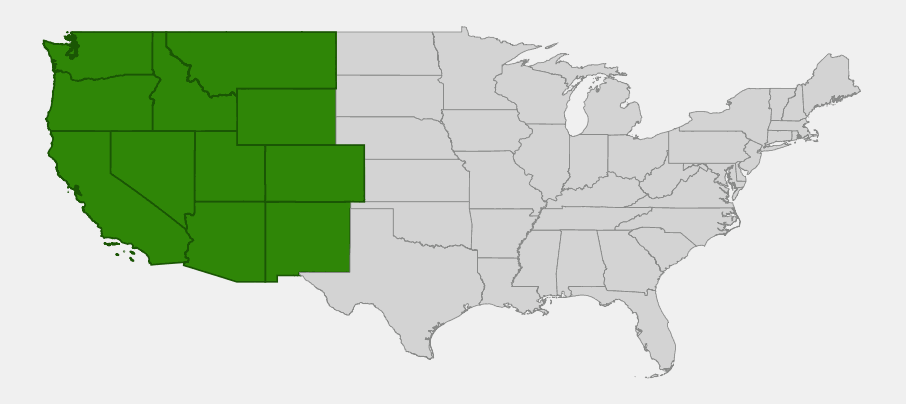
USDA PLANTS lists it as native in Washington, Oregon, California, Nevada, Idaho, Montana, Wyoming, Utah, Colorado, Arizona and New Mexico, and in British Columbia and Alberta. It is the most common native St. John’s wort of the western mountains, and it is a useful native alternative to the invasive common St. John’s wort (H. perforatum, also called Klamath weed), which has spread across many of the same states.
For gardeners, it is a bright, easy perennial for moist sunny spots, rain gardens and the edges of ponds in western gardens. Like other St. John’s worts, it contains compounds that can be harmful to livestock and pets if eaten in quantity; see the safety note below. This guide covers identification, range, growing tips and wildlife value.
Identification
Scouler’s St. John’s wort is an upright, rhizomatous perennial with opposite leaves and flat-topped clusters of yellow flowers. The black dots on its petals and leaf edges set it apart from most other plants in its habitat.
Stems & Leaves
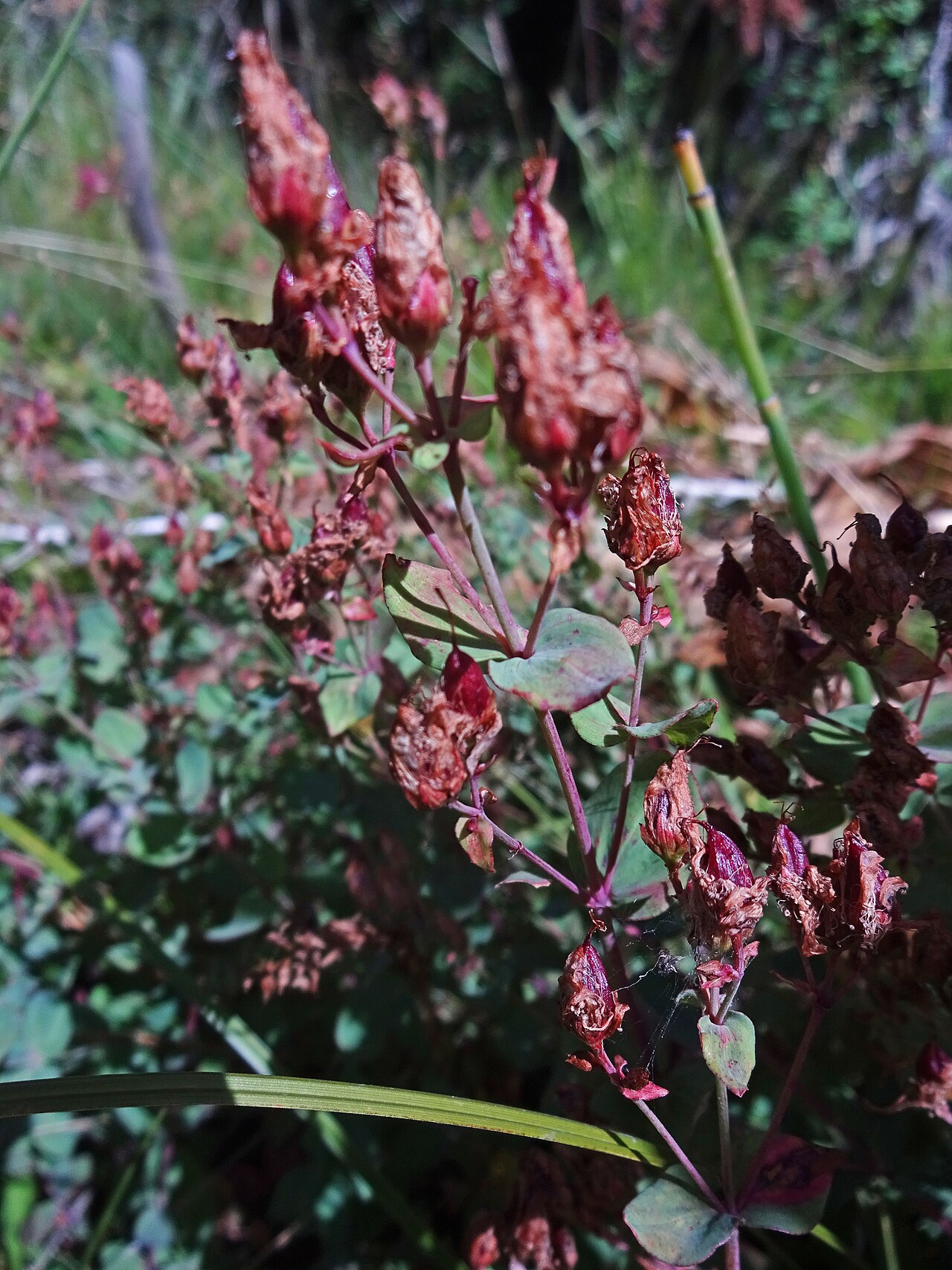
Plants spread by creeping rhizomes and form patches of erect, unbranched or sparsely branched stems usually 4 to 28 inches tall. The leaves are opposite, stalkless and often slightly clasping, oval to oblong, ½ to 1¼ inches long, with smooth edges. They are dotted with tiny black glands, mainly along the margins, and may also have translucent dots visible when held to the light. In late summer the stems and leaves often turn reddish.
Flowers
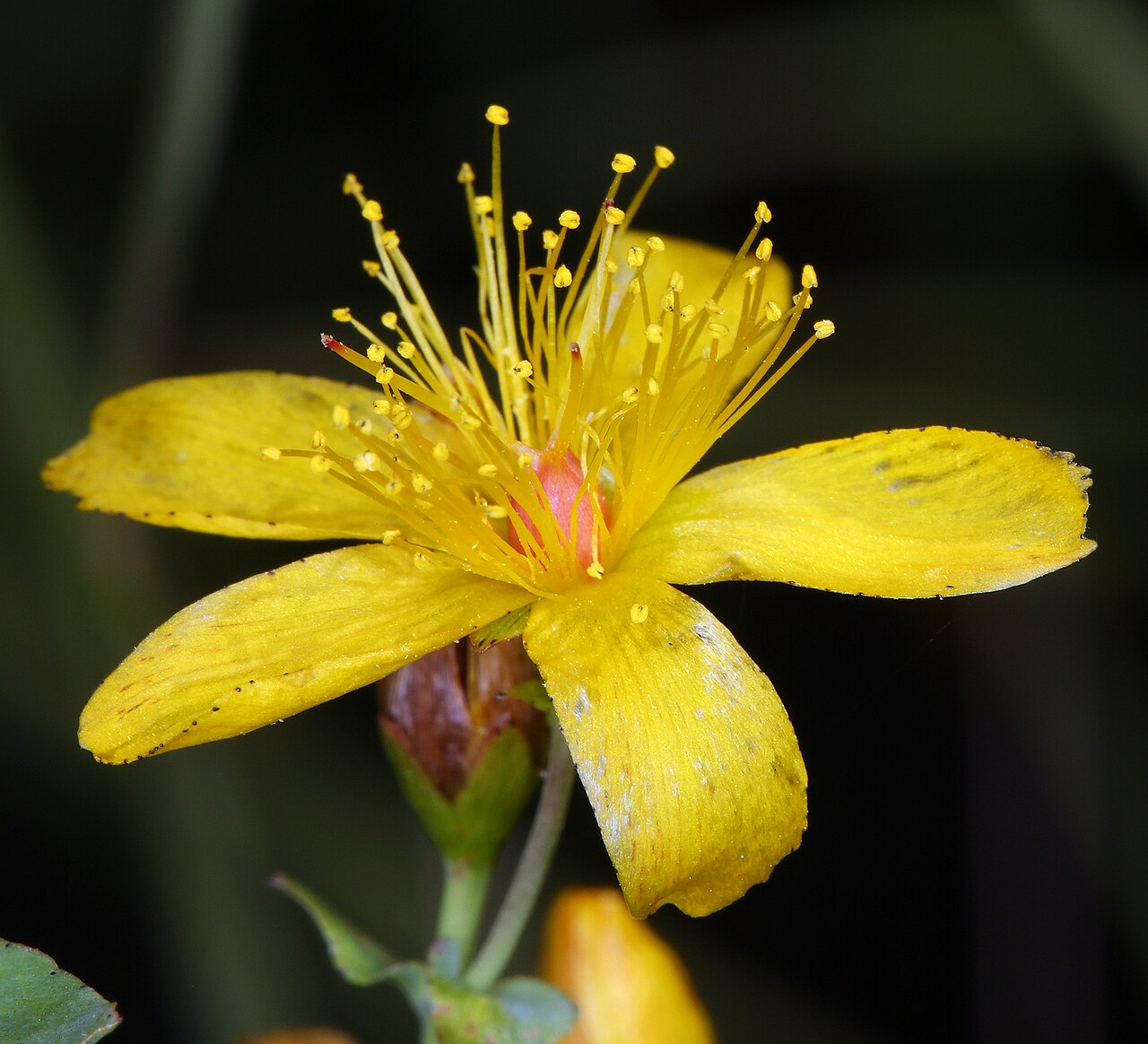
From about June to September, the stem tips carry loose, flat-topped clusters of a few to many flowers. Each flower is about ¾ to 1 inch across, with five bright yellow petals edged with small black dots, five smaller sepals, and a showy cluster of 50 or more yellow stamens. The buds are often tinged red or orange.
Fruit
The fruit is a small, egg-shaped, three-chambered capsule about ⅓ inch long that turns reddish brown and splits open in late summer and fall to release many tiny seeds.
Look-alikes
Invasive common St. John’s wort (Hypericum perforatum) is the main look-alike. It grows in drier, disturbed places such as roadsides and rangeland, has narrower, more linear leaves covered with many translucent dots, is more heavily branched, and produces many more flowers per plant. Tinker’s penny (Hypericum anagalloides) is a much smaller, creeping plant of wet meadows with tiny orange-yellow flowers. Eastern relatives such as Shrubby St. John’s Wort are woody shrubs that do not grow in its range.
Quick Facts
| Scientific Name | Hypericum scouleri Hook. (syn. H. formosum var. scouleri) |
| Family | Hypericaceae (St. John’s wort family) |
| Plant Type | Rhizomatous herbaceous perennial |
| Mature Height | 4–28 in |
| Mature Spread | 1–2 ft; spreads by rhizomes |
| Growth Rate | Moderate |
| Sun Exposure | Full sun to part shade |
| Water Needs | Medium to high; moist soil |
| Soil Type | Moist loam, sandy or gravelly soil; meadow and streamside soils |
| Soil pH | About 5.5–7.5 |
| Bloom Time | June–September |
| Flower Color | Bright yellow with black-dotted petal edges |
| Fall Color | Stems and leaves often turn red |
| Fruit | Reddish-brown capsule with tiny seeds |
| Deer Resistant | Generally deer resistant |
| USDA Hardiness Zones | 4–9 |
Native Range
Scouler’s St. John’s wort is native to western North America. USDA PLANTS lists it in 11 western states: Washington, Oregon, California, Nevada, Idaho, Montana, Wyoming, Utah, Colorado, Arizona and New Mexico. In Canada it grows in southern British Columbia and Alberta. Its close relative Hypericum formosum, with which it was once combined, grows farther south in Mexico.
It grows in moist places from foothills to subalpine elevations: wet and moist meadows, streambanks, seeps and springs, lake margins, moist forest openings and roadside ditches. In the Pacific Northwest it grows at lower elevations on both sides of the Cascades, while in the Southwest it is restricted to moist sites in the higher mountains, such as the Black Range and Sangre de Cristo Mountains of New Mexico and the higher mountains of Arizona.
It is common across most of its range and is not considered threatened. It often grows in the same meadows as other summer wildflowers and is a good indicator of moist but not permanently flooded soils.
📋 Regional plant lists featuring Scouler’s St. John’s Wort: Idaho, Eastern Oregon & Eastern Washington · Montana & Wyoming · Utah & Western Colorado · Arizona & New Mexico · Western Oregon & Western Washington · California & Nevada
Growing & Care Guide
Scouler’s St. John’s wort is offered by some western native plant nurseries and seed suppliers. It is easy to grow in moist, sunny spots and spreads gently into patches. Choose it over non-native St. John’s worts, especially invasive H. perforatum, and buy nursery-grown plants or seed rather than digging from the wild.
Light
Full sun to part shade. At lower elevations and in hot inland gardens, give it afternoon shade and consistent moisture.
Soil & Water
Moist, well-drained to seasonally wet soil of almost any texture. It does best where the soil stays moist through early summer, as in meadows fed by snowmelt or along streams. Water during dry spells; it tolerates brief dry periods once established but declines in dry soils.
Planting Tips
Plant in spring or fall, 12 to 18 inches apart. It suits rain gardens, pond and stream edges, moist meadow plantings and the front of mixed borders with consistent water. It pairs well with columbines, monkeyflowers, yarrow and native grasses.
Pruning & Maintenance
Little maintenance is needed. Cut back spent stems in late fall or early spring. It spreads slowly by rhizomes; dig out unwanted shoots if needed. It is not aggressive like invasive common St. John’s wort.
Propagation
Sow the tiny seeds on the soil surface in fall, or give them about 30 to 60 days of cold, moist stratification before spring sowing; they need light to germinate. Plants can also be divided in spring or propagated from rhizome cuttings.
Landscape Uses
- Rain gardens and pond edges: bright summer color in moist soils
- Mountain meadow plantings: for western wildflower meadows and restorations
- Pollinator gardens: abundant pollen for native bees
- Native alternative: replaces invasive common St. John’s wort in western gardens
Wildlife & Ecological Value
Scouler’s St. John’s wort is a staple of summer meadows in the western mountains. Safety note: St. John’s worts contain hypericin and related compounds. The best-known example, common St. John’s wort, causes photosensitization in livestock, a condition in which eaten plants make skin painfully sensitive to sunlight, and it can interact with medications in people. Treat Scouler’s St. John’s wort as potentially harmful: keep livestock and pets from eating large amounts, and don’t use it as a home remedy without medical advice.
For Pollinators
The flowers produce no nectar but offer abundant pollen on their many stamens. They are visited by bumble bees, sweat bees and other native bees, which collect pollen by vibrating the stamens, as well as hover flies and beetles.
For Birds
Small seed-eating birds may pick seeds from the capsules in fall, and birds forage for insects among the stems.
For Mammals
Deer generally avoid St. John’s worts, which are bitter and contain potentially toxic compounds, though they may nibble young shoots.
Ecosystem Role
As a rhizomatous perennial of moist meadows and streambanks, it helps stabilize soils, and it provides pollen during the peak of the mountain summer. Planting it instead of invasive St. John’s wort supports native insect communities.
Cultural & Historical Uses
The species is named for John Scouler, a Scottish physician and naturalist who collected plants in the Pacific Northwest in 1825 while on a Hudson’s Bay Company voyage with David Douglas. William Jackson Hooker described it from those collections. The genus name Hypericum comes from Greek words meaning “above an image,” from the ancient custom of hanging the plants above religious images to ward off evil.
The name St. John’s wort comes from the European tradition of gathering these plants around St. John’s Day (June 24), near the summer solstice, when many species start to bloom. Some Native peoples of the West used Scouler’s St. John’s wort in traditional medicine, for example as a wash or poultice for wounds and sores.
Common St. John’s wort, its invasive European relative, is widely sold as an herbal supplement for mood. It interacts with many prescription drugs, which is one reason not to use any St. John’s wort, including native species, as a home remedy without medical advice.
Frequently Asked Questions
Is Scouler’s St. John’s wort native?
Yes. It is native to western North America, from British Columbia and Alberta south through the western U.S. to Arizona and New Mexico. It is different from the invasive common St. John’s wort (H. perforatum) from Europe.
How do I tell it from invasive St. John’s wort?
Scouler’s St. John’s wort grows in moist meadows and streambanks, has broader, oval leaves with black dots mainly along the edges, and fewer flowers per stem. Invasive common St. John’s wort grows in dry, disturbed places and has narrow leaves covered with translucent dots and many more flowers.
Is Scouler’s St. John’s wort toxic?
St. John’s worts contain hypericin, which can cause photosensitivity in livestock that eat large amounts, as is well documented for common St. John’s wort. Keep animals from grazing large stands and don’t use it as a home remedy.
Is Hypericum formosum the same plant?
Hypericum formosum var. scouleri is an older name for this plant. USDA PLANTS and current floras treat it as Hypericum scouleri, and restrict H. formosum to a related plant of Mexico.
When does it bloom?
From about June to September, depending on elevation. Lower-elevation plants bloom earlier, and high mountain meadows bloom in mid to late summer.

Looking for a nursery that carries Scouler’s St. John’s Wort?
Browse our native plant nursery directory: Arizona · California · Colorado · Idaho · Montana · Nevada & New Mexico · Oregon · Utah · Washington · Wyoming

