Lavender Hyssop / Anise Hyssop (Agastache foeniculum)
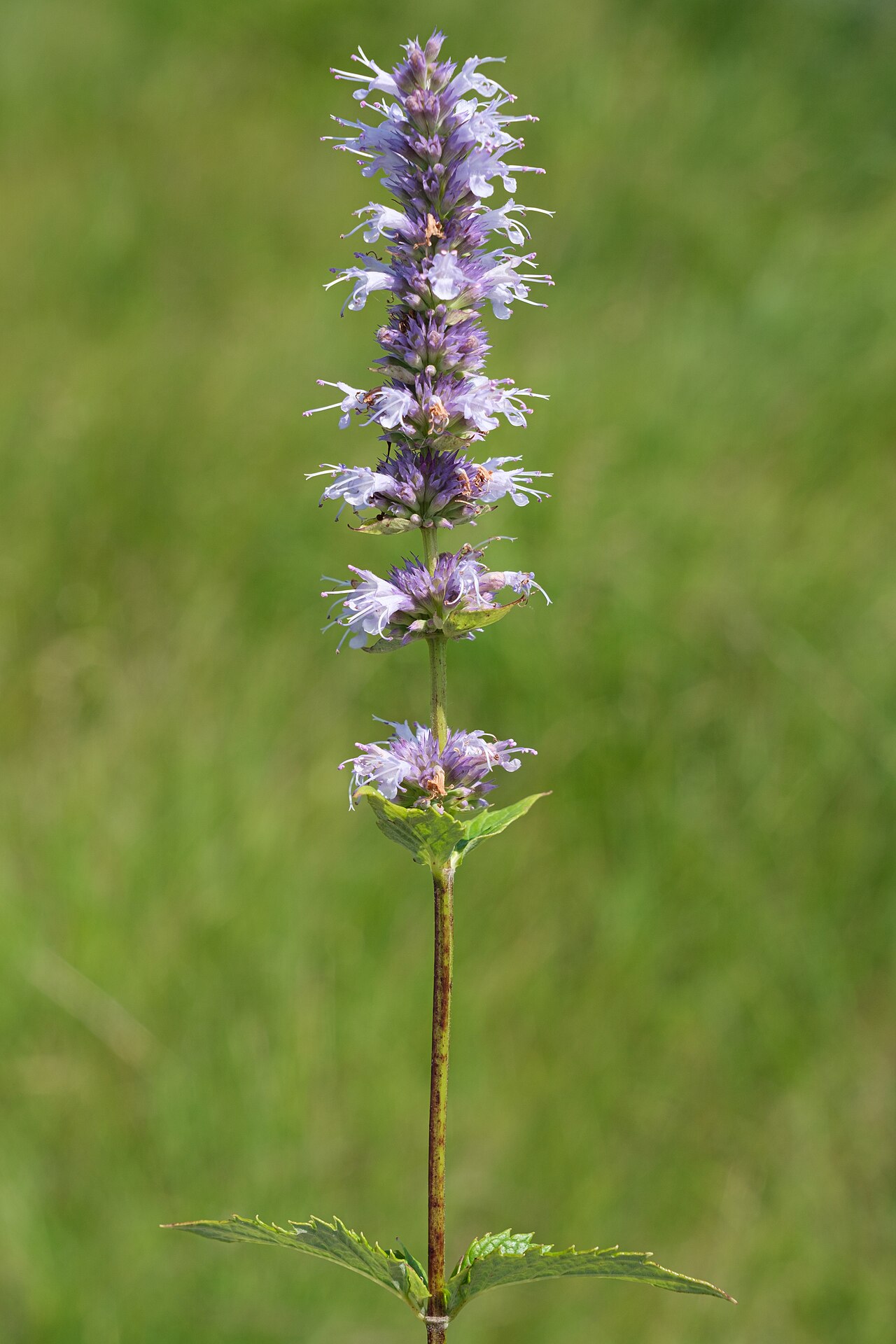
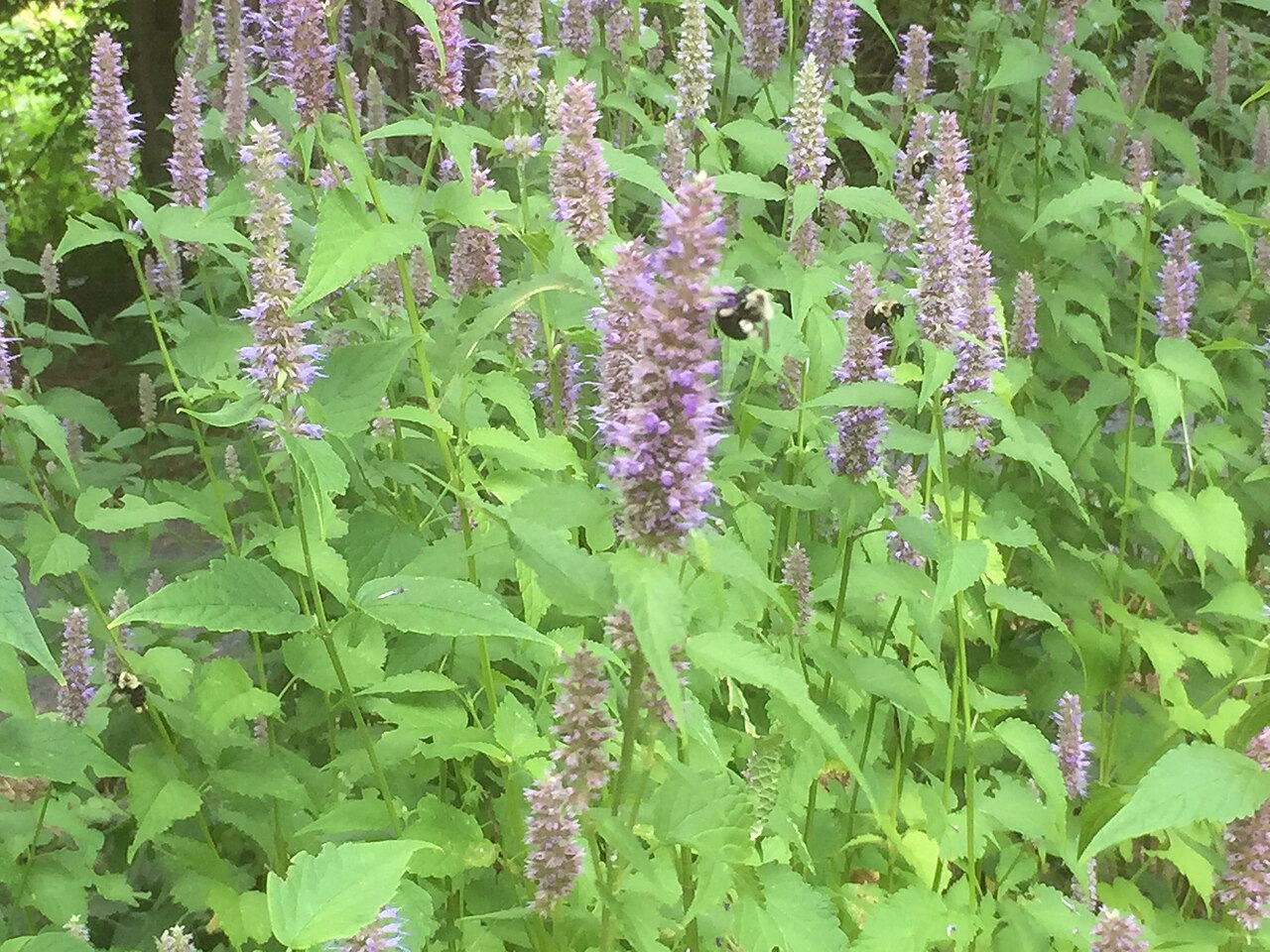
Agastache foeniculum, known as Lavender Hyssop or Anise Hyssop, is an upright, clump-forming perennial of the northern Great Plains prairie, prized for the licorice-anise scent that rises from its foliage at the lightest touch. A member of the mint family (Lamiaceae), it sends up square, branching stems lined with soft gray-green leaves and topped, from midsummer into fall, by dense spikes of tubular lavender-blue flowers that are rarely without a bee or butterfly in attendance.
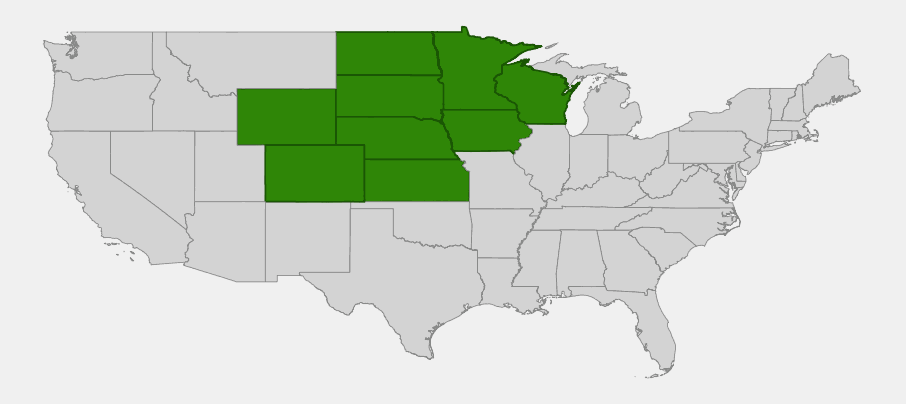
In the wild, Anise Hyssop grows on dry to mesic prairies, open woodland edges, and disturbed ground across the Dakotas, Minnesota, and the western Great Lakes and northern Plains states, where it is one of the more reliable late-summer nectar sources for native pollinators. It has also become one of the most widely planted native perennials in North American gardens — sold by nearly every nursery that carries natives — so it is important to know that cultivated and “naturalized” Anise Hyssop now turns up well outside its true native range; plant it as a native only within the states listed below.
For gardeners inside its native range, Anise Hyssop is about as forgiving as native perennials get: drought-tolerant once established, unbothered by poor soil, long-blooming, and reliably self-seeding without becoming a thug. Its combination of fragrance, pollinator traffic, and tidy upright habit makes it equally at home in a formal border, an herb garden, or a prairie restoration planting.
Identification
Anise Hyssop is an herbaceous perennial reaching 2 to 4 feet tall and 1 to 2 feet wide, with an upright, slightly branching habit and square stems typical of the mint family.
Leaves
Leaves are opposite, egg- to triangle-shaped, 1.5 to 3 inches long, with toothed margins and a grayish-green upper surface; the undersides are pale and finely hairy, giving the whole plant a soft, matte look. Crushed or brushed foliage releases a strong anise-licorice fragrance, the single most reliable field mark for separating this species from garden lookalikes.
Flowers
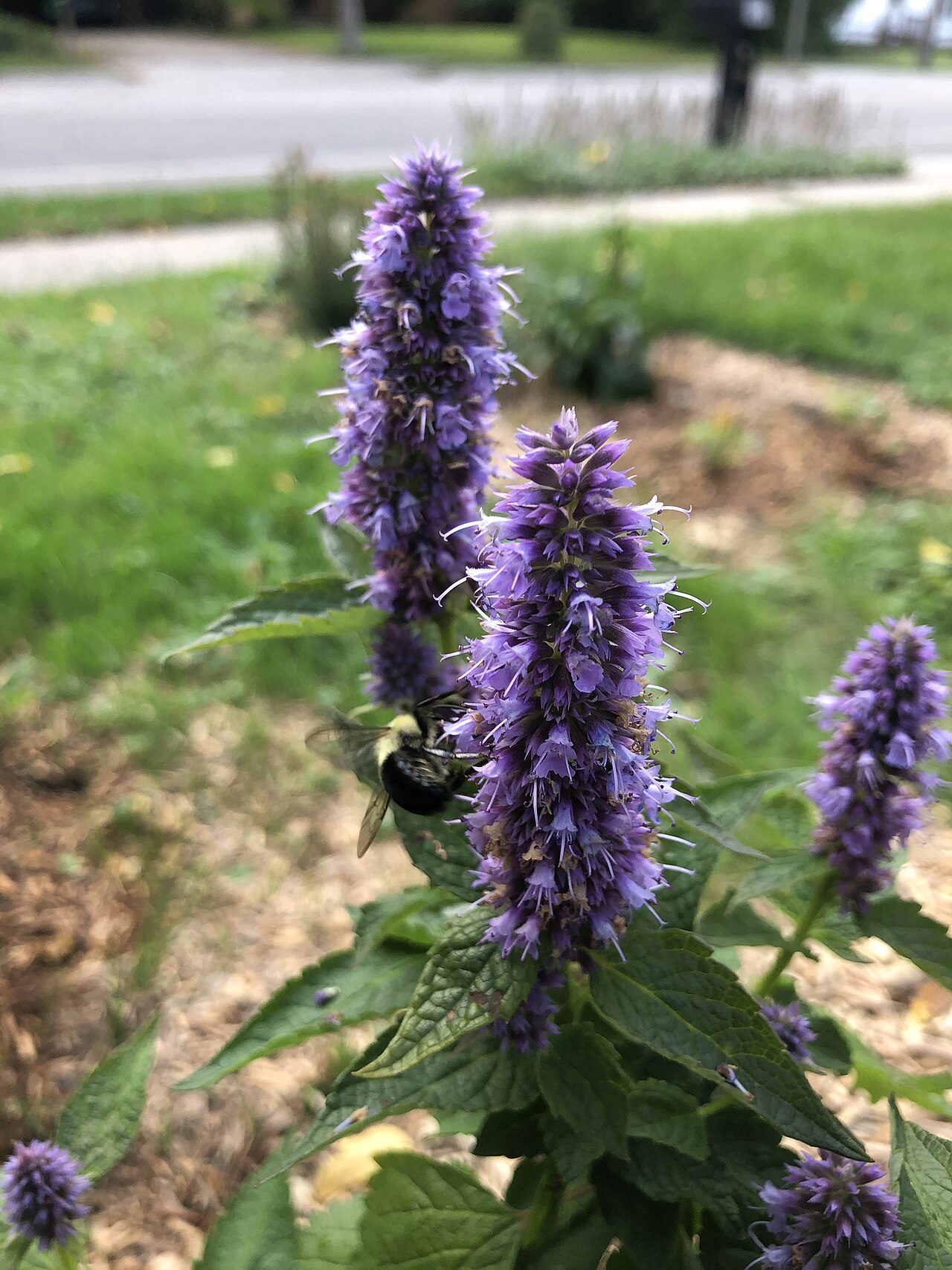
From July into September, each stem ends in a dense, cylindrical spike 2 to 4 inches long packed with small, two-lipped, lavender-blue flowers subtended by purplish bracts. The spikes bloom from the bottom up over several weeks, extending the overall bloom period well beyond that of any individual flower, and are visited constantly by bumblebees, honeybees, small native bees, and butterflies.
Fruit & Seeds
After bloom, each flower produces four small, dark nutlets that ripen in the persistent calyx through fall. The dried flower spikes and seed heads remain attractive and structurally interesting through winter if left standing, and self-sown seedlings often appear nearby the following spring.
Quick Facts
| Scientific Name | Agastache foeniculum |
| Family | Lamiaceae (Mint) |
| Plant Type | Herbaceous Perennial |
| Mature Height | 2–4 ft |
| Mature Spread | 1–2 ft |
| Growth Rate | Fast |
| Sun Exposure | Full Sun to Part Shade |
| Water Needs | Low to Moderate |
| Soil Type | Well-drained; tolerates poor, sandy or rocky soil |
| Soil pH | 6.0–7.5 (neutral to slightly alkaline) |
| Bloom Time | July – September |
| Flower Color | Lavender-blue |
| Fall Color | Tan (dried seed spikes) |
| Fruit | Small dry nutlets |
| Deer Resistant | Yes (aromatic foliage) |
| USDA Hardiness Zones | 4–8 |
Native Range
Lavender Hyssop is native to the northern Great Plains and western Great Lakes prairie region, centered on North Dakota, South Dakota, and Minnesota, and extending south and west through Iowa, Nebraska, Kansas, Wisconsin, and into the eastern plains of Colorado and Wyoming. Within this core range it is a genuine prairie native, typically found on dry to medium-moisture prairie, open woodland margins, and disturbed or roadside ground.
Anise Hyssop’s popularity as a garden and pollinator-strip plant has carried it far beyond this native range, and botanical authorities including NatureServe specifically note that populations in states and provinces further east and west — including Illinois, Michigan, Montana, Washington, and western Ontario — are considered introduced rather than native, likely originating as garden escapes. Treat any Anise Hyssop found growing outside the Great Plains and western Great Lakes core as a planted or naturalized population, not a native one, and favor regionally native mints in those areas instead.
Anise Hyssop is not tracked as rare or threatened across its core native range and remains common in appropriate prairie and prairie-edge habitat throughout the Dakotas and Minnesota. It associates with classic tallgrass and mixed-grass prairie species and is a dependable indicator of relatively intact or recovering prairie ground.
📋 Regional plant lists featuring Lavender Hyssop: North Dakota, South Dakota & Western Minnesota · Michigan, Wisconsin & Eastern Minnesota · Illinois, Iowa & Missouri · Nebraska, Kansas & Eastern Colorado · Montana & Wyoming
Growing & Care Guide
Anise Hyssop is one of the easiest native perennials to grow, thriving on neglect once established and asking for little more than sun and drainage.
Light
Full sun produces the sturdiest, most floriferous plants with the strongest fragrance; light afternoon shade is tolerated, especially in hotter parts of its range, but plants grown in too much shade become floppy and bloom less.
Soil & Water
Anise Hyssop prefers well-drained soil and is remarkably tolerant of poor, sandy, or rocky ground — exactly the conditions found on native prairie. It is drought-tolerant once established and should not be kept consistently wet; soggy soil, especially in winter, is the most common cause of failure. Water regularly through the first growing season, then let it largely fend for itself.
Planting Tips
Space plants 12 to 18 inches apart to allow for its clumping growth and air circulation, which helps prevent powdery mildew in humid climates. It transplants easily from containers and also establishes readily from direct-sown seed in fall or early spring, since the seed benefits from a period of cold. Once sited, Anise Hyssop often self-seeds modestly, filling in gaps without overwhelming neighboring plants.
Pruning & Maintenance
Deadhead spent flower spikes to prolong bloom and reduce self-seeding if a tidier look is wanted, or leave the dried spikes standing through winter for seed-eating birds and garden structure. Cut plants back to a few inches in late winter or early spring before new growth emerges. Established clumps can be divided every few years to maintain vigor and generate new plants.
Landscape Uses
Anise Hyssop earns a place in many kinds of plantings:
- Pollinator gardens — among the most reliable summer-into-fall bee and butterfly plants
- Prairie and meadow restorations on dry to medium sites
- Herb gardens — leaves and flowers are edible and used fresh or dried
- Cut-flower and dried-flower arrangements
- Mixed perennial borders, especially paired with other prairie natives
- Rain gardens and dry slopes where drought tolerance matters
Wildlife & Ecological Value
Few native perennials match Anise Hyssop’s pulling power for pollinators across its long bloom season.
For Pollinators
The nectar- and pollen-rich flower spikes are worked almost continuously from midsummer through fall by bumblebees, honeybees, leafcutter and mason bees, and a wide range of butterflies and skippers. Because it blooms later and longer than many spring prairie flowers, Anise Hyssop is an especially important late-season nectar source that helps bridge the gap before fall asters and goldenrods take over.
For Birds
Seed-eating birds, particularly goldfinches, feed on the ripe nutlets in the dried seed heads through fall and into winter, making it worthwhile to leave spent flower spikes standing rather than cutting them back in autumn.
For Mammals
The aromatic, mint-family foliage is generally avoided by deer and rabbits, making Anise Hyssop one of the more browse-resistant native perennials for gardens in areas with heavy deer pressure.
Ecosystem Role
As a common component of northern prairie plant communities, Anise Hyssop contributes to the extended bloom succession that supports prairie pollinator networks from early summer through fall. Its deep, fibrous root system helps stabilize prairie soils and contributes organic matter, typical of the deep-rooted perennials that built the Great Plains’ historic topsoil.
Cultural & Historical Uses
Indigenous peoples of the northern Great Plains, including Ojibwe and Lakota communities, historically used Anise Hyssop leaves and flowers to flavor food and brew teas, valuing the plant’s sweet anise-like fragrance. The leaves were also dried and used in smudging and medicinal preparations by various Plains nations, as part of broader traditional plant-use practices specific to their communities.
The common names “Anise Hyssop” and “Lavender Hyssop” both reference the plant’s fragrance and flower color rather than true botanical relationships — it is not closely related to either true anise (Pimpinella anisum) or true hyssop (Hyssopus officinalis), both Old World plants in different genera. Today the leaves and flowers are still used fresh or dried in herbal teas, as a culinary garnish, and in potpourri, continuing a long history of use as a flavoring herb.
In more recent decades, Anise Hyssop has become a mainstay of the native-plant nursery trade and pollinator-garden movement, bred into numerous cultivars with names like ‘Golden Jubilee’ and ‘Blue Fortune.’ Straight species plants grown from regionally sourced seed remain the better choice for anyone gardening for genetic integrity or restoration value within its native range.
Frequently Asked Questions
Is Anise Hyssop native to my state?
It is native to the northern Great Plains and western Great Lakes region: North Dakota, South Dakota, Minnesota, Wisconsin, Iowa, Nebraska, Kansas, eastern Colorado, and Wyoming. It is widely cultivated and has naturalized well outside this range, including in many eastern and western states, but those populations are considered introduced, not native.
Can I eat Anise Hyssop?
Yes — the leaves and flowers are commonly used fresh or dried to make herbal tea, flavor baked goods, or garnish dishes, with a mild licorice-anise taste. It has a long history of culinary and beverage use among Indigenous peoples of the Great Plains and remains popular in herb gardens today.
Why isn’t Anise Hyssop blooming in my garden?
The most common causes are too much shade or soil that stays too wet, especially over winter. Make sure plants get at least six hours of direct sun and are sited in well-drained soil; also check that plants aren’t being shaded out by taller, more vigorous neighbors.
Does Anise Hyssop spread aggressively?
It self-seeds modestly in favorable conditions but is not considered an aggressive spreader within its native range. Deadheading spent flower spikes before seed drop will keep self-seeding to a minimum if a tidier look is preferred.
What pollinators does Anise Hyssop attract?
It is an exceptional draw for bumblebees, honeybees, and many species of native solitary bees, along with butterflies and day-flying moths. Its long midsummer-to-fall bloom period makes it one of the most valuable nectar plants a native garden can include.

Looking for a nursery that carries Lavender Hyssop?
Browse our native plant nursery directory: North Dakota & Nebraska · South Dakota · Minnesota · Wisconsin & Wyoming · Iowa & Kansas · Colorado