Black Maple (Acer nigrum)
Acer nigrum, commonly called Black Maple, is a stately shade tree of the eastern and midwestern United States, so closely related to Sugar Maple (Acer saccharum) that many botanists classify it as a subspecies, Acer saccharum subsp. nigrum. Where the two species meet they hybridize freely, which is part of why Black Maple has long flown under the radar of home gardeners even though it offers nearly everything Sugar Maple does — dependable shade, strong fall color, and maple syrup — with a somewhat higher tolerance for heat, drought, and the alkaline, clay-heavy soils common on river terraces and old floodplains.
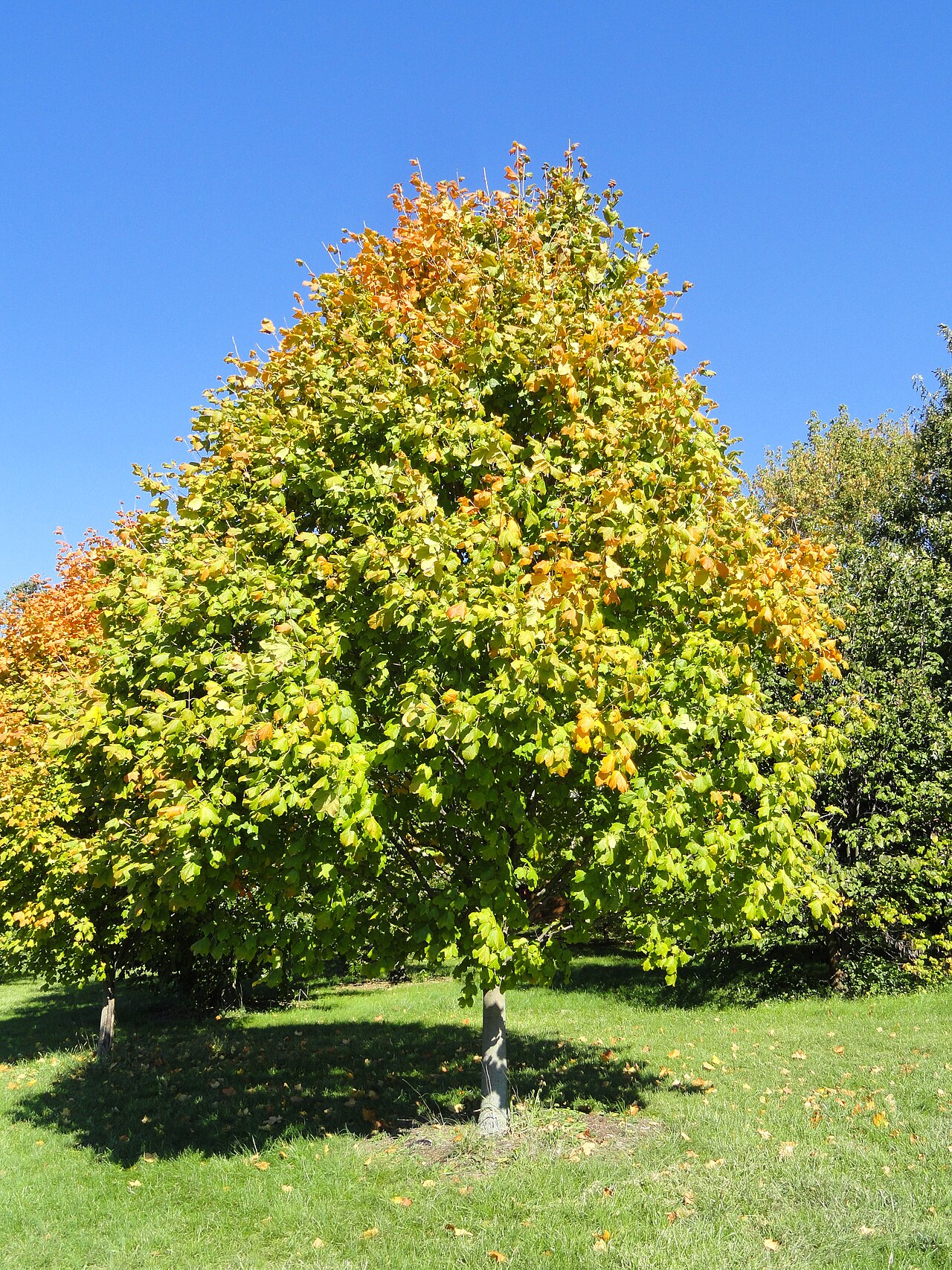
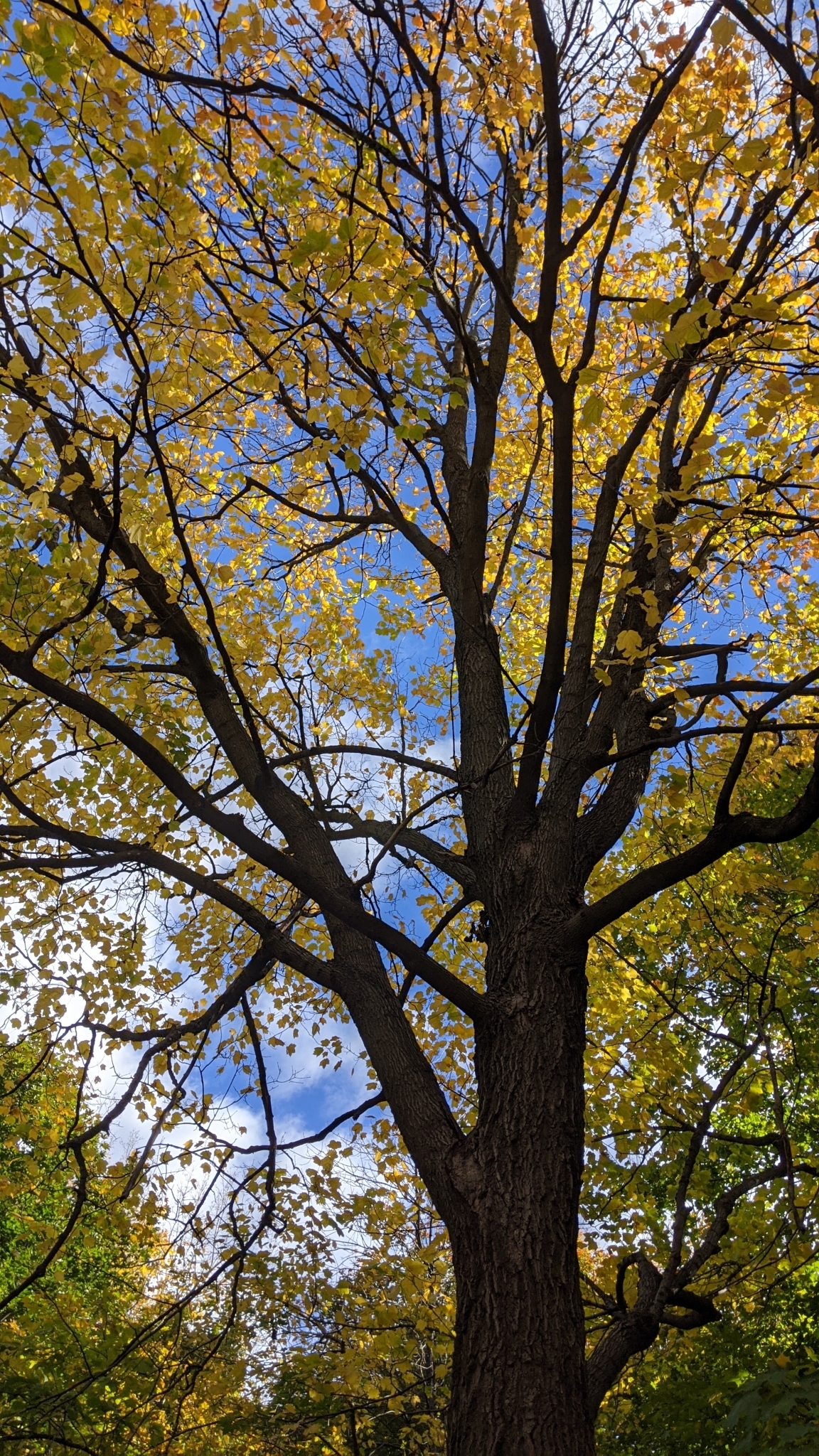
In the open, Black Maple develops a tall, single trunk topped by a dense, rounded or oval crown of drooping, three-lobed leaves that give the whole tree a slightly shaggy, softer silhouette than the crisper five-lobed look of Sugar Maple. The bark is dark gray-brown and deeply furrowed into long plates, noticeably darker and rougher than Sugar Maple’s smoother younger bark. Leaves typically turn a clear, warm yellow in autumn rather than the orange-to-scarlet range Sugar Maple is famous for, though the display is still a highlight of the fall landscape wherever the species grows.
Black Maple is most at home on moist, rich bottomland soils along rivers and streams, especially over calcareous (lime-rich) substrates, but it also tolerates the drier upland sites and compacted urban soils that stress Sugar Maple. That adaptability, combined with its long lifespan and strong wood, makes it a worthwhile choice for anyone restoring a floodplain woodland, planting a long-term shade tree, or simply looking for an under-planted native alternative to the ubiquitous Sugar Maple.
Identification
Black Maple is a medium-to-large deciduous tree, typically reaching 60 to 80 feet tall with a trunk 2 to 3 feet in diameter at maturity, though exceptional trees on rich bottomland soils can exceed 100 feet. The crown is dense, rounded, and often appears to droop slightly at the branch tips, giving mature trees a softer outline than Sugar Maple.
Bark & Stems
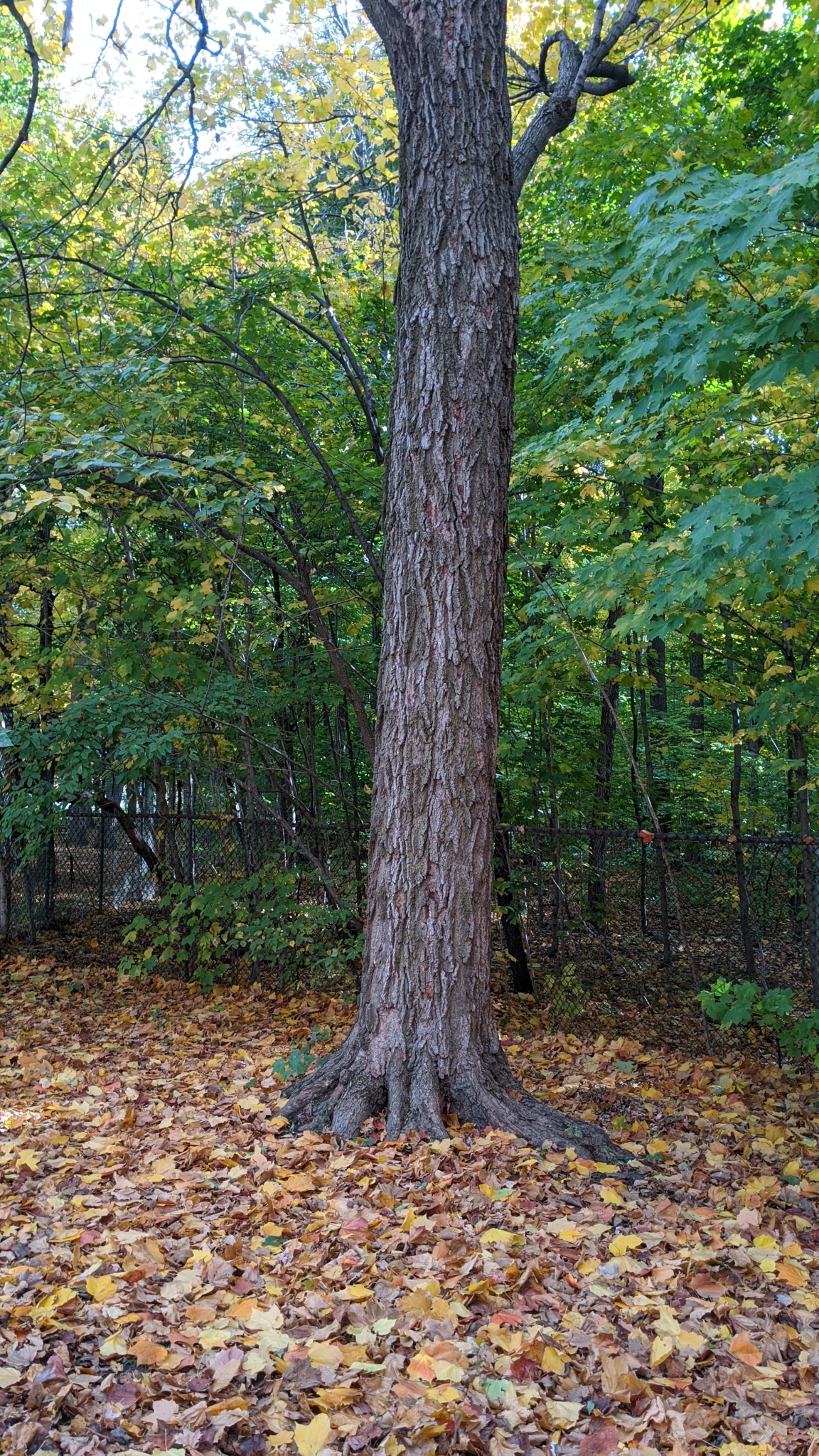
Young bark is smooth and gray, darkening and deepening into furrowed, plated ridges with age — generally darker and more coarsely textured than Sugar Maple bark at a comparable age, which is part of where the common name “black” maple comes from. Twigs are slender, reddish-brown, and often finely hairy (pubescent) near the buds, another useful difference from the hairless twigs of Sugar Maple.
Leaves
Leaves are opposite, simple, and 4 to 6 inches across, with three main lobes (sometimes with two small additional basal lobes) and shallow, rounded sinuses between them — a notably different silhouette from Sugar Maple’s typically five sharply pointed lobes. The leaf often droops or cups downward along its margins, and the underside is pale and covered in fine, soft hairs, especially along the veins. Leaf stalks (petioles) are stout and frequently have a pair of leafy stipules at the base, a feature Sugar Maple usually lacks. Fall color runs a dependable yellow, occasionally with soft gold or pale orange tones, but rarely the fiery red-orange of Sugar Maple.
Flowers & Fruit
In mid-spring, before or as the leaves emerge, Black Maple produces small, yellow-green flowers in drooping, long-stalked clusters. The tree is monoecious, bearing separate male and female flowers on the same individual, and flowers are wind-pollinated though also visited by early-season bees. Fruit is the familiar maple samara — a pair of winged seeds joined at the base — maturing in late summer to early fall and dispersing on the wind through autumn and winter. Black Maple samaras average slightly smaller than Sugar Maple’s, with wings that are closer to parallel rather than widely spread.
Quick Facts
| Scientific Name | Acer nigrum (syn. Acer saccharum subsp. nigrum) |
| Family | Sapindaceae (Soapberry/Maple) |
| Plant Type | Deciduous Shade Tree |
| Mature Height | 60–80 ft |
| Mature Spread | 40–60 ft |
| Growth Rate | Slow to Moderate |
| Sun Exposure | Full Sun to Part Shade |
| Water Needs | Moderate |
| Soil Type | Moist, rich loam; tolerates clay and calcareous soils |
| Soil pH | 6.0–7.5 (neutral to slightly alkaline) |
| Bloom Time | April – May |
| Flower Color | Yellow-green |
| Fall Color | Yellow to golden |
| Fruit | Paired winged samaras |
| Deer Resistant | No (seedlings are readily browsed) |
| USDA Hardiness Zones | 3–8 |
Native Range
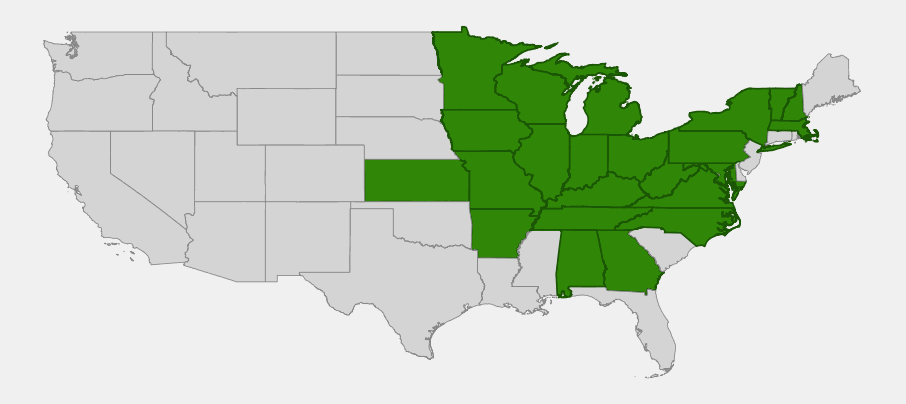
Black Maple is native to the eastern and midwestern United States and adjacent southern Ontario, Canada, with a range centered on the Ohio and upper Mississippi River valleys. It runs roughly from New Hampshire and Vermont west through New York, Pennsylvania, and the Great Lakes states to Minnesota, Wisconsin, Iowa, and eastern Kansas, then south through Missouri, Arkansas, Kentucky, Tennessee, and into the Appalachian and southern Appalachian foothills of Virginia, West Virginia, Maryland, North Carolina, Georgia, and Alabama. It is most abundant in the Midwest and becomes progressively rarer toward the edges of this range — it is considered a rare species in New Hampshire, Vermont, Massachusetts, and Kansas.
Across this range, Black Maple favors rich, moist bottomland forests along rivers and major streams, often on calcareous soils derived from limestone bedrock, where it can be a dominant or co-dominant canopy tree. It also grows on moister slopes and coves in the Appalachians, typically mixed with Sugar Maple, American Basswood, and various oaks and hickories. Because it hybridizes readily with Sugar Maple wherever their ranges overlap, many wild populations show intermediate characteristics, and botanists continue to debate exactly where one species ends and the other begins.
Black Maple is not listed as nationally threatened or endangered — NatureServe ranks it globally secure (G5) — but it is notably uncommon or state-rare at the northern and western edges of its range, including New England and the Great Plains. It is not native to the West Coast, the Gulf Coast states, or most of the Southeast outside the southern Appalachians, and gardeners outside its native range should choose a regionally native shade tree instead.
📋 Regional plant lists featuring Black Maple: New Hampshire, Maine & Vermont · Connecticut, Massachusetts & Rhode Island · New York, Pennsylvania & Northern New Jersey · Maryland, Virginia & West Virginia · North Carolina & South Carolina · Georgia, Alabama & Mississippi · Arkansas, Louisiana, Eastern Oklahoma & Eastern Texas · Kentucky & Tennessee · Ohio & Indiana · Illinois, Iowa & Missouri · Michigan, Wisconsin & Eastern Minnesota · Nebraska, Kansas & Eastern Colorado
Growing & Care Guide
Black Maple makes a durable, long-lived shade tree for yards and parks with room to accommodate its eventual size. It rewards patience: growth is slow to moderate, but the payoff is a tree that can live well over a century and shrug off conditions that stress many other shade trees.
Light
Plant Black Maple in full sun to light part shade. Young trees establish and form a fuller crown with at least six hours of direct sun; in more shaded sites growth slows and the crown becomes more open and asymmetrical as the tree reaches for light.
Soil & Water
This species prefers moist, fertile, well-drained soil and performs best where it gets consistent moisture, as on a river terrace or in a lawn with regular watering. It is more tolerant than Sugar Maple of neutral to mildly alkaline, clay-heavy soils, which makes it a useful choice on calcareous ground where Sugar Maple sometimes struggles with chlorosis. It does not tolerate prolonged drought or waterlogged soil well; aim for evenly moist conditions, especially through the first several years after planting.
Planting Tips
Plant balled-and-burlapped or container-grown stock in early spring or fall. Give Black Maple plenty of room — at least 40 feet from structures and other large trees — to let its crown develop fully. Like other maples, it is sensitive to soil compaction and girdling roots, so avoid planting too deep and keep the root flare visible at the soil surface. Mulch generously but keep mulch away from direct contact with the trunk.
Pruning & Maintenance
Prune in late fall or winter while the tree is dormant; maples pruned in spring “bleed” sap heavily from cuts, which is harmless but messy. Remove dead, crossing, or weakly attached branches and establish a strong central leader while the tree is young. Once established, Black Maple needs little routine maintenance beyond occasional structural pruning and watching for storm damage to its broad crown.
Propagation
Propagate from freshly collected seed, which requires cold, moist stratification over winter to break dormancy — sow outdoors in fall or stratify in a refrigerator for 90 to 120 days before spring sowing. Named selections are typically grafted, but straight species trees grown from local seed are the best choice for restoration and wildlife plantings.
Landscape Uses
Black Maple fits a range of planting goals:
- Shade tree for large residential lots, parks, and streetscapes with adequate root space
- Floodplain and riparian restoration on calcareous bottomland soils
- Specimen tree valued for dependable yellow fall color
- Woodland and naturalized plantings alongside Sugar Maple, oaks, and hickories
- Maple syrup production — sap sugar content is comparable to Sugar Maple
Wildlife & Ecological Value
As a long-lived canopy tree of rich bottomland forests, Black Maple supports a wide web of wildlife across the seasons, much like its close relative Sugar Maple.
For Pollinators
The small, wind-pollinated spring flowers are nonetheless visited by early-emerging native bees and honeybees seeking pollen and nectar at a time when few other food sources are available, making Black Maple a useful early-season resource in forest and woodland-edge plantings.
For Birds
Seed-eating birds, including evening grosbeaks and various finches, feed on the winged samaras, while the dense canopy provides nesting sites and cover for songbirds. Cavity-nesting species make use of hollows that develop in older trees, and the canopy’s insect life supports foraging warblers and vireos through the growing season.
For Mammals
Squirrels and chipmunks eat the samaras and sometimes strip bark to access the sweet sap, the same trait that makes maples valuable for syrup production. White-tailed deer browse seedlings and young saplings, which can make regeneration difficult in areas with high deer densities.
Ecosystem Role
Black Maple is often a dominant or co-dominant tree in rich bottomland and mesic slope forests, where its canopy shapes understory light conditions and its leaf litter — which breaks down readily — contributes to fertile forest-floor soils. Because it favors calcareous substrates, it is frequently found alongside other lime-loving understory plants, contributing to some of the most diverse wildflower communities in the eastern deciduous forest.
Cultural & Historical Uses
Black Maple has long been tapped for maple syrup alongside Sugar Maple, and its sap sugar content is comparable, making it a valued though less famous syrup tree across its range. Indigenous peoples throughout the Ohio and Mississippi valleys tapped both species for sap and used the hard, strong wood for tool handles and implements long before European settlement.
European settlers and foresters historically grouped Black Maple with Sugar Maple under the commercial lumber category “hard maple,” prized for flooring, furniture, and tool handles for its strength and fine, even grain. Because the two species are difficult to distinguish once milled, Black Maple timber has rarely been marketed or studied separately from Sugar Maple, even though botanists have long recognized it as a distinct, if closely related, species.
Today Black Maple remains primarily a forest and shade tree rather than a horticultural specialty, appreciated by foresters and native-plant gardeners for its resilience on difficult bottomland and alkaline soils where Sugar Maple sometimes falters.
Frequently Asked Questions
How do I tell Black Maple from Sugar Maple?
Look at the leaves: Black Maple typically has three main lobes with shallow, rounded sinuses and often droops or curls at the edges, while Sugar Maple usually has five lobes with sharper points. Black Maple bark is generally darker and more coarsely furrowed, and its twigs and leaf undersides are often finely hairy, whereas Sugar Maple’s are usually hairless. Where their ranges overlap, however, the two species hybridize, and some individuals show intermediate traits.
Can I tap Black Maple for syrup?
Yes. Black Maple sap has a sugar content comparable to Sugar Maple’s and can be tapped and boiled down the same way. Many maple syrup producers in the Midwest harvest from both species without distinguishing between them.
How fast does Black Maple grow?
Growth is slow to moderate, typically around 1 foot per year under good conditions, slower on compacted or dry sites. It is a long-term investment tree — plant it where you want shade for decades, not a quick fix.
Is Black Maple native to my state?
It is native to much of the eastern and midwestern United States, from New Hampshire and Vermont west to Minnesota and eastern Kansas, and south through the Ohio Valley into Kentucky, Tennessee, and the southern Appalachians. It is rare at the northern and western edges of this range and is not native to the West Coast, Gulf Coast, or most of the Deep South — check the state list above before planting.
Does Black Maple have good fall color?
Yes, though it leans toward a dependable clear yellow or gold rather than the fiery orange-red of Sugar Maple. It is still a strong fall performer, especially in mass plantings or woodland settings where its color complements red and orange-turning neighbors like oaks and other maples.

Looking for a nursery that carries Black Maple?
Browse our native plant nursery directory: Alabama & Arkansas · Georgia · Iowa, Illinois, Indiana & Kansas · Kentucky, Maryland, Massachusetts, Michigan, Minnesota & Missouri · North Carolina, New Hampshire, New York & Ohio · Pennsylvania, Tennessee, Virginia & Vermont · West Virginia & Wisconsin