
White Flat-topped Goldenrod (Oligoneuron album)
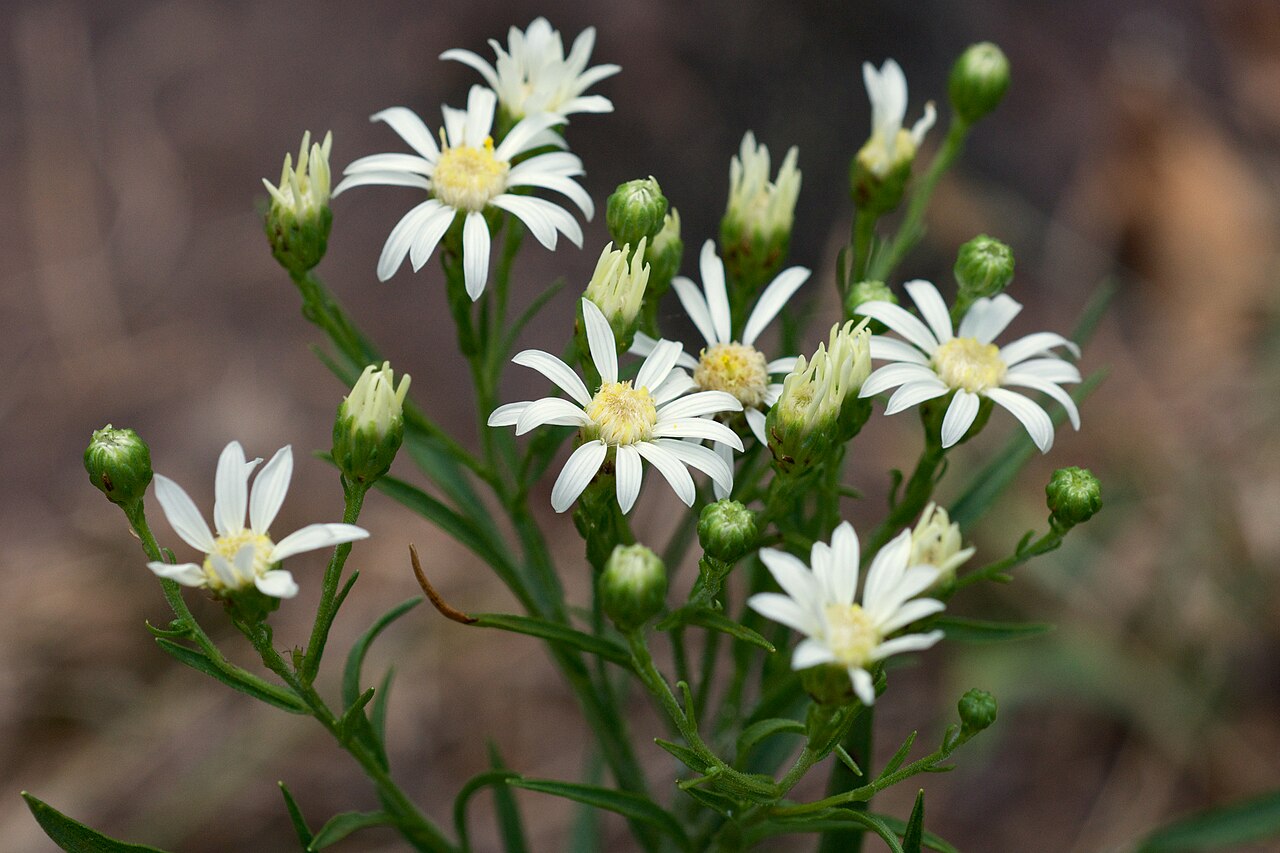
Oligoneuron album, known as White Flat-topped Goldenrod, prairie goldenrod, upland white aster or upland white goldenrod, is a small, white-flowered goldenrod of dry prairies, sand, gravel and limestone outcrops across the northern United States and southern Canada. Many floras and gardeners know it as Solidago ptarmicoides, and older books call it Aster ptarmicoides. It grows 4 to 20 inches tall, with tufts of stiff, narrow, grass-like leaves and, in late summer, flat-topped clusters of white, daisy-like flower heads.
It is a botanical puzzle that has been passed back and forth between asters and goldenrods. Its white rays made early botanists call it an aster, but its flower structure, chemistry and DNA show that it is a goldenrod, closely related to stiff goldenrod (Solidago rigida) and the other flat-topped goldenrods. It even hybridizes with them, producing plants with pale yellow rays.
It is uncommon to rare over much of its range. Several states list it as endangered or of conservation concern, so buy only nursery-propagated plants or seed, and never dig plants from the wild. This guide covers how to identify it, where it grows, how to grow it and its value to pollinators.
Identification
White flat-topped goldenrod looks more like a small white aster than a goldenrod. Its narrow basal leaves, flat-topped cluster of white heads, and dry, open habitat are the keys to recognizing it.
Leaves & Growth Habit
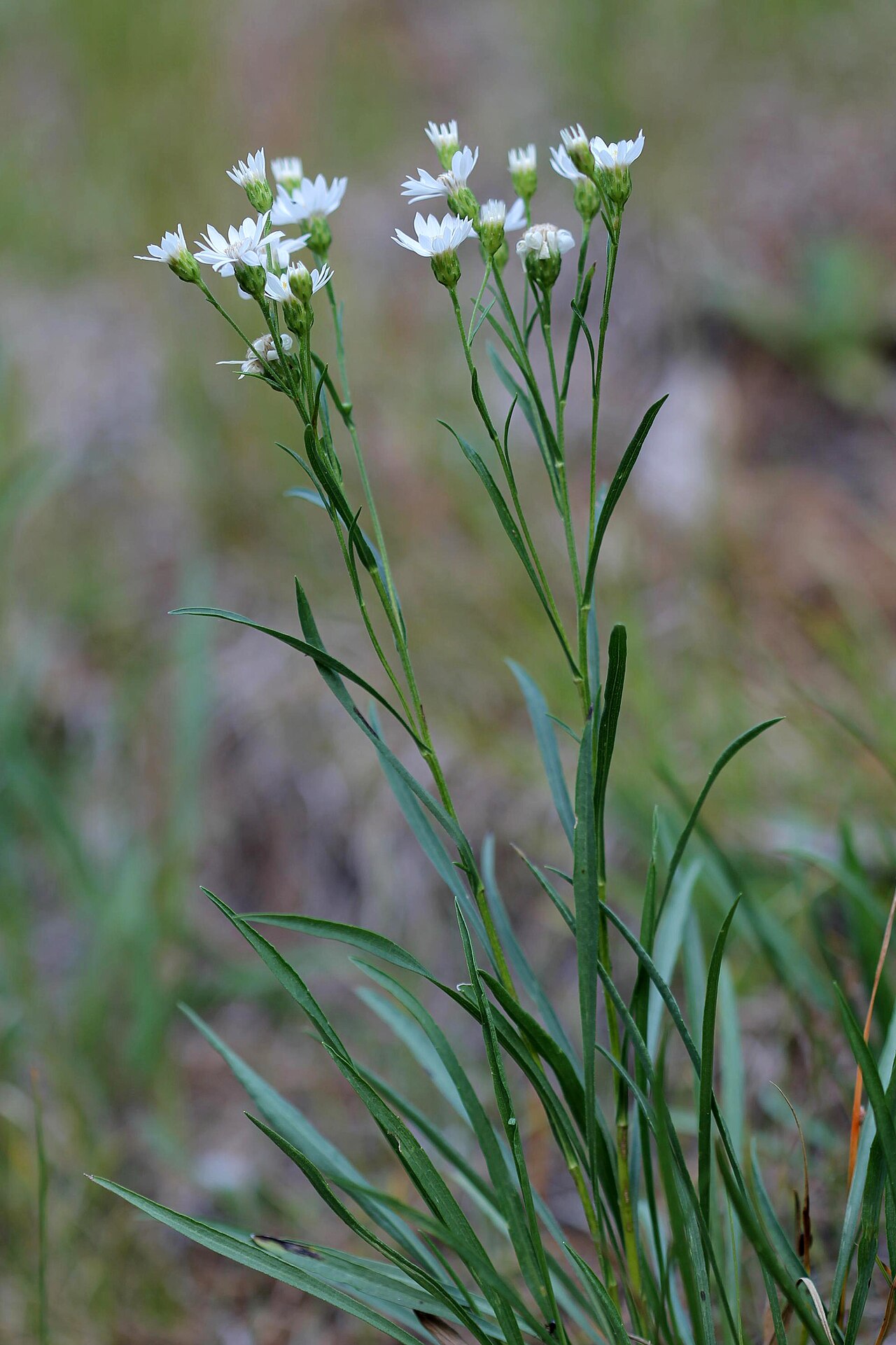
A clump-forming perennial from a woody base, usually with several stems 4 to 20 inches tall, occasionally to about 2 feet. The basal leaves are long, narrow and grass-like, 3 to 8 inches long and about ¼ inch wide, stiff, with rough edges and a few faint parallel veins. The stem leaves are similar but shorter, becoming small near the top. Basal leaves usually remain green at flowering time.
Flowers
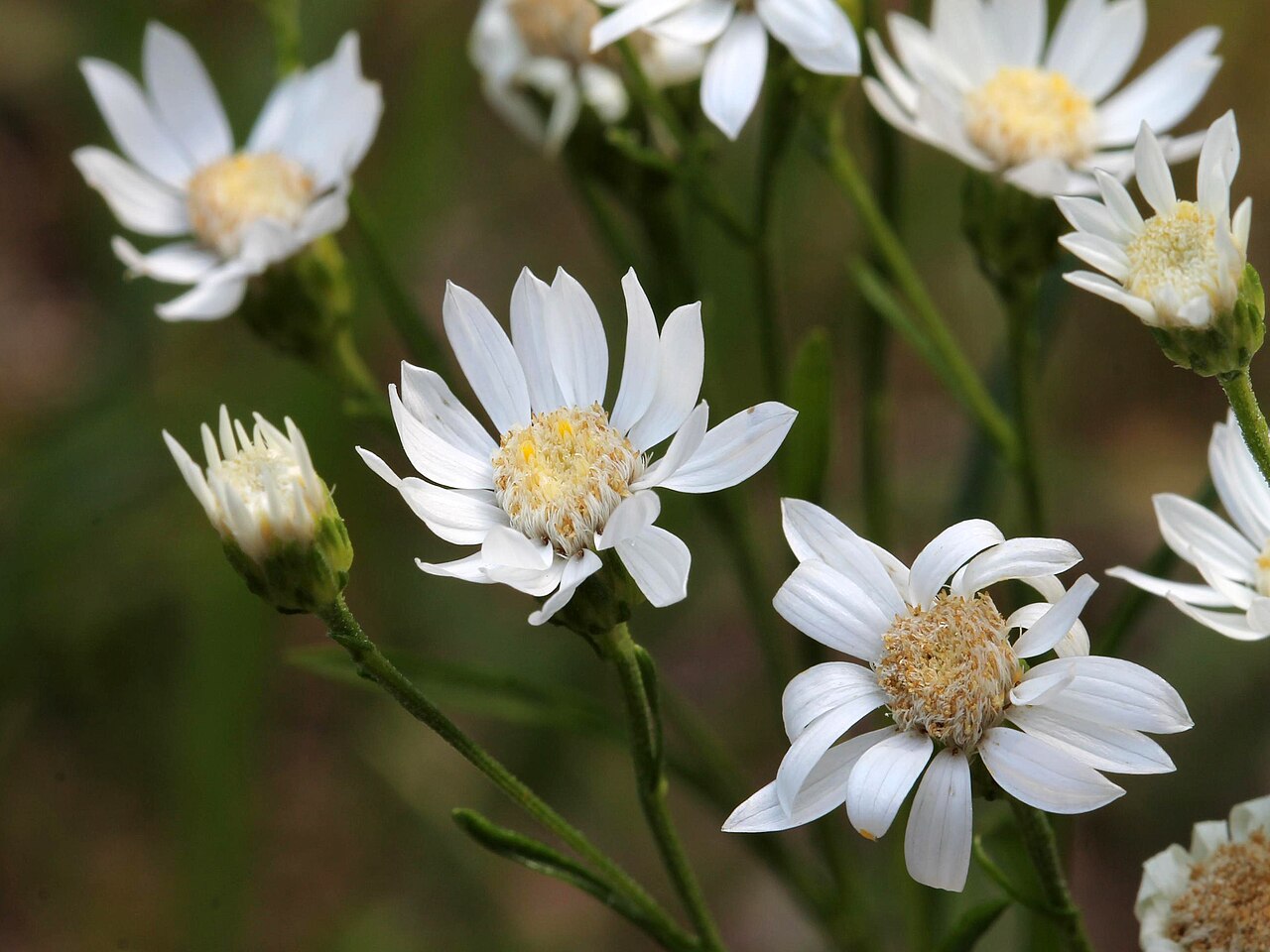
Flowers bloom from July to September in a flat-topped or slightly rounded cluster of a few to about 50 heads at the top of the stem. Each head is about ½ to ¾ inch across, with about 10 to 25 white rays around a disk of small, pale yellow to cream florets. The bracts beneath the head are greenish with pale margins.
Fruit
The seeds (achenes) are small and nearly smooth, each with a tuft of white bristles that carries it on the wind in fall.
Look-alikes
Flat-top White Aster is much taller, with broad leaves and fewer, more ragged rays, and grows in moist ground. Heath Aster has tiny, crowded leaves and many small heads. Silverrod is the other white-rayed goldenrod, but its heads form a narrow, wand-like spike instead of a flat top. Hybrids with Stiff Goldenrod and other flat-topped goldenrods have pale yellow rays.
Quick Facts
| Scientific Name | Oligoneuron album (syn. Solidago ptarmicoides, Aster ptarmicoides, Unamia alba) |
| Family | Asteraceae (aster family) |
| Plant Type | Herbaceous perennial wildflower |
| Mature Height | 4–20 in (occasionally to 2 ft) |
| Mature Spread | 6–12 in |
| Growth Rate | Slow to moderate |
| Sun Exposure | Full sun |
| Water Needs | Low; dry to medium, well-drained soil |
| Soil Type | Sand, gravel, thin soil over limestone or dolomite, rocky prairie |
| Soil pH | Neutral to alkaline (tolerates slightly acidic sand) |
| Bloom Time | July–September |
| Flower Color | White rays with a pale yellow to cream center |
| Fall Color | Foliage turns tan to purplish |
| Fruit | Small achenes with white bristles, wind-dispersed |
| Deer Resistant | Moderately |
| USDA Hardiness Zones | About 3–7 |
Native Range
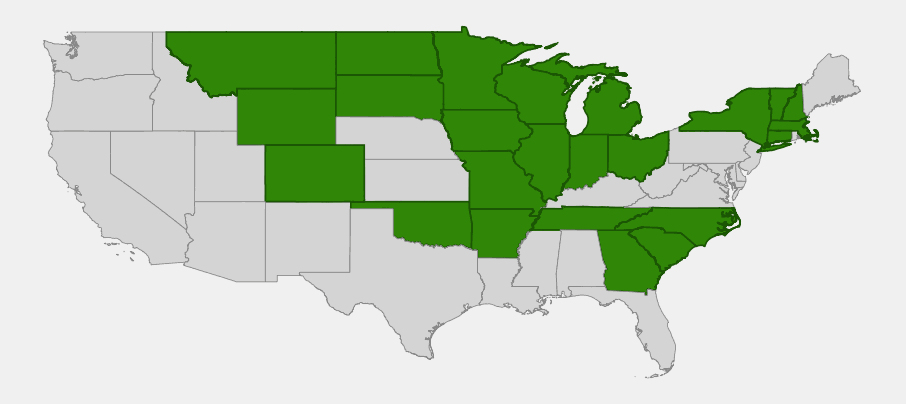
White flat-topped goldenrod is native to central and eastern North America. In Canada it ranges from Saskatchewan and Manitoba east through Ontario and Quebec to New Brunswick. In the United States it is most common in the upper Midwest and Great Lakes region, especially Minnesota, Wisconsin, Michigan, Illinois and Iowa, and on the northern Great Plains of the Dakotas. USDA PLANTS lists it in 24 states.
Outside that core it is scattered and often rare: in the Ozarks of Missouri and Arkansas and in Oklahoma, in Montana, Wyoming and Colorado, in New York and New England, and in isolated populations in Tennessee, North Carolina, South Carolina and Georgia. It is listed as endangered in Connecticut, Massachusetts, New Hampshire, North Carolina and Tennessee, as rare in Indiana, and as presumed extirpated in Ohio, according to the USDA PLANTS database.
It grows in dry, open, sunny places with little competition: sand and gravel prairies, hill prairies, sand dunes and lakeshores, limestone and dolomite outcrops, alvars and glades, rocky ridges and old fields on thin soil. In the Great Lakes it is a characteristic plant of alvars and limestone shores, such as those on Manitoulin Island and the Door Peninsula.
📋 Regional plant lists featuring White Flat-topped Goldenrod: Montana & Wyoming · North Dakota, South Dakota & Western Minnesota · Michigan, Wisconsin & Eastern Minnesota · Illinois, Iowa & Missouri · Ohio & Indiana · Kentucky & Tennessee · Arkansas, Louisiana, Eastern Oklahoma & Eastern Texas · Alabama, Georgia & Mississippi · North & South Carolina · New York, Pennsylvania & Northern New Jersey · Delaware, Southern New Jersey & Long Island · Connecticut, Massachusetts & Rhode Island · New Hampshire, Maine & Vermont
Growing & Care Guide
White flat-topped goldenrod is a compact, well-behaved goldenrod that suits small gardens. Prairie nurseries in the Midwest offer seed and plants under both Solidago ptarmicoides and Oligoneuron album. Because it is rare in many states, use nursery-propagated stock or seed and never dig plants from the wild.
Light
Full sun. It needs open conditions and declines when shaded or crowded by taller plants.
Soil & Water
Plant it in dry to medium, well-drained soil: sand, gravel or rocky soil, including alkaline soils over limestone. It is very drought tolerant once established. Rich, moist garden soil makes it floppy and short-lived, and wet winter soil can rot it.
Planting Tips
Plant in spring or fall in a rock garden, gravel garden, green roof, sunny slope or the front of a short-grass prairie planting, spacing plants about 12 inches apart. Pair it with little bluestem, prairie dropseed, sideoats grama, blazing stars and asters of similar size. Unlike many goldenrods, it does not spread aggressively by rhizomes.
Pruning & Maintenance
Little care is needed. Leave the seed heads standing for winter interest and to self-sow lightly, and cut stems back in early spring. Keep taller, aggressive neighbors from overgrowing it.
Propagation
Sow seed outdoors in fall, or in spring after about 60 days of cold, moist stratification; press it onto the soil surface, since it germinates best with light. Mature clumps can be divided carefully in early spring.
Landscape Uses
- Rock and gravel gardens: compact white flowers on thin, dry soils
- Short-grass prairie plantings: pairs with little bluestem, dropseed and grama grasses
- Pollinator gardens: late-summer nectar and pollen for bees and butterflies
- Conservation plantings: alvars, sand prairies and limestone glades within its range
Wildlife & Ecological Value
Like other goldenrods, white flat-topped goldenrod is a valuable late-season resource for insects in dry, open habitats.
For Pollinators
Its flowers attract many small native bees, including sweat bees and mining bees, as well as bumble bees, flower flies, butterflies and beetles. Goldenrods as a group support numerous specialist bees and the caterpillars of many moths, and this species contributes to that late-summer food supply in prairies and alvars.
For Birds
Small seed-eating birds such as goldfinches, sparrows and juncos eat goldenrod seeds in fall and winter, and the insects drawn to the flowers feed songbirds.
For Mammals
Deer and rabbits occasionally graze it, but its stiff leaves and low stature on dry ground mean it is rarely heavily browsed.
Ecosystem Role
It is a characteristic plant of sand prairies, hill prairies, alvars and other dry, open communities that have become uncommon. Its presence often signals a high-quality remnant of these habitats.
Cultural & Historical Uses
Thomas Nuttall first described the plant in 1818 as Chrysopsis alba, the white golden-aster, and the epithet album (“white”) in its current name comes from that description. It was later placed in Doellingeria and then in Aster as Aster ptarmicoides. The epithet ptarmicoides means “like Ptarmica,” the sneezewort yarrow, which also has white, flat-topped flower clusters; the old name sneezewort goldenrod comes from the same comparison.
In the 20th century, botanists noticed that it hybridizes freely with goldenrods, and studies of its chemistry, anatomy and DNA confirmed that it belongs with them. The Canadian botanist Bernard Boivin moved it to Solidago as Solidago ptarmicoides, and Guy Nesom later placed it in Oligoneuron as Oligoneuron album, the name used by USDA PLANTS. Many current floras treat Oligoneuron as part of Solidago.
Its many names reflect this history: white flat-topped goldenrod, prairie goldenrod, upland white aster, upland white goldenrod and sneezewort aster. Whatever the name, it is one of the few goldenrods with white flowers.
Frequently Asked Questions
Is it a goldenrod or an aster?
It is a goldenrod. It was long called Aster ptarmicoides because of its white rays, but its chemistry, anatomy, DNA and its ability to hybridize with goldenrods show that it belongs with the flat-topped goldenrods.
What is its scientific name?
USDA PLANTS uses Oligoneuron album. Many floras and nurseries use Solidago ptarmicoides, and older sources use Aster ptarmicoides or Unamia alba.
Is white flat-topped goldenrod rare?
It is locally common in parts of the upper Midwest and Great Lakes, but it is rare over much of its range. It is listed as endangered in Connecticut, Massachusetts, New Hampshire, North Carolina and Tennessee, as rare in Indiana, and as presumed extirpated in Ohio.
Does it spread like other goldenrods?
No. It forms compact clumps and does not run by rhizomes, so it is well suited to small gardens and rock gardens.
Where should I plant it?
In full sun in dry, well-drained sand, gravel or rocky soil, such as a rock garden, gravel garden or short prairie planting. Use nursery-propagated plants or seed, never wild-dug plants.

Looking for a nursery that carries White Flat-topped Goldenrod?
Browse our native plant nursery directory: Arkansas · Colorado, Connecticut & Georgia · Illinois, Indiana & Iowa · Massachusetts, Michigan, Minnesota, Missouri & Montana · New Hampshire, New York, North Carolina, North Dakota, Ohio & Oklahoma · South Carolina, South Dakota, Tennessee & Vermont · Wisconsin & Wyoming

