
Silverrod (Solidago bicolor)
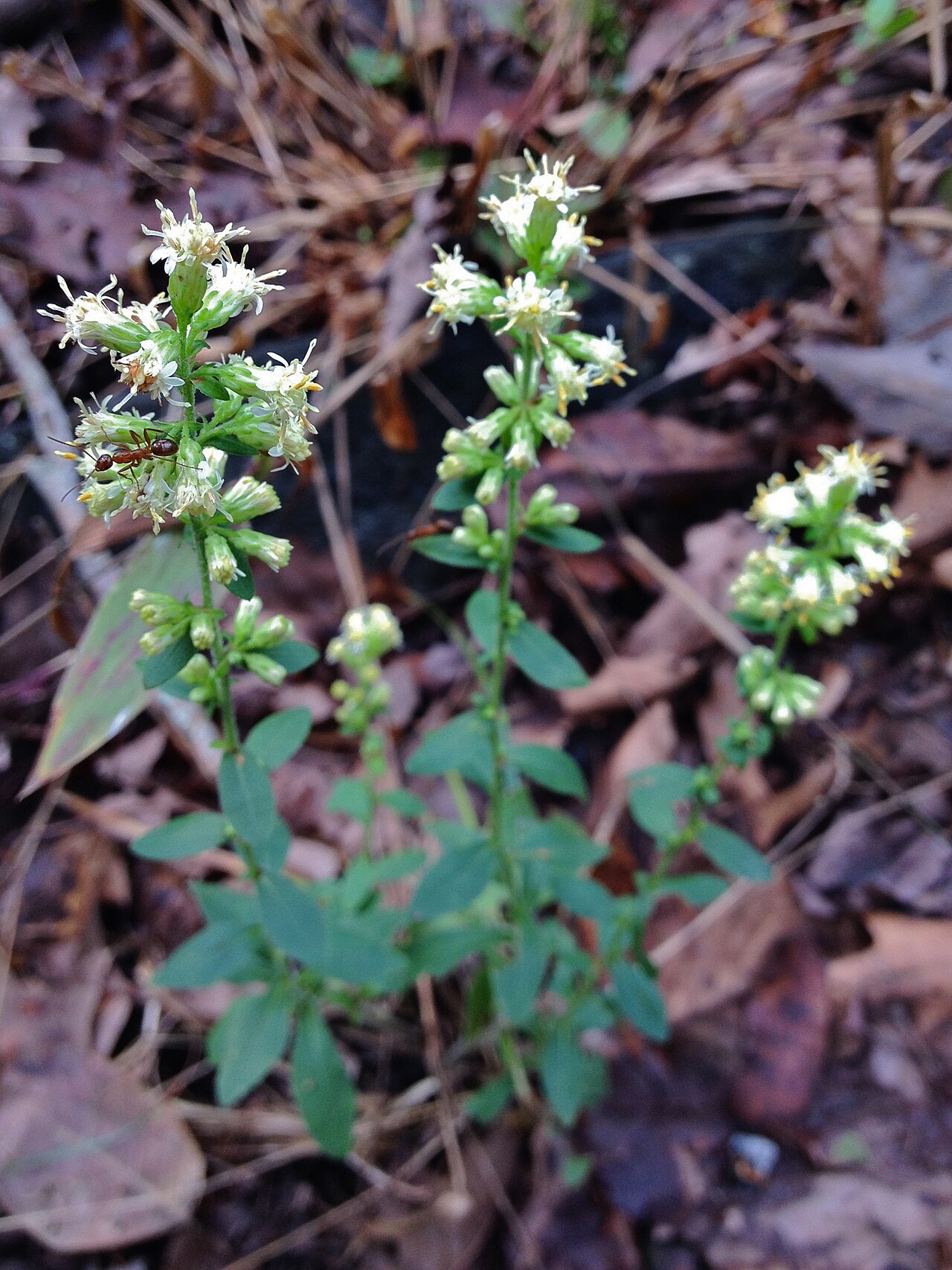
Solidago bicolor, known as Silverrod or white goldenrod (the USDA common name), is the goldenrod that breaks the rule. Nearly every other goldenrod in eastern North America has yellow flowers, but silverrod carries narrow spikes of flower heads with white to creamy rays around a pale yellow center. It is a modest, upright perennial of the aster family (Asteraceae), usually 1 to 3 feet tall, that blooms from late summer into fall in dry, open woods, rocky slopes, old fields and sandy clearings.
The species name bicolor refers to those two-toned heads: white rays and yellowish disc florets. Silverrod is a plant of thin, poor soils. It does best where few other wildflowers thrive, on acidic sand, shale and gravel under oaks and pines, along woodland trails and road banks, and in the openings that follow fire or logging. Because it tolerates dry shade better than most goldenrods, it is one of the more useful late-season nectar plants for woodland gardens.
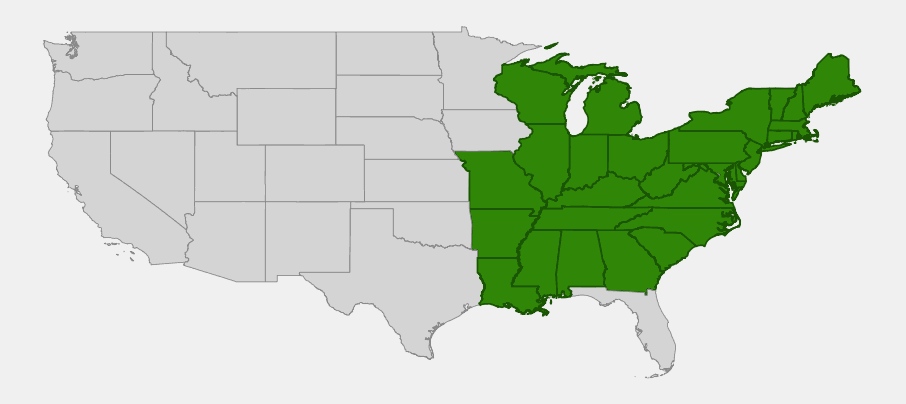
Silverrod ranges from Nova Scotia, Quebec, Ontario and Manitoba south through New England and the Appalachians to Georgia, Alabama, Mississippi and Louisiana, and west to Wisconsin, Illinois, Missouri and Arkansas. This guide covers how to tell it from its close relatives, where it grows, how to use it in a garden, and why its late-season flowers matter to bees and other insects.
Identification
In flower, silverrod is one of the easiest goldenrods to identify, since white rays on a goldenrod-shaped spike are distinctive. Before it blooms it is easy to mistake for other woodland goldenrods, so look at the hairy stem and the shape of the basal leaves as well.
Stems
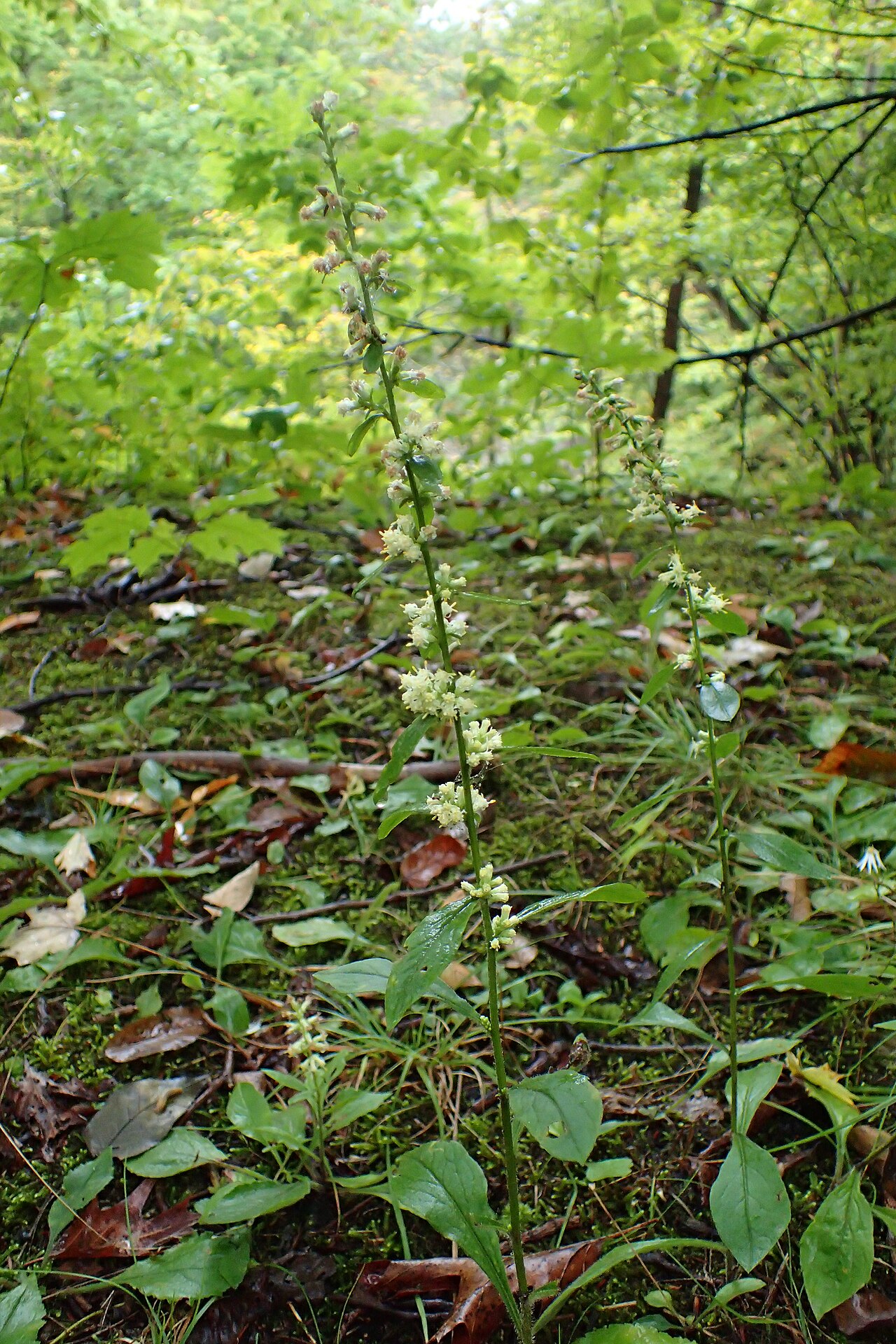
Silverrod usually sends up one to a few stiff, unbranched stems from a short, woody crown (caudex). The stems are grayish green and covered with short, soft hairs, which give the plant a slightly dusty look. Most plants are 1 to 3 feet tall, though small plants on very poor soil may flower at under a foot.
Leaves
The largest leaves form a loose basal rosette and grow on the lower stem. They are oblong to elliptic or broadly lance-shaped, 2 to 4 inches long (occasionally longer), with a tapering, stalk-like base and shallowly toothed or nearly smooth edges. Both surfaces are hairy, especially underneath. Leaves become smaller, narrower and stalkless as they climb the stem, and the uppermost leaves among the flowers are small and bract-like. Lower leaves often wither by flowering time.
Flowers
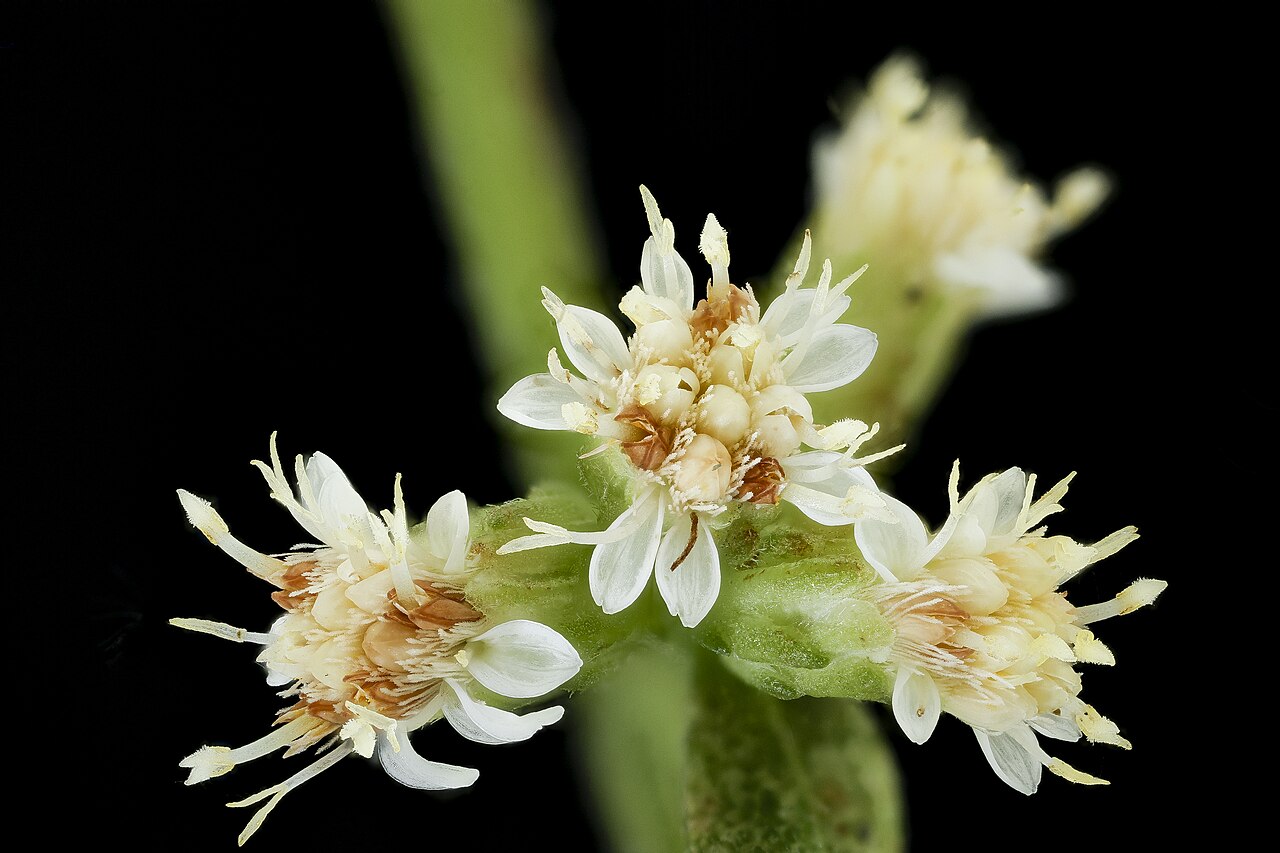
The flower heads are crowded in short clusters in the axils of the upper leaves, forming a narrow, wand-like spike (a thyrse) at the top of the stem, sometimes with a few short side branches at its base. Each head is about ¼ inch across, with roughly 7 to 9 short white or cream ray florets surrounding a small cluster of pale yellow disc florets. Seen from a distance the whole spike looks white to silvery, which explains the common name.
Silverrod blooms from about July or August into October, later in the South than in the North, and plants often continue flowering after the first light frosts.
Similar Species
Hairy goldenrod (Solidago hispida) is very similar in shape and hairiness but has yellow rays. Some botanists treat the two as closely related varieties, and pale intermediates are occasionally reported where they grow together. Wreath Goldenrod (S. caesia) and zigzag goldenrod (S. flexicaulis) also grow in woodland shade, but both have smooth stems and yellow flowers. Upland white goldenrod (Solidago ptarmicoides, also called Oligoneuron album) is white-flowered too, but it has a flat-topped cluster of larger heads and narrow grass-like leaves, and it grows on prairies and limestone barrens rather than in dry woods.
Fruit & Seeds
After flowering, each disc and ray floret produces a tiny, ribbed achene topped with a tuft of white bristles (pappus). The fluffy seed heads open in late fall and the seeds drift on the wind, so silverrod can appear in new clearings and on fresh road cuts without help.
Quick Facts
| Scientific Name | Solidago bicolor L. |
| Family | Asteraceae (aster family) |
| Plant Type | Herbaceous perennial wildflower from a short woody crown |
| Mature Height | 1–3 ft |
| Mature Spread | 6–18 in; forms small clumps |
| Growth Rate | Moderate |
| Sun Exposure | Full sun to part shade |
| Water Needs | Low; prefers dry to medium-dry soil |
| Soil Type | Sandy, gravelly, rocky or shaly soils; tolerates thin, poor soil |
| Soil pH | About 4.5–7.0 (acidic to near neutral) |
| Bloom Time | August–October (from July in some areas) |
| Flower Color | White to cream rays with pale yellow centers |
| Fall Color | None notable; seed heads turn fluffy and silvery |
| Fruit | Small achenes with white bristly pappus, dispersed by wind |
| Deer Resistant | Moderately; deer browse it occasionally |
| USDA Hardiness Zones | 3–8 |
Native Range
Silverrod is a plant of eastern North America. USDA PLANTS records it as native in 28 states and the District of Columbia, from Maine, New Hampshire and Vermont south through the Appalachians and Piedmont to Georgia, Alabama and Mississippi, and west to Wisconsin, Illinois, Missouri, Arkansas and Louisiana. In Canada it grows in Manitoba, Ontario, Quebec, New Brunswick, Nova Scotia and Prince Edward Island.
It is most common in the Northeast and the Appalachian region, where dry oak and pine woods, rocky ridges and shale barrens offer plenty of the thin, acidic soil it prefers. Toward the south and west of its range it becomes more scattered, limited to dry upland woods, sandy openings and rocky glades. It is largely absent from the outer Coastal Plain of the Southeast, from Florida, and from the prairies west of the Mississippi, where hairy goldenrod and other species take its place.
Silverrod is a typical plant of disturbed but nutrient-poor ground. It often moves into woodland roadsides, power-line cuts, trail edges and old burned or logged areas, and it persists in the light shade of open woods as the trees grow back.
📋 Regional plant lists featuring Silverrod: Alabama, Georgia & Mississippi · North & South Carolina · Maryland, Virginia & West Virginia · Kentucky & Tennessee · Arkansas, Louisiana, Eastern Oklahoma & Eastern Texas · Illinois, Iowa & Missouri · Ohio & Indiana · Michigan, Wisconsin & Eastern Minnesota · New York, Pennsylvania & Northern New Jersey · Delaware, Southern New Jersey & Long Island · Connecticut, Massachusetts & Rhode Island · New Hampshire, Maine & Vermont
Growing & Care Guide
Silverrod is an easy, low-maintenance plant for the dry, sunny or lightly shaded corners where many perennials struggle. It does not spread aggressively the way Canada goldenrod and tall goldenrod do, so it fits well in small gardens, woodland edges and rock gardens.
Light
Full sun to part shade. Silverrod flowers most heavily in sun or bright, dappled light, such as under high oak canopies or on the east side of a building. In deep shade it becomes thin and produces few flowers.
Soil & Water
Plant it in well-drained sandy, gravelly or rocky soil. It handles poor, acidic soils and drought well once established, and rich, moist garden soil makes it floppy and short-lived, since more vigorous plants crowd it out. Water new plants during their first summer; after that, rainfall is usually enough except in extended droughts. Fertilizer is unnecessary.
Planting Tips
Set out container plants in spring or early fall, about 12 to 18 inches apart. Silverrod looks best in small drifts of five or more, mixed with low grasses such as little bluestem or poverty oatgrass and with other late bloomers such as asters. Its narrow spikes take up little room, so plant it toward the front or middle of a border rather than behind taller plants.
Pruning & Maintenance
Little care is needed. Leave the stems standing through winter so birds can eat the seeds and insects can overwinter in the hollow stalks, then cut them back in late winter or early spring. Plants can be divided every few years if clumps become crowded. Remove tree seedlings and aggressive grasses that would shade or smother it.
Propagation
Silverrod grows readily from seed. Collect seed heads in late fall when the pappus turns fluffy, and sow them on the soil surface outdoors in fall or after a few weeks of cold, moist stratification in spring; the seeds need light to germinate, so cover them very lightly if at all. Mature clumps can also be divided in early spring. Plants from seed usually bloom in their second year.
Landscape Uses
- Dry woodland gardens: one of the few goldenrods that flowers well in the light shade of oaks and pines
- Rock gardens and slopes: handles thin, gravelly soil and summer drought
- Pollinator gardens: late-season nectar and pollen for bees, wasps, flies and butterflies
- Meadow and roadside plantings: a compact, non-aggressive goldenrod for low-fertility sites
- Restoration: re-establishing woodland edge and barrens vegetation after disturbance within its native range
Wildlife & Ecological Value
Like other goldenrods, silverrod is a late-season resource at a time when fewer plants are in bloom, and its small size makes it a good way to add that resource to dry, shady corners.
For Pollinators
Silverrod flowers attract a wide range of insects, including bumble bees, small sweat bees, mining bees, honey bees, wasps, soldier beetles, hover flies and late butterflies such as skippers. The Xerces Society notes it as having special value to native bees. Goldenrods in general support several pollen-specialist bees that collect only from goldenrods and asters, and they are among the most important native host plants for caterpillars of moths in eastern North America.
For Birds
American goldfinches, dark-eyed juncos, sparrows and other small seed-eating birds pick the seeds from standing stems in fall and winter. Insects that feed on the plant in summer, including caterpillars and leaf beetles, are food for nesting songbirds.
For Mammals
Deer sometimes browse silverrod, and rabbits and other small mammals may nibble the young shoots, but it is not a major food plant for mammals.
Ecosystem Role
Silverrod is an early colonist of thin, disturbed soils in woodland openings, where it helps hold soil and keeps flowering in light shade as woody plants return. It is part of the late-season flowering community that carries pollinators into fall, and its standing stems provide overwintering sites for insects. Like many plants of open oak woods and barrens, it benefits from occasional fire or other disturbance that keeps the canopy open.
Cultural & Historical Uses
Linnaeus named Solidago bicolor in 1767. The genus name comes from the Latin solidare, to make whole or heal, a reference to the medicinal reputation of European goldenrod. The common names silverrod and white goldenrod both appear in nineteenth-century American wildflower books, and Chester A. Reed’s Wild Flowers East of the Rockies (1910) illustrates it as “White Golden-rod; Silver-rod”.
Goldenrods are often blamed for late-summer hay fever, but silverrod, like other goldenrods, has heavy, sticky pollen carried by insects rather than wind. The real culprit is usually ragweed, which blooms at the same time and releases huge amounts of light, wind-blown pollen. Silverrod’s pale color and modest size have helped it escape some of that reputation.
There are records of traditional medicinal use of goldenrods by several Native American peoples, mostly as teas and poultices. Specific uses of silverrod are poorly documented, so it is best treated as an ornamental and wildlife plant rather than an herbal remedy.
Frequently Asked Questions
Is silverrod really a goldenrod?
Yes. Silverrod (Solidago bicolor) belongs to the same genus as the familiar yellow goldenrods. It is unusual only in having white rays, which make the whole flower spike look white or silvery.
Does silverrod cause hay fever?
No. Its pollen is heavy and sticky and is carried by insects, not by the wind. Hay fever in late summer is mostly caused by ragweed, which blooms at the same time.
Will silverrod take over my garden?
Unlikely. Unlike Canada goldenrod and tall goldenrod, silverrod has no long running rhizomes. It forms small clumps and may self-seed modestly on bare, poor soil, but it is easily outcompeted in rich garden beds.
Can silverrod grow in shade?
It tolerates part shade and dry woodland conditions better than most goldenrods. It flowers best with at least a few hours of sun or bright, dappled light, and it thins out in deep shade.
How do I tell silverrod from hairy goldenrod?
Look at the rays. Silverrod has white to cream rays, while hairy goldenrod (Solidago hispida) has yellow rays. Both have hairy stems and narrow flower spikes, and they sometimes grow together.

Looking for a nursery that carries Silverrod?
Browse our native plant nursery directory: Alabama & Arkansas · Connecticut, Delaware & Georgia · Illinois & Indiana · Kentucky, Louisiana, Maine, Maryland, Massachusetts, Michigan, Mississippi & Missouri · New Hampshire, New Jersey, New York, North Carolina & Ohio · Pennsylvania, Rhode Island, South Carolina, Tennessee, Vermont & Virginia · West Virginia & Wisconsin