Douglas Aster (Symphyotrichum subspicatum)
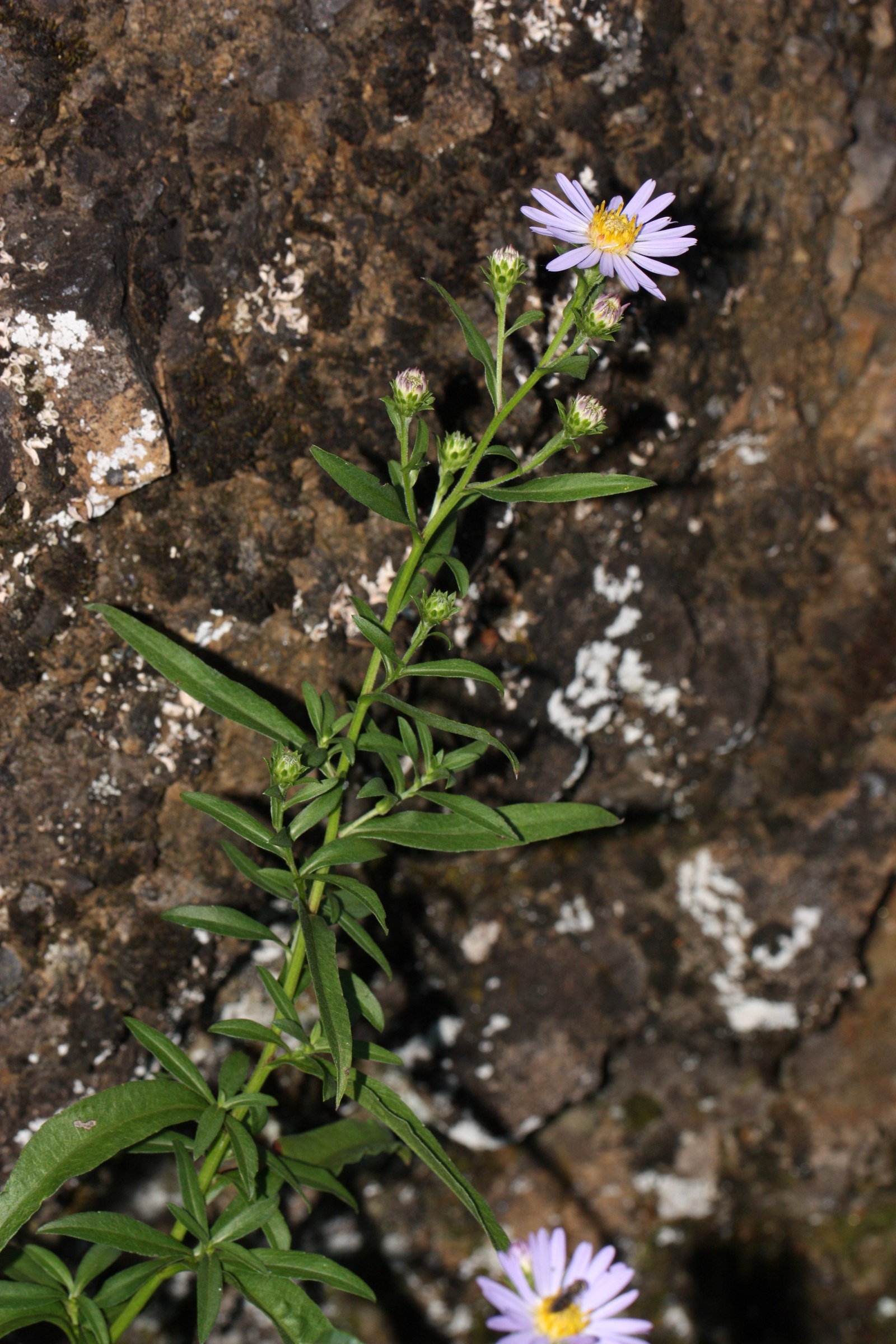
Symphyotrichum subspicatum (formerly Aster subspicatus), commonly known as Douglas Aster or Douglas’ aster, is a robust, rhizomatous perennial wildflower native to the moist lowlands and coastlines of western North America. Named for the Scottish botanist David Douglas, who collected extensively in the Pacific Northwest in the early 1800s, this aster is one of the most familiar native fall wildflowers from northern California up through Washington, bringing a late wave of violet-blue color to wet meadows, marsh edges, and streambanks just as summer wildflowers are fading.
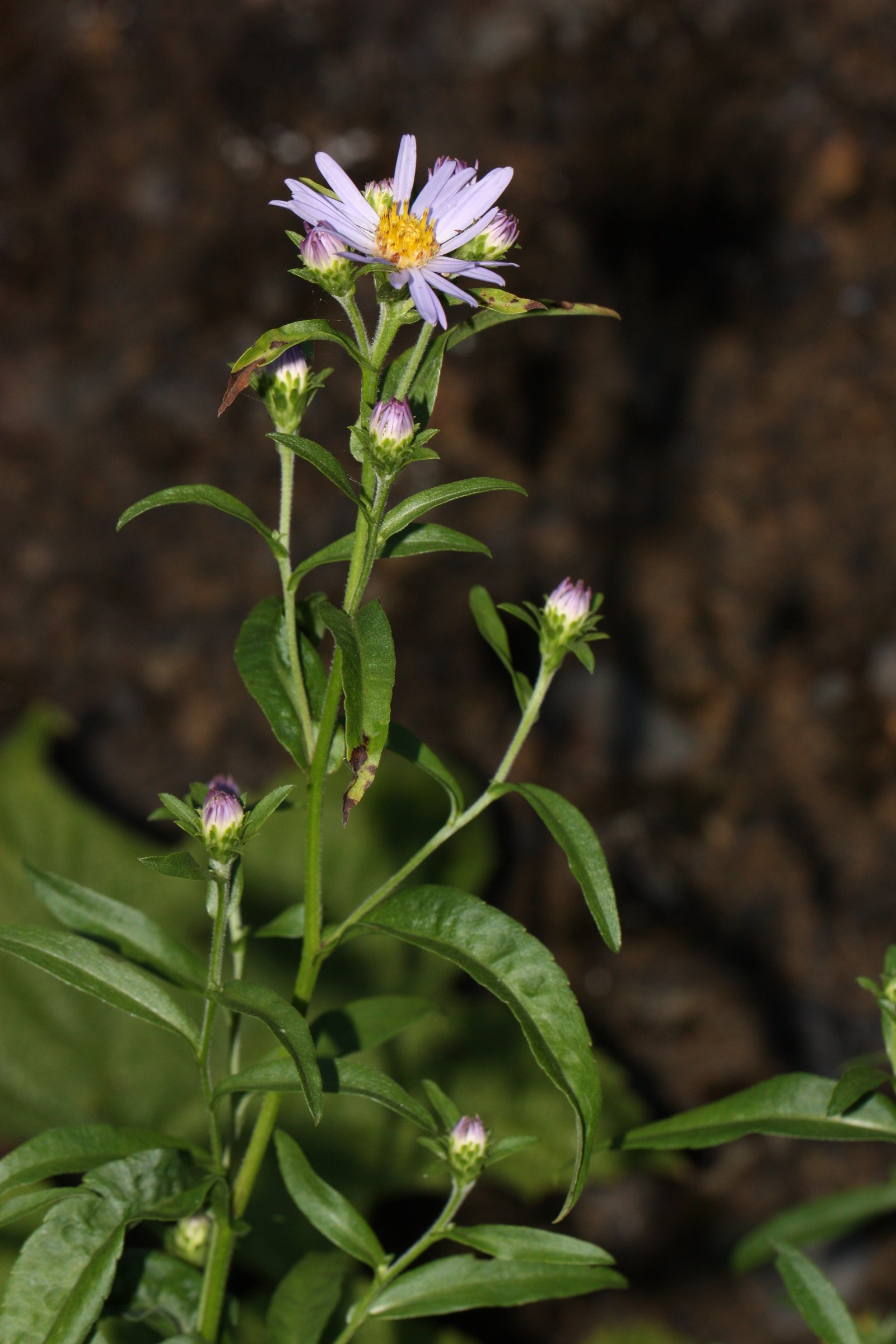
Douglas aster typically grows 1 to 4 feet tall on leafy, often hairy stems, spreading by rhizomes to form loose colonies rather than tight clumps. From late summer into fall, each plant produces abundant flower heads with slender violet ray florets surrounding a center of yellow disk florets that age to a dusty reddish hue — a two-tone effect that makes a single flower head look like it’s changing right before your eyes.
Because it tolerates both consistently moist soil and brief seasonal flooding, Douglas aster is an excellent choice for rain gardens, pond margins, and other damp spots in Pacific Northwest and northern California native gardens where many other asters would struggle.
Identification
Douglas aster is an herbaceous perennial reaching 1 to 4 feet (40–120 cm) tall, spreading at the base by creeping rhizomes into loose, expanding colonies. Stems are leafy to the top and often covered in fine, soft hairs, especially near the flower heads.
Stems
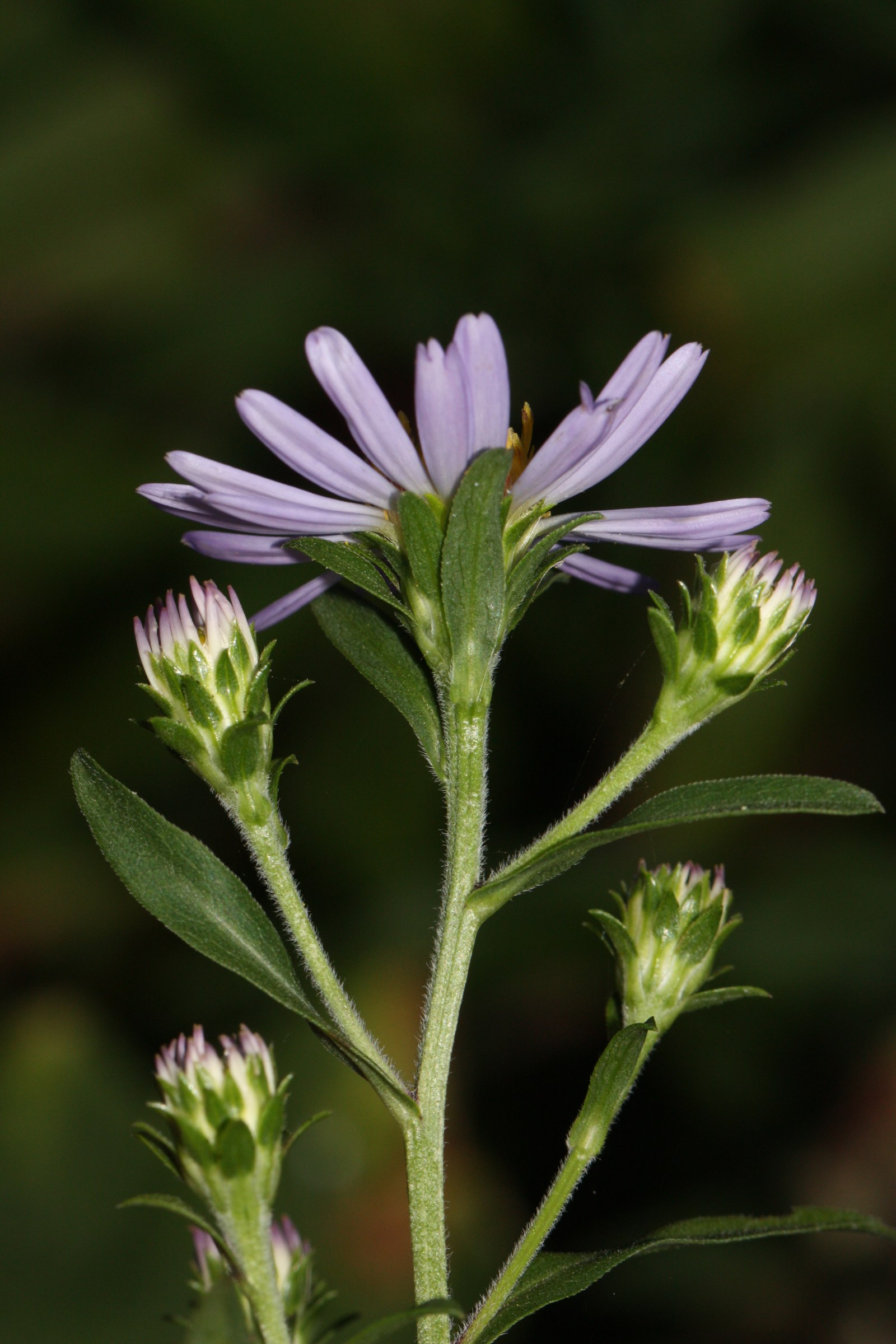
Stems are upright to somewhat sprawling, branching in the upper portion where the flower heads are borne, and are noticeably hairy, particularly just below the flower clusters.
Leaves
Leaves are lance-shaped to oblong, toothed or smooth-margined, and arranged alternately up the stem; lower leaves are larger and often have a short winged stalk (petiole), while upper leaves become smaller, narrower, and stalkless as they approach the flower heads.
Flowers
Flower heads are borne in loose, branched clusters at the stem tips, each about 1 to 1½ inches across. The 20 to 50 narrow ray florets are violet to pale blue-purple, surrounding a center of yellow disk florets that gradually turn a dull reddish-purple as the flower matures. Bloom typically runs from August through October.
Fruit & Seeds
Like other asters, the fruit is a small achene topped with a tuft of fine bristles (pappus) that carries the seed on the wind, maturing in the weeks following bloom.
Quick Facts
| Scientific Name | Symphyotrichum subspicatum (syn. Aster subspicatus) |
| Family | Asteraceae (Aster) |
| Plant Type | Herbaceous Perennial Wildflower |
| Mature Height | 1–4 ft |
| Mature Spread | 1–2 ft, spreading by rhizomes |
| Growth Rate | Moderate to fast |
| Sun Exposure | Full Sun to Part Shade |
| Water Needs | Moderate to High; tolerates seasonal wet soil |
| Soil Type | Moist to wet; loam, clay or sandy soils |
| Soil pH | Slightly acidic to neutral |
| Bloom Time | August – October |
| Flower Color | Violet to pale blue-purple with yellow centers |
| Fall Color | Foliage remains green through bloom |
| Fruit | Small bristle-tipped achenes |
| Deer Resistant | Somewhat; occasional browsing reported |
| USDA Hardiness Zones | 5–9 |
Native Range
Douglas aster is native to the Pacific coast and interior Northwest of North America, ranging from northern California through western Oregon and Washington and into the Idaho panhandle and western Montana. It is especially common and conspicuous in the lowlands west of the Cascade Range, where it is a familiar late-summer and fall wildflower of wetland margins and open, damp ground.
Typical habitats include freshwater and brackish marsh edges, wet meadows, streambanks, roadside ditches, and other seasonally or permanently moist, open sites. It tolerates periodic flooding and compacted or disturbed soils better than many native perennials, which allows it to thrive in highly altered wetland remnants as well as pristine ones.
Because it is adapted to consistently damp ground, Douglas aster is not well suited to dry garden sites outside of its native coastal and lowland range, and gardeners east of the Cascades or in drier interior climates should look to regionally appropriate aster species instead.
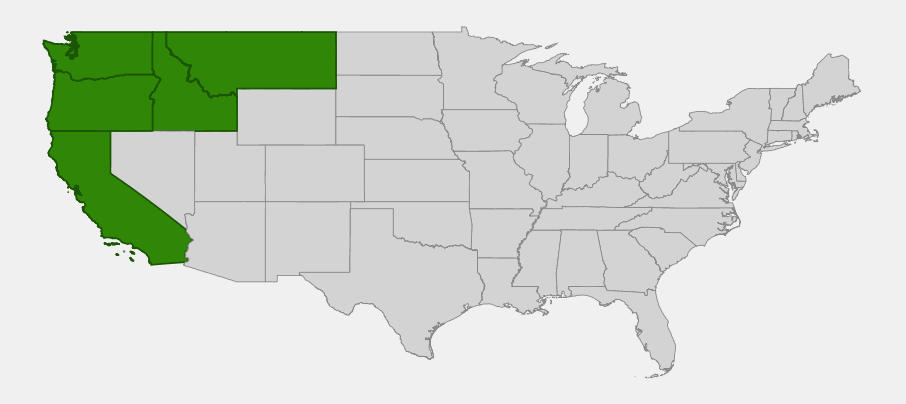
📋 Regional plant lists featuring Douglas Aster: Western Oregon & Western Washington · Idaho, Eastern Oregon & Eastern Washington · Montana & Wyoming
Growing & Care Guide
Douglas aster is a vigorous, easy-to-grow native for any garden with consistently moist soil, and it is one of the most reliable choices for wet spots that stump drier-adapted natives.
Light
Full sun produces the densest flowering and sturdiest stems. Douglas aster also tolerates part shade, particularly near the coast, though plants may become slightly more open and lax in reduced light.
Soil & Water
This species thrives in moist to wet soils and tolerates occasional standing water or seasonal flooding, making it an excellent choice for rain gardens, pond edges, and low spots that stay damp through summer. It adapts to loam, clay, or sandy soils as long as moisture is adequate, and is not a good match for dry, well-drained sites.
Planting Tips
Plant container stock in spring or fall, spacing plants 18 to 24 inches apart to allow room for rhizome spread. It establishes readily in disturbed, damp ground and is often one of the first native wildflowers to colonize restored wetland margins.
Pruning & Maintenance
Cut stems back to the ground in late winter after seedheads have fed birds through the fall and early winter. Because it spreads by rhizomes, it may need occasional dividing or thinning every few years to keep it from crowding out less vigorous neighbors in smaller garden beds.
Propagation
Divide rhizomatous clumps in early spring before new growth is well underway. Seed can also be collected in fall and sown directly, germinating readily with the moisture and cool temperatures of a Pacific Northwest winter.
Landscape Uses
- Rain gardens and bioswales where soils stay consistently moist
- Pond and stream margins as a naturalizing native perennial
- Wetland restoration plantings
- Pollinator gardens for late-season nectar in damp sites
- Wet meadow mixes alongside native sedges and rushes
Wildlife & Ecological Value
Douglas aster’s late bloom time and wetland habitat make it an important resource for pollinators and wildlife moving through Pacific Northwest lowlands in fall.
For Pollinators
The abundant flower heads attract native bees, honey bees, butterflies, and syrphid flies at a time of year when few other wetland wildflowers remain in bloom, providing crucial late-season forage before winter.
For Birds
Seed-eating birds, including sparrows and finches, feed on the ripened achenes through fall, particularly where stems are left standing into winter rather than cut back in autumn.
Ecosystem Role
As a rhizomatous colonizer of disturbed, damp ground, Douglas aster plays a useful stabilizing role in wetland edges and restoration sites, helping hold soil and outcompete some weedy species while flowers are established.
Cultural & Historical Uses
Douglas aster bears the name of Scottish botanist David Douglas, who collected extensively throughout the Pacific Northwest for the Royal Horticultural Society in the 1820s and 1830s and is credited with introducing many regional plants, including this aster, to broader scientific description. There is no significant documented history of medicinal or culinary use of this species among Indigenous peoples of the region; its ethnobotanical record is comparatively modest next to more heavily utilized wetland plants of the Pacific Northwest.
Today, Douglas aster is valued chiefly for its ecological role in wetland restoration and as a reliable, low-maintenance native for damp garden sites, rather than for any historical practical use.
Frequently Asked Questions
Will Douglas aster grow in a dry garden?
No — this species needs consistently moist to wet soil and is not a good fit for dry, well-drained sites. Choose a drought-tolerant native aster instead if your garden doesn’t stay damp.
Does Douglas aster spread aggressively?
It spreads by rhizomes and can form sizeable colonies over time, especially in favorable wet soil, so give it room or plan to divide it every few years in a smaller garden bed.
How is Douglas aster different from other Pacific Northwest asters?
Its combination of hairy stems, wetland habitat preference, and violet flowers with disk florets that age to reddish-purple helps distinguish it from drier-site native asters in the same region.
Is Douglas aster good for a rain garden?
Yes — its tolerance for both consistent moisture and occasional standing water makes it one of the better native perennial choices for rain gardens and other engineered wet features.
When does Douglas aster bloom?
Typically from August through October, making it one of the later-blooming native wildflowers in its Pacific Northwest wetland habitat.

Looking for a nursery that carries Douglas Aster?
Browse our native plant nursery directory: Oregon · Washington · Idaho · Montana · California