
Purple Saxifrage (Saxifraga oppositifolia)
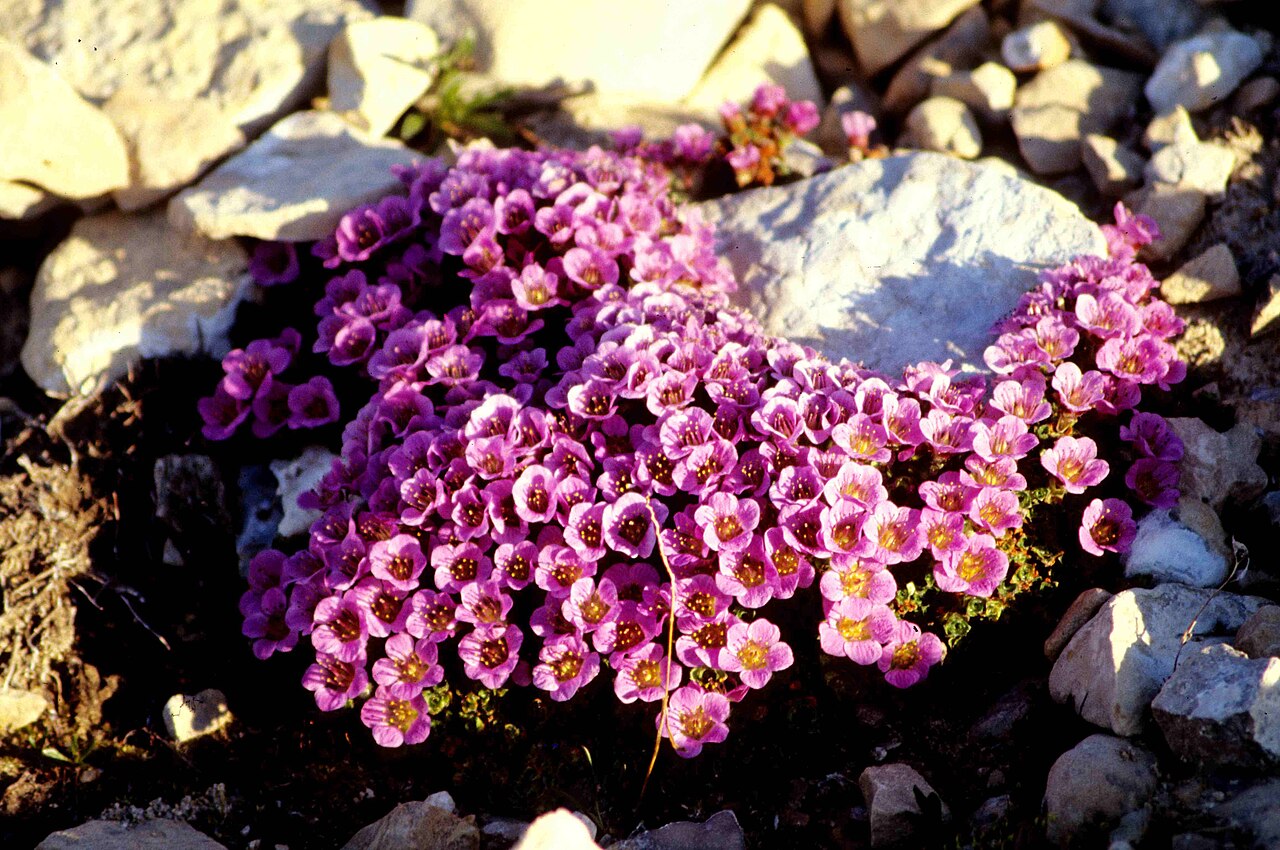
Saxifraga oppositifolia, known as Purple Saxifrage or purple mountain saxifrage, is a tiny, mat-forming perennial of the Arctic and high mountains. It hugs the ground at 1 to 2 inches tall, with trailing stems densely covered in minute, paired, bluish-green leaves, and it blooms almost as soon as the snow melts, covering its cushions in rose-purple, five-petaled flowers. It belongs to the saxifrage family (Saxifragaceae).
Purple saxifrage is one of the most northerly flowering plants on Earth. It grows around the North Pole in Arctic North America, Greenland, Europe and Asia, and south in the high mountains. In the United States it is common in Alaska and grows above treeline in the northern Rocky Mountains, the Olympics and Cascades, with rare relict populations on cliffs in Vermont and New York.
It is the territorial flower of Nunavut, and its early blooms are a familiar sign of spring across the Arctic. Gardeners prize it as a challenging alpine for rock gardens and troughs in cool climates.
Identification
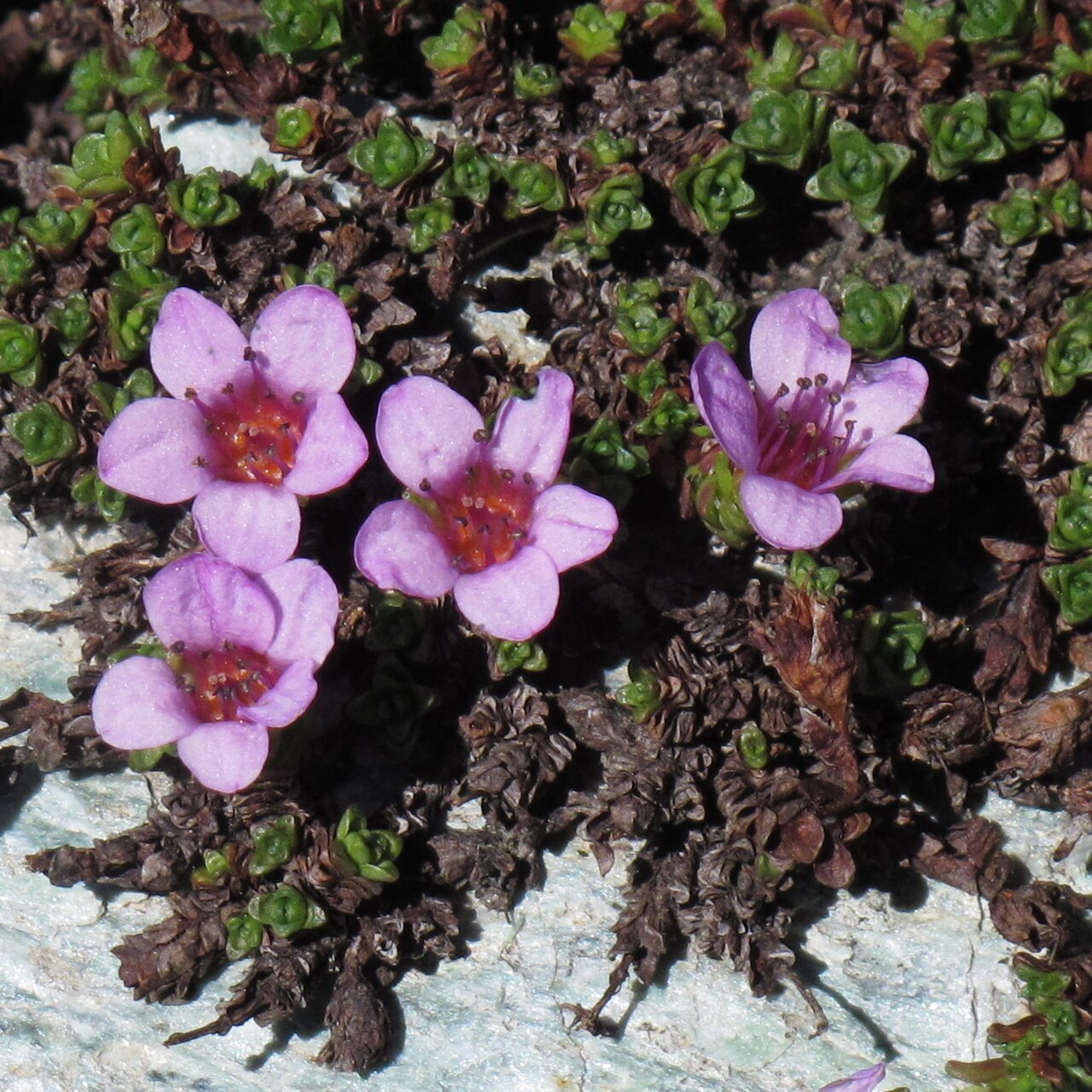
Look for low, dense mats of trailing stems covered in tiny, paired, overlapping leaves, often white-dotted at the tips, with rose-purple, five-petaled flowers held singly just above the mat, on rocky tundra or alpine ridges soon after snowmelt.
Growth Habit
Purple saxifrage is an evergreen, mat- or cushion-forming perennial. Its many trailing, branching stems root along the ground and form loose mats or tight cushions 1 to 2 inches high and from a few inches to more than a foot across. Form varies with habitat: tight cushions in dry, windswept places and looser trailing mats in moister ones.
Leaves
The leaves are tiny, usually less than 1/4 inch long, and grow in opposite pairs, which gives the species its name (oppositifolia, “opposite-leaved”). They overlap closely in four rows along the stems, are thick, bluish green and fringed with stiff hairs. Each leaf tip has a pore that secretes lime, so the tips often carry a small white crust.
Flowers
The flowers grow singly at the tips of very short stems, about 1/2 to 3/4 inch across, with five rounded petals that are rose-purple to lavender, occasionally white. Ten stamens surround two short styles in the center. It is one of the first plants to bloom, flowering from late spring into summer depending on elevation and snowmelt, roughly May to July in the U.S. mountains and June in the high Arctic.
Fruit & Seeds
The fruit is a small, two-beaked capsule that splits to release many tiny seeds in summer. The seeds are scattered by wind and meltwater.
Look-alikes
Moss campion also forms bright pink cushions on the same ridges, but its leaves are narrow and needle-like, not tiny and paired, and its petals are notched at the tip. Diapensia forms similar cushions with white flowers, and mat saxifrage has white petals spotted with red and yellow. Purple saxifrage’s paired, scale-like leaves with white-crusted tips identify it even when it is not in flower.
Quick Facts
| Scientific Name | Saxifraga oppositifolia |
| Family | Saxifragaceae (saxifrage family) |
| Plant Type | Evergreen mat- or cushion-forming perennial |
| Mature Height | 1–2 in |
| Mature Spread | 4–12 in or more |
| Growth Rate | Slow |
| Sun Exposure | Full sun |
| Water Needs | Moderate; moist in spring, sharply drained |
| Soil Type | Gritty, rocky, gravelly or scree soils; often calcareous |
| Soil pH | Neutral to alkaline (about 6.5–8.0); tolerates slightly acid |
| Bloom Time | May–July (soon after snowmelt) |
| Flower Color | Rose-purple to lavender, rarely white |
| Fall Color | Evergreen; may bronze in cold |
| Fruit | Small two-beaked capsule |
| Deer Resistant | Yes; rarely browsed |
| USDA Hardiness Zones | 2–6 |
Native Range
Purple saxifrage has a circumpolar range across Arctic North America, Greenland, Europe and Asia, reaching as far north as there is land. In North America it grows throughout Arctic Canada, from Yukon and the Arctic islands to Labrador and Newfoundland, and south in the western mountains of British Columbia and Alberta. It is also found in the Alps, Pyrenees, mountains of Britain and other high ranges of Europe and Asia, where it has been recorded at about 4,500 meters (14,800 feet), among the highest records for any flowering plant in Europe.
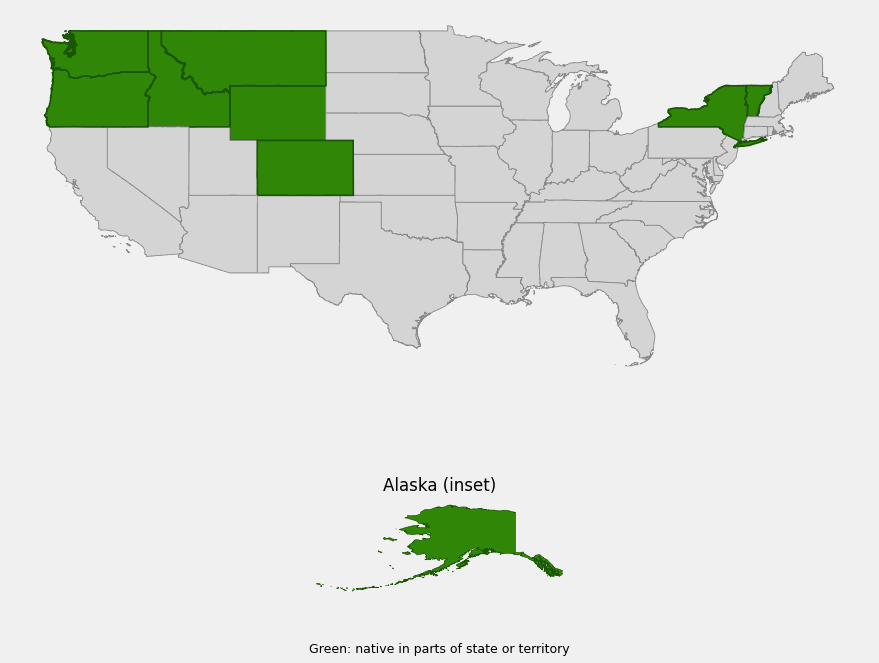
In the United States, USDA PLANTS lists it as native in Alaska, Washington, Oregon, Idaho, Montana, Wyoming, Colorado, New York and Vermont. It is widespread in Alaska. In the lower 48 it grows on alpine ridges and talus in the Olympic Mountains and North Cascades, the Wallowa Mountains of northeastern Oregon, the mountains of Idaho, and the northern Rocky Mountains of Montana and Wyoming; Colorado records are outlying ones at the southern edge of its range. In the Northeast it survives as rare relict populations on cool, limestone-rich cliffs, notably at Lake Willoughby in Vermont; NatureServe ranks it critically imperiled (S1) in both Vermont and New York.
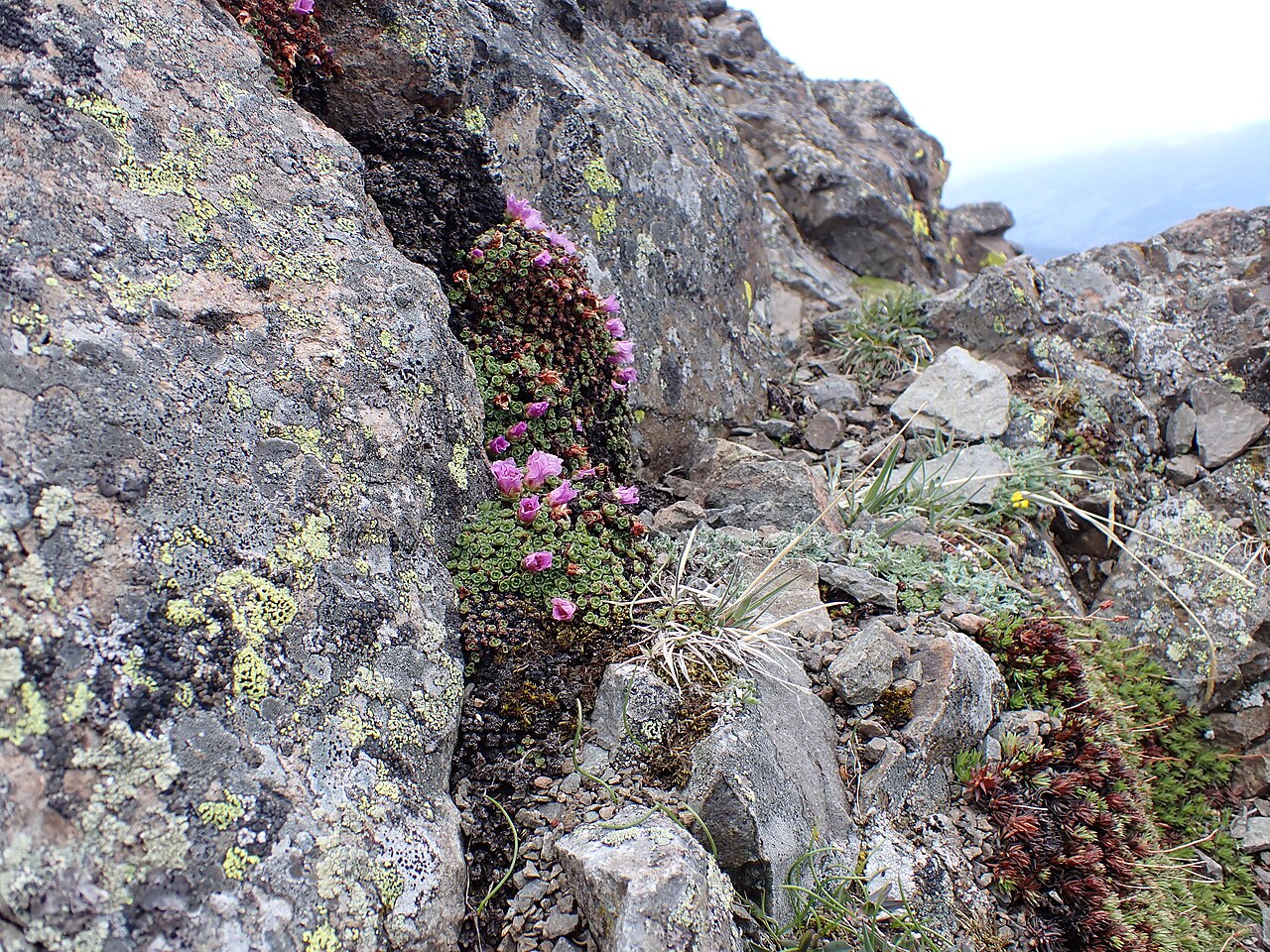
It grows on rocky tundra, gravelly ridges, scree and talus slopes, cliff ledges and crevices, moraines and river gravels, often on limestone or other lime-rich rock and on spots that are free of snow early in the year.
📋 Regional plant lists featuring Purple Saxifrage: Alaska · Idaho, Eastern Oregon & Eastern Washington · Western Oregon & Western Washington · Montana & Wyoming · New Hampshire, Maine & Vermont · New York, Pennsylvania & Northern New Jersey · Delaware, Southern New Jersey & Long Island
Growing & Care Guide
Purple saxifrage is an alpine plant for cool climates and dedicated rock gardeners. It is offered by some specialist alpine nurseries, usually from European stock. Buy nursery-propagated plants only; never dig wild plants, which are slow-growing and protected as rare in several states.
Light
Full sun in cool climates. In places with warm summers, give it morning sun and light afternoon shade, but keep it out of deep shade.
Soil & Water
Use a very gritty, fast-draining mix of gravel, coarse sand and a little loam, ideally with some limestone chips. It needs steady moisture in spring and early summer but must never sit wet, especially in winter. Hot, humid summers and wet, mild winters are its main enemies; it does best in zones 2 to 6 with cool nights.
Planting Tips
Plant it in a scree bed, a raised rock garden, a crevice garden or a stone trough, tucked against a rock that keeps its roots cool. A top-dressing of gravel around the crown helps keep the stems dry and prevents rot. Pair it with other small alpines such as moss campion.
Pruning & Maintenance
Little maintenance is needed. Remove fallen leaves that settle on the mat in autumn, and weed carefully by hand. Cushions that open in the center can be refreshed with fresh grit worked between the stems.
Propagation
Take short cuttings of non-flowering stems after bloom and root them in pure sand or grit, kept cool and moist. Seed can be sown in fall or winter outdoors; it needs a period of cold and germinates in spring. Seedlings grow slowly.
Landscape Uses
- Rock and crevice gardens: an early-blooming carpet for gritty, sunny pockets
- Alpine troughs: a classic small alpine for containers in cool climates
- Scree beds: thrives in gravelly, sharply drained soil
- Northern pollinator gardens: very early bloom for queen bumblebees in Alaska and the North
Wildlife & Ecological Value
In the Arctic, purple saxifrage is often the first flower of the year, and it matters greatly to insects that emerge when little else is in bloom.
For Pollinators
Its early flowers provide nectar and pollen for bumblebee queens, flies and butterflies in early spring, when few other flowers are open. In the Arctic, bumblebees and flies are its main pollinators.
For Birds
Rock ptarmigan and other Arctic birds eat the flowers, buds and leaves, especially in spring when they are among the first fresh greens.
For Mammals
Muskoxen, caribou, Arctic hares and mountain goats graze it. It is among the fresh green foods available soon after snowmelt.
Ecosystem Role
As a pioneer on bare rock, gravel and moraine, it helps stabilize loose ground and traps fine soil and organic matter, making room for other plants. Its cushions create small, warmer microhabitats that shelter insects on windswept ridges.
Cultural & Historical Uses
The genus name Saxifraga comes from Latin for “stone-breaker,” from saxifrages growing in rock crevices; it was once believed that they could break up stones, including kidney stones. The epithet oppositifolia means “with opposite leaves.”
Purple saxifrage was chosen as the official territorial flower of Nunavut, Canada, in 2000. In the Inuit homeland its flowers are known as a first sign of spring, and the petals are eaten as a slightly sweet snack.
It is famous among scientists for its extreme range. It grows on the northern coasts of Greenland, among the northernmost places where any flowering plant grows, and high in the Alps. In Britain and the northeastern United States, its scattered populations are seen as survivors from the end of the last ice age.
Frequently Asked Questions
Where does purple saxifrage grow in the United States?
Mainly in Alaska and on alpine ridges in the Olympics, Cascades, Wallowas and northern Rockies. It also survives as rare relicts on cliffs in Vermont and New York.
When does purple saxifrage bloom?
Very early, right after the snow melts: roughly May to July in U.S. mountains and June in the high Arctic. It is often the first flower of the season.
Can I grow purple saxifrage in my garden?
Yes, in cool climates (about zones 2 to 6) with very gritty, sharply drained soil, such as a rock garden or trough. It struggles in hot, humid summers. Buy nursery-propagated plants; never dig wild ones.
What is the flower of Nunavut?
Purple saxifrage. It was adopted as the territorial flower of Nunavut in 2000.
How is purple saxifrage different from moss campion?
Both form pink cushions on alpine ridges, but purple saxifrage has tiny paired, scale-like leaves, while moss campion has narrow, needle-like leaves and notched petals.


