
White-tipped Clover (Trifolium variegatum)
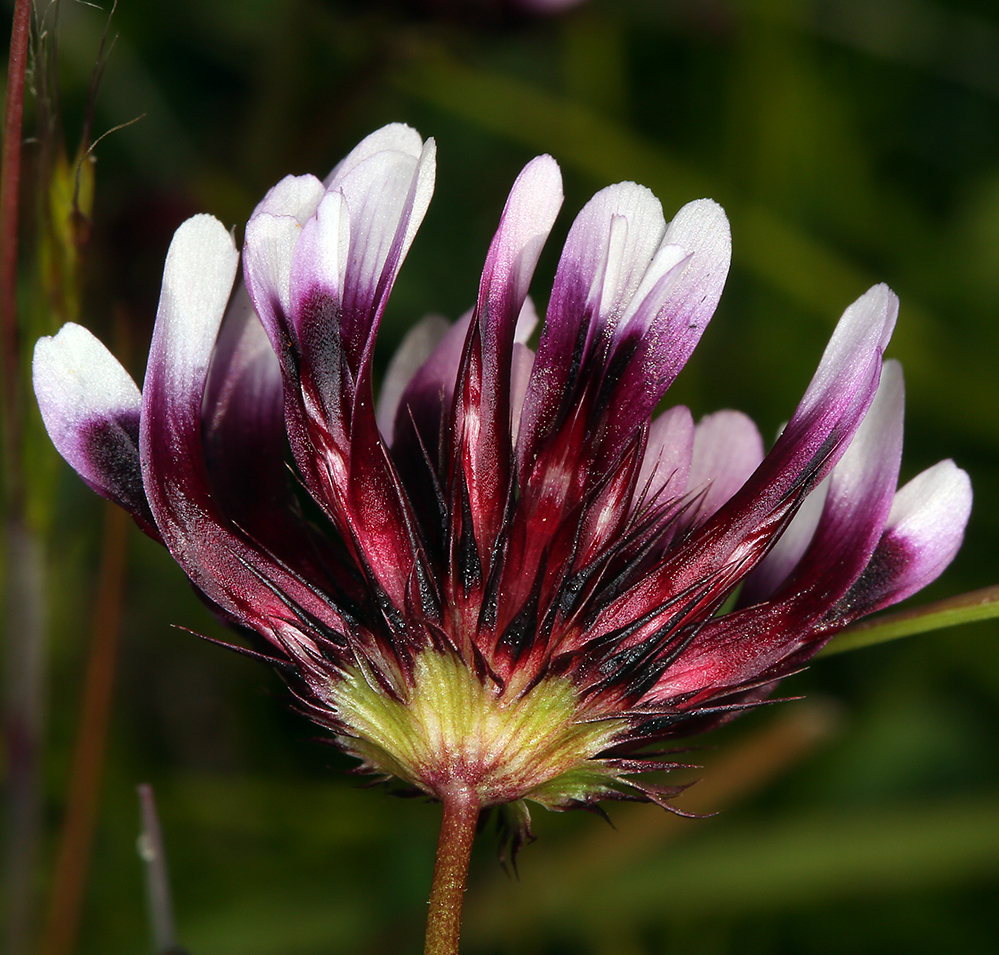
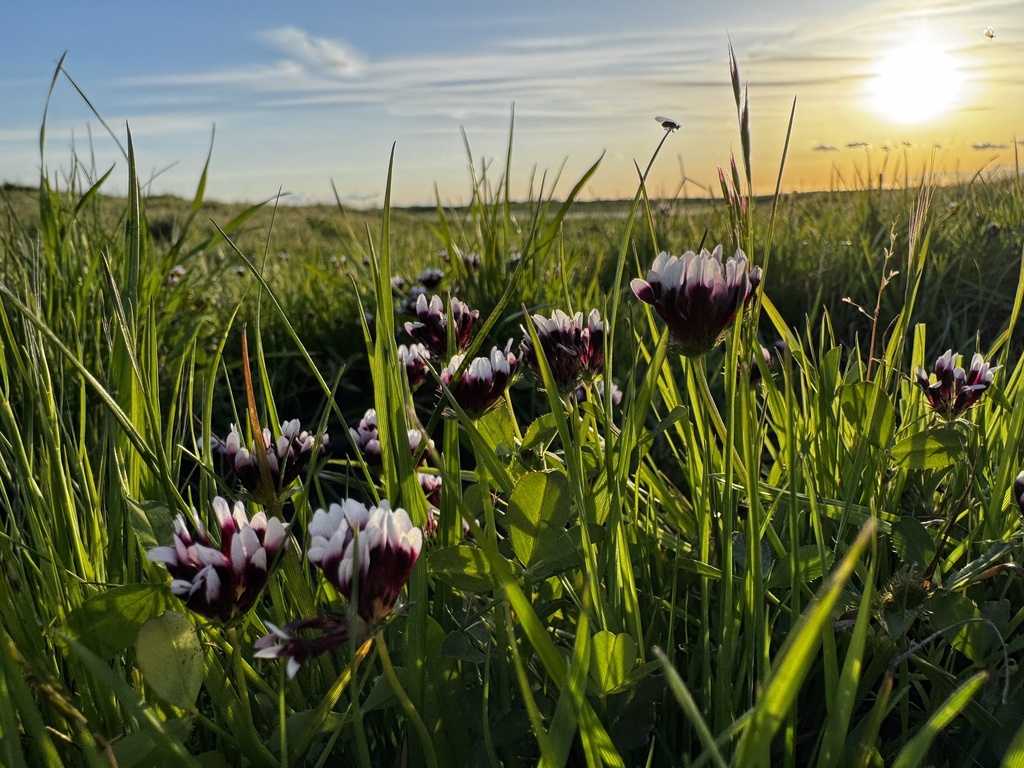
Trifolium variegatum, known as White-tipped Clover, whitetip clover (the USDA name) or variegated clover, is a native annual clover of western North America. In spring its sprawling stems carry small, rounded heads of rich purple flowers tipped in white, held above a cup of fused bracts. It is one of the most common and variable native clovers in the West, growing in damp meadows, vernal pool margins, seeps and stream banks from British Columbia to Baja California.
Like all clovers it is a legume (Fabaceae), and its roots host bacteria that capture nitrogen from the air, enriching the soil for neighboring plants. It is also a good spring food plant for native bees. In California and Oregon, it is a familiar part of the wildflower displays of wet grasslands and vernal pools.
White-tipped clover is not a garden clover in the usual sense, but it is useful in native seed mixes for moist meadows, vernal pool restorations and wildflower lawns. This guide describes how to recognize it, where it grows, and how to encourage it.
Identification
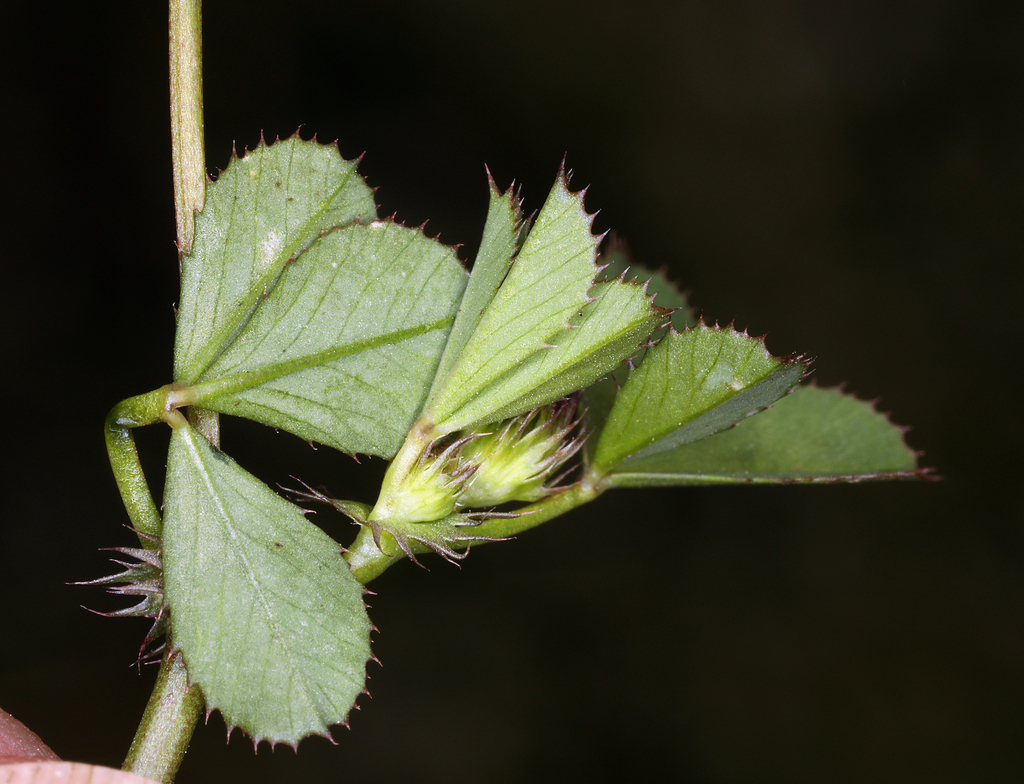
The western United States has dozens of native clovers. White-tipped clover is recognized by its purple flowers with white tips, the cup-like involucre of fused bracts beneath each head, and its toothed leaflets and stipules.
Growth Habit
A usually hairless annual (occasionally short-lived perennial) with stems 4 to 16 inches long that sprawl along the ground or grow upright among grasses. It is highly variable: plants in dry sites may be tiny with one or two flowers per head, while those in wet meadows can be lush and fleshy with large heads.
Leaves
Leaves are divided into three leaflets, each oval to oblong, about ¼ to ¾ inch long, with sharply toothed edges. The stipules at the base of the leaf stalks are conspicuous and deeply toothed or fringed.
Flowers
The flower heads are ½ to 1 inch wide and sit on a shallow, cup-like involucre of fused bracts with sharp, toothed edges. Each head holds from one or a few to more than twenty pea-like flowers about ⅓ inch long. The flowers are purple to reddish-purple and usually tipped in white, although some forms are almost entirely purple or pale. The calyx teeth end in bristle-like tips. Bloom time is March to July, depending on elevation.
Tomcat clover (Trifolium willdenovii) has very narrow leaflets and pink to purple flowers with paler tips. Springbank clover (T. wormskioldii) is a creeping perennial with larger heads. Cowbag clover (T. depauperatum) has flowers that inflate into small balloons as they age.
Fruit & Seeds
After flowering, each flower forms a small pod containing one or two seeds, hidden inside the dry calyx. The seeds drop near the parent and germinate with the fall and winter rains.
Quick Facts
| Scientific Name | Trifolium variegatum Nutt. |
| Family | Fabaceae (legume or pea family) |
| Plant Type | Annual (sometimes short-lived perennial) herb; nitrogen-fixing |
| Mature Height | 2–8 in (stems 4–16 in long) |
| Mature Spread | 6–16 in |
| Growth Rate | Fast |
| Sun Exposure | Full sun to partial shade |
| Water Needs | Moist in spring; dries out in summer |
| Soil Type | Moist clay, loam or sandy soils; vernal pool and meadow soils |
| Soil pH | Slightly acidic to neutral (about 5.5–7.5) |
| Bloom Time | March–July |
| Flower Color | Purple with white tips |
| Fall Color | None; annual |
| Fruit | Small one- to two-seeded pod |
| Deer Resistant | No; browsed by deer and other animals |
| USDA Hardiness Zones | 5–10 (grown as an annual) |
Native Range
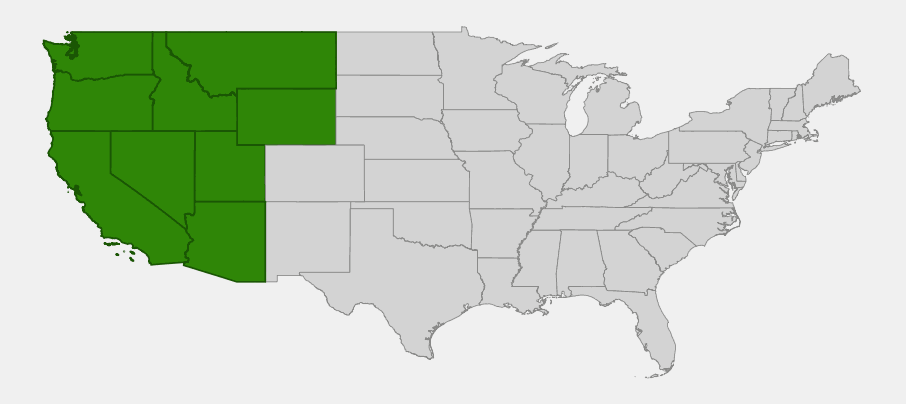
White-tipped clover is a western species. USDA PLANTS lists it as native in Washington, Oregon, California, Idaho, Nevada, Montana, Wyoming, Utah and Arizona, and it also grows in British Columbia and Baja California. USDA treats records from Alaska as introduced, although some sources include southern Alaska in the native range; this page follows USDA and leaves Alaska out.
It is most common west of the Cascades and Sierra Nevada, from the Puget Sound region and the Willamette Valley through the Central Valley, Coast Ranges and foothills of California. East of the mountains it becomes more scattered and is limited to moist sites such as stream banks, spring-fed meadows and wet swales in Idaho, Montana, Wyoming, Utah, Nevada and Arizona.
Its habitats include wet and vernally moist meadows, the edges of vernal pools, seeps, stream banks, ditches, grassy openings in woodlands and coastal prairie. It often grows where soil is saturated in winter and spring and dries out by summer.
📋 Regional plant lists featuring White-tipped Clover: Western Oregon & Western Washington · Idaho, Eastern Oregon & Eastern Washington · California & Nevada · Montana & Wyoming · Utah & Western Colorado · Arizona & New Mexico
Growing & Care Guide
White-tipped clover is an annual that is easiest to establish from seed in a site that is wet in winter and spring and allowed to dry in summer, like its native meadows. Seed is sometimes included in native wildflower and vernal pool mixes from western seed suppliers.
Light
Full sun is best; it tolerates light shade at woodland edges.
Soil & Water
Moist to wet soil during the cool season, drying in summer. It grows in clay, loam and sandy soils and does not need fertilizer, since it fixes its own nitrogen. Summer irrigation is unnecessary and favors weedy competitors.
Planting Tips
Sow seed in fall, just before the rains, on bare or lightly disturbed soil, and rake it in lightly. Scarifying (nicking or sanding) the hard seed coat improves germination. It mixes well with other native annuals and low grasses in a meadow or wildflower lawn.
Pruning & Maintenance
Let plants set seed before mowing in late spring or summer so the population can reseed. Keep vigorous non-native grasses in check, since dense thatch can smother the small seedlings.
Propagation
By seed only. Collect dry flower heads in late spring, rub out the seeds and store them dry until fall sowing.
Landscape Uses
- Vernal pool and wet meadow restoration: a common native annual of seasonally wet grasslands
- Native wildflower lawns and meadows: low, colorful and nitrogen-fixing
- Pollinator plantings: spring nectar and pollen for native bees
- Soil improvement: fixes nitrogen in poor or disturbed soils
- Erosion control seed mixes: quickly covers bare, damp ground in spring
Wildlife & Ecological Value
White-tipped clover is a valuable native legume for wildlife and pollinators in western grasslands and meadows.
For Pollinators
Bumble bees, mining bees, sweat bees and other native bees visit the flowers for nectar and pollen. Clovers are also larval host plants for several butterflies, including sulphurs and blues, which feed on legumes.
For Birds
Quail, doves and other seed-eating birds eat clover seeds, and geese and other birds graze the foliage in spring.
For Mammals
Deer, elk, rabbits, ground squirrels and gophers eat native clovers, which are nutritious and high in protein. Livestock also graze it.
Ecosystem Role
As a nitrogen-fixing legume, it adds nitrogen to the soil through bacteria in nodules on its roots. It is a characteristic plant of vernal pool edges and wet grasslands, and its presence in a meadow is a sign of healthy native annual flora.
Cultural & Historical Uses
The species was described by Thomas Nuttall, the English-born naturalist who explored and collected widely in western North America in the 1830s. The species name variegatum refers to the two-toned purple and white flowers.
Native clovers were an important spring food for many California Indian peoples, who gathered and ate the fresh leaves and flowers raw or steamed. Clovers were often eaten in quantity in early spring before other greens were available. Such uses are historical and should not be repeated with wild plants, especially in sensitive vernal pool habitats.
Botanists know Trifolium variegatum as one of the most variable clovers in the West. Several varieties and closely related forms have been named, and some recent treatments split the group into several species, so field guides may use different names for local forms.
Frequently Asked Questions
Is white-tipped clover native?
Yes. It is native to western North America from British Columbia to Baja California and east to Montana, Wyoming, Utah and Arizona. USDA treats Alaska records as introduced.
How do I recognize white-tipped clover?
Look for small, rounded heads of purple flowers with white tips sitting in a cup of fused, toothed bracts, on low, sprawling stems with three toothed leaflets and fringed stipules.
Is it an annual or a perennial?
It is usually an annual that germinates with fall and winter rains, blooms in spring and dies back by summer, though some plants in wet sites may live longer.
Can I grow it from seed?
Yes. Sow scarified seed in fall on bare, moist ground in full sun, especially in places that stay damp in spring and dry out in summer.
Does it help pollinators?
Yes. Its spring flowers are visited by bumble bees and many smaller native bees, and clovers are host plants for some butterflies.

Looking for a nursery that carries White-tipped Clover?
Browse our native plant nursery directory: Arizona · California · Idaho · Montana · Nevada · Oregon · Utah · Washington · Wyoming

