Baltic Rush (Juncus balticus)
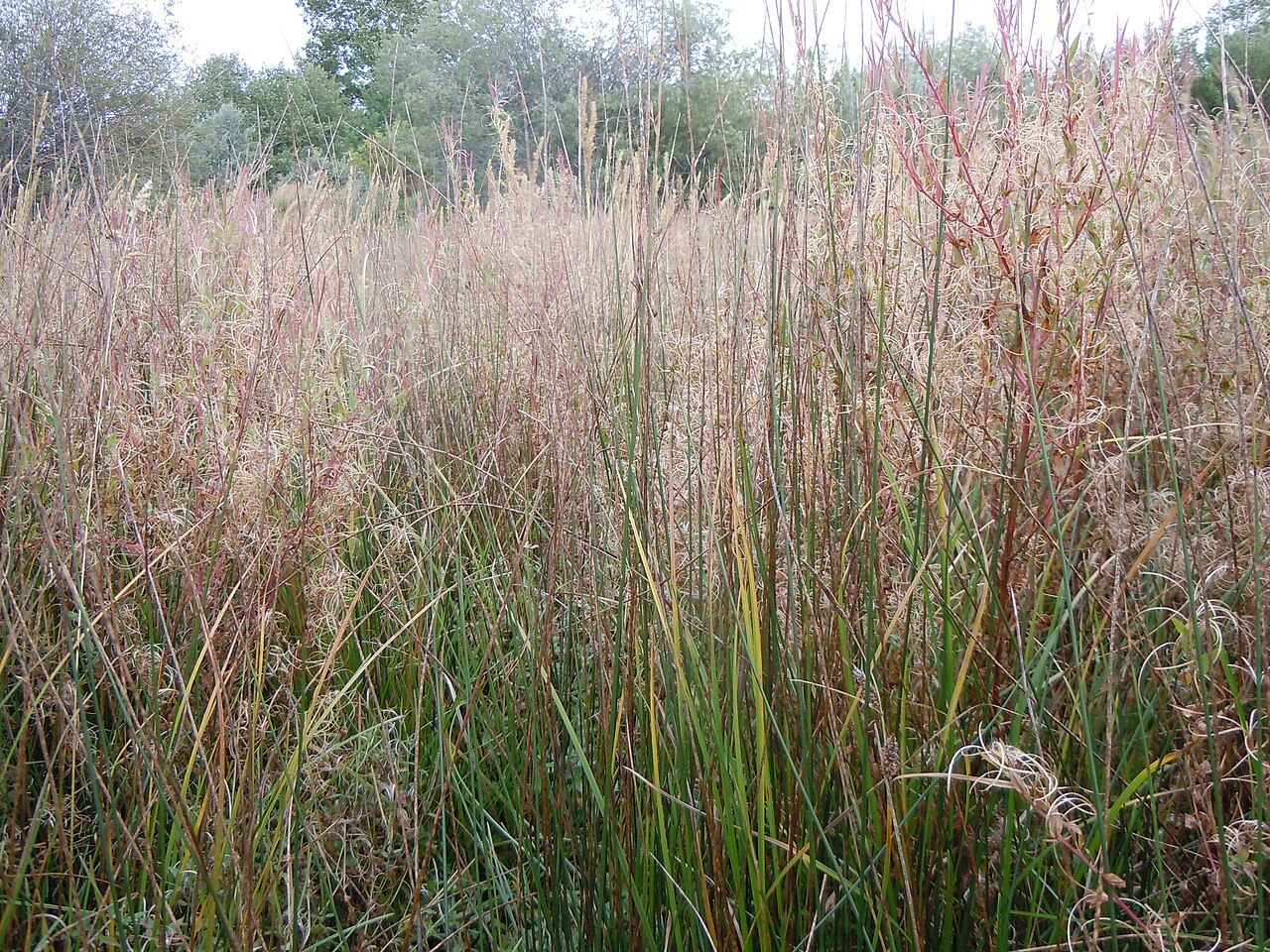
Juncus balticus (now classified by many current authorities within Juncus arcticus subsp. littoralis), commonly known as Baltic Rush or mountain rush, is a tough, rhizomatous wetland rush found across wet meadows, pond margins, and seasonally saturated soils throughout much of western North America. Despite the name’s suggestion of a European origin, Baltic rush is a true native of the North American West, as well as of similar cold wetland habitats across much of the Northern Hemisphere — the “Baltic” in its older name reflects its broad circumboreal distribution rather than any exclusive tie to that region.
Baltic rush is instantly recognizable by its round, pithy, leafless green stems, which rise in dense colonies from vigorous spreading rhizomes rather than forming the tufted clumps typical of many grasses and sedges. A single plant can send rhizomes outward to form an expanding patch many feet across over time, making it one of the most effective native rushes for stabilizing wet soils and outcompeting weedy colonizers along pond edges, ditches, and seasonal wetlands.
For gardeners and restoration practitioners working with wet or seasonally flooded ground, Baltic rush is an exceptionally reliable choice — tolerant of standing water, periodic drying, alkaline soils, and a wide range of elevations and climates, from coastal marshes to subalpine meadows well above 9,000 feet. Its vivid green, upright stems also bring strong vertical structure and year-round color to pond margins and rain gardens where few other native plants perform as consistently.
Identification
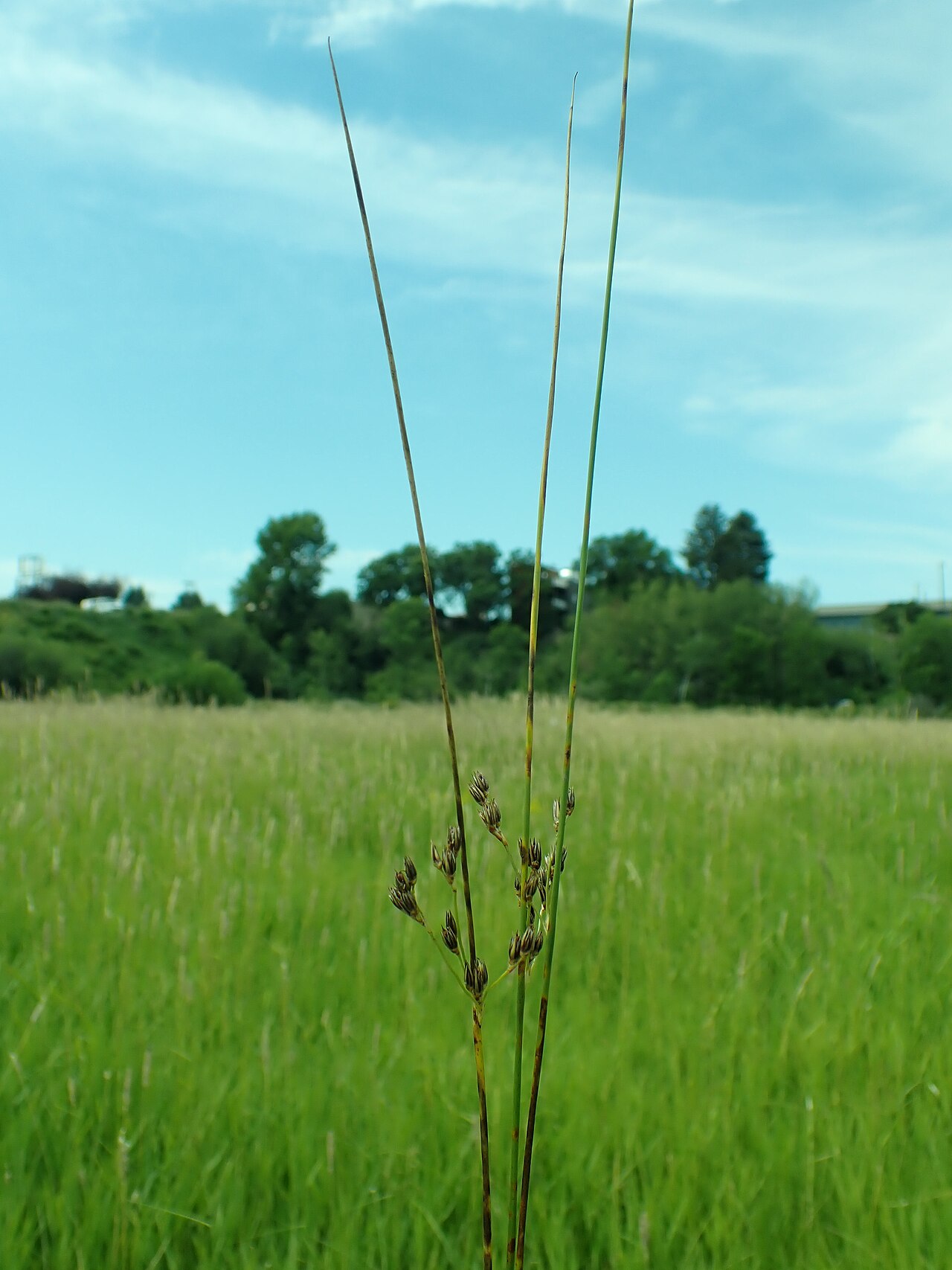
Baltic rush forms dense to loose colonies of narrow, round, unbranched stems, typically growing 1 to 3 feet tall, rising directly from slender, creeping underground rhizomes spaced along the ground rather than clustering in a single clump.
Stems
The stems are smooth, round in cross-section, and filled with continuous white pith, standing stiffly upright and often bluish-green to deep green in color. Unlike many wetland grasses and sedges, Baltic rush produces no true leaf blades along the stem — the stem itself functions as the primary photosynthetic structure, with only reduced, sheathing scales at the base.
Flowers
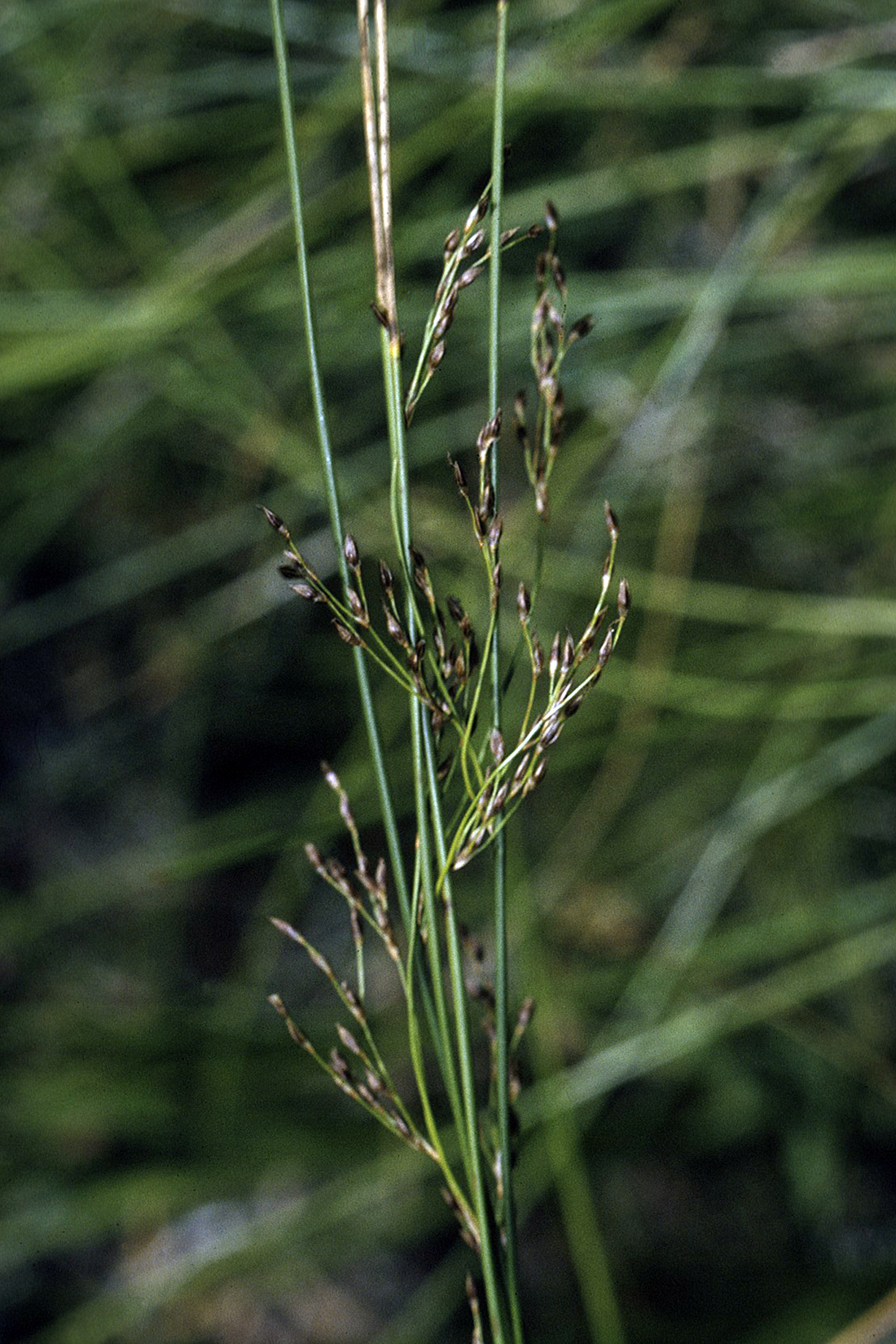
The flower cluster is borne partway up the stem rather than at its very tip, appearing lateral because a leaf-like bract continues above the inflorescence, mimicking a continuation of the stem — a classic identifying feature of many rushes in this group. The small flowers are brownish to straw-colored, clustered in a loose to compact cyme, and bloom in late spring through summer depending on elevation and local conditions.
Rhizomes & Growth Habit
Perhaps the most diagnostic feature of Baltic rush is underground: tough, cord-like rhizomes extend outward from each stem, often a few inches below the soil surface, sending up new stems at intervals and allowing a single planting to expand steadily into a dense, erosion-resistant colony over a few growing seasons. This rhizomatous habit distinguishes it from many other wetland rushes that grow in discrete tufts.
Quick Facts
| Scientific Name | Juncus balticus (syn. Juncus arcticus subsp. littoralis) |
| Family | Juncaceae (Rush) |
| Plant Type | Rhizomatous Perennial Rush |
| Mature Height | 1–3 ft (30–90 cm) |
| Mature Spread | Indefinite; spreads by rhizomes to form colonies |
| Growth Rate | Moderate to fast once established |
| Sun Exposure | Full Sun |
| Water Needs | Wet to consistently moist; tolerates standing water |
| Soil Type | Wet mineral or organic soils; tolerates alkaline/saline |
| Soil pH | 6.0–8.5 |
| Bloom Time | Late spring – summer |
| Flower Color | Brownish to straw-colored |
| Fall Color | Stems fade from green to tan |
| Fruit | Small three-chambered capsule |
| Deer Resistant | Generally yes; rarely browsed |
| USDA Hardiness Zones | 2–9 |
Native Range
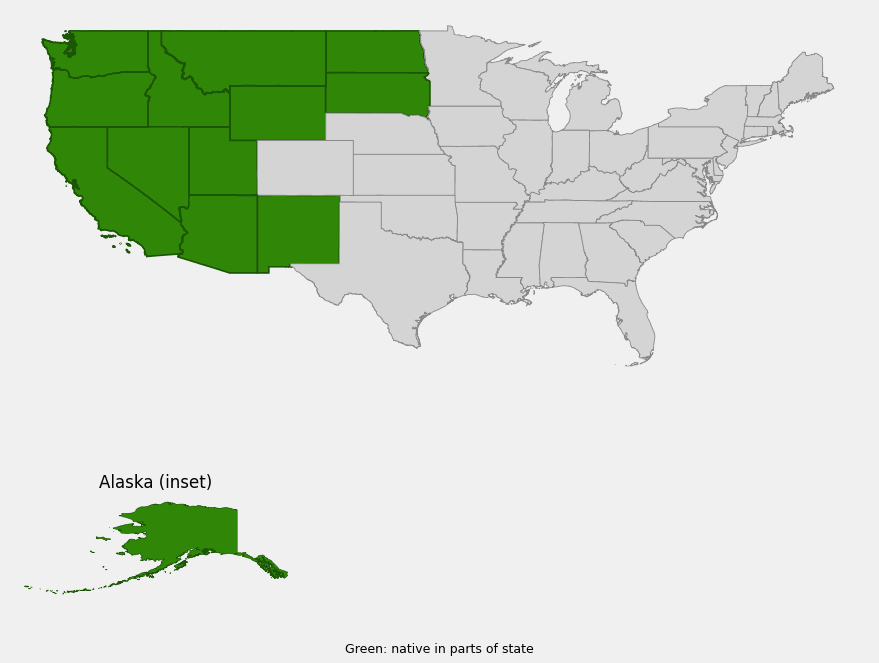
Baltic rush is native across a very broad swath of western North America, occurring from Alaska south through the Pacific states, across the Rocky Mountain states, and into the desert Southwest wherever wetland habitat exists, as well as through much of the northern Great Plains. Within the states covered by this site, it is confirmed native in Alaska, California, Nevada, Oregon, Washington, Idaho, Montana, Wyoming, Utah, Arizona, New Mexico, North Dakota, and South Dakota — an unusually wide elevational and climatic range for a single rush species.
Across this range, Baltic rush is consistently a wetland obligate, found in wet meadows, marshes, pond and lake margins, ditches, seeps, and riparian corridors from near sea level to subalpine elevations above 9,000 feet. It is especially tolerant of alkaline and mildly saline wet soils, allowing it to colonize interior desert wetlands and playas where many other wetland plants cannot persist.
Taxonomically, botanists have increasingly folded the Baltic rush of North America into the broader, circumboreal Juncus arcticus complex, treating it as subspecies littoralis; both names remain in common use, and most regional plant lists and nurseries still refer to it simply as Baltic rush or Juncus balticus.
📋 Regional plant lists featuring Baltic Rush: California & Nevada · Idaho & Eastern Oregon/Washington · Montana & Wyoming · Utah & Western Colorado · Arizona & New Mexico · Alaska · North & South Dakota
Growing & Care Guide
Baltic rush is a workhorse wetland plant: easy to grow wherever soil stays consistently moist to wet, and one of the most dependable native choices for stabilizing problem wet areas that frustrate gardeners used to drier plantings.
Light
Plant Baltic rush in full sun for the best, densest growth. It will tolerate light shade but produces fewer, more sparse stems where light is limited.
Soil & Water
This is a true wetland obligate species — it needs consistently moist to saturated soil, and tolerates standing water for extended periods, making it an excellent choice for pond margins, rain gardens, bioswales, and the wet edges of streams and seasonal wetlands. It is notably tolerant of alkaline and mildly saline soils, a trait that lets it thrive in interior desert wetlands and seeps where salt accumulation limits many other wetland plants. Established plants can tolerate brief dry spells but perform best, and expand most vigorously, where moisture is reliable through the growing season.
Planting Tips
Install container plants or rhizome divisions in spring or fall directly into wet, saturated soil at the planting site. Space plants 12 to 18 inches apart if a quick-filling colony is desired, since the rhizomatous growth habit will close gaps over one to two growing seasons. Baltic rush is well suited to pond and wetland edges where its spreading habit can be allowed to form a natural, stabilizing colony rather than confined to a tight garden bed.
Pruning & Maintenance
Little maintenance is needed beyond occasionally cutting back old, dried stems in late winter to tidy the planting before new spring growth emerges. Because it spreads by rhizome, Baltic rush can be vigorous in ideal wet conditions; in small garden ponds or contained rain gardens, be prepared to periodically thin or edge the planting to keep it within bounds.
Propagation
The easiest method is division of rhizome sections with attached stems, planted directly into wet soil in spring. Seed propagation is also possible but slower and less reliable than division for establishing new plantings quickly.
Landscape Uses
Baltic rush fills an important niche in wet garden and restoration settings:
- Pond and water feature margins where year-round moisture is available
- Rain gardens and bioswales that handle periodic flooding
- Wetland and streambank restoration for erosion control
- Alkaline or saline wet soils where few other natives perform well
- Vertical texture in naturalistic wet meadow plantings
- Living material for basketry and fiber-craft gardens
Wildlife & Ecological Value
As a dominant structural plant across many western wetlands, Baltic rush provides habitat and cover values that extend well beyond its unassuming green stems.
For Birds
Dense colonies of Baltic rush offer nesting and hiding cover for marsh-nesting and wet-meadow bird species, including various waterfowl and shorebirds that use the stem bases and surrounding wet ground for concealment. Seed-eating birds also take the small seeds produced in the summer capsules.
For Mammals
Muskrats and other wetland mammals use Baltic rush stands for cover and, at times, forage, while the dense rhizome mats help stabilize bank and shoreline soils that many other wetland animals depend on for burrows and travel corridors.
Ecosystem Role
Baltic rush’s spreading rhizome system is one of its most important ecological functions: it binds wet soils along pond edges, streambanks, and wetland margins, reducing erosion and filtering sediment and nutrients from runoff before they reach open water. Its tolerance of both standing water and periodic drying makes it a resilient, foundational species in the fluctuating hydrology typical of western wetlands, helping maintain wetland structure through wet and dry years alike.
Cultural & Historical Uses
Baltic rush holds genuine historical importance as a fiber plant: its long, tough, pliable stems have been used for centuries by Indigenous peoples across much of western North America in basketry, mat weaving, and cordage. Peeled and split, the stems provided a reliable, locally abundant fiber source in wetland and riparian areas where the plant grows in dense, easily harvested stands, and it remains valued today among Native basket weavers continuing these traditions.
Beyond its use as a craft material, Baltic rush’s role in the landscape has long been practical in a quieter sense: its dense rhizome mats have helped define and stabilize the edges of wet meadows and waterways that Indigenous communities and later settlers alike depended on for water, forage, and wildlife. In recent decades, the species has become an important tool in formal wetland restoration and erosion-control projects, prized by restoration ecologists for exactly the toughness and spreading habit that made it useful to basket weavers long before.
Today, Baltic rush is increasingly specified in constructed wetlands, stormwater bioswales, and stream restoration projects across the West, a modern application of a plant whose soil-holding rhizomes and tolerance for fluctuating water levels have always made it one of the most dependable plants of the wetland edge.
Frequently Asked Questions
Is Baltic rush actually native to the Baltic region, or just North America?
Despite the common name, Baltic rush is native to North America as well as similar cold wetland habitats across much of the Northern Hemisphere, including parts of Europe and Asia. The “Baltic” name reflects its broad circumboreal distribution rather than exclusive origin in that one region.
Will Baltic rush take over my pond or rain garden?
It spreads steadily by rhizome and can form dense colonies over a few growing seasons, especially in consistently wet soil. In a small, contained feature, plan to periodically thin or edge the planting; in a larger natural wetland setting, its spreading habit is a benefit rather than a problem.
Does Baltic rush need standing water to survive?
It tolerates standing water well but doesn’t strictly require it — consistently moist to saturated soil is the key requirement, which is why it thrives equally at pond margins and in wet meadows that are merely saturated rather than flooded.
Can Baltic rush handle alkaline or salty soil?
Yes, notably well. It is one of the more salt- and alkali-tolerant native wetland plants in the West, allowing it to colonize interior desert seeps and playa-margin wetlands where salt accumulation limits many other species.
What is Baltic rush traditionally used for?
Its long, tough stems have been used for generations by Indigenous peoples across the West in basketry, mat weaving, and cordage, a tradition that continues among Native basket weavers today.

Looking for a nursery that carries Baltic Rush?
Browse our native plant nursery directory: California · Nevada, New Mexico & North Dakota · Idaho · Montana · Utah & South Dakota · Arizona & Alaska · Wyoming · Washington · Oregon