Slender Buckwheat (Eriogonum microthecum)
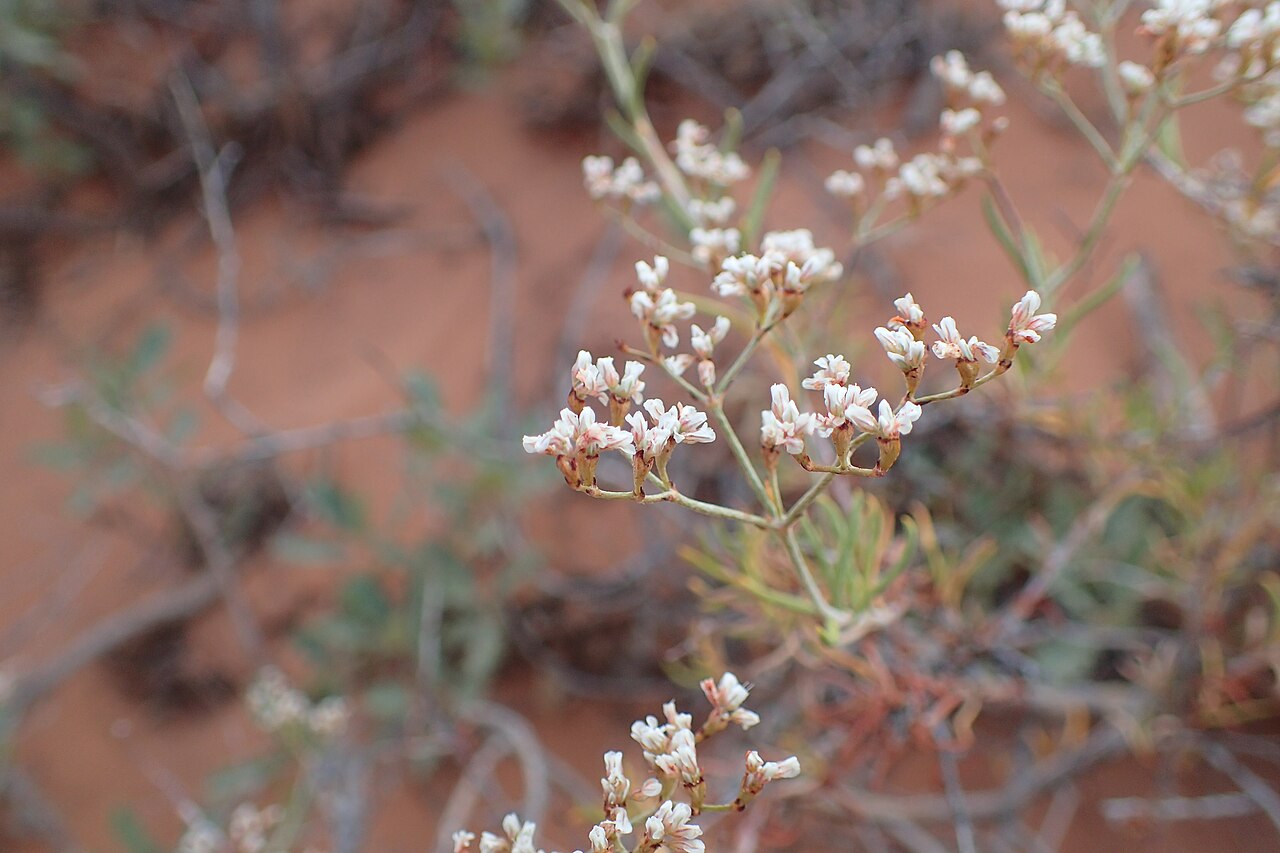
Eriogonum microthecum, commonly called slender buckwheat or Great Basin buckwheat, is a low, wiry, variable shrub or subshrub in the buckwheat family (Polygonaceae), native across the dry mountains and high deserts of the interior western United States. It is one of the most widespread and variable wild buckwheats in the West, ranging from flat, ground-hugging mats barely a few inches tall to loosely branched shrubs over a foot high, with botanists recognizing roughly a dozen distinct regional varieties across its range.
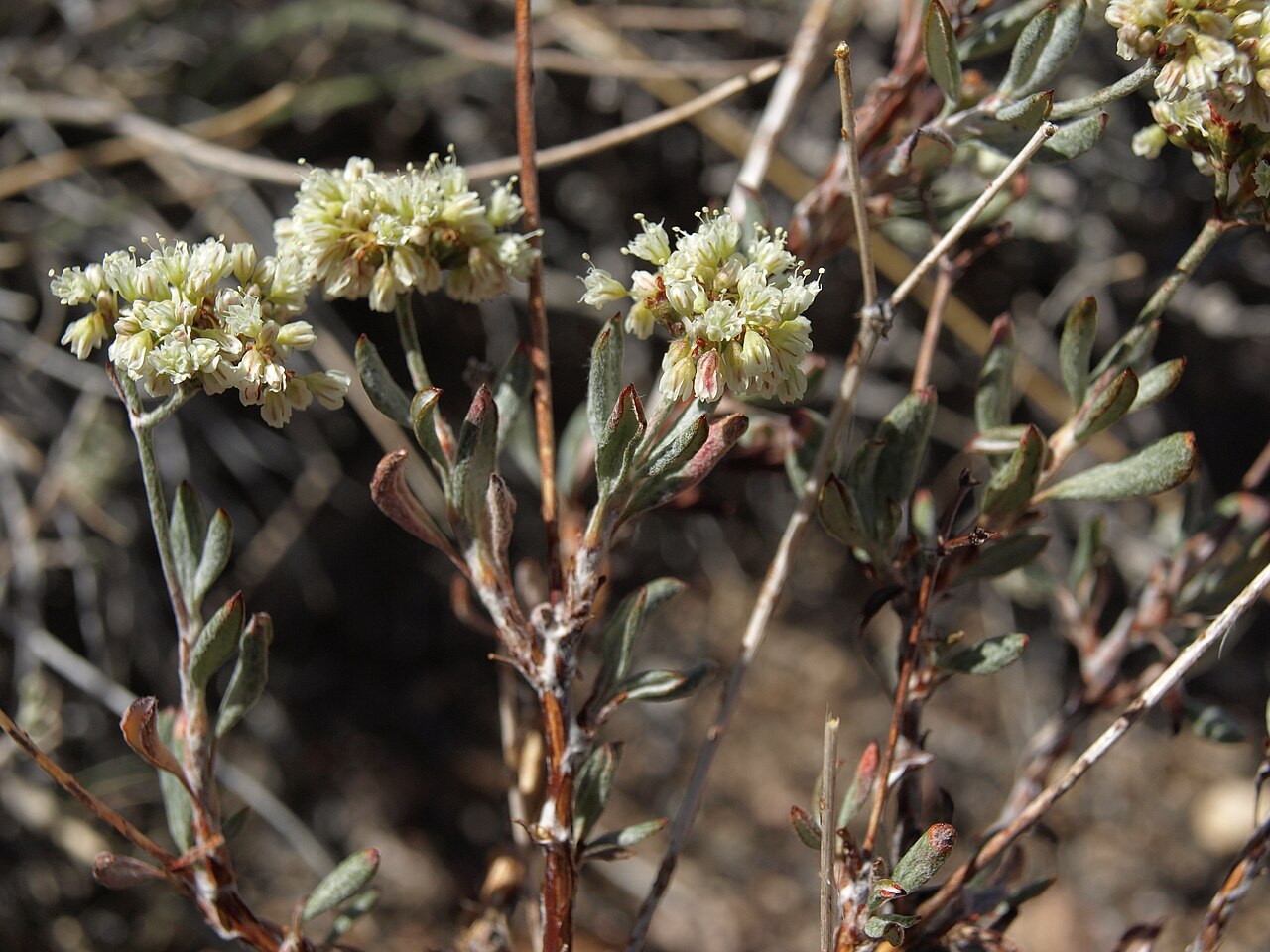
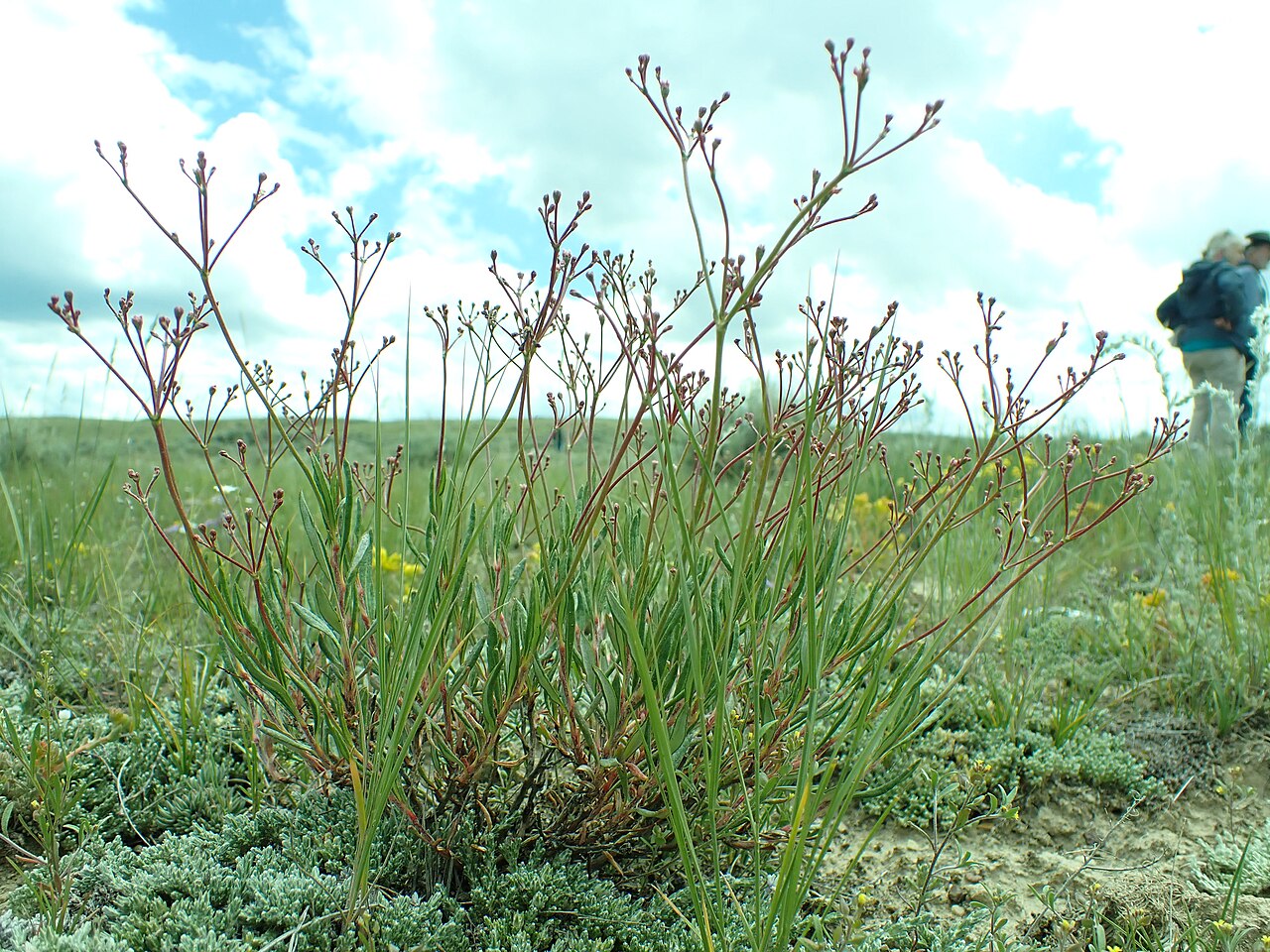
True to its common name, slender buckwheat has narrow, needle-like to linear leaves and thin, wiry stems that give the whole plant a fine, airy texture quite different from the broader-leaved, mounding form of many other Eriogonum species. Small clusters of white, cream, or pale yellow flowers — sometimes blushed with pink or rose — are held on slender branched stalks above the foliage, typically blooming from mid to late summer and persisting as rusty, dried seedheads well into fall.
This tough, adaptable shrub occupies an enormous range of habitats, from sagebrush steppe and pinyon-juniper woodland to rocky alpine ridgelines, and it tolerates shallow, gravelly, and nutrient-poor soils that few other landscape plants can handle. For gardeners in the Intermountain West, slender buckwheat offers reliable, no-fuss structure and late-season bloom for rock gardens, dry slopes, and water-wise native plantings.
Identification
Slender buckwheat is highly variable across its range, but most forms share a low, wiry, much-branched habit with fine, narrow foliage and small clustered flowerheads.
Stems & Leaves
Plants form a low, spreading to upright subshrub, typically 4 inches to 2 feet (10–60 cm) tall depending on variety and site, with numerous slender, woody-based branches. Leaves are narrow — linear to lance-shaped — usually under 1 inch (2.5 cm) long, often with margins rolled under and a grayish or whitish coat of fine hairs on the underside. The fine leaf texture and thin stems give the plant an open, airy appearance quite unlike the broader, felted leaves of relatives such as California buckwheat.
Flowers
Flowers are tiny, individually under ¼ inch (6 mm), and are gathered into small, loosely rounded clusters (involucres) held on thin branching stalks above the foliage. Flower color ranges from white to cream to pale yellow, often aging to pink or rust as blooms mature — a trait shared with many wild buckwheats. Bloom time runs from roughly June through September depending on elevation and variety, with higher, cooler sites blooming later.
Fruit & Seeds
The fruit is a small, three-angled achene typical of the genus, maturing within the dried flower clusters through late summer and fall. The dried, rust-colored seedheads often persist on the plant through winter, adding subtle color and texture to the dormant-season landscape and providing seed for birds.
Quick Facts
| Scientific Name | Eriogonum microthecum |
| Family | Polygonaceae (Buckwheat) |
| Plant Type | Low Perennial Subshrub |
| Mature Height | 4 in – 2 ft (10–60 cm) |
| Mature Spread | 1–2 ft (0.3–0.6 m) |
| Growth Rate | Slow to Moderate |
| Sun Exposure | Full Sun |
| Water Needs | Low |
| Soil Type | Rocky, gravelly, or sandy; well-drained |
| Soil pH | 6.5–8.5 (tolerates alkaline soils) |
| Bloom Time | June – September |
| Flower Color | White to cream, aging pink/rust |
| Fall Color | Rust-brown dried seedheads |
| Fruit | Small three-angled achene |
| Deer Resistant | Yes |
| USDA Hardiness Zones | 4–9 |
Native Range
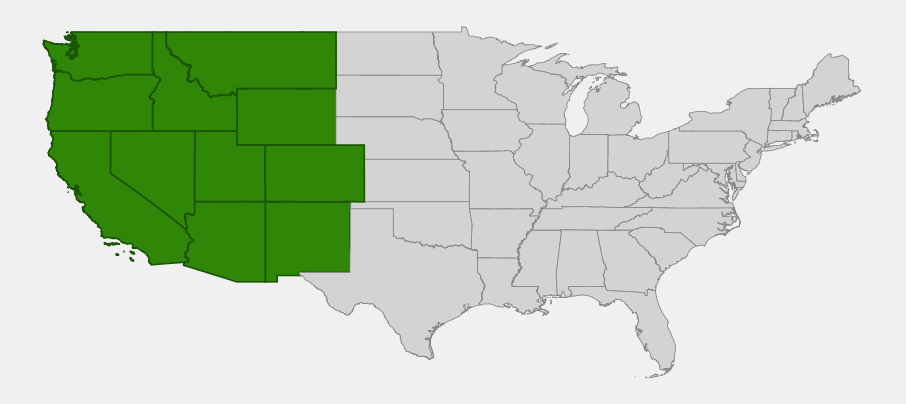
Slender buckwheat is native across the mountains, high deserts, and sagebrush country of the interior western United States, from Washington and Oregon east through Idaho, Montana, and Wyoming, and south through California, Nevada, Utah, and Colorado to Arizona and New Mexico. It is one of the most widely distributed wild buckwheats in the West, and its many regional varieties reflect this broad range — from the alpine slender buckwheat of California’s high Sierra to the pinyon buckwheat of the Great Basin’s pinyon-juniper belt.
Across this range it grows from roughly 2,000 feet up to over 11,000 feet (600–3,400 m) elevation, occupying sagebrush steppe, pinyon-juniper woodland, dry montane forest openings, and rocky subalpine and alpine slopes. It favors open, sunny sites with shallow, rocky, or sandy soils and is frequently found on exposed ridgelines, talus, and other harsh microsites where competition from larger shrubs and grasses is limited.
Because several named varieties of slender buckwheat are restricted to particular mountain ranges or soil types, the species as a whole is best thought of as a complex of regionally adapted forms rather than a single uniform plant; gardeners should look for stock sourced from populations near their own region and elevation when possible.
📋 Regional plant lists featuring Slender Buckwheat: California & Nevada · Arizona & New Mexico · Utah & Western Colorado · Idaho, Eastern Oregon & Eastern Washington · Montana & Wyoming
Growing & Care Guide
Slender buckwheat is a tough, low-maintenance shrub for dry, sunny gardens throughout the Intermountain West. Its needs mirror its native habitat: sharp drainage, full sun, and minimal pampering.
Light
Grow in full sun. Slender buckwheat is adapted to open, exposed sites and becomes leggy and sparse-flowering in shade.
Soil & Water
This species demands sharply drained, rocky, gravelly, or sandy soil and performs poorly in heavy clay or soils that retain moisture. It tolerates alkaline soils well, consistent with its native sagebrush-steppe habitat. Once established it is highly drought-tolerant and needs no supplemental irrigation in most gardens; occasional deep watering during an unusually dry establishment year is helpful but routine summer watering should be avoided.
Planting Tips
Plant container-grown stock in fall or early spring. Space plants 1 to 2 feet apart depending on the mature size of the particular variety being grown. Choose planting sites with excellent drainage — raised beds, slopes, or rock gardens are ideal — and avoid amending the soil with rich organic matter, which can promote rot in this drought-adapted plant.
Pruning & Maintenance
Little pruning is required. Lightly shape plants in late winter or early spring if a tidier form is desired, removing any dead or winter-damaged growth. Avoid heavy pruning into old wood, as recovery can be slow. Established plants are otherwise essentially maintenance-free.
Propagation
Propagate from seed sown in fall to allow natural cold stratification over winter, or from semi-hardwood cuttings taken in late summer. Because the species includes many regionally distinct varieties, seed or cutting stock sourced from populations near the planting site’s elevation and climate will generally perform best.
Landscape Uses
- Rock gardens and gravel gardens, where its fine texture pairs well with stone
- Dry slopes and berms for erosion control without irrigation
- Xeriscape and water-wise plantings throughout the Intermountain West
- Sagebrush-steppe and pinyon-juniper restoration projects
- Pollinator gardens as a reliable mid-to-late-summer bloomer
Wildlife & Ecological Value
As one of the most widespread wild buckwheats across the Intermountain West, slender buckwheat provides season-long value to a wide range of native wildlife.
For Pollinators
The small flower clusters attract a wide variety of native bees, butterflies, and other pollinating insects through the mid-to-late summer bloom period, a time when fewer other flowers are available in arid sagebrush and pinyon-juniper habitats. Several native butterflies, including blues and hairstreaks that specialize on wild buckwheats, use the foliage as a larval host plant.
For Birds
The abundant small seeds produced in the dried flowerheads are consumed by sparrows and other seed-eating birds through fall and winter, and the low, branching structure offers modest cover for ground-feeding species in otherwise open terrain.
For Mammals
Small mammals, including ground squirrels and other rodents, feed on the seed, while the plant’s deer resistance makes it reliable in gardens with heavy browsing pressure. In its native rangelands, it contributes modestly to the forage base used by native ungulates, though it is not a primary browse species.
Ecosystem Role
Slender buckwheat’s tolerance of shallow, rocky, and disturbed soils makes it an important stabilizing presence on exposed slopes and ridgelines throughout its range, where it helps anchor soil and provide structure in otherwise sparse plant communities. Its broad distribution and many site-adapted varieties also make it a resilient, genetically diverse component of sagebrush-steppe and pinyon-juniper ecosystems.
Cultural & Historical Uses
Wild buckwheats of the genus Eriogonum, including slender buckwheat, were part of the broader plant knowledge of Indigenous peoples across the Great Basin and Intermountain West, who were deeply familiar with the native flora of their homelands for food, medicine, and material culture depending on regional tradition and availability. Specific, well-documented historical uses of Eriogonum microthecum itself are limited in the available record compared to some other, more intensively studied buckwheat species.
In modern times, slender buckwheat has gained recognition among native-plant gardeners and restoration ecologists in the Intermountain West for its toughness, drought tolerance, and wildlife value. Its widespread natural distribution and tolerance of harsh, rocky soils have also made it useful in reclamation of disturbed mine sites, road cuts, and other degraded lands across its native range, where its ability to establish on poor substrates helps stabilize soil and begin the process of ecological recovery.
Frequently Asked Questions
How many varieties of slender buckwheat are there?
Botanists recognize roughly a dozen named varieties across the species’ wide range, differing in height, leaf shape, and hairiness, and often tied to particular mountain ranges or soil types. Examples include alpine slender buckwheat in California’s high Sierra and pinyon buckwheat in Great Basin pinyon-juniper woodland.
Does slender buckwheat need regular watering?
No. Once established, it is highly drought-tolerant and adapted to the dry summers of its native sagebrush and high-desert habitat. Regular summer irrigation can promote rot in its preferred rocky, fast-draining soil.
What is the difference between slender buckwheat and sulphur-flower buckwheat?
Slender buckwheat has notably narrower, more linear leaves and a finer, wirier overall texture than sulphur-flower buckwheat (Eriogonum umbellatum), which has broader, more rounded leaves and showier yellow flower umbels. Both are common in similar high-desert and montane habitats.
Is slender buckwheat good for pollinators?
Yes. Its mid-to-late-summer bloom provides nectar and pollen when many other high-desert plants have finished flowering, and its foliage hosts the larvae of several native butterflies.
Can slender buckwheat grow at high elevation?
Yes — depending on the variety, slender buckwheat occurs from around 2,000 feet up to over 11,000 feet, including exposed subalpine and alpine ridgelines, making it one of the more elevation-tolerant wild buckwheats in the West.

Looking for a nursery that carries Slender Buckwheat?
Browse our native plant nursery directory: Arizona · California · Colorado · Idaho · Montana · Nevada & New Mexico · Oregon · Utah · Washington · Wyoming