Long-Stemmed Buckwheat (Eriogonum elongatum)
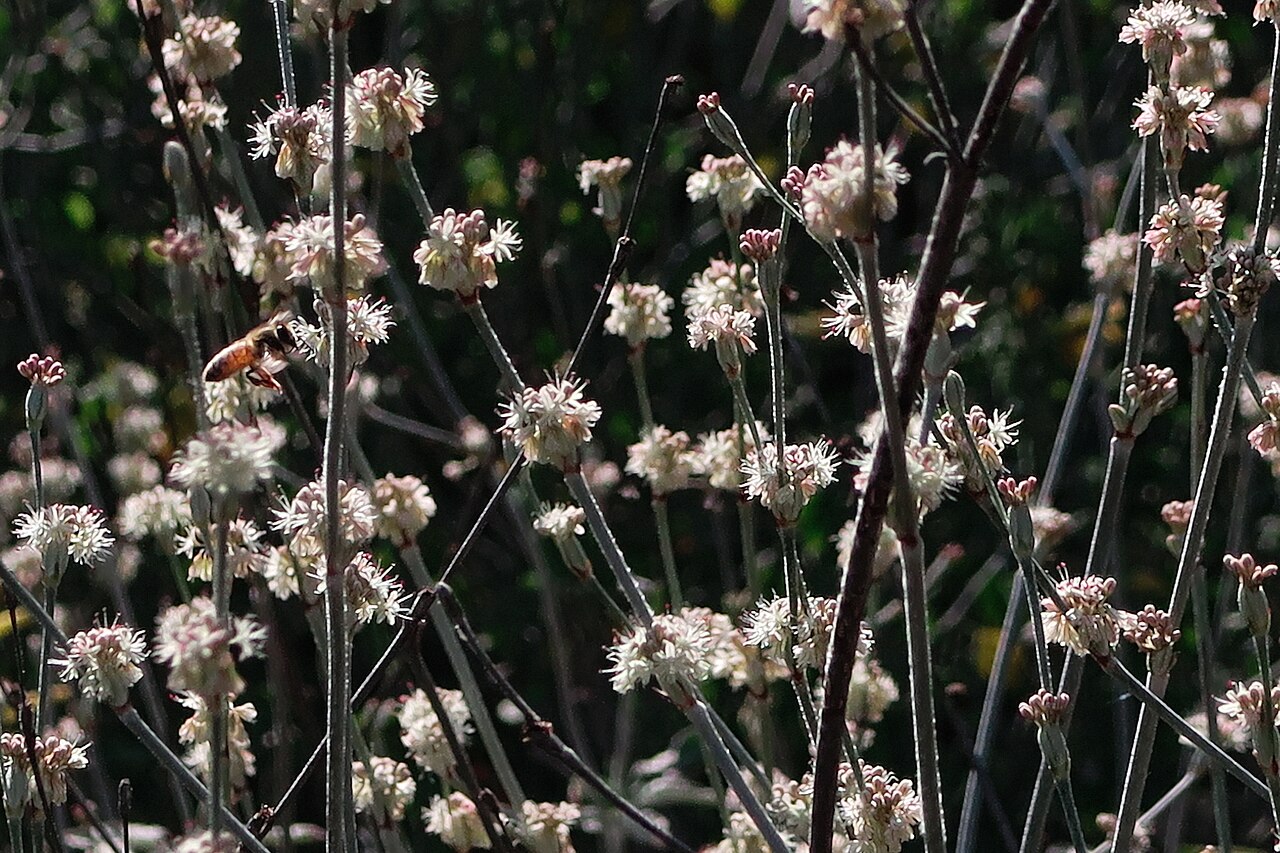
Eriogonum elongatum, commonly called long-stemmed buckwheat or longstem buckwheat, is a perennial wildflower in the buckwheat family (Polygonaceae) native to the coastal hills, inland valleys, and foothills of California. It forms an airy, open clump of long, wiry, nearly leafless flowering stems rising well above a low mound of gray-green, felted basal leaves. The effect, especially in late summer, is a loose haze of small cream-to-pink flower clusters suspended on thin stalks — a striking and distinctive silhouette among California’s many native wild buckwheats.
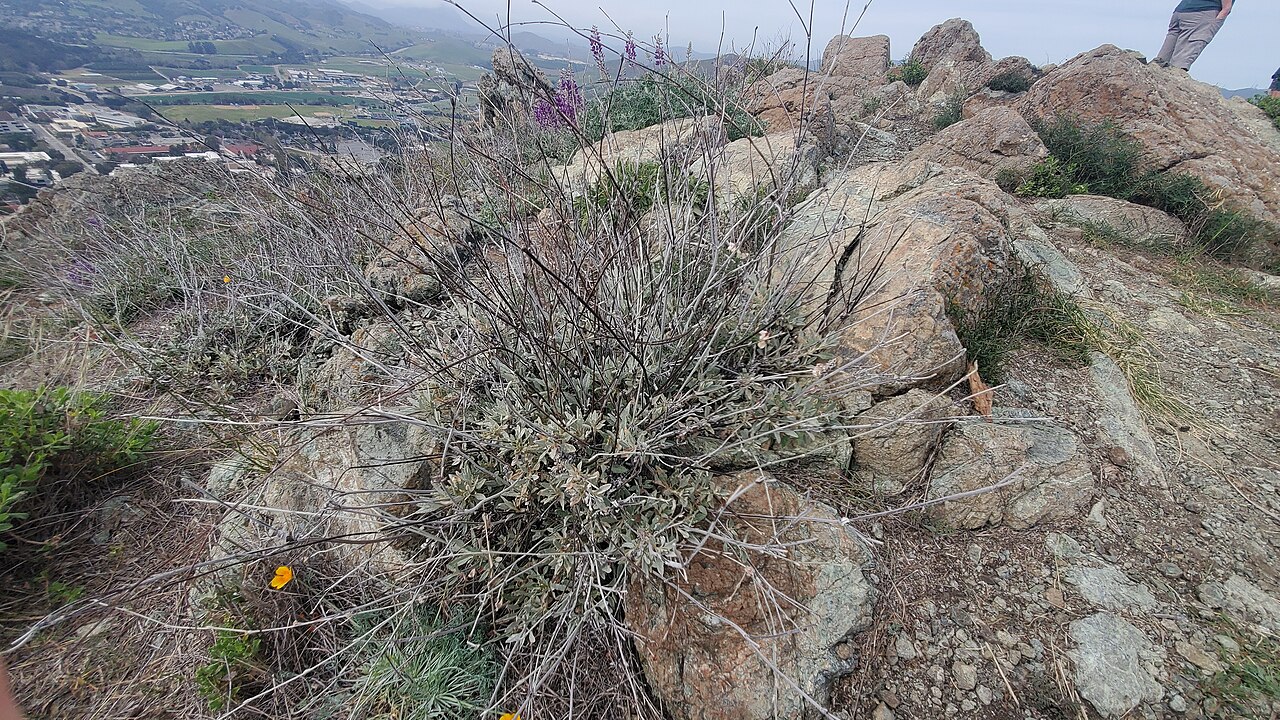
Long-stemmed buckwheat typically grows 2 to 4 feet tall, with stems that stay slender and gently branching rather than forming a dense shrub. It thrives in dry, often rocky or serpentine soils across a broad swath of the state, from coastal sage scrub and chaparral near the Pacific to drier inland foothill woodlands. Because it tolerates poor, mineral-heavy soils — including the specialized serpentine substrates found on parts of the Central Coast — it is frequently found growing where few other garden plants would survive.
In the garden, long-stemmed buckwheat earns its keep as one of the best late-season nectar sources available to California native-plant gardeners. Its bloom period runs later into summer and fall than many other buckwheats, providing a critical pollen and nectar source for native bees, butterflies, and other insects when much of the rest of the landscape has gone dry and quiet. It asks for almost nothing in return: no irrigation, no fertilizer, and minimal care once established.
Identification
Long-stemmed buckwheat is a woody-based perennial herb with a basal rosette of leaves and tall, slender, wand-like flowering stems that give the plant its common name and its airy, see-through habit.
Stems & Leaves
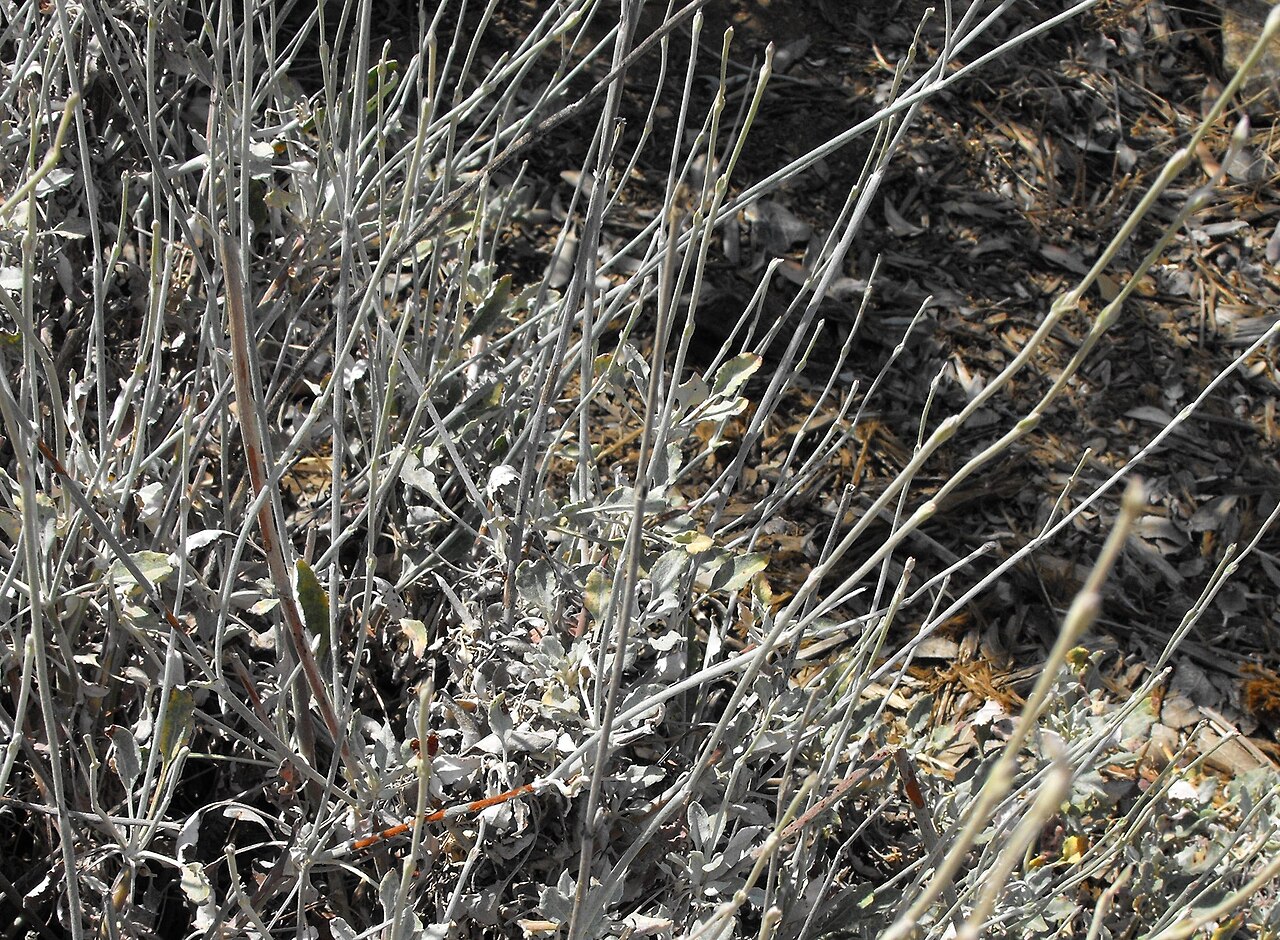
The plant forms a low basal clump of oval to rounded leaves, 1 to 2 inches (2.5–5 cm) long, covered in dense white to gray woolly hairs (tomentum) on the lower surface and often grayish-green above. From this basal clump rise numerous long, slender, mostly leafless flowering stems 2 to 4 feet (0.6–1.2 m) tall, sometimes taller on favorable sites, that branch sparingly near the top into the flower clusters. The stems are typically gray-green and finely hairy when young, often turning reddish-brown and woody with age.
Flowers
Flowers are tiny, under ¼ inch (6 mm) across, and are borne in small, rounded clusters (involucres) scattered along the upper branches. Individual flowers are cream to white, often aging to pink or rose as they mature, giving a two-toned, airy quality to a blooming plant viewed from a distance. Bloom time runs long — typically July through October — later than many other California wild buckwheats, which makes it an especially valuable late-season nectar source.
Fruit & Seeds
Like other buckwheats, the fruit is a small, three-angled achene enclosed within the dried flower parts. Seed matures through fall as the flower clusters dry to a rusty brown, and the dried seedheads persist on the stems well into winter, adding texture to the dormant-season garden and providing seed for birds.
Quick Facts
| Scientific Name | Eriogonum elongatum |
| Family | Polygonaceae (Buckwheat) |
| Plant Type | Perennial Herb (woody-based) |
| Mature Height | 2–4 ft (0.6–1.2 m) |
| Mature Spread | 1.5–3 ft (0.5–1 m) |
| Growth Rate | Moderate |
| Sun Exposure | Full Sun |
| Water Needs | Low |
| Soil Type | Rocky, sandy, or serpentine; well-drained |
| Soil pH | 6.0–8.0 |
| Bloom Time | July – October |
| Flower Color | Cream to white, aging pink/rose |
| Fall Color | Rusty brown seedheads |
| Fruit | Small three-angled achene |
| Deer Resistant | Yes |
| USDA Hardiness Zones | 8–10 |
Native Range
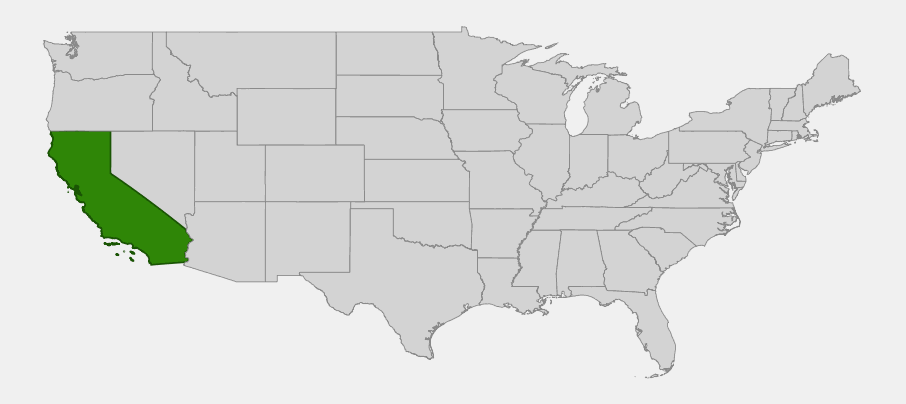
Long-stemmed buckwheat is native to California, where it grows from the San Francisco Bay Area and central coast ranges south through southern California to the U.S.–Mexico border, with its range continuing into northern Baja California. Within the state it occurs in both coastal and inland foothill settings — from Monterey County’s coastal bluffs and the Central Coast’s serpentine outcrops to the chaparral- and sage-scrub-covered hills of the South Coast and Peninsular Ranges.
It typically grows between about 200 and 6,200 feet (60–1,900 m) elevation, favoring open, sunny slopes and rocky or sandy soils in coastal sage scrub, chaparral, and foothill woodland plant communities. It is notably tolerant of serpentine and other mineral-poor or heavy-metal-rich soils that exclude many other plants, and it is often a conspicuous component of the specialized flora found on California’s serpentine outcrops.
Long-stemmed buckwheat is not native outside California; gardeners elsewhere in the West should look to regionally native Eriogonum species better suited to their own climate and soils rather than planting this species outside its home range.
📋 Regional plant lists featuring Long-Stemmed Buckwheat: California & Nevada
Growing & Care Guide
Long-stemmed buckwheat is an excellent low-water, low-maintenance choice for California gardens, particularly where a light, airy texture and late-season bloom are wanted. It is at its best on lean, well-drained soils and asks for very little once settled in.
Light
Plant in full sun. Long-stemmed buckwheat is adapted to open, exposed slopes and does not perform well in significant shade, where its stems tend to flop and flowering is reduced.
Soil & Water
This species is tolerant of poor, rocky, sandy, and even serpentine soils, and actually tends to grow more compactly and bloom more reliably on lean ground than on rich garden soil. Good drainage is essential. Once established, it needs little to no supplemental water and is an excellent candidate for unirrigated slopes; occasional deep watering during its first one to two summers helps it establish a strong root system.
Planting Tips
Set out container plants in fall or early spring to take advantage of winter and spring rains for establishment. Space plants 2 to 3 feet apart to allow for their eventual spread and to maintain good air circulation around the woody base. Avoid rich, amended soil or heavy mulch piled against the crown, both of which can encourage crown rot in this drought-adapted species.
Pruning & Maintenance
Cut back the dried flowering stems in late winter before new growth begins, both to tidy the plant and to encourage fuller, more floriferous growth the following season. Leaving the dried seedheads standing through fall and winter provides seed for birds and architectural interest in the dormant garden, so pruning can be delayed until just before spring growth resumes.
Propagation
Propagate from seed sown in fall or from cuttings taken from non-flowering basal growth in late spring. Seed benefits from the natural cold, moist conditions of a California winter when sown outdoors in autumn.
Landscape Uses
- Pollinator gardens — a standout late-summer and fall nectar source
- Dry slopes and banks for erosion control on unirrigated ground
- Serpentine and rock gardens where few other species thrive
- Coastal sage scrub and chaparral restoration plantings
- Low-water, Mediterranean-climate gardens as a textural accent
Wildlife & Ecological Value
Few California native plants match long-stemmed buckwheat’s value as a late-season food source, when most of the landscape has already gone dormant for the dry season.
For Pollinators
The small flower clusters are intensely attractive to honeybees, native bees, butterflies, and other beneficial insects, offering a critical nectar and pollen source from midsummer through fall — a period when few other California natives are still blooming. Long-stemmed buckwheat is also a larval host and nectar source for several native butterfly species that rely on wild buckwheats, including blues and hairstreaks.
For Birds
Seed-eating birds, including sparrows and finches, feed on the abundant small seeds produced in the dried flower clusters through fall and winter. The open, airy stems also offer perching sites for small birds hunting insects drawn to the flowers.
For Mammals
Small mammals browse the foliage lightly, and the plant’s deer resistance makes it a reliable choice in areas with heavy deer pressure. Ground-dwelling insects and other invertebrates shelter in the basal leaf clump and leaf litter at the plant’s base.
Ecosystem Role
As a long-blooming, drought-tolerant nectar source on lean and disturbed soils, long-stemmed buckwheat helps sustain pollinator populations through the driest part of the California growing season. Its tolerance of serpentine and other specialized soils also makes it an important component of the unique plant communities that develop on these substrates, where it helps stabilize soil on otherwise sparsely vegetated outcrops.
Cultural & Historical Uses
Wild buckwheats in the genus Eriogonum have long been part of the plant knowledge of California’s Indigenous peoples, who used various species in the genus for food, medicine, and other purposes depending on regional availability and tradition. As with many native California wild buckwheats, specific historical uses of Eriogonum elongatum itself are not well documented in the available record, though the genus as a whole held broad ethnobotanical significance across California tribes.
In more recent decades, long-stemmed buckwheat has become increasingly valued within the California native-plant horticulture movement, prized by gardeners and restoration practitioners for its drought tolerance, late-season bloom, and ability to grow on difficult, mineral-poor soils where few ornamental alternatives succeed. Its role in supporting late-season pollinators has made it a frequent recommendation in pollinator-garden and habitat-restoration plant lists throughout its native range.
The plant also serves an important role in California’s unique serpentine ecosystems, which have long attracted the interest of botanists for their specialized, often rare flora adapted to the unusual chemistry of serpentine-derived soils.
Frequently Asked Questions
How is long-stemmed buckwheat different from other California wild buckwheats?
Its tall, wiry, nearly leafless flowering stems rising from a low basal leaf clump give it a distinctively airy, see-through form compared to the more compact, rounded mounds of species like California buckwheat (Eriogonum fasciculatum). Its unusually late bloom period, running into October, is another distinguishing trait.
Does long-stemmed buckwheat need special soil?
No special soil amendments are needed — in fact, it performs best on lean, rocky, or even serpentine soils with sharp drainage. Rich, regularly irrigated garden soil can lead to floppy growth and reduced flowering.
When does long-stemmed buckwheat bloom?
It blooms later than most California wild buckwheats, typically from July into October, making it one of the best late-season nectar sources for pollinators in a native plant garden.
Is long-stemmed buckwheat deer resistant?
Yes. Deer generally avoid browsing this species, which makes it a reliable choice in gardens with significant deer pressure.
Can I grow long-stemmed buckwheat outside California?
It is native only to California (and adjacent Baja California, Mexico) and is best kept within that range. Gardeners in other parts of the West should choose a wild buckwheat species native to their own region instead.

Looking for a nursery that carries Long-Stemmed Buckwheat?
Browse our native plant nursery directory: California