
Tomcat Clover (Trifolium willdenovii)
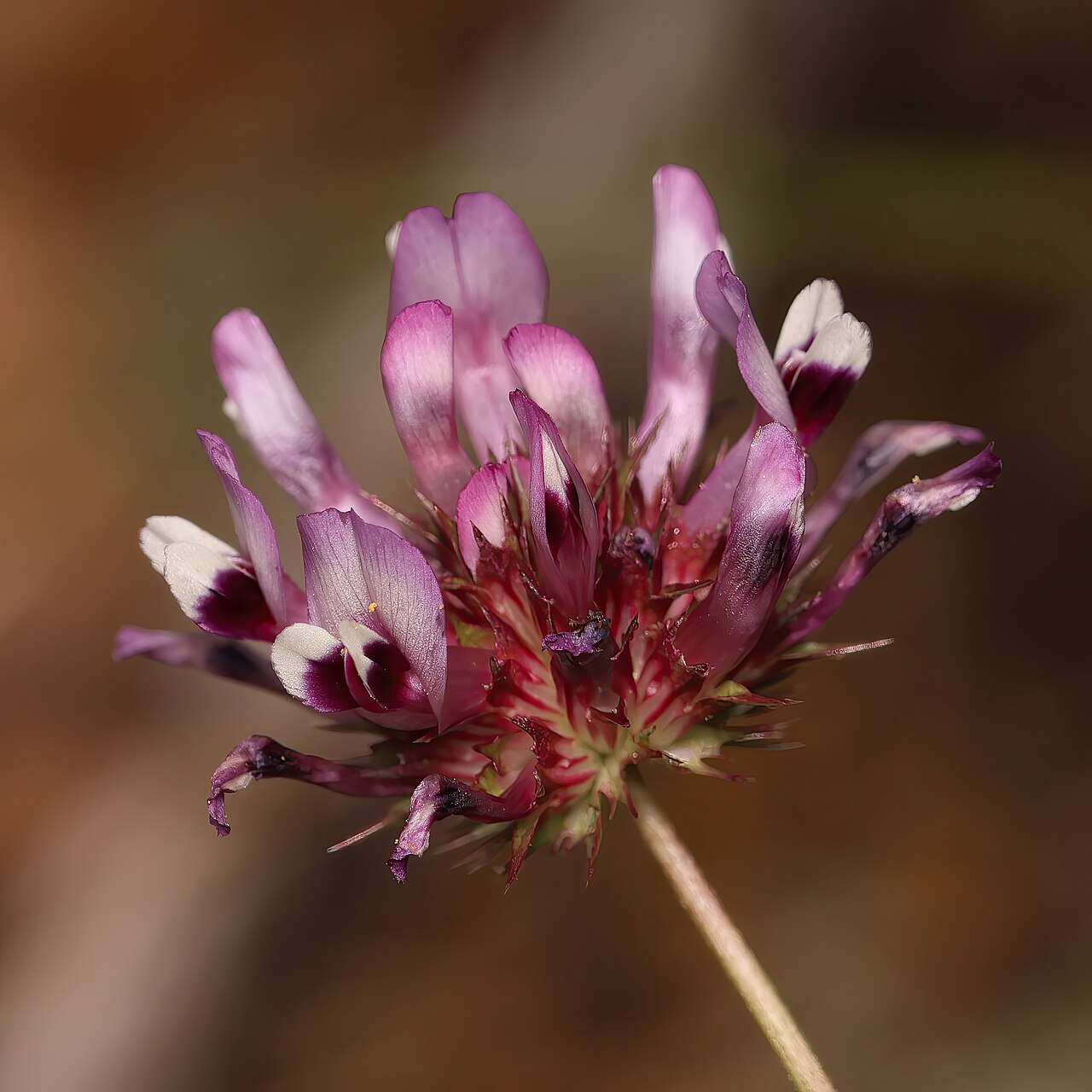
Trifolium willdenovii, known as Tomcat Clover, is a native annual clover of grasslands, meadows and open woodlands along the Pacific side of North America, from southern British Columbia to Baja California. A member of the pea family (Fabaceae), it grows 4 to 16 inches tall on slender stems, with narrow, sharply toothed leaflets and rounded heads of pink-purple flowers tipped in white, held in a showy, bristly collar.
It is one of the most common and attractive of the many native annual clovers in California, where it often colors spring grasslands and openings in oak woodland from March to June. Like other clovers it hosts nitrogen-fixing bacteria in its roots, enriching poor soils, and its flowers are valued by native bees.
This guide explains how to tell tomcat clover from the many other clovers in the West, where it grows, how to grow it from seed in a native meadow, and its value to pollinators and wildlife.
Identification
Tomcat clover looks little like the white and red clovers of lawns and roadsides, which are European introductions. Its narrow leaflets, the wheel-like involucre beneath each flower head and its bicolored flowers are the features to look for.
Growth Form
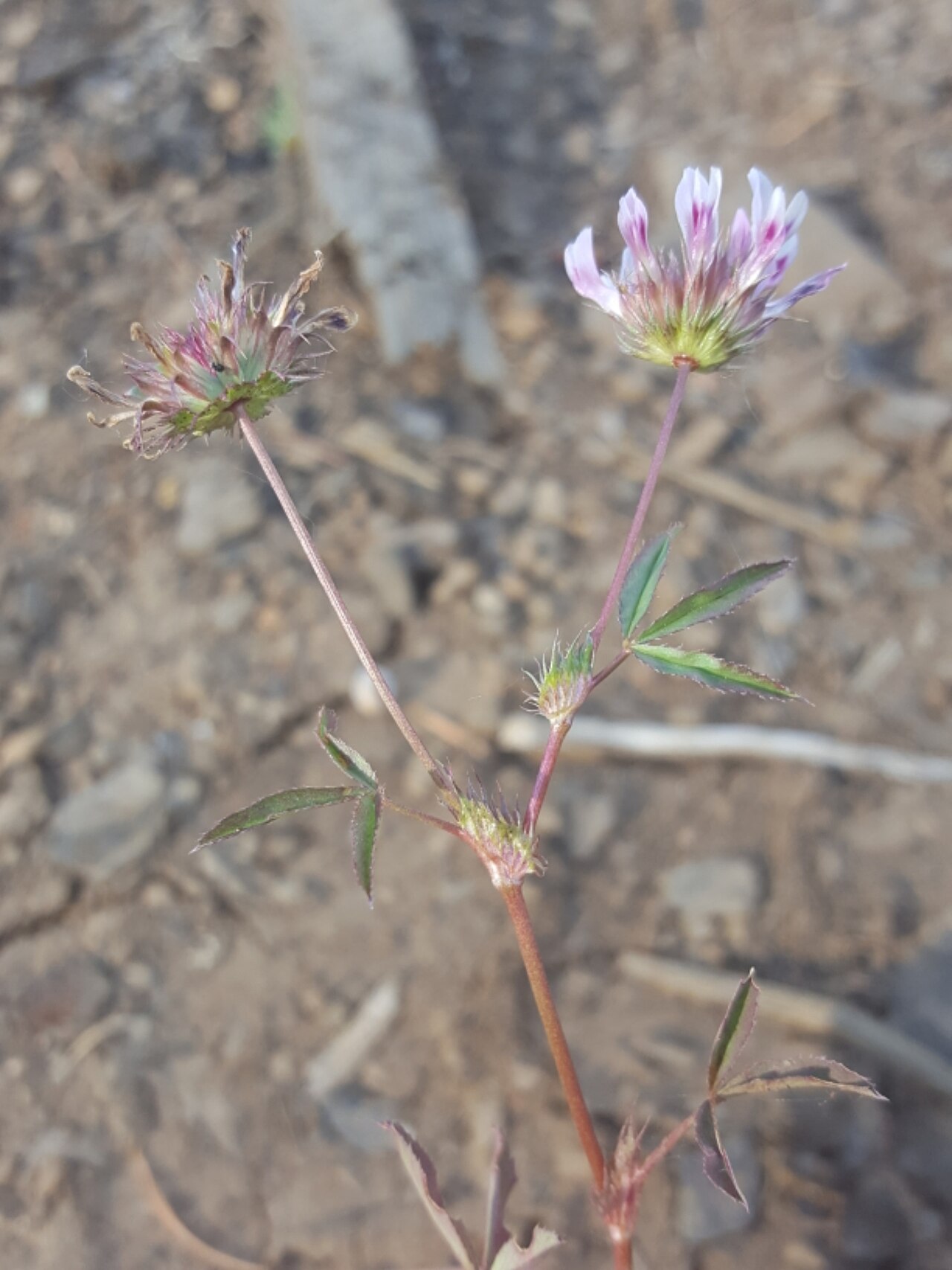
An annual herb with one to several slender, upright or spreading stems, usually 4 to 16 inches tall and occasionally up to about 2 feet. The plants are hairless or nearly so.
Leaves
Each leaf has three narrow leaflets, linear to lance-shaped, usually ½ to 2 inches long, with sharply toothed edges. At the base of each leaf stalk are stipules with bristle-like teeth.
Flower Heads
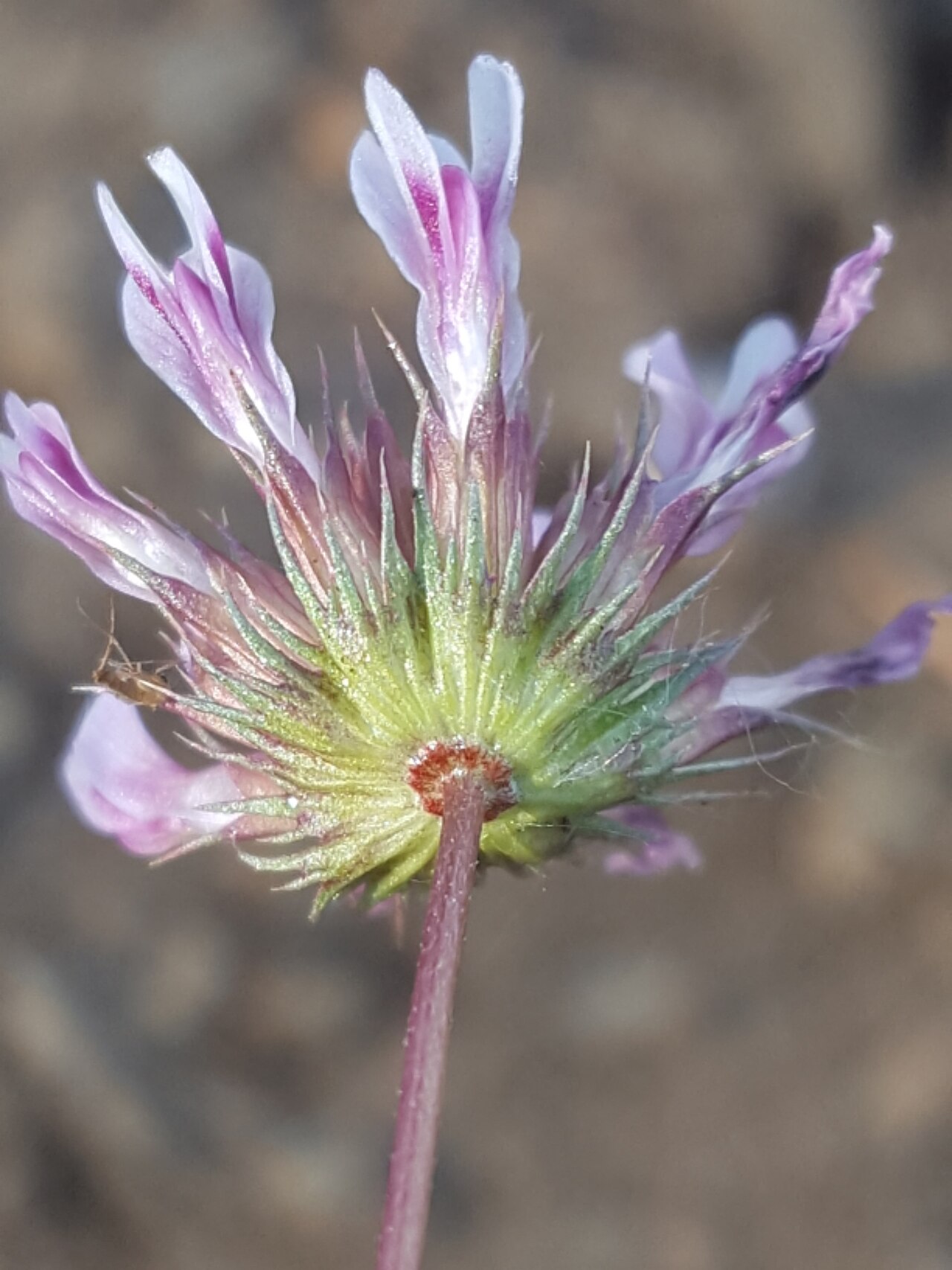
The flowers are packed into rounded heads about ½ to 1 inch across at the tips of long stalks. Each pea-like flower is reddish purple to pink with a white or pale tip, which gives the head a two-toned look. Below each head is an involucre, a green, saucer- or wheel-shaped collar of fused bracts whose lobes end in fine, bristly teeth. Bloom time is mainly March to June, later at higher elevations and farther north.
Fruit & Seeds
After flowering, each flower forms a small pod holding one or two seeds, which ripens within the persistent involucre and dried flowers.
Similar Species
Many native annual clovers grow with it. Cup clover (Trifolium cyathiferum) has a cup-shaped, papery involucre. Whitetip clover (Trifolium variegatum) has smaller heads and broader leaflets. Bull clover (Trifolium fucatum) has large, inflated, cream to pink flowers. Perennial springbank clover (Trifolium wormskioldii) creeps by rhizomes in moist places and has broader leaflets. Introduced red and white clovers have no involucre and broad, rounded leaflets.
Quick Facts
| Scientific Name | Trifolium willdenovii |
| Family | Fabaceae (pea family) |
| Plant Type | Annual herb (wildflower) |
| Mature Height | 4–16 in (occasionally to 2 ft) |
| Mature Spread | 4–12 in |
| Growth Rate | Fast; completes its life cycle in spring |
| Sun Exposure | Full sun to light shade |
| Water Needs | Moist in spring; dry in summer |
| Soil Type | Clay, loam or rocky soils, including serpentine |
| Soil pH | About 5.5–7.5 |
| Bloom Time | March–June |
| Flower Color | Reddish purple to pink with white tips |
| Fall Color | None; annual that dies back by early summer |
| Fruit | Small pods with one or two seeds |
| Deer Resistant | No; browsed by deer and grazing animals |
| USDA Hardiness Zones | Annual; grows in winter-wet regions of zones 7–10 |
Native Range
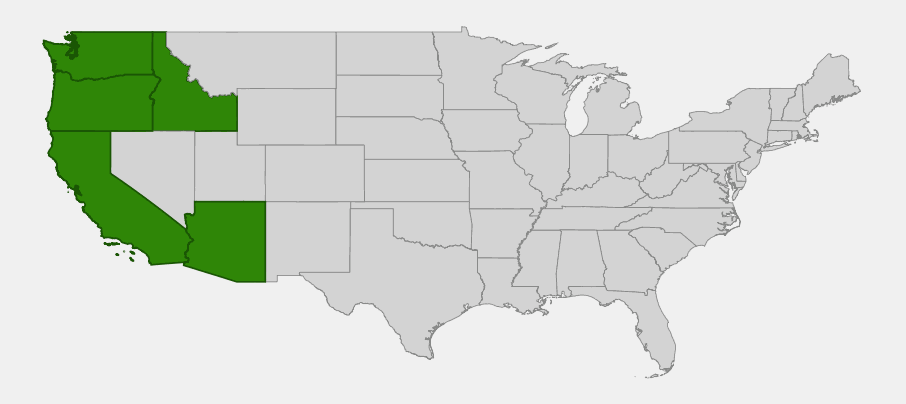
Tomcat clover is native to western North America, from southern British Columbia south through Washington and Oregon into California and Baja California. USDA PLANTS records it in Washington, Oregon, Idaho, California and Arizona, and in British Columbia. It is most common west of the Cascades and in California, where it occurs in the Coast Ranges, the Central Valley margins, the Sierra Nevada foothills and the southern California mountains. Idaho and Arizona records are outlying, and it is uncommon there.
In the Pacific Northwest it grows in the Puget Trough and the San Juan Islands, the Willamette Valley and the oak savannas and grassy balds of southwestern Oregon, typically in spots that are wet in winter and spring and dry out in summer.
Its habitats include grasslands, meadows, vernally moist flats, grassy openings in oak and pine woodland and chaparral, and serpentine grasslands. It ranges from near sea level into the lower mountains.
📋 Regional plant lists featuring Tomcat Clover: Arizona & New Mexico · California & Nevada · Idaho, Eastern Oregon & Eastern Washington · Western Oregon & Western Washington
Growing & Care Guide
Tomcat clover is grown from seed as part of a native wildflower meadow or grassland planting. It germinates with fall and winter rains, flowers in spring, and sets seed before the summer drought, so it fits perfectly into the natural rhythm of West Coast gardens.
Light
Grow it in full sun or light shade, such as an open meadow or the edge of an oak canopy.
Soil & Water
It tolerates many soils, including heavy clay and rocky or serpentine soils. Fall and winter rain is usually all it needs. Provide occasional water in spring only if rains stop early. Summer water is not needed, since the plants die after setting seed.
Planting Tips
Sow seed in fall, just before or with the first rains, on bare or lightly raked soil, and press it in. It does best in open, low-competition sites, mixed with other annual wildflowers and native bunchgrasses such as purple needlegrass and California oatgrass. Dense non-native annual grasses crowd it out.
Pruning & Maintenance
Leave plants standing until the seed ripens and drops in early summer, then mow or rake off the dry growth. Controlling weedy annual grasses before they set seed helps native clovers return each year.
Propagation
Grow it from seed. Like many clovers, the seeds have a hard coat; lightly scarifying them, for example by rubbing between sandpaper, or soaking them overnight can improve germination. Fall sowing outdoors usually works well without treatment.
Landscape Uses
- Native wildflower meadows: spring color among bunchgrasses
- Pollinator gardens: nectar and pollen for native bees
- Grassland and oak savanna restoration: within its Pacific Coast range
- Soil improvement: nitrogen fixation in poor soils
- Serpentine and clay sites: tolerates difficult soils
Wildlife & Ecological Value
Native clovers are an important part of western grasslands, providing protein-rich forage, nectar and pollen, and nitrogen for the plant community around them.
For Pollinators
The Xerces Society lists tomcat clover as having special value to native bees. Bumblebees and other native bees visit the flowers for nectar and pollen. Clovers are larval host plants for several butterflies in the sulphur and blue families.
For Birds
Quail, doves and other ground-feeding birds eat clover seeds and leaves, which are rich in protein.
For Mammals
Deer, rabbits, ground squirrels and other grazers eat the foliage, which is nutritious, and native clovers were historically an important forage plant in western grasslands.
Ecosystem Role
Like other legumes, tomcat clover forms partnerships with rhizobium bacteria in root nodules that convert nitrogen from the air into forms plants can use, enriching the soil for its neighbors in nutrient-poor grasslands.
Cultural & Historical Uses
The genus name Trifolium means “three leaves,” for the familiar three-part clover leaf. The species honors the German botanist Carl Ludwig Willdenow and is sometimes spelled willdenowii. It has also been known as Trifolium tridentatum, a name that refers to the toothed leaflets.
Native clovers were an important spring food for many California Indigenous peoples, who gathered and ate the young greens, often fresh, and in some cases harvested the seeds. Many tribes held spring clover feasts. These traditional practices relied on detailed knowledge of local plants.
Today tomcat clover is a valued component of grassland restoration seed mixes on the West Coast, helping bring back the diverse native wildflowers that once filled the region’s meadows.
Frequently Asked Questions
Is tomcat clover native?
Yes. Trifolium willdenovii is native to western North America, from British Columbia to Baja California. It is unrelated to the introduced lawn clovers, which are from Europe.
Why is it called tomcat clover?
The origin of the name is not well documented. It may refer to the bristly, whisker-like teeth of the involucre around each flower head.
Is tomcat clover an annual?
Yes. It germinates in fall or winter, flowers in spring and sets seed before the summer drought. It returns each year from seed.
How do I grow tomcat clover?
Sow seed in fall on bare soil in full sun, ideally in a meadow with native bunchgrasses. Winter rain is usually enough water. Let the plants go to seed so they come back.
Is tomcat clover good for bees?
Yes. It is listed by the Xerces Society as having special value to native bees, and bumblebees visit it often.

Looking for a nursery that carries Tomcat Clover?
Browse our native plant nursery directory: Arizona · California · Idaho · Oregon · Washington