Sweet-scented Bedstraw (Galium triflorum)
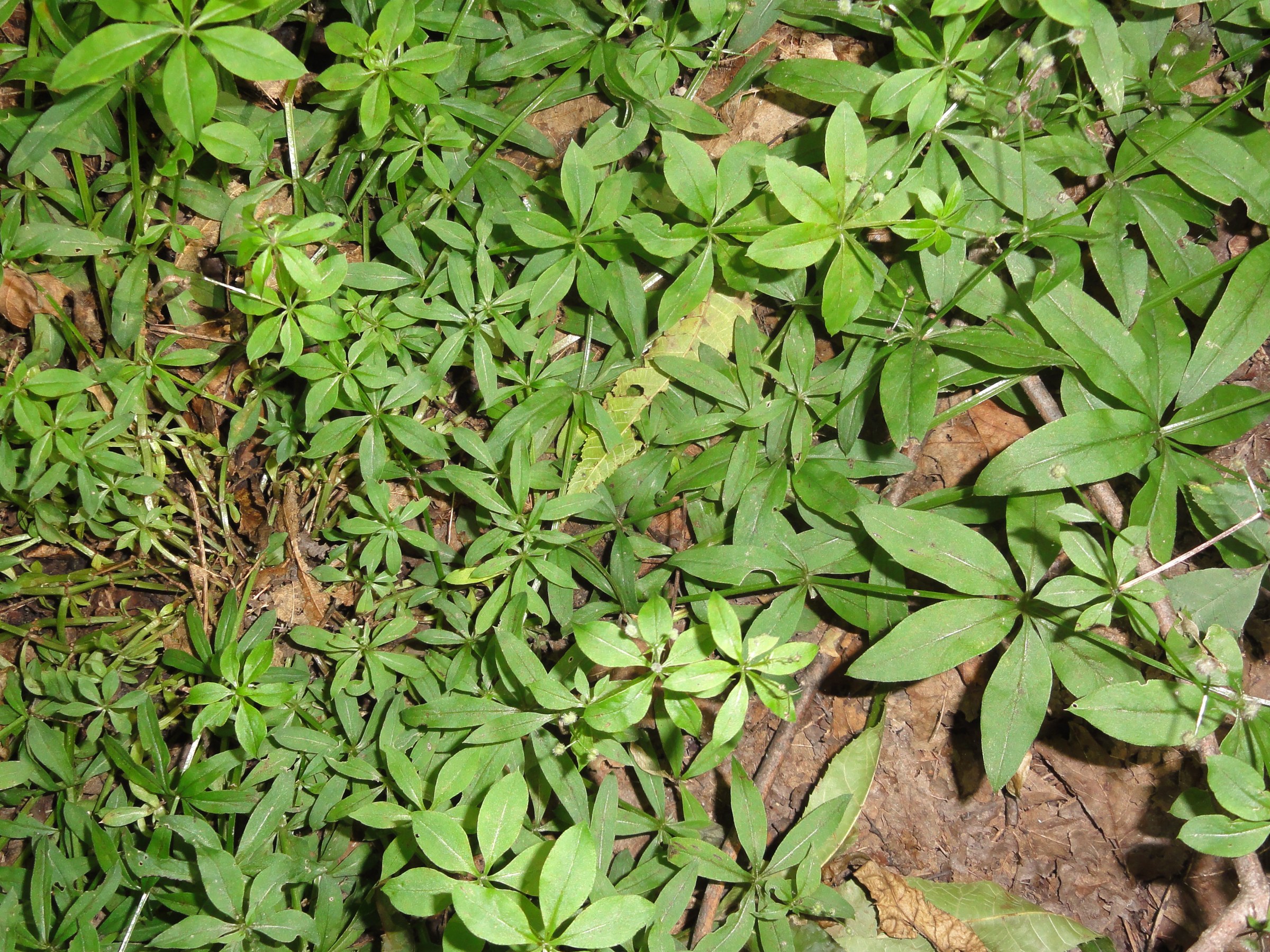
Galium triflorum, commonly known as Sweet-scented Bedstraw or Fragrant Bedstraw, is one of the most widely distributed native wildflowers in North America — a quiet, low-growing forest-floor perennial found from Alaska to Florida and nearly every state in between. Its claim to fame is hidden in its name: crush or dry the foliage and it releases a sweet, hay-like vanilla scent, the same fragrance chemical (coumarin) that gives true vanilla and freshly cut hay their smell.
This member of the Rubiaceae (madder) family is a sprawling, weak-stemmed groundcover of shaded woods, not a plant that calls attention to itself with showy flowers. Its tiny star-shaped white blooms are easy to overlook, but the whorled, star-pattern leaves and gently clinging, hooked-bristle stems and fruit are unmistakable once you know what to look for. Sweet-scented Bedstraw spreads quietly across the forest floor, filling the gaps between ferns, wildflowers, and tree trunks in the dappled shade where many other groundcovers struggle.
Because it tolerates deep shade, spreads gently without becoming a nuisance, and asks for nothing more than the kind of leafy, moisture-retentive soil found under almost any established tree canopy, Sweet-scented Bedstraw is an excellent low groundcover for woodland gardens across most of the country. It is a plant to walk on, not around — crushed underfoot along a shaded path, it leaves a faint sweet scent behind.
Identification
Sweet-scented Bedstraw is a sprawling to weakly climbing perennial herb, usually forming loose mats 6 inches to 2 feet tall where the stems lean against other vegetation, though individual stems can trail several feet along the ground. Square, weak stems are armed with tiny downward-hooked prickles that let the plant cling gently to neighboring foliage and catch on clothing as you brush past.
Stems
Stems are four-angled, slender, and often somewhat reclining or sprawling rather than upright, rarely self-supporting for more than a few inches. The fine, backward-pointing prickles along the angles of the stem give it a slightly rough, Velcro-like texture.
Leaves
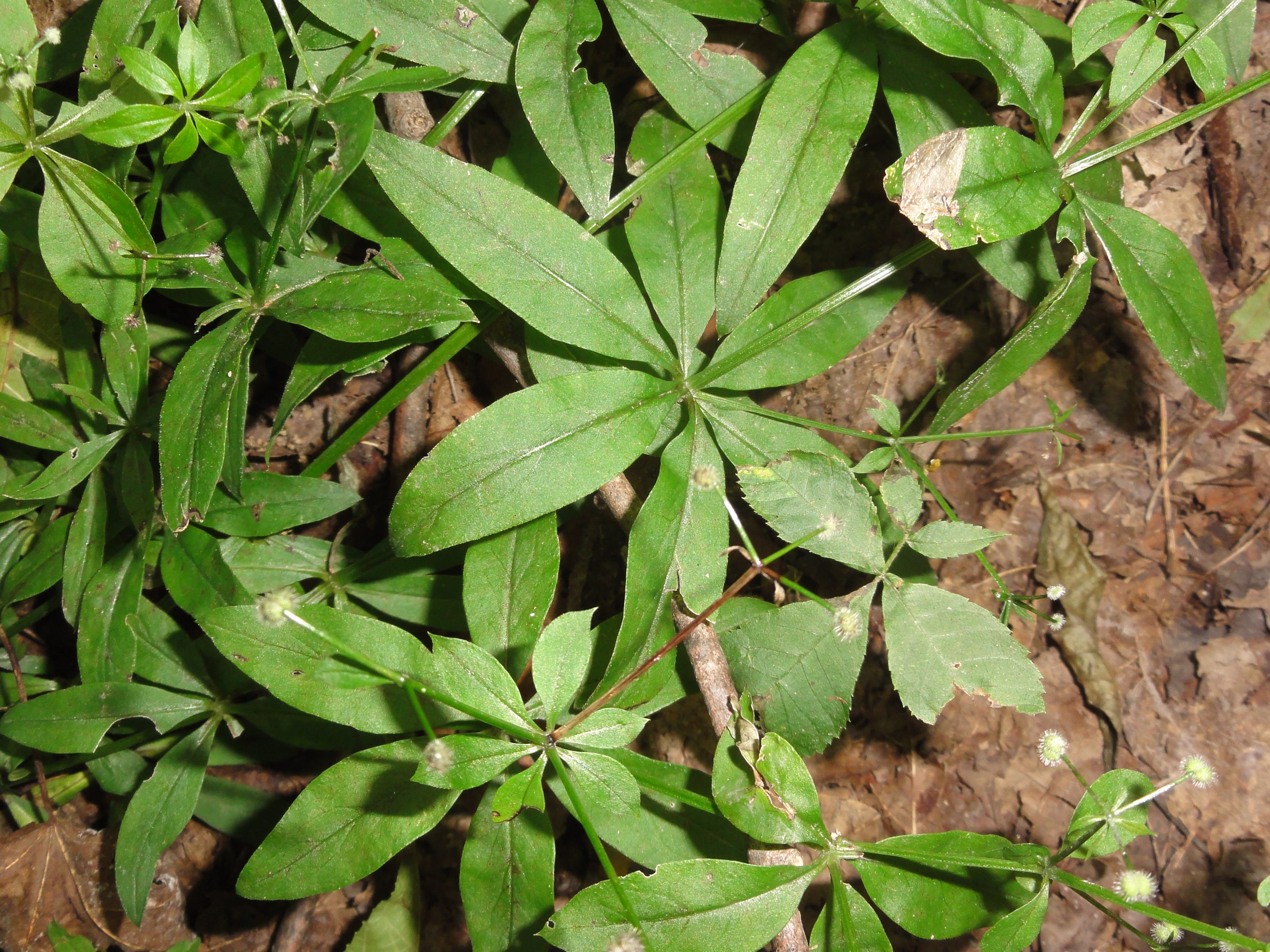
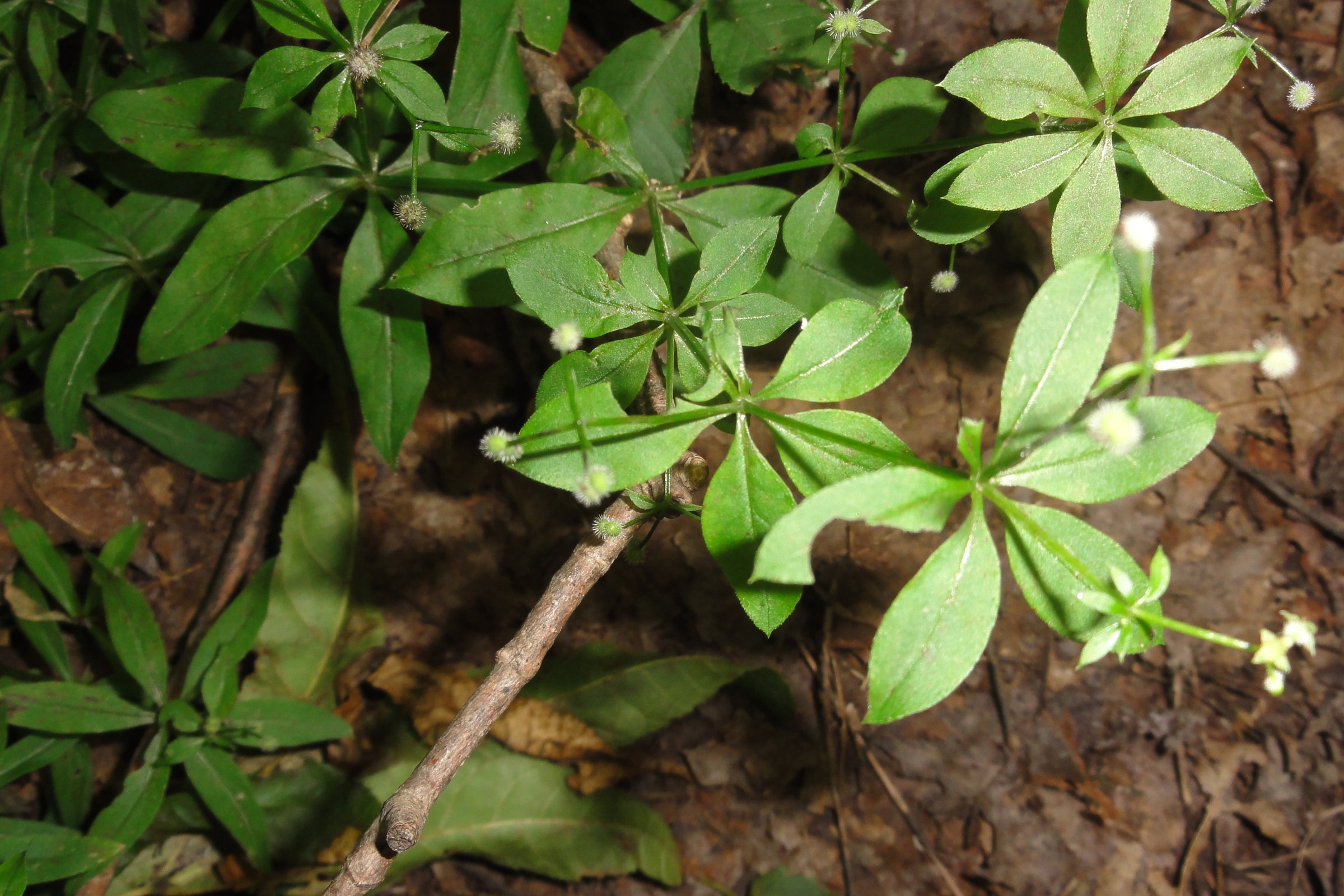
Leaves are arranged in whorls of 4 to 8 (most commonly 6), elliptic to lance-shaped, up to 2 inches long, with a single prominent midvein and bristle-tipped margins. The whorled leaves radiate out from the stem like the points of a star, the signature look of the bedstraw genus. When bruised or dried, the foliage releases a sweet, hay-like vanilla fragrance from its coumarin content — the trait that gives the plant its common name.
Flowers & Fruit
Flowers are tiny, about 1/16 inch across, with four greenish-white to white petals fused into a small flattish star, typically borne in loose clusters of three (reflected in the species name triflorum) from the leaf axils or stem tips. Bloom occurs from late spring into summer. The fruit is a pair of small, dry nutlets densely covered in hooked bristles, which cling to fur and clothing for dispersal, much like its common roadside relative, cleavers (Galium aparine).
Quick Facts
| Scientific Name | Galium triflorum |
| Family | Rubiaceae (Madder) |
| Plant Type | Herbaceous Perennial Groundcover |
| Mature Height | 6–24 in, sprawling/trailing |
| Mature Spread | Indefinite, loosely mat-forming |
| Growth Rate | Moderate |
| Sun Exposure | Part Shade to Full Shade |
| Water Needs | Moderate; prefers consistently moist soil |
| Soil Type | Rich, humusy, well-drained woodland soil |
| Soil pH | 5.5–7.0 |
| Bloom Time | May – July |
| Flower Color | Greenish-white |
| Fruit | Paired bristly nutlets (burs) |
| Deer Resistant | Moderate; occasionally browsed |
| USDA Hardiness Zones | 3–9 |
Native Range
Sweet-scented Bedstraw is one of the most broadly distributed native wildflowers in North America, occurring in nearly every U.S. state, including Alaska, and across almost all of Canada. It is native coast to coast — from the Pacific Northwest and California through the Rocky Mountains and Great Plains, across the Midwest and South, and throughout New England and the Mid-Atlantic. It is absent only from Hawaii and the driest, southernmost tip of Texas and Florida.
Across this huge range, Sweet-scented Bedstraw is consistently a plant of shaded, moist-to-mesic woodlands: deciduous and mixed forests, streambank thickets, and the cool understory beneath conifers in the mountains and the Pacific Northwest. It typically grows from near sea level to subalpine elevations in the West, always favoring the cooler, humus-rich soil of a forest floor over open, sunny ground.
Despite its vast range, Sweet-scented Bedstraw is not considered weedy or aggressive; it spreads gently within shaded woodland settings and does not persist in open lawns, agricultural ground, or full-sun garden beds. Gardeners anywhere within its native range can use it confidently as an authentic, well-behaved groundcover beneath native trees and shrubs.
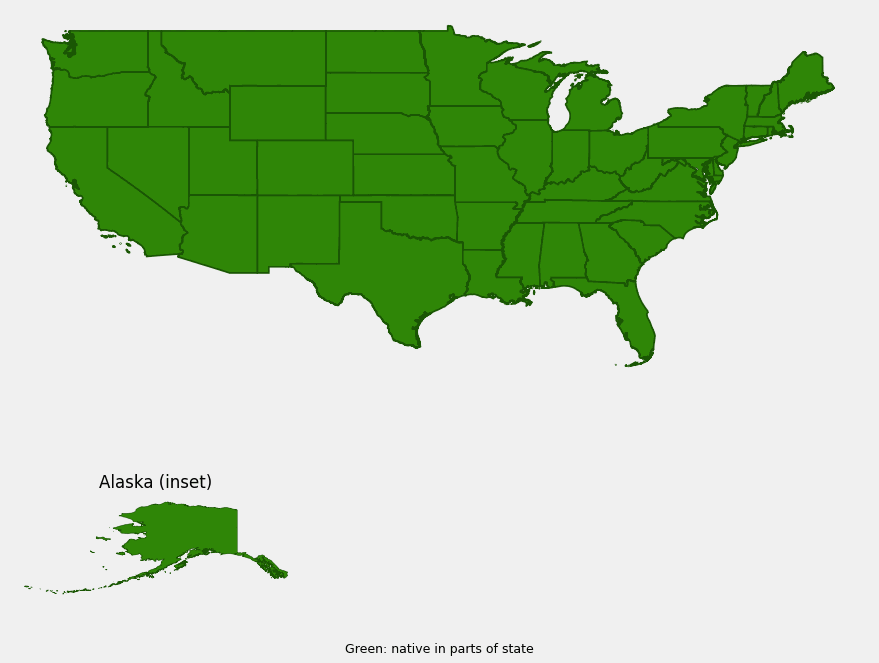
📋 Regional plant lists featuring Sweet-scented Bedstraw: Alaska, Idaho, Eastern Oregon & Eastern Washington, Western Oregon & Western Washington, Utah & Western Colorado, Arizona & New Mexico, Montana & Wyoming, North Dakota, South Dakota & Western Minnesota, Nebraska, Kansas & Eastern Colorado, Illinois, Iowa & Missouri, Michigan, Wisconsin & Eastern Minnesota, Ohio & Indiana, Kentucky & Tennessee, Arkansas, Louisiana, Eastern Oklahoma & Eastern Texas, Georgia, Alabama & Mississippi, North Carolina & South Carolina, Maryland, Virginia & West Virginia, Delaware, Southern New Jersey & Long Island, New York, Pennsylvania & Northern New Jersey, Connecticut, Massachusetts & Rhode Island, New Hampshire, Maine & Vermont
Growing & Care Guide
Sweet-scented Bedstraw is about as low-fuss as a native groundcover gets, provided you give it the shaded, humusy conditions it would find on any healthy forest floor.
Light
Part shade to full shade is ideal — this is fundamentally a forest-floor plant, and it declines in hot, direct sun. Dappled light beneath deciduous trees or the deeper shade of conifers both suit it well.
Soil & Water
Rich, humusy soil with consistent moisture mimics its native woodland floor habitat best. It tolerates average garden soil but performs poorly in compacted clay or in soil that dries out completely during summer. A layer of leaf-litter mulch helps retain the moisture and cool root run it prefers.
Planting Tips
Plant from container stock or small divisions in spring or fall, tucking plants beneath the canopy of established trees and shrubs. Space plants 12 to 18 inches apart to let the loose mats fill in naturally over a season or two. It combines well with ferns, wild ginger, and spring ephemerals in a woodland planting scheme.
Pruning & Maintenance
Essentially none needed. Cut back or thin older growth in early spring if a patch becomes congested; otherwise, let it spread naturally within its shaded bed. It has no significant pest or disease issues.
Landscape Uses
Sweet-scented Bedstraw earns its keep in several shaded garden settings:
- Woodland groundcover beneath native trees and shrubs
- Shaded path edging, where its fragrance is released underfoot
- Fern garden companion filling gaps between larger shade perennials
- Streambank and ravine stabilization in shaded, moist sites
- Naturalized forest restoration plantings across its wide native range
Wildlife & Ecological Value
As an understated but widespread forest-floor plant, Sweet-scented Bedstraw contributes quietly but meaningfully to woodland ecosystems across its enormous range.
For Pollinators
The small summer flowers draw an assortment of small native bees, flies, and beetles capable of working tiny blooms, offering a minor nectar source in the dim light of the forest understory when larger woodland wildflowers have already finished blooming.
For Birds & Mammals
The dense, trailing mats provide ground-level cover for small mammals and ground-feeding birds navigating the forest floor. Its bristly fruit catches readily on fur, letting white-tailed deer, small mammals, and other forest wildlife disperse the seed well beyond the parent plant.
Ecosystem Role
Sweet-scented Bedstraw is a common, stabilizing component of the herbaceous layer in healthy deciduous and mixed forests across North America, helping hold moisture in the leaf litter and filling niches between larger wildflowers, ferns, and tree seedlings. Its wide tolerance of forest types, from Pacific coastal rainforest to Appalachian cove forest to boreal taiga edge, makes it one of the most ecologically consistent native groundcovers on the continent.
Cultural & Historical Uses
The sweet, hay-like scent of dried Sweet-scented Bedstraw — caused by the same coumarin compound found in sweet woodruff and sweet grass — made it historically valuable as a strewing herb and mattress stuffing, the origin of the common “bedstraw” name shared across the genus. Indigenous peoples across its range, including groups in the Pacific Northwest and the boreal forest, used dried bedstraw foliage for bedding and as a natural air freshener in homes and storage containers, prized for both its pleasant scent and its reputed ability to deter insects.
Some Indigenous communities also used preparations of related bedstraw species in traditional practices, though specific, well-documented ethnobotanical use of Galium triflorum itself is less extensively recorded than for some of its showier relatives. The plant’s root, like several other bedstraws, can yield a reddish dye, though this was a minor use compared to dedicated dye plants.
Today, Sweet-scented Bedstraw is valued mainly by native plant gardeners and restoration practitioners as a dependable, fragrant, low-growing groundcover for shaded native plantings, rather than for any specific craft or culinary tradition.
Frequently Asked Questions
Why is it called Sweet-scented Bedstraw?
Crushed or dried foliage releases a sweet, hay-like vanilla fragrance from coumarin, the same aromatic compound found in sweet woodruff and freshly cut hay. The scent is strongest once the leaves have dried.
Is Sweet-scented Bedstraw the same plant as sweet woodruff?
No. Sweet woodruff (Galium odoratum) is a related but separate species native to Europe, commonly grown as a garden groundcover. Sweet-scented Bedstraw (Galium triflorum) is the North American native equivalent, with a similar fragrance but a different, more informal sprawling growth habit.
Will Sweet-scented Bedstraw take over my garden?
No. It spreads gently within shaded woodland conditions and does not persist in sunny lawns or open beds. It is not considered weedy or invasive anywhere in its native range.
Does Sweet-scented Bedstraw grow in full sun?
It can tolerate brief morning sun but performs best, and looks best, in part to full shade. In hot, direct sun it tends to struggle and brown out.
Do the seeds really stick to clothing and fur?
Yes — the small, bristly fruit is covered in hooked hairs built to catch on fur and fabric for seed dispersal, the same strategy used by its weedy relative cleavers (Galium aparine), though Sweet-scented Bedstraw is far less aggressive.

Looking for a nursery that carries Sweet-scented Bedstraw?
Browse our native plant nursery directory: Alaska, Arizona, Arkansas & Alabama · California · Oregon · Washington · Idaho, Illinois, Indiana, Iowa & Kansas · Kentucky through Montana · Nevada through Oklahoma · Pennsylvania through Virginia · West Virginia, Wisconsin & Wyoming