Swamp Jessamine (Gelsemium rankinii)
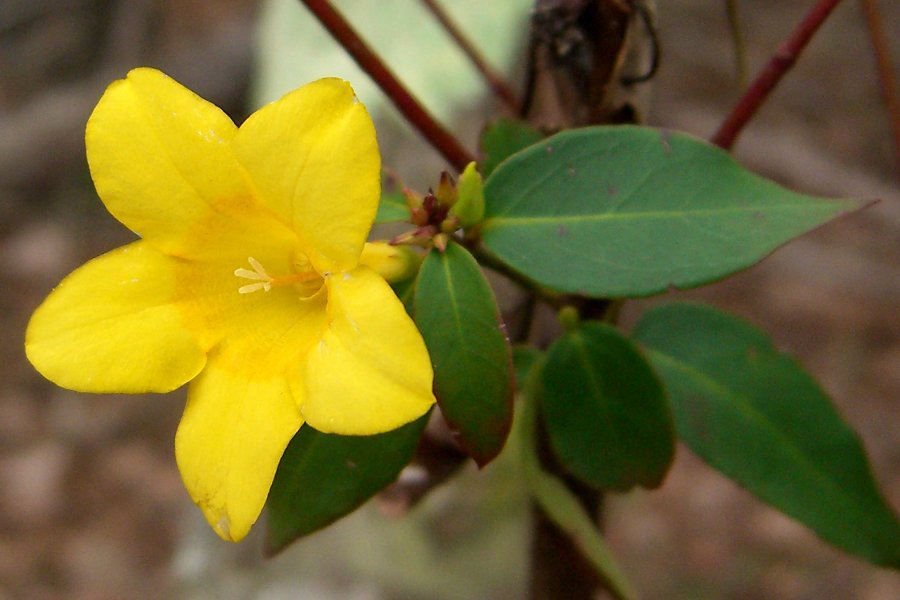
Important: every part of this plant is highly toxic if eaten. Gelsemium rankinii, commonly called Swamp Jessamine or Rankin’s Trumpetflower, is a woody, twining evergreen vine native to wet pinelands, swamp margins, and pocosins of the Southeastern Coastal Plain. Like its better-known relative Carolina jessamine, it produces cheerful yellow, funnel-shaped flowers against glossy dark green foliage — but the entire plant contains potent toxic alkaloids, and it should never be treated as an edible or medicinal herb, despite some popular but dangerously mistaken folk claims about related jessamine species.
Swamp Jessamine is the lesser-known of the two North American Gelsemium species. It is considerably more restricted in range and habitat than Carolina jessamine (Gelsemium sempervirens), sticking close to the wet, boggy ground of the coastal plain rather than the broad range of soils — wet to dry, sun to shade — that Carolina jessamine tolerates. Where the two species overlap, they can be told apart by bloom timing, flower shape, and fragrance, details covered below for anyone trying to identify a jessamine vine growing in a southeastern wetland.
For gardeners restoring wet pine savannas, pocosins, or swamp-margin plantings in the Deep South, Swamp Jessamine is a valuable, true-to-habitat native vine. It is not a substitute for Carolina jessamine in drier gardens, and because of its toxicity, it is best sited away from areas where children, pets, or livestock might be tempted to sample the foliage, flowers, or nectar.
Identification
Swamp Jessamine is a woody, high-twining evergreen vine, climbing into shrubs and low trees at the edges of wet woods, or sprawling along the ground where no support is available. Its slender, reddish-brown stems twine counterclockwise around whatever they encounter, and established vines can reach 10 to 20 feet into the canopy of swamp-edge shrubs and small trees.
Stems
Young stems are slender, wiry, and reddish-brown, becoming woody and twisted with age as the vine climbs. The twining growth habit lets it scramble through swamp shrub thickets such as titi, fetterbush, and buttonbush without needing to build its own rigid support.
Leaves
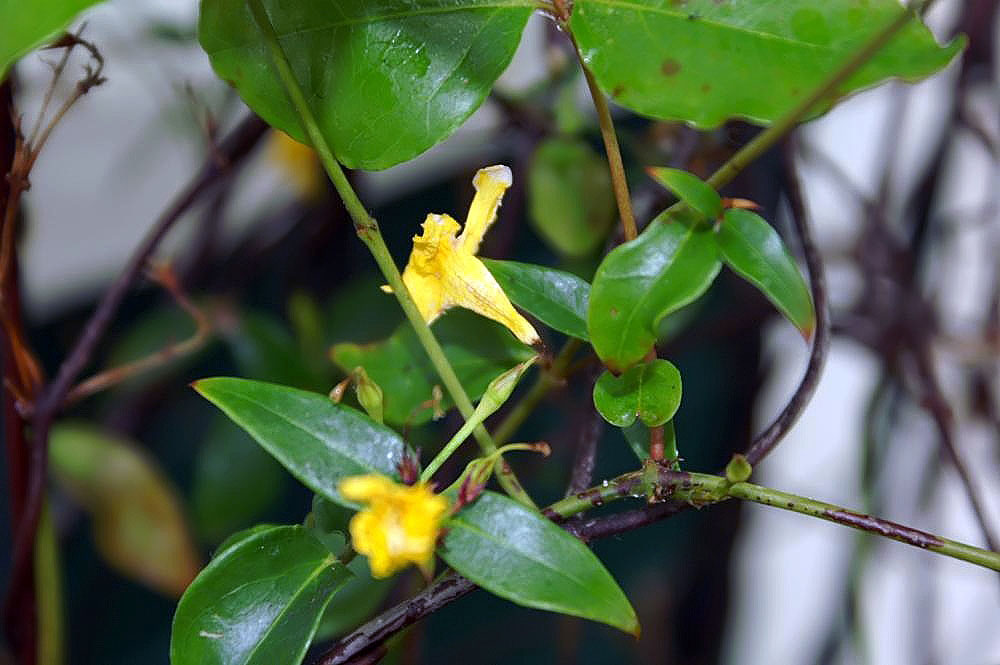
Leaves are opposite, simple, lance-shaped to narrowly oblong, 1 to 3 inches long, with smooth (entire) margins and a glossy, somewhat leathery texture. They are evergreen, staying dark green through winter, though they may take on a yellowish-green cast in cold weather — a trait shared with Carolina jessamine.
Flowers & Fruit
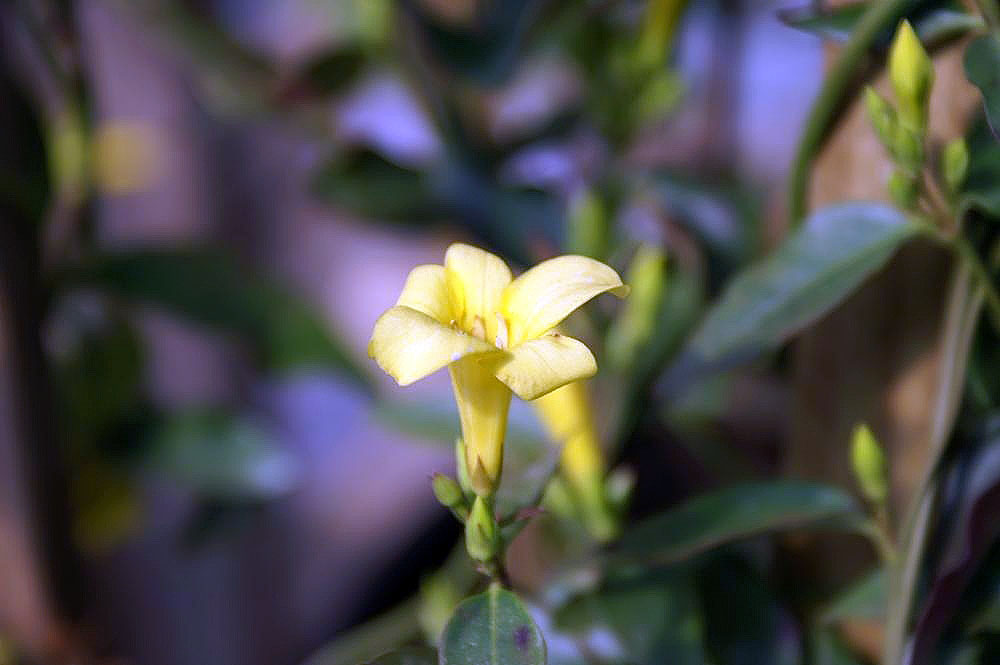
Flowers are funnel- to bell-shaped, bright clear yellow, about 1 to 1.5 inches long, with five flaring, rounded petal lobes that open relatively flat compared to the more tubular, trumpet-shaped flowers of Carolina jessamine. Swamp Jessamine flowers have little to no detectable fragrance, in clear contrast to the strong sweet scent of Carolina jessamine. It is also the only one of the two species to bloom twice: a modest flush in early fall, followed by its main bloom in late winter to early spring. The fruit is a flattened, two-valved capsule containing winged seeds, maturing a few months after flowering.
⚠ Toxicity warning: All parts of Swamp Jessamine — leaves, stems, flowers, nectar, and roots — contain toxic indole alkaloids (including gelsemine and gelsemicine) closely related to strychnine. Ingestion can cause weakness, difficulty breathing, and can be fatal in people, pets, and livestock. Even honey made from Gelsemium nectar has caused documented poisonings. Never eat any part of this plant or use it as a home remedy, and keep it away from grazing animals.
Quick Facts
| Scientific Name | Gelsemium rankinii |
| Family | Gelsemiaceae |
| Plant Type | Woody Evergreen Twining Vine |
| Mature Height | 10–20 ft climbing (trails if unsupported) |
| Growth Rate | Moderate to fast with consistent moisture |
| Sun Exposure | Part Sun to Shade |
| Water Needs | High; prefers consistently wet to moist soil |
| Soil Type | Wet, poorly drained; sandy peat or muck |
| Soil pH | 4.5–6.5 (acidic) |
| Bloom Time | Late winter–early spring, with a lighter rebloom in early fall |
| Flower Color | Bright yellow, unscented |
| Fruit | Flattened two-valved capsule with winged seeds |
| Deer Resistant | Yes — toxic foliage is avoided by deer |
| USDA Hardiness Zones | 7–9 |
Native Range
Swamp Jessamine is native to the Southeastern Coastal Plain, found from southeastern North Carolina south through South Carolina, Georgia, and Florida, and west through Alabama, Mississippi, and Louisiana. It is far more narrowly distributed than Carolina jessamine, which ranges much farther north and west. Within this coastal plain belt, Swamp Jessamine is also notably less common, favoring a narrower set of consistently wet habitats rather than the wide range of soils Carolina jessamine accepts.
True to its common name, this species is a plant of wet ground: swamp margins, wet pine flatwoods and savannas, pocosins, bay forests, and the edges of blackwater streams and ponds. It typically grows at low elevations across the flat coastal plain, intertwined with shrubs such as titi, fetterbush, and swamp doghobble that share its preference for saturated, acidic soils.
Because Swamp Jessamine depends on consistently wet ground, it does not persist in typical upland garden soil the way Carolina jessamine does, and it is absent from the drier Piedmont and mountain plantings where Carolina jessamine thrives. Gardeners outside its native wet coastal-plain habitat, or outside the Southeast altogether, should not expect this species to establish in average garden conditions.
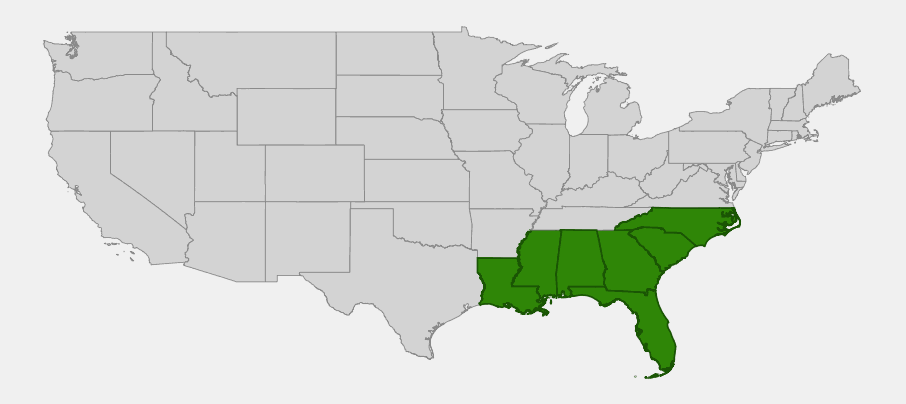
📋 Regional plant lists featuring Swamp Jessamine: North Carolina & South Carolina, Georgia, Alabama & Mississippi, Arkansas, Louisiana, Eastern Oklahoma & Eastern Texas
Growing & Care Guide
Swamp Jessamine rewards gardeners who can offer it genuinely wet feet. It is not a drop-in substitute for Carolina jessamine in a typical border — it wants the same soggy, acidic ground it grows in naturally.
Light
Part sun to shade suits it well, reflecting its natural habitat at the semi-shaded edges of swamp shrub thickets. It flowers most heavily with at least a few hours of direct or dappled sun.
Soil & Water
This is a wetland plant through and through — give it consistently moist to wet, acidic soil, such as a rain garden, pond margin, or low spot that stays damp through most of the year. It does not tolerate drought or well-drained upland soil the way Carolina jessamine does; use the drier-tolerant species instead for a typical garden bed.
Planting Tips
Plant near water features, in low wet spots, or as part of a pocosin or bog-garden restoration. Provide a trellis, fence, or shrub to climb; without support it will sprawl as a loose groundcover. Space plants several feet apart to allow for its twining spread.
Pruning & Maintenance
Prune after the main spring bloom to control size and shape, since flower buds for the following year form on new growth through summer. Wear gloves when handling and pruning this plant, and wash hands afterward, given its toxic sap.
Landscape Uses
Swamp Jessamine fits a specific, wet-site niche:
- Rain gardens and pond or stream margins
- Pocosin and wet pine savanna restoration plantings
- Trellised screening in consistently damp sites
- Naturalized swamp-edge gardens paired with titi and fetterbush
Wildlife & Ecological Value
Despite its toxicity to humans and livestock, Swamp Jessamine supports a specialized set of pollinators adapted to its chemistry, and provides structural habitat in coastal plain wetlands.
For Pollinators
Early-blooming flowers provide an important late-winter nectar source for native bees and some early-season butterflies in the coastal plain, when few other nectar plants are flowering. Because the nectar itself contains toxic alkaloids, honey bees that forage heavily on Gelsemium can produce tainted honey — a well-documented regional caution for beekeepers near large jessamine patches.
For Birds & Mammals
The dense tangles formed where Swamp Jessamine climbs through swamp shrub thickets offer cover for small birds and mammals. Its toxicity means it is not browsed by deer, which can make it a useful, deer-resistant component of a wildlife-friendly wetland planting.
Ecosystem Role
As a twining vine of wet coastal plain shrub communities, Swamp Jessamine adds structural complexity to pocosins and swamp margins, helping knit together the shrub layer in these increasingly rare wetland habitats.
Cultural & Historical Uses
Swamp Jessamine itself has little distinct recorded history separate from its more widely known relative, Carolina jessamine, with which it was historically confused due to their similar appearance; it was not formally described as a separate species until 1928. The genus as a whole has a documented history in traditional and 19th-century homeopathic medicine, where Gelsemium extracts were used — and frequently misused, with fatal results — as sedatives and pain remedies.
Because of the serious toxicity risk, Swamp Jessamine has no safe home-remedy or culinary use, and none should be attempted. Its historical interest today is mainly botanical and horticultural, as a lesser-known coastal plain counterpart to Carolina jessamine.
Frequently Asked Questions
Is Swamp Jessamine the same as Carolina jessamine?
No. They are closely related and look similar, but Swamp Jessamine (Gelsemium rankinii) has unscented, more flat-faced flowers, blooms twice a year, and sticks to wet swamp-edge habitats. Carolina jessamine (Gelsemium sempervirens) has strongly fragrant, more tubular flowers, blooms once in late winter to spring, and tolerates both wet and dry, sunny and shaded sites across a much larger range. See our Carolina (Yellow) Jessamine page for comparison.
Is Swamp Jessamine poisonous?
Yes, seriously so. Every part of the plant — leaves, flowers, nectar, and roots — contains toxic alkaloids that can be fatal if ingested. Keep it away from children, pets, and grazing livestock, and never use it as a home remedy.
Can I grow Swamp Jessamine in a normal, well-drained garden bed?
Not successfully. This species needs consistently wet, acidic soil similar to its native swamp-margin habitat. For a typical garden border, Carolina jessamine is the better-adapted choice.
Does Swamp Jessamine smell sweet like Carolina jessamine?
No — this is one of the clearest field differences. Swamp Jessamine flowers have little to no fragrance, while Carolina jessamine is well known for its strong, sweet scent.
Is Swamp Jessamine rare?
It is uncommon relative to Carolina jessamine and more habitat-restricted, occurring only in wet coastal plain sites across a narrower range from North Carolina to Louisiana. It is not federally listed, but it is tracked as a species of conservation concern in parts of its range.

Looking for a nursery that carries Swamp Jessamine?
Browse our native plant nursery directory: North Carolina · South Carolina · Georgia & Florida · Alabama · Mississippi & Louisiana