Narcissus Anemone (Anemone narcissiflora)
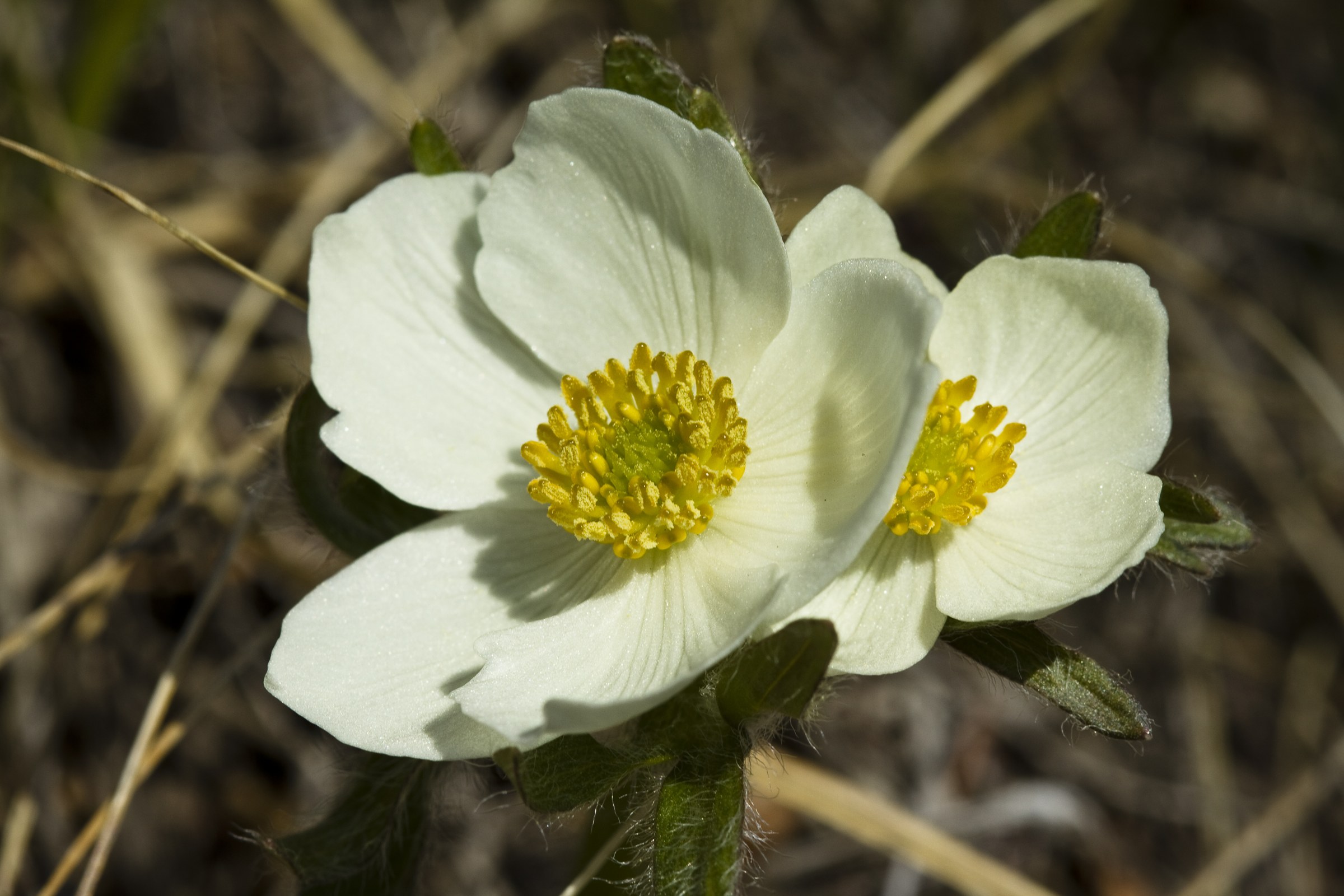
Anemone narcissiflora (also classified as Anemonastrum narcissiflorum), commonly known as Narcissus Anemone or narcissus-flowered anemone, is a low, clump-forming alpine wildflower in the buttercup family (Ranunculaceae). It is a circumboreal species found across the high mountains of the Northern Hemisphere, but only a small part of that huge range falls within the United States. Here it is a genuinely native plant of just two disjunct areas: the alpine tundra of Alaska and the high alpine zone of the southern Rocky Mountains in Colorado and Wyoming, where it grows as the distinct variety zephyra.
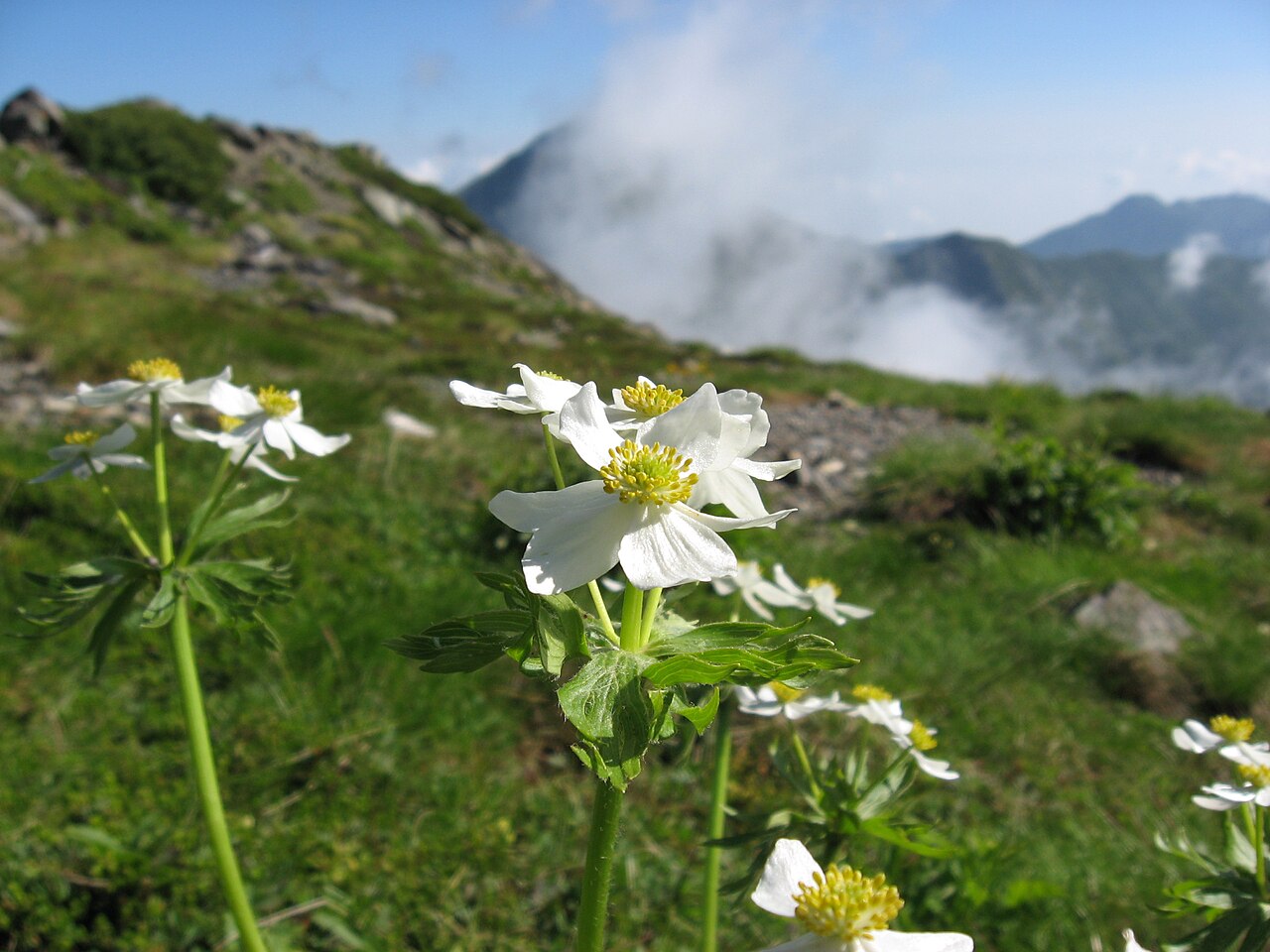
This is not a plant most gardeners will ever grow, and that is part of the point of documenting it: narcissus anemone belongs to true alpine tundra and high mountain meadows, above or near treeline, where short summers, intense light, and thin, rocky soil shape a very different kind of native flora than the forests and prairies most of this site covers. In Alaska it blooms across open, snow-free tundra slopes soon after snowmelt; in the Rockies, the variety zephyra is a scarce, specialized inhabitant of high alpine turf and talus, found in only a handful of counties in Colorado and Wyoming.
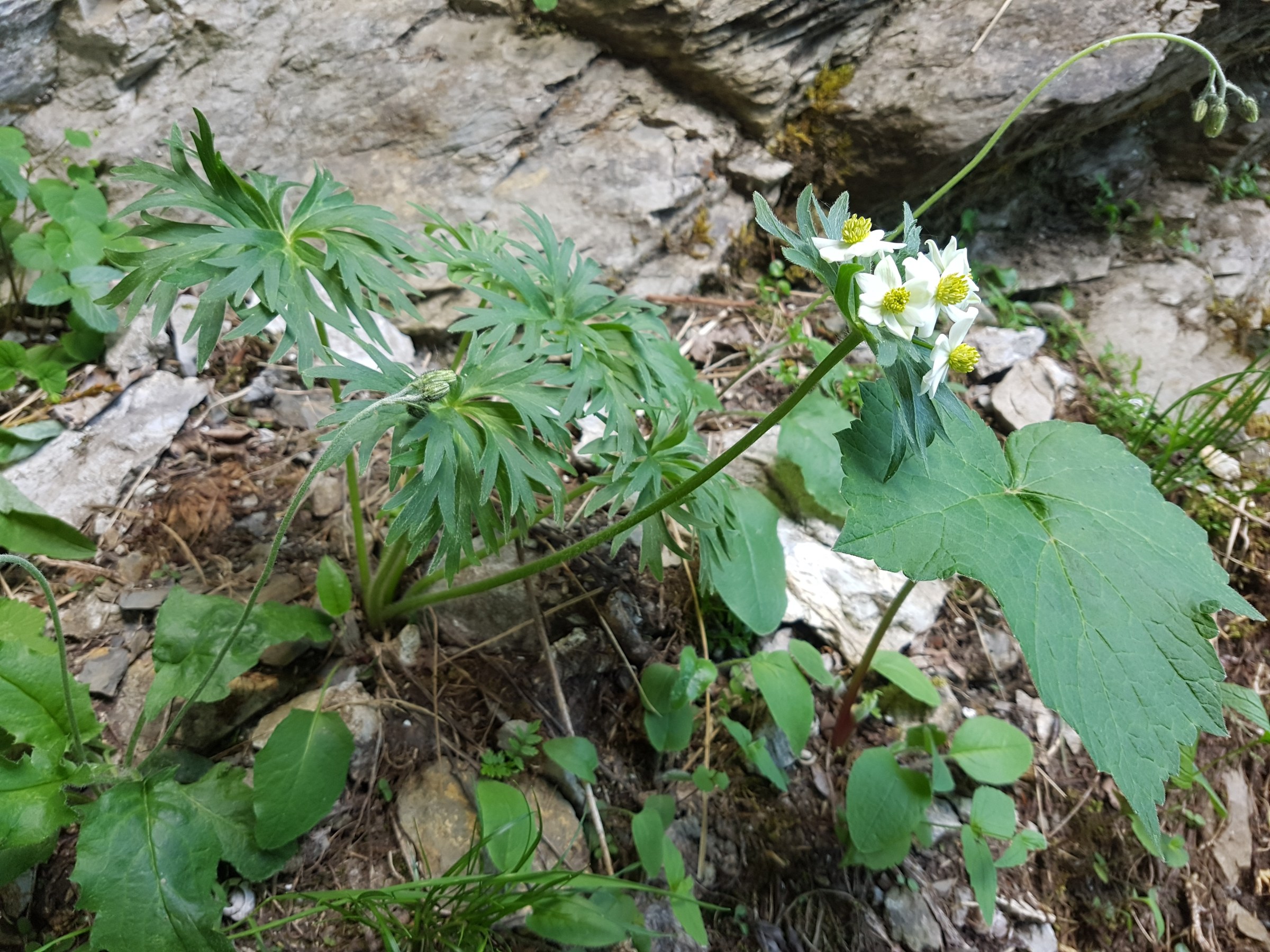
The flowers are the plant’s signature feature: broad, creamy-white to pale yellow, cup-shaped blooms with a dense cluster of golden stamens at the center, carried singly or in small, loose umbels above a mound of finely divided, fern-like basal leaves. Though narcissus anemone is a popular alpine garden subject in parts of Europe, where other varieties of the species are native, the North American populations are a specialized, climate-sensitive alpine plant best appreciated in the wild rather than attempted in most home gardens.
Identification
Narcissus anemone is a low, non-woody perennial growing from a stout, woody underground base (caudex), typically reaching 6 to 16 inches tall in its North American populations, though the species overall can range from under 3 inches to nearly 2 feet depending on variety and growing conditions. It forms a tidy clump of basal leaves from which one to several flowering stems rise each summer.
Leaves
The basal leaves are long-stalked and divided into three main segments, each further cut into narrow, toothed lobes, giving the foliage a finely dissected, almost fern-like or parsley-like appearance. A few much smaller, simplified leaves (bracts) are arranged in a whorl partway up each flowering stem, directly beneath the flower cluster.
Flowers
Each flowering stem carries one to several flowers in a loose, umbrella-like cluster, though a single flower per stem is also common, especially at high elevation or in harsher sites. The flowers lack true petals; instead, five to nine petal-like sepals, creamy white to pale yellow and sometimes faintly blue-tinged on the back, spread into a broad, open cup 1 to 2 inches across. At the center sits a dense boss of forty to eighty or more golden-yellow stamens, giving the flower a bright, sunny eye that contrasts with the pale sepals.
Fruit & Seeds
After flowering, the plant produces a rounded head of flattened, winged seeds (achenes), each tipped with a small curved beak. The seed heads mature through late summer and are dispersed by wind across the open tundra and alpine turf the species favors.
Quick Facts
| Scientific Name | Anemone narcissiflora (syn. Anemonastrum narcissiflorum) |
| Family | Ranunculaceae (Buttercup) |
| Plant Type | Herbaceous alpine perennial |
| Mature Height | 6–16 in (North American populations) |
| Mature Spread | 8–14 in |
| Growth Rate | Slow |
| Sun Exposure | Full Sun |
| Water Needs | Average to Wet (relies on snowmelt moisture) |
| Soil Type | Thin, rocky alpine soils; gravelly tundra |
| Soil pH | Neutral to slightly acidic |
| Bloom Time | June – August, soon after snowmelt |
| Flower Color | Creamy white to pale yellow |
| Fall Color | Foliage dies back; no notable fall color |
| Fruit | Small winged achenes in a rounded head; not a food plant |
| Deer Resistant | Yes (toxic foliage, like other anemones) |
| USDA Hardiness Zones | 2–5 (alpine/subarctic) |
Native Range
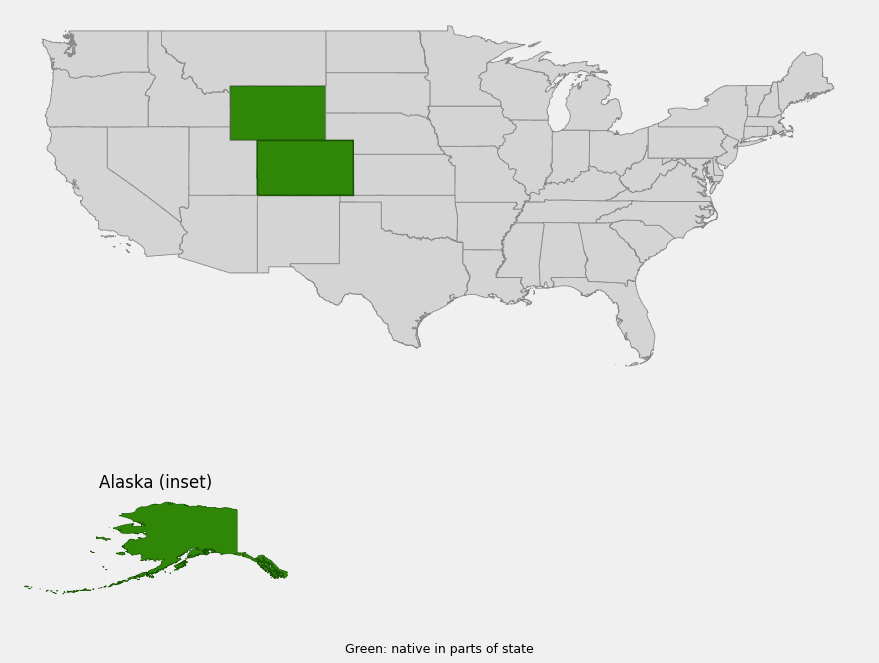
In the United States, narcissus anemone is native only to Alaska and to a disjunct alpine outlier in the southern Rocky Mountains. The Alaska populations, treated as varieties villosissima and monantha, occur across tundra of the Alaska mainland. Separately, and far to the south, the taxonomically distinct variety zephyra grows only in the high alpine zone of Colorado and Wyoming — a true island population isolated from the Alaska plants by thousands of miles of lower-elevation terrain where the species does not occur.
Both North American populations are strictly plants of the alpine zone: open tundra, rocky alpine meadows, talus slopes, and gravelly turf at or above treeline, where snow lingers late into the growing season and the plant must complete its flowering and seed-set in a short summer window. Variety zephyra in particular is a scarce, range-restricted plant known from only a limited number of high alpine sites in the Colorado and Wyoming Rockies, reflecting how narrow and specialized its habitat requirements are.
This species should not be assumed native anywhere else in the Lower 48. It is a widespread and variable plant across the mountains of Eurasia, where related varieties are native and sometimes cultivated, but outside Alaska and the high Rockies of Colorado and Wyoming it is not part of the native American flora, and garden populations grown elsewhere in North America are plantings of Eurasian stock, not wild native plants.
📋 Regional plant lists featuring Narcissus Anemone: Alaska · Utah & Western Colorado · Montana & Wyoming
Growing & Care Guide
Narcissus anemone is, realistically, not a plant for the typical home garden outside specialist alpine growers. It is included here primarily to document a genuine, if obscure, piece of U.S. native flora; the growing notes below are offered for gardeners in cold, high-elevation climates who want to attempt true alpine conditions, such as a scree bed or alpine trough.
Light
In its native tundra and alpine turf, this species grows in full, intense sun during the brief high-elevation growing season. Any attempt at cultivation should mimic this with an open, unshaded site; the plant has no tolerance for shade or competition from taller vegetation.
Soil & Water
Narcissus anemone needs sharply drained, mineral, rocky soil — the opposite of a typical rich garden bed — combined with reliable moisture during the growing season from snowmelt or regular watering, since alpine soils dry quickly despite often feeling constantly damp from seepage. This combination of excellent drainage with consistent moisture is difficult to replicate outside a purpose-built scree bed or alpine trough and is the main reason this species rarely succeeds in ordinary gardens.
Planting Tips
Gardeners in cold, high-elevation regions (generally USDA zone 2–5) who wish to try this species should plant it in a dedicated alpine scree bed or trough with deep gravel drainage, sourcing plants or seed only from reputable alpine plant specialists rather than wild-collecting, given how localized and scarce the native Rocky Mountain population is.
Pruning & Maintenance
No regular pruning is needed; simply remove spent flowering stems and dead foliage as the plant goes dormant in fall. Winter protection from excess moisture (rather than cold) is usually the limiting factor in cultivation, since the plant is adapted to a dry, frozen winter under insulating snow rather than the wet, freeze-thaw winters of most lower-elevation gardens.
Propagation
Propagation is by seed, which requires cold, moist stratification over winter to break dormancy, or by careful division of the woody crown in early spring. Both methods are slow, and plants grown from seed may take several years to reach flowering size.
Landscape Uses
- Alpine scree beds and troughs in cold, high-elevation gardens
- Specialist rock garden collections focused on true alpine species
- Educational or botanical garden plantings illustrating Rocky Mountain or Arctic alpine flora
For nearly all gardeners, this species is best enjoyed in the wild — on a summer hike above treeline in the Colorado or Wyoming high country, or across the open tundra of interior Alaska — rather than attempted in cultivation.
Wildlife & Ecological Value
In its narrow alpine and tundra habitat, narcissus anemone contributes to a short but ecologically important summer bloom window in landscapes where flowering plants are scarce and growing seasons are brief.
For Pollinators
The open, bowl-shaped flowers with their prominent central mass of stamens are well suited to pollination by flies and short-tongued native bees, both of which are important pollinator groups in Arctic and alpine tundra where many specialized long-tongued pollinators are absent.
For Birds
There is no significant documented relationship between narcissus anemone and bird species; the plant is not a notable food source for birds, though the alpine and tundra habitats it occupies support ground-nesting species such as ptarmigan and various sparrows that rely on the broader plant community for cover and insect prey.
For Mammals
Like most anemones, the foliage contains protoanemonin, an irritant compound that makes the plant unpalatable and mildly toxic to livestock and most grazing mammals, which likely helps it persist in alpine turf that is otherwise grazed by deer, elk, and, in Alaska, caribou.
Ecosystem Role
As one of relatively few broad-flowered, insect-pollinated plants in the harsh alpine and Arctic tundra environments it occupies, narcissus anemone adds floral diversity to plant communities dominated by grasses, sedges, and low shrubs, supporting pollinator activity during the brief window when the ground is snow-free.
Cultural & Historical Uses
Narcissus anemone has a documented but limited place in Indigenous ethnobotany in the far north. Among the Aleut people of Alaska, the plant was historically used medicinally as an antihemorrhagic, applied to help stop bleeding, a use recorded by ethnobotanical researchers studying traditional Alaska Native plant knowledge. This kind of topical, emergency use of a toxic plant for its astringent or styptic properties is consistent with how several anemone species have been used in traditional medicine around the world, despite the plant’s toxicity if ingested.
Because the species as a whole is far more common and widespread across the mountains of Europe and Asia, most of its broader cultural history — including its occasional use as a garden alpine plant — comes from Eurasian traditions rather than from North America, where its range is limited to the remote tundra of Alaska and a handful of high peaks in Colorado and Wyoming.
Today, narcissus anemone’s primary significance in the United States is scientific and conservation-related: botanists studying alpine plant distribution use the disjunct Rocky Mountain population of variety zephyra as an example of how ice-age climate patterns left isolated alpine species stranded on mountaintops far from their main range, a pattern echoed by several other alpine plants found only on the highest peaks of Colorado and Wyoming.
Frequently Asked Questions
Can I grow narcissus anemone in a typical garden?
Not successfully in most cases. This is a true alpine tundra plant that needs cold winters, intense summer sun, sharply drained rocky soil, and consistent snowmelt moisture — conditions found naturally only at high elevation or in a dedicated alpine scree bed. It is not suited to ordinary garden beds.
Is narcissus anemone poisonous?
Yes. Like other anemones, it contains protoanemonin, an irritant compound that makes the foliage toxic if eaten and can cause skin irritation on contact with sap. It should never be treated as a food plant, despite its historical topical medicinal use among the Aleut.
Where in the United States is narcissus anemone actually native?
Only in Alaska and in a small, disjunct alpine population in Colorado and Wyoming (variety zephyra). It is not native anywhere else in the continental United States, even though related varieties of the same species are common across the mountains of Europe and Asia.
Why does this species occur in both Alaska and the Colorado/Wyoming Rockies but nowhere in between?
This disjunct distribution is thought to reflect past ice-age climate patterns, when alpine and Arctic tundra habitat was far more widespread and connected; as the climate warmed, the species retreated to the cold, high-elevation refuges where it survives today, leaving isolated populations separated by thousands of miles of unsuitable lower-elevation terrain.
Is narcissus anemone rare?
The Colorado and Wyoming alpine population (variety zephyra) is quite localized and known from relatively few high-elevation sites, making it a scarce, range-restricted plant worth protecting; the Alaska populations are more widespread across appropriate tundra habitat within the state.