
Smallflower Woodland Star (Lithophragma parviflorum)
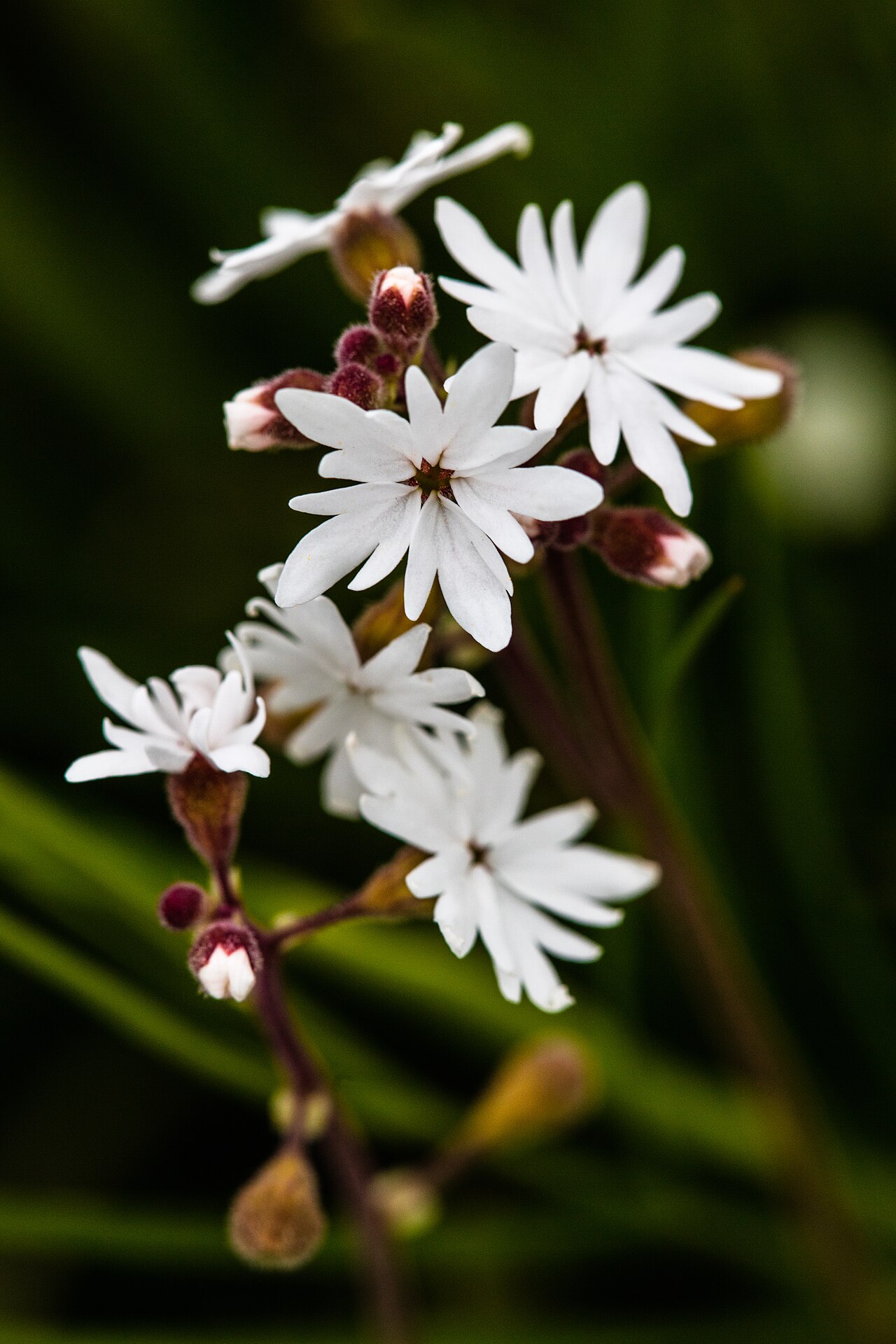
Lithophragma parviflorum, known as Smallflower Woodland Star or prairie star, is a slender spring wildflower of the western United States and southwestern Canada. It grows from small, rice-like bulblets on a short underground stem, sends up a rosette of round, deeply divided leaves in late winter or early spring, and then raises one or a few reddish stems, 4 to 12 inches tall, topped with a loose cluster of white to pink, star-shaped flowers. Each of the five petals is deeply cut into three narrow lobes.
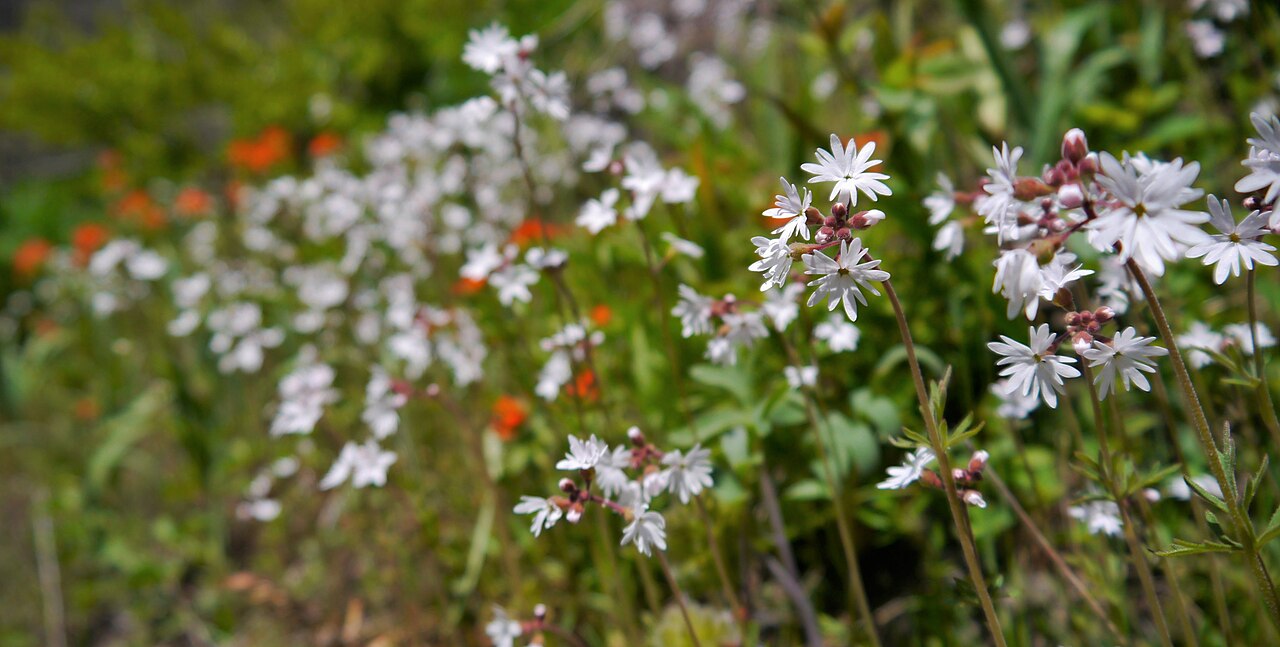
Despite the name “smallflower,” it is one of the showiest woodland stars, and in good years it whitens sagebrush steppe, grasslands, meadows and open pine woods from British Columbia and Alberta south to California and Colorado, and east to the Black Hills and the Pine Ridge of western Nebraska. It belongs to the saxifrage family (Saxifragaceae), along with alumroots and fringecups.
Like many spring ephemerals of dry-summer climates, it flowers early and then goes dormant: the leaves and stems wither by early summer, and the plant waits out the hot, dry months as bulblets underground. In gardens it suits naturalistic plantings, dry meadows and rock gardens within its range, where it can be left undisturbed to reappear each spring.
Identification
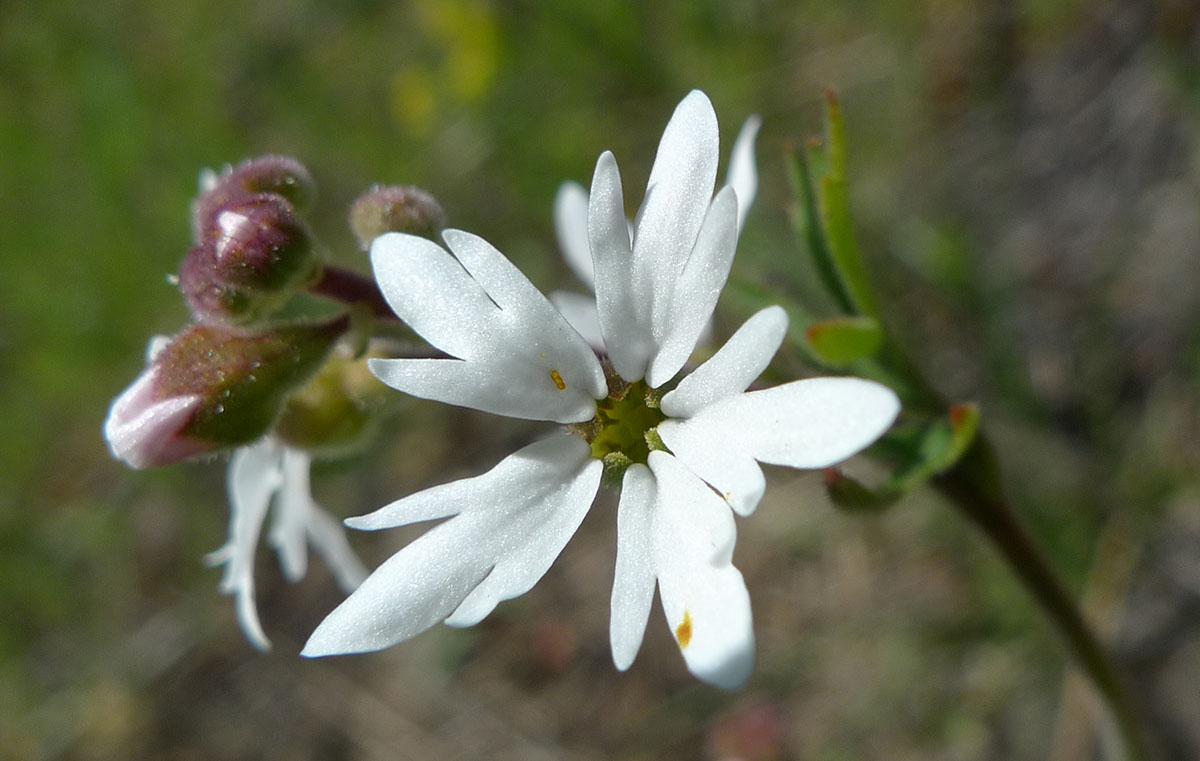
Look in spring for a small basal rosette of rounded, deeply lobed leaves and a slender, sticky-hairy reddish stem with a few white or pink stars at the top, each petal split into three finger-like lobes.
Growth Habit
A small, upright perennial herb 4 to 12 inches tall, occasionally to about 20 inches, from a short rhizome bearing tiny bulblets. Usually one to a few unbranched flowering stems rise from each plant. The stems and flower stalks are often reddish and covered with short, glandular, slightly sticky hairs.
Leaves
Most leaves are basal, on long stalks, with blades 1/2 to 1 1/2 inches wide that are round in outline and divided into three main segments, each further lobed. The stem carries one to three smaller, more divided leaves. The leaves appear early, while soil is still moist from winter, and die back after flowering.
Flowers
The flowers are borne in a short raceme of about 3 to 15 at the stem tip. Each has five white to pale pink petals about 1/4 to 1/2 inch long, each cut deeply into three narrow lobes, giving the flower a fringed, starry appearance about 3/4 inch across. The calyx is cone- to top-shaped and fused to the ovary. Bloom time is March to June, earliest at low elevations and later in the mountains.
Fruit & Dormancy
The fruit is a small capsule enclosed in the persistent calyx that opens at the top to release many tiny seeds. By early to midsummer the whole plant above ground dries up, leaving no trace until the next spring. Unlike some other woodland stars, it usually does not produce bulblets in the flower cluster or leaf axils.
Look-alikes
Other woodland stars are similar. Woodland star (Lithophragma affine) of California and Oregon has a bell-shaped calyx and less deeply cut petals. Slender woodland star (L. tenellum) has smaller flowers with more irregularly lobed petals. Bulbous woodland star (L. glabrum) usually carries reddish bulblets in the flower cluster or leaf axils. Saxifrages and fringecups (Tellima) have different petal shapes and leaf textures.
Quick Facts
| Scientific Name | Lithophragma parviflorum |
| Family | Saxifragaceae (saxifrage family) |
| Plant Type | Spring-ephemeral perennial herb from bulblets |
| Mature Height | 4–12 in (occasionally to 20 in) |
| Mature Spread | 3–6 in |
| Growth Rate | Moderate; dormant by summer |
| Sun Exposure | Full sun to part shade |
| Water Needs | Moist in spring, dry in summer |
| Soil Type | Well-drained loam, gravel or rocky soil |
| Soil pH | Slightly acidic to slightly alkaline (about 6.0–7.5) |
| Bloom Time | March–June |
| Flower Color | White to pink |
| Fall Color | None; summer dormant |
| Fruit | Small capsule with many tiny seeds |
| Deer Resistant | Unknown; occasionally grazed |
| USDA Hardiness Zones | 4–8 |
Native Range
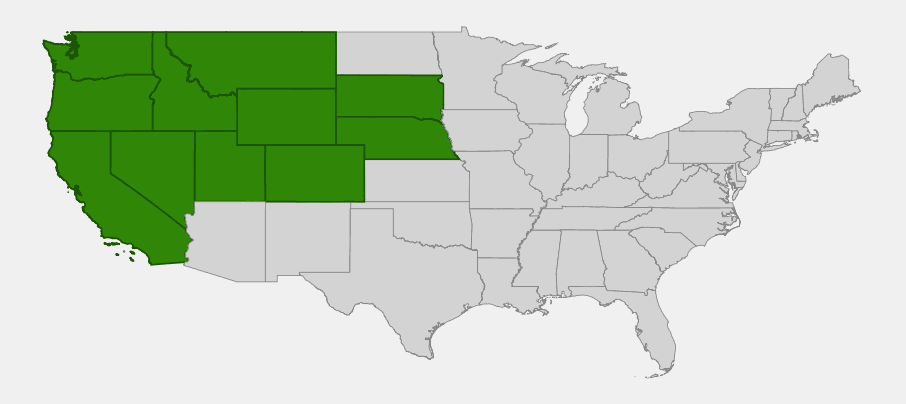
Smallflower woodland star is native to western North America from southern British Columbia and Alberta south to California and Colorado. USDA PLANTS lists it in California, Colorado, Idaho, Montana, Nebraska, Nevada, Oregon, South Dakota, Utah, Washington and Wyoming. It is especially common in the Columbia Basin, the northern Rockies and the foothills of the Cascades and Sierra Nevada.
On the east side of the Cascades it grows widely in sagebrush steppe, bunchgrass prairie and open ponderosa pine forest. It also grows west of the Cascades, in the Puget Trough and the Willamette Valley, on prairies, rocky balds and grassy bluffs such as those in the San Juan Islands. At the eastern edge of its range it reaches the Black Hills of South Dakota and the Pine Ridge of northwestern Nebraska, and it grows in the foothills and mountain parks of Colorado and Wyoming.
Habitats include grasslands, sagebrush flats, open pine and oak woodland, meadows, rocky slopes and moist spring seeps, from low valleys to subalpine meadows. It favors spots that are moist in spring and dry in summer.
📋 Regional plant lists featuring Smallflower Woodland Star: Idaho, Eastern Oregon & Eastern Washington · Montana & Wyoming · Nebraska, Kansas & Eastern Colorado · Utah & Western Colorado · North Dakota, South Dakota & Western Minnesota · Western Oregon & Western Washington · California & Nevada
Growing & Care Guide
Smallflower woodland star is rarely sold in nurseries, but seed is sometimes available from native seed suppliers in the Pacific Northwest and Intermountain West. It is easy to grow from seed in a spot that matches its natural cycle of a moist spring and a dry summer. Plan around its summer dormancy so you do not dig it up by mistake.
Light
Full sun to part shade. It flowers best in sun or light, dappled shade under open pines or oaks.
Soil & Water
Any well-drained soil, from sandy and gravelly to rocky loam. It needs moisture from fall through spring and tolerates or prefers summer drought once dormant. Avoid irrigating its spot heavily in summer, which can rot the bulblets.
Planting Tips
Sow seed in fall directly where you want plants, or in pots left outdoors over winter. Combine it with bunchgrasses and other early wildflowers such as balsamroot, shooting stars and seablush, which hide its dormant spot in summer. Mark its location so the bulblets are not disturbed.
Pruning & Maintenance
No pruning is needed. Let the stems ripen and shed seed before cutting them back, and leave the dormant spot alone in summer. Keep aggressive groundcovers and dense mulch away, as they crowd out small bulbs.
Propagation
Grow from seed sown in fall for natural cold stratification, or give spring-sown seed about a month of cold, moist treatment. Seedlings need a couple of years to flower. Established plants also spread slowly by bulblets, which can be lifted and replanted while dormant. Never dig wild plants.
Landscape Uses
- Dry meadows and prairie plantings: an early flower among native bunchgrasses
- Rock gardens: a delicate spring accent in well-drained pockets
- Open woodland gardens: under pines and oaks with light shade
- Pollinator gardens: early-season nectar for small bees and flies
- Restoration: part of the native spring flora of steppe, prairie and oak savanna
Wildlife & Ecological Value
Smallflower woodland star is part of the early spring flush of wildflowers that feeds insects before the steppe and grasslands dry out.
For Pollinators
Woodland stars have a close relationship with small moths of the genus Greya, which pollinate the flowers while laying eggs in them; their larvae feed on some of the developing seeds. Small native bees, bee flies and other insects also visit the flowers for nectar and pollen early in the season.
For Birds
It provides little direct food for birds, but it is part of the spring flora that supports the insects many grassland and sagebrush birds feed to their young.
For Mammals
Deer, elk and livestock may graze the stems in spring, and small mammals may dig the bulblets, but the plant is too small to be an important forage.
Ecosystem Role
As a spring ephemeral, it uses moisture and sunlight early in the year before grasses and shrubs reach full growth, adding to the diversity of the steppe, prairie and open forest understory.
Cultural & Historical Uses
The genus name Lithophragma comes from Greek words meaning “stone” and “fence” or “wall,” a reference to the rocky places where some species grow. The species name parviflorum means “small-flowered,” although its flowers are among the larger ones in the genus.
The relationship between woodland stars and Greya moths has been studied for decades by evolutionary biologists as a model of how plant–pollinator partnerships can range from mutually beneficial to costly, depending on which other pollinators are present in a given place.
The plant’s early bloom makes it a sign of spring across much of the inland Northwest, where it often flowers together with arrowleaf balsamroot, grass widows and shooting stars on south-facing slopes.
Frequently Asked Questions
Why did my woodland star disappear in summer?
It is a spring ephemeral. The leaves and stems naturally die back by early summer, and the plant survives as small bulblets underground until the next spring.
How do I tell smallflower woodland star from other woodland stars?
Look at the petals and calyx. Smallflower woodland star has petals deeply split into three narrow lobes and a cone-shaped calyx, and usually no bulblets in the flower cluster.
Does it need summer water?
No. It needs moisture in fall, winter and spring and prefers to stay dry while dormant in summer.
Is smallflower woodland star found east of the Rockies?
Only at the eastern edge of its range, in the Black Hills of South Dakota, the Pine Ridge of western Nebraska and the Colorado and Wyoming foothills.
How do I grow it?
Sow seed outdoors in fall in a sunny or lightly shaded, well-drained spot. It takes a couple of years to flower from seed.

Looking for a nursery that carries Smallflower Woodland Star?
Browse our native plant nursery directory: California · Colorado · Idaho · Montana · Nebraska & Nevada · Oregon · South Dakota & Utah · Washington · Wyoming