Woodland Star (Lithophragma affine)
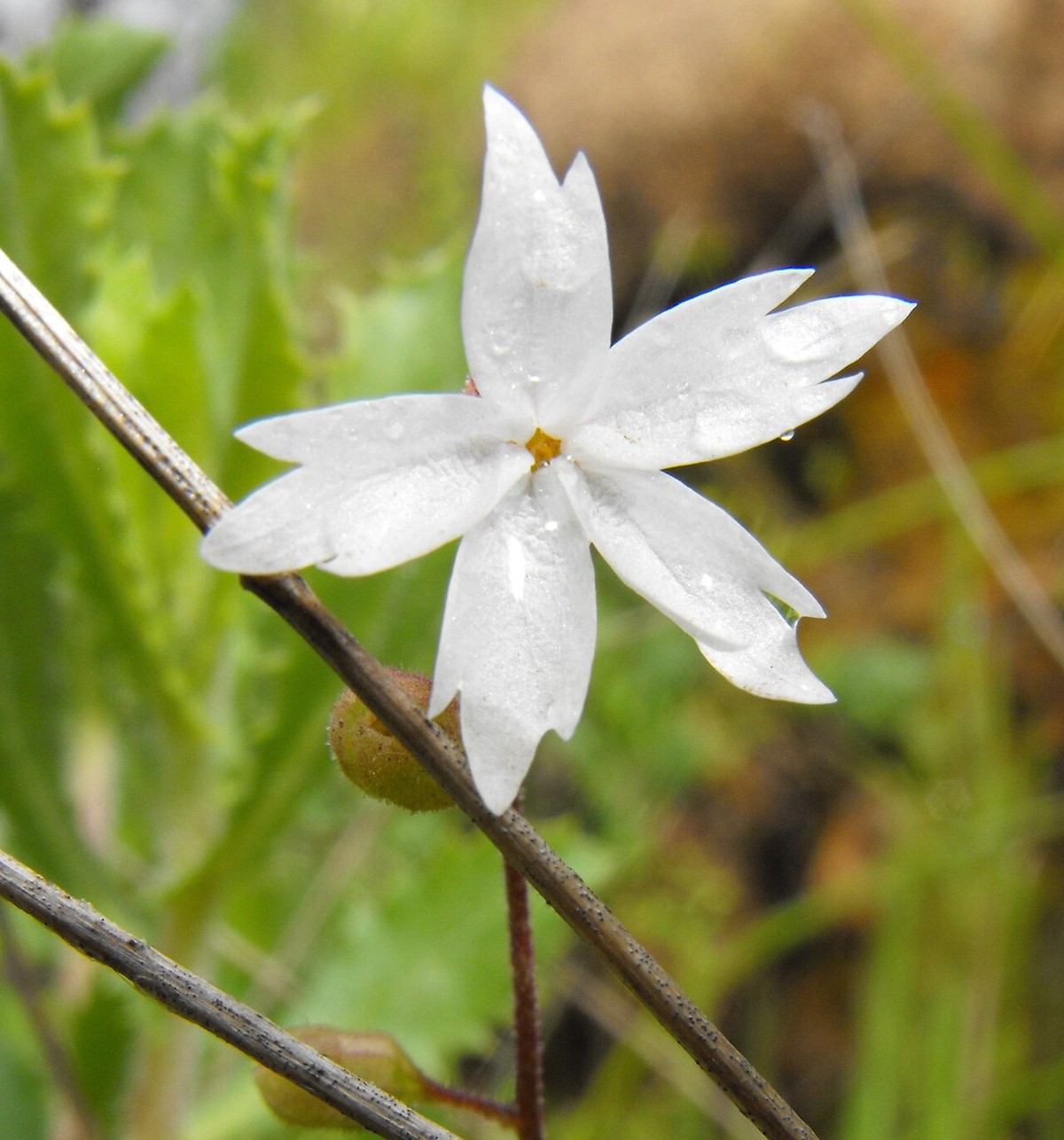
Lithophragma affine, commonly called woodland star, is a small, delicate perennial wildflower native to California and the southwestern corner of Oregon. True to its name, it typically grows in dappled light at the edges of woodlands and grassy slopes, sending up slender, wiry stems topped with a loose spray of starry white to pale pink flowers in early to mid-spring.
Woodland star belongs to the saxifrage family and grows from a small cluster of tiny bulblets, allowing it to persist through the dry California summer underground much like many of the state’s spring bulbs and corms. Its flowers have five deeply cleft or lobed petals, giving each bloom a lacy, star-like outline that stands out even though the individual flowers are less than an inch across.
For gardeners working with California native plants, woodland star is a lovely, unassuming addition to a part-shade rock garden, native lawn alternative, or woodland edge planting. It is easy to overlook when not in bloom, but its airy sprays of white stars are a welcome early-spring sight among emerging grasses and other ephemeral wildflowers.
Identification
Woodland star is a slender, upright perennial, typically 6 to 16 inches tall, with most of its leaves clustered near the base of the plant.
Leaves
The basal leaves are rounded to kidney-shaped in outline and divided into several lobed or toothed segments, giving them a somewhat maple-leaf or parsley-like texture. They form a loose low rosette close to the ground, with only a few much-reduced leaves, or none at all, appearing along the slender flowering stem.
Flowers
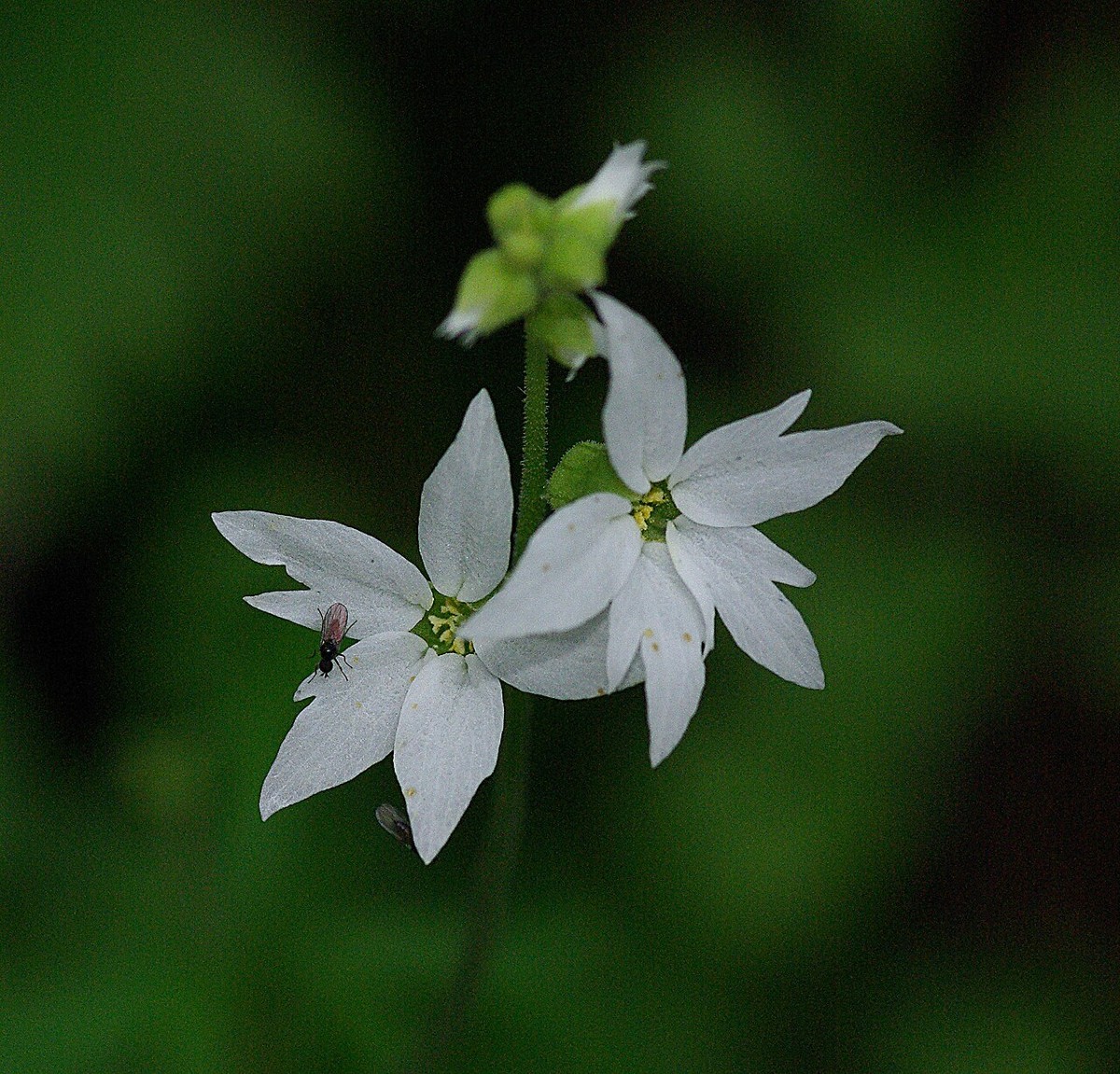
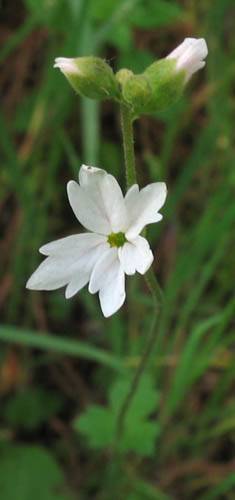
Flowering stems are thin, wiry, and often slightly hairy or sticky, rising well above the basal leaves and branching into a loose, open cluster of several nodding to upright flowers. Each flower has five petals, white to pale pink, each petal deeply three- to five-lobed at the tip so that the whole flower looks like a delicate, fringed star. Flowers open in succession up the stem over several weeks in early to mid-spring.
Fruit & Seed
After flowering, small cup-shaped seed capsules develop, each containing numerous tiny seeds. The plant also produces small bulblets at the base, which can themselves sprout into new plants, giving woodland star a second, vegetative way to spread in addition to seed.
Quick Facts
| Scientific Name | Lithophragma affine |
| Family | Saxifragaceae (Saxifrage) |
| Plant Type | Perennial wildflower, summer-dormant (bulblet-forming) |
| Mature Height | 6–16 in in bloom |
| Mature Spread | 4–8 in basal clump |
| Growth Rate | Fast in season, then dormant |
| Sun Exposure | Part Shade to Shade |
| Water Needs | Moist in winter/spring; dry (dormant) in summer |
| Soil Type | Well-drained loam or gravelly soil |
| Soil pH | Neutral to slightly acidic |
| Bloom Time | February – May |
| Flower Color | White to pale pink |
| Fall Color | None; dormant by fall |
| Fruit | Small cup-shaped capsules, spring; also spreads by basal bulblets |
| Deer Resistant | Generally yes |
| USDA Hardiness Zones | 7–10 |
Native Range
Woodland star is native to California, where it occurs widely from the Coast Ranges and Sierra foothills south into Southern California, and to the far southwestern corner of Oregon, where documented populations are concentrated near the coast and inland valleys of Curry and Coos counties close to the California border.
Typical habitat includes open woodlands, grassy slopes, oak savanna, and chaparral edges, usually on well-drained soils with some shade from scattered trees or shrubs. It takes advantage of the same winter-wet, summer-dry Mediterranean climate pattern used by many California spring ephemerals, growing and flowering during the cool, moist months and retreating underground as bulblets once the dry season arrives.
Woodland star has no broad conservation listing and remains locally common within suitable habitat in California, though its small, scattered Oregon populations near the state’s southwestern edge are worth noting as a range-limit occurrence rather than a widespread Oregon native.
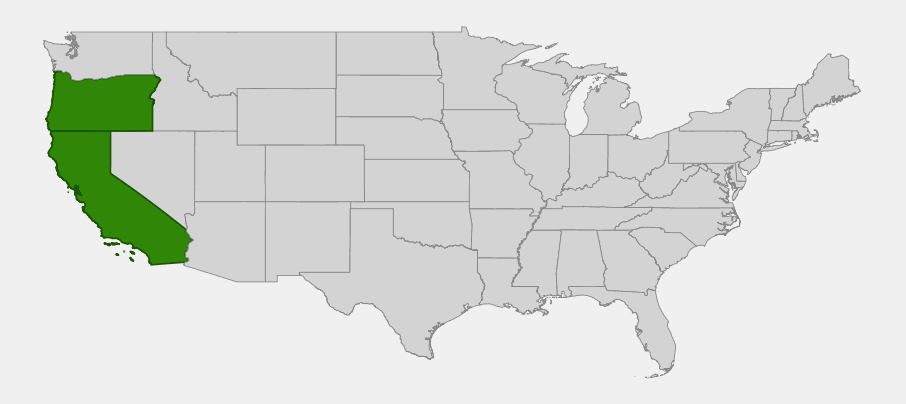
📋 Regional plant lists featuring Woodland Star: California & Nevada · Western Oregon & Western Washington
Growing & Care Guide
Woodland star is an easy, low-maintenance addition to a Mediterranean-climate garden once its need for a dry summer rest is understood.
Light
Give it part shade to light, dappled shade, similar to the edges of an oak woodland or the north side of shrubs. It tolerates more sun near the cool coast, but inland gardens should provide afternoon shade to keep the foliage from stressing during its short active season.
Soil & Water
Plant in well-drained soil and water regularly during the winter and spring growing season. Once the foliage yellows in late spring, stop watering entirely; like many California bulbs, woodland star needs a dry summer dormancy and can rot if kept moist year-round.
Planting Tips
Plant bulblets or nursery starts in fall as the rainy season begins, setting them a couple of inches deep in loose, well-drained soil. Group several together for a fuller spring display, since individual plants are delicate and slender. Mark the planting area, since the foliage disappears completely by early summer.
Pruning & Maintenance
Little maintenance is needed. Deadhead spent flower stems if desired, or leave them to set seed and self-sow. Let the foliage die back naturally after bloom rather than cutting it while still green, so the bulblets can finish storing energy for next year.
Propagation
Propagate by separating the small basal bulblets during summer dormancy and replanting them in fall, or by sowing fresh seed in fall for germination with the winter rains. Bulblet division is the faster, more reliable method for building up a planting.
Landscape Uses
- Part-shade rock gardens and woodland edge plantings
- California native meadow or bulb gardens alongside other spring ephemerals
- Oak woodland understory plantings that take advantage of winter and early spring light
- Naturalized drifts under deciduous shrubs where summer dormancy goes unnoticed
Wildlife & Ecological Value
Woodland star provides early-season nectar and pollen in California’s woodlands and grasslands during the same late winter and early spring window used by many native bees and other early-emerging pollinators.
For Pollinators
Small native bees, flies, and other early-season insects visit the open, accessible flowers for nectar and pollen. Because the species blooms early and in loose, airy clusters, it offers an easy, low-effort nectar source compared with more complex flower shapes.
For Birds
The plant is not a major direct food source for birds, but the grassy and woodland-edge habitats it favors support insect populations that feed early-spring songbirds.
For Mammals
Woodland star is not a significant forage plant for mammals, and its brief above-ground season limits exposure to grazing pressure during most of the year.
Ecosystem Role
As one of many small spring ephemerals in California’s oak woodlands and grasslands, woodland star contributes to the diversity of the understory flora and the overall early-season nectar resources available before the dry summer sets in.
Cultural & Historical Uses
Woodland star has little recorded history of practical use by people, likely reflecting both its small size and its modest, easily overlooked presence compared with more conspicuous California wildflowers. Its chief interest has long been ornamental and botanical, as one of several related Lithophragma species noted for their delicate, star-shaped flowers and tight relationship with certain specialist moth pollinators studied by botanists.
Today, woodland star is valued mainly by native plant gardeners and naturalists for its understated spring beauty and its role as one of the first woodland wildflowers to bloom each year.
Frequently Asked Questions
Why is it called woodland star?
Each flower has five deeply lobed, pointed petals arranged in a star-like pattern, and the plant typically grows in the dappled shade of woodland edges, giving rise to the common name.
Does woodland star die back every year?
Yes, the above-ground growth dies back after flowering in late spring, and the plant survives the dry summer as small underground bulblets, regrowing the following fall or winter with the return of rain.
Can I grow woodland star outside California or Oregon?
It is best suited to a Mediterranean climate with wet winters and dry summers. Gardeners in other climates can try it in a container where summer moisture can be controlled.
What pollinates woodland star?
Small native bees and flies are the main visitors, though some related Lithophragma species have a well-studied, specialized relationship with small moths that both pollinate the flowers and lay eggs in them.
When does woodland star bloom?
Typically from February through May, with timing depending on local rainfall and elevation; coastal and low-elevation populations often bloom earlier than inland or higher-elevation ones.

Looking for a nursery that carries Woodland Star?
Browse our native plant nursery directory: California · Oregon