Ground Pink (Linanthus dianthiflorus)
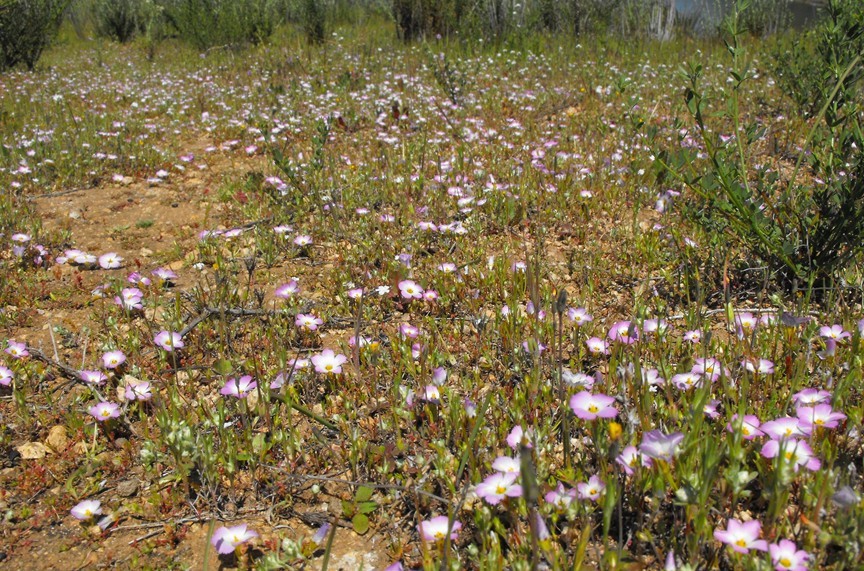
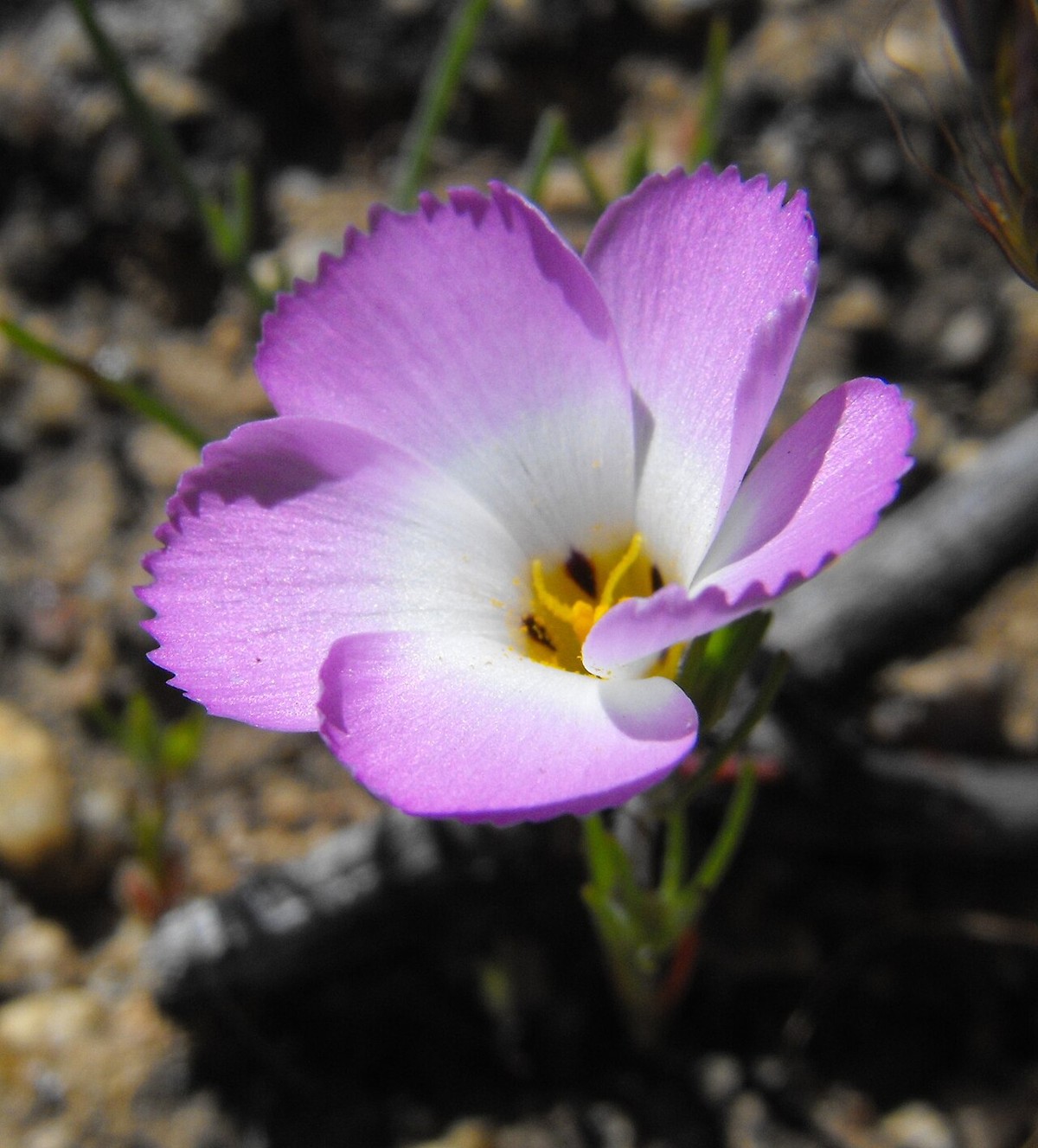
Linanthus dianthiflorus, commonly called ground pink or fringed linanthus, is a tiny but showy annual wildflower endemic to southern California. Despite standing only a few inches tall, it produces disproportionately large, pink to lavender flowers with a white-and-yellow throat and finely fringed, saw-toothed petal tips — a level of detail best appreciated up close, even as whole hillsides of it create a soft pink haze from a distance.
A member of the phlox family, ground pink is found only in southern California, in the Peninsular Ranges, Transverse Ranges, and on the Channel Islands, where it grows in open grassland, chaparral clearings, and coastal sage scrub, often becoming especially abundant the first spring after a wildfire clears competing shrub cover. Like many Southern California annuals, it has been lost from much of its historic lower-elevation range to urban development, making remaining wild populations in open space preserves and foothill parks increasingly valuable.
For gardeners in coastal and inland Southern California, ground pink is a charming, low-growing annual for rock gardens, pathway edges, and open sunny patches where its mat-forming habit and fringed flowers can be seen at close range. It asks for very little: full sun, well-drained soil, and the normal winter-wet, summer-dry rhythm of the region.
Identification
Ground pink is a diminutive, mat-forming to loosely branched annual, typically just 2 to 5 inches (5–13 cm) tall and a bit wider, hugging the ground closely enough that its flowers often appear to sit directly on the soil surface.
Leaves & Stems
Stems are thin, wiry, and branch low to the ground, often tinged reddish. The leaves are narrow and needle-like to linear, opposite along the stem, sometimes divided into thread-like lobes that give the foliage a fine, almost grass-like texture easy to overlook until the flowers appear.
Flowers
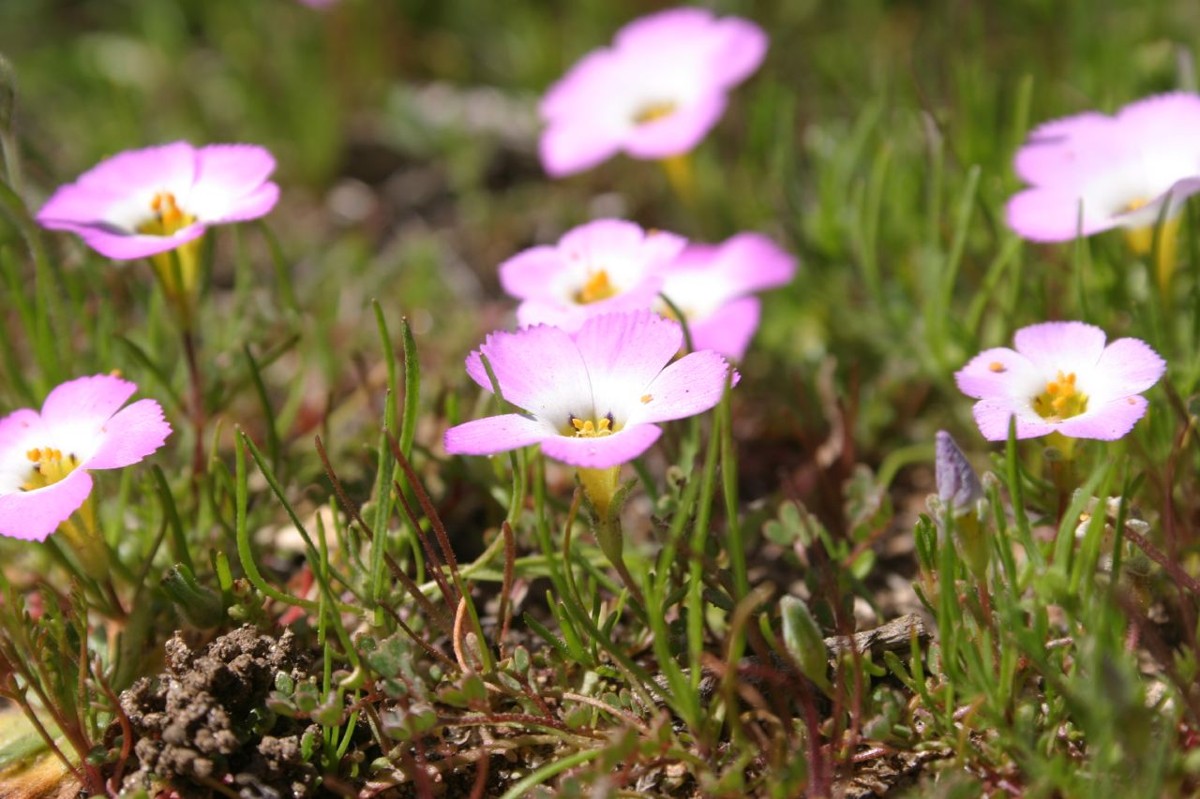
The flowers are the plant’s standout feature relative to its small size: a tubular base flares into five broad lobes about ½ to ¾ inch (1.3–2 cm) across, colored pink to lavender-pink with a contrasting white center and a bright yellow throat. Each petal lobe has a finely toothed or fringed tip, giving the flower a delicate, lacy edge that is the source of the common name “fringed linanthus.” Flowers typically open individually at the tips of short stems, close in late afternoon or cloudy weather, and bloom from February through April depending on elevation and rainfall.
Fruit & Seeds
After pollination, the flower forms a small, dry seed capsule close to the ground that splits open at maturity to release tiny seeds. As an annual, ground pink completes its life cycle in a single season, germinating with fall and winter rains, flowering in late winter to spring, and dying back by early summer, persisting through the dry season as a seed bank in the soil.
Quick Facts
| Scientific Name | Linanthus dianthiflorus |
| Family | Polemoniaceae (Phlox) |
| Plant Type | Annual Wildflower |
| Mature Height | 2–5 in (5–13 cm) |
| Mature Spread | 3–6 in (7.5–15 cm) |
| Growth Rate | Fast (single growing season) |
| Sun Exposure | Full Sun |
| Water Needs | Low |
| Soil Type | Well-drained; sandy, gravelly, or clay-loam |
| Soil pH | 6.0–7.5 (neutral) |
| Bloom Time | February – April |
| Flower Color | Pink to lavender-pink with white-yellow throat |
| Fall Color | None; plant dies back after seed set |
| Fruit | Tiny dry seed capsule |
| Deer Resistant | Generally yes (not a preferred browse) |
| USDA Hardiness Zones | 9–11 (grown as a self-sowing annual) |
Native Range
Ground pink is endemic to southern California, found in the Peninsular Ranges (including San Diego and Riverside counties), the Transverse Ranges (including the Santa Ana Mountains and Santa Monica Mountains), and on several of the Channel Islands. It does not occur naturally anywhere outside this relatively compact corner of the state.
Within its range, ground pink grows in open grassland, chaparral clearings, and coastal sage scrub, generally from near sea level up to around 5,000 feet (1,500 m) in the foothills and lower mountains. It is particularly associated with open, sunny, often rocky or gravelly ground, and populations can become especially dense the first spring after a fire removes competing shrub cover, taking advantage of the open space before chaparral shrubs resprout and shade it out again.
Ground pink was historically abundant at lower elevations throughout much of coastal and inland southern California, but has been lost from many of these areas to urban and suburban development. Remaining populations are increasingly concentrated in open-space preserves, foothill parks, and less-developed wildland areas, making garden cultivation and habitat protection both meaningful ways to support the species.
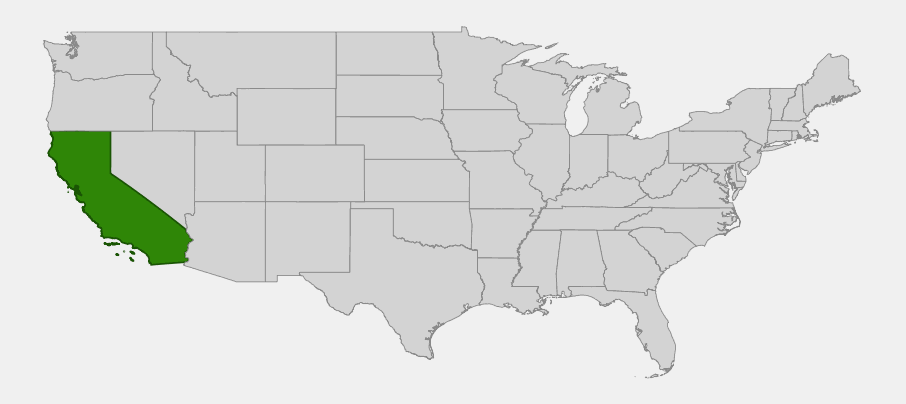
📋 Regional plant lists featuring ground pink: California & Nevada
Growing & Care Guide
Ground pink is an undemanding little annual, ideal for gardeners who want an authentic southern California wildflower for a small, sunny space where its fine detail can be appreciated up close.
Light
Full sun is essential; ground pink grows naturally in open, unshaded ground and will not perform well under shrubs or trees. Choose the sunniest, most open spot available, mimicking the recently disturbed or fire-opened ground where it thrives in the wild.
Soil & Water
Ground pink tolerates sandy, gravelly, or clay-loam soils as long as drainage is reasonably good, and it does not need or want rich, fertile garden soil. Water to establish fall- or winter-sown seed, then let rainfall take over; established plants need very little supplemental water and bloom best when allowed to dry down naturally in spring, following the region’s normal wet-winter, dry-summer pattern.
Planting Tips
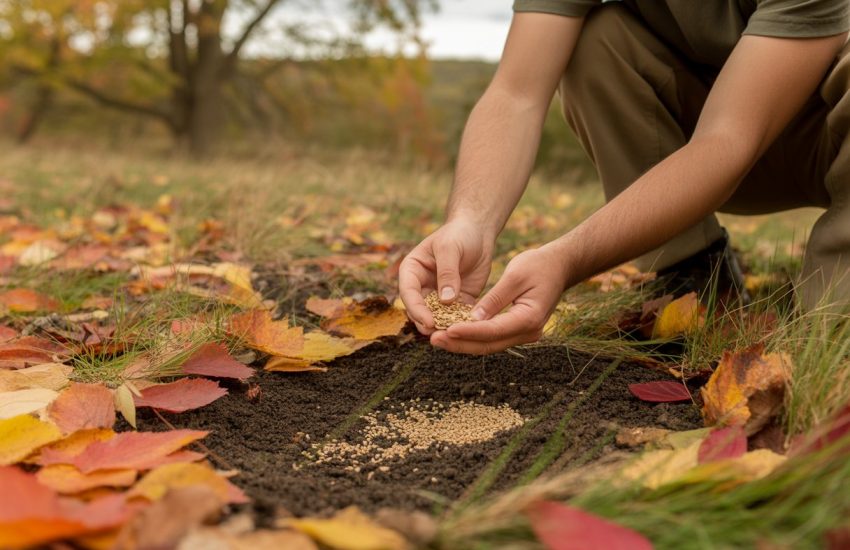
Sow seed directly in fall or early winter, since this tiny annual germinates with the first rains and does not transplant well. Scatter seed thinly over cleared, lightly raked soil in a sunny rock garden, path edge, or open bed, pressing it in rather than burying it deeply. Because the plants are so small, avoid sowing where taller companions will quickly shade them out; pair instead with other low-growing native annuals.
Pruning & Maintenance
No pruning or deadheading is needed. The plant completes its life cycle on its own each year, and most gardeners simply allow it to set seed and dry up in place by early summer, letting it self-sow for the following season.
Landscape Uses
Ground pink suits a handful of specific garden settings well:
- Rock gardens and gravel beds where its small scale fits naturally
- Pathway and border edges for a close-up spring accent
- Open, sunny wildflower patches paired with other low annuals
- Post-fire or disturbed-ground restoration in its native southern California range
- Container displays where the fringed flowers can be viewed at eye level
Wildlife & Ecological Value
Though small, ground pink contributes to the diversity of flowering resources available to pollinators during the Southern California spring wildflower season.
For Pollinators
The tubular, fringed flowers attract small native bees and other short-tongued pollinators able to access the nectar at the base of the flower tube, as well as occasional small butterflies. The bright yellow throat likely serves as a visual nectar guide for visiting insects.
For Birds & Other Wildlife
Small seed-eating birds forage on the tiny seeds released from the capsules in late spring. The dense mats ground pink forms after a good rainy season also provide brief ground cover for small insects and other invertebrates during the bloom period.
Ecosystem Role
As a fire-following annual, ground pink plays a useful ecological role in the recovery of chaparral and coastal sage scrub after burns, quickly colonizing open ground and contributing to early post-fire plant cover before woody shrubs resprout. Its presence in the soil seed bank also supports the broader diversity of Southern California’s fire-adapted annual wildflower community.
Cultural & Historical Uses
Ground pink has long been recognized by Southern California botanists and naturalists as a distinctive, if easily overlooked, element of the region’s chaparral and coastal sage scrub wildflower displays. Its restricted range and decline at lower elevations due to urbanization have made it a subject of interest for regional open-space and habitat conservation groups documenting the state of Southern California’s native grassland and scrubland flora.
The species does not have a well-documented history of food, medicinal, or craft use among Indigenous peoples of the region in available records; its chief significance has always been ecological and, more recently, horticultural, as native plant gardeners in Southern California seek out authentic regional annuals for naturalistic plantings.
Today, ground pink is occasionally available from native plant nurseries specializing in Southern California wildflower seed, offering gardeners within its range a chance to grow a true local endemic that most visitors to the region never notice underfoot.
Frequently Asked Questions
Is ground pink the same as fringed linanthus?
Yes. “Ground pink” and “fringed linanthus” are both common names for Linanthus dianthiflorus, with “fringed” referring to the finely toothed edges of the petal lobes.
How big does ground pink get?
It is a very small annual, typically only 2 to 5 inches tall, forming a low mat of fine, needle-like foliage studded with disproportionately large pink flowers.
Why do ground pink flowers close sometimes?
Like many members of the phlox family, ground pink flowers tend to close in the late afternoon, in overcast weather, or when conditions are not favorable for pollinators, reopening the following sunny morning.
Can I grow ground pink outside southern California?
It is endemic to southern California’s chaparral and coastal sage scrub and is best suited to gardens within or climatically similar to that range. Gardeners elsewhere should check whether local winter-wet, summer-dry conditions can support it.
Does ground pink need fire to grow well?
No, but it often becomes especially abundant the first spring after a fire clears competing shrub cover, since it depends on open, sunny ground. In a garden setting, simply keeping the planting area open and unshaded achieves a similar effect.

Looking for a nursery that carries ground pink?
Browse our native plant nursery directory: California