
Whitedaisy Tidytips (Layia glandulosa)
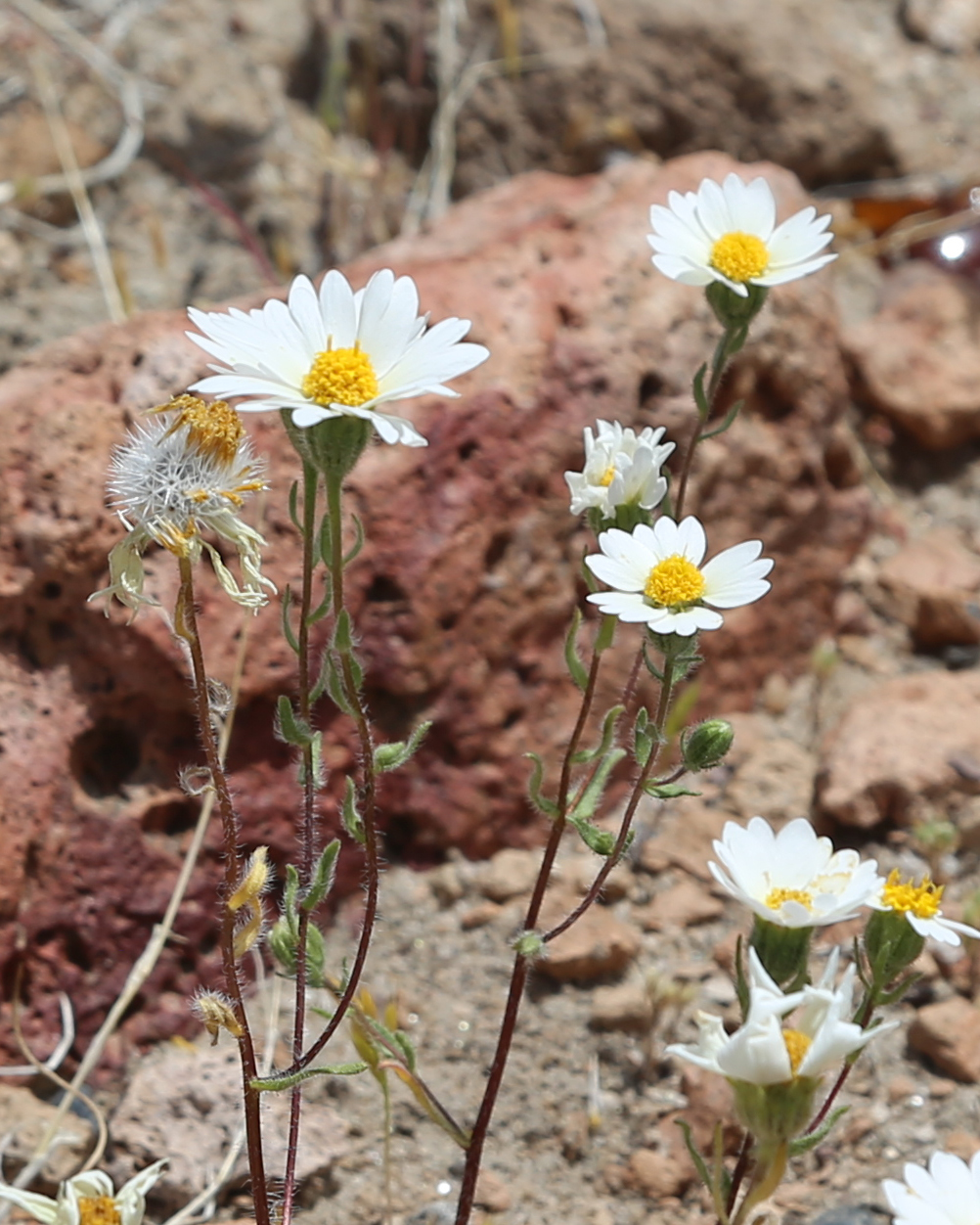
Layia glandulosa, known as Whitedaisy Tidytips (also white layia or white tidytips), is a spring-blooming annual wildflower of the sunflower family (Asteraceae). It grows on sandy and gravelly soils across much of the arid and semi-arid West, from southern British Columbia, Washington and Idaho south through California, Nevada and Utah to Arizona, New Mexico and Baja California.
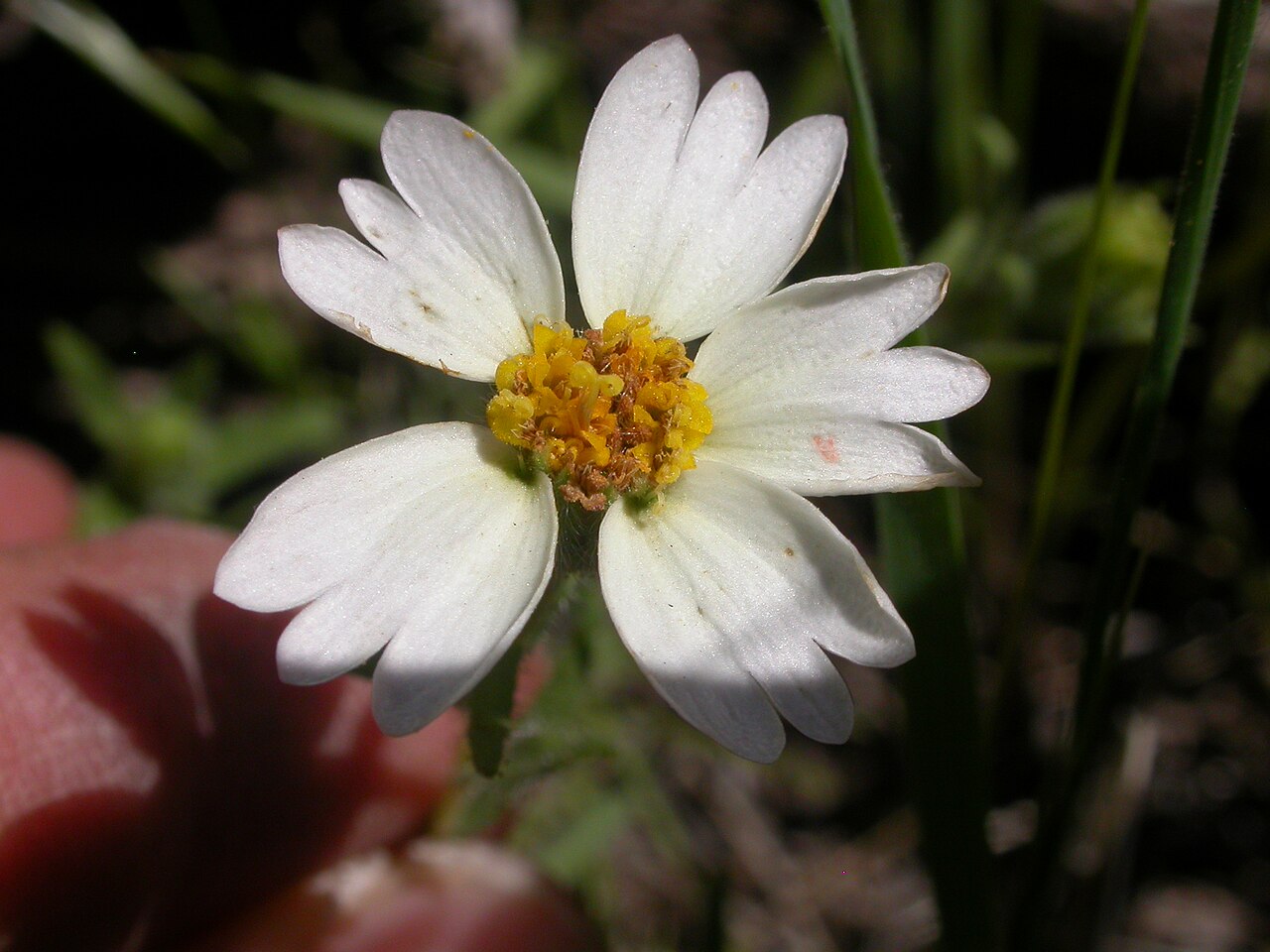
The plant is a slender, branching annual, usually 4 to 24 inches tall, with narrow leaves and sticky, glandular-hairy stems. In spring it produces daisy-like flower heads about 1 to 1-1/2 inches across, with a mound of deep yellow disk flowers surrounded by usually five to fourteen broad white rays. Each ray ends in three neat lobes, which gives the flower its tidy look and its name. The white rays often fade to rose or purple as they age.
Whitedaisy tidytips is a cheerful addition to native wildflower seed mixes, desert gardens and dry meadow plantings in the West. Like most desert annuals, it grows from seed in a single season, flowers after winter or spring rains, sets seed and dies. Sow it in fall on lean, sandy soil in full sun, and let it reseed for displays in the following years.
Identification
Look for a slender, branching annual on sandy or gravelly ground with white daisy-like flowers whose rays are notched into three lobes at the tip, around a yellow center, and with sticky, glandular hairs on the stems and bracts.
Stems & Leaves
Plants are erect and usually branched, 4 to 24 inches tall, with reddish to green stems covered in stiff hairs and small stalked glands that make them slightly sticky and aromatic. The lower leaves are narrow, 1/2 to 3 inches long, and may be toothed or lobed; the upper leaves are smaller, narrow and usually untoothed.
Flower Heads
The flower heads appear from about March to June, depending on elevation and rainfall, at the ends of the branches. Each head is about 1 to 1-1/2 inches across, with a central mound of many tiny, deep yellow disk flowers with dark anthers, surrounded by usually 5 to 14 white ray flowers. The rays are broad and fan-shaped, 1/4 to 1/2 inch long, and end in three shallow lobes. They often turn pinkish or purplish with age.
Bracts
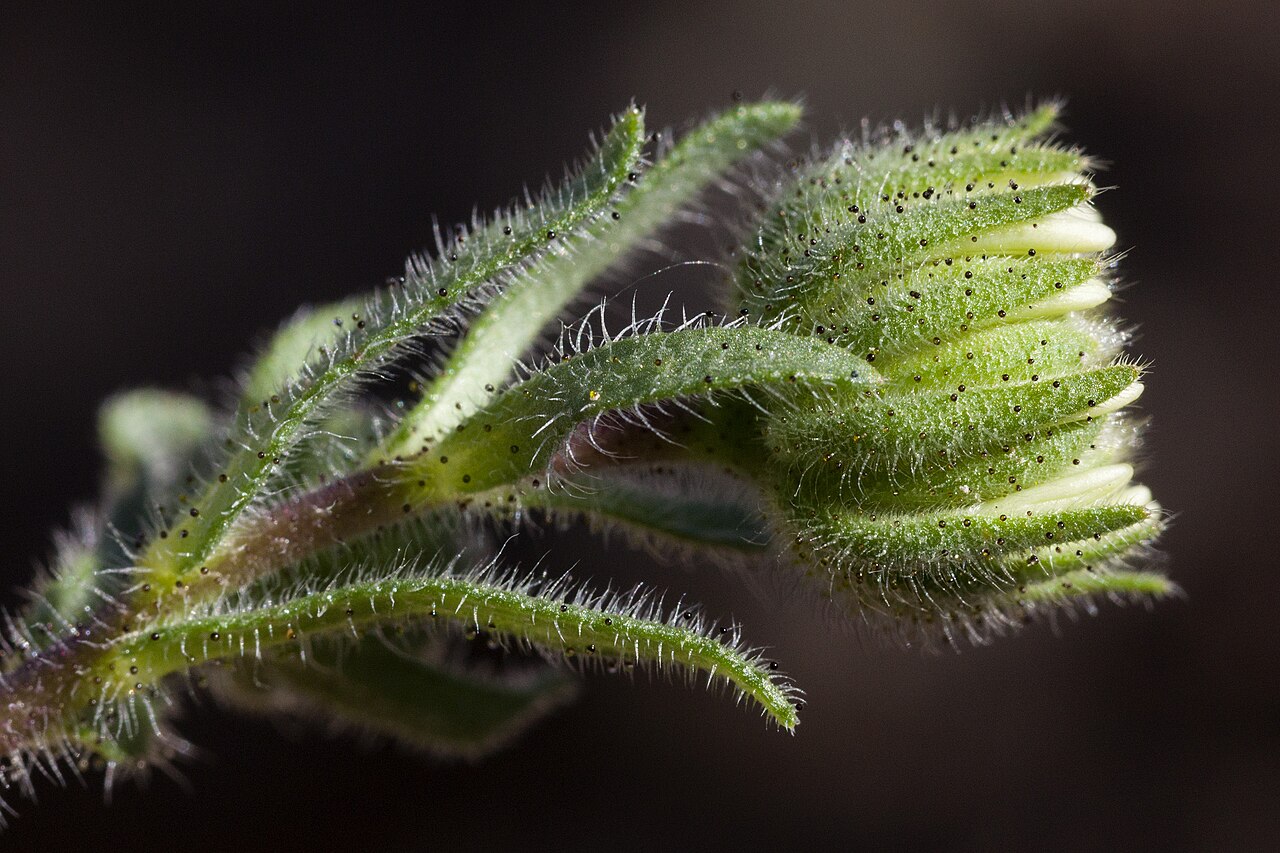
The bracts (phyllaries) around the base of each head are green and densely covered with long hairs and tiny, often black-tipped glands. Each bract partly folds around the seed of the ray flower in front of it, a distinctive feature of the genus Layia.
Fruit & Seeds
The seeds (cypselae) are small and dark. Those of the disk flowers carry a crown of white, feathery bristles (a pappus) that help them blow away in the wind, so mature seed heads look like small white puffs.
Variation
Most plants have white rays, but occasional plants have pale yellow rays. The name Layia glandulosa ssp. lutea, once used for yellow-rayed plants, is treated by USDA PLANTS as a synonym of the species. A few flower heads may have no rays at all.
Look-alikes
Tidy tips (Layia platyglossa) of coastal and central California has yellow rays with white tips. White-rayed fleabanes (Erigeron) have many more, very narrow rays without three-lobed tips. Desert chicory (Rafinesquia) has white, strap-shaped flowers with milky sap and no yellow disk. Whitedaisy tidytips is the only common western annual with a few broad, white, three-lobed rays around a yellow center.
Quick Facts
| Scientific Name | Layia glandulosa |
| Family | Asteraceae (sunflower family) |
| Plant Type | Annual wildflower (herb) |
| Mature Height | 4–24 in |
| Mature Spread | 4–12 in |
| Growth Rate | Fast (completes its life cycle in one season) |
| Sun Exposure | Full sun |
| Water Needs | Low; winter and spring rain, dry in summer |
| Soil Type | Sandy, gravelly or rocky, well-drained soil |
| Soil pH | About 6.0–8.0 (slightly acidic to slightly alkaline) |
| Bloom Time | March–June |
| Flower Color | White rays (aging pink to purple); yellow center |
| Fall Color | None; annual dies after setting seed |
| Fruit | Small dry seeds (cypselae) with feathery bristles |
| Deer Resistant | Moderately; hairy, sticky foliage is seldom favored |
| USDA Hardiness Zones | Annual; grows wherever its winter-spring growing season occurs (roughly zones 5–10) |
Native Range
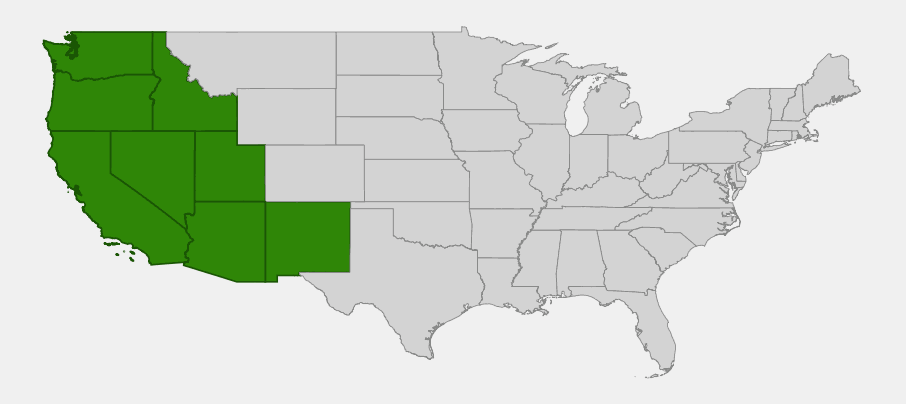
Whitedaisy tidytips is native to western North America. USDA PLANTS lists it as native to the lower 48 states and records it from Arizona, California, Idaho, Nevada, New Mexico, Oregon, Utah and Washington. The Lady Bird Johnson Wildflower Center summarizes its range as southern British Columbia to southwestern Idaho, south to New Mexico, Arizona and Baja California.
It is most widespread in California, where it occurs in the Coast Ranges, the foothills of the Sierra Nevada and the Transverse and Peninsular Ranges, and especially in the Mojave Desert and on desert mountain slopes. To the north it grows in dry, sandy places in eastern Oregon and Washington, the Snake River Plain of southwestern Idaho and in southwestern Oregon. Eastward it occurs across the Great Basin of Nevada and Utah and on the Colorado Plateau and desert grasslands of Arizona and New Mexico.
Habitats include sandy flats and washes, dry rocky and gravelly slopes, mesas, sagebrush steppe, desert scrub, grasslands, and open pinyon-juniper, oak and pine woodlands. It often appears in large numbers after fires and on disturbed, sandy or volcanic soils, especially after wet winters.
📋 Regional plant lists featuring Whitedaisy Tidytips: Idaho, Eastern Oregon & Eastern Washington · Utah & Western Colorado · Arizona & New Mexico · Western Oregon & Western Washington · California & Nevada
Growing & Care Guide
Whitedaisy tidytips is easy to grow from seed in sunny, dry, western gardens. It is an annual, so the goal is to give it a good start in fall or winter and then let it reseed. It does best in lean soil; rich, watered garden beds produce tall, floppy plants with fewer flowers.
Light
Give it full sun. It flowers poorly and becomes leggy in shade.
Soil & Water
Grow it in sandy, gravelly or rocky soil with excellent drainage. The Lady Bird Johnson Wildflower Center notes that lean soil is necessary to encourage flowering and keep plants from becoming leggy, so do not add compost or fertilizer. In the desert Southwest and California it grows on winter rain; water only if winter and spring are very dry, and stop watering once plants set seed.
Planting Tips
Sow seed in fall or early winter, before the rainy season, directly where you want plants to grow. Scatter the seed on raked bare soil, press it in lightly, and keep competing weeds down while seedlings are small. It mixes well with other annual wildflowers such as California poppy, goldfields, desert bluebells and lupines.
Pruning & Maintenance
No pruning is needed. Let the plants set seed and dry in place in early summer so they can reseed; remove the dry stalks afterward if you want a neater look. Keep aggressive non-native grasses and weeds from crowding out the seedlings in winter.
Propagation
Propagate only from seed. Collect the fluffy seed heads when they are dry and starting to break apart, store the seed dry, and sow it the following fall. In suitable sites, established patches reseed themselves and may come back in larger numbers after wet winters.
Landscape Uses
- Wildflower seed mixes: a bright white companion to orange poppies and yellow goldfields
- Desert and dry gardens: for spring color on sandy, unirrigated ground
- Meadow and steppe restoration: on sandy or recently burned sites in the interior West
- Pollinator gardens: an early-season nectar and pollen source for native bees
- Containers and rock gardens: in lean, gritty soil in full sun
Wildlife & Ecological Value
Whitedaisy tidytips is one of the many spring annuals that make western deserts and dry slopes come alive after wet winters, and it feeds insects and seed-eating birds.
For Pollinators
The Lady Bird Johnson Wildflower Center notes special value for native bees. The open flower heads are visited by many small native bees, as well as bee flies, beetles and butterflies looking for nectar and pollen in early spring.
For Birds
Birds eat the seeds, according to the Lady Bird Johnson Wildflower Center. Sparrows, finches and quail forage on the seeds of annual wildflowers like tidytips in late spring and early summer.
For Mammals
Small mammals such as kangaroo rats and pocket mice gather the seeds of desert annuals, and rabbits may nibble young plants.
Ecosystem Role
As a fast-growing annual, it quickly covers bare sandy soil after rains and fires, helping to hold soil and providing early food for insects. Its seeds can persist in the soil for years, waiting for a wet winter to germinate in large numbers.
Cultural & Historical Uses
The genus Layia is named for George Tradescant Lay, a naturalist on Captain Frederick Beechey’s voyage to the Pacific in the 1820s, which collected plants in California. The species was first described by William Jackson Hooker, and the name glandulosa refers to the glandular hairs on the stems and bracts.
The name tidytips refers to the neat, three-lobed tips of the rays. Botanists have studied Layia closely as an example of how new plant species evolve: the genus includes many closely related annuals in California with different chromosome numbers and flower colors, and whitedaisy tidytips is one of the most widespread.
For wildflower lovers, whitedaisy tidytips is a familiar sight in desert superbloom years in places such as the Mojave National Preserve and the high desert of southern California, where it can carpet sandy flats and burned slopes alongside poppies and goldfields.
Frequently Asked Questions
Is whitedaisy tidytips an annual?
Yes. It sprouts after fall or winter rains, flowers in spring, sets seed and dies in early summer. Established patches come back from seed.
How is it different from tidy tips?
Tidy tips (Layia platyglossa) has yellow rays with white tips, while whitedaisy tidytips has all-white rays (often aging pink) around a yellow center.
When should I sow whitedaisy tidytips seed?
Sow in fall or early winter, before the rainy season, on lean, sandy soil in full sun. Seed sown in spring may germinate poorly unless it gets cool, moist conditions.
Does it need fertilizer or rich soil?
No. Rich soil and fertilizer make plants tall and floppy with fewer flowers. It does best in lean, sandy or gravelly soil.
Is whitedaisy tidytips good for pollinators?
Yes. Its open flower heads provide nectar and pollen for native bees and other insects in early spring, and birds eat the seeds.

Looking for a nursery that carries Whitedaisy Tidytips?
Browse our native plant nursery directory: Arizona · California · Idaho · Nevada & New Mexico · Oregon · Utah · Washington