
Swamp Dewberry (Rubus hispidus)
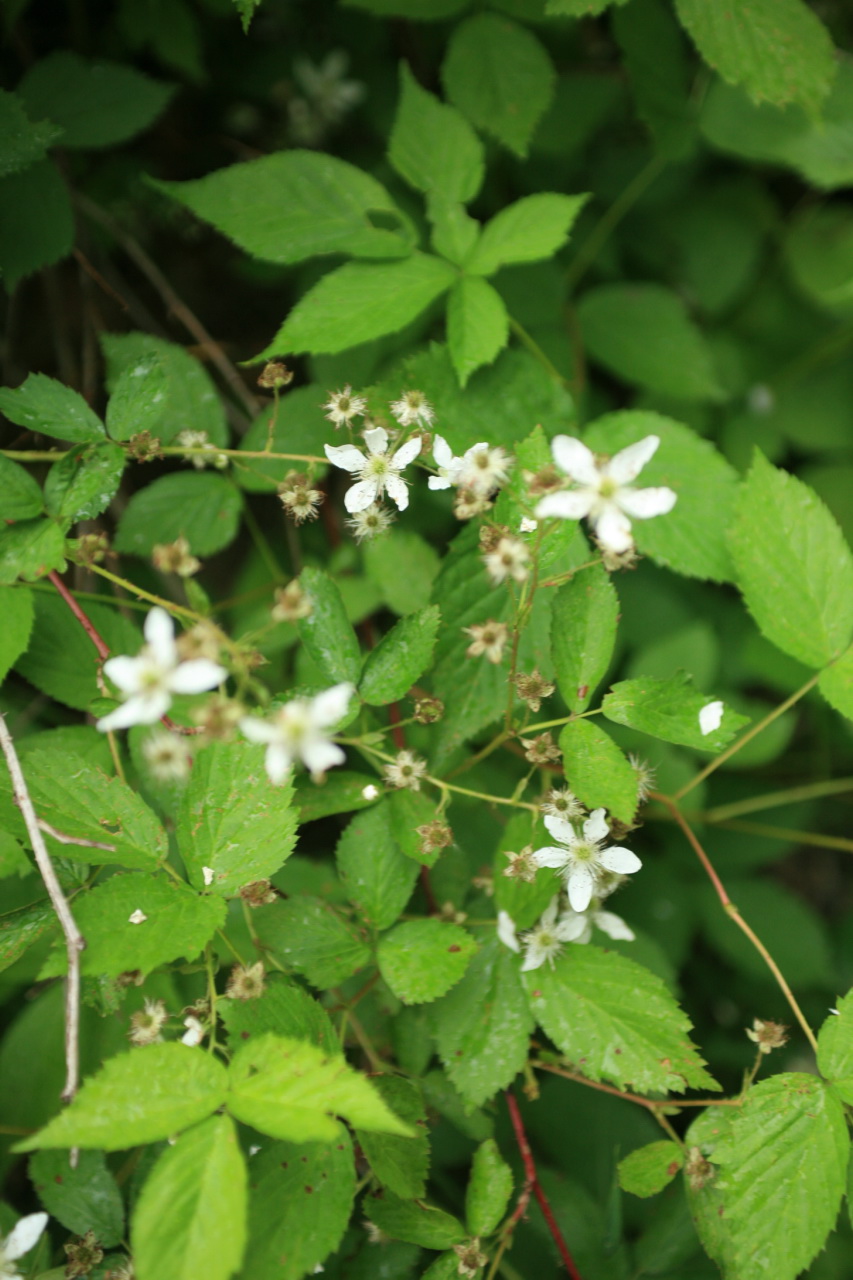
Rubus hispidus, known as Swamp Dewberry (USDA: bristly dewberry; also running swamp blackberry or groundberry), is a low, trailing bramble of wet woods, bogs and sandy clearings in eastern North America. It belongs to the rose family (Rosaceae), with the blackberries and raspberries. Instead of arching canes, it sends long, slender, bristly stems creeping along the ground, rooting at the tips and weaving a loose, evergreen groundcover.
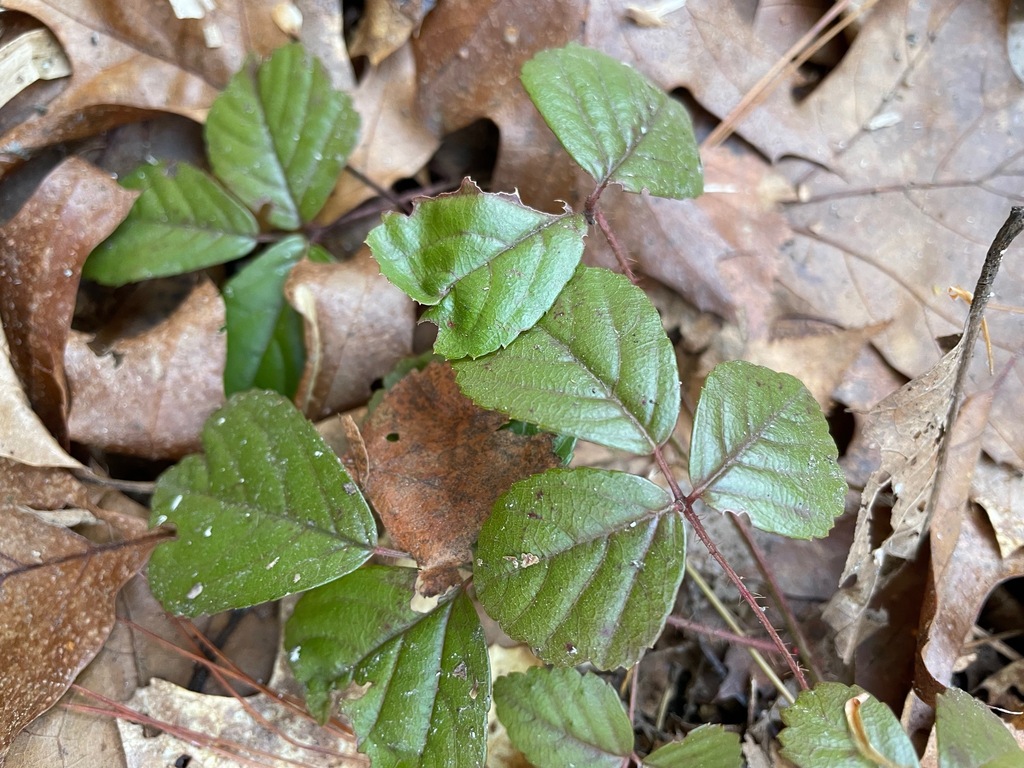
Its small, glossy leaves have three (sometimes five) rounded, toothed leaflets that stay green well into winter, often turning bronze or red-purple in cold weather. In early to midsummer it bears white, five-petaled flowers on short upright shoots, followed by small, dark red to purple-black berries that are usually sour. The flowers feed bees and other pollinators, and the fruit is eaten by birds and small mammals.
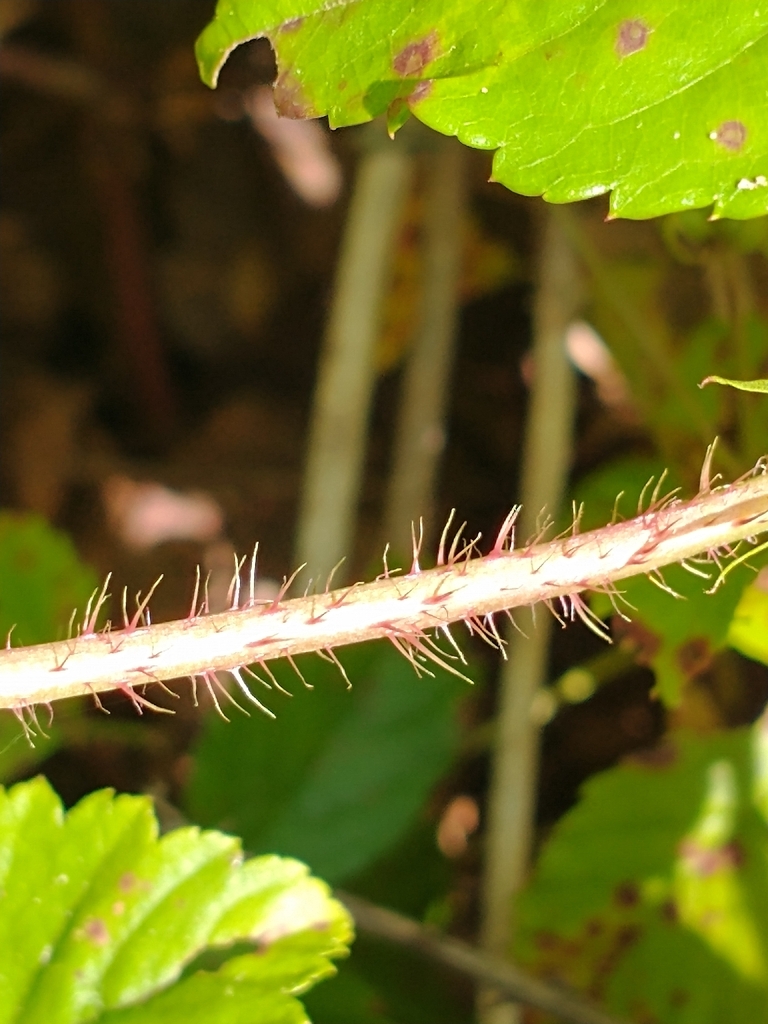
Swamp dewberry is an excellent native groundcover for damp, acidic, partly shaded spots where lawn grass fails, such as the edges of wet woods, rain gardens and bog gardens. Its bristles are fine and soft compared with the hooked prickles of blackberries, though gloves are still a good idea when handling it.
Identification
Look for a low, trailing bramble with thin stems covered in fine, straight bristles, glossy, leathery leaves with three rounded leaflets that stay green into winter, and small white flowers in early summer, in wet or sandy acidic ground.
Stems & Habit
The stems are slender, woody and trailing, often 3 to 6 feet (1 to 2 m) long, lying on the ground or scrambling over low plants, and rarely rising more than about 1 foot (30 cm). They are densely covered with fine, straight, reddish to purplish bristles, not the stout, hooked prickles of most blackberries. The stem tips root where they touch moist soil, and over time plants form large, loose mats.
Leaves
The leaves are alternate and usually divided into three leaflets, sometimes five on vigorous first-year stems. Each leaflet is about 3/4 to 2 inches (2 to 5 cm) long, broadly oval to obovate (widest above the middle) with a blunt or rounded tip and coarsely toothed edges. They are thick, glossy and dark green on top, paler beneath, and are semi-evergreen, often turning bronze or reddish-purple in winter and persisting until spring.
Flowers
The flowers grow singly or in small, loose clusters on short, upright side shoots that come from the previous year’s trailing stems. Each flower is about 1/2 to 3/4 inch (1.2 to 2 cm) across, with five white petals and many stamens around a green center. Bloom time is about June to August, later than most blackberries.
Fruit
The fruit is a small aggregate berry about 1/4 to 3/8 inch (6 to 10 mm) across, with relatively few drupelets. It ripens from red to dark red, purple or nearly black in mid to late summer. The berries are edible but usually sour or bland and seldom abundant.
Look-alikes
Northern Dewberry (Rubus flagellaris) has curved, hooked prickles, thinner leaves that drop in fall and sweeter fruit, and grows in drier, open ground. Southern Dewberry (R. trivialis) also has bristles mixed with hooked prickles but grows mainly in the Southeast and blooms in early spring. Dwarf red raspberry (R. pubescens) has soft, unarmed stems and thin, deciduous leaves. Barren strawberry and wild strawberry have similar three-parted leaves but no woody, bristly runners.
Safety
The fruit is edible and the plant is not poisonous. The bristles are fine and seldom break the skin, but they can be irritating, so wear gloves when weeding or moving plants. Swamp dewberry is widespread and common and is not of conservation concern in most of its range.
Quick Facts
| Scientific Name | Rubus hispidus |
| Family | Rosaceae (rose family) |
| Plant Type | Trailing, semi-evergreen subshrub (bramble) |
| Mature Height | 6–12 in |
| Mature Spread | 3–6 ft per plant; spreads by rooting stems |
| Growth Rate | Moderate to fast |
| Sun Exposure | Full sun to part shade |
| Water Needs | Moist to wet; tolerates some dry sandy sites |
| Soil Type | Acidic sandy, peaty or loamy soils; bogs, wet woods and clearings |
| Soil pH | About 4.5–6.5 |
| Bloom Time | June–August |
| Flower Color | White |
| Fall Color | Bronze to red-purple; leaves persist into winter |
| Fruit | Small dark red to purple-black berry, usually sour |
| Deer Resistant | No; deer browse the leaves |
| USDA Hardiness Zones | 3–8 |
Native Range
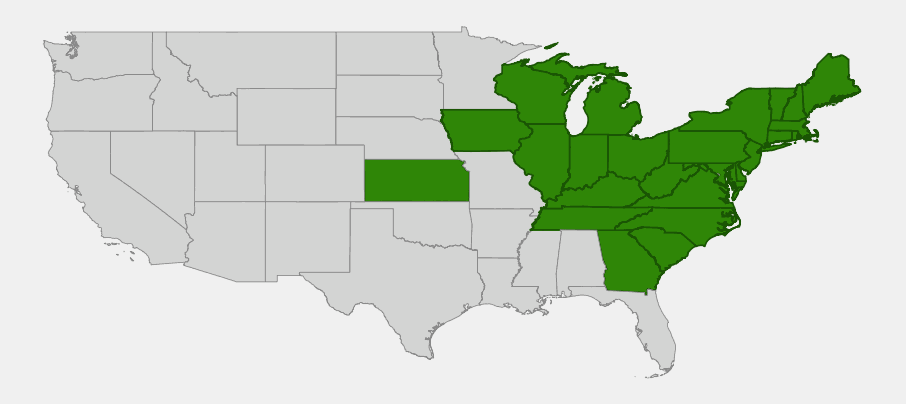
Swamp dewberry is native to eastern North America, from Nova Scotia, New Brunswick, Prince Edward Island, Newfoundland, Quebec and Ontario south to Georgia and South Carolina and west to Wisconsin, Iowa and Kansas. USDA PLANTS lists it as native in 25 eastern and midwestern states. It is most common in New England, New York, Pennsylvania, New Jersey and the Great Lakes region; records in Kansas and the far south of the range are outlying. USDA also lists a Washington record, but the Burke Herbarium treats the species as introduced in Washington, so it is not shown on the map.
In the Southeast it occurs mainly in the Appalachian Mountains and Piedmont, reaching northern Georgia and the upstate of South Carolina. Along the Atlantic Coastal Plain it is frequent in the New Jersey Pine Barrens and on Cape Cod, Long Island and the coast of Maine.
Despite its name, it grows in both wet and dry places: swamps, bogs, wet thickets and the edges of marshes, but also moist to dry sandy woods, pine barrens, heath barrens, old fields, clearings and roadsides. It favors acidic soils and often grows with blueberries, huckleberries, sheep laurel and ferns.
📋 Regional plant lists featuring Swamp Dewberry: New York, Pennsylvania & Northern New Jersey · Ohio & Indiana · Michigan, Wisconsin & Eastern Minnesota · Kentucky & Tennessee · Nebraska, Kansas & Eastern Colorado · Connecticut, Massachusetts & Rhode Island · New Hampshire, Maine & Vermont · Maryland, Virginia & West Virginia · Delaware, Southern New Jersey & Long Island · Illinois, Iowa & Missouri · Alabama, Georgia & Mississippi · North & South Carolina
Growing & Care Guide
Swamp dewberry is an easy, low-maintenance groundcover for moist, acidic soil. It fills in quickly by rooting stems, so give it room or edge it where it meets paths.
Light
Full sun to part shade. It flowers and fruits best with several hours of sun but makes a good evergreen carpet in light shade under trees.
Soil & Water
It prefers acidic, sandy, peaty or loamy soil that stays moist. It tolerates periodic flooding and also grows in drier sandy soil once established. Avoid alkaline or heavily limed soil. Water during dry spells in the first season.
Planting Tips
Space plants 2 to 3 feet apart for a groundcover; the stems will root and fill in within a couple of seasons. Use it on the edge of a wet woodland, around a rain garden or pond, under blueberries in an acidic bed, or on a damp slope. Pin a few stems to the soil to speed rooting.
Pruning & Maintenance
No regular pruning is needed. In early spring, cut out dead stems and trim back runners that stray onto paths or into other beds. Like other brambles, each flowering shoot dies after fruiting, but new stems keep the mat full. Wear gloves when working with it.
Propagation
The easiest method is to dig rooted stem tips in spring or fall and replant them. It can also be grown from seed collected from ripe fruit; clean the seeds and sow them outdoors in fall, or give them several months of cold, moist stratification. Germination of bramble seed is often slow and uneven.
Landscape Uses
- Wet-site groundcover: fills damp, acidic, partly shaded ground
- Rain gardens and pond edges: tolerates periodic flooding
- Woodland gardens: a semi-evergreen carpet under blueberries and ferns
- Erosion control: rooting stems knit soil on damp slopes and banks
- Wildlife gardens: flowers for bees and fruit for birds
Wildlife & Ecological Value
Swamp dewberry provides flowers, fruit and low cover in wet woods and bogs.
For Pollinators
The white flowers are visited by many native bees, including small sweat bees, mining bees and bumblebees, as well as flies and other insects. Its summer bloom comes after most other brambles have finished. Like other Rubus, it is a host plant for the caterpillars of several moths.
For Birds
Thrushes, catbirds, towhees, robins and other songbirds eat the berries. Ruffed grouse and wild turkeys eat the fruit and leaves, and the low tangle gives cover to ground-nesting birds.
For Mammals
White-tailed deer and rabbits browse the semi-evergreen leaves, especially in winter. Chipmunks, mice, foxes and black bears eat the fruit.
Ecosystem Role
Swamp dewberry covers the ground in bogs, swamp edges and sandy barrens, holding soil and providing winter greenery when most other plants are dormant. Its rooting stems let it quickly fill gaps after disturbance, and its fruit is spread by the birds and mammals that eat it.
Cultural & Historical Uses
The species name hispidus is Latin for “bristly,” describing the stems. Carl Linnaeus named it in 1753. Older botanists described many forms and varieties of eastern dewberries, and some of those names, such as Rubus sempervirens (“evergreen”) and R. hispidus var. obovalis, are now treated as synonyms of this species.
The common name dewberry is used for low, trailing brambles whose fruit ripens close to the ground, among the morning dew. Swamp dewberry’s fruit is much less tasty than that of its relatives, so it has never been a berry crop; its value is as a tough, evergreen native groundcover and a wildlife plant of northern bogs and barrens.
Related brambles on this site include Northern Dewberry, Southern Dewberry, Cloudberry and Black Raspberry.
Frequently Asked Questions
Is swamp dewberry fruit edible?
Yes. The small dark berries are edible but are usually sour or bland and not very abundant, so the plant is grown mostly as a groundcover and for wildlife.
Does swamp dewberry have thorns?
It has fine, straight bristles rather than stout, hooked thorns. They are much less painful than blackberry prickles, but gloves are still helpful.
Is swamp dewberry evergreen?
It is semi-evergreen. The glossy leaves usually persist through winter, often turning bronze or reddish-purple, and are replaced in spring.
Does it only grow in swamps?
No. It is common in swamps and bogs, but it also grows in moist to dry sandy woods, pine barrens and clearings with acidic soil.
Will swamp dewberry spread in my garden?
Yes. Its trailing stems root at the tips and form spreading mats. That makes it a good groundcover, but edge it or trim runners where you want to keep it contained.

Looking for a nursery that carries Swamp Dewberry?
Browse our native plant nursery directory: Connecticut, Delaware & Georgia · Illinois, Indiana, Iowa & Kansas · Kentucky, Maine, Maryland, Massachusetts & Michigan · New Hampshire, New Jersey, New York, North Carolina & Ohio · Pennsylvania, Rhode Island, South Carolina, Tennessee, Vermont & Virginia · West Virginia & Wisconsin