Cinnamon Fern (Osmundastrum cinnamomeum)
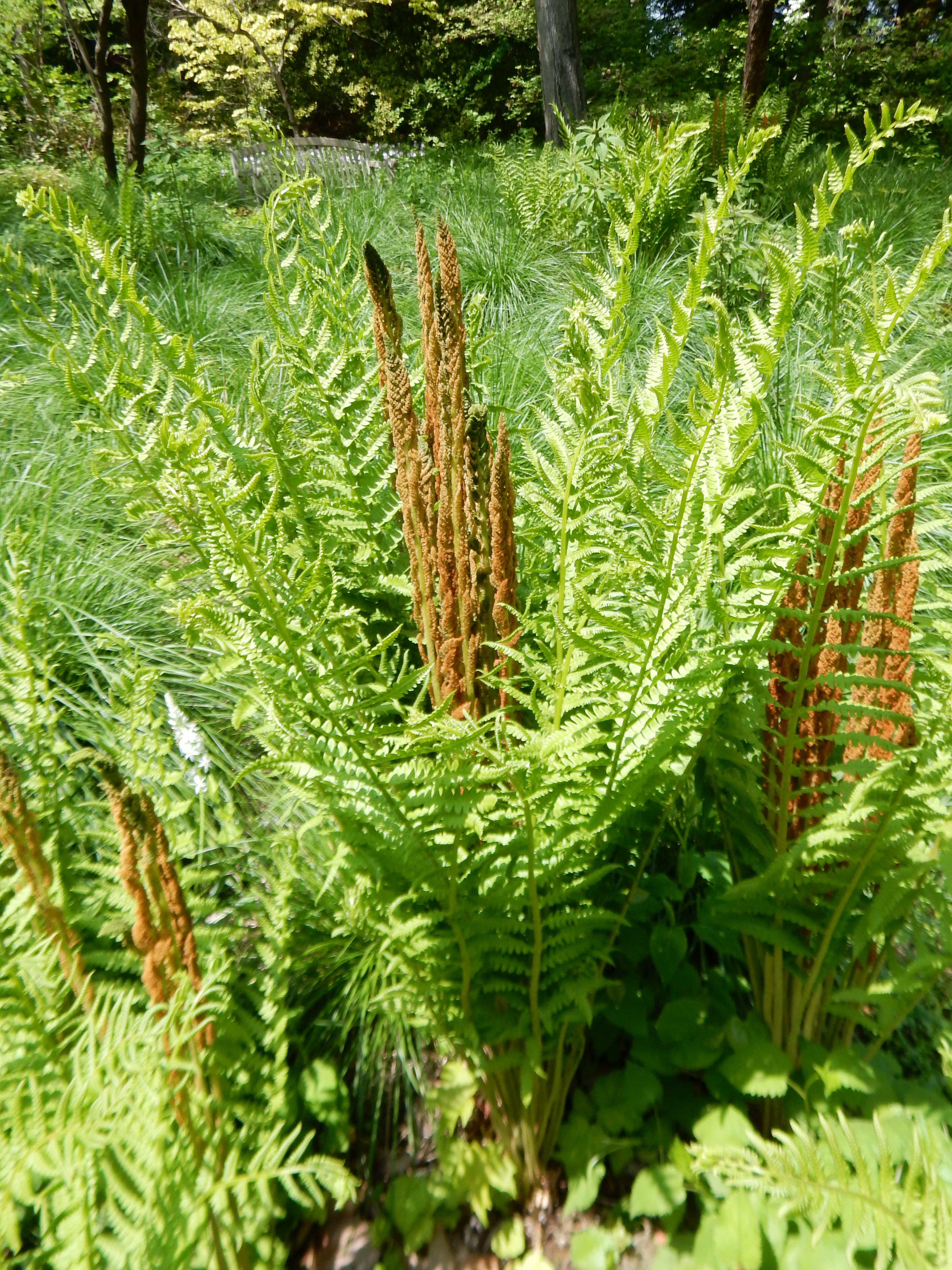
Osmundastrum cinnamomeum (syn. Osmunda cinnamomea), commonly known as Cinnamon Fern, is one of the most beautiful, ecologically valuable, and widely distributed native ferns in North America. A member of the ancient Osmundaceae family — a lineage that has persisted virtually unchanged for over 220 million years, appearing in the fossil record from the Triassic period — Cinnamon Fern is a living link to the age of dinosaurs. Its dramatic vase-shaped clumps of tall, arching green sterile fronds surrounding a central spike of cinnamon-colored fertile fronds are one of the most striking and immediately recognizable sights of eastern North American woodlands and wetlands.
Cinnamon Fern grows from a dense, fibrous root mass (called a rootstock or rhizome) that accumulates year after year into a large, raised mound. This root mass — a dense mass of dark, wiry roots bound together with fibers — is so durable and moisture-retentive that it was historically harvested for use as a growing medium for orchids and other epiphytes, and as a constituent of peat moss substitutes. The plant itself can live for decades, with established clumps growing to impressive size and forming the structural centerpiece of a shade or wetland garden. Its tolerance of wet feet, deep shade, and heavy clay soils makes it one of the most forgiving and reliable native plants for difficult sites.
For gardeners in Delaware, New Jersey, and New York, Cinnamon Fern is a native of both the coastal plain’s wet pine forests and the upland hardwood slopes — it is essentially ubiquitous in any moist, shaded habitat throughout the region. It grows in wet swales, along stream margins, in swampy thickets, and in moist hardwood forest understories. In the landscape, it provides bold textural contrast, excellent wildlife cover, and spectacular seasonal interest without requiring any maintenance once established.
Identification
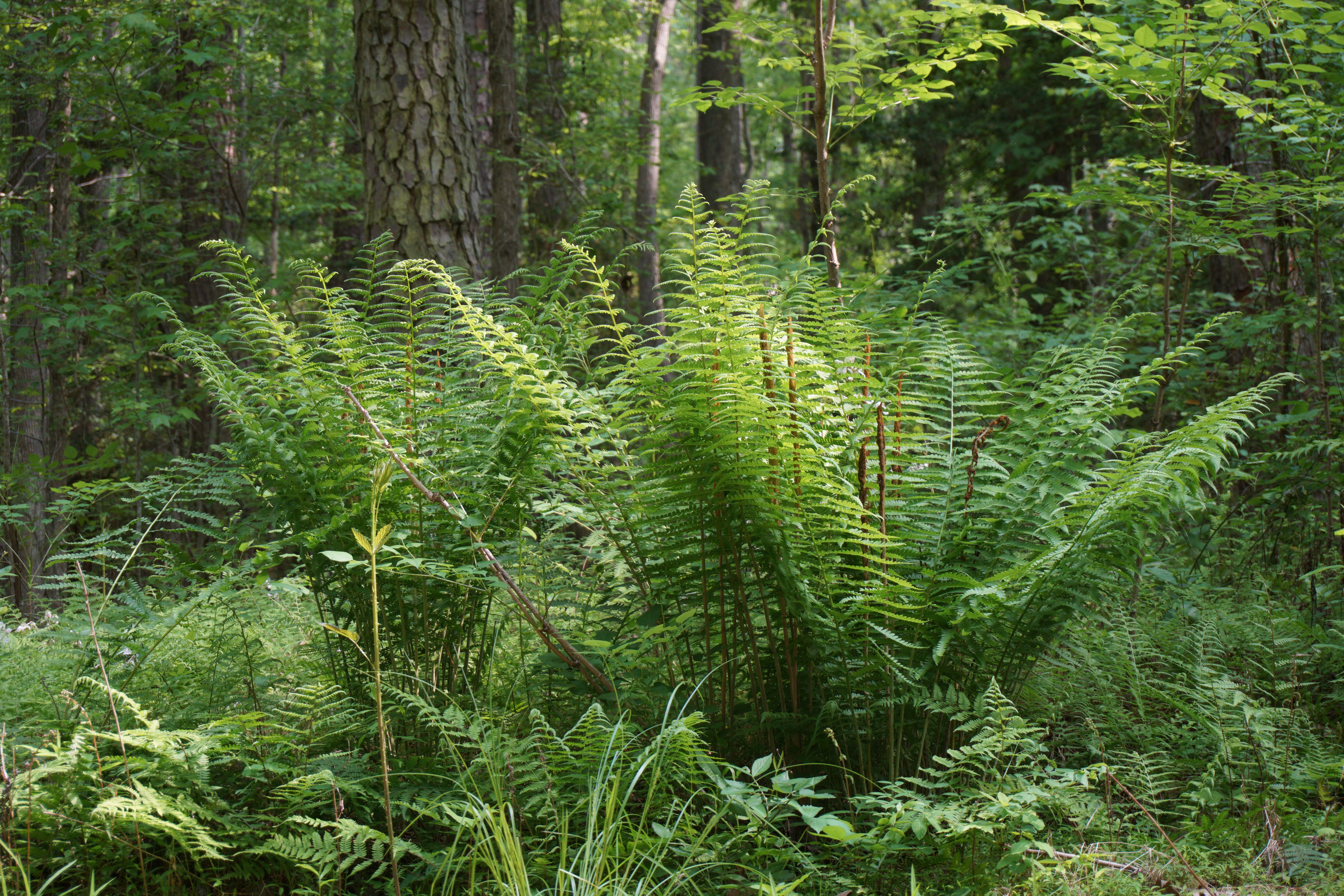
Cinnamon Fern is a deciduous fern growing in vase-shaped clumps. Mature plants typically produce fronds 2–5 feet (60–150 cm) tall, though in optimal conditions with rich, moist soil, individual fronds can reach 6 feet. The overall effect of a large established clump is bold and architectural — a fountain of arching green fronds surrounding a central cluster of upright fertile fronds.
Sterile Fronds (Vegetative)
The sterile (non-reproductive) fronds are the showy, persistent fronds that give the plant its ornamental value. They are once-pinnate (pinnate-pinnatifid) — each frond has a central rachis with alternately arranged pinnae (leaflets), each pinna deeply cut into rounded lobes. The fronds are bright yellow-green when emerging in spring (and covered with white-woolly hairs that drop off as fronds expand), maturing to dark green in summer, then turning yellow to orange-brown before dying back in hard frost. A distinctive diagnostic feature: at the base of each pinna, where it meets the rachis, there is a conspicuous tuft of woolly, rusty-brown hairs — these persist even on mature fronds and are immediately diagnostic.
Fertile Fronds (Reproductive)
The fertile fronds emerge in the center of the clump in early spring, just before or alongside the sterile fronds. They are entirely transformed into sporangia — the photosynthetic pinnae are replaced by dense clusters of bright cinnamon-brown spore cases that completely cover the frond, giving it the appearance of a brown pipe cleaner or a cinnamon stick. This is the source of the common name. The fertile fronds wither and die by early summer after releasing spores, well before the sterile fronds reach their full size.
Rootstock
The rootstock is a distinctive, raised, fibrous mound composed of tightly packed dark brown roots and root fibers. In old plants, this mound can be 12–18 inches tall and 2–3 feet in diameter, lifting the crown of the plant visibly above surrounding soil. The rootstock is extremely spongy and water-retentive.
Quick Facts
| Scientific Name | Osmundastrum cinnamomeum (syn. Osmunda cinnamomea) |
| Family | Osmundaceae (Royal Fern family) |
| Plant Type | Deciduous Fern |
| Mature Height | 1–2 ft (fronds can reach 5 ft in optimal conditions) |
| Sun Exposure | Part Shade to Full Shade |
| Water Needs | Moderate |
| Bloom Time | None (spore-bearing fern) |
| Flower Color | None (spore-bearing fern); fertile fronds are cinnamon-brown |
| Fall Color | Yellow to golden-orange |
| Deer Resistant | Yes (generally avoided by deer) |
| USDA Hardiness Zones | 3–10 |
Native Range
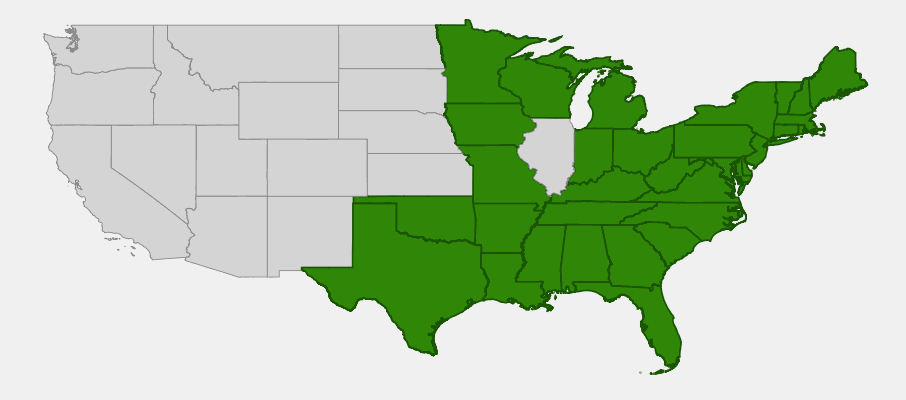
Cinnamon Fern has one of the broadest native ranges of any North American fern, spanning from Newfoundland and Quebec in the north to southern Florida in the south, and from the Atlantic coast west to Minnesota, Iowa, Kansas, and Oklahoma. It is also native to eastern Asia and tropical America, reflecting its ancient origins — this genus appeared before the breakup of the supercontinent Pangaea. Within North America, it is particularly common throughout the eastern half of the continent, wherever suitable moist, acidic habitat exists.
In the Mid-Atlantic region — including Delaware, New Jersey, and New York — Cinnamon Fern is a common and characteristic plant of moist forests, swampy woods, forested wetland edges, Atlantic white cedar swamps, and sphagnum bog margins. It thrives in the acidic, waterlogged soils of the coastal plain as well as in the moist upland forests of the Piedmont and Appalachian foothills. It is rarely absent from any stream or wetland corridor throughout the region.
The species favors cool, humid conditions and is most abundant in areas with consistently moist soils and at least some shade. It achieves remarkable size in the bottomland hardwood forests of the mid-Atlantic and Appalachian regions, where perfect moisture, shade, and nutrient conditions allow clumps to grow for decades, building into substantial masses of accumulated rootstock.
📋 Regional plant lists featuring Cinnamon Fern: Delaware, New Jersey & New York
Growing & Care Guide
Cinnamon Fern is one of the most reliable and low-maintenance native plants for shaded, moist situations. Once established, it requires virtually no care — just appropriate siting and adequate moisture.
Light
Cinnamon Fern performs best in part shade to full shade — the dappled light under a deciduous canopy is ideal. It will tolerate morning sun if the soil stays consistently moist, but afternoon sun combined with dry conditions will cause fronds to brown and scorch. In deep shade, the plant grows somewhat shorter but remains healthy and vigorous. It is an excellent choice for the dry shade under shallow-rooted trees like maples, where it tolerates competition better than most plants.
Soil & Water
Moist to wet, acidic soil (pH 4.5–6.5) is ideal. Cinnamon Fern thrives in consistently moist conditions and will even grow in seasonally flooded soils — it tolerates brief periods of standing water. Rich, organic soil high in humus is preferred; the plant builds its own organic matter over time as accumulated rootstock. In garden settings, amend with acidic compost, leaf mold, or peat moss at planting. Consistent moisture is key — mulch heavily to retain soil moisture, especially in drier sites.
Planting Tips
Plant container-grown or bare-root Cinnamon Fern in spring or fall. Space clumps 2–3 feet apart for a naturalistic colony effect. The raised rootstock mound should sit at or just above soil level — do not bury it deeply. Avoid planting in alkaline soils; if your soil is neutral to alkaline, amend with sulfur and acidic organic matter, or grow in raised beds. Cinnamon Fern rarely needs dividing but can be split in early spring if a large clump becomes overcrowded.
Pruning & Maintenance
Cinnamon Fern is essentially maintenance-free. Old fronds die back naturally after hard frost and can be cut back in late fall or left in place for winter structure and wildlife cover. The russet-brown standing fronds provide attractive winter interest and shelter for overwintering insects. The distinctive woolly, fibrous rootstock does not need to be cleaned up — it provides its own mulch and moisture retention. There are no significant pest or disease problems.
Landscape Uses
Cinnamon Fern is invaluable in a wide range of shaded or wet landscape settings:
- Rain gardens and bioswales — tolerates wet feet and flooding
- Pond and stream edges — beautiful reflected in water
- Shade gardens — bold textural contrast with fine-textured companions
- Wetland restoration — a key species in forested wetland plantings
- Woodland gardens — naturalizes beautifully under deciduous canopy
- Mass plantings — effective as a groundcover in large areas of moist shade
- Container gardening — striking in large decorative containers with regular watering
Wildlife & Ecological Value
Cinnamon Fern is an ecologically important plant that supports wildlife across multiple levels of the food web.
For Birds
The woolly hairs shed from emerging fronds and the fibrous material from the rootstock are actively collected by birds — particularly hummingbirds — for nest construction. Ruby-throated Hummingbirds line their thimble-sized nests with these plant fibers, binding them with spider silk. Great Crested Flycatchers and Yellow Warblers also use fern material in nest construction. The dense clumps of Cinnamon Fern provide excellent ground-level cover for wood-nesting thrushes, Ovenbirds, and various sparrows.
For Mammals
Cinnamon Fern is generally avoided by deer and other mammalian browsers — an important practical advantage in many gardens. The dense clumps provide cover and nesting material for small mammals including voles, shrews, and salamanders. The rootstock hosts numerous invertebrates that serve as prey for larger wildlife.
For Pollinators
As a fern, Cinnamon Fern does not produce flowers or nectar. However, the dense, moist microhabitat created by fern colonies supports numerous invertebrates important in the broader food web. The spores are a nutrient source for specialized microorganisms and contribute to soil health in wetland ecosystems.
Ecosystem Role
Cinnamon Fern plays important roles in wetland and forest ecosystems. Its deep, spongy rootstock absorbs and slowly releases large amounts of water, helping regulate water flow in wet areas. The accumulated organic matter of old rootstocks builds soil organic content and supports rich invertebrate and fungal communities. Cinnamon Fern colonies create a distinct microclimate — cooler, moister, and more humid than surrounding areas — that is essential habitat for numerous specialist amphibians, insects, and other small organisms.
Cultural & Historical Uses
Cinnamon Fern has a long history of human use across its range. Indigenous peoples throughout eastern North America used various parts of the plant medicinally and practically. The young, tightly coiled fiddleheads (croziers) of Cinnamon Fern were eaten as a spring vegetable by numerous Native American groups, including the Iroquois, Mohegan, and Cherokee. They were eaten raw, boiled, or cooked like asparagus. The flavor is mild and somewhat mucilaginous, similar to other edible fiddleheads. Note that only the fiddleheads of true Osmundastrum and Osmunda ferns should be eaten — other fern fiddleheads may be toxic.
The fibrous rootstock was used medicinally by several Indigenous groups as a treatment for joint pain, rheumatism, and as a general tonic. The fibers were also used as a durable binding and padding material. European colonists quickly recognized the rootstock’s horticultural value as a growing medium; by the 19th century, “osmunda fiber” (from Cinnamon Fern and Royal Fern rootstocks) had become a major commercial product used worldwide by orchid growers, who valued its moisture retention, aeration, and slow decomposition. Harvesting wild osmunda fiber for this market significantly reduced natural Cinnamon Fern populations in parts of New England during the early-to-mid 20th century.
Today, osmunda fiber collection from wild plants is no longer practiced at commercial scale, and synthetic and alternative growing media have largely replaced it in horticulture. Cinnamon Fern populations have recovered substantially. The plant is now widely cultivated in native plant gardens and restoration projects, and several cultivars and hybrids have been selected for garden performance. Its deep evolutionary heritage — essentially unchanged for hundreds of millions of years — makes it a uniquely meaningful choice for naturalistic plantings.
Frequently Asked Questions
Are Cinnamon Fern fiddleheads edible?
Yes — the young fiddleheads of Cinnamon Fern are edible and have been eaten by Indigenous peoples and foragers for centuries. They should be cooked (boiled or sautéed) rather than eaten raw in large quantities. Only harvest a few fiddleheads per plant to avoid harming it, and be certain of identification — confuse them with Ostrich Fern fiddleheads, which are more commonly sold commercially.
Will Cinnamon Fern grow in standing water?
Cinnamon Fern tolerates seasonally flooded conditions and moist to wet soils extremely well. It can handle brief periods of standing water, making it suitable for rain garden edges and pond margins. However, it prefers to not be in permanently standing water — plant it at the water’s edge rather than submerged.
What is the difference between Cinnamon Fern and Interrupted Fern?
Both are large Osmundaceae ferns, but they’re easy to distinguish. Interrupted Fern (Osmunda claytoniana) has fertile pinnae interrupting the middle of otherwise sterile fronds (hence the name). Cinnamon Fern has completely separate sterile and fertile fronds — the cinnamon-colored fertile frond is entirely reproductive, not mixed with sterile tissue.
How do I get Cinnamon Fern to spread in my garden?
Cinnamon Fern spreads slowly by expanding rootstock clumps — it does not produce running rhizomes or spread aggressively. To propagate, divide large clumps in early spring, cutting through the rootstock with a sharp spade. Each division should have several crowns. Spore propagation is possible but slow and requires specific conditions.
Why are my Cinnamon Fern fronds turning brown in summer?
Summer browning is usually caused by insufficient moisture or too much direct sun. Cinnamon Fern needs consistently moist soil and afternoon shade in most of its cultivated range. Increase watering, add mulch to retain moisture, and if possible provide shade during the hottest part of the day. Temporary browning after drought stress is not fatal — the plant will produce new growth in spring.

Looking for a nursery that carries Cinnamon Fern?
Browse our native plant nursery directory: Delaware · New Jersey