
Attracting Songbirds with Native Plants for a Thriving Backyard Habitat
Last updated: September 7, 2026
If you want to draw songbirds into your garden, you’ve got to think about food and shelter. Native plants really matter here—they offer the seeds, berries, and insects that local birds know and love.
Choosing native plants that fit your region is hands-down the best way to support and attract songbirds.
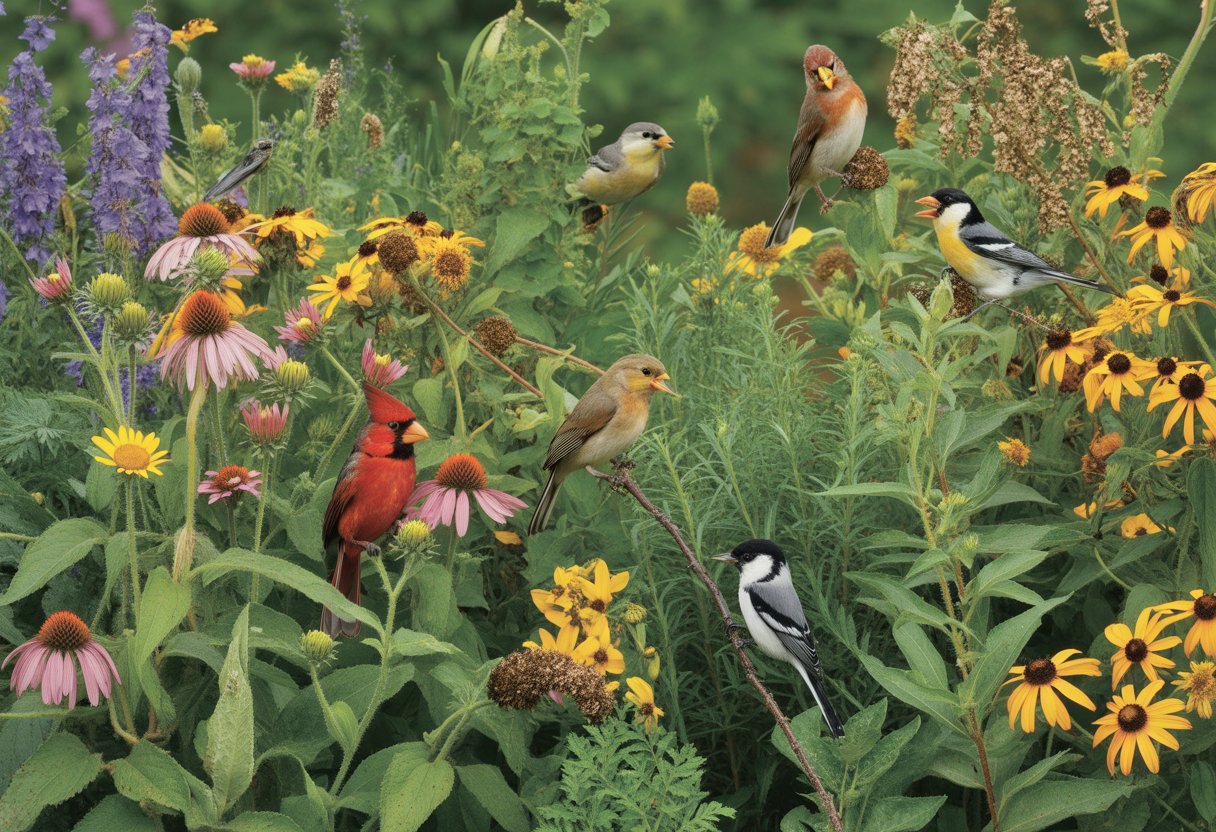
These plants do more than feed birds. They create natural habitats that offer nesting spots and protection.
Native plants and local wildlife have grown up together, so they just make sense for a healthy bird population. They’re not just pretty—they’re essential.
A backyard full of native plants brings in all sorts of songbirds through the seasons. Pick the right species, and you’ll get regular feathered visitors while helping the environment.
Understanding the Role of Native Plants in Attracting Songbirds
Native plants give songbirds exactly what they need—food, shelter, and breeding sites. They help keep local ecosystems humming by supporting insects and other wildlife.
That’s how you get birds sticking around all year, not just passing through.
Benefits of Using Native Plants
Native plants know how to handle your local soil and weather. They’re tough, so you don’t have to fuss over them much.
They time their fruits, seeds, and nectar to match up with bird lifecycles. That means food shows up when birds actually need it.
You won’t need to dump a bunch of water or fertilizer on them. That’s better for birds, since less runoff means cleaner habitats.
Pollinators and seed-spreaders love native plants, too. That just makes the whole ecosystem stronger.
How Native Plants Support Bird Habitat
Native plants come in all shapes and sizes—ground covers, shrubs, tall trees. That variety gives birds places to nest, hide, and perch.
Dense shrubs keep predators at bay, and tall trees give birds a lookout and a safe place to rest. It’s a bit like building a little bird city right in your backyard.
Because these plants and birds evolved together, they just click. Songbirds find what they need, which helps them stick around and raise their young.
Supporting Insect Populations for Songbirds
Songbirds aren’t just after seeds—many need insects, especially when raising chicks. Native plants attract plenty of caterpillars and beetles.
Non-native plants often don’t host the right bugs, so birds lose out. When you plant natives, you help keep the food chain strong for birds and their babies.
Selecting and Planting Native Species for Songbird Habitats
If you want to help songbirds, pick a mix of native flowers, shrubs, and trees. That way, birds have food and shelter in every season.
A thoughtful landscape doesn’t just look good—it works for the birds, too.
Choosing Flowering Plants, Trees, and Shrubs
Go for flowering plants like purple coneflower and black-eyed Susan. They offer nectar and attract insects, which birds love to snack on.
Native shrubs such as serviceberry and spicebush give up berries in the fall and winter, a real lifesaver when food’s scarce.
Trees like oaks and maples bring in insects and give birds a place to nest. Herbaceous plants fill out the lower layers, so there’s always somewhere to hide or forage.
If you mix it up, you’ll attract more species and keep things balanced.
Top Native Plants for Attracting Songbirds
Some plants just always seem to bring in birds. Elderberry and dogwood shrubs offer fruit and thick cover.
Hickory and birch trees attract insects and drop seeds birds can eat. Purple coneflower and black-eyed Susan make lots of seeds and pull in bugs, too.
Joe-Pye weed gives birds something to eat late in the season. With a variety of these, you’ll see birds from spring through fall.
| Plant Type | Examples | Benefits |
|---|---|---|
| Shrubs | Serviceberry, Spicebush | Berries for food, shelter |
| Trees | Oak, Maple, Hickory | Insects, nesting sites |
| Flowering Plants | Purple Coneflower, Black-eyed Susan | Nectar, seeds, attract insects |
Designing Landscapes for Food and Shelter
A layered setup—trees, shrubs, perennials—gives birds food and protection all over the place. Tall trees let birds perch and nest, while shrubs and flowers offer berries, seeds, and insects.
Try planting dense shrubs like elderberry near open spots so birds can forage safely. Space out perennials enough for sunlight, but keep them close enough for cover.
Leaving some leaf litter and dead branches around helps, too. That’s where insects thrive, and birds love to poke around in it.
Enhancing Garden Environments for Songbirds and Wildlife
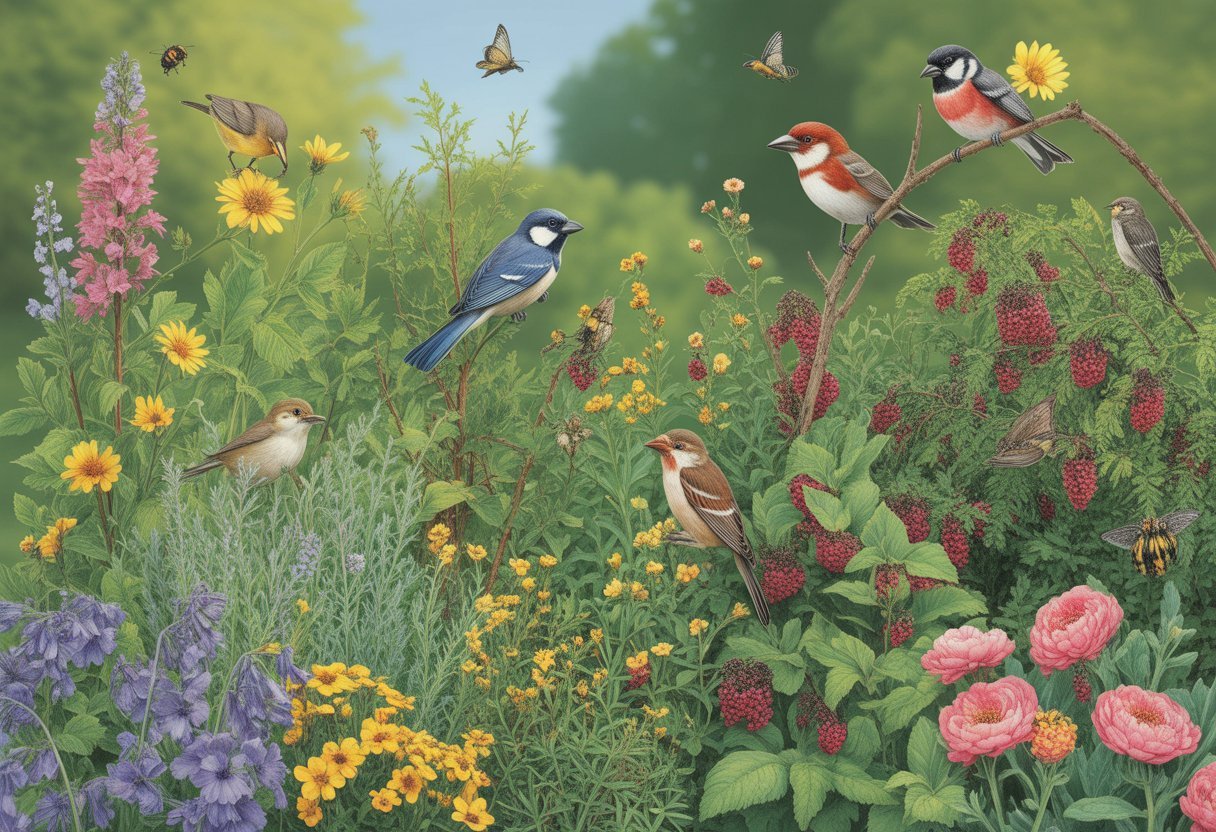
Planting natives is only part of the picture. Clean water, safe places to eat, and protection from threats make a garden truly bird-friendly.
Incorporating Bird Feeders and Birdbaths
Fill your feeders with seeds local birds actually eat—black oil sunflower or millet work well. Hang them at different heights to suit everything from ground-feeding quail to tiny finches.
Don’t forget to clean feeders often. Nobody wants sick birds.
A birdbath with fresh water is a big draw. Pick a shallow basin with a rough bottom so birds can grip it.
Refill water every day if you can, and set baths near shrubs for a quick escape if danger shows up.
Managing Predators and Conservation Practices
Predators, especially cats, can be a real problem. Try to keep cats inside, or use collars with bells to cut down on bird casualties.
Put nest boxes where predators can’t reach them. That way, birds have a better shot at raising their young.
Skip the pesticides and let some areas grow dense and wild. Thickets give birds cover, and leaf litter keeps the insect buffet going for nestlings.
Supporting Pollinators and Beneficial Insects
Native flowering plants attract hummingbirds and butterflies. Both play a big role as pollinators.
These insects help plants reproduce. They also boost food sources for birds—pretty neat how it all connects.
Skip the chemical pesticides if you want to keep helpful bugs around. Add milkweed and other nectar-rich plants to support butterfly larvae and adult pollinators.
When you do this, you end up with a more balanced ecosystem. Songbirds get a little indirect help from all this too.
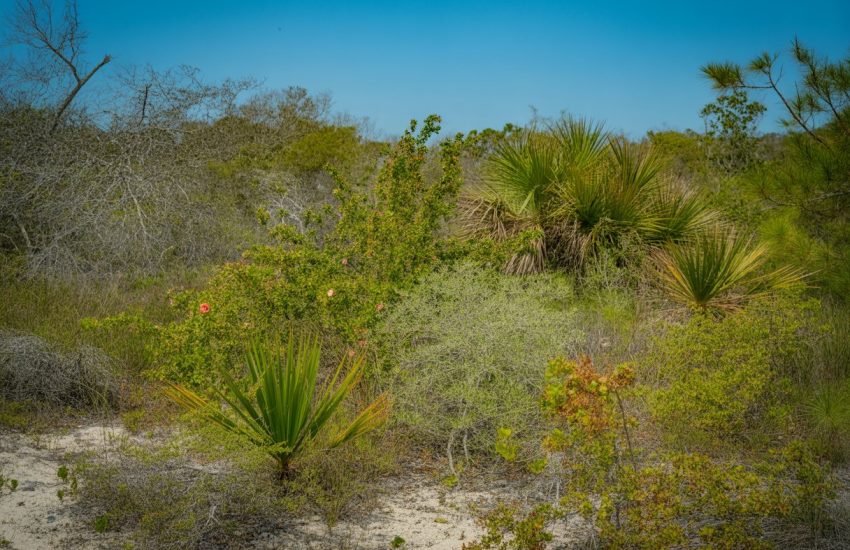
Some of this might be region-specific. What works in the south doesn’t always apply up north.
Appreciate the honest feedback, Michelle. Gardening is definitely more nuanced than any single article can cover. Local conditions play a huge role. -Plant Native Team