Our Favorite 5 Indoor Plant Fertilizers for 2026: Top Picks for Thriving Houseplants
We independently select all products and services. If you click through links we provide, Plant Native may earn a commission with no extra cost to you.
Last updated: November 8, 2026
Indoor plants bring life and beauty to our homes, but to thrive, they need proper nutrition. Fertilizers provide essential nutrients that may be lacking in potting soil, helping plants grow strong and vibrant.
Regular fertilization can promote lush foliage, vibrant blooms, and overall plant health.
When choosing a fertilizer for indoor plants, it’s crucial to consider the nutrient balance, form, and ease of application.
Indoor plant fertilizers typically come in liquid, granular, or slow-release formulations. Each type has its advantages, and the best choice often depends on the specific plants you’re growing and your care routine.
We tested numerous indoor plant fertilizers to find the ones that deliver consistent results across various plant types. Our top picks stood out for their effectiveness, ease of use, and value for money.
Our Favorite 5 Indoor Plant Fertilizers for 2026
We’ve carefully selected the top indoor plant fertilizers to help your houseplants thrive in the coming year. Our list includes options for various plant types and feeding needs, ensuring you’ll find the perfect fertilizer to keep your indoor garden lush and healthy.
Our top pick

- Slow-release pellets feed for months at a time
- Balanced mix of macro and micronutrients, urea free
- Works in bark, sphagnum moss, perlite and other potting mixes
- Easy for beginners: no mixing or measuring water
Cons
- Small 5 oz pouch for a large plant collection
- Slower to show results than a liquid feed
The Grow Co Indoor Plant Food is our top pick for low-effort feeding. Its balanced blend of macro and micronutrients releases gradually, so one application covers months of care for most common houseplants.
Best for indoors
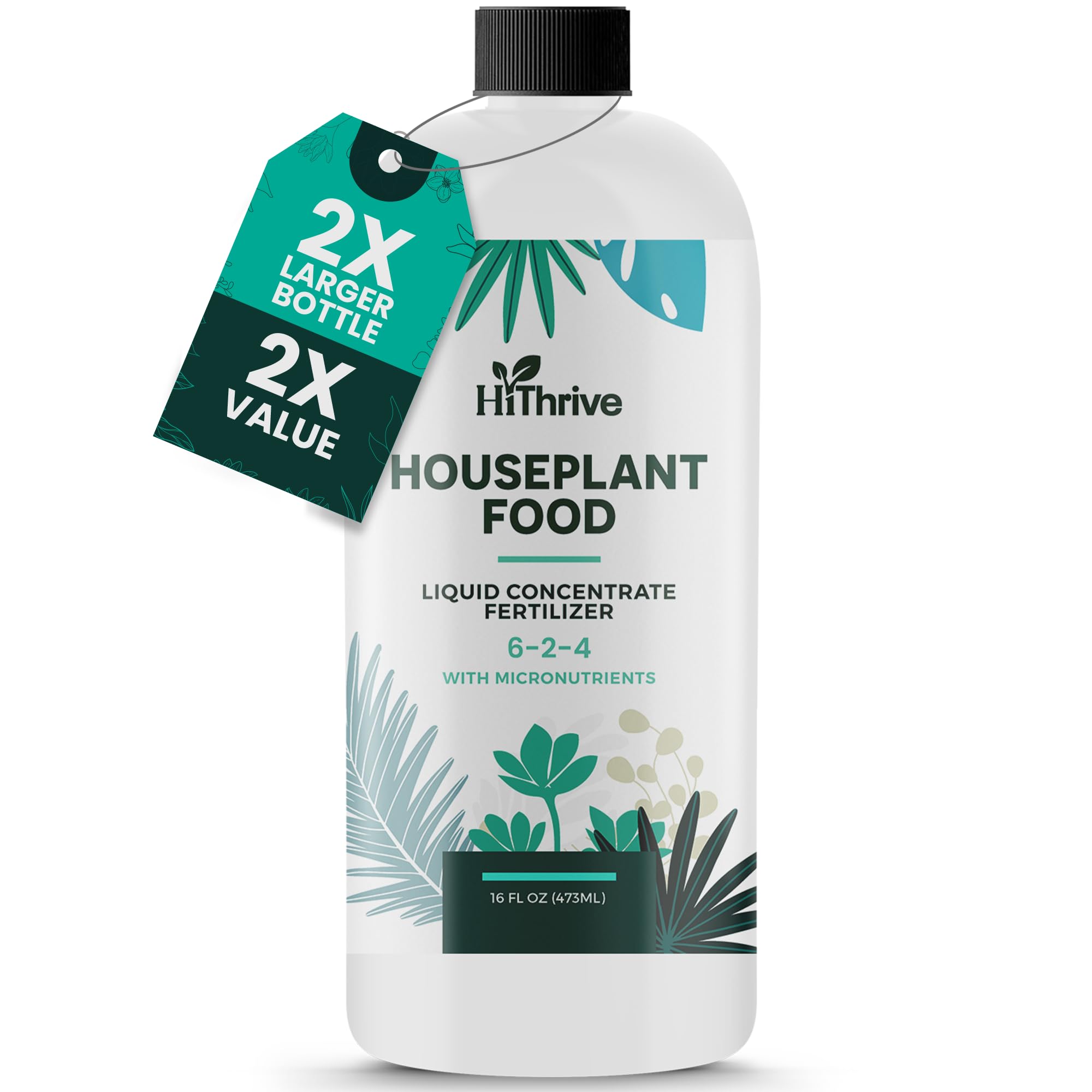
- Fast-acting liquid feeds plants instantly
- Makes 85+ gallons at 1 teaspoon per gallon
- Can be used as a foliar spray or for water propagation at a lower dose
Cons
- Needs measuring and mixing at every feeding
- Not a slow-release option; repeat feeding required
Its 6-2-4 NPK ratio is nitrogen-forward for green, leafy growth, and the liquid form is absorbed quickly. Because it is concentrated, one bottle goes a long way for a large houseplant collection.
Most versatile
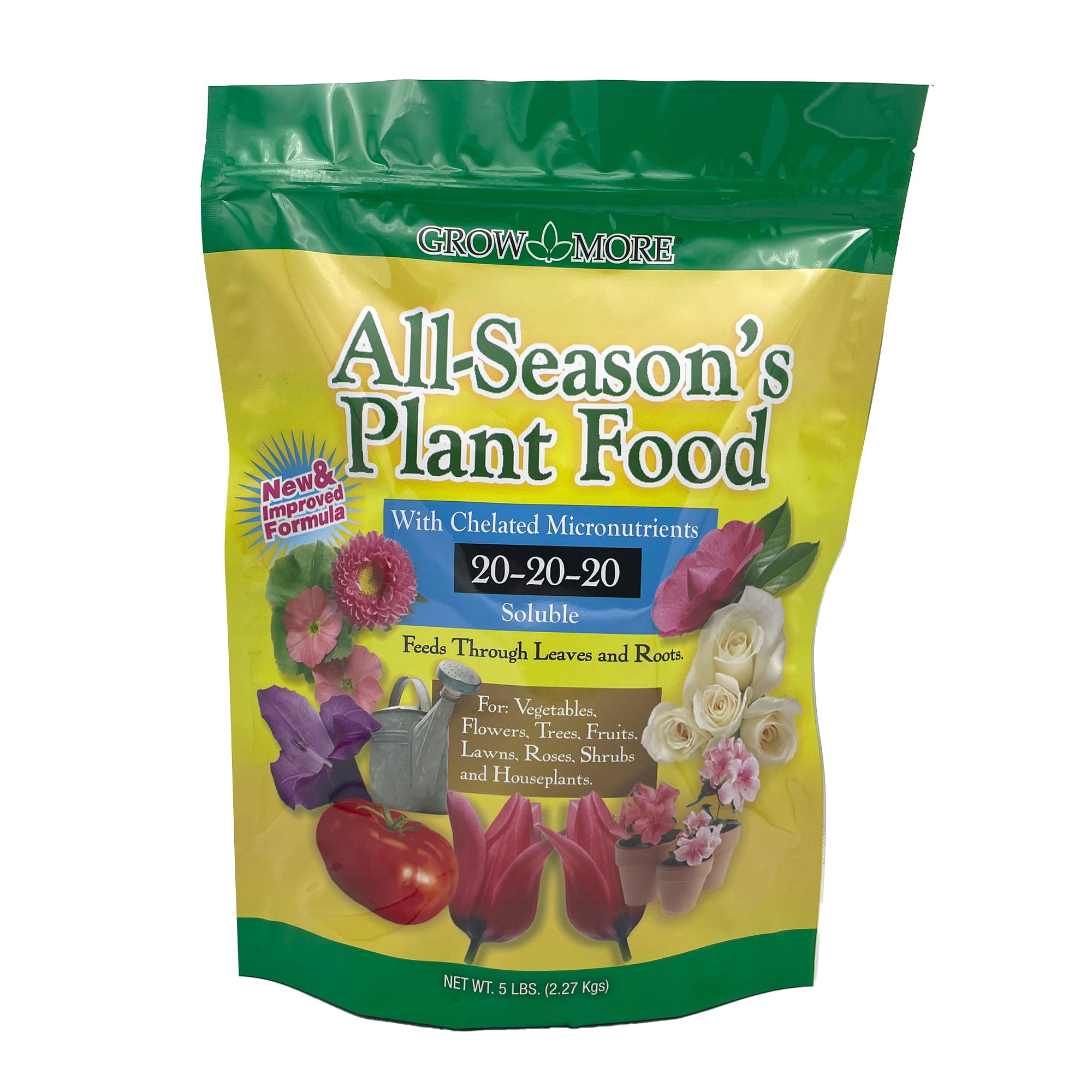
- Balanced 20-20-20 formula for every growth stage
- Chelated micronutrients for easier uptake
- Dissolves quickly for soil or foliar feeding
- 5 lb bag is a strong value for big collections
Cons
- 5 lb is more than most small indoor collections need
- Synthetic soluble salts; measure carefully to avoid overfeeding
The 20-20-20 balanced formula supplies essential nutrients through the year for both indoor and outdoor plants. While the 5-pound bag offers great value, it might be more than necessary for those with smaller plant collections.
Best compact option
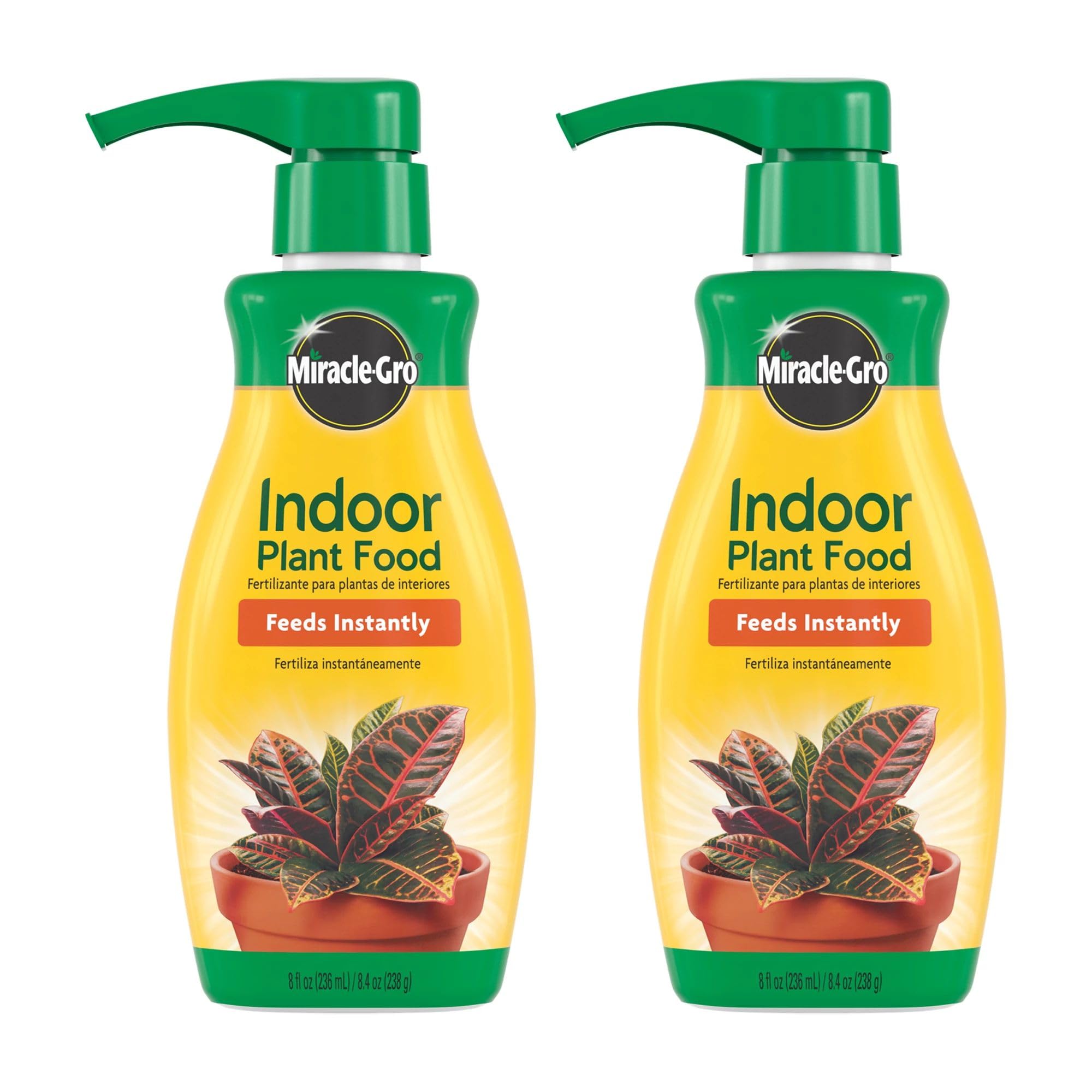
- Pump directly onto the soil: 1 pump for small pots, 2 for large
- Feeds plants instantly
- Labeled for houseplants plus indoor vegetables and herbs
- Two 8 oz bottles included
Cons
- Needs regular reapplication
- Less economical per feeding than a bulk concentrate
Miracle-Gro Indoor Plant Food is the simplest liquid option here: no mixing is needed if you pump it straight onto the soil, or you can dilute 4 pumps per quart of water. For tight quarters, it is a smart, space-efficient pick.
Best for edibles
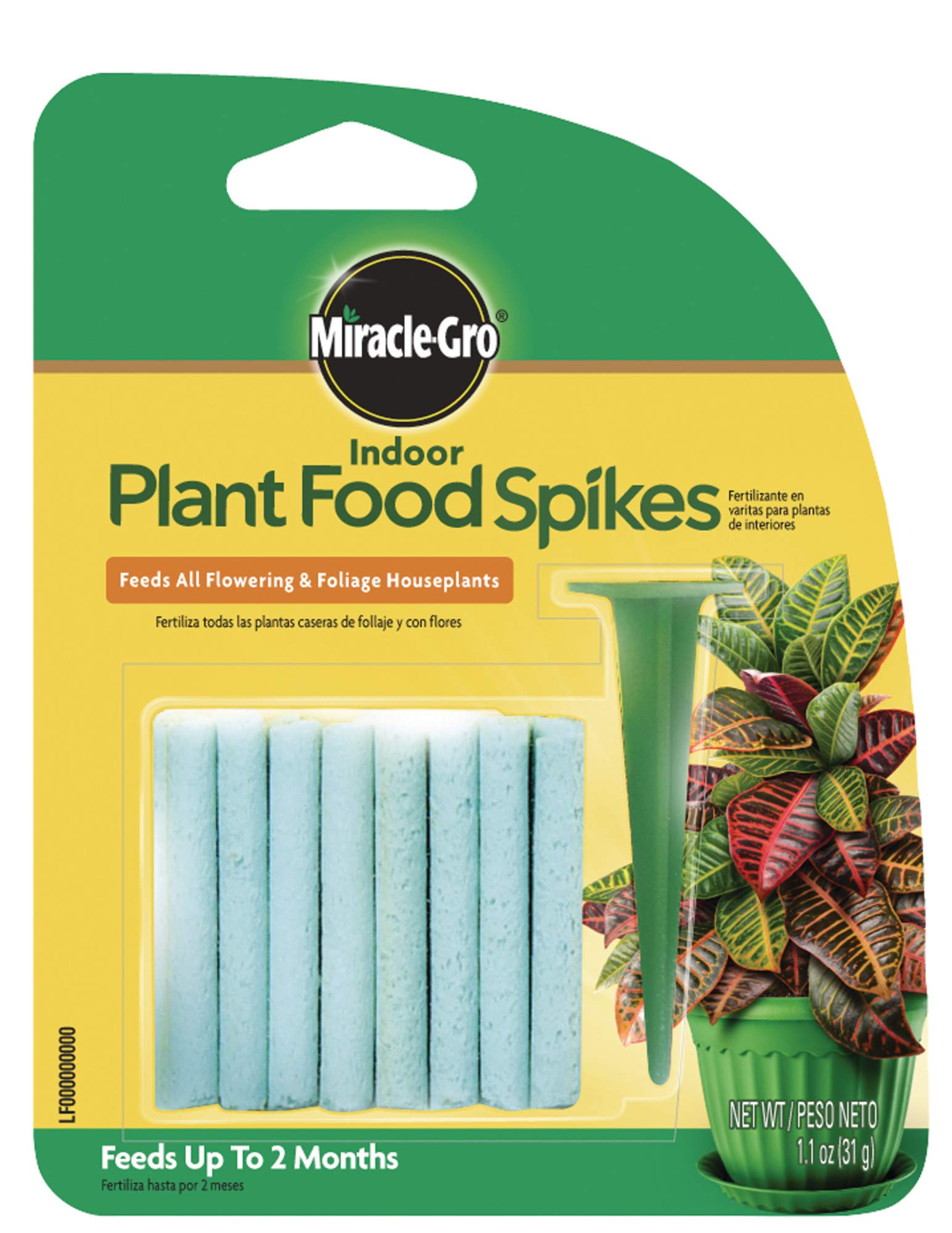
- No measuring or mixing: just push into the soil
- Feeds continuously for up to 2 months
- Contains micronutrients houseplants need
- Very low cost per pot
Cons
- Nutrients concentrate near the spike rather than spreading evenly
- Harder to adjust the dose for very small pots
Miracle-Gro Indoor Plant Food Spikes are a hassle-free way to keep houseplants fed. Each pack holds 24 spikes, and one round of feeding lasts up to two months.
Buying Guide
When selecting an indoor plant fertilizer for 2026, we recommend considering several key factors to ensure optimal plant health and growth.
Nutrient Ratio
Look for a balanced NPK (Nitrogen, Phosphorus, Potassium) ratio suitable for your specific plants. Most indoor plants thrive with a 3-1-2 or 5-5-5 ratio.
Form
Choose between liquid, granular, or slow-release fertilizers based on your preferences and plant needs.
| Form | Advantages |
|---|---|
| Liquid | Easy to apply, fast-acting |
| Granular | Long-lasting, less frequent application |
| Slow-release | Provides nutrients over time, reduces risk of over-fertilizing |
Organic vs. Synthetic
Decide between organic and synthetic fertilizers. Organic options are eco-friendly but may have a milder effect, while synthetic fertilizers offer precise nutrient control.
Micronutrients
Check for essential micronutrients like iron, manganese, and zinc, which support overall plant health.
Ease of Use
Consider fertilizers with clear instructions and easy application methods to simplify your plant care routine.
Plant Compatibility
Ensure the fertilizer is suitable for your specific indoor plants. Some may have unique nutritional requirements.
By carefully evaluating these factors, we can select the most appropriate indoor plant fertilizer for our green companions in 2026.
Related: 5 Best Folding Garden Kneelers with Tool Storage: Top Picks for Comfortable Gardening in 2026
We independently select all products and services. If you click through links we provide, Plant Native may earn a commission with no extra cost to you. As an Amazon Associate I earn from qualifying purchases.