
Native Hedgerows for Birds Enhancing Habitat and Biodiversity
Last updated: September 7, 2026
Native hedgerows play a big role in supporting bird populations. They offer food, shelter, and nesting sites—basically, everything a bird could want.
A vital habitat of native plants attracts insects and produces berries, giving birds what they need to thrive.
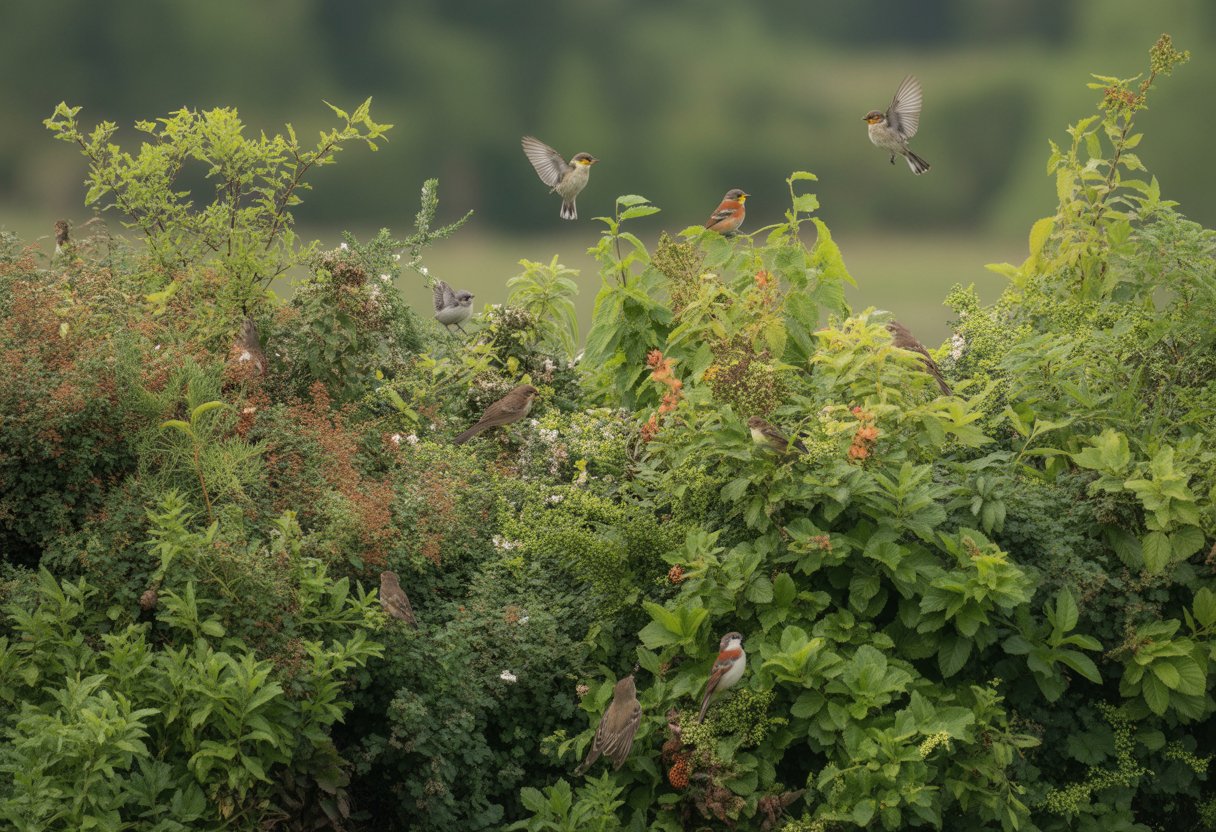
Birds use these hedges for protection from predators. They also move safely between larger natural areas, using the hedgerows as corridors.
When you add native plants to hedgerows, you help keep the ecosystem balanced and resilient. Local wildlife benefits in a way that really feels tangible.
If you want to support bird diversity, it helps to understand how native hedgerows function. Gardeners and conservationists can create spaces that genuinely make a difference for birds.
Why Native Hedgerows Benefit Birds
Native hedgerows support birds year-round by offering shelter, food, and water. They host a mix of insects and plants that keep local wildlife going.
These structures give birds safe places to nest and raise young. Reproduction and survival get a boost with hedgerows around.
Shelter and Nesting Sites
Dense cover from native hedgerows protects birds from predators and tough weather. Twigs, leaves, and branches create perfect nesting spots for species like sparrows, wrens, and finches.
Multiple layers of vegetation let different birds find their own space for shelter and breeding. The variety also draws in insects, which only adds to the habitat’s richness.
Year-Round Food Supply
Hedgerows filled with native plants give birds nectar, seeds, and berries across the seasons. Even during lean times, birds can find something to eat.
Many native shrubs attract insects, a protein source for insect-eaters. Plants like hawthorn, blackthorn, and elder stagger their fruiting, so there’s always something ripe.
Flowering natives bring in pollinators, offering nectar for hummingbirds and other nectar feeders. This mix of fruit and insects keeps a wide range of birds fed all year.
Water Availability and Birdbaths
Native hedgerows catch rainfall and dew, creating moist little pockets that wildlife love. Sometimes, water pools in low spots or leaf axils, making natural birdbaths.
Birds need water for drinking and keeping their feathers in good shape. If you put a birdbath near a hedgerow, you’re almost guaranteed to get more bird visitors.
The close combo of shelter, food, and water really makes hedgerows a hotspot for birds.
Choosing the Best Native Shrubs and Plants
Picking native shrubs and plants is a balancing act. You want structure, food sources, and habitat that suit birds all year.
Look for species that offer cover, attract pollinators, and produce fruit or berries. It’s not always easy, but it’s worth it.
Flowering Shrubs and Evergreens
Flowering natives like lilac and ceanothus attract insects that birds eat. Evergreens such as manzanitas and mountain mahogany keep their cover through winter, which is a big deal when it’s cold out.
Flowering shrubs help with nesting, while evergreens give birds a safe hideout year-round. Mixing both types makes the hedgerow a true refuge and a reliable food source.
Their leaves and branches break down over time, adding organic matter to the soil. That’s good news for the whole hedgerow.
Berry- and Fruit-Producing Species
Plants like elderberry, native roses, and some ceanothus types offer berries and fruits, which birds especially need in fall and winter. When insects vanish, these fruits keep birds going.
It helps to plant several berry- and fruit-producing shrubs with different ripening times. Birds like thrushes and waxwings really depend on them.
Supporting Pollinators and Beneficial Insects
Native flowering plants bring in pollinators like bees and butterflies. Birds eat these insects, so you’re supporting two groups at once.
Species such as ray hartman ceanothus are especially good for native insects. A variety of blooming times means pollinators and insect-eating birds always have something to stick around for.
Considerations for Fast-Growing and Mature Size
When you pick shrubs, keep growth rate and mature size in mind. Fast-growers like certain manzanitas fill in space quickly but might need some pruning.
Mature size affects how dense your hedgerow gets and how easy it is for birds to use. Mixing slow and fast growers gives you quick cover and long-term stability.
Leave enough space between plants for sunlight and air flow. That way, you help prevent disease and keep the hedgerow healthy.
Design and Management of Hedgerows for Birds
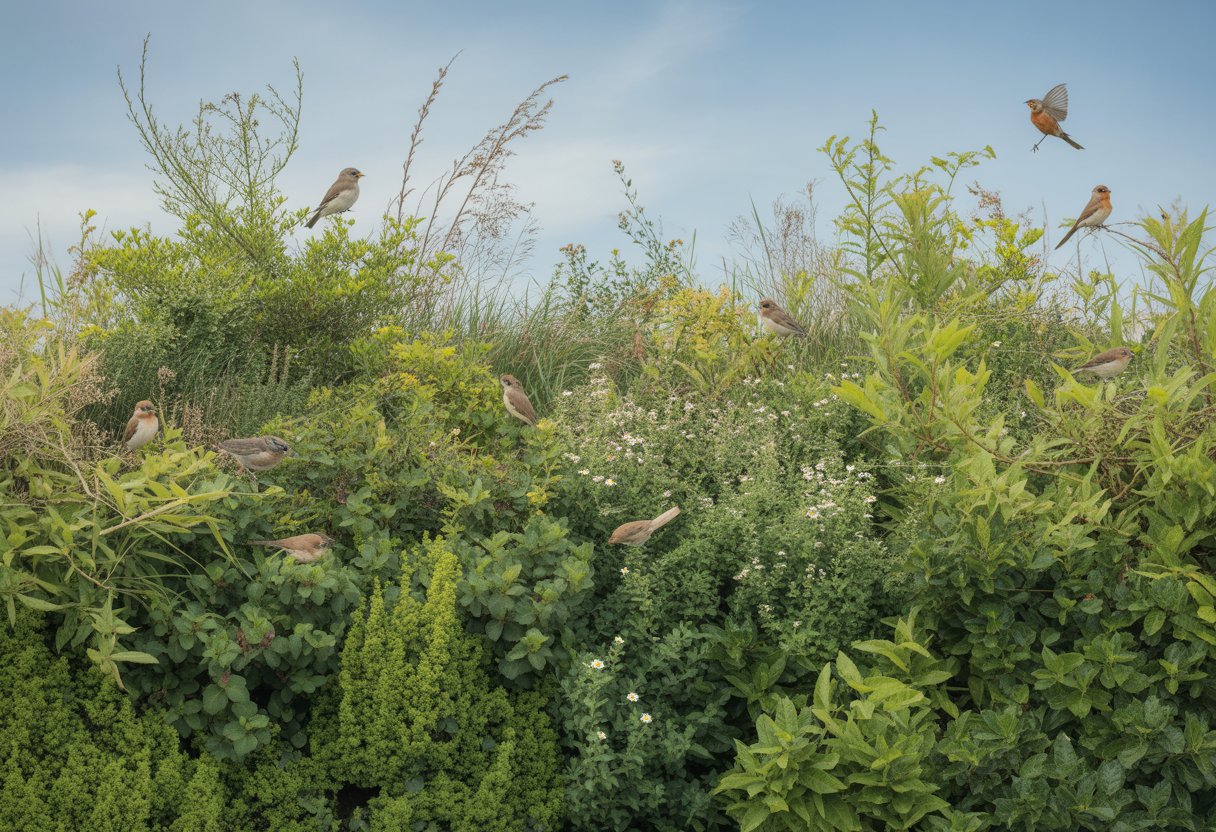
Good hedgerow design blends smart planting with regular care. The right mix of species, structure, and pruning keeps things lively for birds and even gives you privacy or a windbreak.
Hedgerow Design Principles
A strong hedgerow uses mixed native species for food and shelter all year. Shrubs and small trees like hawthorn, blackthorn, and holly attract a variety of birds.
Aim for a width of at least 2-3 meters for thick growth and predator protection. Vary the height from 1.5 to 3 meters to create layers.
Placing hedgerows along field edges or garden borders makes them great windbreaks and wildlife corridors. Don’t plant everything in neat rows—irregular gaps add complexity and better hiding spots.
Planting Techniques and Care Instructions
Plant during the dormant season—late autumn to early spring works best. That way, plants settle in with less stress.
Clear weeds and loosen the soil before you start. Use a mix of young plants (whips) spaced about 30-45 cm apart.
Water right after planting and mulch with organic stuff to keep moisture in and weeds down. Protect young plants from deer and rabbits with guards or fencing.
Keep an eye on soil moisture and water during dry spells. It’s easy to forget, but it makes a huge difference.
Practical Maintenance and Pruning Tips
Regular maintenance keeps your hedgerow healthy and bird-friendly. Prune once a year in late winter to encourage dense branches and control height.
Try the traditional “laying” technique, or just avoid chopping the tops too much—birds like a thick base. Cut out dead or diseased wood as soon as you spot it.
Don’t prune during bird breeding season (March to August). Always check for nests before you start any heavy work.
Ensuring Longevity and Protection
Check your hedgerows regularly. That way, you’ll spot disease, invasive species, or even signs of trespassers before things get out of hand.
Put up barriers or use natural deterrents to keep people and animals from messing with your plants. Sometimes a simple fence does the trick, but other times you’ll want to get creative.
Over time, add new plants to fill in gaps left by damage or loss. This keeps your hedgerow looking full and healthy.
Keep the soil in good shape by tossing on compost or spreading organic mulch. It’s not fancy, but it works.
Chat with your neighbors about preserving hedgerows that connect across properties. Wider corridors really help wildlife, and it’s honestly just nice to have some green continuity.
Depending on where you live, some hedgerows might be protected by law. It’s worth checking local rules so you don’t accidentally run into trouble.
Decent overview. If you’re just starting out this covers the basics well enough.