
Western Stoneseed (Lithospermum ruderale)
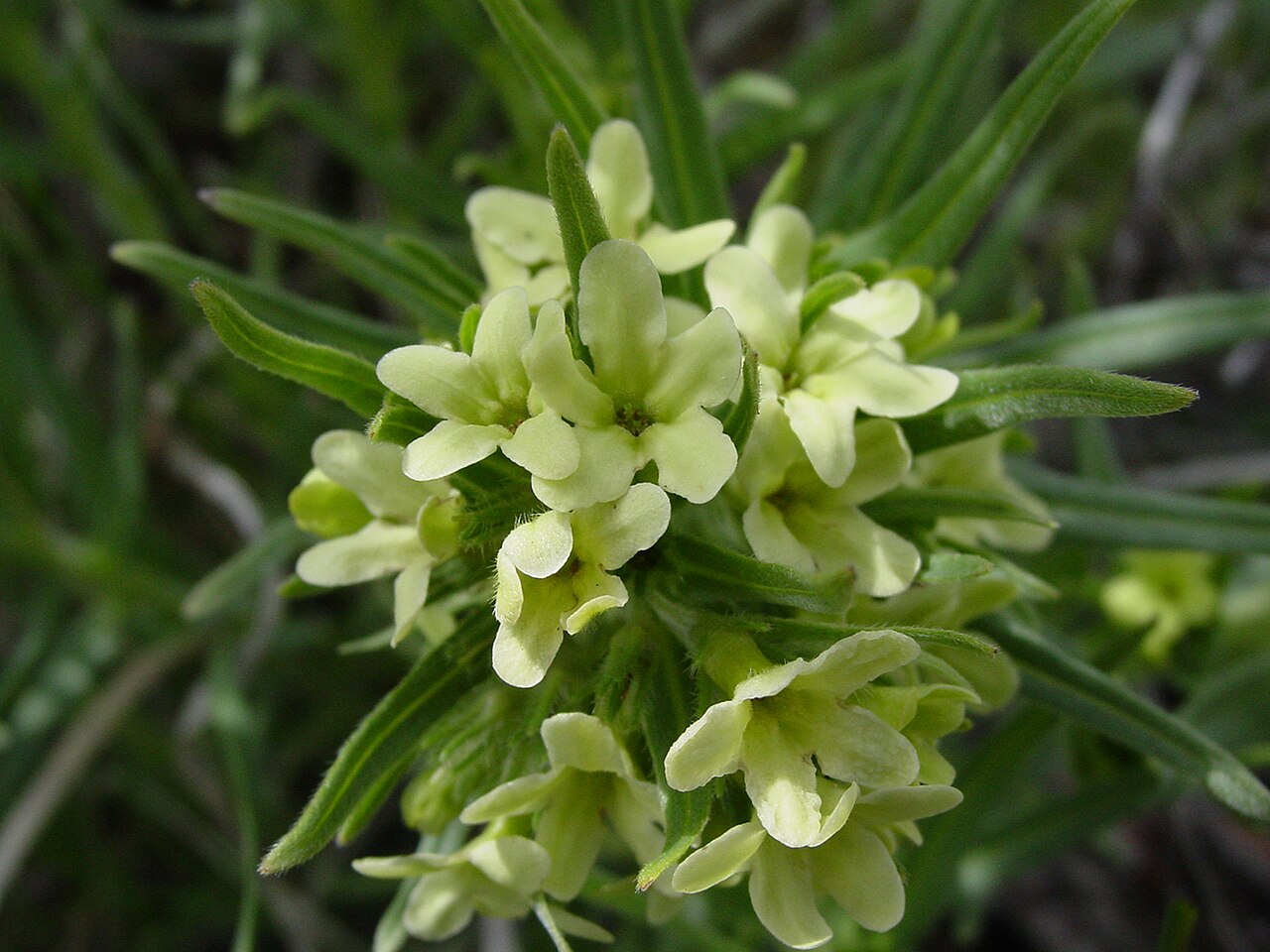
Lithospermum ruderale, known as Western Stoneseed, is a native perennial wildflower of the borage family (Boraginaceae). It is also called western gromwell, wayside gromwell, lemonweed and puccoon. It forms bushy clumps of many leafy, gray-green, coarsely hairy stems, and in spring it produces clusters of small, pale yellow to greenish-yellow flowers tucked among the upper leaves.
Western stoneseed is a plant of the dry interior West. It grows in sagebrush steppe, grasslands, juniper woodlands and open ponderosa pine and Douglas-fir forests from British Columbia and Alberta south to northeastern California, Nevada, Utah and Colorado. It blooms from about April to June, and its name comes from its very hard, shiny, stone-like seeds.
This tough, long-lived plant grows from a deep taproot and is very drought tolerant once established. It is a good choice for dry native gardens, rock gardens and restoration plantings in the Intermountain West, where its early flowers feed native bees and its mounding form adds texture among bunchgrasses.
Identification
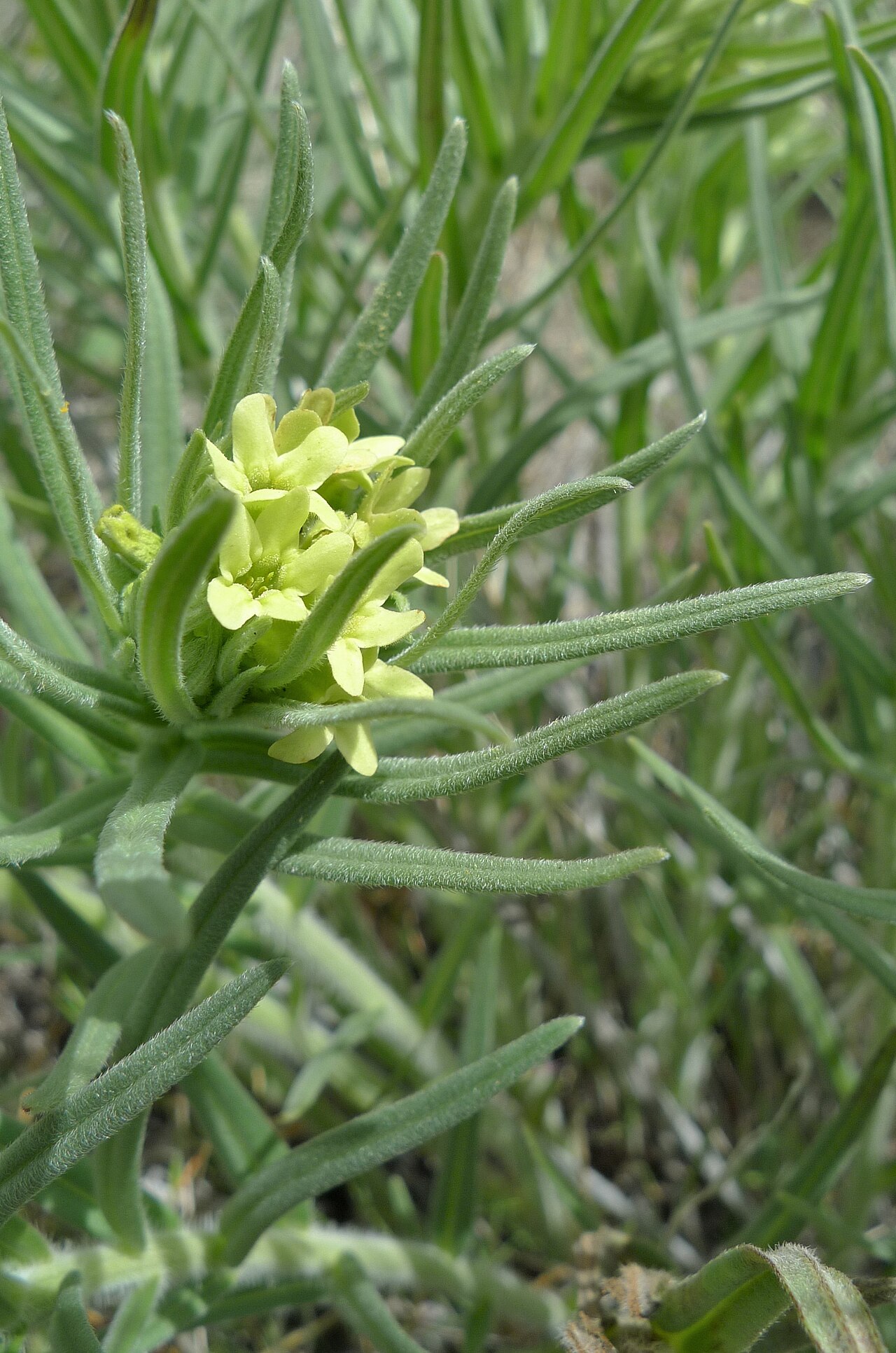
Western stoneseed is a bushy, clumping perennial. Look for many unbranched, leafy stems densely covered in narrow, lance-shaped, rough-hairy leaves, and small pale yellow tubular flowers clustered among the upper leaves in spring.
Stems & Growth Habit
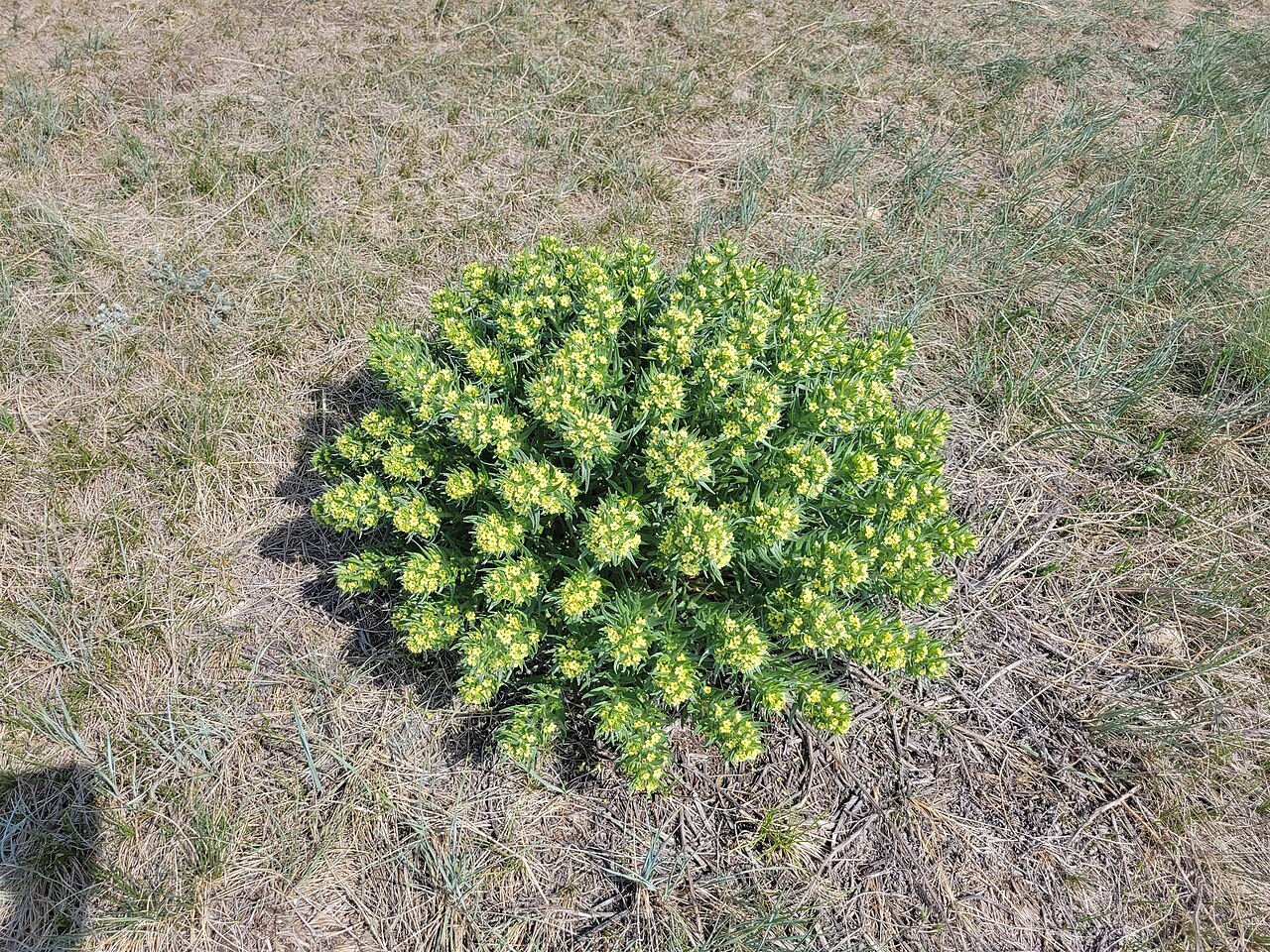
The plant grows from a stout taproot and woody base and sends up a cluster of upright or arching stems about 8 to 24 inches tall. The stems are densely leafy and covered with fine, stiff hairs. Older plants form rounded clumps 1 to 2 feet or more across.
Leaves
The leaves are alternate, stalkless, narrowly lance-shaped and about 1 to 4 inches long. They are gray-green and rough to the touch, with stiff hairs pressed against the surface. The leaves crowd closely along the stems, especially toward the top.
Flowers
The flowers grow in leafy clusters near the tops of the stems, partly hidden among leaf-like bracts. Each flower is a short tube that opens into five rounded lobes, about 1/3 inch across, pale yellow, cream or slightly greenish. The flowers have a faint lemony scent, which may explain the name lemonweed. Bloom time is about April to June.
Fruit & Seeds
Each flower can produce up to four nutlets, though usually only one to three mature. The nutlets are hard, smooth, glossy and gray to white, about 1/4 inch long, and look like small polished stones or teeth. This feature gives the genus its name: Lithospermum means “stone seed.”
Look-alikes
Narrowleaf puccoon (Lithospermum incisum) has bright yellow flowers with long tubes and frilly, toothed petal edges. Hoary puccoon (Lithospermum canescens) of the Great Plains and East has bright orange-yellow flowers. Western stoneseed’s pale, small flowers hidden among the leaves and its bushy, gray-green clumps set it apart.
Safety
Western stoneseed contains compounds that have shown hormone-like effects in laboratory animals, and it has a history of use as a contraceptive. Do not eat or drink preparations of this plant, especially if pregnant or trying to conceive. Like many plants in the borage family, it may also contain pyrrolizidine alkaloids, which can harm the liver.
Quick Facts
| Scientific Name | Lithospermum ruderale |
| Family | Boraginaceae (borage family) |
| Plant Type | Herbaceous perennial wildflower |
| Mature Height | 8–24 in |
| Mature Spread | 1–2 ft |
| Growth Rate | Slow |
| Sun Exposure | Full sun to light shade |
| Water Needs | Low |
| Soil Type | Well-drained sandy, gravelly or rocky soil |
| Soil pH | Neutral to alkaline |
| Bloom Time | April–June |
| Flower Color | Pale yellow to greenish-yellow |
| Fall Color | None; foliage dries to tan in late summer |
| Fruit | Hard, glossy gray-white nutlets |
| Deer Resistant | Yes; rough, hairy foliage is seldom browsed |
| USDA Hardiness Zones | 3–8 |
Native Range
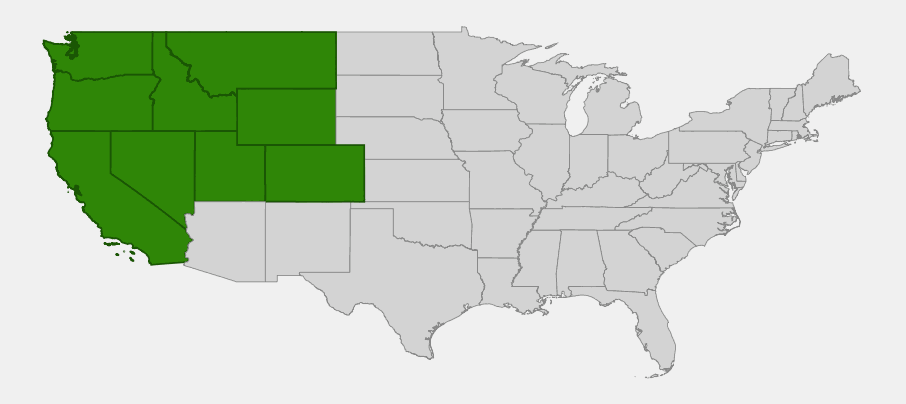
Western stoneseed is native to western North America. USDA PLANTS lists it as native in California, Colorado, Idaho, Montana, Nevada, Oregon, Utah, Washington and Wyoming, and in Canada in British Columbia, Alberta and Saskatchewan. The Lady Bird Johnson Wildflower Center describes its range as northeastern California to western Colorado and north to western Canada.
It is most common east of the Cascades and Sierra Nevada, in the Columbia Basin of eastern Washington and Oregon, the Snake River Plain and foothills of Idaho, western Montana, Wyoming and the mountains and plateaus of Nevada, Utah and western Colorado. In California it is found mainly in the northeastern part of the state, on the Modoc Plateau and east of the Sierra.
It grows in open, sunny and usually dry places: sagebrush steppe, bunchgrass grasslands, juniper and pinyon woodlands, open ponderosa pine and Douglas-fir forests, rocky slopes and roadsides. It often increases after fire, resprouting from its deep taproot.
📋 Regional plant lists featuring Western Stoneseed: Idaho, Eastern Oregon & Eastern Washington · Montana & Wyoming · Utah & Western Colorado · California & Nevada
Growing & Care Guide
Western stoneseed is a tough, long-lived plant for dry gardens in the Intermountain West. It is not common in nurseries, but seed is sometimes available from native seed suppliers in the region. Because of its deep taproot, start it from seed or small containers and plant it where it can stay.
Light
Full sun is best. It also grows in the light shade of open pine woods, but becomes leggier and blooms less in deeper shade.
Soil & Water
It needs well-drained soil: sandy, gravelly or rocky soils are ideal, and it tolerates neutral to alkaline conditions. Water young plants during their first summer; once established it needs little or no supplemental water in its native range. Avoid rich, heavy, wet soil, which can cause root rot.
Planting Tips
Sow seed outdoors in fall so it gets a natural winter chill, or plant small container-grown plants in spring. Space plants about 2 feet apart and pair them with bunchgrasses and other dryland wildflowers. Avoid disturbing the taproot when transplanting.
Pruning & Maintenance
No pruning is needed. The stems dry to tan in late summer; leave them standing for winter interest and wildlife, or cut them back in fall or early spring. Plants are slow to establish but very persistent once rooted.
Propagation
Grow it from seed. The hard nutlets germinate slowly and benefit from a long cold, moist period: sow outdoors in fall or give seed 2 to 3 months of cold stratification in the refrigerator before spring sowing. Seedlings may take two or three years to reach flowering size.
Landscape Uses
- Dry native gardens: a long-lived, drought-tolerant clump for xeric plantings
- Rock gardens: gray-green mounds among rocks and bunchgrasses
- Sagebrush steppe restoration: a native forb for rangeland and post-fire seeding mixes
- Pollinator gardens: early-season nectar and pollen for native bees
- Wildlife plantings: seeds for ground-feeding birds and small mammals
Wildlife & Ecological Value
In the dry country where it grows, western stoneseed is one of the early-blooming forbs that support pollinators and wildlife among the sagebrush and bunchgrasses.
For Pollinators
The pale yellow flowers are visited by native bees, including bumble bees and small solitary bees, as well as butterflies; the Lady Bird Johnson Wildflower Center lists it as attracting butterflies. Its spring bloom supports pollinators at a time when many steppe plants are just beginning to flower.
For Birds
Ground-feeding birds such as sparrows, quail and grouse may eat the hard nutlets that fall near the plant, and the clumps give cover to small birds and insects.
For Mammals
The rough, hairy leaves are not a preferred browse for deer or livestock. Rodents gather and cache the hard seeds, helping to disperse them.
Ecosystem Role
As a deep-rooted perennial forb, western stoneseed helps hold soil on dry slopes and resprouts after fire. It adds plant diversity to sagebrush and grassland communities that are often dominated by a few grasses and shrubs.
Cultural & Historical Uses
Western stoneseed is well known in ethnobotany. Several Native American peoples, including the Shoshone and Navajo, are reported to have used preparations of the plant as a contraceptive. In the 1940s, laboratory studies found that extracts of the plant reduced fertility in mice, which drew scientific interest in its hormone-like compounds. This is a historical and scientific note, not a recommendation for use.
Plains and Plateau peoples also used the roots in other ways: the roots were used medicinally for coughs and colds and were reportedly cooked and eaten. The name puccoon, an Algonquian word for plants that yield dye, has been applied to several Lithospermum species, whose roots give a purple-red dye.
The genus name Lithospermum comes from Greek words meaning “stone” and “seed,” for the hard, polished nutlets. The species name ruderale means “growing in waste places” or along roadsides, reflecting its habit of growing in disturbed, open ground.
Frequently Asked Questions
Why is it called stoneseed?
Its seeds are hard, smooth, glossy nutlets that look like tiny polished stones. The genus name Lithospermum means “stone seed” in Greek.
Is western stoneseed drought tolerant?
Yes. It grows from a deep taproot in dry sagebrush steppe and grasslands and needs little or no extra water once established in its native range.
Is western stoneseed poisonous?
It is not known as a major poisonous plant, but it contains compounds with hormone-like effects and may contain pyrrolizidine alkaloids. Do not eat it or make teas from it, especially if pregnant.
When does western stoneseed bloom?
It blooms from about April to June, depending on elevation, with pale yellow flowers tucked among the upper leaves.
How is it different from narrowleaf puccoon?
Narrowleaf puccoon has showy, bright yellow flowers with long tubes and frilly petal edges. Western stoneseed has smaller, pale yellow to greenish flowers partly hidden among its leaves.

Looking for a nursery that carries Western Stoneseed?
Browse our native plant nursery directory: California · Colorado · Idaho · Montana · Nevada · Oregon · Utah · Washington · Wyoming