
Heartleaf Bittercress (Cardamine cordifolia)
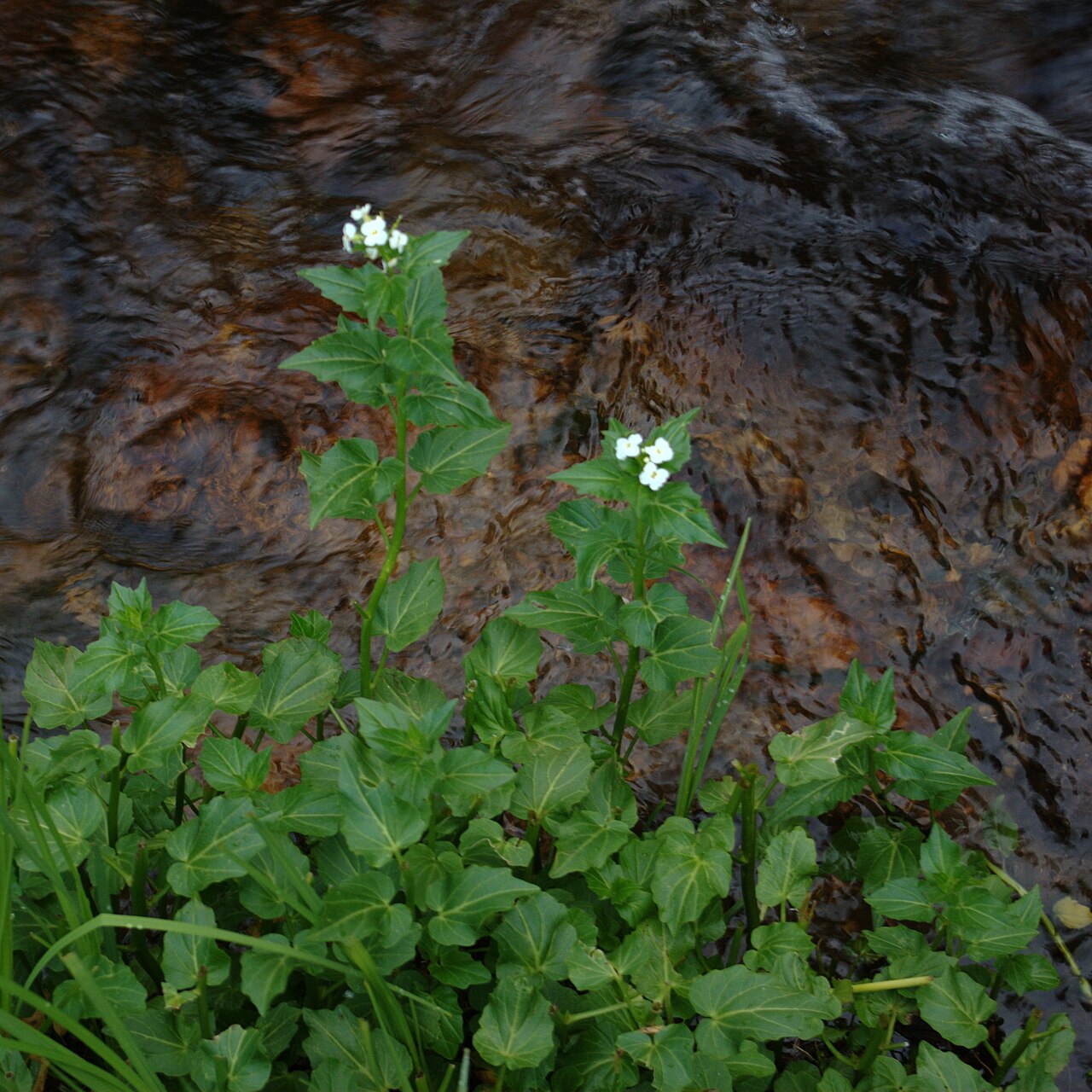
Cardamine cordifolia, known as Heartleaf Bittercress, is a lush, white-flowered wildflower of mountain streambanks, springs and wet meadows in the western United States. From early to late summer its leafy stems carry dense clusters of bright white, four-petaled flowers above broad, heart-shaped leaves, often forming thick patches along icy creeks in spruce-fir forest and subalpine meadows.
It belongs to the mustard family (Brassicaceae), and like other bittercresses it has a peppery, mustard-like taste. It spreads by underground rhizomes and is one of the most common and recognizable wildflowers along streams in the Rocky Mountains, the Sierra Nevada and the Cascades. In the Southern Rockies it is often among the first white flowers hikers notice along trails that follow water.
Heartleaf bittercress is also an important plant for wildlife: it feeds the caterpillars of several white and orangetip butterflies and has been studied for decades by ecologists working in the Colorado Rockies. It is rarely grown in gardens but can be a good fit for wet, shaded spots in mountain landscapes. This guide covers how to identify it, where it grows and how to use it.
Identification
Heartleaf bittercress is easy to recognize: dense patches of upright stems with broad, heart-shaped, toothed leaves and rounded clusters of white, cross-shaped flowers, always in wet ground near water.
Stems & Growth Habit
It is a rhizomatous perennial with upright, unbranched or sparingly branched stems usually 8 inches to 2½ feet tall. Plants spread underground to form dense colonies along streams and seeps. The stems are smooth to slightly hairy and leafy all the way up.
Leaves
The leaves are simple, alternate, rounded to broadly heart-shaped with a notched base, about 1 to 4 inches across, with wavy to coarsely toothed edges. They have distinct leaf stalks and are bright to dark green, smooth or slightly hairy. Unlike many bittercresses, the leaves are not divided into leaflets.
Flowers
The flowers are borne in dense, rounded clusters (racemes) at the stem tips that lengthen as they bloom. Each flower is about ½ to ¾ inch across with four bright white, spoon-shaped petals arranged in a cross, six stamens with yellow anthers, and four small green sepals. It blooms from about June to August, depending on elevation and snowmelt.
Fruit & Seeds
The fruits are slender, upright pods (siliques) about 1 to 1½ inches long. When ripe, the pod walls coil back suddenly and fling the small seeds a short distance, a trait shared by many bittercresses.
Similar Species
Brook saxifrage (Saxifraga odontoloma) shares the same streambanks and has rounded leaves, but its leaves are all basal and its tiny white flowers have five petals. White marsh marigold (Caltha leptosepala) has fleshy, heart-shaped leaves but single, many-parted white flowers. Other western bittercresses have divided leaves or much smaller flowers.
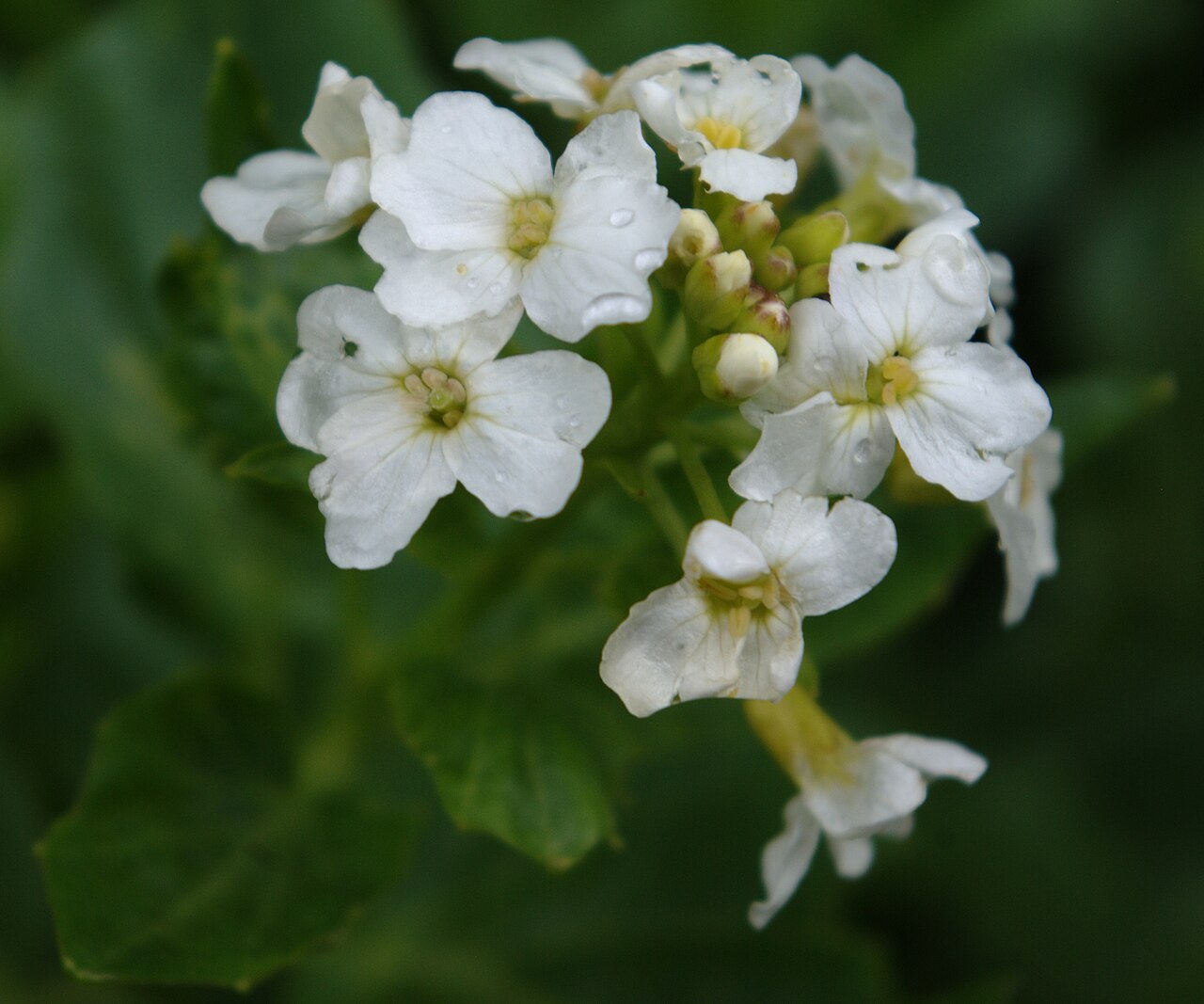
Quick Facts
| Scientific Name | Cardamine cordifolia A. Gray |
| Family | Brassicaceae (mustard family) |
| Plant Type | Herbaceous perennial wildflower, spreading by rhizomes |
| Mature Height | 8 in–2½ ft |
| Mature Spread | 1–2 ft; spreads to form colonies |
| Growth Rate | Moderate |
| Sun Exposure | Part shade to full shade |
| Water Needs | High; constantly moist to wet soil |
| Soil Type | Wet, organic or gravelly soils along streams, seeps and springs |
| Soil pH | About 5.5–7.5 |
| Bloom Time | June–August |
| Flower Color | White |
| Fall Color | None; dies back in fall |
| Fruit | Slender upright pod that coils open to fling seeds |
| Deer Resistant | No; browsed by deer, elk and livestock |
| USDA Hardiness Zones | 3–7 |
Native Range
Heartleaf bittercress is native to the mountains of western North America. USDA PLANTS lists it in Arizona, California, Colorado, Idaho, Nevada, New Mexico, Oregon, Utah, Washington and Wyoming, and it also grows in southern British Columbia. It is especially common in the Southern Rocky Mountains of Colorado, northern New Mexico, Wyoming and Utah, and it also occurs in the Sierra Nevada, the Cascades, the mountains of Idaho, and the high ranges of Nevada and Arizona.
It is a plant of cold, running water and wet ground: streambanks and the edges of creeks, springs and seeps, wet meadows, avalanche chutes, willow thickets and the shaded, wet floor of spruce-fir and aspen forests. It often grows with its roots in the water along small mountain streams.
It is found mainly at montane to subalpine elevations, roughly 5,000 to 12,000 feet, reaching the highest elevations in the Southern Rockies. Botanists have recognized several varieties across its range that differ in hairiness and leaf shape, including var. lyallii in the Pacific Northwest and the Sierra Nevada.
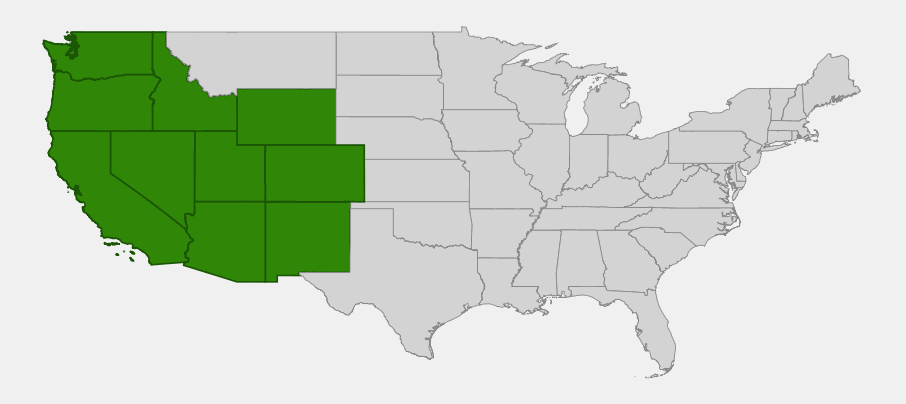
📋 Regional plant lists featuring Heartleaf Bittercress: Western Oregon & Western Washington · Idaho, Eastern Oregon & Eastern Washington · California & Nevada · Arizona & New Mexico · Utah & Western Colorado · Montana & Wyoming
Growing & Care Guide
Heartleaf bittercress is rarely offered by nurseries, but it can be grown in cool mountain gardens with a reliably wet, shaded spot such as a stream edge, spring or bog garden. It does poorly in hot, dry lowland climates. Start it from seed or small divisions from a nursery or your own planting, not by digging from wild streams.
Light
It grows best in part shade to full shade, or in sun only where the soil stays cold and wet. In hot afternoon sun the leaves wilt and scorch.
Soil & Water
It needs soil that stays constantly moist to wet through the growing season: the edge of a stream, pond or spring, a bog garden or a low, shaded spot that collects water. It tolerates gravelly or organic soils and brief flooding but not drought.
Planting Tips
Plant divisions or seedlings in spring after the soil thaws, 12 to 18 inches apart. It pairs well with other mountain streamside plants such as monkshood, mountain bluebells, arrowleaf ragwort and marsh marigold.
Pruning & Maintenance
Little care is needed. Remove old stems in fall or leave them to break down. Keep the soil wet during summer heat. It may spread by rhizomes to fill a wet area.
Propagation
Divide rhizomes in early spring or after flowering. Seed can be sown outdoors in fall in moist soil; it germinates after a cold winter period.
Landscape Uses
- Stream and pond edges: fills wet, shaded banks with green leaves and white flowers
- Mountain and cold-climate gardens: for high-elevation gardens with wet, shaded spots
- Butterfly habitat: larval food for white and orangetip butterflies
- Riparian restoration: stabilizes small streambanks in montane and subalpine zones
- Wild edible interest: its leaves have a peppery mustard flavor; eat only small amounts
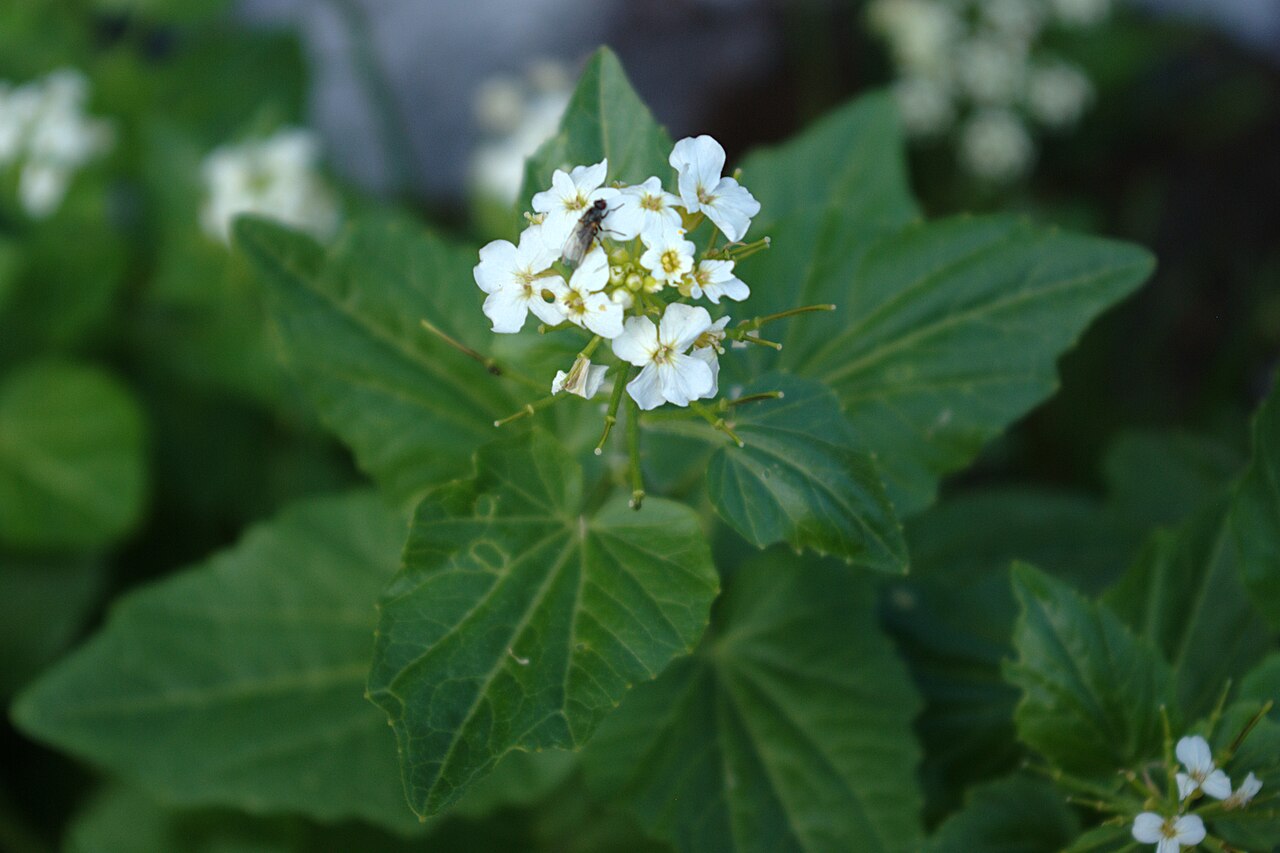
Wildlife & Ecological Value
Heartleaf bittercress is a key plant in mountain stream communities, feeding insects that range from butterflies to specialized leaf-mining flies.
For Pollinators
The white flowers attract small bees, flies, beetles and butterflies. More importantly, the plant is a larval host for butterflies in the white and orangetip family (Pieridae), including the margined white and mustard white group, and some orangetips use it as well.
For Birds
Birds that forage along mountain streams, such as American dippers, warblers and flycatchers, feed on the many insects that live on and around it. Its dense patches provide cover along the water.
For Mammals
Deer, elk, moose, sheep and cattle graze its tender leaves, and pikas and other small mammals may harvest it near rocky streams. Grazing pressure can reduce its patches along heavily used streams.
Ecosystem Role
Its rhizomes help bind soil along small streams and seeps. Ecologists at the Rocky Mountain Biological Laboratory in Colorado have used heartleaf bittercress for decades to study how plants defend themselves against insects, including a leaf-mining fly (Scaptomyza) and butterfly caterpillars, and how sun, shade and water affect those interactions.
Cultural & Historical Uses
Asa Gray described Cardamine cordifolia in the mid-nineteenth century from specimens collected in the Rocky Mountains. The species name cordifolia means “heart-shaped leaf.” The genus name Cardamine comes from an ancient Greek name for a cress-like plant.
Like watercress and other mustards, heartleaf bittercress contains mustard-oil compounds (glucosinolates) that give its leaves a sharp, peppery flavor. Hikers and foragers sometimes nibble the leaves, but plants growing in streams can carry waterborne parasites and contaminants, so any wild greens should be eaten only sparingly and with care.
For mountain hikers it is one of the most familiar streamside wildflowers of summer, a sign that cold, clean water is close by. It is also part of a long research tradition in plant-insect ecology at high-elevation field stations.
Frequently Asked Questions
Where does heartleaf bittercress grow?
Along mountain streams, springs, seeps and in wet meadows and forests across the western United States, from Washington and Idaho south to California, Arizona and New Mexico, mainly from about 5,000 to 12,000 feet.
Is heartleaf bittercress edible?
Its leaves have a peppery mustard flavor and are sometimes eaten in small amounts. Because it grows in streams, wild plants can carry waterborne parasites, so wash greens well and eat them sparingly, and never strip patches in the wild.
When does heartleaf bittercress bloom?
From about June to August, depending on elevation and how early the snow melts.
What butterflies use heartleaf bittercress?
It is a host plant for caterpillars of white and orangetip butterflies (family Pieridae), including the margined white and mustard white group in the Rocky Mountains.
Can I grow heartleaf bittercress in my garden?
Only where you can provide cool, constantly wet soil and shade, such as a stream edge or bog garden in a mountain or cool-summer climate. It does not tolerate hot, dry conditions.

Looking for a nursery that carries Heartleaf Bittercress?
Browse our native plant nursery directory: Arizona · California · Colorado · Idaho · Nevada & New Mexico · Oregon · Utah · Washington · Wyoming

