
Brook Saxifrage (Saxifraga odontoloma)
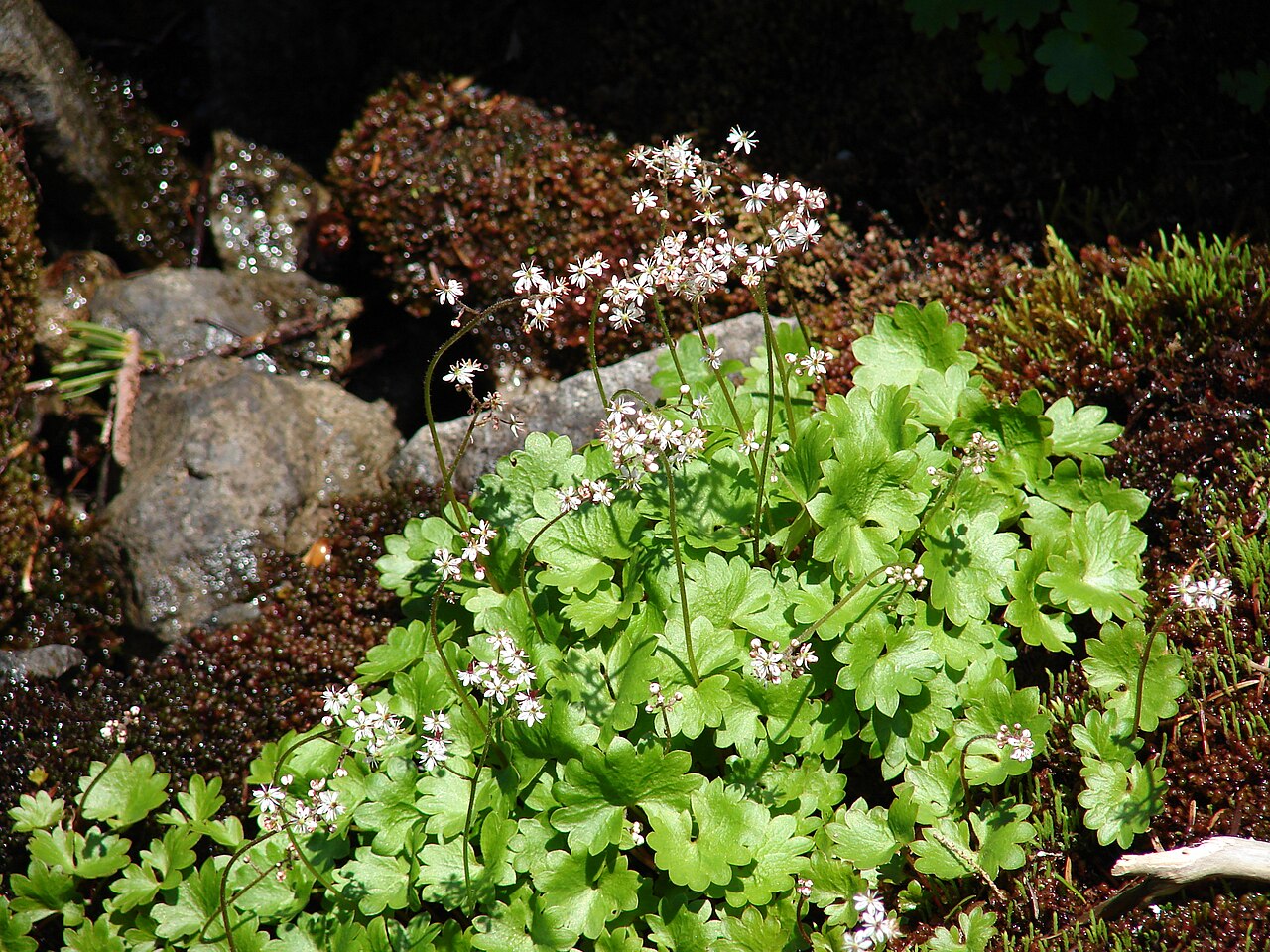
Saxifraga odontoloma, known as Brook Saxifrage (also streambank saxifrage), is a perennial wildflower of cold mountain streams in western North America. It forms lush clumps of round, scalloped leaves on long stalks, right at the water’s edge, and in summer sends up slender, reddish stalks with airy sprays of small white flowers. Many botanists now place it in the genus Micranthes, as Micranthes odontoloma, and older books call it Saxifraga arguta or S. punctata subsp. arguta.
It belongs to the saxifrage family (Saxifragaceae). The rounded, toothed leaves look a little like those of a small geranium or coltsfoot, and the dainty flowers, with their white, club-shaped stamens and dark red centers, reward a close look. It grows from the mountains of British Columbia and Alberta south through the Cascades, Sierra Nevada and Rocky Mountains to Arizona and New Mexico, mostly at middle to high elevations.
Brook saxifrage is a plant for hikers to enjoy along subalpine creeks, springs and waterfalls. In gardens it needs constantly moist, cool conditions, such as a shaded streamside, bog or pond edge, and does poorly in hot, dry lowland gardens. Buy plants or seed from native or alpine specialists and never dig plants from the wild.
Identification
Look for clumps of round, coarsely toothed basal leaves on long stalks beside cold running water, with leafless reddish flower stalks carrying loose clusters of small white flowers.
Growth Habit
A clump-forming perennial that grows from a stout, scaly rhizome. All the leaves are basal. The flowering stalks are leafless, slender, often reddish and glandular-hairy, and usually 6 to 24 inches tall (occasionally to about 32 inches).
Leaves
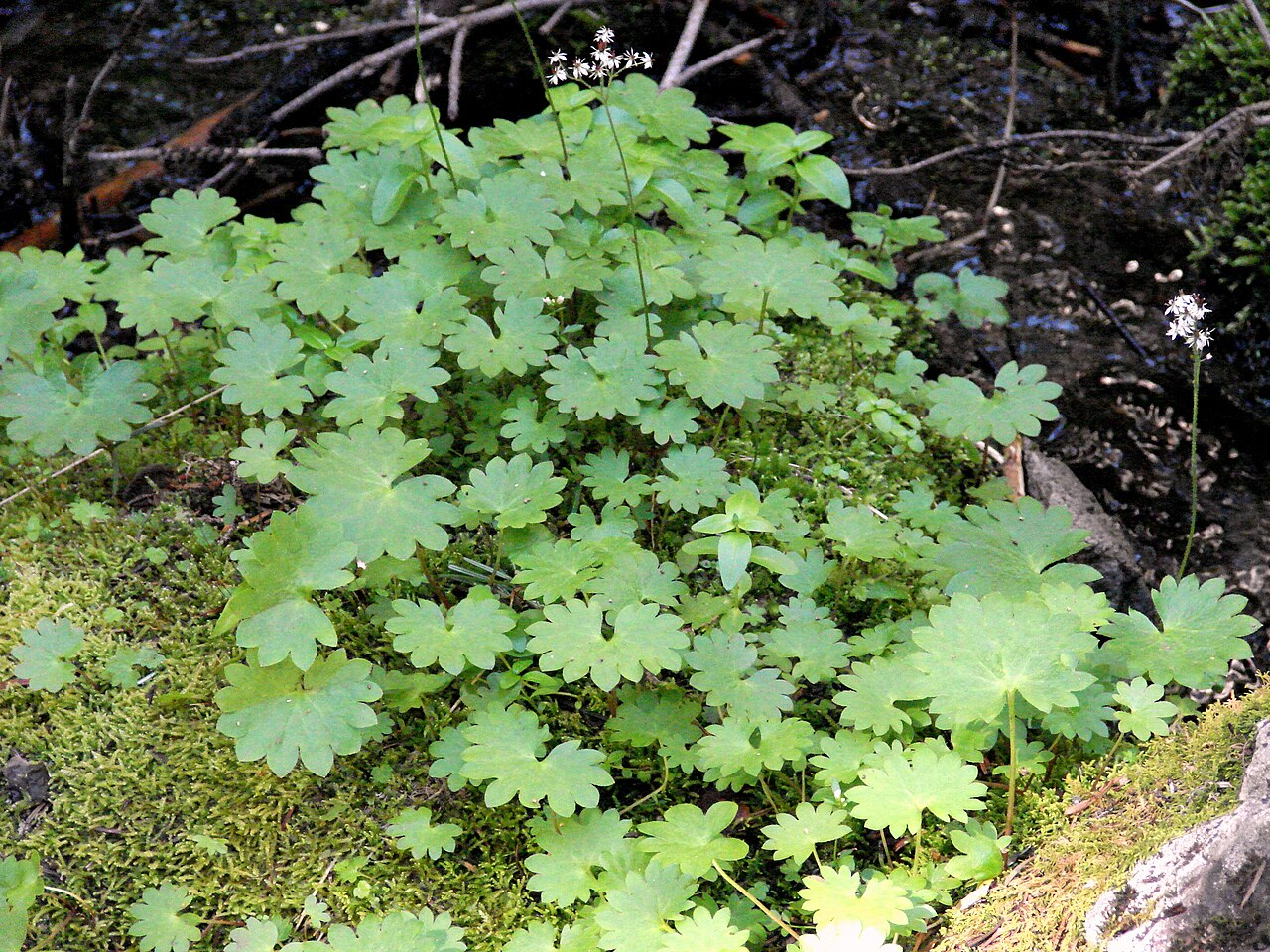
The leaves are round to kidney-shaped, about 1 to 3 inches wide, with a heart-shaped base and evenly spaced, coarse, triangular teeth all around the edge. They are bright green, mostly hairless and somewhat fleshy, and are held on stalks 2 to 8 inches long. Plants growing in fast water often have larger, more lush leaves.
Flowers
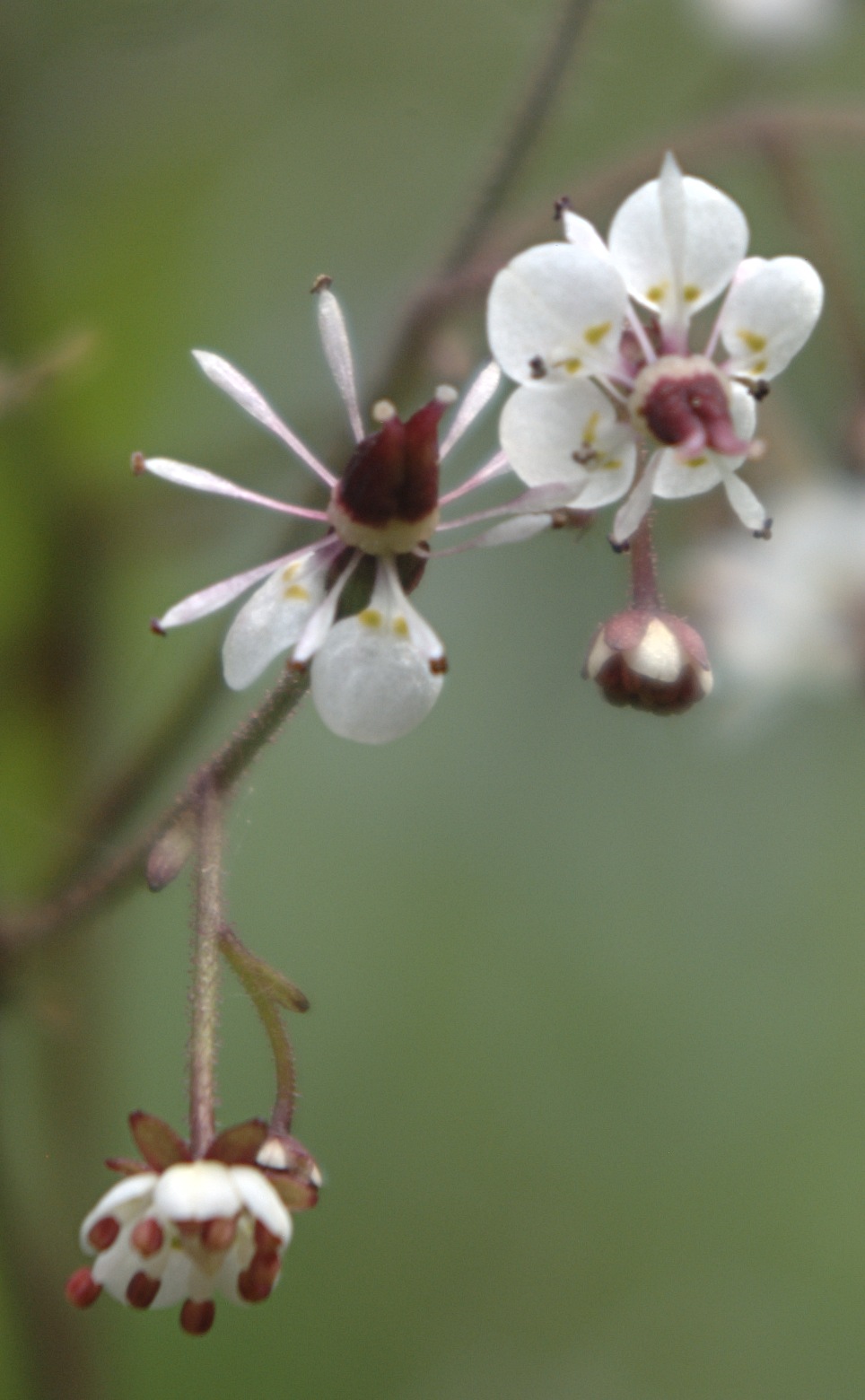
Flowers are borne in an open, branching cluster at the top of the stalk. Each is about 1/4 to 3/8 inch across, with five rounded white petals, each with a narrow stalk-like base and often two small yellowish spots. The sepals are reddish-purple and bend backward. The ten stamens have distinctive white, club-shaped filaments that widen toward the tip, and the ovary in the center is dark red to purple. Plants bloom from June to September, depending on snowmelt.
Fruit
The fruit is a small, two-beaked capsule that turns reddish-purple as it ripens in late summer, releasing many tiny seeds.
Look-alikes
Other streamside saxifrages, such as Micranthes lyallii (red-stemmed saxifrage) and M. nelsoniana, have wedge-shaped or differently toothed leaves and different flower clusters. Mat saxifrage (Saxifraga bronchialis) forms dense mats of stiff, narrow leaves on dry rocks and looks nothing like brook saxifrage. Wild ginger and coltsfoot leaves can look similar, but neither has the white flower sprays.
Quick Facts
| Scientific Name | Saxifraga odontoloma (syn. Micranthes odontoloma) |
| Family | Saxifragaceae (saxifrage family) |
| Plant Type | Herbaceous perennial |
| Mature Height | 6–24 in in flower |
| Mature Spread | 6–12 in |
| Growth Rate | Slow to moderate |
| Sun Exposure | Part shade to full sun with cold, wet soil |
| Water Needs | High; constantly wet |
| Soil Type | Wet gravel, sand, mossy rocks and muck beside running water |
| Soil pH | Acidic to neutral (about 5.5–7.5) |
| Bloom Time | June–September |
| Flower Color | White with a dark red center |
| Fall Color | Leaves may redden in fall |
| Fruit | Small, two-beaked reddish-purple capsules |
| Deer Resistant | Moderately |
| USDA Hardiness Zones | 3–7 |
Native Range
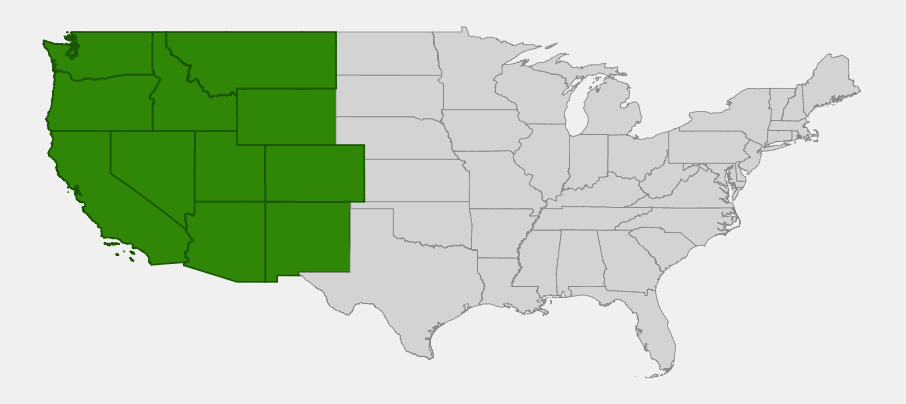
USDA PLANTS lists brook saxifrage as native to 11 western states: Arizona, California, Colorado, Idaho, Montana, Nevada, New Mexico, Oregon, Utah, Washington and Wyoming. In Canada it grows in the mountains of British Columbia and Alberta.
It is found in nearly all the major western mountain ranges: the Cascades (on both sides of the crest, including Mount Rainier), the Blue and Wallowa Mountains, the Sierra Nevada and Klamath region, the northern and central Rockies, the Uinta and Wasatch Mountains, the higher ranges of Nevada, and south to the San Juan and Sangre de Cristo Mountains and the high mountains of Arizona and New Mexico.
It grows almost entirely along cold, running water: the banks of mountain creeks, spray zones of waterfalls, seeps, springs and wet meadows in the montane and subalpine zones, often in the shade of willows, alders, spruce and fir. It is a facultative wetland plant (FACW) in the national wetland plant list.
📋 Regional plant lists featuring Brook Saxifrage: Idaho, Eastern Oregon & Eastern Washington · Montana & Wyoming · Utah & Western Colorado · Arizona & New Mexico · Western Oregon & Western Washington · California & Nevada
Growing & Care Guide
Brook saxifrage is a specialist of cold, running water and is not an easy garden plant outside cool mountain and northern climates. It is best suited to naturalistic water features, shaded bog gardens and pond edges in cool regions.
Light
Part shade is safest. In cool mountain gardens it can take full sun if its roots stay cold and wet. Hot afternoon sun quickly scorches it.
Soil & Water
Plant in gritty, humus-rich soil that stays wet all season, ideally where cool water seeps or flows. It must never dry out. Standing, warm, stagnant water is less suitable than moving water.
Planting Tips
Plant in spring among rocks at the edge of a stream, a recirculating water feature or the wet margin of a pond, where the crown sits just above the water line. Use nursery-grown plants or seedlings; never dig plants from wild streambanks.
Pruning & Maintenance
Remove spent flower stalks if you don’t want seed. Keep larger plants from crowding it, and protect it from slugs, which like the soft leaves.
Propagation
Sow fresh seed on the surface of a moist, gritty mix in fall and let it go through a cold winter outdoors; it germinates in spring. Established clumps can be divided carefully in early spring.
Landscape Uses
- Water features: softens the edges of streams and recirculating creeks
- Bog and rain gardens: a cool-climate plant for constantly wet spots
- Shade gardens: bold round leaves and airy white flowers
- Alpine gardens: for moist, shaded pockets in cool regions
- Restoration: streambank planting in montane riparian projects
Wildlife & Ecological Value
Brook saxifrage is part of the lush plant community along mountain streams, one of the richest habitats in the western mountains.
For Pollinators
The small, open flowers are visited by flies, including syrphid flies, small bees and other insects that are active in cool mountain summers.
For Birds
It offers little direct food for birds, but the streamside vegetation it is part of shelters species such as American dippers and warblers, which hunt the insects living there.
For Mammals
Elk, deer and pikas may browse the leaves, and the streamside cover is used by small mammals.
Ecosystem Role
Its rhizomes and clumps help hold gravel and soil on streambanks, and its leaves shade the water’s edge. It is one of many wetland plants that indicate cold, permanently wet habitats.
Cultural & Historical Uses
The name Saxifraga means “stone breaker” in Latin, after the habit of many species of growing in rock crevices, and an old belief that they could break up kidney stones. The species name odontoloma means “toothed edge,” describing the leaves.
DNA studies have shown that the large genus Saxifraga contains several distinct lineages. Many botanists now put brook saxifrage and its relatives, which mostly have basal leaves and leafless flowering stalks, in the separate genus Micranthes. Both names are widely used.
For many hikers in the western mountains, the sight of brook saxifrage beside a cascading creek is a sign that they have reached the subalpine zone, where summer comes late and streams run cold even in August.
Frequently Asked Questions
Is brook saxifrage a Saxifraga or a Micranthes?
Both names are in use. USDA PLANTS lists it as Saxifraga odontoloma, while many newer floras and iNaturalist use Micranthes odontoloma. They refer to the same plant.
Where can I see brook saxifrage?
Look along cold creeks, springs and waterfalls in the mountains of the West in mid to late summer, for example in Mount Rainier, Yellowstone and Rocky Mountain national parks.
Can I grow brook saxifrage in my garden?
Only if you can give it cool, constantly wet conditions and some shade, such as beside a recirculating stream or in a bog garden in a cool climate. It does poorly in hot, dry gardens.
When does brook saxifrage bloom?
From June to September, depending on elevation and how late the snow melts.
Is brook saxifrage rare?
No. It is widespread in the western mountains, but it depends on cold, clean streams, so it is sensitive to changes in water flow.

Looking for a nursery that carries Brook Saxifrage?
Browse our native plant nursery directory: Arizona · California · Colorado · Idaho · Montana · Nevada & New Mexico · Oregon · Utah · Washington · Wyoming

