
Fringed Grass of Parnassus (Parnassia fimbriata)
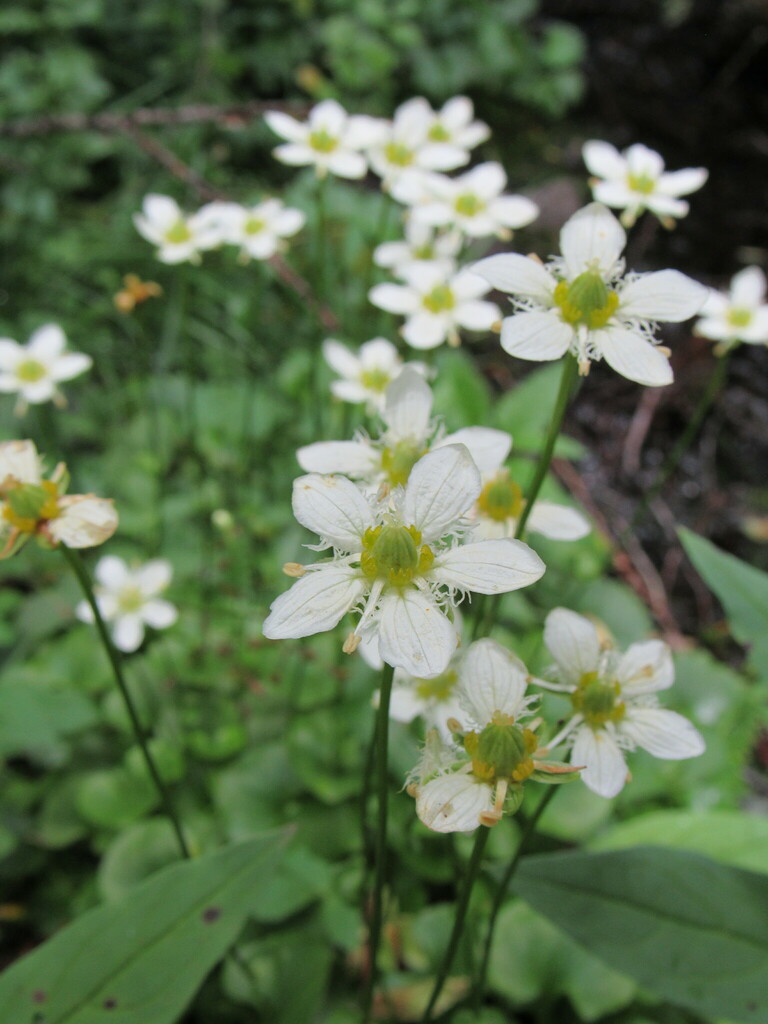
Parnassia fimbriata, known as Fringed Grass of Parnassus, is a graceful perennial wildflower of wet places in the mountains of western North America. It grows from Alaska and Yukon south through the Rocky Mountains to New Mexico and through the Cascades and Sierra Nevada to central California. Despite its name, it is not a grass. It belongs to the bittersweet family (Celastraceae) in modern classifications; older books place it in the saxifrage family or in its own family, Parnassiaceae.
In mid to late summer, slender stalks 6 to 20 inches tall rise above a clump of glossy, kidney-shaped leaves, each carrying a single white flower about an inch across. Look closely and you will see what makes it special: the lower edges of the five petals are fringed with long, fine hairs, and between the stamens sit five small, fan-shaped clusters of sterile stamens tipped with tiny knobs that glisten like nectar.
Fringed grass of Parnassus is a plant of cold, wet ground: streambanks, seeps, wet meadows and dripping rock faces in the subalpine and alpine zones. It is lovely to find on a mountain hike, but it is rarely grown in gardens because it needs constant moisture and cool summers. Enjoy it in the wild and leave the plants in place.
Identification
Look for a clump of glossy, kidney-shaped leaves along a cold mountain stream, with single white flowers on slender stalks whose petals are fringed with hairs near the base.
Growth Habit
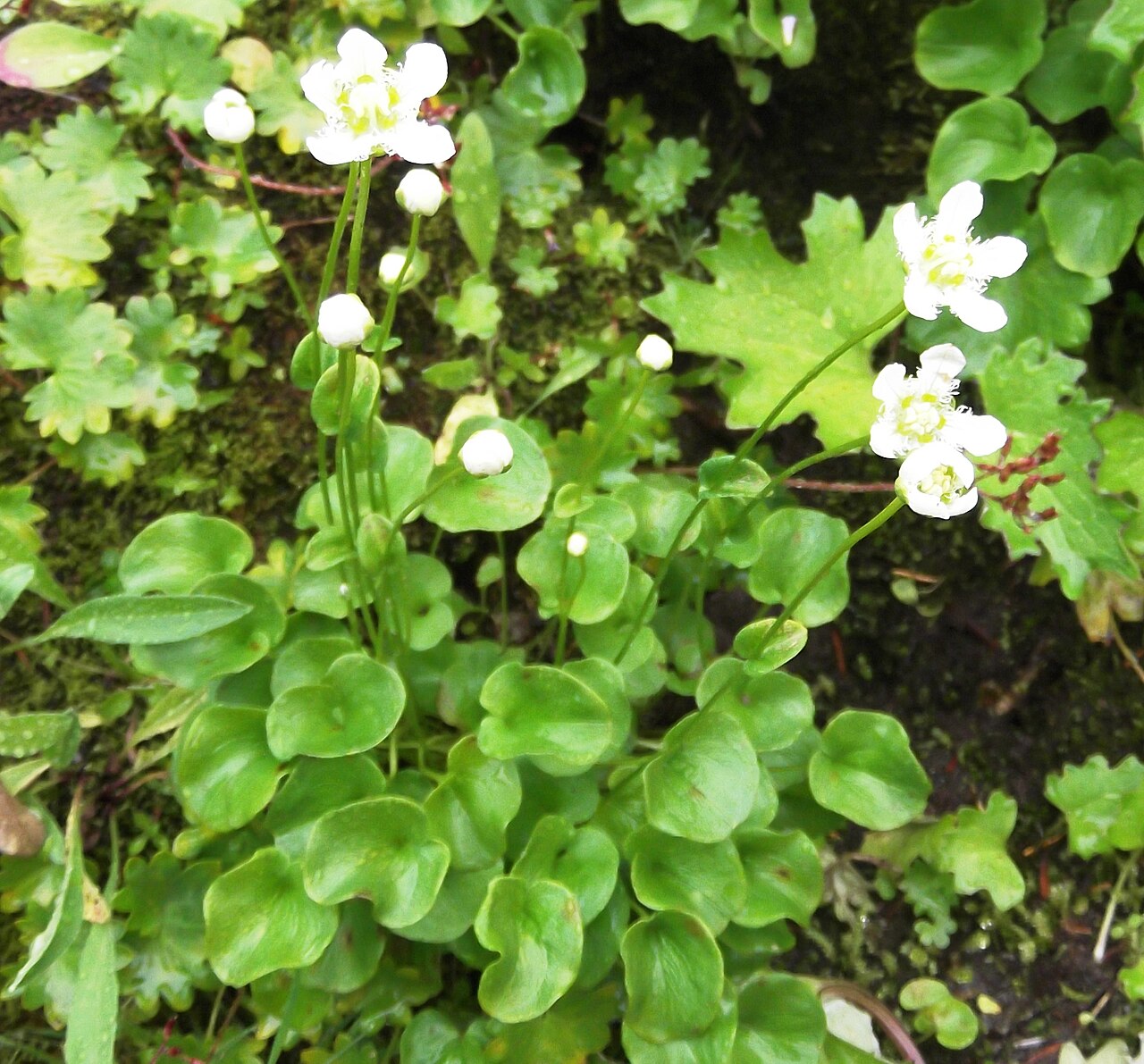
Fringed grass of Parnassus is a clump-forming perennial, 6 to 20 inches tall in flower, growing from a short rootstock. Each clump has a rosette of basal leaves and one to several unbranched flowering stalks.
Leaves
The basal leaves are kidney-shaped to broadly heart-shaped, 3/4 to 2 inches wide, smooth, glossy and bright green, on long stalks. Each flowering stalk has a single small, stalkless leaf that clasps the stem about halfway up. That one small stem leaf is a good field mark for the genus.
Flowers
Each stalk ends in a single flower about 3/4 to 1 1/4 inches across. The five white petals have fine greenish veins, and their lower edges are fringed with long, hair-like segments, which gives the species its name. Five fertile stamens alternate with five staminodes: small, fan-shaped scales divided into several short, finger-like lobes with knobbed tips that look like drops of nectar. Bloom time is July to September, depending on elevation and latitude.
Fruit & Seeds
The fruit is a small, egg-shaped capsule that splits into three or four parts, releasing many tiny seeds in fall.
Look-alikes
Marsh grass of Parnassus (Parnassia palustris) has petals without a fringe and staminodes with many more slender, gland-tipped lobes. Small-flowered grass of Parnassus (P. parviflora) has smaller, unfringed petals and ovate leaves. White marsh marigold grows in similar places but has larger, fleshy leaves and many stamens in the center of each flower.
Quick Facts
| Scientific Name | Parnassia fimbriata |
| Family | Celastraceae (bittersweet family); formerly Saxifragaceae or Parnassiaceae |
| Plant Type | Herbaceous perennial wildflower |
| Mature Height | 6–20 in |
| Mature Spread | 6–12 in |
| Growth Rate | Slow to moderate |
| Sun Exposure | Full sun to part shade |
| Water Needs | High; constantly moist to wet |
| Soil Type | Wet, gravelly, rocky or mossy soils along streams and seeps |
| Soil pH | Slightly acidic to slightly alkaline (about 6.0–8.0) |
| Bloom Time | July–September |
| Flower Color | White with greenish veins |
| Fall Color | Leaves may turn yellow to bronze |
| Fruit | Small, egg-shaped capsule with many tiny seeds |
| Deer Resistant | Moderately |
| USDA Hardiness Zones | 3–7 |
Native Range
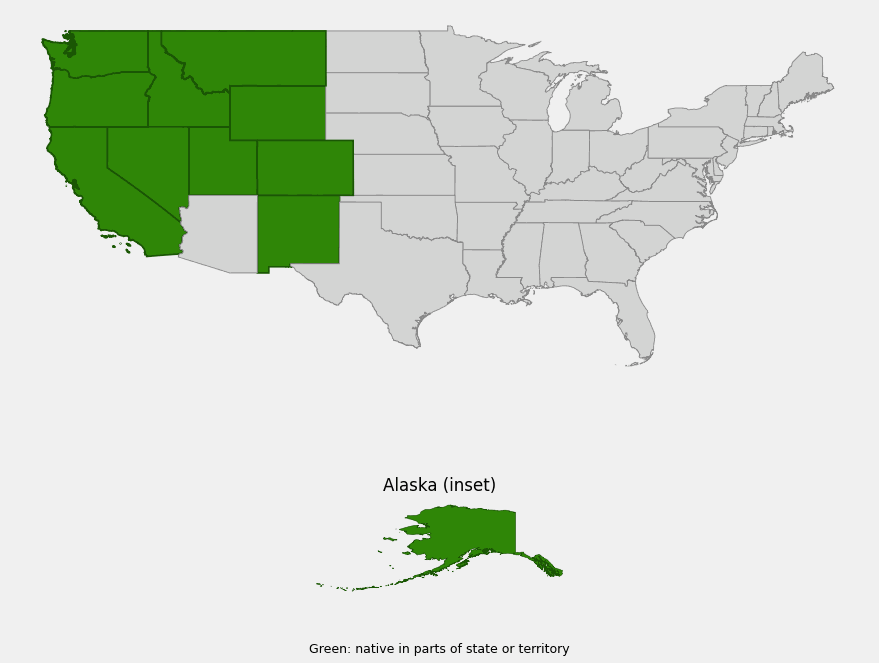
Fringed grass of Parnassus grows in the mountains of western North America. USDA PLANTS lists it as native in Alaska, California, Colorado, Idaho, Montana, Nevada, New Mexico, Oregon, Utah, Washington and Wyoming, and in Alberta, British Columbia, Yukon and the Northwest Territories. Lady Bird Johnson Wildflower Center summarizes its range as Alaska to central California and east to the Rocky Mountains from New Mexico to Alberta.
In Oregon and Washington it grows on both sides of the Cascades, from the Olympic Mountains and the west-side Cascades to the eastern slopes, and in the Blue and Wallowa mountains of northeastern Oregon. In California it grows in the Sierra Nevada, the Klamath Mountains and the southern Cascades. In the Rockies it ranges from Alberta and Montana through Idaho, Wyoming, Utah and Colorado to northern New Mexico. In Nevada it is rare, limited to a few high mountain ranges.
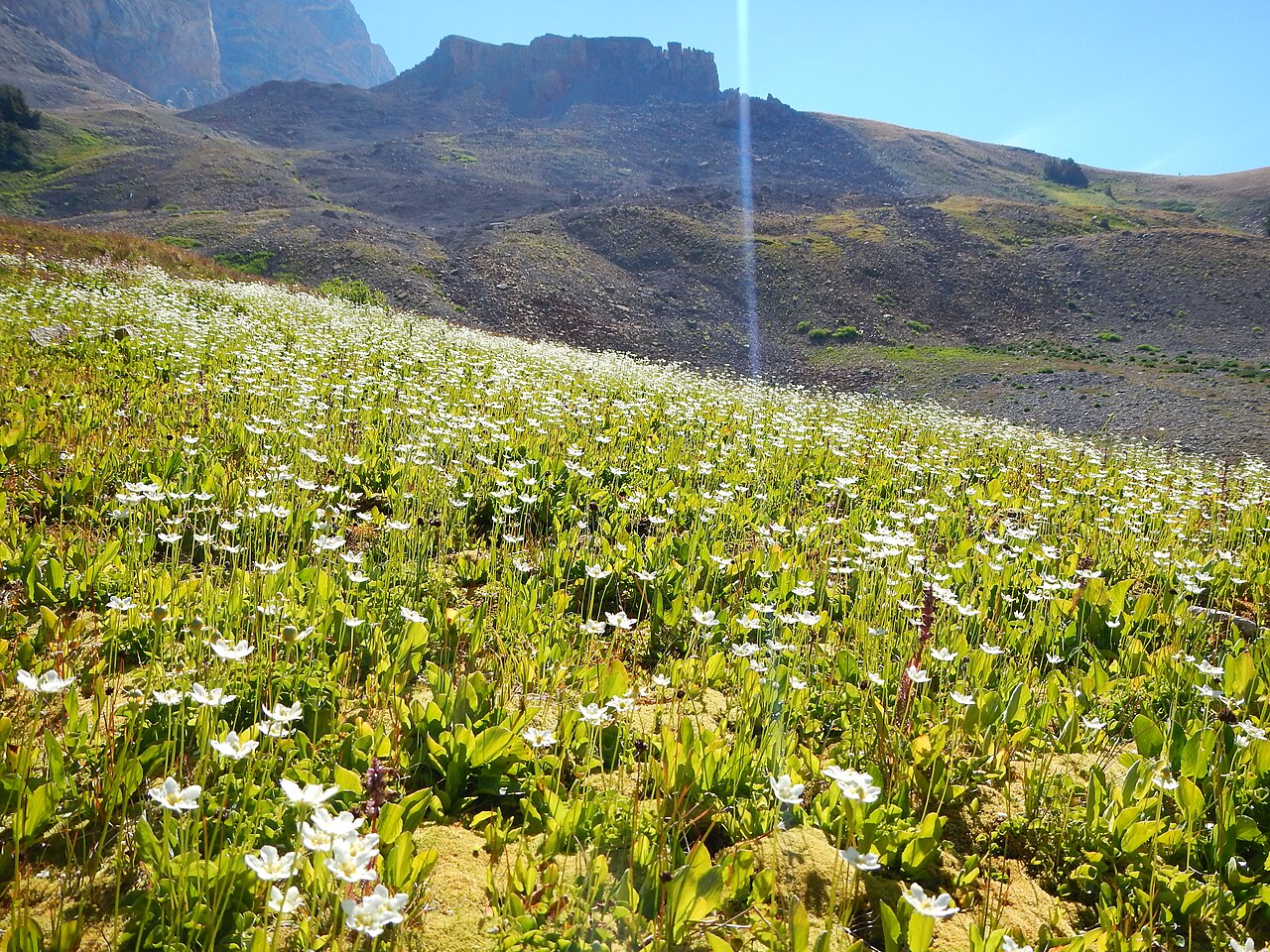
Its habitat is cold, wet ground in the montane, subalpine and alpine zones: streambanks, wet meadows, seeps and springs, bogs and fens, wet cliffs and the spray zones of waterfalls. It often grows among mosses and sedges, from about 3,000 feet in the north to more than 11,000 feet in Colorado.
📋 Regional plant lists featuring Fringed Grass of Parnassus: Idaho, Eastern Oregon & Eastern Washington · Montana & Wyoming · Utah & Western Colorado · Alaska · Western Oregon & Western Washington · California & Nevada
Growing & Care Guide
Fringed grass of Parnassus is seldom grown and is not easy in gardens. It needs the cold, constantly wet conditions of a mountain streambank. Gardeners in cool, moist climates with a suitable bog or stream garden can try nursery-grown plants or seed; never dig plants from the wild.
Light
Full sun to part shade where summers are cool. In warmer areas, give it afternoon shade.
Soil & Water
It needs soil that is wet all season, ideally with cold, moving water, as along a stream, spring or the edge of a pond with a constant flow. A gritty, mossy, peaty or gravelly soil works best. It will not tolerate drying out or hot, stagnant water.
Planting Tips
Plant in spring in a bog garden, at the margin of a stream or water feature, or in a trough kept wet. Combine it with other plants of mountain wetlands, such as marsh marigolds, monkeyflowers, sedges and mosses. It is best suited to cool, northern or high-elevation gardens.
Pruning & Maintenance
Remove old flower stalks after seed has dropped if you want a tidy look. Keep vigorous neighbors from crowding it, and never let the soil dry out.
Propagation
Sow the tiny seeds on the surface of a moist, gritty mix in fall and leave them outdoors over winter; they need a period of cold to germinate. Established clumps can be divided carefully in spring. Collect seed only where permitted, and never collect in national parks.
Landscape Uses
- Bog and stream gardens: for cool, constantly wet stream and pond edges
- Alpine and rock gardens: in wet, shaded pockets of cool-climate rock gardens
- Mountain wildflower walks: look for it in late summer along subalpine streams and seeps
- Wetland restoration: suited to high-elevation wet meadow and spring restoration
- Nature photography: its fringed petals and glistening staminodes reward close-up photography
Wildlife & Ecological Value
Fringed grass of Parnassus blooms late in the short mountain summer, when it offers food to insects in wet meadows and along streams.
For Pollinators
The flowers are visited mainly by flies and small bees. The knobbed, glistening tips of the staminodes look like drops of nectar and help attract insects, while true nectar is produced at the base of the staminodes. As in other grass of Parnassus species, the flowers are protandrous: the stamens shed pollen one at a time over several days before the stigma becomes receptive, which encourages cross-pollination.
For Birds
It provides little direct food for birds, but the wet meadows and streambanks where it grows are rich in insects that feed many mountain birds.
For Mammals
Elk, deer and mountain goats graze in the wet meadows where it grows, and may eat it with other plants.
Ecosystem Role
It is a characteristic plant of mountain springs, seeps and fens, which are small but very species-rich habitats. Its presence is a sign of cold, clean, steady water.
Cultural & Historical Uses
The genus name Parnassia comes from Mount Parnassus in Greece, sacred in Greek mythology to Apollo and the Muses. Early European herbalists called the European species “grass of Parnassus,” and the odd common name stuck. The species name fimbriata means “fringed.”
Grass of Parnassus flowers, with their sterile, nectar-like staminodes, have long fascinated botanists studying how flowers attract insects. The German naturalist Christian Konrad Sprengel, a pioneer in the study of pollination, wrote about the false nectaries of the European marsh grass of Parnassus in the 1790s.
Botanists have had trouble placing Parnassia in the plant family tree. It was long put in the saxifrage family, then in its own family, Parnassiaceae. DNA studies now place it in the bittersweet family, Celastraceae, alongside plants such as American bittersweet and burning bush.
Frequently Asked Questions
Is fringed grass of Parnassus a grass?
No. It is a flowering perennial with white flowers. The name dates back centuries to the European species, called a “grass” of Mount Parnassus in Greece.
Where can I see fringed grass of Parnassus?
Look along cold mountain streams, seeps and wet meadows in the Cascades, Sierra Nevada, Rocky Mountains and Alaska from July to September.
How do I tell it from marsh grass of Parnassus?
Fringed grass of Parnassus has a fringe of long hairs along the lower edges of its petals. Marsh grass of Parnassus has petals without a fringe.
Can I grow fringed grass of Parnassus in my garden?
Only in cool climates, with constantly wet soil such as a bog or stream edge. It is rarely sold and is difficult in warm or dry gardens.
What are the little knobs in the flower?
They are staminodes, sterile stamens with glistening, gland-like tips that look like nectar and help attract pollinating insects.

Looking for a nursery that carries Fringed Grass of Parnassus?
Browse our native plant nursery directory: Alaska · California · Colorado · Idaho · Montana · Nevada & New Mexico · Oregon · Utah · Washington · Wyoming

