
Western Bog Laurel (Kalmia microphylla)
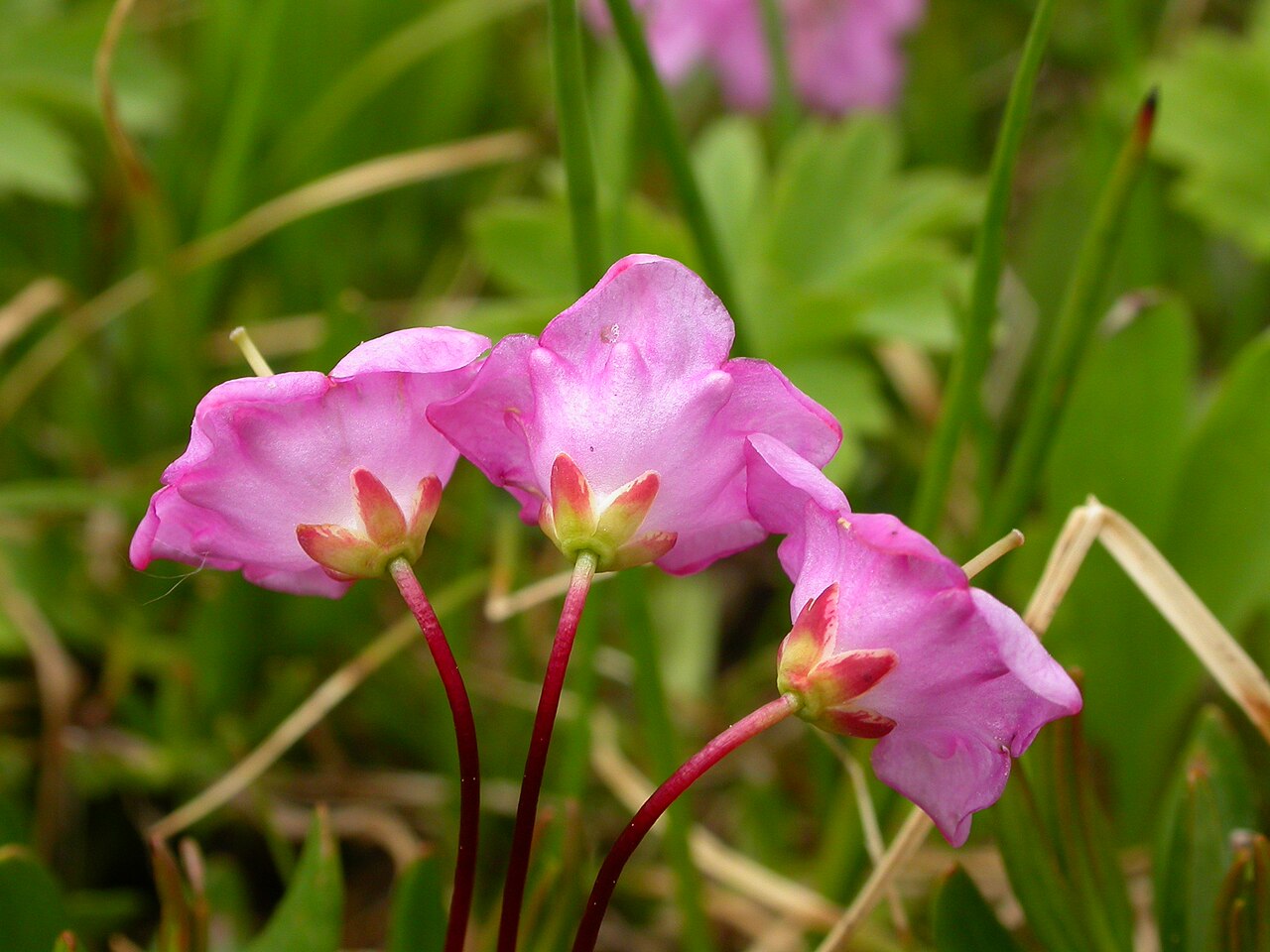
Kalmia microphylla, known as Western Bog Laurel, alpine laurel or western swamp laurel, is a small evergreen shrub of wet mountain meadows, bogs and lakeshores in western North America. It forms low mats or small, upright tufts only a few inches to about a foot and a half tall, with narrow, glossy leaves that are dark green above and whitish beneath. In early summer, soon after snowmelt, it bears clusters of bright pink, saucer-shaped flowers that look like tiny versions of the familiar eastern mountain laurel.
It is the western counterpart of the eastern bog laurel (Kalmia polifolia), and the two were long treated as one species. Western bog laurel is generally smaller, with shorter leaves and fewer flowers per cluster, and it grows mainly in the mountains of the West and in Alaska, while bog laurel proper is a plant of northern and eastern peat bogs.
Like other laurels, western bog laurel is poisonous: all parts contain grayanotoxins, which can sicken people and livestock. This guide covers how to identify it, how it differs from bog laurel, where it grows, its demanding growing needs, and how its flowers fling pollen onto visiting bees.
Identification
Western bog laurel is easy to recognize in flower by its pink, five-sided saucers with pollen pockets. Out of flower, look for its opposite, narrow, leathery leaves with rolled edges and a whitish underside, which separate it from the heaths and huckleberries that often grow with it.
Stems & Growth Habit
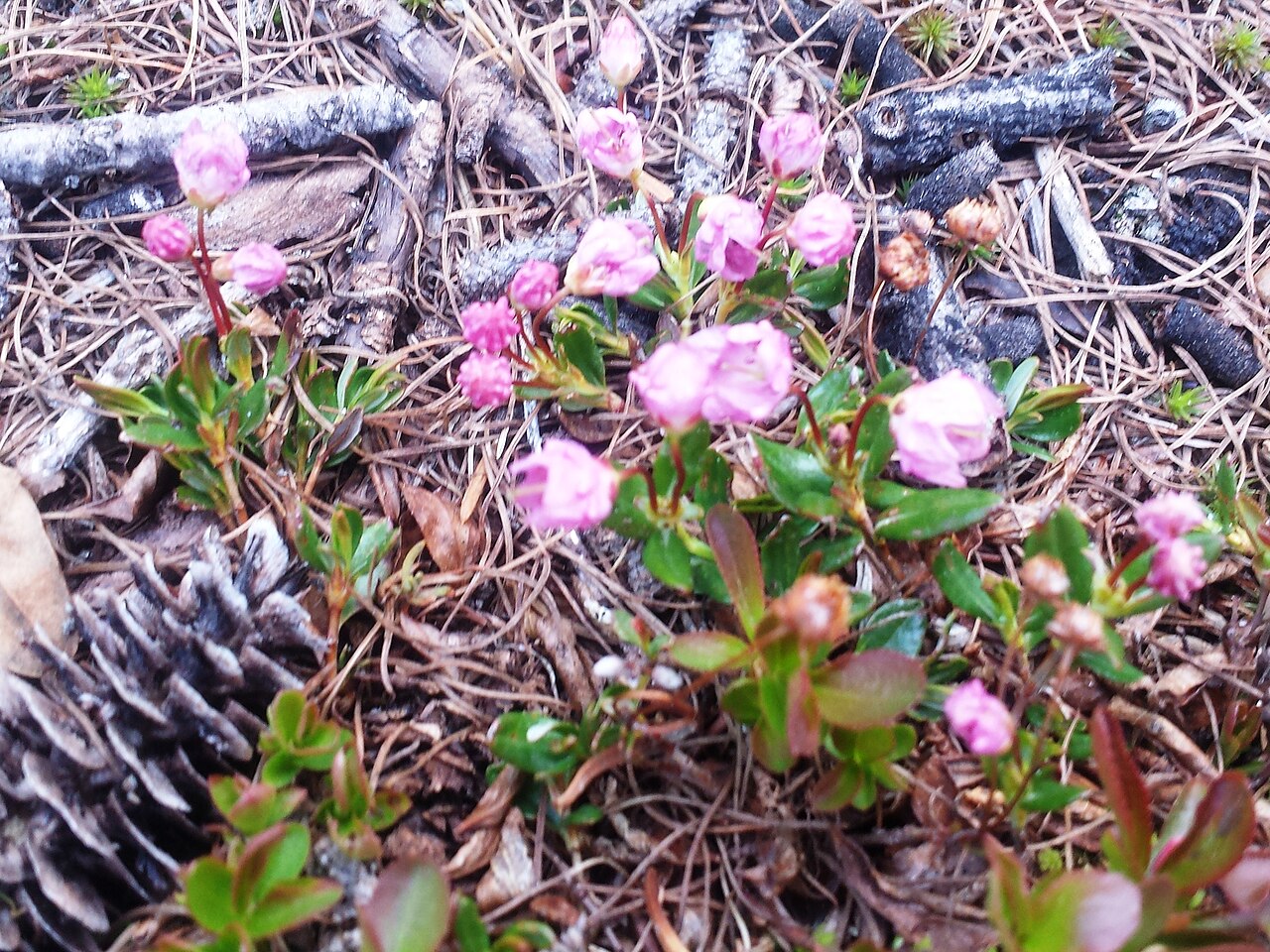
It is a dwarf evergreen shrub, usually 4 to 8 inches tall in the high mountains and up to about 1½ feet in lower, boggy sites. Plants spread by rooting stems to form low mats or loose patches. Young twigs are slightly two-edged; older stems are woody and reddish brown.
Leaves
The leaves are opposite, narrowly oval to lance-shaped, about ½ to 1½ inches long, leathery and evergreen. They are dark, glossy green above and pale, whitish or grayish beneath, and the edges are often rolled under. The leaves of the alpine form are among the smallest of any laurel, which gives the species its name, microphylla, “small-leaved.”
Flowers
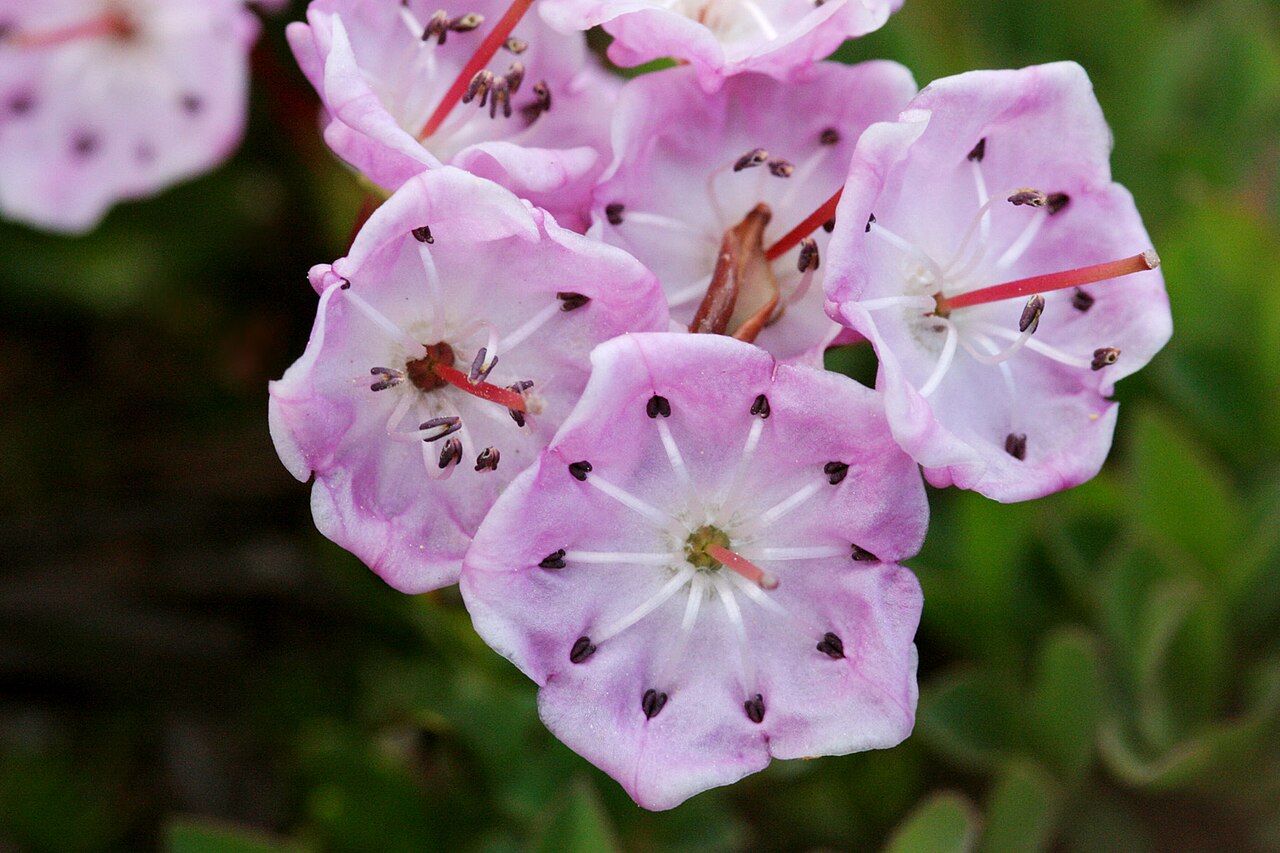
The flowers are borne in small clusters at the tips of the stems on slender, reddish stalks. Each flower is about ½ inch across, a shallow, five-lobed saucer in bright to pale pink or rose. Ten stamens are bent back, each anther tucked into a small pocket in the petals. Bloom follows snowmelt, mostly from June to August depending on elevation.
Fruit & Seeds
Each flower produces a small, round, five-parted capsule that splits to release many tiny seeds. The dry capsules often stay on the plant into the next year.
Look-alikes
Bog laurel (Kalmia polifolia) of eastern and boreal bogs is taller, with longer leaves and larger flower clusters. Pink mountainheath has needle-like leaves and bell-shaped flowers. Labrador tea grows in similar places but has alternate leaves with rusty, woolly undersides and white flowers.
Quick Facts
| Scientific Name | Kalmia microphylla (syn. Kalmia polifolia var. microphylla) |
| Family | Ericaceae (heath family) |
| Plant Type | Dwarf evergreen shrub |
| Mature Height | 4 in–1.5 ft |
| Mature Spread | 6 in–2 ft (spreading mats) |
| Growth Rate | Slow |
| Sun Exposure | Full sun to part shade |
| Water Needs | High; constantly moist to wet |
| Soil Type | Wet, acidic peat, muck or organic soil |
| Soil pH | About 4.0–6.0 |
| Bloom Time | June–August |
| Flower Color | Bright to pale pink |
| Fall Color | Evergreen; leaves may redden in winter |
| Fruit | Small round capsule with many tiny seeds |
| Deer Resistant | High (toxic foliage) |
| USDA Hardiness Zones | 2–6 |
Native Range
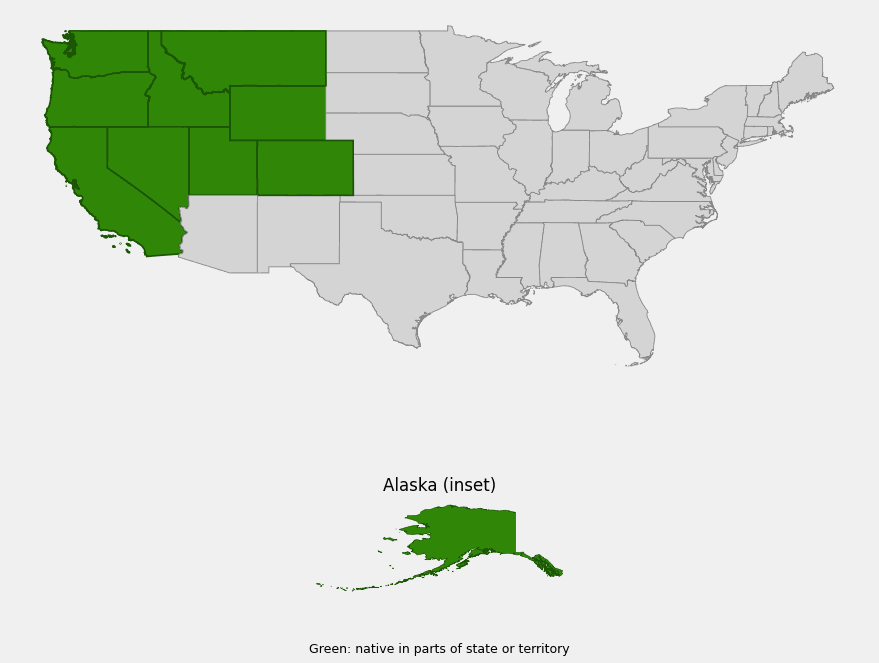
Western bog laurel is native to western North America from Alaska and the Yukon south through British Columbia and Alberta into the western United States. USDA PLANTS lists it as native in Alaska, Washington, Oregon, California, Nevada, Idaho, Montana, Wyoming, Utah and Colorado. In Canada it is also reported east to Manitoba and Ontario and north into the Northwest Territories.
Two varieties are often recognized. The alpine laurel, var. microphylla, is the small, mat-forming plant of high-elevation wet meadows in the Rockies, the Sierra Nevada, the Cascades and the Great Basin ranges. The taller western swamp laurel, var. occidentalis, grows in lowland and coastal bogs from southern Alaska through British Columbia to western Washington and Oregon.
Its habitats are always wet and acidic: subalpine and alpine meadows that stay soggy after snowmelt, the margins of lakes, tarns and streams, sphagnum bogs and fens. In the mountains it is often found with mountain heaths, huckleberries, sedges and marsh marigolds.
📋 Regional plant lists featuring Western Bog Laurel: Idaho, Eastern Oregon & Eastern Washington · Montana & Wyoming · Utah & Western Colorado · Alaska · Western Oregon & Western Washington · California & Nevada
Growing & Care Guide
Western bog laurel is a specialist. It needs constant moisture, acidic soil and cool summers, and it is rarely sold by nurseries. It can be grown in a bog garden or a cool, wet rock garden in the Pacific Northwest, the northern Rockies or Alaska, but it is difficult in hot, dry or alkaline conditions. Never dig it from the wild; it transplants poorly and its mountain habitats recover slowly. Because the plant is toxic, do not plant it where children or livestock might eat it.
Light
Full sun in cool climates, or light afternoon shade where summers are warmer. In deep shade it becomes sparse and flowers little.
Soil & Water
Use wet, acidic, organic soil: a mix of peat or composted bark with sand works well. The soil should never dry out. It tolerates saturated soil and brief standing water but not alkaline or heavy, compacted soil. Use rainwater where tap water is hard.
Planting Tips
Plant nursery-propagated plants in spring at the edge of a bog garden, pond or wet trough, alongside other acid-loving plants such as heaths, sedges and sphagnum. A cool, north-facing spot helps in warmer areas. Keep it away from vegetable gardens, pastures and play areas.
Pruning & Maintenance
Little pruning is needed. Trim off old flower clusters after bloom if you want a neater look. Keep competing grasses and taller plants from shading it out, and mulch with pine needles or peat to keep the roots cool and moist. Wear gloves when handling it.
Propagation
Grow it from seed sown on the surface of moist, acidic peat mix; the seed is dust-fine and needs light to germinate. Cold, moist stratification for a month or two can improve germination. Stem cuttings in late summer root slowly, and rooted layers can be separated from established mats.
Landscape Uses
- Bog gardens: with pitcher plants, sedges, heaths and other acid-loving wetland plants in cool climates
- Alpine and rock gardens: in a wet, peaty pocket or trough garden
- Pond and stream margins: in cool, acidic, wet soil
- Wetland restoration: in subalpine meadow and bog restoration in its native range
- Wildflower viewing: one of the first shrubs to bloom in high mountain meadows after snowmelt
Wildlife & Ecological Value
Western bog laurel is a small but important part of high-mountain wetland communities, and its flowers have one of the most remarkable pollination mechanisms of any native plant.
For Pollinators
The flowers are visited mainly by bumblebees and other bees. Each of the ten anthers is held under tension in a pocket in the petals. When a bee lands and pushes on the stamens, they spring free and fling pollen onto its body. Watching a bee trigger a flower is one of the small joys of a mountain meadow in July.
For Birds
It provides cover for small ground-nesting birds in wet meadows, but its seeds and leaves are not a significant food source.
For Mammals
The foliage is toxic, and most mammals avoid it. Sheep and other livestock that eat it, usually when other forage is scarce, can be poisoned.
Ecosystem Role
Western bog laurel forms part of the low shrub layer of subalpine wetlands, helping hold soil along lakeshores and streams. Like other heaths, it forms close partnerships with root fungi that help it take up nutrients from poor, acidic, waterlogged soils.
Cultural & Historical Uses
The genus Kalmia was named by Carl Linnaeus for Pehr Kalm, a Finnish-Swedish naturalist who traveled in eastern North America in the 1740s. The species name microphylla means “small-leaved.” Other common names include alpine laurel, alpine bog laurel and western swamp laurel.
Safety note: all parts of western bog laurel are poisonous. The leaves, flowers, nectar and pollen contain grayanotoxins, the same compounds found in mountain laurel and many rhododendrons. Eating the plant can cause drooling, vomiting, dizziness, low blood pressure and slow heart rate in people, and it is a known cause of poisoning in sheep, goats and cattle. Honey made largely from Kalmia or rhododendron nectar can also be toxic. Never eat any part of the plant or use it for tea, and keep it away from children and grazing animals.
Botanists debated for many years whether the western plants were simply a variety of the eastern bog laurel. Many current treatments, including USDA PLANTS, accept Kalmia microphylla as a separate species, and some older books still list it as Kalmia polifolia var. microphylla.
Frequently Asked Questions
Is western bog laurel poisonous?
Yes. All parts contain grayanotoxins and can poison people, pets and livestock, especially sheep and goats. Never eat the plant, use it for tea or let animals graze on it.
How is it different from bog laurel?
Bog laurel (Kalmia polifolia) grows in northern and eastern peat bogs and is taller, with longer leaves and larger flower clusters. Western bog laurel is a smaller plant of western mountain meadows, bogs and lakeshores and Alaska.
Where does western bog laurel grow?
From Alaska and western Canada south through the Cascades, the Sierra Nevada and the Rocky Mountains, in wet meadows, bogs and lakeshores, often at high elevation.
Can I grow it in my garden?
Only in cool, wet, acidic conditions, such as a bog garden in the Pacific Northwest or the northern Rockies. It is rarely sold and difficult in hot or dry climates. Never dig it from the wild.
How are the flowers pollinated?
Each anther sits in a pocket in the petals with its stalk bent like a spring. When a bee lands, the stamens snap up and dust the bee with pollen.

Looking for a nursery that carries Western Bog Laurel?
Browse our native plant nursery directory: Alaska · California · Colorado · Idaho · Montana · Nevada · Oregon · Utah · Washington · Wyoming
