
Mountain Bog Gentian (Gentiana calycosa)
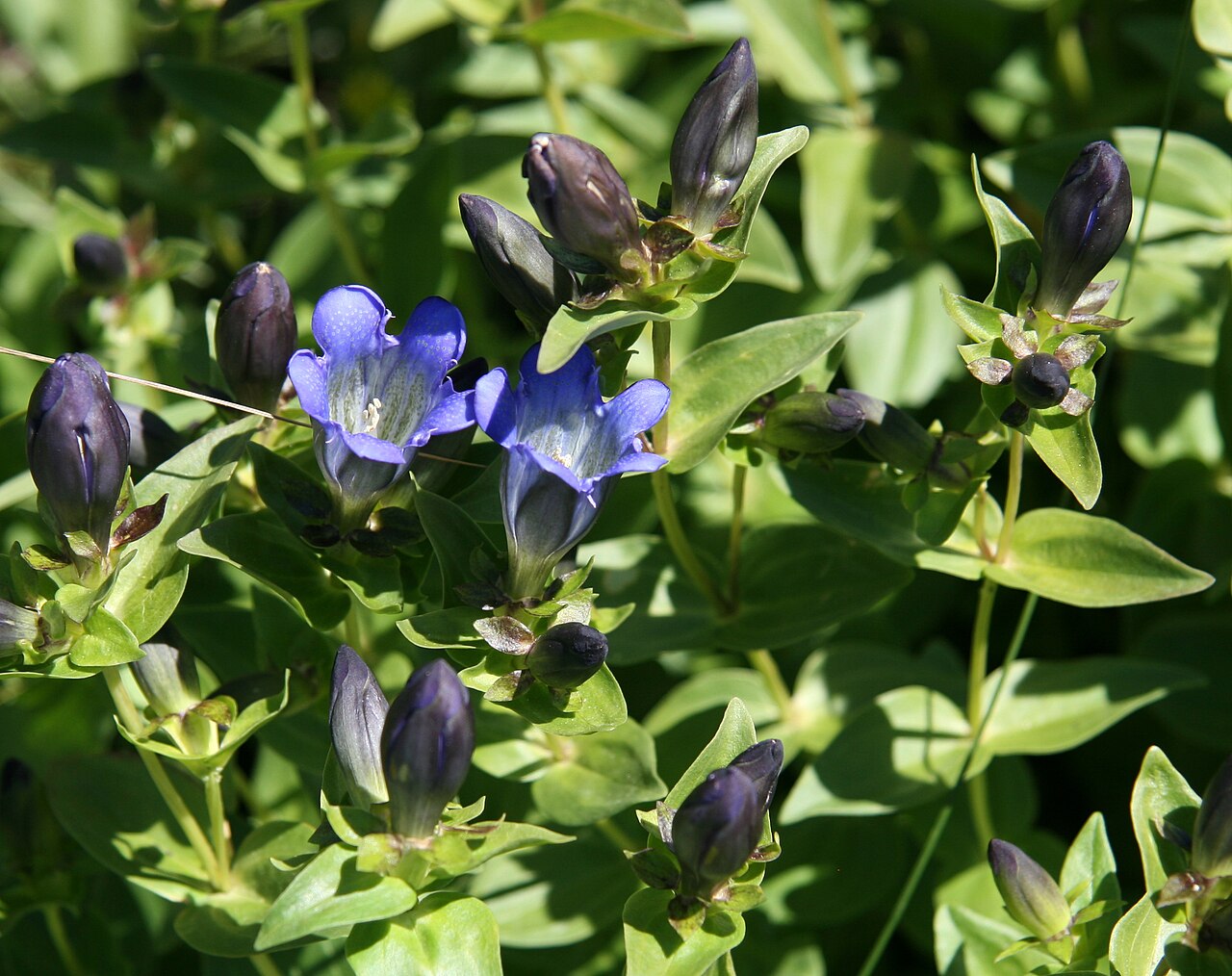
Gentiana calycosa, known as Mountain Bog Gentian, is a native perennial wildflower of the high mountains of western North America. USDA PLANTS calls it Rainier pleated gentian, and it is also widely known as explorer’s gentian. Its deep blue, funnel-shaped flowers, about 1 1/2 inches long, are one of the great sights of subalpine meadows in late summer and early fall.
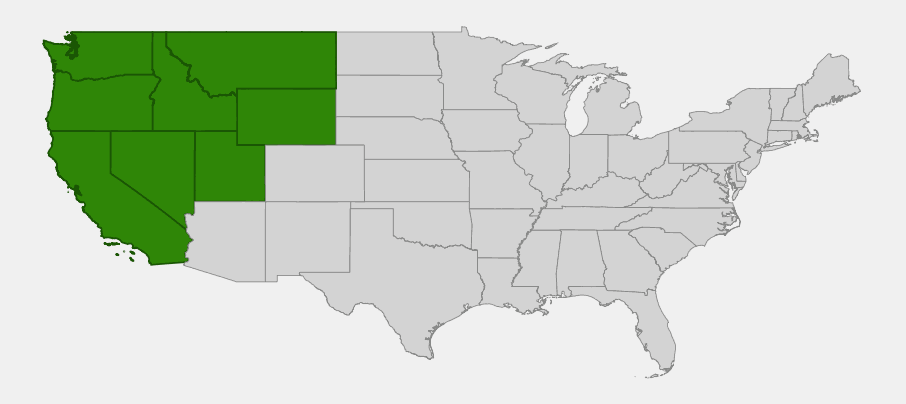
This gentian grows in wet subalpine and alpine meadows, along streams and seeps, and in moist pockets among rocks, from the Sierra Nevada of California north through the Cascades to British Columbia and Alberta, and east to the northern Rockies and the mountains of Nevada, Utah and Wyoming. It blooms late, from about July into October, after most other meadow wildflowers have finished.
The flowers are an important late-season food source for bumble bees, which crawl deep into the blue cups. Mountain bog gentian is a beautiful but demanding garden plant that needs cool, constantly moist conditions. Most people will enjoy it best in the wild, on a late-summer hike through mountain meadows.
Identification
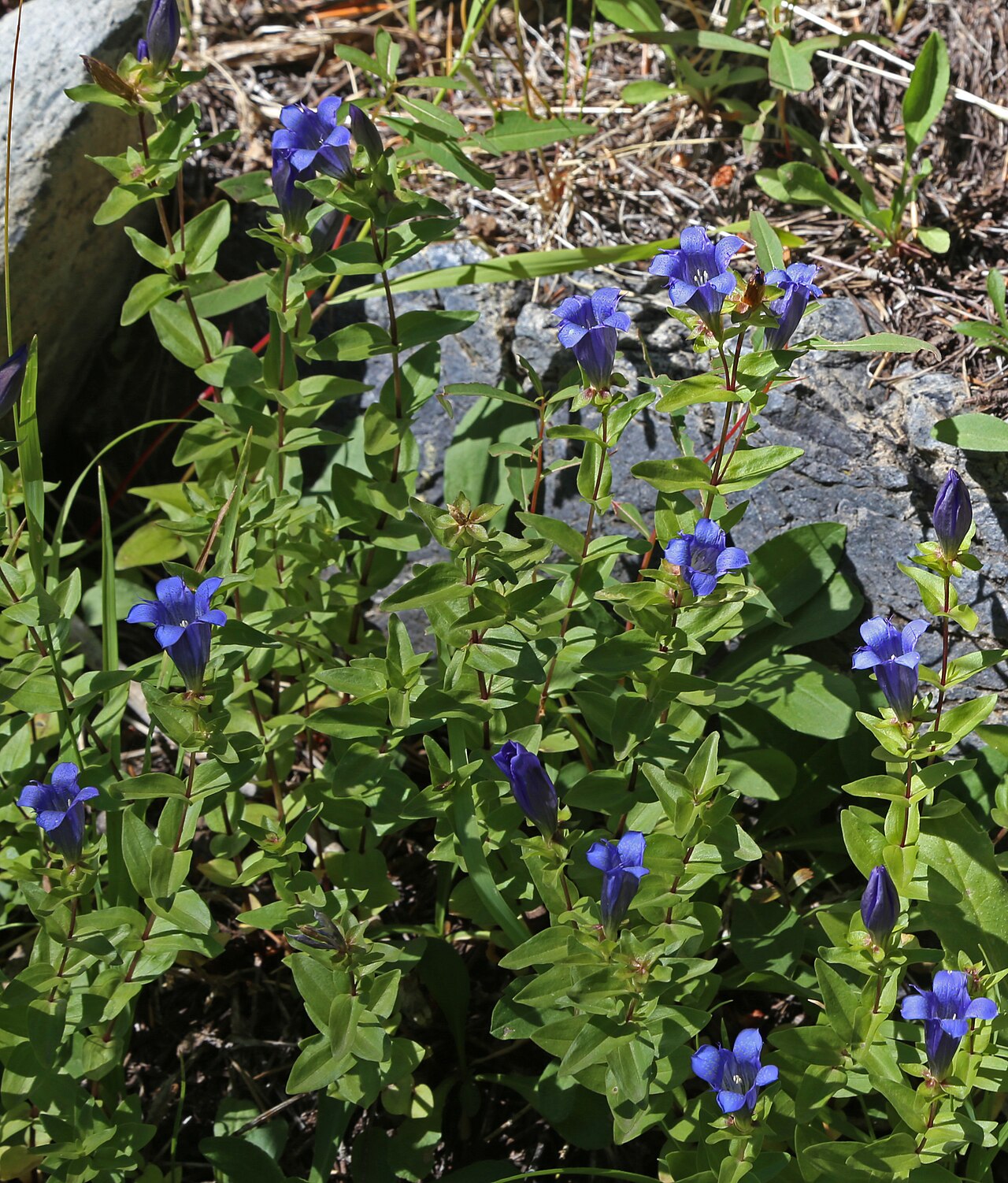
Mountain bog gentian forms low, leafy clumps of unbranched stems. Look for paired, oval, stalkless leaves and one to a few large, upright, deep blue funnel-shaped flowers at the top of each stem, with small pleats between the petal lobes.
Stems & Growth Habit
Plants grow from a short, thick root and send up several to many leafy stems, usually 4 to 12 inches tall and sometimes up to about 18 inches. The stems are often reddish and grow upright or curve up from the base, forming a clump that grows larger over the years.
Leaves
The leaves are opposite, stalkless and broadly oval to egg-shaped, about 1/2 to 1 1/4 inches long. They are thick, smooth and bright green, and the pairs are evenly spaced up the stem. The leaves directly under the flowers form a small collar around the flower base.
Flowers
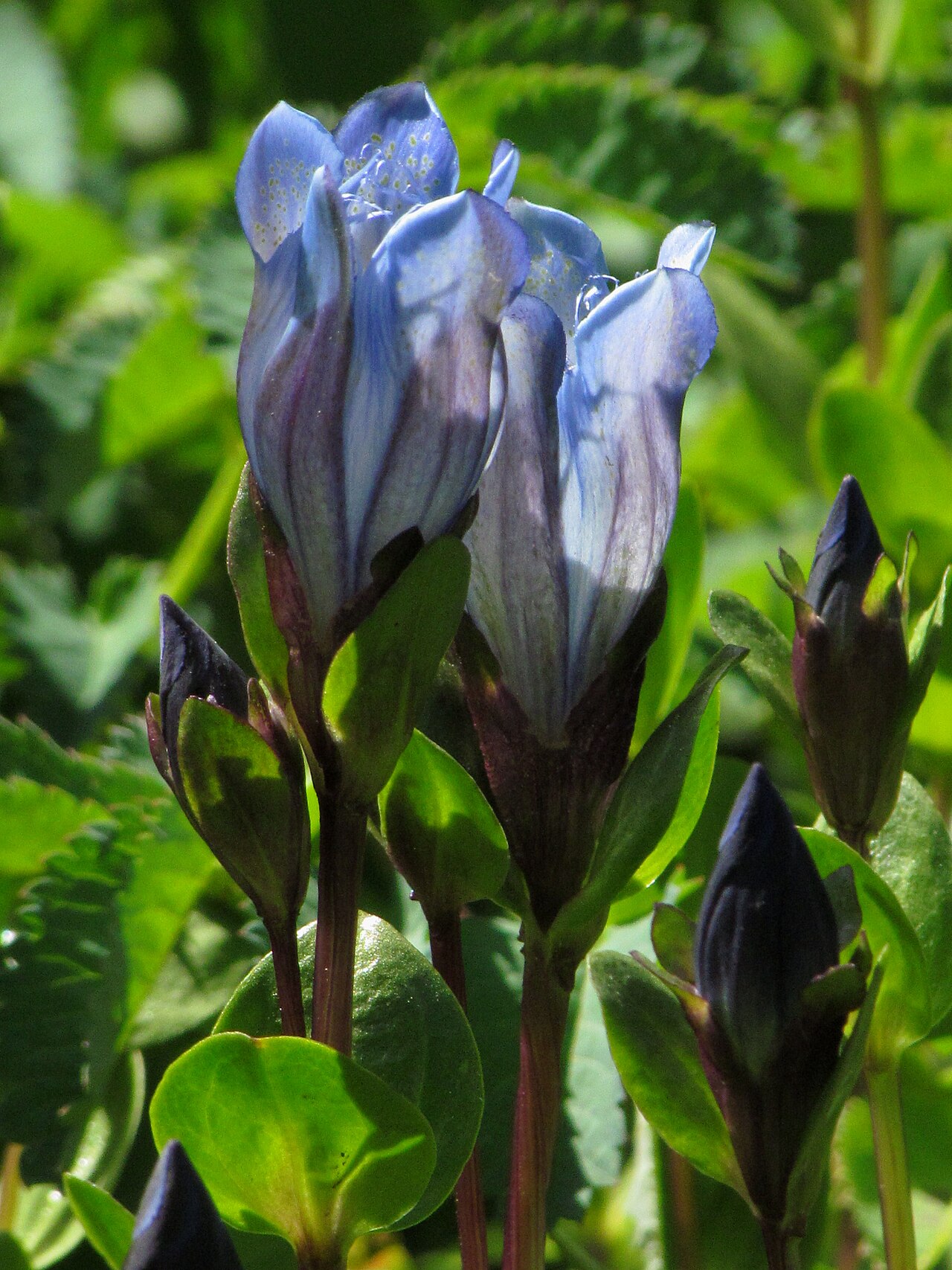
The flowers are borne singly or in small groups of up to three at the tips of the stems. Each is an upright funnel or bell about 1 to 2 inches long, deep blue to blue-violet, sometimes mottled with green inside and with a paler throat. The five (sometimes four) spreading lobes alternate with small folded pleats that have a few fine teeth at the tip, which is where the name pleated gentian comes from. Like many gentians, the flowers tend to close in cold, cloudy weather. Bloom time is about July to October.
Fruit & Seeds
The fruit is a narrow capsule that stays inside the withered flower and splits open in fall to release many tiny, light seeds, which are scattered by wind and water.
Look-alikes
Other blue gentians in the West include the closely related prairie gentian (Gentiana affinis), which has narrower leaves and several smaller flowers clustered along the upper stem, and the small annual and biennial gentians of the genus Gentianella, which have smaller, often fringed flowers. Mountain bog gentian’s broad, oval leaves and large, upright flowers at the stem tips are distinctive.
Safety
The Lady Bird Johnson Wildflower Center warns that all parts of this plant, including the nectar, are poisonous if ingested. Gentians contain very bitter compounds. Do not eat any part of the plant, and keep children and pets from chewing it.
Quick Facts
| Scientific Name | Gentiana calycosa |
| Family | Gentianaceae (gentian family) |
| Plant Type | Herbaceous perennial wildflower |
| Mature Height | 4–12 in, occasionally to 18 in |
| Mature Spread | 6–12 in |
| Growth Rate | Slow |
| Sun Exposure | Full sun to part shade |
| Water Needs | High; constantly moist soil |
| Soil Type | Moist, cool, rocky or gravelly loam |
| Soil pH | Acidic to neutral |
| Bloom Time | July–October |
| Flower Color | Deep blue to blue-violet |
| Fall Color | Leaves may turn reddish in fall |
| Fruit | Narrow capsule with many tiny seeds |
| Deer Resistant | Generally yes; bitter and toxic |
| USDA Hardiness Zones | 3–7 |
Native Range
Mountain bog gentian is native to the mountains of western North America. USDA PLANTS lists it as native in California, Idaho, Montana, Nevada, Oregon, Utah, Washington and Wyoming, and in Canada in British Columbia and Alberta. The Lady Bird Johnson Wildflower Center summarizes its range as British Columbia to northern California and east to western Montana and Wyoming.
It is found in the Sierra Nevada and the mountains of northern California, throughout the Cascades of Oregon and Washington (it is a familiar late-season wildflower at Mount Rainier), the Olympic Mountains, the Blue and Wallowa Mountains, and the northern Rocky Mountains of Idaho and Montana, including Glacier National Park. Farther east and south it occurs in Wyoming’s Teton Range, the Uinta Mountains of Utah and the Ruby Mountains of Nevada.
It grows mostly in the subalpine and alpine zones, in wet meadows, along streams, seeps and lake shores, and in moist crevices and ledges among rocks. It often grows where snow lingers into early summer, keeping the soil wet through the growing season.
📋 Regional plant lists featuring Mountain Bog Gentian: Idaho, Eastern Oregon & Eastern Washington · Montana & Wyoming · Utah & Western Colorado · Western Oregon & Western Washington · California & Nevada
Growing & Care Guide
Mountain bog gentian is a challenging plant outside its mountain home. The Lady Bird Johnson Wildflower Center notes that conditions matching its wet, cold natural habitat must be met for any success. It is best suited to experienced rock garden and alpine gardeners in cool climates, and should only be grown from nursery-propagated plants or legally collected seed, never dug from the wild.
Light
Full sun to part shade. In its native meadows it gets bright mountain light but cool temperatures. In warmer lowland gardens, give it morning sun and afternoon shade.
Soil & Water
It needs cool, constantly moist but not stagnant soil: a gritty, humus-rich mix of loam, sand and fine gravel that stays damp through summer. It does not tolerate drought or hot, dry soil. Acidic to neutral conditions suit it best.
Planting Tips
Plant it in a bog garden edge, a moist scree or trough, or beside a small stream or pond where the roots stay cool and wet. Set plants about 8 to 12 inches apart and mulch with fine gravel to keep the crowns dry while the roots stay moist. It grows slowly and dislikes being moved once established.
Pruning & Maintenance
No pruning is needed. Cut the stems back after they die down in late fall if you wish. Keep competing grasses and vigorous neighbors away, and never let the soil dry out in summer heat.
Propagation
Grow it from seed. The seeds are tiny and need a period of cold, moist stratification: sow on the surface of a gritty mix in fall and leave the pots outdoors over winter, or refrigerate moist seed for 6 to 8 weeks. Seedlings grow slowly and may take two or more years to flower. Mature clumps can be divided carefully in spring.
Landscape Uses
- Alpine and rock gardens: for gardeners in cool climates who can keep it moist
- Bog garden edges: in cool, wet, well-aerated soil beside water
- Pollinator gardens: late-season nectar for bumble bees
- Mountain meadow restoration: in high-elevation wet meadows within its native range
- Wildflower viewing: a highlight of late-summer hikes in western mountains
Wildlife & Ecological Value
In the short mountain summer, mountain bog gentian is one of the last flowers to bloom, giving pollinators a crucial food source before winter.
For Pollinators
Bumble bees are the main pollinators. They crawl deep into the funnel-shaped flowers to reach the nectar at the base, brushing against the anthers and stigma as they go. Bees are sometimes found sheltering inside the flowers on cold days. Late-blooming flowers like this are valuable to queen bumble bees building up reserves before winter.
For Birds
The plant offers little direct food for birds, but the insects it supports and the dense meadow vegetation it grows in provide food and cover for birds that nest and feed in subalpine meadows.
For Mammals
Gentians are bitter and generally avoided by deer, elk and other grazers. Small mammals such as pikas and marmots live in the rocky meadows where it grows, though gentians are not known as a major food for them.
Ecosystem Role
As a late-season bloomer in wet mountain meadows, it extends the flowering season for pollinators. Its clumps help stabilize wet soils along streams and seeps, and the plant is part of the diverse wildflower community that makes subalpine meadows so rich.
Cultural & Historical Uses
The species was named by the German botanist August Grisebach in the 1830s, in his account of the gentians for William Hooker’s Flora Boreali-Americana, from specimens gathered by early collectors in western North America. The epithet calycosa refers to the well-developed calyx, the leafy cup at the base of the flower.
Gentians in general are named after Gentius, an ancient king of Illyria who, according to Pliny the Elder, discovered the medicinal value of gentian roots. Bitter gentian roots have been used for centuries to flavor bitters and aperitifs and in traditional medicine, although these uses come from European species, not from mountain bog gentian.
At Mount Rainier National Park, where it is called Rainier pleated gentian, rangers describe it as one of the last flowers to bloom in the subalpine meadows, and its deep blue flowers signal the end of the short summer season. Many visitors time late-summer hikes to see the gentians in bloom.
Frequently Asked Questions
Why is it called mountain bog gentian?
It grows in wet mountain meadows, seeps and boggy streamsides in the western mountains. It is also called Rainier pleated gentian, after Mount Rainier and the small pleats between its petal lobes, and explorer’s gentian.
When does mountain bog gentian bloom?
It blooms late in the season, from about July into October depending on elevation and snowmelt. It is often one of the last wildflowers flowering in subalpine meadows.
Can I grow mountain bog gentian in my garden?
It is possible in cool climates with constantly moist, gritty soil, such as a bog garden edge or alpine trough, but it is difficult in hot or dry areas. Use only nursery-propagated plants or legally collected seed.
Is mountain bog gentian poisonous?
The Lady Bird Johnson Wildflower Center warns that all parts of the plant are poisonous if ingested. Do not eat it, and keep children and pets from chewing it.
What pollinates mountain bog gentian?
Bumble bees are the main pollinators. They crawl into the large blue flowers to reach the nectar, and they sometimes shelter in the flowers during cold or cloudy weather.

Looking for a nursery that carries Mountain Bog Gentian?
Browse our native plant nursery directory: California · Idaho · Montana · Nevada · Oregon · Utah · Washington · Wyoming