White Marsh Marigold (Caltha leptosepala)
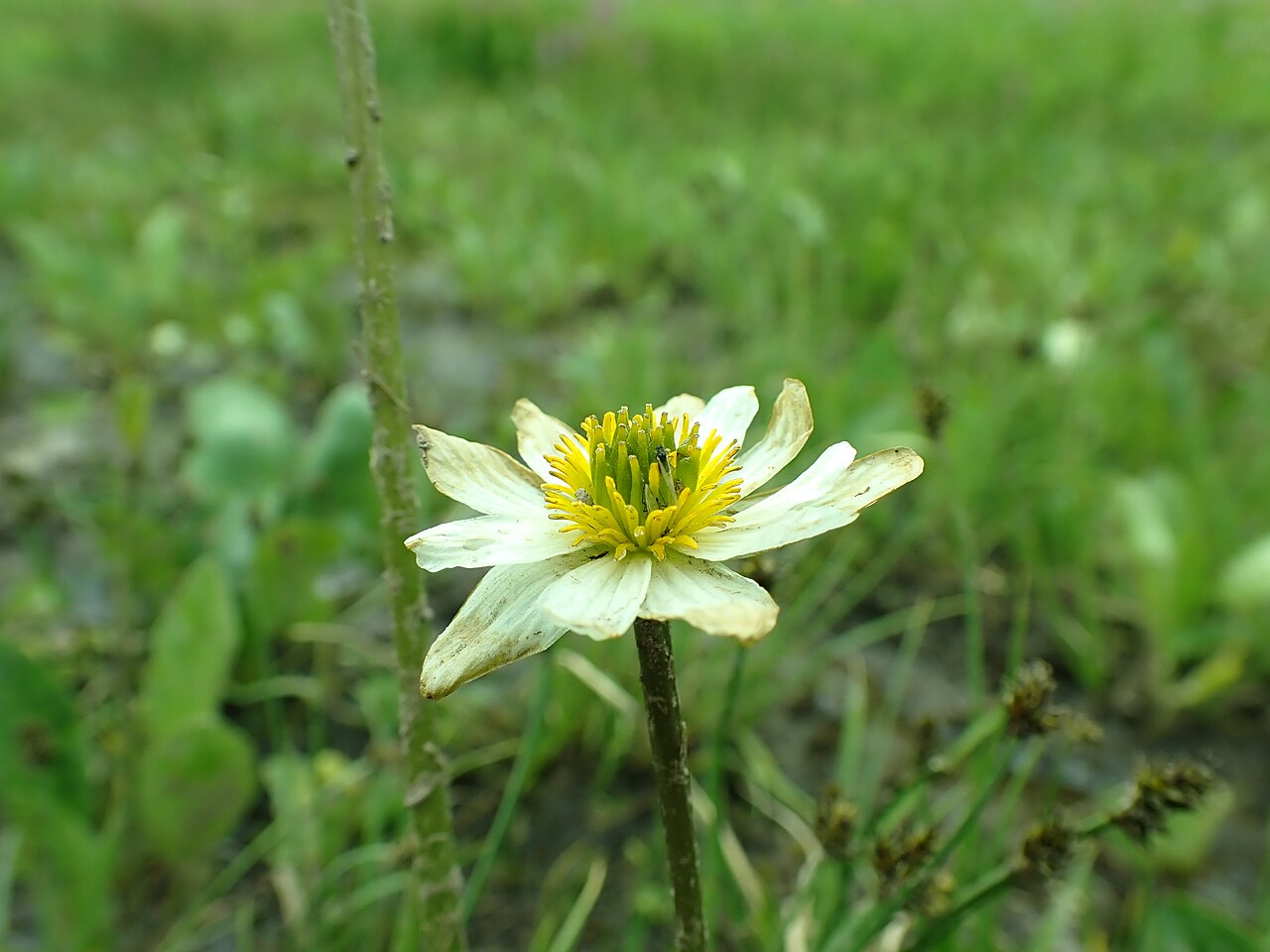
White marsh marigold (Caltha leptosepala) is a small perennial of wet western mountain habitats. White, saucerlike flowers rise above a low clump of smooth leaves, often near snowmelt, seeps or saturated meadow ground. It belongs to the buttercup family, not to the familiar garden marigolds in Tagetes. The shared common name is not a guide to either its care or its safety.
This is a plant for a cool, reliably wet root zone, not a drought-tolerant alpine rockery. In nature, a sunny site may still receive cold seepage or snowmelt that keeps roots supplied with water. Reproducing only the sunshine and stones while omitting that moisture is a common way to misunderstand a mountain plant’s needs.
The name has been used in both broad and narrower taxonomic treatments. This page follows the broad Flora of North America concept for its range, explicitly noting that coastal plants may be separated as Caltha biflora in other floras. The photographs are documented Montana plants identified as Caltha leptosepala. They are not presented as a complete guide to every coastal segregate or local form.
Identification
Low, seasonal growth
The plant forms a low clump of basal leaves with comparatively simple flowering stalks. Height is commonly under a foot, though the apparent size changes between flowering and later leaf development. A specimen in a wet meadow can be partly hidden by sedges. Photograph the base and whole flowering stalk rather than only the showy white flower.
Leaves
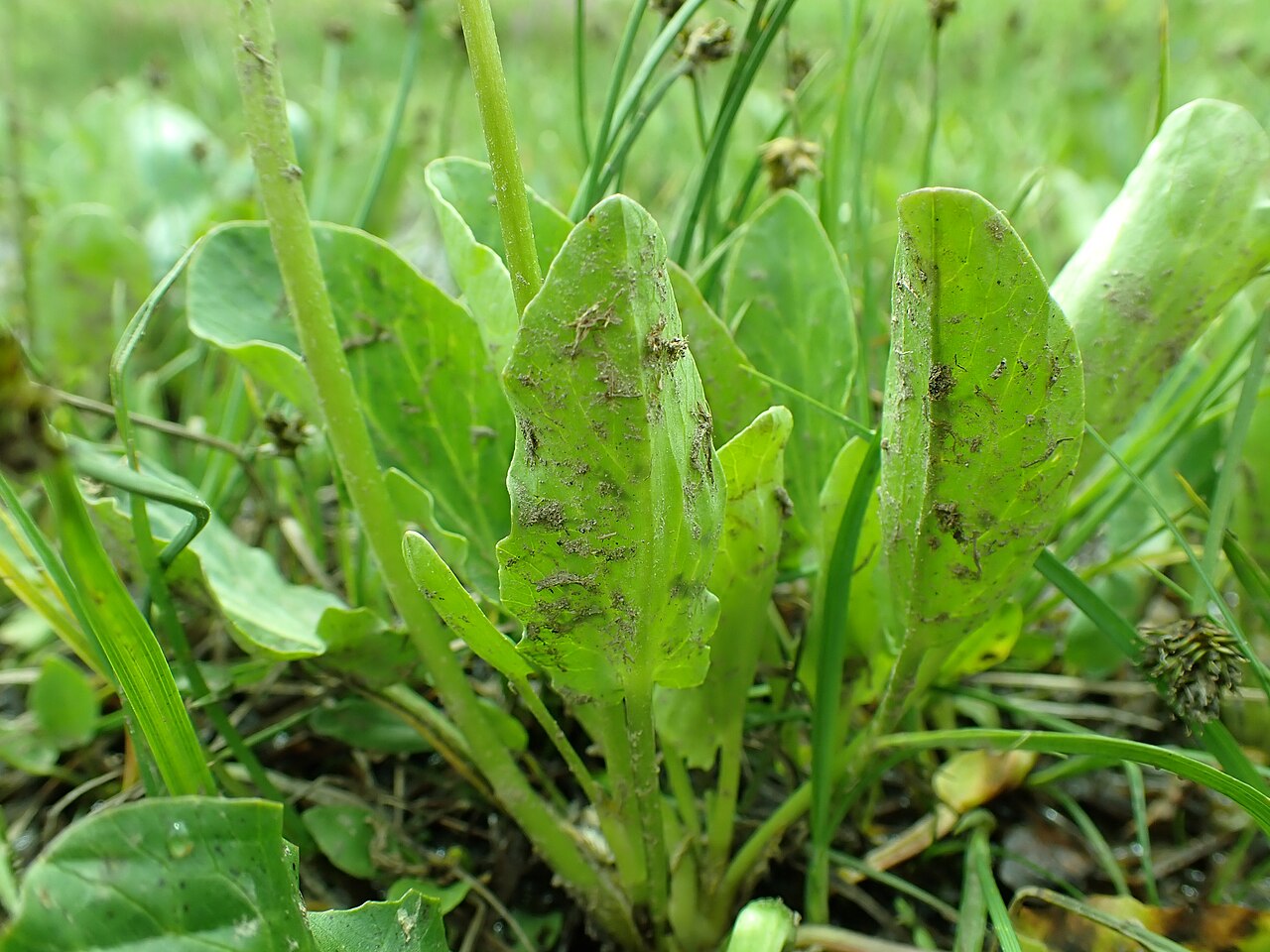
Leaves are smooth, rather fleshy and carried on stalks, with outlines ranging from longer-than-wide to rounded or kidney-shaped under the broad treatment. Shape is taxonomically important, so retain photographs of fully developed leaves and their basal lobes. A single immature leaf is not enough to decide between the regional forms that different floras recognize.
Flowers
The white petal-like structures are sepals; true petals are absent. Numerous yellow stamens surround the developing center. Flowers are borne singly or in small numbers on relatively uncluttered stalks. The contrast of white sepals and yellow reproductive parts is conspicuous, but use leaf and stalk characters to separate it from other buttercup-family plants in the same meadow.
Fruit and taxonomic limits
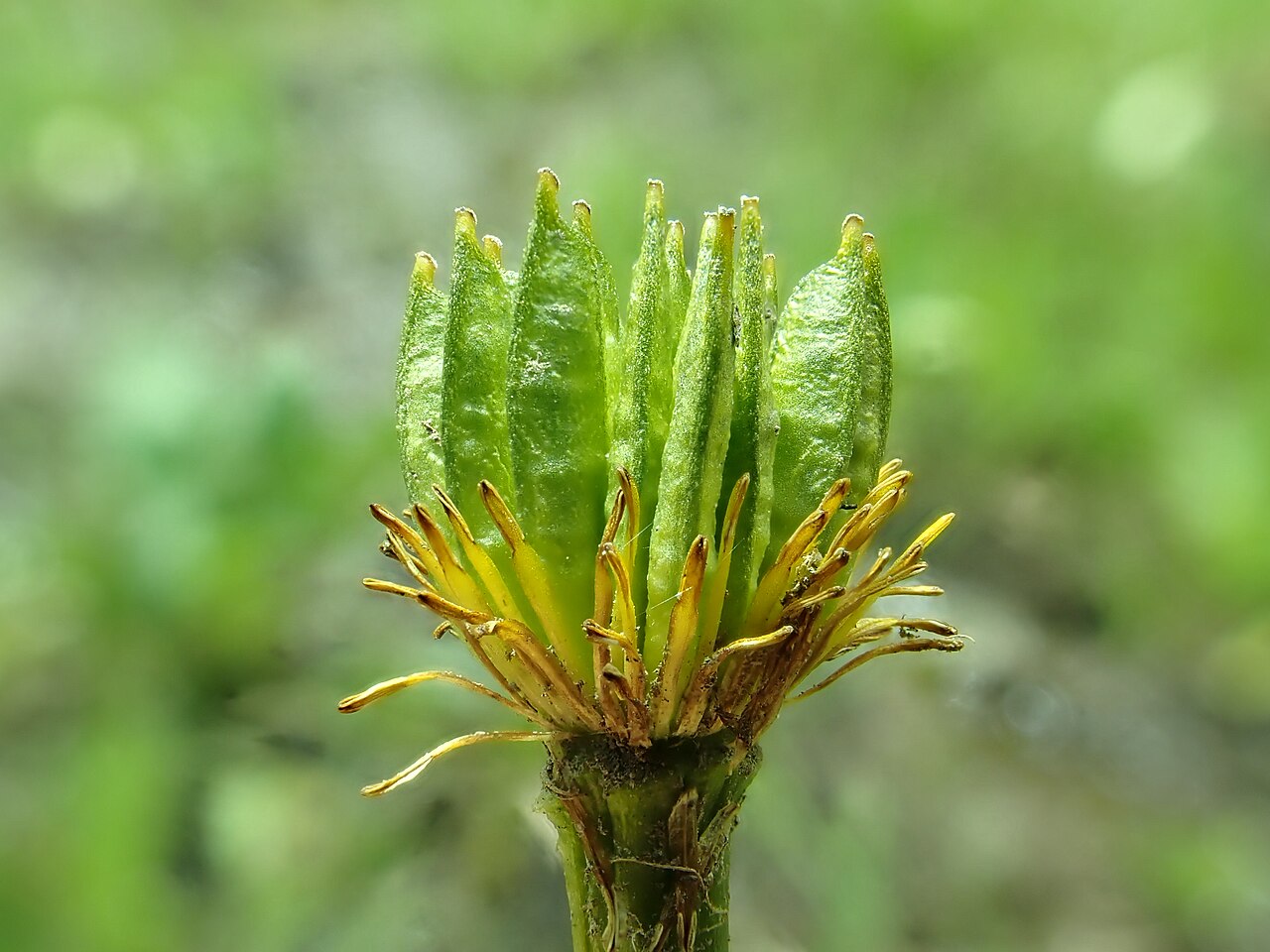
After flowering, clustered follicles develop and later release seeds. Their form, along with leaf shape and flower number, contributes to taxonomic interpretation. Coastal Caltha biflora has sometimes been included in C. leptosepala and sometimes treated separately. For local restoration or a difficult identification, follow the current regional flora rather than forcing every white marsh marigold into a single visual pattern.
Quick Facts
| Scientific Name | Caltha leptosepala, broad Flora of North America treatment |
| Family | Ranunculaceae |
| Plant Type | Herbaceous perennial |
| Mature Height | Usually about 6–12 in; varies with form and season |
| Mature Spread | Small clump; allow space for expanding basal leaves |
| Growth Rate | Seasonal, tied to cool wet conditions |
| Sun Exposure | Sun to partial shade with cool, wet roots |
| Water Needs | Consistently moist to wet; no drought recommendation |
| Soil Type | Moisture-retentive, organic meadow or seep soil |
| Soil pH | Follow local habitat and provenance requirements |
| Bloom Time | Late spring–summer; often June–August in mountain habitat |
| Flower Color | Usually white petal-like sepals with yellow center |
| Fall Color | Herbaceous foliage becomes dormant |
| Fruit | Clustered dry follicles |
| Deer Resistant | Not established; do not infer safety from wildlife browsing |
| USDA Hardiness Zones | Often listed 3–8; cool summer conditions remain essential |
Native Range
Flora of North America reports the broad species from Alaska, Arizona, California, Colorado, Idaho, Montana, Nevada, New Mexico, Oregon, Utah, Washington and Wyoming, with Alberta, British Columbia and Yukon in Canada. The map follows that stated broad treatment. It does not imply continuous distribution through the dry lowlands between mountain populations.
The range must be read together with taxonomy. Some current treatments separate coastal Caltha biflora, while older guides combine coastal and interior forms. Kew’s displayed state list is narrower than the Flora of North America account. Rather than silently blending those lists, this guide names the broad treatment used for the map and directs project-level identification to a regional flora.
Habitat is more decisive for garden success than the state list: wet subalpine and alpine meadows, seepage and snowmelt-associated ground. Flora of North America gives an elevation span of roughly 750–3,900 meters across its treatment. Latitude and local conditions change what that means on the ground; an Alaska site and a southern Rocky Mountain site need not share the same elevation to offer a comparable cool, wet environment.
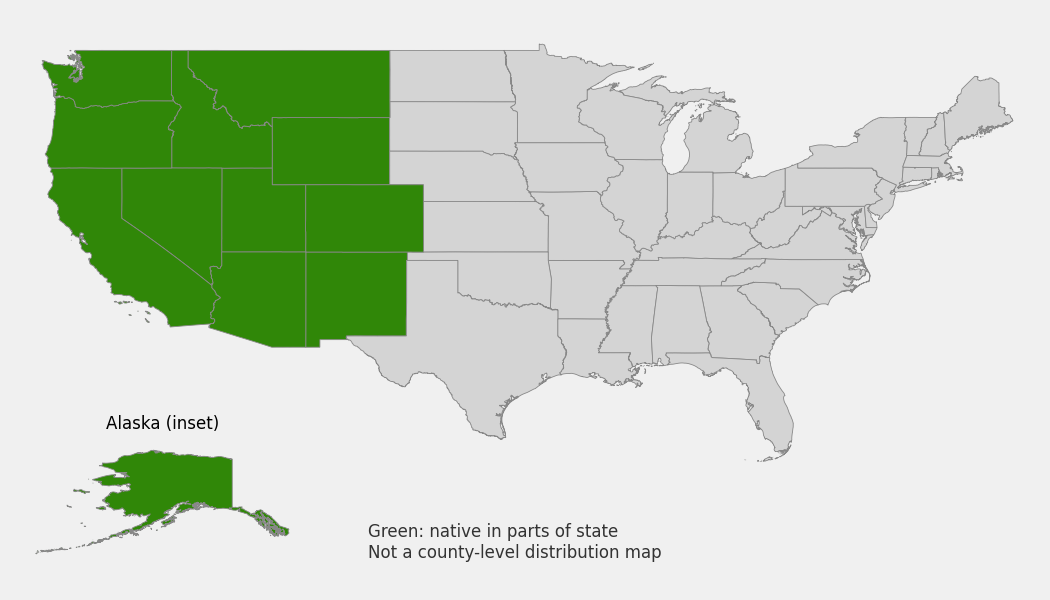
📋 Regional plant list: Alaska
Growing & Care Guide
Decide whether the site is genuinely suitable
A cool climate and dependable moisture are the starting requirements. A small bog garden can become much warmer than a mountain seep, especially beside paving. Before purchasing, observe summer water levels and afternoon temperatures at the proposed location. If the bed dries repeatedly, choose another native species rather than treating a mountain wetland plant as a test of intensive irrigation.
Light and root temperature
Sun can be appropriate where roots remain cool and wet. Partial shade may help in a garden, but dense shade is not a substitute for suitable moisture and climate. A shallow container exposed on all sides can heat rapidly even when its surface looks damp. Think about the entire root environment rather than the number of hours of direct sunlight alone.
Soil and water
Use a moisture-retentive substrate compatible with the plant’s origin, without burying the crown. Wet soil is not identical to deep permanent submergence. In a constructed planting, confirm that the plant sits at a level where roots stay supplied while foliage is not continually drowned. Do not alter a natural seep or wet meadow to imitate a garden arrangement.
Planting and establishment
Set a nursery-grown plant at its original crown level and handle the root system gently. Water immediately and protect the new plant from drying while roots establish. Mark its position because seasonal dormancy can make a living crown seem absent. Avoid planting aggressively spreading neighbors that will quickly overtop the small clump.
Seasonal dormancy
Leaves may decline later in summer even where moisture is adequate. Assess the seasonal pattern before concluding that the plant has died. Keep the site appropriately moist, avoid digging repeatedly to inspect the crown, and watch for renewed growth in the following season. Persistent decline from heat or an unsuitable site is different from normal seasonal retreat.
Seed and division
Use nursery-produced seed or divisions rather than collecting plants from fragile mountain wetlands. Fresh seed and stored seed can behave differently, so obtain the supplier’s species-specific germination advice. Keep seed lots labeled with origin and collection year. Division of a robust cultivated clump may be possible, but do not repeatedly divide a small struggling plant simply to increase numbers.
Maintenance
Remove encroaching weeds carefully so the crown and shallow wet soil are not disturbed unnecessarily. There is no benefit in forcing lush growth with routine fertilizer when the basic problem is temperature or water supply. Keep surrounding paths stable so visitors do not compact the wet bed. A small plant near a path is best viewed without stepping into its root zone.
Safety and identification
Do not treat white marsh marigold as an edible flower or substitute it for garden marigolds in food. Buttercup-family plants can contain irritating compounds, and common-name confusion adds another risk. Use it as an ornamental or ecological planting, and seek qualified advice for any accidental ingestion. A regional botanical identification is also essential before moving material for restoration.
Landscape Uses
- Specialist cool-climate wet garden using nursery-propagated stock.
- Moist alpine planting where summer root temperatures remain moderate.
- Educational native-plant collection with clear taxonomic labeling.
- Restoration only with locally appropriate identity, provenance and hydrology.
Wildlife & Ecological Value
Flower visitors
The open flowers make their central structures accessible to visiting insects during the short mountain growing season. Local observations are preferable to naming a specialist pollinator without evidence. In a garden, avoid pesticide exposure around bloom and maintain other suitable native flowers so that one brief display is not the only resource.
Wet-meadow community
The plant is part of a wet meadow or seep community, not merely an isolated ornamental. Its relationship to moisture helps indicate why draining or compacting such sites can change their vegetation. Protecting the water regime and neighboring plants is more important than adding a few specimens after the habitat has been damaged.
Wildlife browsing is not a food recommendation
Reports or observations of animals browsing a plant do not establish that it is safe for people or domestic animals. Keep the guide focused on habitat and identification rather than extrapolating an edible use. A plant can have ecological value without being promoted as a food crop.
Low-impact observation
Photograph wild plants from durable ground where possible. Wet alpine soils and slow-growing vegetation are easily damaged by repeated foot traffic. A close-up can be obtained without uprooting a specimen. Record location and habitat for identification while leaving the plant and its surrounding community intact.
Cultural & Historical Uses
Caltha leptosepala has accumulated several names in botanical literature, including combinations in Psychrophila and treatments of coastal plants under Caltha biflora. These differences reflect genuine taxonomic questions rather than a reason to ignore scientific names. A useful guide states which concept it follows and preserves the evidence needed for a narrower local determination.
Rock-garden literature has long emphasized the challenge of keeping this attractive mountain plant in cultivation. Its appearance beside snowmelt can tempt gardeners to copy the visible stones and open light while overlooking the continuous cold water supply. The lesson is to reproduce the relevant conditions, not merely the scenery around a photograph.
No traditional food or medicinal preparation is recommended here. Historical uses require an accurately identified taxon, a specific source and context that a general garden page cannot replace. For most readers, its value lies in understanding a distinctive native wetland perennial and protecting the specialized habitats where it naturally grows.
Frequently Asked Questions
Is this the same as a garden marigold?
No. Caltha belongs to Ranunculaceae; garden marigolds in Tagetes belong to Asteraceae. Their care requirements and safety should not be transferred between them.
Can I plant it in a dry alpine rock garden?
Not successfully as a general recommendation. It needs persistent moisture; an alpine origin does not imply drought tolerance.
Why do sources give different ranges?
Some include coastal Caltha biflora within a broad C. leptosepala, while others separate it. This map follows the explicitly identified broad Flora of North America treatment.
Are the white parts petals?
They are petal-like sepals. The flower lacks true petals and has conspicuous yellow stamens in the center.
What if the leaves disappear in summer?
Seasonal dormancy can occur. Mark the crown, maintain appropriate moisture and evaluate the whole seasonal cycle before assuming the plant is dead.
Sources & Further Reading
- Flora of North America: broad taxonomic treatment and range
- Burke Herbarium: identification
- North American Rock Garden Society: cultivation
- Kew: accepted name and narrower displayed distribution
- US Forest Service: Rocky Mountain riparian communities
Find Native Plants
Ask growers about nursery propagation and regional provenance. Browse our AK native plant nurseries, WA native plant nurseries, MT native plant nurseries, CO native plant nurseries directory for suppliers. Explore the native nursery finder.