
Mountain Coyote Mint (Monardella odoratissima)
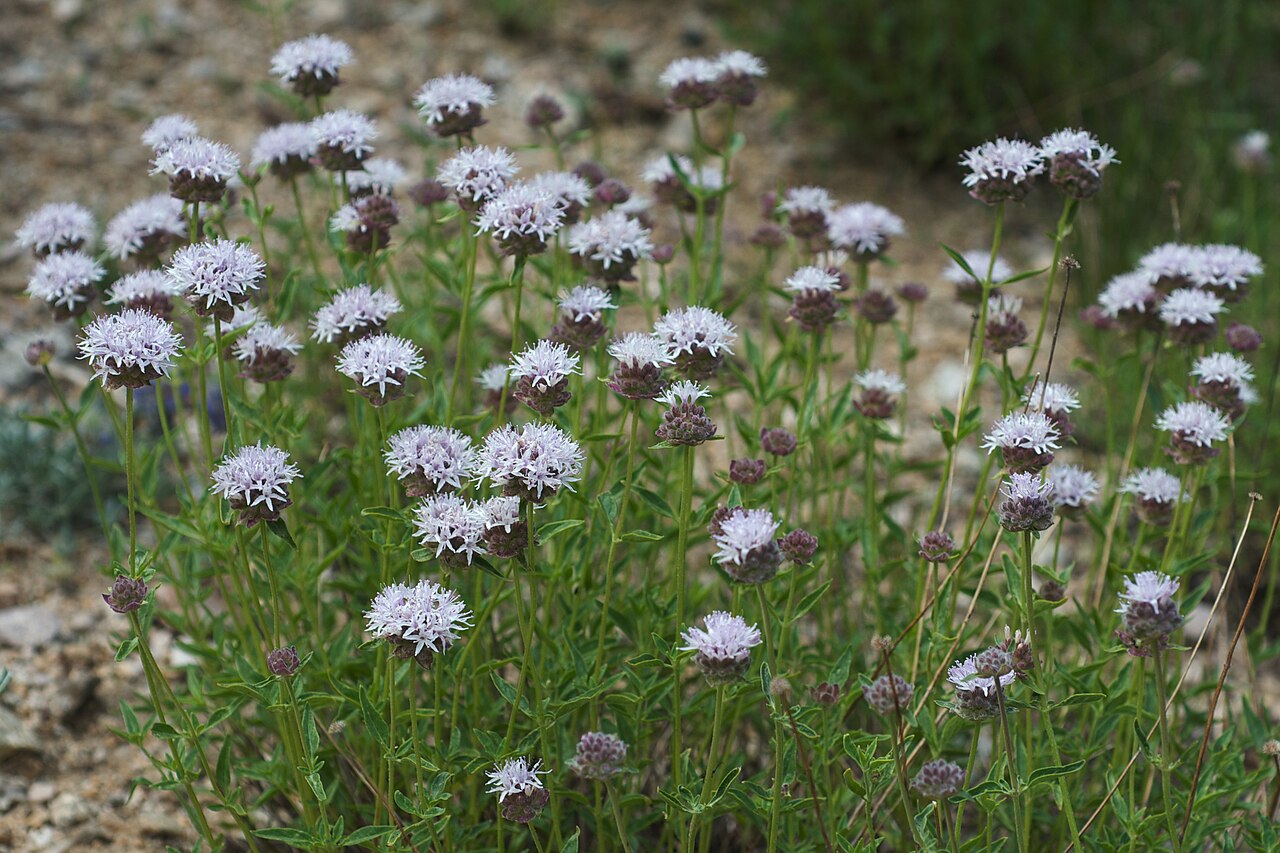
Monardella odoratissima, known as Mountain Coyote Mint, mountain monardella or mountain pennyroyal, is a low, aromatic subshrub of dry, rocky mountain slopes in the western United States. It forms rounded clumps of woody-based stems with small, gray-green, strongly scented leaves, and from early to late summer each stem is topped by a pompom-like head of pale lavender, pink or nearly white tubular flowers. Brush the plant with your hand and the air fills with a sharp, minty fragrance.
It grows from the mountains of Washington and Idaho south through the Cascades, the Siskiyous and the Great Basin ranges to the Sierra Nevada and the mountains of southern Nevada, usually on sunny, well-drained sites: talus, gravelly flats, rock outcrops, open pine forest and sagebrush slopes. It is a magnet for butterflies and bees during the short mountain summer.
For gardeners in the interior West, mountain coyote mint is an excellent choice for rock gardens and dry, sunny borders, where it needs little water once established. This guide covers how to identify it, where it grows, how to grow it, and its value to pollinators. It is a close relative of the coastal and foothill coyote mint (Monardella villosa).
Identification
Mountain coyote mint is easy to recognize in bloom: a low, aromatic, gray-green mound covered in round, pincushion-like heads of pale purple flowers. The strong minty smell of the crushed leaves confirms it.
Stems & Growth Habit
Plants are low subshrubs, usually 6 to 16 inches tall, with many slender, upright or spreading stems from a woody base. The stems are four-angled, like those of most mints, and often reddish or purplish. Older plants form dense, rounded mounds up to about 2 feet across.
Leaves
The leaves are opposite, lance-shaped to narrowly oval, about ½ to 1½ inches long, with smooth edges and a short stalk or none. They range from green to gray-green and may be smooth or finely hairy, depending on the subspecies. All parts of the plant are strongly aromatic, with a scent like pennyroyal or spearmint.
Flowers
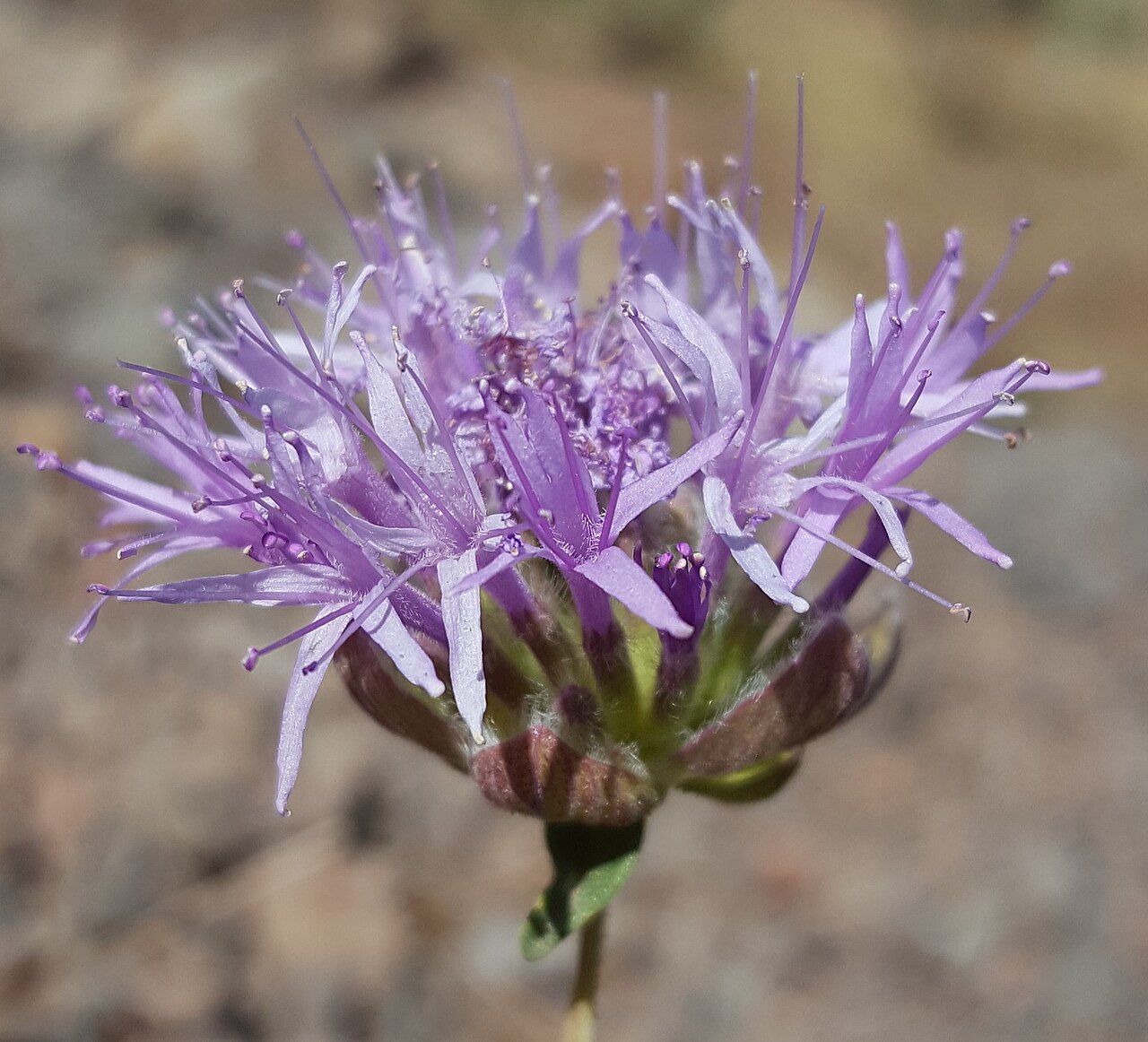
The flowers are packed into dense, rounded heads about 1 to 1½ inches wide at the tips of the stems. Each head sits in a cup of broad, papery bracts that are often tinged purple or pink. The individual flowers are narrow tubes about ½ inch long with five slender lobes and long, protruding stamens, which gives the heads a fuzzy, pincushion look. Colors range from pale lavender and pinkish purple to nearly white. Bloom is mainly from June to August, and into September at higher elevations.
Fruit & Seeds
Like other mints, each flower produces four tiny, smooth nutlets that ripen inside the persistent calyx. The dry heads stay on the plant into fall.
Look-alikes
Coyote mint (Monardella villosa) grows at lower elevations in the California Coast Ranges and foothills and has broader, often hairier, toothed leaves. Other Monardella species in California differ in leaf shape, bract color and habitat. Wild bergamot (Monarda fistulosa) has similar pompom flowers but is a taller, non-woody plant with larger, toothed leaves, growing in meadows and prairies.
Quick Facts
| Scientific Name | Monardella odoratissima |
| Family | Lamiaceae (mint family) |
| Plant Type | Aromatic perennial subshrub |
| Mature Height | 6–16 in |
| Mature Spread | 1–2 ft |
| Growth Rate | Moderate |
| Sun Exposure | Full sun to light shade |
| Water Needs | Low |
| Soil Type | Rocky, gravelly or sandy, well-drained |
| Soil pH | About 6.0–8.0 |
| Bloom Time | June–September |
| Flower Color | Pale lavender, pinkish purple or white |
| Fall Color | None of note |
| Fruit | Four tiny nutlets per flower |
| Deer Resistant | High (strongly aromatic) |
| USDA Hardiness Zones | 4–8 |
Native Range
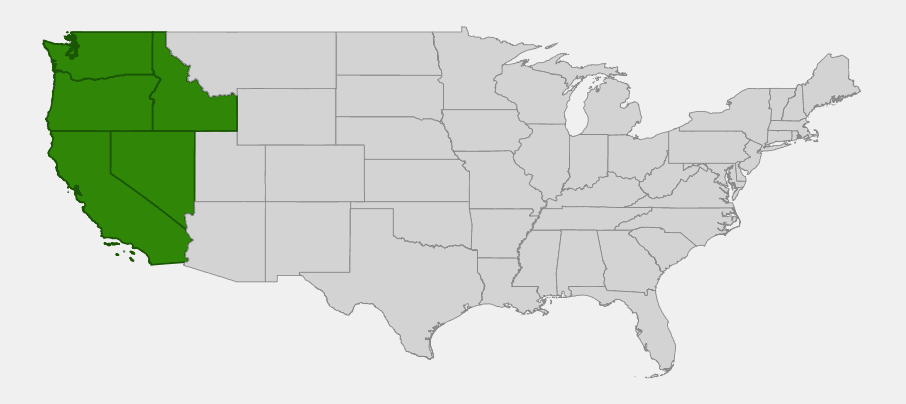
USDA PLANTS lists mountain coyote mint as native in five states: Washington, Oregon, Idaho, Nevada and California. It also reaches southern British Columbia. In Washington it grows mainly along the east slope of the Cascades and in the eastern mountains; in Oregon it is found in the Cascades, the Siskiyou Mountains of the southwest, and the mountains of central and eastern Oregon; in Idaho it is mostly in the southwestern and central mountains.
In California it is widespread in the Klamath Ranges, the Cascades, the Sierra Nevada and the Great Basin ranges, and in Nevada it grows in many of the higher desert mountain ranges, from the Jarbidge Mountains in the north to the Spring Mountains near Las Vegas. Botanists recognize several subspecies, including subsp. glauca and subsp. pallida, which differ in leaf hairiness, leaf color and bract shape.
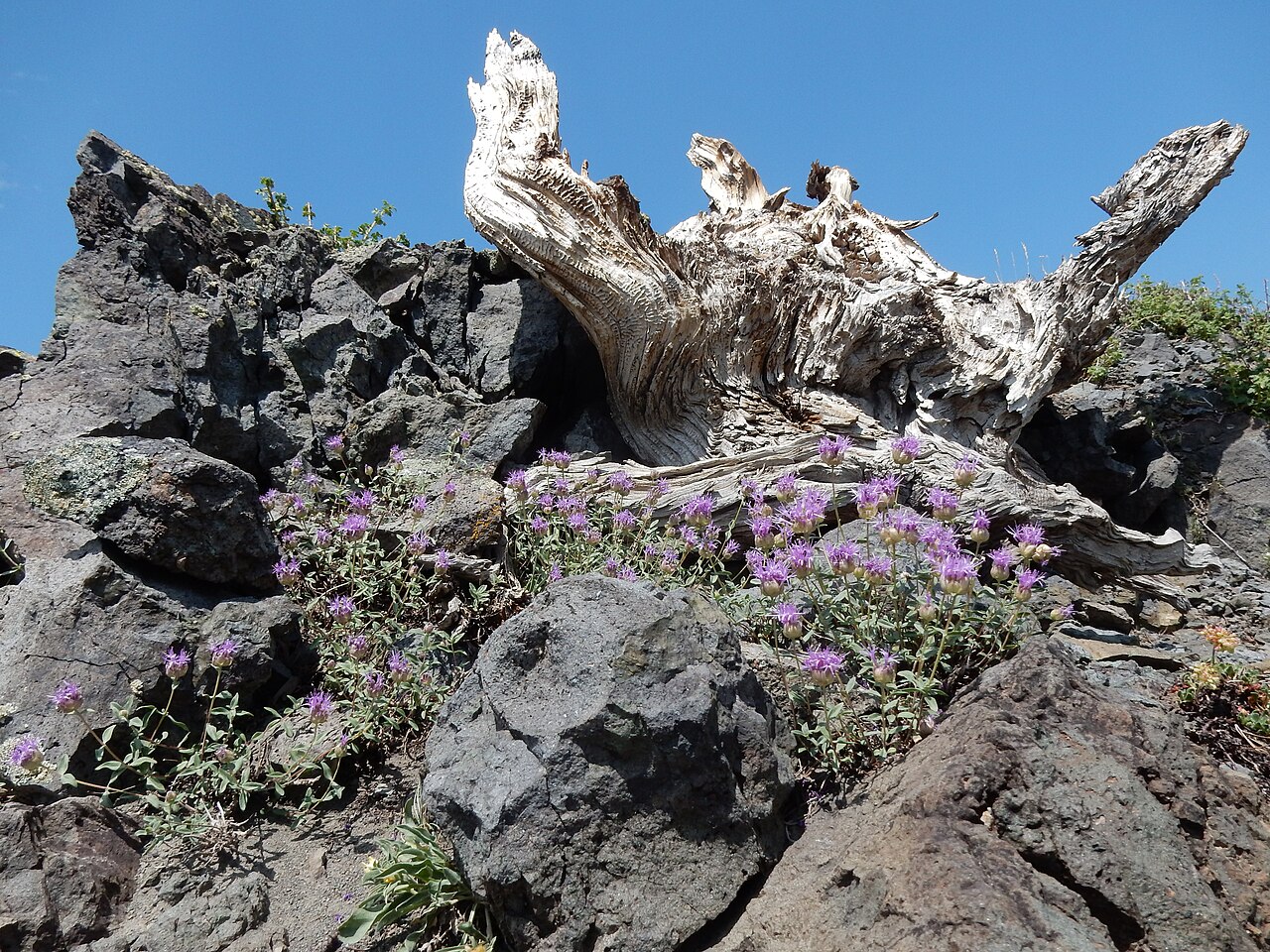
It is a plant of open, sunny, dry habitats: rocky ridges, talus slopes, gravelly flats, sagebrush slopes and openings in pine and fir forests, from mid elevations up to the subalpine zone.
📋 Regional plant lists featuring Mountain Coyote Mint: Idaho, Eastern Oregon & Eastern Washington · Western Oregon & Western Washington · California & Nevada
Growing & Care Guide
Mountain coyote mint is a rewarding, low-water plant for gardens in the interior West and for cool, dry climates generally. The keys to success are full sun, sharp drainage and restraint with water. It is offered by some native plant nurseries in California, Oregon, Idaho and Nevada and grows readily from seed or cuttings.
Light
Full sun is best. It tolerates light shade, such as under open pines, but becomes leggy and flowers less in deeper shade.
Soil & Water
Plant it in lean, rocky, gravelly or sandy soil that drains quickly. Heavy clay and winter wet are the most common causes of failure. Water regularly the first summer, then only occasionally in long dry spells; established plants survive on natural rainfall in much of its range. Do not fertilize.
Planting Tips
Plant in spring or early fall. It is well suited to rock gardens, gravel gardens, dry slopes, crevices in rock walls and the edges of paths, where its fragrance can be enjoyed. A gravel mulch around the crown helps keep it dry. In hot, low-elevation gardens, give it some afternoon shade and expect it to be shorter lived.
Pruning & Maintenance
After bloom, or in early spring, trim the stems back by about a third to keep plants compact and encourage new growth. Do not cut into old, bare wood. Plants may be short-lived in rich or wet gardens; let a few seed heads ripen so that seedlings can replace older plants.
Propagation
Sow seed in fall outdoors or give it about 30 to 60 days of cold, moist stratification before sowing in spring; the seed is small and should be barely covered. Softwood cuttings taken in late spring or early summer root readily. Clumps can also be divided carefully in early spring.
Landscape Uses
- Rock and gravel gardens: a compact, aromatic mound for crevices and gravel beds
- Pollinator gardens: summer nectar for butterflies, bees and other insects
- Waterwise landscapes: a low-water groundcover for dry, sunny slopes
- Fragrance gardens: along paths and patios where the leaves can be brushed
- Mountain and high-desert restoration: a native subshrub for disturbed rocky slopes in its range
Wildlife & Ecological Value
Mountain coyote mint is one of the busiest pollinator plants on dry mountain slopes in midsummer, and its strong scent helps protect it from browsing.
For Pollinators
The tubular flowers produce nectar that attracts many butterflies, including swallowtails, fritillaries, checkerspots and blues, along with native bees, bumblebees and day-flying moths. Its long bloom period in summer makes it a reliable nectar source after spring flowers fade.
For Birds
Small seed-eating birds may pick at the ripe nutlets, and the insects drawn to the flowers feed insect-eating birds. Hummingbirds visit occasionally.
For Mammals
The strongly aromatic foliage is rarely browsed by deer or rabbits, which makes it a good choice for gardens with heavy deer pressure.
Ecosystem Role
As a long-lived subshrub of rocky slopes and talus, it helps stabilize loose soil and gravel, and its flowers support a wide range of pollinators in high, dry habitats where flowers can be scarce in late summer.
Cultural & Historical Uses
The genus Monardella means “little Monarda,” after its resemblance to the bee balms, and the species name odoratissima means “most fragrant.” The names coyote mint and mountain pennyroyal both refer to its strong minty scent.
Several Native American peoples of the Great Basin and the Sierra Nevada, including Paiute and Washoe groups, made a tea from the leaves and flowering tops, both as a beverage and as a remedy for colds, stomach aches and other ailments. Hikers sometimes still brew it as a camp tea.
If you want to try the tea, use plants from your own garden rather than wild stands, and use it sparingly. Like many mints, it contains aromatic oils that are best avoided in large amounts, especially during pregnancy.
Frequently Asked Questions
Is mountain coyote mint easy to grow?
Yes, in the right conditions: full sun, lean, very well-drained soil and little summer water. It struggles in heavy clay, rich soil or wet winters.
Does it attract pollinators?
Yes. Its summer flower heads are visited by many butterflies, native bees and bumblebees, and it is one of the best nectar plants on dry mountain slopes.
Is it deer resistant?
Generally yes. Its strongly aromatic leaves are rarely eaten by deer or rabbits.
How is it different from coyote mint?
Coyote mint (Monardella villosa) grows at lower elevations in the California Coast Ranges and foothills and has broader, often toothed leaves. Mountain coyote mint grows in the mountains and high deserts from Washington and Idaho to California and Nevada.
Can I make tea from it?
The leaves have been used for tea by Native American peoples and hikers. Use garden-grown plants, use it in moderation, and avoid it during pregnancy.

Looking for a nursery that carries Mountain Coyote Mint?
Browse our native plant nursery directory: California · Idaho · Nevada · Oregon · Washington