
Marsh Pink (Sabatia stellaris)
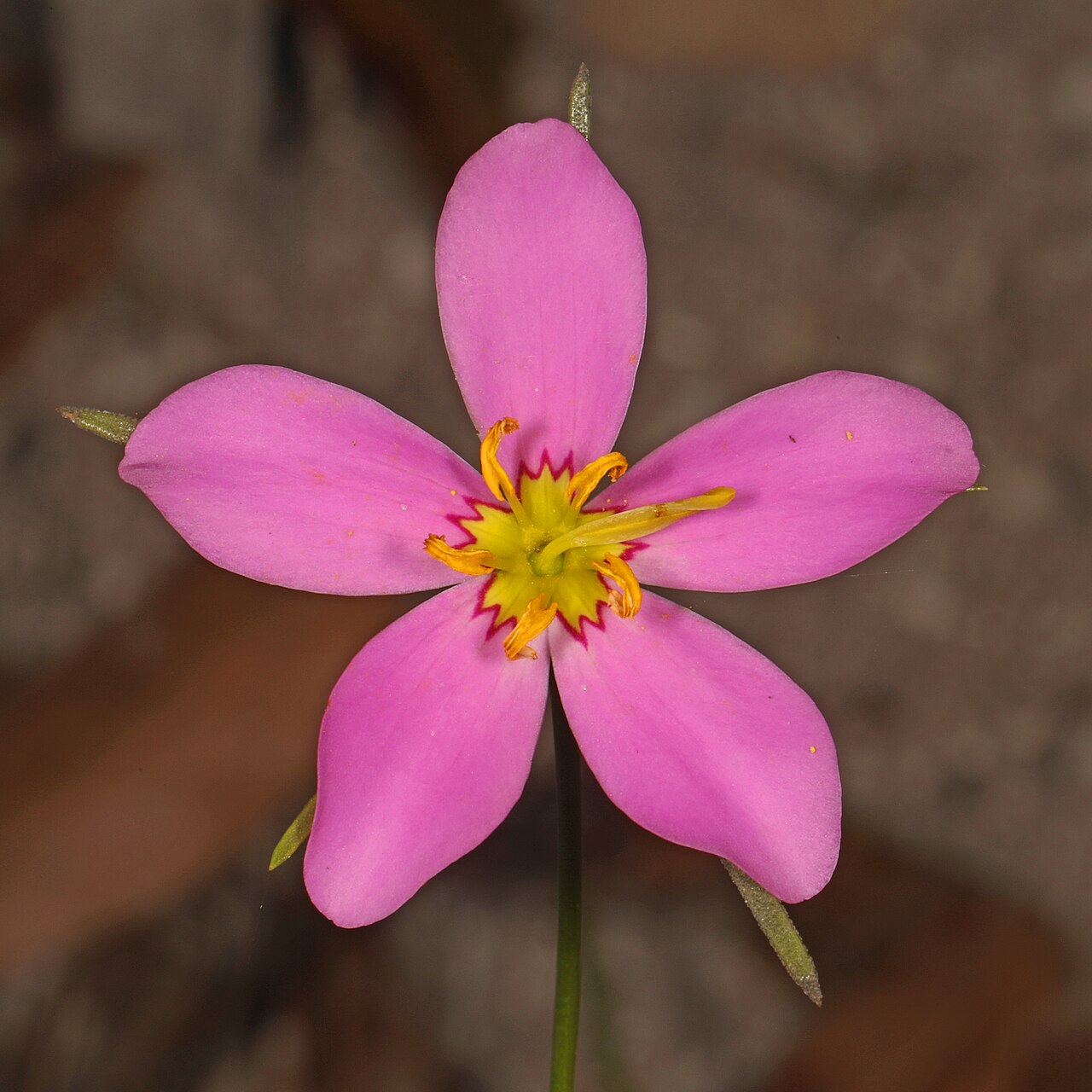
Sabatia stellaris, known as Marsh Pink, sea pink, saltmarsh rose gentian or rose of Plymouth (the USDA name), is a native annual or short-lived biennial wildflower of salt and brackish marshes along the Atlantic and Gulf coasts of the United States. It belongs to the gentian family (Gentianaceae) and is one of about 20 rose gentians (Sabatia) native to eastern North America.
Plants are slender and loosely branched, usually 6 inches to 2 feet tall, with narrow paired leaves and a scattering of flowers at the ends of the branches. Each flower is about 1 to 1 1/2 inches across, with five (sometimes more) rose-pink to pale pink petals around a bright yellow, star-shaped center edged in red. The flowers open from midsummer into fall in the North and almost all year in South Florida.
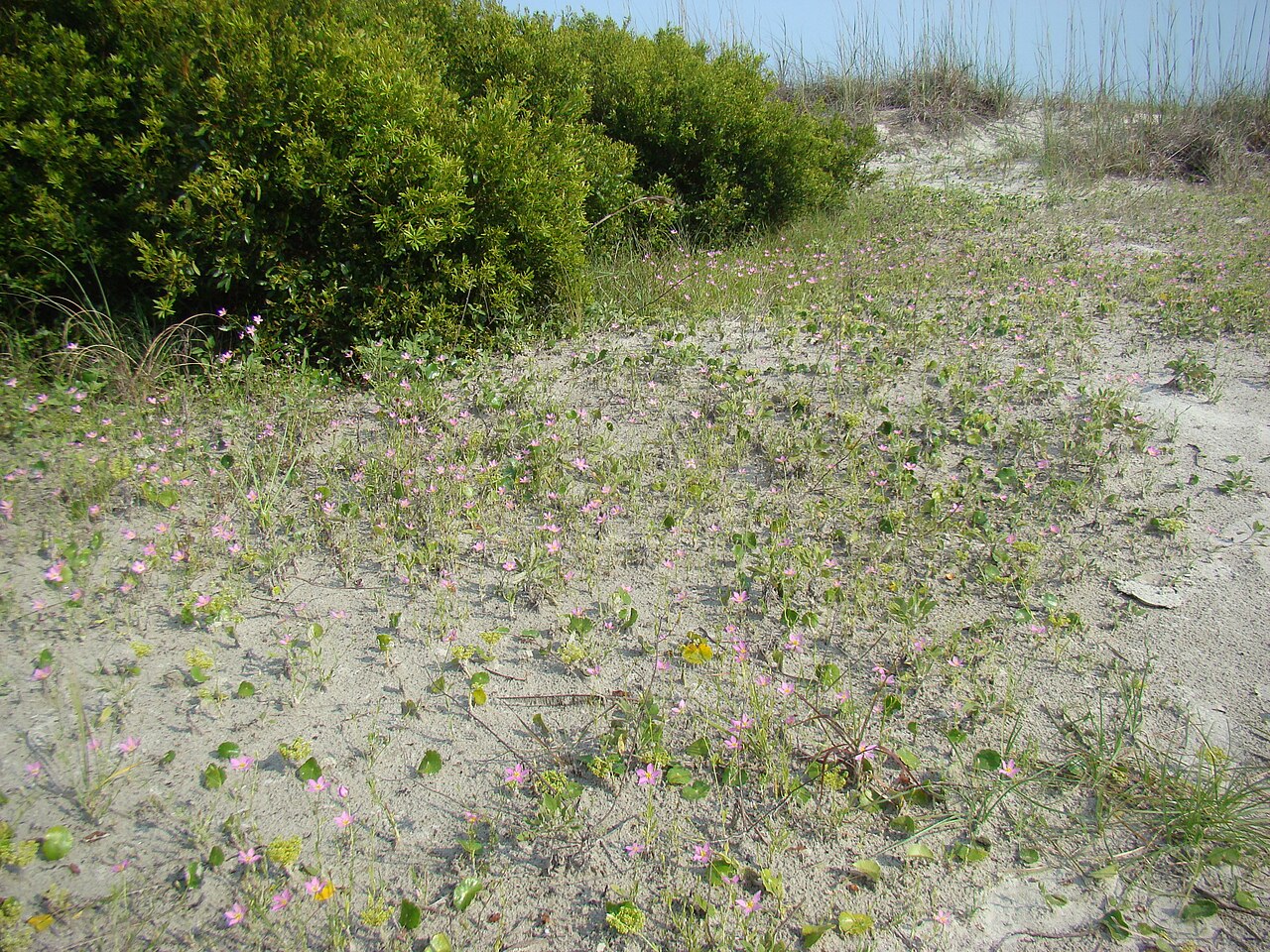
Marsh pink is a plant of the narrow zone where salt marsh meets upland: the upper edges of tidal marshes, salt pannes, wet sandy flats behind dunes and brackish meadows. It is rare and legally protected in several northeastern states, so it is best enjoyed in the wild or grown from purchased seed in a damp, sunny garden near the coast.
Identification
Look for marsh pink on the upper edges of salt and brackish marshes from July to October in the North, and nearly any month in South Florida. The single, long-stalked pink flowers with a yellow star centered in a thin red border identify it.
Growth Habit
Marsh pink is a slender, upright to sprawling annual or biennial, usually 6 inches to 2 feet tall, with a single main stem that branches alternately above. Stems are smooth, round to slightly angled, and often reddish near the base. Plants grow from a small taproot and may form a small basal rosette in their first season.
Leaves
The leaves are opposite, stalkless, smooth and narrowly lance-shaped to elliptic, about 1/2 to 2 inches long. Lower leaves are broader and blunter; upper leaves become very narrow and bract-like. The foliage is sparse, so the plant looks airy and open.
Flowers
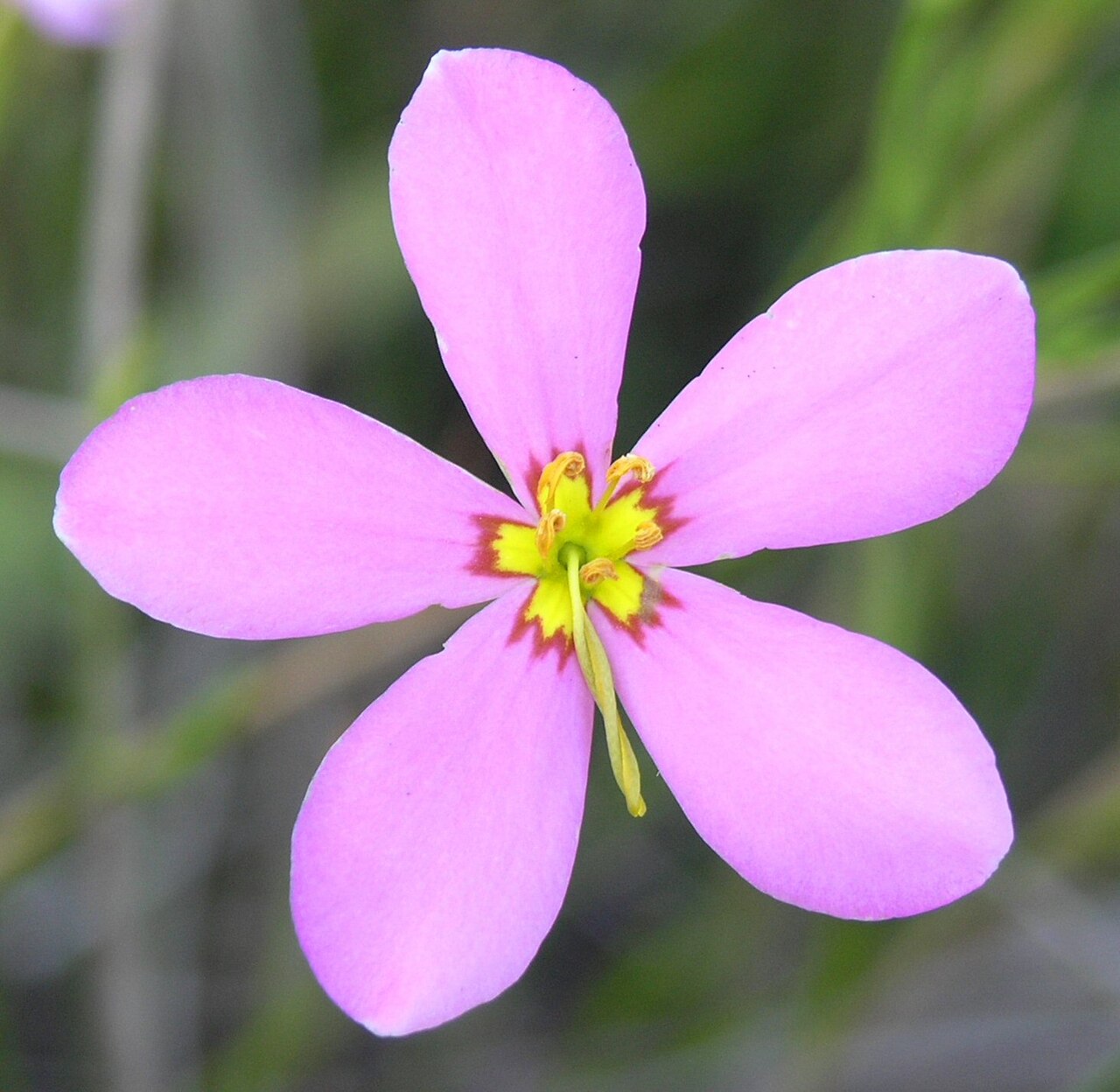
Flowers are borne singly on long, slender stalks at the ends of alternate branches. Each has a five-parted (occasionally more) corolla about 1 to 1 1/2 inches across, rose-pink to pale pink or occasionally white, with a yellow, star-shaped eye outlined in a thin red line. The five yellow anthers twist as they mature, and the style splits into two coiling branches. The calyx lobes are narrow and shorter than the petals.
Fruit & Seeds
After flowering, each flower produces a small, papery capsule that splits to release many tiny seeds. Plants usually die after setting seed, and populations depend on new seedlings each year.
Look-alikes
Rosepink (Sabatia angularis) is taller, with square, winged stems and opposite branches, and grows in upland fields and woods rather than salt marshes. Slender marsh pink (S. campanulata) grows in freshwater bogs and wet pinelands and has very narrow, needle-like leaves. Large marsh pink (S. dodecandra) has larger flowers with 8 to 12 petals. In marsh pink the branching is alternate, the petals usually number five and the habitat is brackish.
Quick Facts
| Scientific Name | Sabatia stellaris |
| Family | Gentianaceae (gentian family) |
| Plant Type | Annual or short-lived biennial wildflower |
| Mature Height | 6 in–2 ft |
| Mature Spread | 6–12 in |
| Growth Rate | Fast; completes its life cycle in one or two seasons |
| Sun Exposure | Full sun |
| Water Needs | High; moist to wet, often brackish soil |
| Soil Type | Sand, peat or marsh mud; tolerates salt |
| Soil pH | About 5.5–7.5 (acidic to neutral) |
| Bloom Time | July–October in the North; nearly year-round in South Florida |
| Flower Color | Rose-pink to pale pink with a yellow, red-edged center |
| Fall Color | None notable |
| Fruit | Small papery capsule with many tiny seeds |
| Deer Resistant | Not well documented |
| USDA Hardiness Zones | 6–11 (grown as an annual) |
Native Range
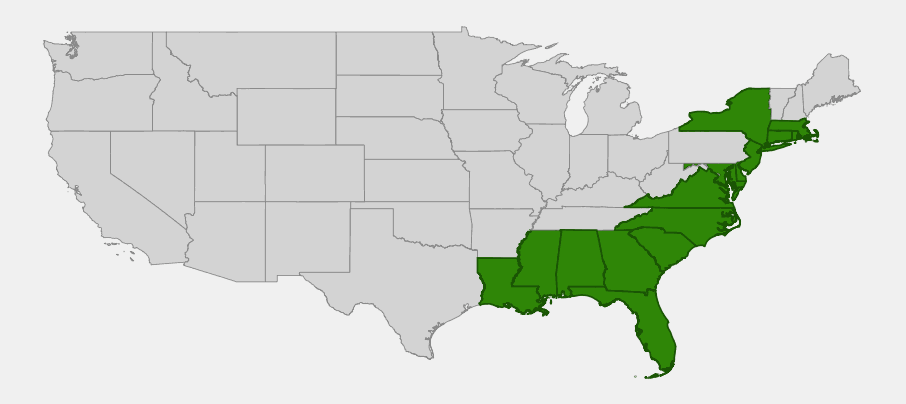
Marsh pink is native to the Atlantic and Gulf coasts of the eastern United States. USDA PLANTS lists it as native in the lower 48 states and records it from 15 states: Massachusetts, Rhode Island, Connecticut, New York, New Jersey, Delaware, Maryland, Virginia, North Carolina, South Carolina, Georgia, Florida, Alabama, Mississippi and Louisiana. It also grows in the Bahamas, Cuba and eastern Mexico.
It is most common from the Carolinas to Florida, where it also grows inland in wet prairies, marl flats and the edges of the Everglades. At the northern end of its range it is rare. Go Botany lists it as endangered in Connecticut and Massachusetts and state threatened in Rhode Island, and the New York Natural Heritage Program lists it as threatened in New York, with only a handful of current populations, some threatened by the invasive common reed (Phragmites). Along the Gulf Coast it reaches west to coastal Louisiana.
Typical habitats are the upper, landward edges of salt and brackish marshes, salt pannes and flats, wet sandy swales behind dunes, brackish meadows and, in Florida, wet prairies and marl flats. It needs full sun, open ground with little competition, and soil that stays moist or is flooded only occasionally by the highest tides.
📋 Regional plant lists featuring Marsh Pink: New York, Pennsylvania & Northern New Jersey · Connecticut, Massachusetts & Rhode Island · New Hampshire, Maine & Vermont · Maryland, Virginia & West Virginia · Delaware, Southern New Jersey & Long Island · Alabama, Georgia & Mississippi · North & South Florida · North & South Carolina · Arkansas, Louisiana, Eastern Oklahoma & Eastern Texas
Growing & Care Guide
Marsh pink is not a common nursery plant, and as an annual or biennial it has to reseed to persist. It is worth trying from purchased seed in a damp, sunny garden or rain garden near the coast. Never collect plants or seed from wild populations, especially in the Northeast, where it is state-listed and protected.
Light
Full sun is essential. Marsh pink is a plant of open marsh edges and does not tolerate shade or competition from taller plants.
Soil & Water
Grow it in sandy or peaty soil that stays consistently moist to wet, such as the margin of a pond, a rain garden or a low spot that collects water. It tolerates brackish water and salt spray but does not need salt. Do not let the soil dry out, especially while seedlings are small.
Planting Tips
Sow seed on the surface of moist, bare sand or peat in fall or late winter; the seed is tiny and needs light to germinate. Keep the site free of dense grasses and taller plants so seedlings get full sun. Plant in drifts so the flowers make a show, and pair it with low, salt-tolerant natives.
Pruning & Maintenance
Do not deadhead if you want it to return; plants must drop seed each year. Keep surrounding vegetation short and open, and leave some bare, moist ground for new seedlings. It has no serious pest problems.
Propagation
Propagate only from seed. Surface-sow fine seed on moist, sandy mix, keep it constantly damp, and give it cold, moist stratification for a few weeks if sowing in spring. Germination is irregular, and seedlings are tiny at first. It does not divide or transplant well.
Landscape Uses
- Coastal gardens: salt-tolerant color for damp, sunny sites near the shore
- Rain gardens and pond edges: moist, open margins with low companions
- Pollinator gardens: summer and fall flowers for bees and small butterflies
- Marsh restoration: upper-marsh and salt panne plantings from local seed
- Wildflower viewing: a summer highlight of coastal marsh walks
Wildlife & Ecological Value
Marsh pink adds bright color to the edges of salt marshes at a time of year when few other marsh plants are in showy bloom.
For Pollinators
The open flowers are visited by small native bees, bumblebees, syrphid flies and small butterflies. The yellow, red-edged star at the center acts as a nectar guide, directing visitors to the twisting anthers and stigma.
For Birds
Marsh pink is not a significant food plant for birds, but it is part of the upper-marsh plant community that shelters sparrows, rails and other marsh birds.
For Mammals
Use by mammals is not well documented. Like other gentians, the plant contains bitter compounds that may discourage grazing.
Ecosystem Role
As an annual of open salt pannes and marsh edges, marsh pink depends on natural disturbance such as storm tides, ice scour and fire to keep ground open. Its decline in the Northeast is linked to shoreline development, ditching and the spread of common reed, which crowds out low, sun-loving plants.
Cultural & Historical Uses
The genus Sabatia honors the 18th-century Italian botanist Liberato Sabbati, and the species name stellaris means star-like, for the star-shaped flower and its yellow center. Older names include sea pink and rose of Plymouth, the name USDA uses today.
Rose gentians, like many gentians, are very bitter. Some species were used in traditional folk medicine as a bitter tonic, but there is little documented use of marsh pink specifically, and it should not be used as a home remedy.
Marsh pink was a favorite of 19th-century New England naturalists and appears in older wildflower books as one of the loveliest flowers of the salt marsh. Today many northern populations are protected, and conservation groups monitor them as indicators of healthy upper-marsh habitat.
Frequently Asked Questions
Is marsh pink an annual or a perennial?
It is an annual or short-lived biennial. Plants flower, set seed and die, so populations depend on new seedlings each year.
Where does marsh pink grow?
It grows along the Atlantic and Gulf coasts from Massachusetts to Florida and Louisiana, mostly on the upper edges of salt and brackish marshes and in wet sandy flats behind dunes.
Is marsh pink rare?
It is common in parts of the Southeast but rare in the Northeast. It is listed as endangered in Connecticut and Massachusetts and threatened in Rhode Island and New York.
Can I grow marsh pink in my garden?
Yes, from purchased seed, in full sun and consistently moist, sandy or peaty soil with little competition. Never collect plants or seed from the wild.
How do I tell marsh pink from rosepink?
Rosepink has square, winged stems with opposite branches and grows in upland fields and woods. Marsh pink has round stems with alternate branches and grows in salt and brackish marshes.

Looking for a nursery that carries Marsh Pink?
Browse our native plant nursery directory: Alabama · Connecticut, Delaware, Florida & Georgia · Louisiana, Maryland, Massachusetts & Mississippi · New Jersey, New York & North Carolina · Rhode Island, South Carolina & Virginia