Bog Laurel (Kalmia polifolia)
Kalmia polifolia, commonly called Bog Laurel or Swamp Laurel, is a low, wiry evergreen shrub of cold northern peatlands in the heath family (Ericaceae). It is one of the signature plants of sphagnum bogs across the northern tier of the United States and most of Canada, where it forms loose, sprawling colonies alongside sphagnum moss, sedges, and other acid-loving dwarf shrubs. Few native plants announce a true bog as unmistakably as a mat of Bog Laurel in bloom.
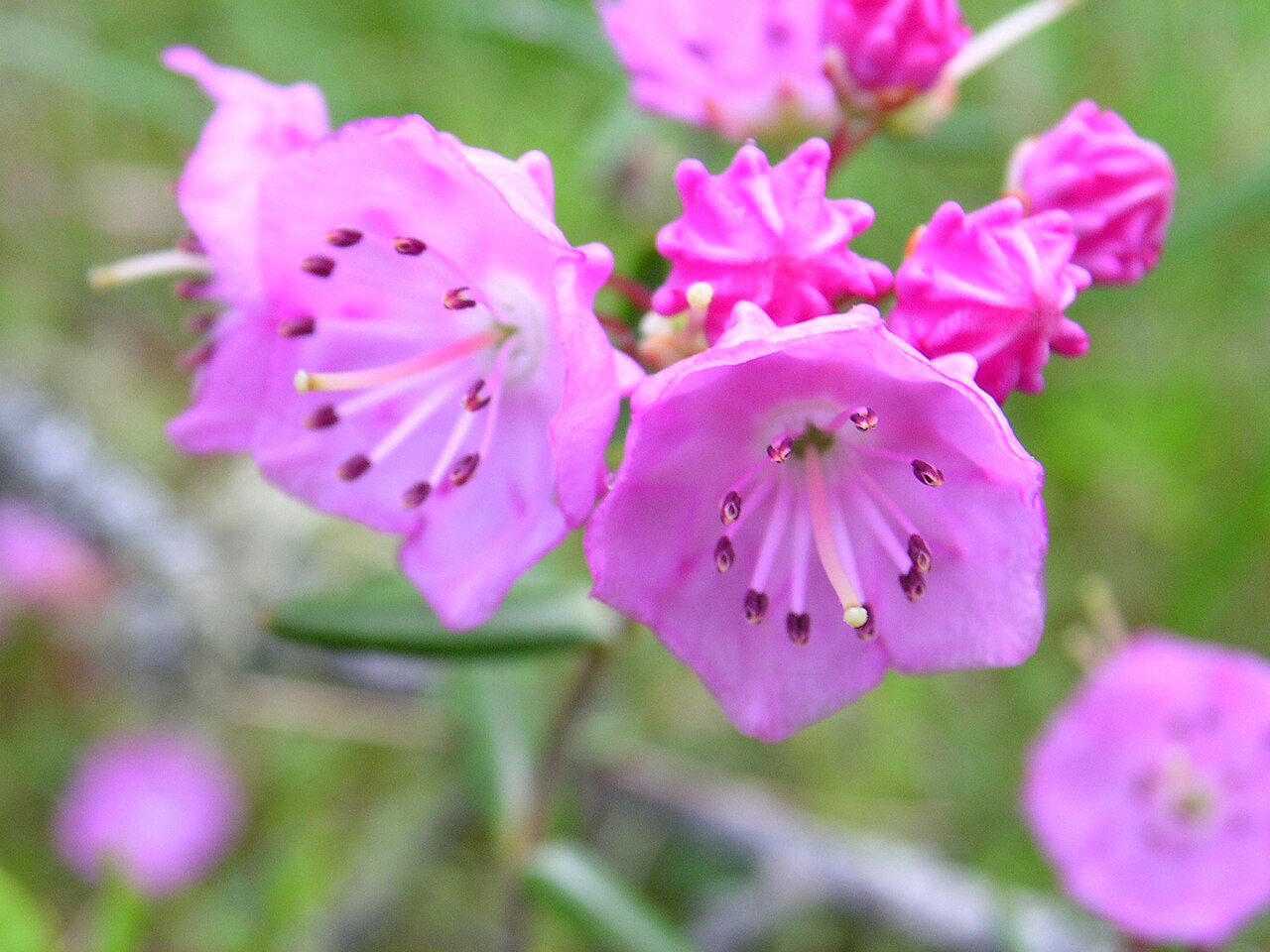
The plant rarely exceeds knee height, with narrow, blue-green leaves that curl tightly under at the margins — an adaptation that helps the leaf conserve moisture even though the roots sit in saturated peat. In late spring, clusters of rose-pink to rich magenta flowers open at the branch tips, each one a small, five-sided saucer with ten anthers tucked into pockets in the petals. An insect landing in the flower trips the anthers, which snap forward and dust the visitor with pollen — the same spring-loaded mechanism found in its close relative, Mountain Laurel.
Bog Laurel is not a plant for the ordinary perennial border. It belongs in a constructed bog garden, a rain garden with a permanently saturated, acidic pocket, or a naturalistic planting around a pond edge where the water table stays high year-round. Grown in the right conditions, it is long-lived, needs no fertilizer, and rewards patience with a flush of color precisely when most spring ephemerals have already faded.
Identification
Bog Laurel is a low, much-branched evergreen shrub, typically 8 to 24 inches tall, occasionally reaching 3 feet in favorable sites, and often wider than it is tall as the stems sprawl and root where they touch wet moss.
Bark & Stems
Young twigs are slender, two-angled or winged in cross-section, and reddish-brown, aging to gray-brown bark on the older, woody base. The low, wiry stems often lean or recline across the sphagnum hummocks rather than standing upright, rooting at nodes that stay in contact with the wet moss.
Leaves
Leaves are opposite, evergreen, and narrowly oblong to lance-shaped, ½ to 1½ inches long. The upper surface is dull blue-green; the underside is whitened with a fine waxy bloom. The margins roll under (revolute), a classic bog-shrub adaptation that reduces water loss through the leaf’s underside even when the roots are sitting in cold, saturated peat. Leaves persist through winter, often taking on a bronzed or purplish cast in cold weather.
Flowers
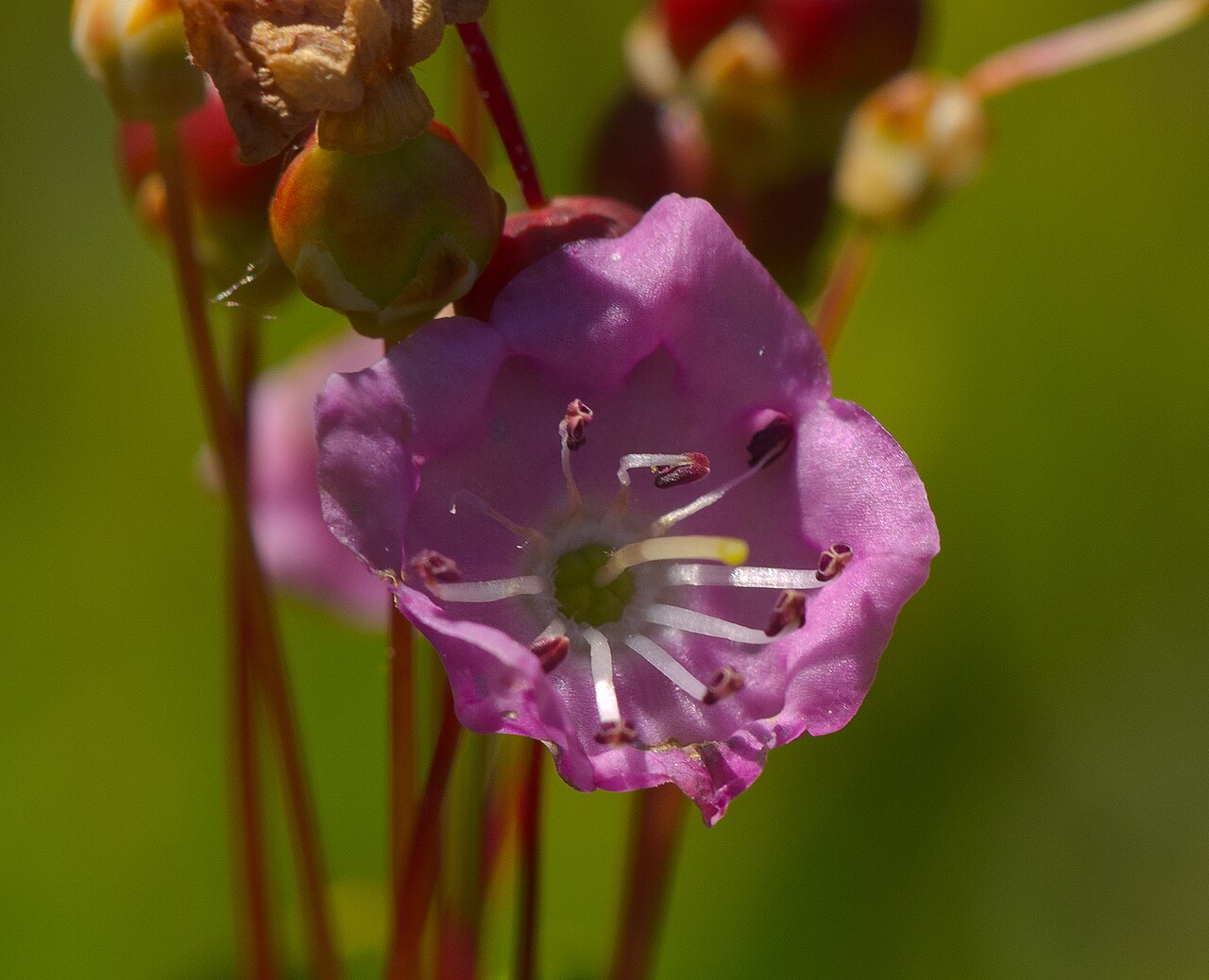
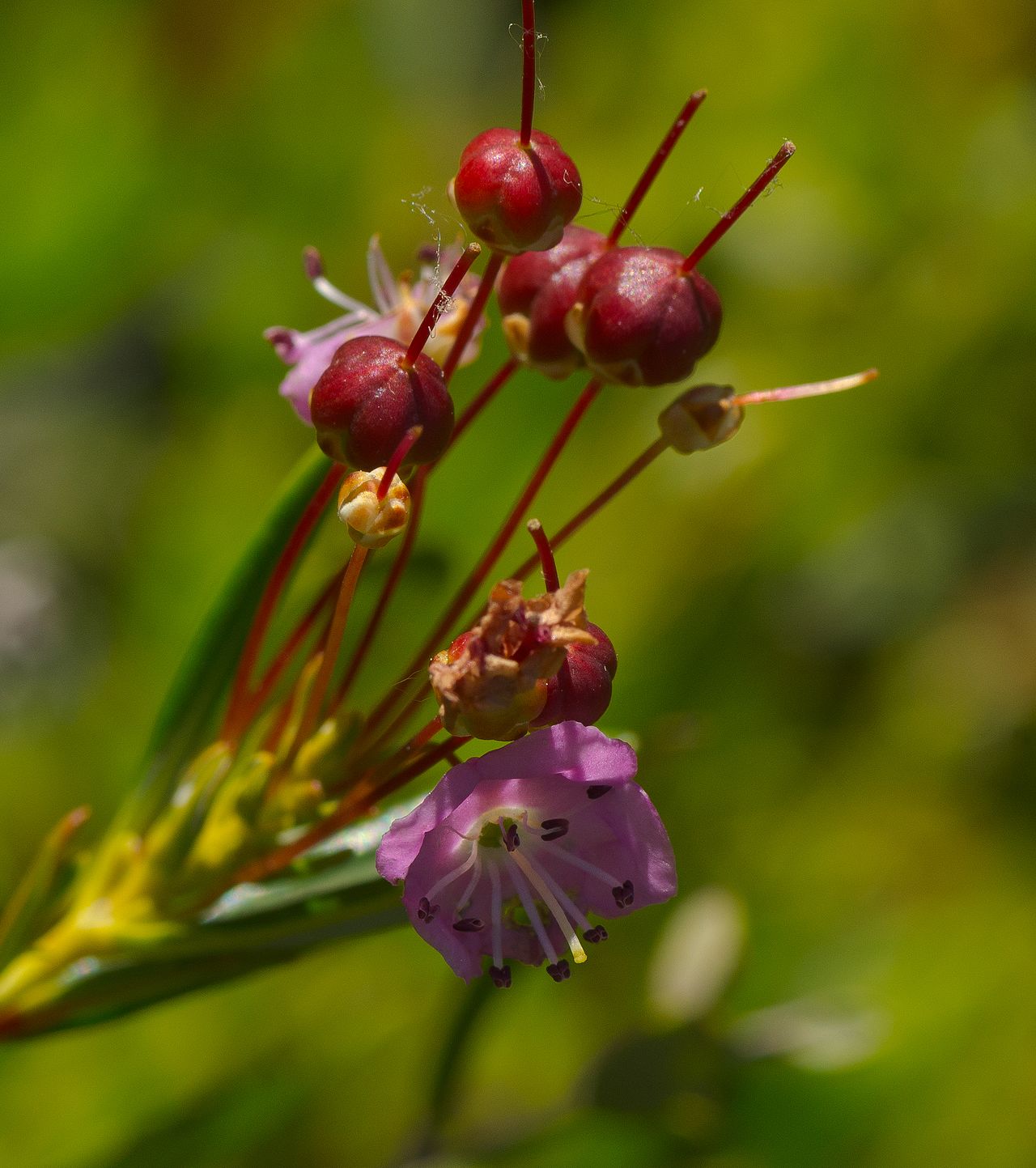
Flowers open in terminal clusters (corymbs) of 2 to 12, each about ½ to ¾ inch across, saucer- or bowl-shaped, with five shallow lobes in shades of rose-pink to deep magenta-purple. Ten stamens arch outward with their anthers caught in small pouches pressed into the corolla; the mechanism releases explosively when a bee disturbs it, flinging pollen onto the insect’s body. Bloom runs from mid-May in the southern part of the range to July at higher latitudes and elevations.
Fruit & Seeds
The fruit is a small, round, woody capsule roughly ¼ inch across, splitting into five parts at maturity to release numerous tiny seeds. Spent capsules are persistent and often visible on the plant well into the following season, giving the shrub a slightly shaggy look even outside bloom time.
Quick Facts
| Scientific Name | Kalmia polifolia |
| Family | Ericaceae (Heath) |
| Plant Type | Evergreen Shrub |
| Mature Height | 1–2 ft (occasionally to 3 ft) |
| Mature Spread | 2–4 ft, sprawling |
| Growth Rate | Slow |
| Sun Exposure | Full Sun to Part Shade |
| Water Needs | High; constantly wet |
| Soil Type | Saturated peat or sphagnum; poorly drained |
| Soil pH | 3.5–5.5 (strongly acidic) |
| Bloom Time | May – July |
| Flower Color | Rose-pink to magenta |
| Fall Color | Evergreen; leaves may bronze in winter |
| Fruit | Small woody capsule |
| Deer Resistant | Yes (toxic foliage) |
| USDA Hardiness Zones | 2–6 |
Native Range
Bog Laurel is a circumboreal-leaning North American species, native across most of Canada and dipping into the northern United States wherever cold, acidic peatlands occur. In the Lower 48, its core range runs through New England and upstate New York, west through the western Great Lakes states of Michigan, Wisconsin, and northeastern Minnesota. It is absent from the drier, warmer country in between and does not occur naturally south of the glaciated Northeast and upper Midwest.
Within this range, Bog Laurel is tied closely to a single habitat type: cold, nutrient-poor sphagnum bogs, muskegs, and boggy pond and lake margins, usually on glacially formed peatlands left behind by the last ice age. It grows in full sun on open bog mats as readily as in the light shade at a bog’s wooded edge, but it is essentially never found outside of consistently saturated, acidic peat.
Because this habitat is naturally patchy and slow to form, Bog Laurel’s distribution is itself patchy even within its native states — common in the Adirondacks, northern New England, and the bog-rich counties of northern Michigan, Wisconsin, and Minnesota, but entirely absent from unglaciated or well-drained terrain nearby. Gardeners should treat the species as a specialist: it will not tolerate an ordinary garden bed no matter how far north the garden sits.
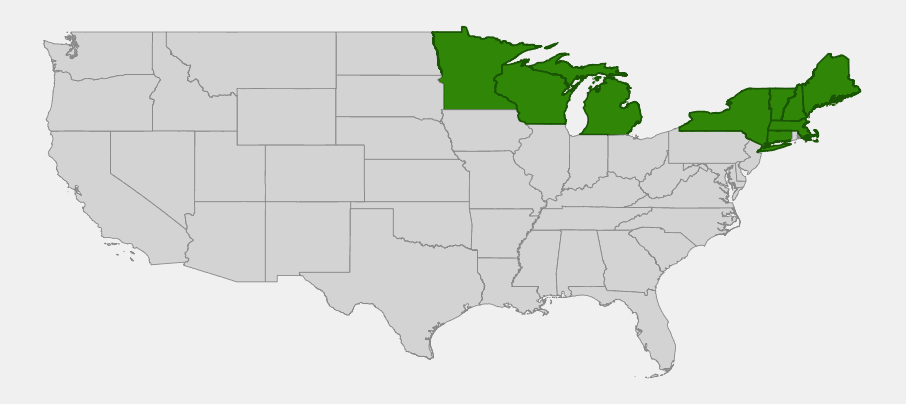
📋 Regional plant lists featuring Bog Laurel: New Hampshire, Maine & Vermont · Connecticut, Massachusetts & Rhode Island · New York, Pennsylvania & Northern New Jersey · Michigan, Wisconsin & Eastern Minnesota
Growing & Care Guide
Bog Laurel is not a plant to try in average garden soil. It is a true wetland specialist, and success depends entirely on reproducing the cold, acidic, saturated conditions of a natural bog. Gardeners who have a boggy, poorly drained corner of the yard — or who are building a dedicated bog garden with a pond liner and peat substrate — can grow it successfully; everyone else should admire it in the wild.
Light
Bog Laurel tolerates full sun to light shade. In the open, sunny conditions of a natural bog mat it stays compact and flowers heavily; in the part shade at a bog’s treed margin it grows slightly taller and more open with somewhat fewer blooms. Avoid deep shade, which weakens flowering.
Soil & Water
This is the species’ non-negotiable requirement: constantly saturated, strongly acidic, nutrient-poor soil, ideally living sphagnum moss or well-decomposed peat. Standing water at or just below the soil surface year-round is normal and beneficial. Ordinary garden loam, even if kept damp, is not wet enough or acidic enough to sustain the plant long-term. Never apply lime, wood ash, or standard fertilizer; both will push the pH away from the acidic range the roots require.
Planting Tips
Plant in early spring into an already-established bog garden with a peat or sphagnum substrate and a reliable water source — a pond liner with a shallow, saturated planting pocket works well in gardens outside a true natural bog. Set plants at the same depth they were growing in their container and firm the peat gently around the roots; avoid burying the crown. Space plants 18 to 24 inches apart to allow for sprawling growth.
Pruning & Maintenance
Little pruning is needed. Trim lightly after flowering only to remove dead or winter-damaged tips; Bog Laurel resents heavy cutting. Top-dress occasionally with a thin layer of fresh sphagnum or acidic peat to keep the root zone cool and moist, especially in gardens where the bog is partially artificial.
Propagation
Propagate by layering low stems that are already in contact with wet sphagnum — they root readily where nodes stay moist — or by seed sown fresh on the surface of damp peat and kept consistently wet; germination is slow and seedlings are very small and slow-growing for the first year or two. Division of established sprawling clumps is also possible in early spring.
Landscape Uses
Bog Laurel earns its place in a narrow but valuable set of garden situations:
- Constructed bog gardens with a peat substrate and permanent water source
- Pond and rain garden margins where the soil stays saturated year-round
- Wetland and peatland restoration projects in its native glaciated range
- Companion planting with pitcher plants, sundews, cranberry, and Labrador tea
- Northern rock-garden or container bog plantings on a porch or patio
Wildlife & Ecological Value
Bog Laurel is a modest but reliable contributor to the specialized food web of a northern peatland, where few flowering plants bloom at all.
For Pollinators
Bumblebees are the primary pollinators, strong enough to trip the explosive anther mechanism that smaller insects cannot trigger effectively. The flowers provide an important nectar source in bogs during late spring, when relatively few other plants are in bloom, making Bog Laurel disproportionately valuable to the bumblebee queens establishing colonies at that time of year.
Birds
Bog Laurel itself offers little direct forage for birds, but the low, tangled growth form adds structural cover for ground-nesting and understory species using bog-margin habitat, and the bogs it indicates are frequently used by species such as palm warblers and Lincoln’s sparrows that specialize in this habitat type.
Mammals
Because Bog Laurel contains grayanotoxins, it is avoided as forage by deer, moose, and livestock, which makes it one of the few shrubs that remains untouched by browsing pressure in bogs that otherwise see heavy deer use on surrounding vegetation.
Ecosystem Role
As a long-lived, slow-growing shrub rooted directly in living sphagnum, Bog Laurel helps stabilize the surface of a bog mat and contributes to the gradual buildup of peat as its tissues decompose slowly in the cold, saturated, low-oxygen conditions. Its presence is considered a strong indicator of an intact, undisturbed bog ecosystem.
Cultural & Historical Uses
Like other members of the genus Kalmia, Bog Laurel contains grayanotoxins throughout its tissues, and historical accounts from Indigenous communities and early naturalists consistently describe it as a plant to avoid rather than use medicinally or as food. Some northern Indigenous groups reportedly used small, carefully prepared external applications in traditional practice, but these uses were not widespread and are not a basis for any modern use of the plant.
Bog Laurel’s primary historical significance has been as an indicator species. Naturalists and surveyors moving through the northern forests used the presence of a flowering Bog Laurel mat as a reliable sign of a true sphagnum bog, useful information when assessing terrain for travel, trapping, or later for peat extraction and land drainage decisions.
In more recent decades, the plant has found a niche role in specialty horticulture, valued by bog-garden and carnivorous-plant hobbyists who grow it alongside pitcher plants and sundews in constructed peat bogs, where its spring flowers provide color before the carnivorous plants reach their summer peak.
Frequently Asked Questions
Is Bog Laurel poisonous?
Yes. Like all Kalmia species, every part of the plant contains grayanotoxins that are toxic if ingested by humans, pets, and livestock. Keep it out of reach of grazing animals and small children, and never use it as an herbal remedy.
Can I grow Bog Laurel in a regular garden bed?
No, not successfully over the long term. Bog Laurel needs permanently saturated, strongly acidic peat or sphagnum. In ordinary garden soil, even moist soil, it typically declines and dies within a season or two.
How is Bog Laurel different from Mountain Laurel?
Mountain Laurel (Kalmia latifolia) is a much larger upright shrub of well-drained woodlands, while Bog Laurel is a low, sprawling shrub restricted to saturated acidic bogs. Both share the same spring-loaded flower mechanism and toxic foliage, but their habitats do not overlap.
When does Bog Laurel bloom?
Bloom time runs from mid-May in the southern parts of its range to July at higher latitudes and elevations, typically lasting two to three weeks per site.
Do I need a pond to grow Bog Laurel?
You need a consistently saturated, acidic substrate, which is most reliably achieved with a lined bog garden or a planting pocket at a pond’s edge. A liner that holds water at or near the soil surface, filled with peat or sphagnum, can replicate these conditions without a full pond.

Looking for a nursery that carries Bog Laurel?
Browse our native plant nursery directory: Connecticut · Maine, Massachusetts, Michigan & Minnesota · New Hampshire & New York · Vermont · Wisconsin