Red Dome Blanketflower (Gaillardia pinnatifida)
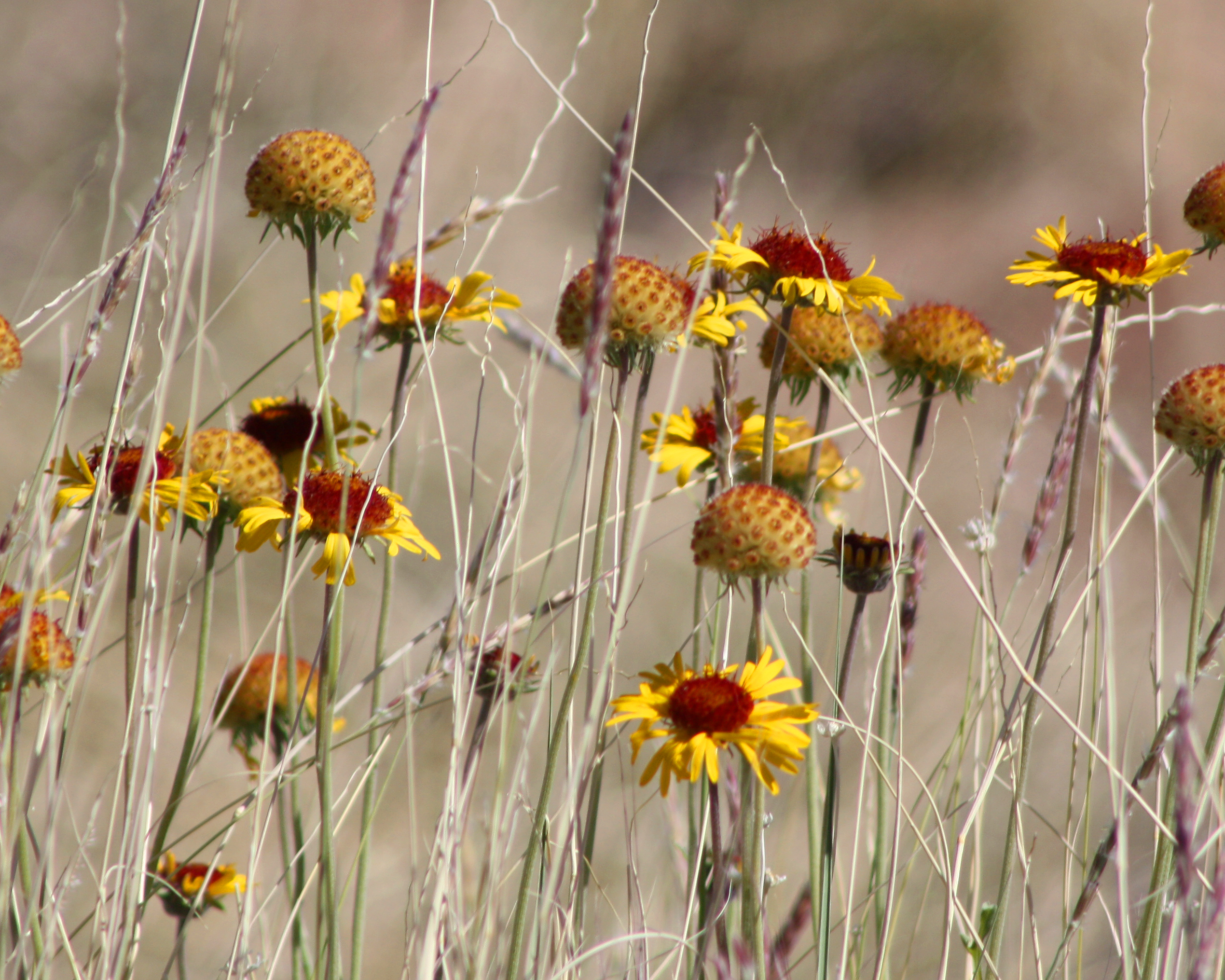
Gaillardia pinnatifida, commonly called Red Dome Blanketflower or Hopi Blanketflower, is a tough, low-growing perennial wildflower of the American Southwest. A member of the sunflower family (Asteraceae), it produces cheerful yellow daisy-like flowers with maroon-red centers from late spring through fall, even in the driest, rockiest soils where little else will bloom. The “red dome” name refers to the plant’s distinctive rounded seed heads, which take on a warm rust-red color as they mature and persist attractively after the petals drop.
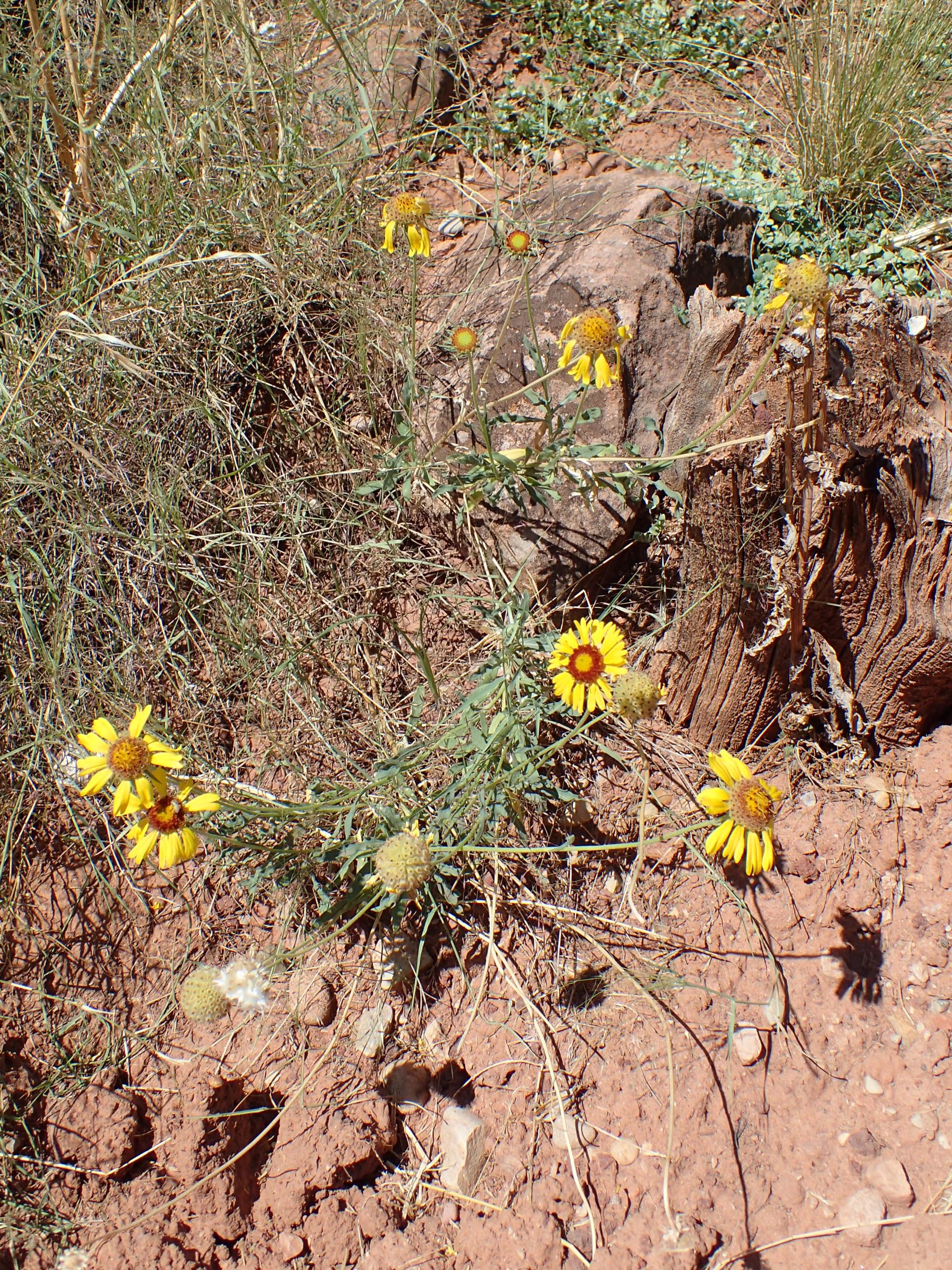
This is a modest plant in stature — rarely topping 2 feet — but an outsized performer in a dry garden. Its deeply lobed, grayish-green leaves form loose rosettes and sprawling mats low to the ground, from which slender flowering stems rise well above the foliage. The combination of long bloom season, minimal water needs, and genuine toughness has made it a favorite for xeriscaping and pollinator gardens across Arizona, New Mexico, and the broader Four Corners region.
Red Dome Blanketflower shows considerable variation across its range — leaf shape, flower color, and disc color all shift somewhat from Arizona to Utah to the southern Great Plains — which is part of what gives it such wide adaptability. Regardless of local form, it remains a reliable nectar source for native bees and butterflies throughout the hottest months, when many other wildflowers have gone dormant.
Identification
Red Dome Blanketflower is a perennial forb growing from a woody base, typically 8 to 22 inches tall, with a similar or somewhat greater spread as mature plants sprawl outward. The stems are slender, branching, and covered in fine hairs, giving the whole plant a slightly grayish, matte look.
Leaves
Leaves are alternate, 1 to 3 inches long, and grow mostly from the base of the plant with fewer leaves reaching up the stems. Most populations show deeply lobed or pinnately divided leaf margins — the “pinnatifida” in the scientific name — though plants in parts of Arizona often have simple, unlobed leaves. The leaf surface is gray-green and softly hairy.
Flowers
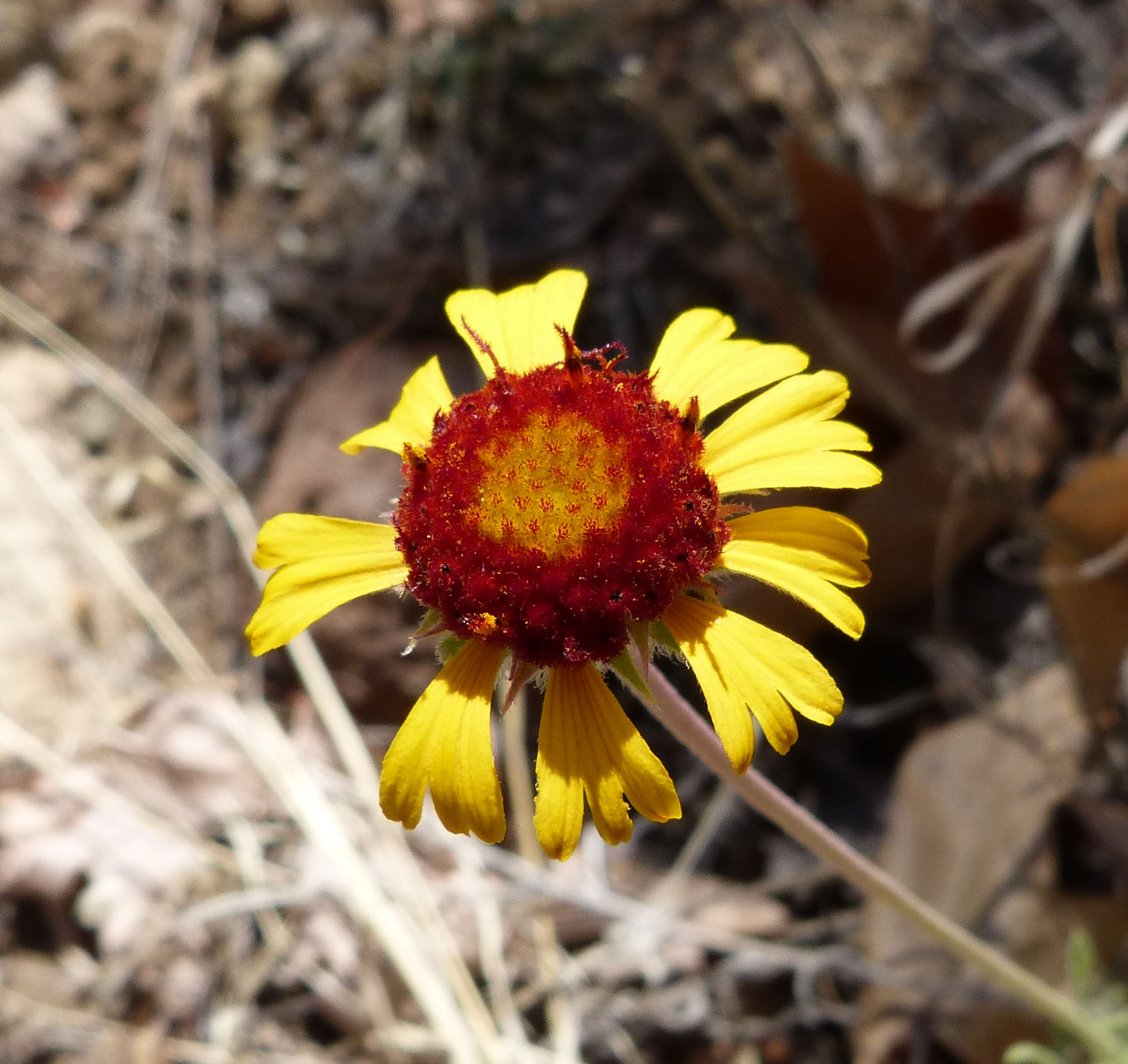
Each stem carries a single flower head, about 1 to 1.5 inches across, with 7 to 12 yellow ray flowers surrounding a dense, domed center of disc flowers. The disc is typically orange-brown to deep maroon-red, though some populations — notably in Utah — have yellow discs instead. The ray flowers are distinctly three-lobed at their tips, a useful field mark for telling this species apart from other blanketflowers. Bloom runs from late spring into fall, often continuing through the hottest part of summer when rainfall allows.
Fruit & Seeds
After flowering, the disc dries and swells slightly into the rounded, red-brown “dome” of bristly seed heads that gives the plant its common name. These domes persist on the stem well after the petals have fallen, adding texture and winter interest, and they are an important seed source for small birds.
Quick Facts
| Scientific Name | Gaillardia pinnatifida |
| Family | Asteraceae (Sunflower family) |
| Plant Type | Herbaceous perennial wildflower |
| Mature Height | 8–22 in (20–56 cm) |
| Mature Spread | 1–2 ft (0.3–0.6 m) |
| Growth Rate | Moderate |
| Sun Exposure | Full Sun |
| Water Needs | Low (drought tolerant once established) |
| Soil Type | Sandy, rocky, or gravelly; well-drained; tolerates poor and gypsum soils |
| Soil pH | Neutral to alkaline |
| Bloom Time | Late spring – fall |
| Flower Color | Yellow rays with a red-brown to maroon disc (disc yellow in some Utah populations) |
| Fall Color | None notable; foliage dies back with frost |
| Fruit | Dry, bristly seed head (the “red dome”) |
| Deer Resistant | Yes, generally avoided by deer and rabbits |
| USDA Hardiness Zones | 5–9 |
Native Range
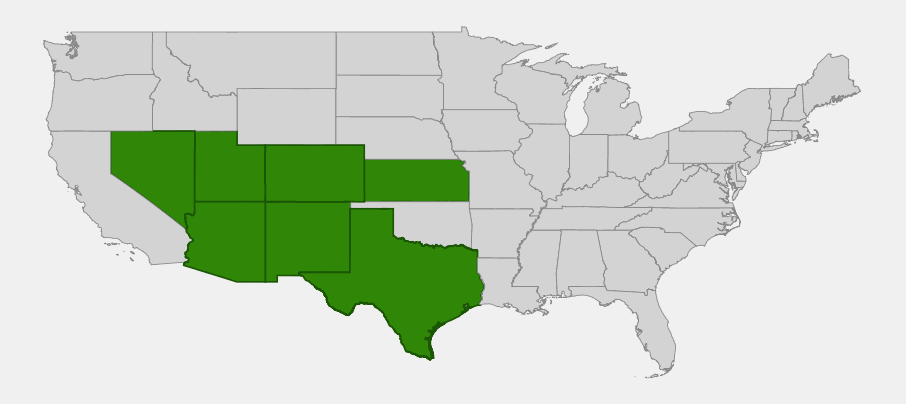
Red Dome Blanketflower is native to the south-central and southwestern United States, from southwestern Kansas south through the Texas Panhandle and central Texas, and west across New Mexico, Arizona, Utah, Colorado, and into southern Nevada. It also occurs in northern Mexico, including Chihuahua, Coahuila, Durango, and Sonora. Within this range it is a true desert and high-plains plant, common on open, sun-baked ground rather than in moist or shaded sites.
Typical habitats include blackbush scrub, mixed shrub-grasslands, pinyon-juniper woodland edges, dry roadsides, and desert flats, generally from around 3,000 to 7,500 feet in elevation. It tolerates heavy clay, caliche, and even gypsum soils that few other wildflowers can colonize, which lets it fill in gaps in sparse desert grassland and disturbed ground alike.
Because it is so widely adapted, Red Dome Blanketflower shows real regional variation — Arizona plants often have simple, unlobed leaves, while populations farther north and east tend toward the deeply cut leaves the species name describes, and Utah populations frequently show yellow rather than red-brown disc flowers. All of these forms are considered the same species rather than separate taxa.
📋 Regional plant lists featuring Red Dome Blanketflower: Arizona & New Mexico · Utah & Western Colorado · Nebraska, Kansas & Eastern Colorado
Growing & Care Guide
Red Dome Blanketflower is built for neglect in the best way — give it sun and sharp drainage and it will reward you with months of bloom and almost no maintenance. It is an excellent choice for gardeners who want color in a true xeriscape without the upkeep of thirstier wildflowers.
Light
Full sun is a must. This is a plant of open desert and grassland, and it will become sparse and underperform in any significant shade. The more sun it gets, the more flowers it produces.
Soil & Water
Drainage is the single most important factor — this species is adapted to thin, rocky, sandy, or even gypsum-rich soils and will rot in heavy, wet ground. Water new plants regularly through their first growing season to establish a deep root system; after that, established plants need little supplemental water beyond what falls naturally, even through hot, dry summers. Overwatering is the most common way to lose this plant in cultivation.
Planting Tips
Plant in spring or early fall from containers or direct-sown seed. Space plants about 12 to 18 inches apart to allow for their sprawling habit. Avoid amending the planting hole with rich organic matter — this species performs best in lean, mineral soils similar to its native desert and grassland habitat.
Pruning & Maintenance
Deadheading spent flower heads encourages additional bloom through the season, though leaving some seed heads in place benefits seed-eating birds and allows the plant to self-sow. Cut plants back lightly in late winter before new spring growth begins. Red Dome Blanketflower is generally untroubled by pests or disease when grown in appropriately dry, well-drained conditions.
Landscape Uses
- Xeriscaping and water-wise gardens
- Pollinator gardens — reliable nectar source through the hottest months
- Rock gardens and gravel beds
- Roadside and slope plantings in dry, sunny sites
- Desert grassland restoration projects
- Mixed wildflower meadows with other low-water natives
Wildlife & Ecological Value
Despite its modest size, Red Dome Blanketflower punches above its weight as a wildlife plant in arid landscapes where blooming resources can be scarce for much of the year.
For Pollinators
The long bloom season makes this species a dependable nectar and pollen source for native bees, honeybees, and butterflies through the heat of summer, when many other wildflowers have finished blooming. Its flat, open flower heads make nectar and pollen easily accessible to a wide range of pollinator species.
For Birds
The bristly seed heads that give the plant its common name are a food source for small seed-eating birds through fall and winter, including native sparrows and finches that forage in open grassland and desert scrub.
Ecosystem Role
As a hardy, early-colonizing perennial, Red Dome Blanketflower helps stabilize thin desert and grassland soils and fills gaps in sparse vegetation after disturbance. Its presence supports a chain of pollinators and seed predators in habitats where plant diversity and blooming season length are both naturally limited by aridity.
Cultural & Historical Uses
Red Dome Blanketflower is also known as Hopi Blanketflower, a name that reflects its long-standing association with the Hopi and other Indigenous peoples of the Southwest, who recognized and used the plant for traditional purposes as part of a broader regional ethnobotanical tradition. As with many Southwestern wildflowers, specific historical uses varied by community and are documented unevenly in the ethnobotanical record, so claims about particular preparations are best treated as regional history rather than guidance for current use.
The plant’s resilience in some of the harshest, driest ground in the Southwest has long made it a familiar, recognizable part of the regional landscape — a dependable splash of yellow and red across desert grassland, mesa tops, and roadside slopes from the Four Corners region down into the Mexican border states.
Frequently Asked Questions
Why is it called Red Dome Blanketflower?
The name comes from the rounded, bristly seed head that forms at the center of each flower after the yellow petals fall. As it matures and dries, this “dome” takes on a warm red-brown color and remains on the stem long after flowering.
How much water does this plant need?
Very little once established. Water regularly during the first growing season to help roots establish, then rely on natural rainfall — this is a true drought-tolerant desert and grassland species that resents soggy soil.
Will Red Dome Blanketflower spread in my garden?
It can self-sow modestly from seed in favorable conditions, forming loose colonies over time, but it is not aggressive or weedy. Deadheading reduces self-seeding if a tidier look is preferred.
Is this the same plant as common garden blanketflower (Gaillardia aristata or Gaillardia × grandiflora)?
No. Those are related but distinct species more commonly sold in nurseries. Red Dome Blanketflower (Gaillardia pinnatifida) is smaller, more drought-adapted, and native specifically to the southwestern U.S. and northern Mexico.
What soil does it need?
Lean, well-drained soil is essential — sandy, rocky, gravelly, or even gypsum soils all work well. Avoid rich, heavily amended, or poorly drained soil, which can cause root rot.

Looking for a nursery that carries Red Dome Blanketflower?
Browse our native plant nursery directory: Arizona · New Mexico & Nevada · Utah & Texas · Colorado · Kansas