Narrowleaf Yucca (Yucca glauca)
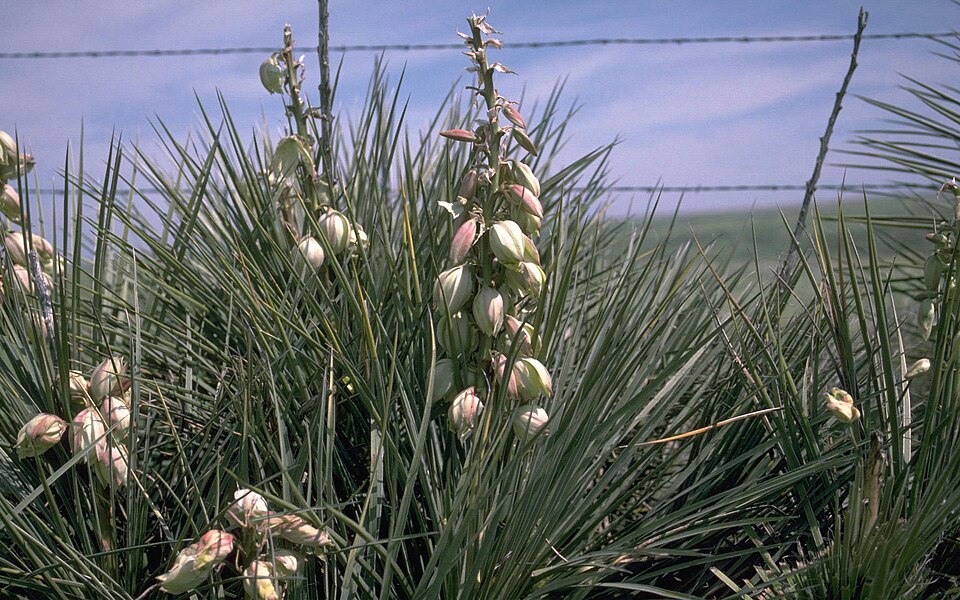
Yucca glauca, commonly known as Narrowleaf Yucca, Soapweed Yucca, or Plains Yucca, is a striking native evergreen succulent of the Great Plains and Intermountain West, belonging to the Asparagaceae family. It is the most widespread yucca species in the central United States, dominating open grasslands, shortgrass prairies, and rocky slopes from North Dakota and Montana south through the Great Plains to New Mexico and Texas. With its dramatic rosette of stiff, narrow, blue-green leaves tipped with sharp spines, and its tall summer flower spike bearing large creamy-white bell-shaped flowers, Narrowleaf Yucca is one of the most architecturally striking native plants of the American West.
Growing 3 to 6 feet tall (including the flower spike), Narrowleaf Yucca forms a dense basal rosette of rigid, linear leaves 1–2 feet long, each ending in a sharp terminal spine and bearing fine, thread-like fibers along the margins. In July, the plant produces a tall spike (2–4 feet tall) densely packed with large, nodding, creamy-white bell-shaped flowers that open in the evening and are pollinated exclusively by the Yucca Moth (Tegeticula yuccasella) — one of the most extraordinary mutualistic relationships in all of botany. Without yucca moths, yucca plants cannot reproduce sexually; without yucca plants, yucca moths cannot complete their life cycle.
Narrowleaf Yucca is exceptionally tough and adaptable, thriving in full sun, dry to moderately moist soils, and withstanding extreme temperature fluctuations, high winds, and drought that would kill most ornamental plants. Its bold architectural form, year-round foliage interest, drought resistance, and ecological significance make it an excellent choice for xeriscape gardens, native prairie plantings, rocky slopes, and wildlife gardens throughout the Intermountain West and Great Plains.
Identification
Narrowleaf Yucca is stemless or with a very short, partly buried stem. It grows as a compact rosette of 20–80 stiff, linear, blue-green to gray-green leaves, with mature plants sometimes developing multiple rosettes from the base. The overall diameter of a mature rosette is typically 2–3 feet. Unlike tree yuccas (Y. brevifolia), Narrowleaf Yucca remains low to the ground, without a pronounced trunk.
Leaves
The leaves are the plant’s most distinctive feature: narrow (¼–½ inch wide), rigid, and 12–24 inches long, with a sharp, stiff terminal spine that can cause significant injury if brushed against carelessly. The leaf surfaces are flat to concave, blue-green to gray-green, and prominently marked with fine, pale thread-like fibers (curling white fibers) along the margins — a key identification characteristic that distinguishes Y. glauca from some similar species. The leaf color provides an attractive blue-gray year-round accent in the landscape.
Flowers & Fruit
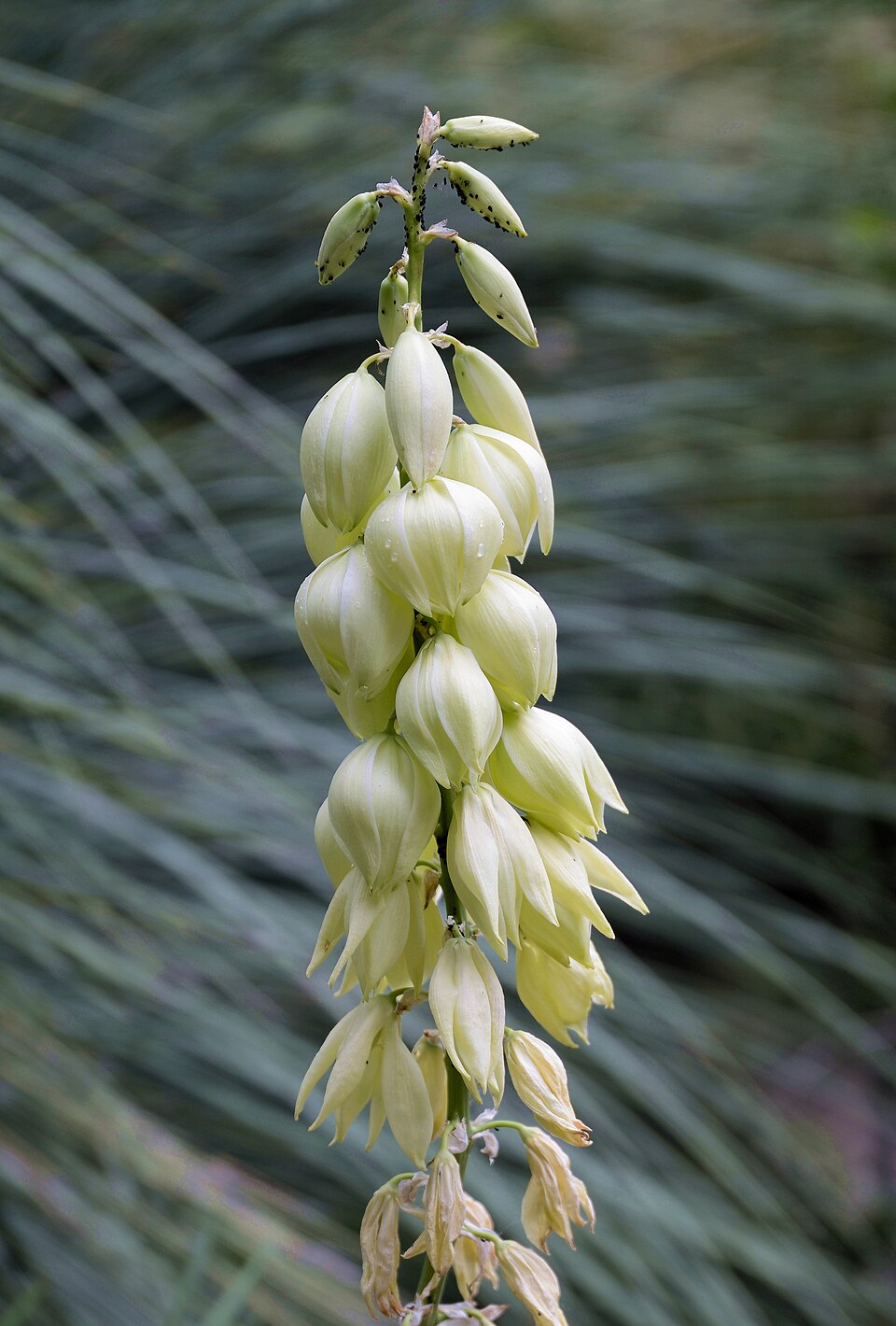
In July (occasionally extending into August at higher elevations), the plant produces a dense raceme or panicle on a stout, unbranched or sparingly branched stalk 2–5 feet tall. The flowers are large (1.5–2 inches long), pendant (nodding), and consist of six creamy-white to greenish-white tepals forming a bell or globe shape. They open in the evening and are pollinated at night exclusively by the Yucca Moth, which collects pollen, fashions it into a ball, and deliberately deposits it on the stigma of another flower — a behavior unique among pollinators. In return, the moth lays her eggs inside the developing seed pod.
The fruit is a large, dry, erect capsule 1.5–3 inches long and about 1 inch in diameter, containing numerous flat, black seeds. The capsules persist through winter and are important food sources for small mammals and birds. The timing and abundance of flowering varies considerably year to year, with the most spectacular displays occurring after adequate winter precipitation.
Quick Facts
| Scientific Name | Yucca glauca |
| Family | Asparagaceae |
| Plant Type | Evergreen Perennial Succulent |
| Mature Height | 3–6 ft (including flower spike) |
| Sun Exposure | Full Sun |
| Water Needs | Moderate (drought tolerant once established) |
| Bloom Time | July – August |
| Flower Color | Creamy white to greenish-white (bell-shaped) |
| Soil Type | Well-drained; sandy, gravelly, or rocky soils preferred |
| Deer Resistant | Yes (sharp-spined leaves deter most browsing) |
| USDA Hardiness Zones | 3–9 |
Native Range
Narrowleaf Yucca is a characteristic plant of the Great Plains and the eastern edge of the Intermountain West, native from southern Montana and North Dakota south through Wyoming, South Dakota, Nebraska, Kansas, Colorado, and into New Mexico, Oklahoma, Texas, and Missouri. It extends eastward into Iowa in scattered populations. This is the only native yucca species found naturally across the northern Great Plains, where it marks the dry, exposed ridges and gravelly knolls of shortgrass prairie with its bold, rosette form.
Within its range, Narrowleaf Yucca grows on well-drained, often rocky or sandy soils in full sun, typically on slopes, ridge tops, and gravelly flats where water drains rapidly and competition from taller grasses is reduced. It is a characteristic species of shortgrass prairie, mixed-grass prairie, and sagebrush-grassland transition zones. In Colorado, Wyoming, and Montana, it grows from the high plains up through foothills and lower montane zones, often on south-facing slopes where solar heating ensures warm, dry conditions.
Narrowleaf Yucca is an excellent indicator of undisturbed, well-drained prairie soils. Its presence often marks areas that have never been cultivated, as its deep root system is disrupted by plowing and the plant rarely colonizes heavily disturbed agricultural soils. In areas of the Great Plains where shortgrass prairie has been converted to wheat or corn production, Narrowleaf Yucca populations persist only in road margins, rocky outcrops, and other uncultivated refugia.
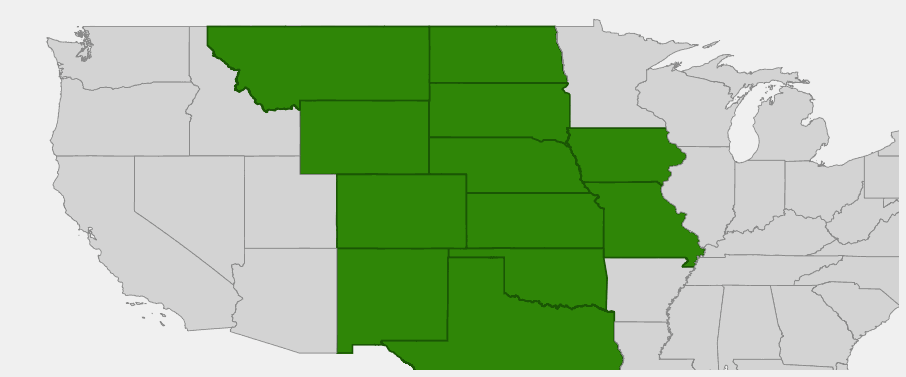
📋 Regional plant lists featuring Narrowleaf Yucca: Intermountain West
Growing & Care Guide
Narrowleaf Yucca is one of the most undemanding native plants available for western gardens. Once established in a well-drained site with full sun, it requires virtually no supplemental care. Its biggest enemy is wet, poorly drained soil — avoid this at all costs.
Light
Narrowleaf Yucca demands full sun. It will not thrive in shade or even substantial partial shade, as its native habitat is the open, sun-baked prairie. In full sun, the leaf color is most attractive (steel-blue to gray-green) and flowering is most reliable. Plant it in the sunniest location available for best results.
Soil & Water
Excellent drainage is non-negotiable for Narrowleaf Yucca. It thrives in sandy, gravelly, or rocky soils with low fertility and minimal organic matter — conditions that challenge most ornamental plants. Heavy clay soils that retain moisture will rot the crown and roots, particularly in winter. If your garden has clay soil, plant Narrowleaf Yucca on a raised berm or slope, or amend a large planting area with coarse grit or gravel. Once established, this yucca needs no supplemental water in most of its native range — it is among the most drought-tolerant of all native plants in the Intermountain West.
Planting Tips
Plant Narrowleaf Yucca in spring or early fall in a very well-drained, sunny location. Handle the sharp leaf tips carefully — wear thick gloves and consider taping the tips during planting. Space plants 3–4 feet apart, allowing room for the expanding rosette and future offsets. Do not overwater newly planted specimens — water once after planting and then rely on rainfall except in prolonged drought. Mulching with gravel or crushed rock is far preferable to organic mulch, which retains moisture around the crown.
Pruning & Maintenance
Narrowleaf Yucca requires minimal maintenance. After flowering, the spent flower stalk can be cut back to the rosette to tidy the appearance, or left standing to provide winter structure and wildlife value (birds eat the seeds from persistent capsules). Old, dead outer leaves can be pulled or trimmed back annually. Over time, the plant produces offsets (pups) that can be separated and transplanted in spring, though dividing is rarely necessary.
Landscape Uses
Narrowleaf Yucca is excellent for bold architectural effects in dry landscapes:
- Xeriscape centerpiece — bold, year-round architectural form in dry gardens
- Native prairie planting — essential component of authentic Great Plains plant communities
- Rock garden specimen — thrives in the sharp drainage and full sun of rock gardens
- Slope stabilization — deep roots anchor dry, eroding slopes
- Barrier planting — sharp leaf tips create an effective deterrent
- Wildlife habitat — provides cover, nesting sites, and food for Great Plains wildlife
Wildlife & Ecological Value
Narrowleaf Yucca is an ecological keystone of the Great Plains prairie, supporting a specialized community of wildlife dependent on its unique structure and resources.
The Yucca Moth Mutualism
The most remarkable ecological relationship involving Narrowleaf Yucca is its obligate mutualism with the Yucca Moth (Tegeticula yuccasella). Female yucca moths are the exclusive pollinators of Yucca glauca. The moth deliberately collects pollen with specialized mouthparts (tentacles), forms it into a ball, and transfers it to the stigma of another yucca flower — actively pollinating the plant. She then lays her eggs in the plant’s ovary. The developing moth larvae eat some (but not all) of the seeds, leaving enough to ensure future plants. This is one of the most studied examples of obligate mutualism (coevolved dependence between two species) in North American ecology. Without each other, neither species can successfully reproduce.
For Birds
The large seed capsules of Narrowleaf Yucca provide food for seed-eating birds including sparrows, juncos, and finches. The dense, spiny rosette provides excellent nesting habitat — particularly for House Wrens, which often nest deep within the protected center of the leaf rosette where the sharp leaf tips deter predators. Mourning Doves and Scaled Quail shelter in the shade beneath large rosettes in hot summer weather.
For Mammals
Black-tailed Prairie Dogs, ground squirrels, and mice consume yucca seeds from fallen capsules. Pronghorn Antelope, Mule Deer, and Elk browse the flower stalks before they harden — one of the few times large herbivores exploit yucca. The spiny rosette provides shelter for lizards, toads, and small invertebrates in the prairie ecosystem.
Ecosystem Role
Narrowleaf Yucca contributes significantly to shortgrass prairie structure and diversity. Its physical form creates microhabitats — the interior of the rosette traps leaf litter and supports invertebrate communities, while the shade beneath the plant provides refugia for heat-stressed prairie animals. Its deep root system stabilizes dry slopes and contributes to soil structure in prairie ecosystems subject to wind erosion.
Cultural & Historical Uses
Narrowleaf Yucca was one of the most comprehensively utilized plants on the Great Plains. Indigenous nations including the Lakota, Crow, Comanche, Arapaho, Cheyenne, Kiowa, and Pueblo peoples used virtually every part of the plant. The name “Soapweed” reflects one of its most widespread uses: the roots contain saponins that lather in water, making an effective soap and shampoo. Yucca root soap was widely used for washing hair, hide, and textiles, and is still commercially sold today as a “natural shampoo.”
The leaves were a crucial fiber source. The tough, flexible leaf fibers were separated by pounding, retting, or scraping and then woven into baskets, mats, sandals, cordage, rope, and cloth. The sharp leaf tips served as needles with the fiber still attached — a ready-made needle-and-thread. Yucca fiber sandals have been found in archaeological sites throughout the Southwest and Great Plains dating back thousands of years. The leaf tips were used as awls and pins. The dried leaf fibers were woven into fire-starting bundles and used to make paint brushes.
The flower stalks, roots, flowers, and seeds were all consumed as food. The tall, tender flower stalks were harvested before they hardened, peeled, and eaten raw or roasted — tasting somewhat like asparagus. The flowers were eaten raw or cooked, often added to stews and soups. The roots were baked and eaten in times of scarcity. The seeds were ground into flour. Today, Narrowleaf Yucca is experiencing renewed interest in xeriscape horticulture, Native American cultural revitalization, and ecological restoration — a testament to its enduring importance on the landscapes where it evolved over millions of years.
Frequently Asked Questions
Will Narrowleaf Yucca grow in my garden?
Narrowleaf Yucca grows in any garden that offers full sun and excellent drainage. It is among the most cold-hardy yuccas, surviving to USDA Zone 3 (temperatures to -40°F). The only requirements are sun and dry-to-moderate soil — it will not survive in poorly drained, wet areas. It thrives in containers on sunny patios in humid climates where ground drainage is poor.
Is Narrowleaf Yucca dangerous?
The sharp terminal spines on the leaves can cause puncture wounds and should be respected. Plant Narrowleaf Yucca away from walkways, play areas, and anywhere people might brush against it. Wear heavy gloves when handling, and consider taping the leaf tips during planting. The plant is not toxic — in fact, the flowers are edible.
Why isn’t my Narrowleaf Yucca flowering?
Yucca flowering is driven by winter precipitation, plant maturity, and the availability of Yucca Moths for pollination. Young plants (under 3–5 years) may not flower regularly. Plants that flowered the previous year may skip the next — biennial or irregular flowering is normal. In gardens far outside the Yucca Moth’s range, the plant may bloom but fail to set fruit. Adequate winter moisture and full sun promote the most consistent flowering.
How do I divide Narrowleaf Yucca?
Yucca produces offsets (“pups”) at the base of the main rosette, especially after flowering. To divide, use a sharp spade or saw in early spring to sever the connecting rhizome between the parent rosette and the offset. Plant the offset immediately in well-drained soil, water once, and then allow it to establish with minimal additional water. Offsets may take 1–2 growing seasons to resume vigorous growth.
What is the difference between Narrowleaf Yucca and Joshua Tree?
Joshua Tree (Yucca brevifolia) is a tree-forming yucca native to the Mojave Desert, growing 15–40 feet tall with a distinct trunk. Narrowleaf Yucca (Yucca glauca) is a low, trunkless rosette plant of the Great Plains and foothills, rarely exceeding 2 feet in rosette height. They are adapted to completely different climates and have different ranges, with no overlap in natural habitat.