Ashe Juniper (Juniperus ashei)
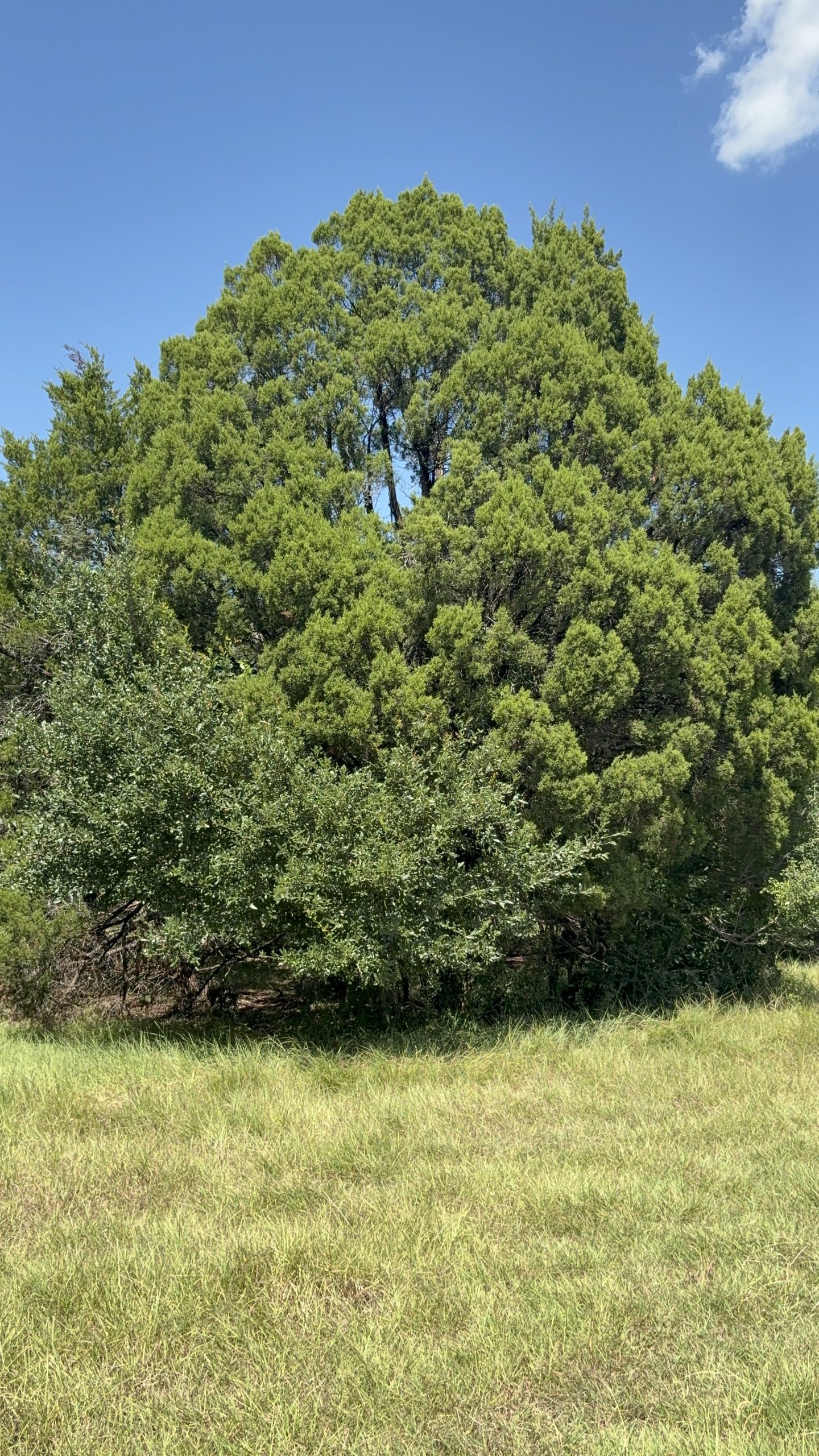
Juniperus ashei, commonly known as Ashe Juniper, Blueberry Juniper, or “Mountain Cedar,” is a small to medium evergreen conifer that defines the look and ecology of the Texas Hill Country and much of the southern Ozarks. Despite the common nickname “cedar,” it is a true juniper in the cypress family (Cupressaceae), closely related to Eastern Red Cedar. Where limestone bedrock sits close to the surface and little topsoil has had time to form, Ashe Juniper is often the only tree that can hold on — making it both a defining feature of the regional landscape and a genuinely important erosion-control species.
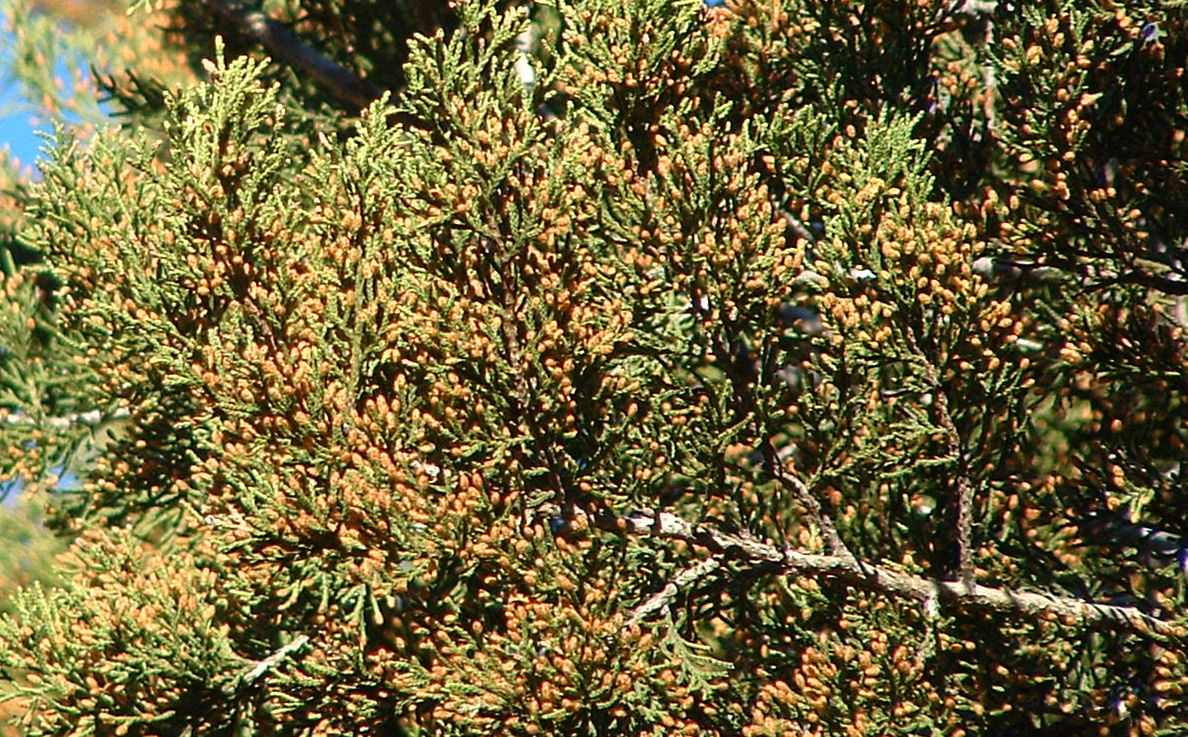
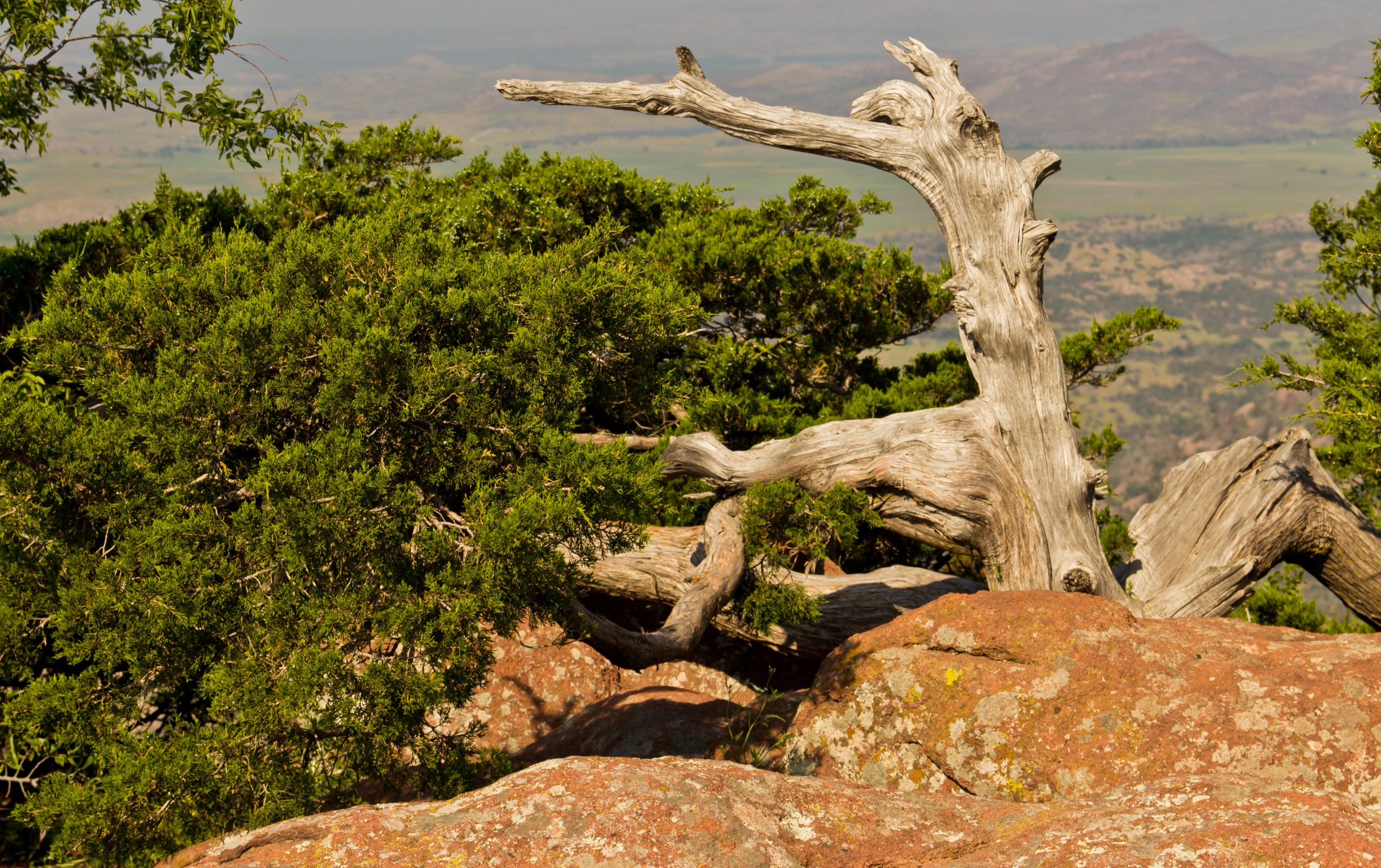
The tree’s dense, scale-like, blue-green foliage gives mature specimens a solid, pyramidal to rounded form, and its shaggy, fibrous, ashy-gray bark peels in long vertical strips. Ashe Juniper is dioecious — individual trees are either male or female — and in late winter the male trees release enormous clouds of yellow pollen, the well-known cause of “cedar fever” allergy season across Central Texas. Female trees bear small, round, blue, waxy-coated cones that look and are often called “berries,” ripening in fall and persisting into winter.
Beyond its reputation as an allergy trigger, Ashe Juniper plays an outsized and often underappreciated ecological role. Its shredding bark is the primary nesting material for the endangered Golden-cheeked Warbler, a songbird found nowhere else in the world outside the juniper-oak woodlands of Central Texas. For gardeners and land managers working on thin, rocky, alkaline soils in its native range, it remains one of the most reliable, drought-proof evergreens available.
Identification
Ashe Juniper typically grows 15 to 30 feet tall, occasionally reaching 40 feet on favorable sites, with a trunk diameter of 1 to 2 feet. It often forms a multi-trunked, bushy small tree or large shrub rather than a single clean trunk, especially on exposed, shallow-soil sites.
Bark & Stems
The bark is thin, fibrous, and ashy gray to gray-brown, peeling off in long, shaggy vertical strips that give older trunks a shredded, textured look. Young branches are slender and densely covered in scale-like foliage.
Leaves
Foliage consists of tiny, overlapping, scale-like leaves pressed tightly against the twigs, arranged in flattened sprays. The color is a deep blue-green year-round, since the species is evergreen and does not change color seasonally. Crushed foliage has a resinous, “cedar” scent typical of junipers.
Flowers & Fruit
Ashe Juniper is dioecious, meaning male and female cones form on separate trees. Male trees produce small, inconspicuous pollen cones that turn golden-brown and release huge quantities of wind-borne pollen from December through February — the source of the region’s notorious “cedar fever” season. Female trees produce round, berry-like cones about ¼ to ⅓ inch across, pale blue with a whitish waxy bloom when ripe, maturing in a single season from late summer into fall and persisting on the tree through winter.
Quick Facts
| Scientific Name | Juniperus ashei |
| Family | Cupressaceae (Cypress family) |
| Plant Type | Evergreen coniferous tree/large shrub |
| Mature Height | 15–30 ft (occasionally to 40 ft) |
| Trunk Diameter | 1–2 ft |
| Growth Rate | Slow to moderate |
| Sun Exposure | Full Sun to Part Shade |
| Water Needs | Low (highly drought tolerant once established) |
| Soil Type | Shallow, rocky, limestone-derived; well-drained |
| Soil pH | Alkaline |
| Bloom Time | Pollen cones: December–February |
| Flower Color | Golden-brown pollen cones (male); inconspicuous female cones |
| Fall Color | None (evergreen) |
| Fruit | Blue, berry-like cone with waxy bloom |
| Deer Resistant | Yes, rarely browsed |
| USDA Hardiness Zones | 7–9 |
Native Range
Ashe Juniper is native to the south-central United States, centered on the Edwards Plateau and Hill Country of central Texas, extending south toward the Rio Grande Plain, east into the Texas Cross Timbers, and north through south-central and eastern Oklahoma. A separate, disjunct population occurs in the Ozark Highlands of northern Arkansas and southern Missouri, where it grows on limestone and dolomite glades and bluffs far from the main Texas population.
Across this range, Ashe Juniper is a specialist of thin, rocky, alkaline soils over limestone bedrock — precisely the sites too dry and shallow for most other trees. It is the dominant evergreen on much of the Edwards Plateau, where extensive stands are often called “cedar brakes,” and it forms an important component of oak-juniper woodlands throughout the Hill Country.
Because it tolerates conditions that exclude competing trees, Ashe Juniper has also expanded well beyond its historical core range over the past century, encroaching into former savanna and grassland following the suppression of the periodic fires that once kept it in check. This has made it the subject of ongoing land-management debate in Texas, where it is valued for erosion control and wildlife habitat in some contexts and actively thinned for water-yield and rangeland-restoration goals in others.
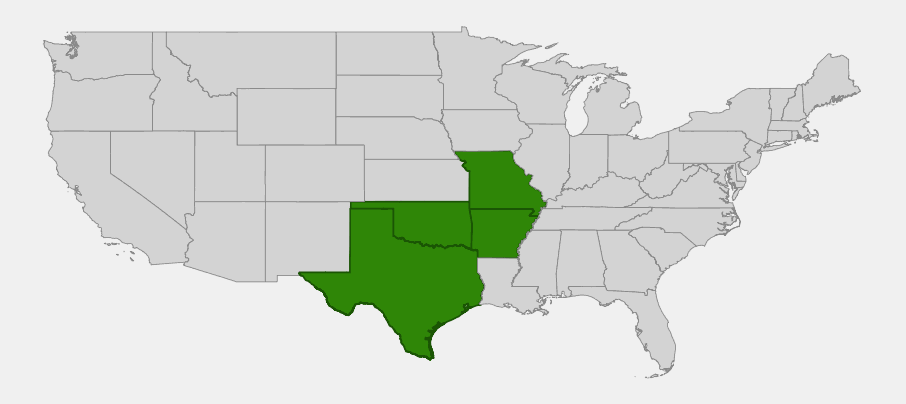
📋 Regional plant lists featuring Ashe Juniper: Arkansas, Louisiana, Eastern Oklahoma & Eastern Texas · Illinois, Iowa & Missouri
Growing & Care Guide
Ashe Juniper is about as low-maintenance as a native evergreen tree gets, provided it is planted where its roots can access the lean, rocky, well-drained soil it evolved in. It is a poor fit for rich garden beds or heavy clay, but an excellent, nearly indestructible choice on the thin limestone soils common across its native range.
Light
Full sun produces the densest, most symmetrical form, though established trees tolerate partial shade, especially as understory in oak-juniper woodland. Young seedlings often establish in the dappled shade of nurse shrubs before growing up into full sun.
Soil & Water
Thin, rocky, alkaline soil over limestone is ideal — this species is specifically adapted to exactly the conditions that defeat most ornamental trees. Drainage is essential; it does not tolerate consistently wet or poorly drained soil. Water regularly during the first one to two years after planting to establish roots, then expect the tree to need little to no supplemental irrigation even through extended Texas summers.
Planting Tips
Plant small container stock in fall or early spring to allow root establishment before summer heat. Because Ashe Juniper is sensitive to root disturbance, smaller transplants generally establish more reliably than larger balled-and-burlapped specimens. Give trees 15 to 20 feet of spacing if planting a windbreak or screen, since mature canopies are wide and dense.
Pruning & Maintenance
Established trees need minimal pruning beyond removing dead or damaged branches. Because dense, unmanaged stands can increase wildfire fuel load and reduce understory grass cover, many Hill Country landowners selectively thin Ashe Juniper to maintain a mix of open savanna and woodland rather than allowing continuous “cedar brake” cover — a decision that depends on specific land-management goals rather than the health of any individual tree.
Landscape Uses
- Erosion control on steep, rocky, limestone slopes
- Windbreaks and privacy screens on dry, exposed sites
- Wildlife habitat plantings, especially for nesting songbirds
- Xeriscaping in alkaline, low-water landscapes
- Naturalized woodland restoration on degraded rangeland
Wildlife & Ecological Value
Ashe Juniper is one of the most ecologically significant trees of the Texas Hill Country, anchoring a food web and nesting ecosystem that depends directly on its structure and bark.
For Birds
Most notably, the endangered Golden-cheeked Warbler, which breeds exclusively in the oak-juniper woodlands of Central Texas and nowhere else on Earth, strips long fibers from mature Ashe Juniper bark to build its nests — a dependency so specific that the bird’s range closely tracks stands of old-growth juniper. Cedar Waxwings and many other birds eat the blue, berry-like cones through fall and winter, helping disperse the seeds.
For Mammals
White-tailed deer rarely browse Ashe Juniper foliage, which makes it useful as a deer-resistant planting, though the dense cover it provides is valuable thermal and escape habitat for deer and many smaller mammals.
Ecosystem Role
On the thin, erosion-prone soils of the Edwards Plateau, Ashe Juniper’s root system is often what holds soil in place on steep limestone slopes where few other trees can establish. Its dense canopy also shades and cools the ground beneath it, supporting a distinct community of shade-tolerant understory plants in long-established cedar brakes.
Cultural & Historical Uses
The durable, rot-resistant heartwood of Ashe Juniper has long been used regionally for fence posts, a practice still common on Hill Country ranches today, since the wood resists decay in contact with soil far longer than most other locally available timber. Historically, Indigenous peoples of the region used juniper wood, bark, and foliage for various practical and ceremonial purposes consistent with broader Southern Plains traditions, though specific documented uses for this species individually are less extensively recorded than for some other regional trees.
In modern Central Texas culture, Ashe Juniper is perhaps best known — somewhat unfairly — as the source of “cedar fever,” the intense seasonal allergy triggered by its winter pollen release. This reputation often overshadows the tree’s real ecological importance, including its role as the primary nest-building material for the endangered Golden-cheeked Warbler.
Frequently Asked Questions
Why is Ashe Juniper called “Mountain Cedar” if it’s not a cedar?
True cedars (genus Cedrus) are native to the Mediterranean and Himalayas, not North America. “Cedar” is a common folk name applied to many junipers and other aromatic conifers in the U.S., including Ashe Juniper, because of superficial similarities in wood scent and appearance.
Is Ashe Juniper responsible for “cedar fever”?
Yes. Male Ashe Juniper trees release huge amounts of wind-borne pollen from December through February, and this pollen is the primary cause of the severe seasonal allergy symptoms known locally as cedar fever across Central Texas.
Should I remove Ashe Juniper from my property?
That depends on your goals. It provides real value for erosion control, privacy screening, and wildlife habitat — including critical nesting material for the endangered Golden-cheeked Warbler in parts of its range — but dense, unmanaged stands can also crowd out grassland and increase fire fuel load. Many Hill Country landowners choose selective thinning rather than wholesale removal.
How much water does Ashe Juniper need?
Very little once established. It is adapted to the thin, rocky, often drought-stressed soils of the Edwards Plateau and needs only occasional watering during its first year or two in the ground.
Can Ashe Juniper grow outside of rocky limestone soil?
It can tolerate a range of well-drained soils, but it performs best and is most drought-tolerant on the alkaline, limestone-derived soils of its native range. It generally struggles in consistently wet, poorly drained, or strongly acidic soils.