
Virginia Dwarf Dandelion (Krigia virginica)
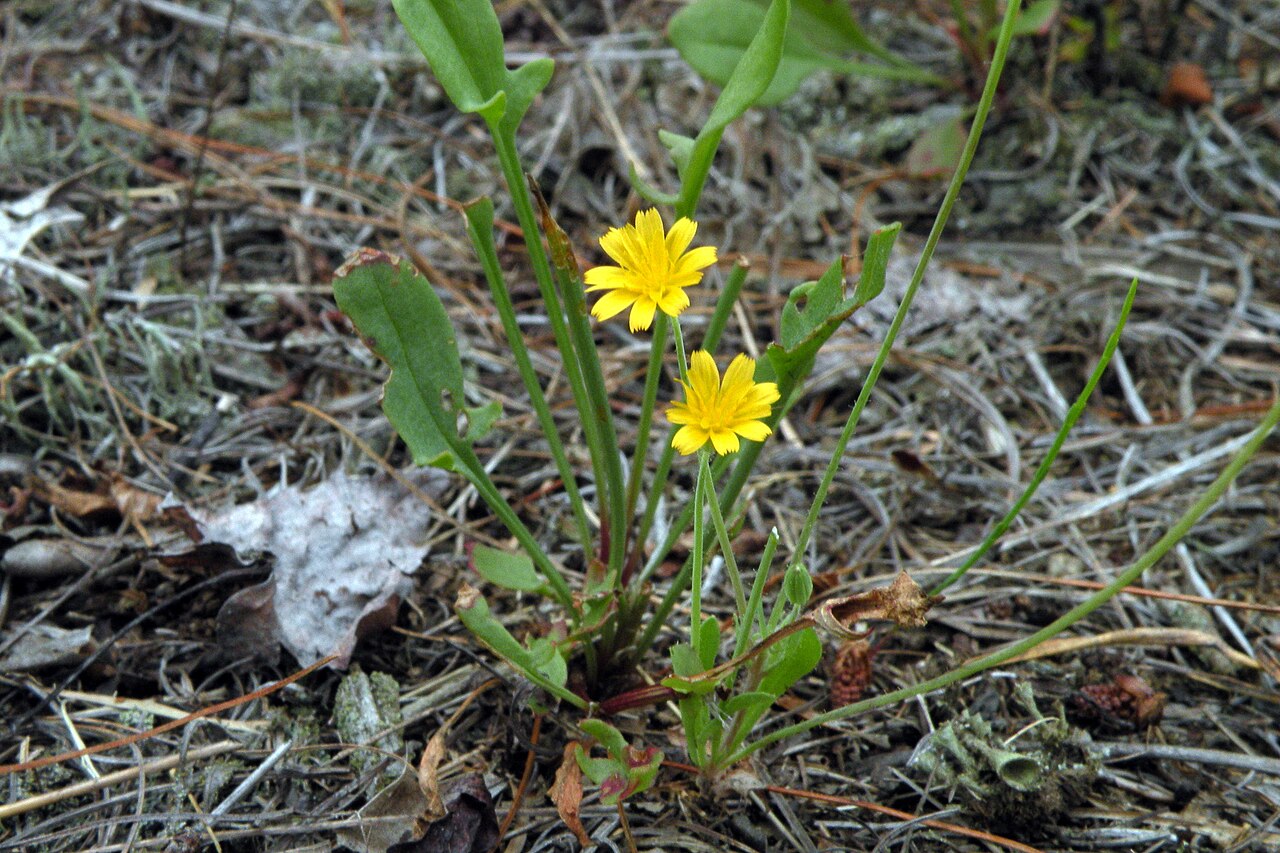
Krigia virginica, known as Virginia Dwarf Dandelion (USDA: Virginia dwarfdandelion), is a small native annual wildflower of sandy, open ground across the eastern United States. It is a member of the aster family (Asteraceae) and a close relative of the dandelions and hawkweeds. Plants are tiny, usually just 2 to 10 inches tall, with a small rosette of leaves and one or more slender, leafless stalks, each holding a single yellow flower head.
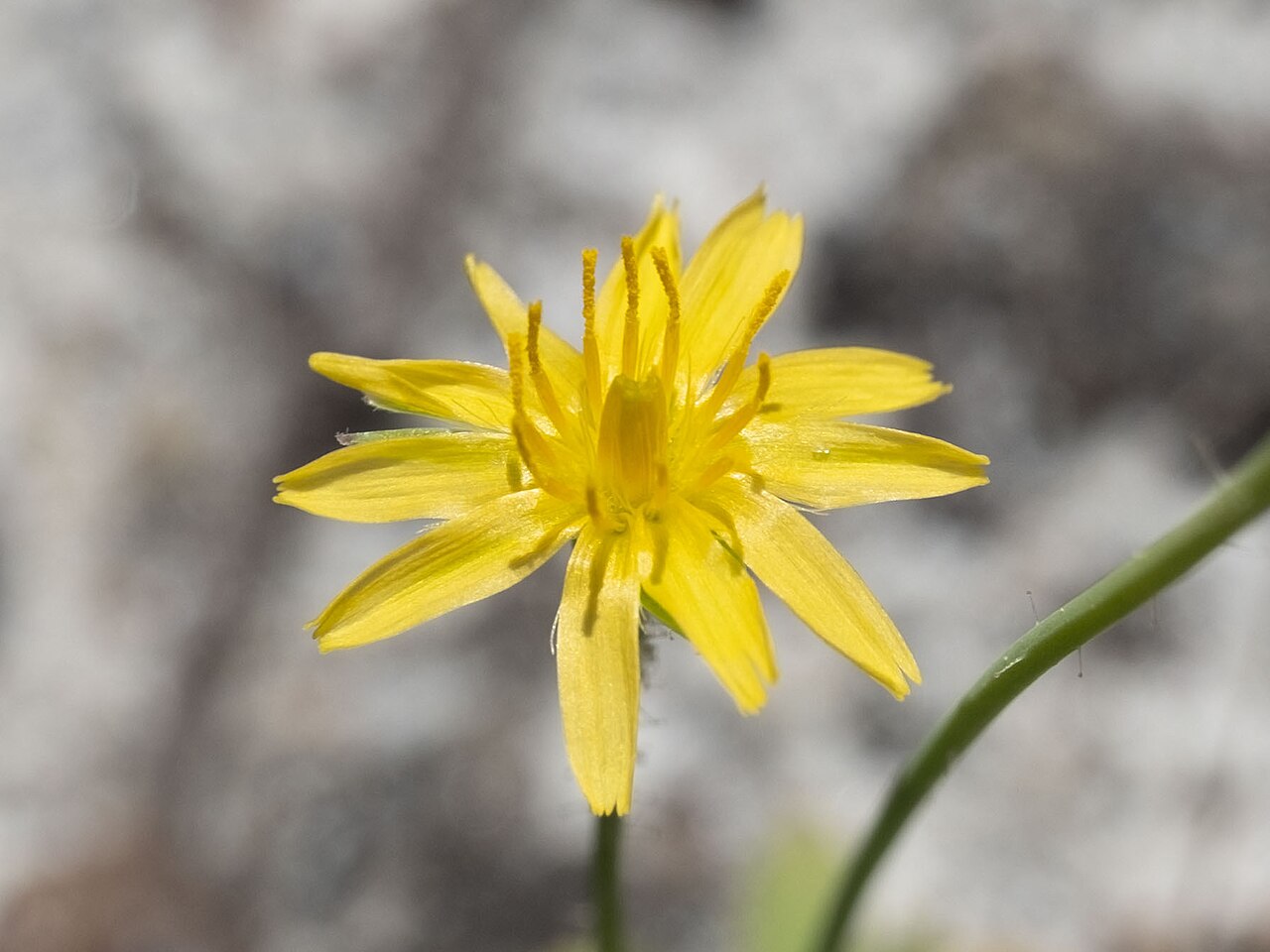
The flower heads are about 1/2 inch across, bright yellow to orange-yellow, and made entirely of strap-shaped ray florets, like a miniature dandelion. They open in the morning in sunny weather and close by afternoon. The plant blooms mainly from early spring to early summer, and in the South it can flower again in fall.
Virginia dwarf dandelion is easy to overlook, but it is a characteristic plant of sandhills, dry clearings, rock outcrops and sandy roadsides. Unlike the common dandelion, which was introduced from Europe, it is a true native. It is not a typical garden plant, but it reseeds on its own in sunny, sandy, low-competition sites such as rock gardens, sandy lawns and native meadows.
Identification
Look for Virginia dwarf dandelion in dry, sandy, sunny places from March to June. The tiny size, the small basal rosette, the single yellow head on each leafless stalk, and the seeds topped by both scales and bristles identify it.
Growth Habit
Plants are small annuals, usually 2 to 10 inches tall (up to about a foot), growing from a slender taproot. A rosette of leaves sits at the base, and one to several slender stalks rise from it. Young stalks are leafless; on older plants, a stalk may branch and carry a pair of small leaves. The plant has milky sap.
Leaves
The basal leaves are small, about 1 to 4 inches long, narrow to spoon-shaped, and smooth or slightly hairy. They vary from nearly untoothed to deeply lobed with backward-pointing lobes, like a small dandelion leaf. Early leaves are often entire and later ones more lobed.
Flowers
Each stalk carries a single head about 1/3 to 1/2 inch across, made of 9 to 35 yellow to orange-yellow ray florets with small teeth at the tips. There are no disk florets. The head sits on a ring of 5 to 18 narrow green bracts, which bend back once the seeds ripen. Blooming runs mainly from March to June, with occasional fall flowers in the South.
Fruit & Seeds
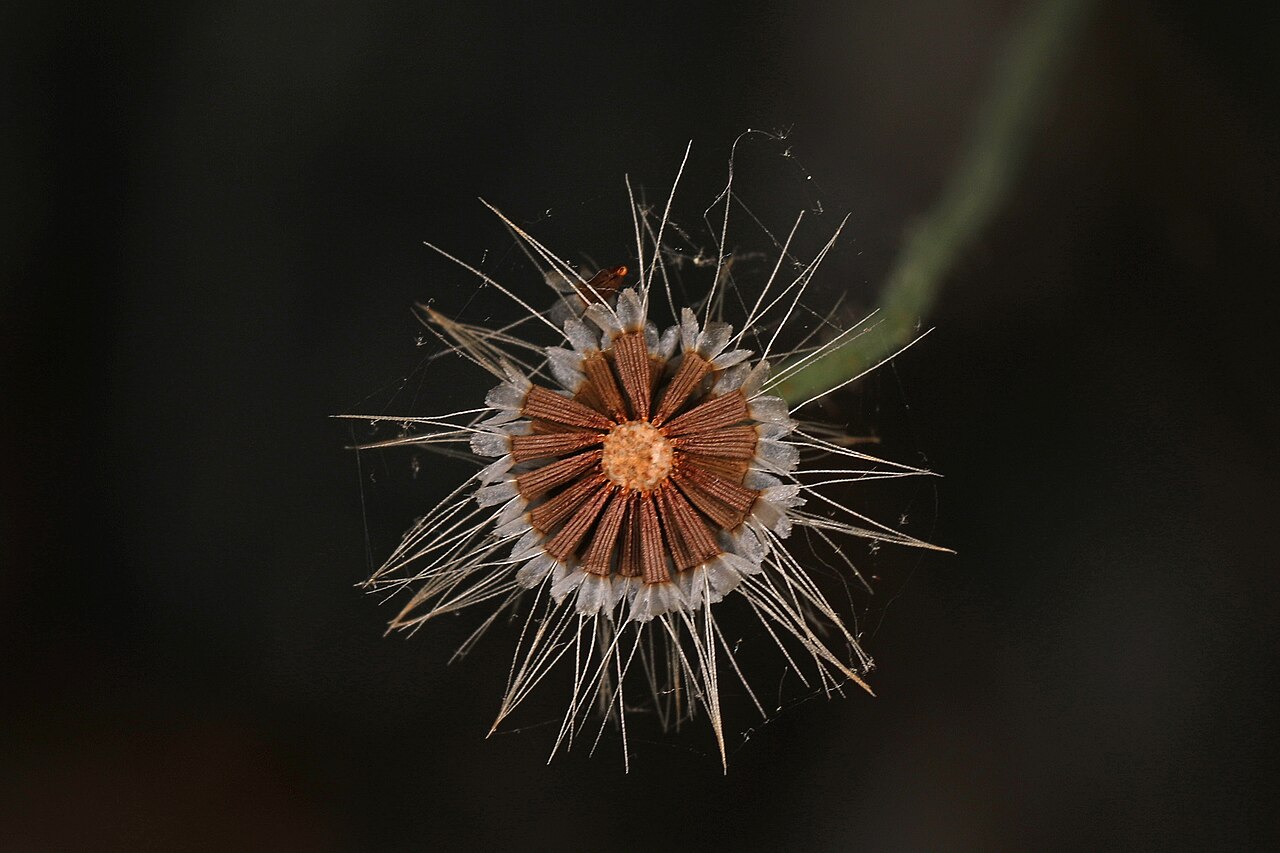
The seeds are small, reddish-brown, ribbed achenes. Each is topped by a pappus made of 5 short, pale, rounded scales alternating with 5 longer, slender bristles. This two-part crown separates Virginia dwarf dandelion from most of its relatives. The seeds scatter in the wind and germinate in fall or early spring.
Look-alikes
The common dandelion (Taraxacum officinale) is much larger, with hollow stalks and a fluffy seed head of many long-beaked seeds. Two-flower dwarf dandelion (Krigia biflora) is a perennial with a clasping leaf on the stem, usually two or more larger heads and an orange tint. Weedy dwarf dandelion (K. cespitosa) has branching leafy stems and seeds with little or no pappus.
Quick Facts
| Scientific Name | Krigia virginica |
| Family | Asteraceae (aster family) |
| Plant Type | Annual wildflower |
| Mature Height | 2–10 in (rarely to 1 ft) |
| Mature Spread | 2–6 in |
| Growth Rate | Fast; completes its life cycle in a few months |
| Sun Exposure | Full sun to light shade |
| Water Needs | Low; dry, well-drained soil |
| Soil Type | Sand, sandy loam, gravel or thin soil over rock |
| Soil pH | About 4.5–7.0 (acidic to neutral) |
| Bloom Time | March–June; sometimes again in fall |
| Flower Color | Yellow to orange-yellow |
| Fall Color | None; plants die after setting seed |
| Fruit | Small reddish-brown achene with scales and bristles |
| Deer Resistant | Not well documented |
| USDA Hardiness Zones | 4–9 (annual) |
Native Range
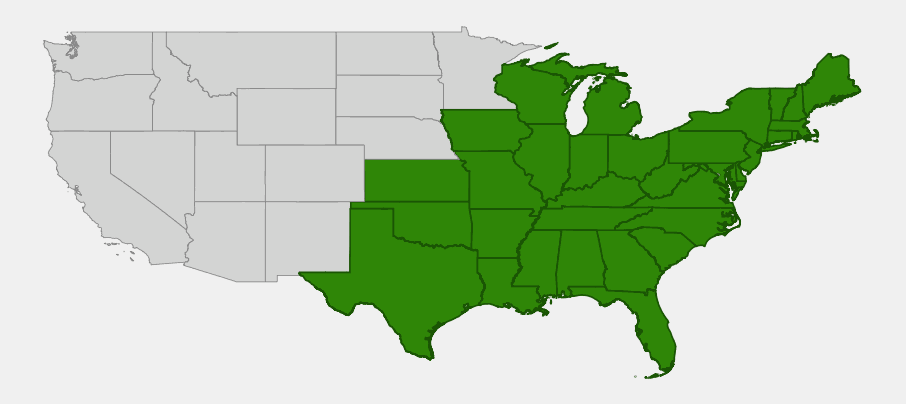
Virginia dwarf dandelion is native to the eastern United States. USDA PLANTS lists it as native in the lower 48 states and records it from 33 states and the District of Columbia, from Maine, New Hampshire and Vermont south along the Atlantic states to Florida, and west through Michigan, Wisconsin, Iowa, Missouri and Kansas to Oklahoma, Texas and Louisiana. USDA lists it as introduced in Canada, where it has been found in southern Ontario, so it is not treated as native there.
It is most common on the sandy Coastal Plain from New Jersey to Florida and Texas, in the Piedmont, and in sandy areas of the Midwest such as the sand prairies and savannas of Illinois, Indiana and Michigan. It is scattered in New England and the upper Midwest. In Texas it grows in the sandy east and the Post Oak Savannah rather than the dry south and west.
Typical habitats are dry, open, sandy ground: sandhills, pine and oak barrens, sand prairies, old fields, dry clearings and woodland edges, rock outcrops and glades, and sandy roadsides and lawns. It needs open ground with little competition and full or nearly full sun.
📋 Regional plant lists featuring Virginia Dwarf Dandelion: New York, Pennsylvania & Northern New Jersey · Ohio & Indiana · Michigan, Wisconsin & Eastern Minnesota · Kentucky & Tennessee · Nebraska, Kansas & Eastern Colorado · Connecticut, Massachusetts & Rhode Island · New Hampshire, Maine & Vermont · Maryland, Virginia & West Virginia · Delaware, Southern New Jersey & Long Island · Illinois, Iowa & Missouri · Alabama, Georgia & Mississippi · North & South Florida · North & South Carolina · Arkansas, Louisiana, Eastern Oklahoma & Eastern Texas
Growing & Care Guide
Virginia dwarf dandelion is not sold as a nursery plant, but it often turns up on its own in sandy, sunny yards and meadows. Where it appears, you can encourage it with a little care. If you want to introduce it, collect a few seeds only with the landowner’s permission, from a large population, or buy them from a native seed supplier.
Light
Full sun is best. It tolerates light shade but needs open ground that is not covered by taller plants, especially in early spring when it grows and blooms.
Soil & Water
It thrives in dry, sandy, gravelly or thin, well-drained soils that are low in nutrients. Rich, moist garden soil encourages taller plants that crowd it out. No watering is needed once seedlings are up.
Planting Tips
Sow seed on bare, sandy soil in fall or late winter and leave it uncovered or very lightly pressed in. It is best suited to rock gardens, sandy paths, gravel gardens, low-mow sandy lawns and sand prairie or barrens plantings where low annuals have room.
Pruning & Maintenance
Let the plants go to seed before mowing or weeding the area, usually by early summer. Keep surrounding plants low and leave patches of bare soil for seedlings. Avoid fertilizers and heavy mulch.
Propagation
Propagate from seed. Sow ripe seed in fall outdoors on bare sandy soil, or in late winter. Germination is usually good, and established patches reseed themselves each year.
Landscape Uses
- Rock and gravel gardens: tiny yellow flowers in early spring
- Sandy lawns and paths: a native alternative to lawn weeds in low-mow areas
- Barrens and sand prairie restoration: early-blooming annual of open sandy ground
- Pollinator gardens: early-season pollen and nectar for small bees and flies
- Wildflower viewing: a spring highlight of sandhills and barrens
Wildlife & Ecological Value
Virginia dwarf dandelion blooms early, giving small native bees and flies some of the first pollen of the year in sandy habitats.
For Pollinators
The flowers are visited mainly by small native bees such as sweat bees and mining bees, and by syrphid flies and small butterflies. The open heads make pollen and nectar easy to reach.
For Birds
Small seed-eating birds such as sparrows may eat the seeds, though the plant is too small to be an important food source.
For Mammals
Rabbits and other herbivores may nibble the leaves and flowers. Wildlife use is not otherwise well documented.
Ecosystem Role
As a quick-growing annual of open sand and thin soil, it is part of the early-spring plant community of sandhills, barrens and glades. It depends on natural or light disturbance, such as fire or grazing, to keep the ground open, and it disappears when these habitats grow over.
Cultural & Historical Uses
The genus Krigia was named for David Krieg, a German physician who collected plants in Maryland in the early 1700s and sent specimens back to Europe. The species name virginica means of Virginia.
Because it looks like a tiny dandelion, Virginia dwarf dandelion is often overlooked or pulled as a weed. In fact, it is one of the native dandelion relatives of North America, and its presence often points to remnant sandy habitat.
Dwarf dandelions, like true dandelions, have milky sap. There is little documented use of this species for food or medicine.
Frequently Asked Questions
Is Virginia dwarf dandelion a native plant?
Yes. It is native to the eastern United States. The common lawn dandelion is a European introduction, but dwarf dandelions are native North American wildflowers.
How can I tell it from a common dandelion?
Virginia dwarf dandelion is much smaller, with flower heads about 1/2 inch across on very thin stalks. Its seeds are topped by small scales plus bristles instead of a long-beaked, fluffy parachute.
Is Virginia dwarf dandelion an annual?
Yes. It germinates in fall or early spring, blooms in spring, sets seed and dies by early summer, although some plants bloom again in fall in the South.
Where does it grow?
It grows in dry, sunny, sandy places such as sandhills, barrens, dry fields, rock outcrops and sandy roadsides across the eastern United States.
Should I pull it from my lawn?
There is no need. It is small, native, harmless and finished blooming by early summer. Letting it reseed helps early bees and adds a tiny spring flower to sandy lawns.

Looking for a nursery that carries Virginia Dwarf Dandelion?
Browse our native plant nursery directory: Alabama & Arkansas · Connecticut, Delaware, Florida & Georgia · Illinois, Indiana, Iowa & Kansas · Kentucky, Louisiana, Maine, Maryland, Massachusetts, Michigan, Mississippi & Missouri · New Hampshire, New Jersey, New York, North Carolina, Ohio & Oklahoma · Pennsylvania, Rhode Island, South Carolina, Tennessee, Texas, Vermont & Virginia · West Virginia & Wisconsin
