
Two-Flower Dwarf-Dandelion (Krigia biflora)
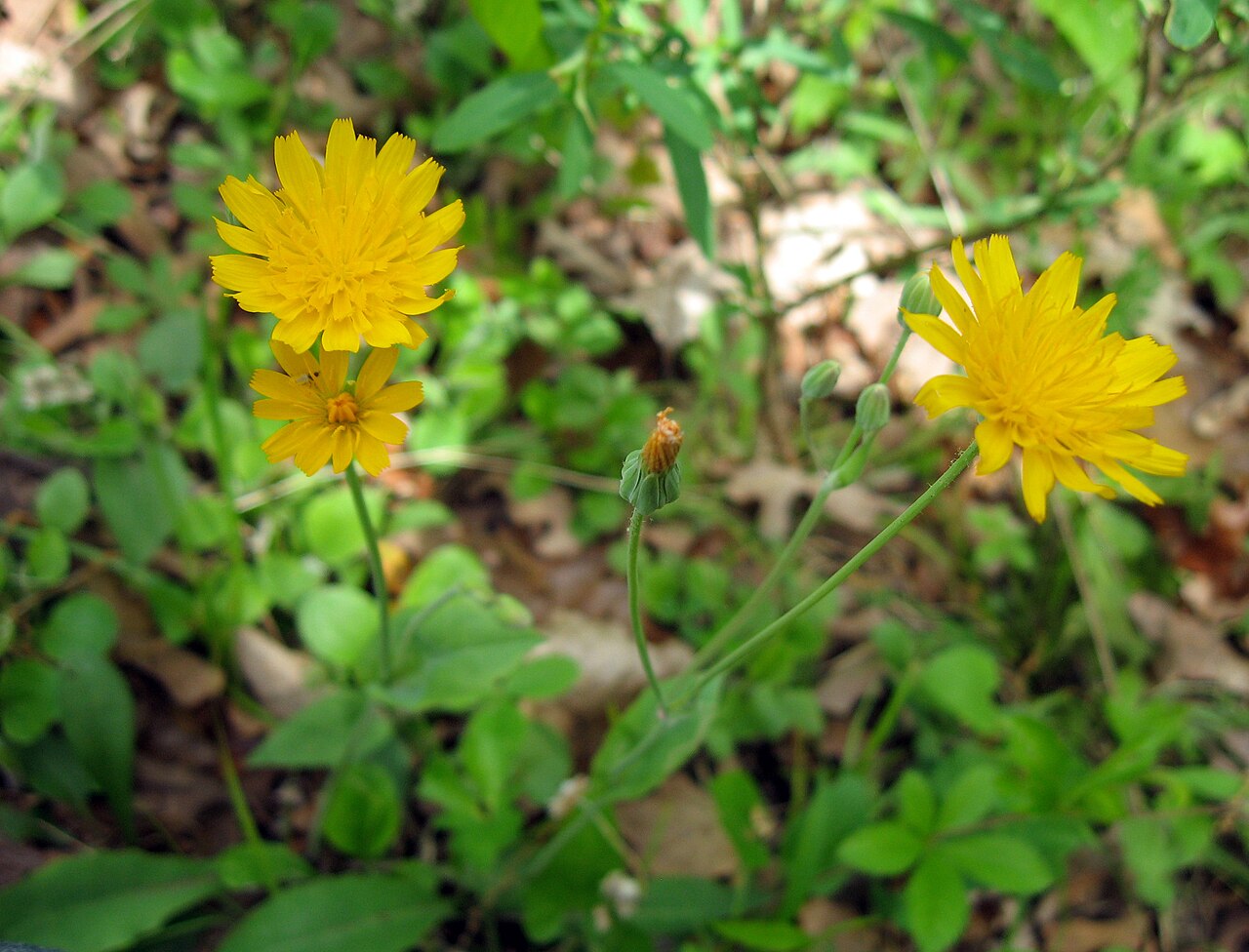
Krigia biflora, known as Two-Flower Dwarf-Dandelion (USDA: twoflower dwarfdandelion) and also as orange dwarf-dandelion or two-flowered Cynthia, is a native perennial wildflower in the aster family (Asteraceae). From late spring into summer it holds bright orange-yellow, dandelion-like flower heads on smooth, forking stems 8 to 24 inches tall. Despite its name, it is not the weedy common dandelion (Taraxacum officinale), which came from Eurasia; it is a native North American plant in a small genus found only in North America.
The plant is easy to recognize once you know the trick: partway up the smooth, bluish-green stem is a single clasping leaf (sometimes two or three), and above that leaf the stem forks into two or more stalks, each topped by a flower head. The name biflora, “two-flowered,” refers to this habit, although plants may carry one to six heads. Like its relatives, it has milky sap.
It grows in open woods, woodland edges, glades, meadows, prairies and clearings across much of the eastern and central United States, from Massachusetts and New York to Georgia and west to Minnesota, Kansas and Oklahoma, with outlying populations in the mountains of the Southwest. It is a lovely, low-maintenance native for sunny or lightly shaded wildflower gardens, where its flowers feed small native bees and hover flies.
Identification
Two-flower dwarf-dandelion looks like a slender, smooth, orange-tinted dandelion on a branched stem. The clasping stem leaf at the fork is the key feature.
Growth Habit
A perennial with fibrous roots and a short underground base, often forming small clumps. Plants are smooth (hairless) and somewhat waxy blue-green, with milky sap. Flowering stems are 8 to 24 inches tall.
Leaves
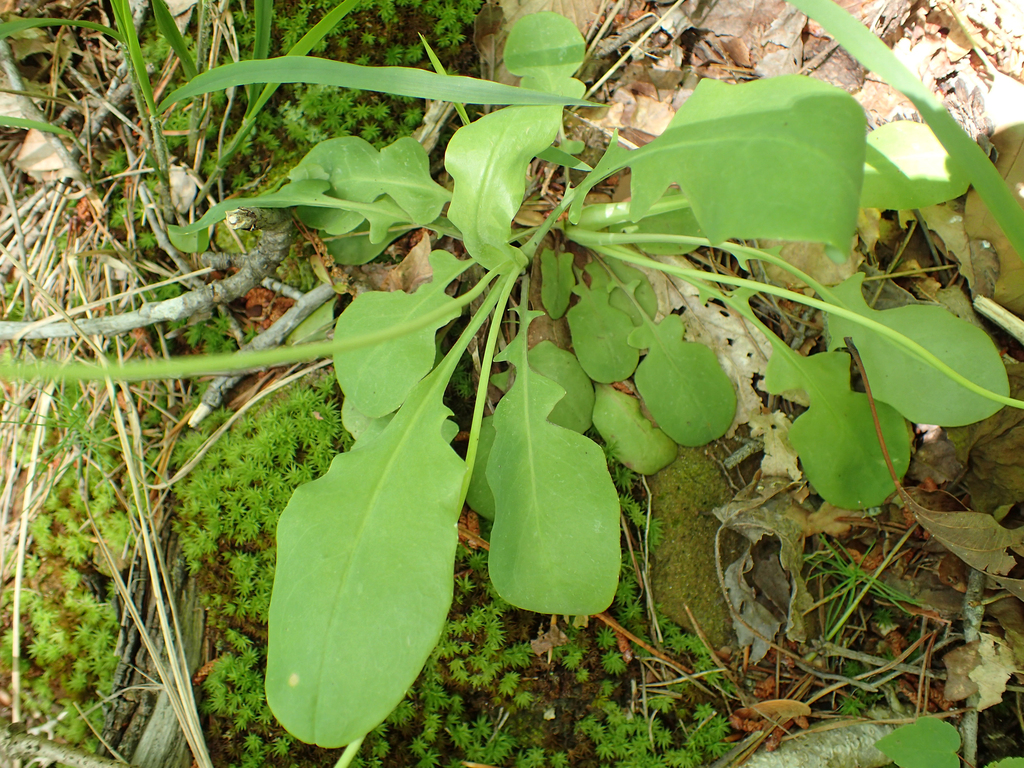
Most leaves are basal, 2 to 7 inches long, oval to lance-shaped, tapering to a winged stalk, with smooth, wavy or slightly toothed margins. One clasping stem leaf (occasionally two or three) sits partway up the stem, wrapping the stem at its base; the stem branches just above it.
Flowers
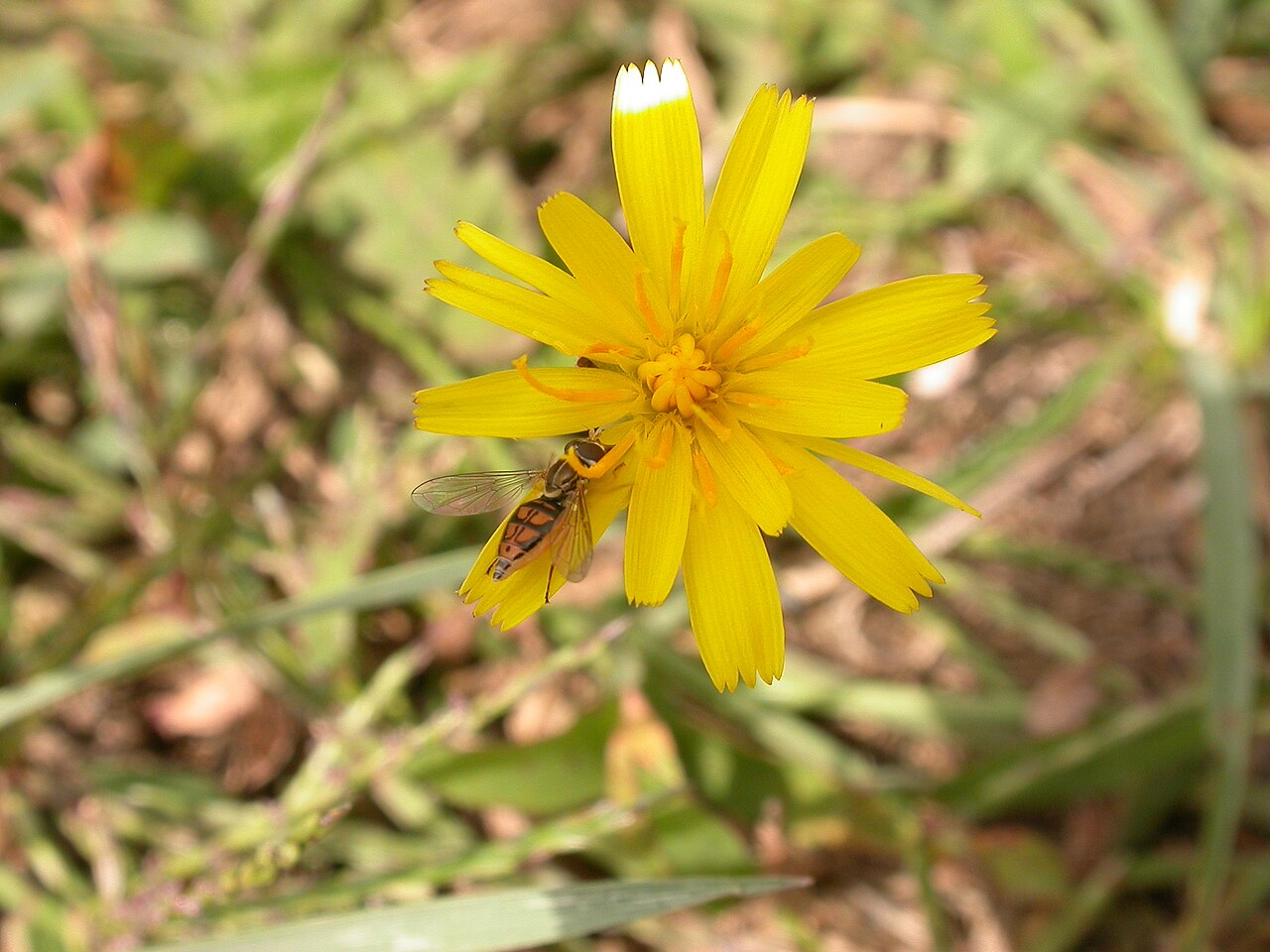
Each stalk ends in a single flower head about 1 to 1 1/2 inches across, made entirely of strap-shaped ray florets, bright yellow to orange-yellow. There are usually two to six heads per stem, opening over a period of weeks from about May to August, with occasional flowers into fall. Heads open in the morning and often close in the afternoon.
Fruit & Seeds
Each floret produces a small, ribbed, reddish-brown achene topped by a pappus of 5 to 10 short scales and many longer, white bristles, which help scatter the seed on the wind.
Look-alikes
The common dandelion has deeply toothed leaves and hollow, unbranched, leafless flower stalks with one head each. Potato dandelion (Krigia dandelion) also has a single head on a leafless stalk and grows from small tubers. Virginia dwarf-dandelion (K. virginica) is a small annual of sandy sites with tiny heads. Rattlesnakeweed (Hieracium venosum) has purple-veined basal leaves and many smaller, paler yellow heads.
Native, Not a Weed
Because of its dandelion-like flowers, this plant is sometimes pulled as a weed. It is a native wildflower that does not spread aggressively and is worth keeping in lawns, meadows and woodland edges.
Quick Facts
| Scientific Name | Krigia biflora |
| Family | Asteraceae (aster family) |
| Plant Type | Herbaceous perennial wildflower |
| Mature Height | 8–24 in |
| Mature Spread | 6–12 in |
| Growth Rate | Moderate |
| Sun Exposure | Full sun to partial shade |
| Water Needs | Low to medium |
| Soil Type | Sandy, loamy or rocky, well-drained soil |
| Soil pH | About 5.5–7.5 |
| Bloom Time | May–August |
| Flower Color | Orange-yellow |
| Fall Color | Not significant |
| Fruit | Small achene with a white bristly pappus |
| Deer Resistant | Moderately; occasionally browsed |
| USDA Hardiness Zones | 3–8 |
Native Range
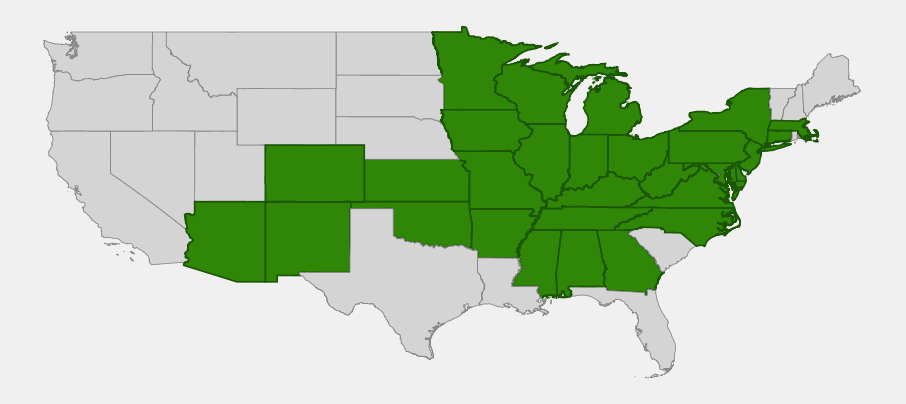
USDA PLANTS lists two-flower dwarf-dandelion as native in the lower 48 states and Canada, with records from 29 states and from Manitoba and Ontario. The main range runs from Massachusetts, Connecticut and New York south through the Appalachians and Piedmont to Georgia, Alabama and Mississippi, and west through the Ohio Valley and Great Lakes to Minnesota, Iowa, Missouri, Kansas, Arkansas and eastern Oklahoma.
It is most common in the Ohio Valley, the Ozarks and the southern Great Lakes states. In Minnesota it reaches the western part of the state, and in Oklahoma it grows mainly in the east. Farther west, scattered populations in the mountains of Colorado, New Mexico and Arizona are outlying records, separated by hundreds of miles from the main eastern range.
Typical habitats are open deciduous and oak-hickory woods, woodland edges and clearings, glades and barrens, moist to dry meadows and prairies, old fields, stream banks and roadsides. It favors sunny or lightly shaded sites with sandy, loamy or rocky soil and little competition from tall plants.
📋 Regional plant lists featuring Two-Flower Dwarf-Dandelion: New York, Pennsylvania & Northern New Jersey · Ohio & Indiana · Michigan, Wisconsin & Eastern Minnesota · Kentucky & Tennessee · Nebraska, Kansas & Eastern Colorado · Connecticut, Massachusetts & Rhode Island · New Hampshire, Maine & Vermont · Maryland, Virginia & West Virginia · Delaware, Southern New Jersey & Long Island · Arizona & New Mexico · Illinois, Iowa & Missouri · Alabama, Georgia & Mississippi · North & South Carolina · Arkansas, Louisiana, Eastern Oklahoma & Eastern Texas · North Dakota, South Dakota & Western Minnesota
Growing & Care Guide
Two-flower dwarf-dandelion is an easy, small-scale native for sunny to partly shaded spots. It is seldom sold in nurseries, so look for native plant specialists or grow it from responsibly collected or purchased seed.
Light
Full sun to partial shade. It blooms best with at least half a day of sun, and it does well at woodland edges and under high, open tree canopies.
Soil & Water
It prefers well-drained sandy, loamy or rocky soils of average to low fertility and tolerates both mildly acidic and limestone soils. It handles moderately dry conditions once established but also grows in moist meadows. Avoid rich, heavily fertilized beds, where taller plants crowd it out.
Planting Tips
Plant in spring or fall in small drifts near the front of a border, along a path, in a rock garden or in a meadow with short grasses. It can also be kept in an unfertilized, lightly mown lawn or “flowering lawn” if mowing is delayed until after bloom.
Pruning & Maintenance
Little care is needed. Deadhead if you want to limit self-seeding, or leave seed heads for birds and natural spread. Keep taller, aggressive plants from shading it.
Propagation
Sow fresh seed in fall, or in spring after one to two months of cold, moist stratification; press it into the soil surface. Established clumps can be divided in early spring or fall.
Landscape Uses
- Wildflower meadows: adds early-summer orange-yellow color among short grasses
- Woodland edges: thrives in dappled light under open trees
- Rock and glade gardens: suits thin, rocky, well-drained soils
- Pollinator gardens: feeds small native bees and hover flies
- Native lawns: a native alternative to the weedy dandelion in lightly mown areas
Wildlife & Ecological Value
Two-flower dwarf-dandelion is a small plant, but its long flowering season makes it a reliable food source for small pollinators in woodland edges and meadows.
For Pollinators
The flower heads offer pollen and nectar to small bees, including sweat bees (Halictidae) and small carpenter bees, and to hover flies and other flies. The Xerces Society notes it is of special value to native bees and bumble bees.
For Birds
Finches, sparrows and other small seed-eating birds may eat the seeds.
For Mammals
Rabbits, groundhogs and deer occasionally browse the foliage.
Ecosystem Role
As an early-successional and edge species, it helps cover open ground in glades, barrens and woodland clearings. Its seeds are dispersed by wind, letting it colonize newly opened sites.
Cultural & Historical Uses
The genus Krigia honors David Krieg (died 1713), a German physician and naturalist who collected plants in Maryland in the early 1700s. The genus is native only to North America and includes about seven species, all called dwarf-dandelions.
The species name biflora means “two-flowered,” describing the way the stem typically forks above the clasping leaf into two flower stalks. An older common name, “two-flowered Cynthia,” comes from Cynthia, a former genus name for these plants.
Dwarf-dandelions are related to the common dandelion and the hawkweeds, and like them they have milky sap. Their native status and modest habit make them a good example of how many dandelion-like flowers in North America are native wildflowers rather than weeds.
Frequently Asked Questions
Is two-flower dwarf-dandelion a weed?
No. It is a native North American wildflower. It does not spread aggressively and is not related closely enough to the common dandelion to share its weedy habits.
How can I tell it from a common dandelion?
Two-flower dwarf-dandelion has smooth, bluish-green leaves with wavy or slightly toothed edges, a clasping leaf on the stem, and a stem that forks into two or more flower stalks. The common dandelion has deeply toothed leaves and unbranched, hollow, leafless stalks.
When does it bloom?
Mainly from May to August, with scattered flowers into fall. The heads usually open in the morning and close by afternoon.
Does it grow in shade?
It grows in partial shade along woodland edges and in open woods, but it flowers best with at least half a day of sun.
Does it attract pollinators?
Yes. Small native bees, bumble bees and hover flies visit its flowers for pollen and nectar.

Looking for a nursery that carries Two-Flower Dwarf-Dandelion?
Browse our native plant nursery directory: Alabama, Arizona & Arkansas · Colorado, Connecticut, Delaware & Georgia · Illinois, Indiana, Iowa & Kansas · Kentucky, Maryland, Massachusetts, Michigan, Minnesota, Mississippi & Missouri · New Jersey, New Mexico, New York, North Carolina, Ohio & Oklahoma · Pennsylvania, Tennessee & Virginia · West Virginia & Wisconsin