
Seedbox (Ludwigia alternifolia)
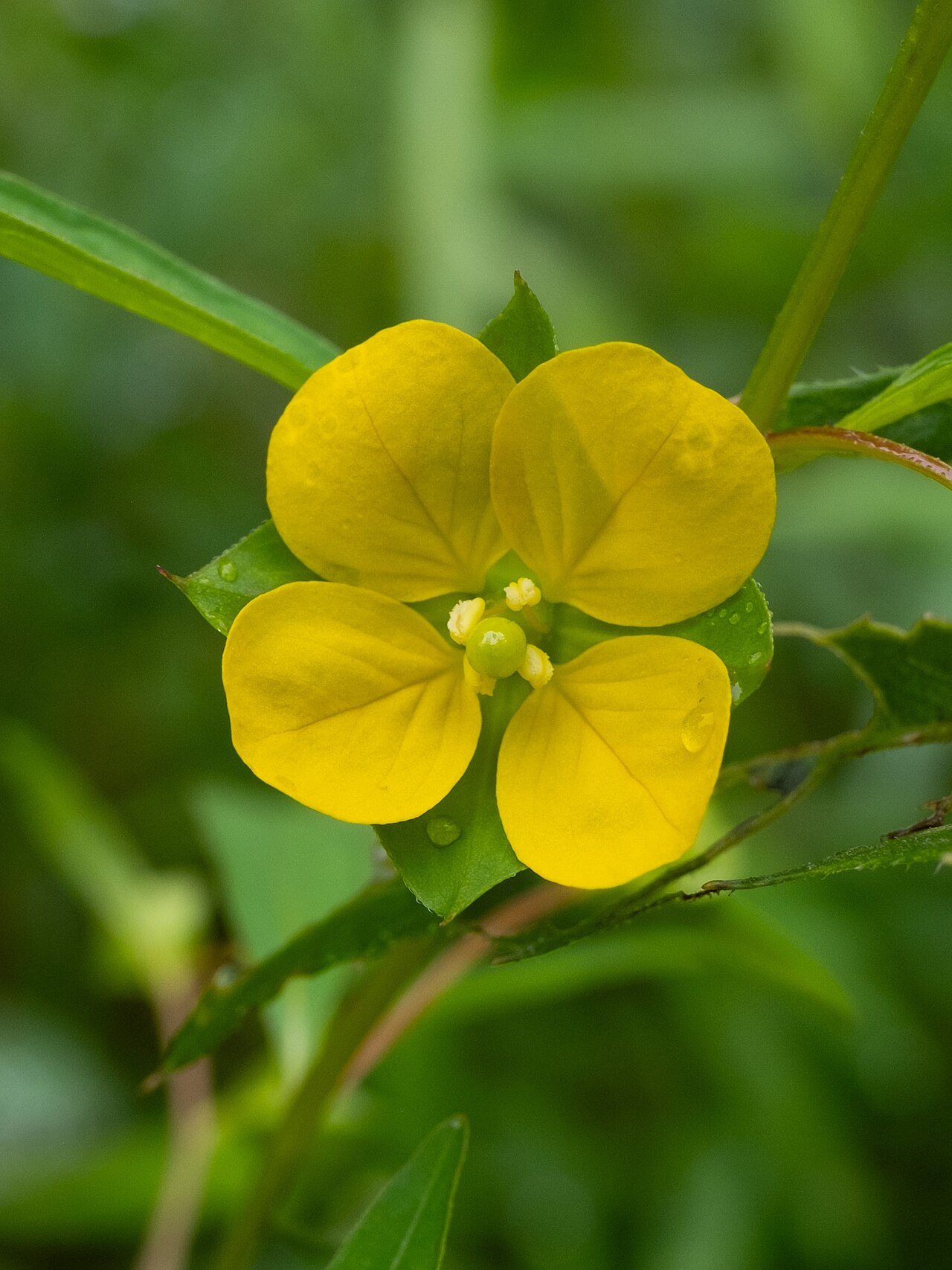
Ludwigia alternifolia, known as Seedbox (also rattlebox or square-pod water-primrose), is a wetland perennial of the evening primrose family (Onagraceae) native to the eastern and central United States and southern Ontario and Quebec. It is a bushy, branching plant 2 to 4 feet tall that grows in wet meadows, marsh edges, ditches and swampy openings, where it blooms through the summer with small, bright yellow, four-petaled flowers.
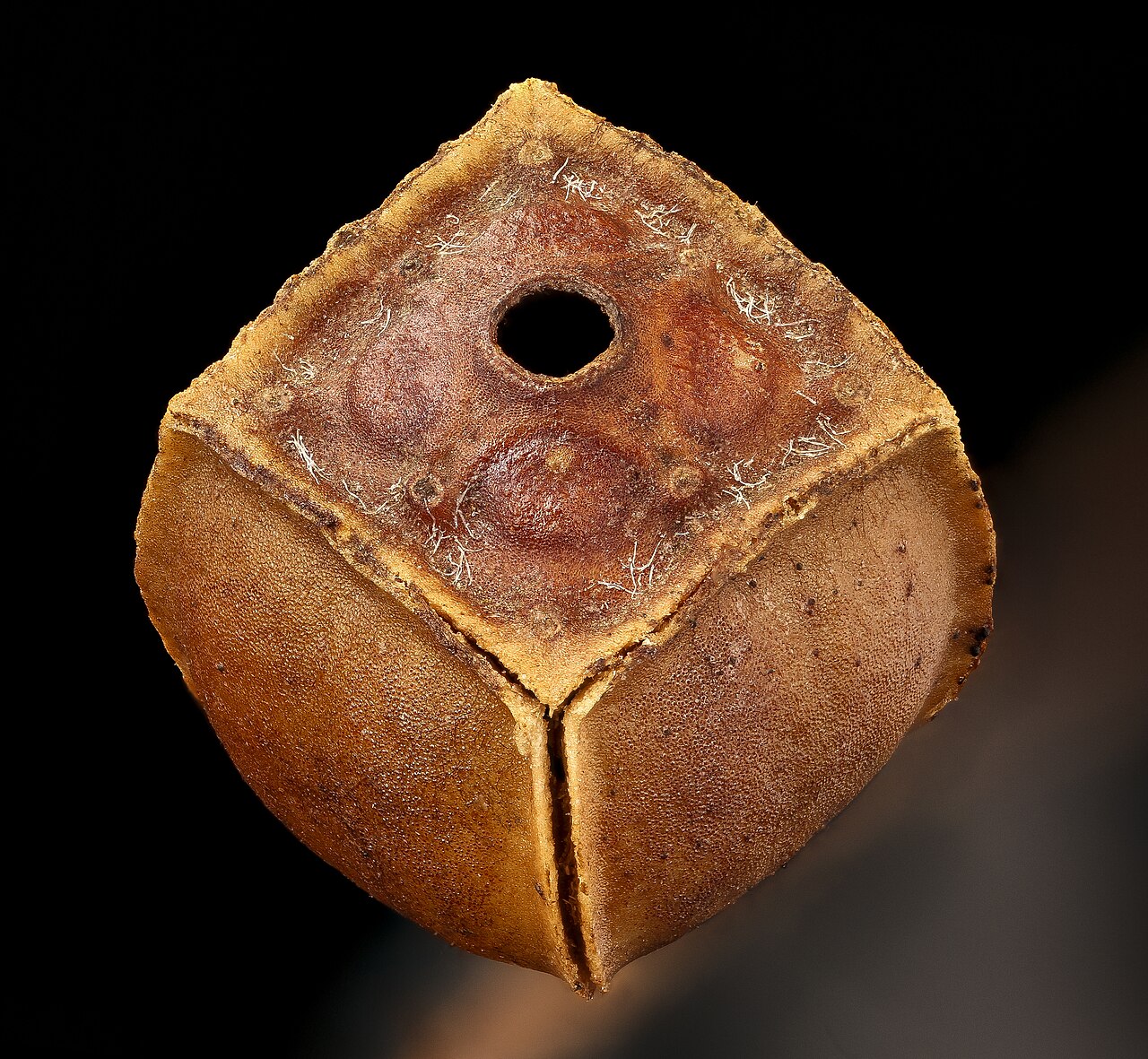
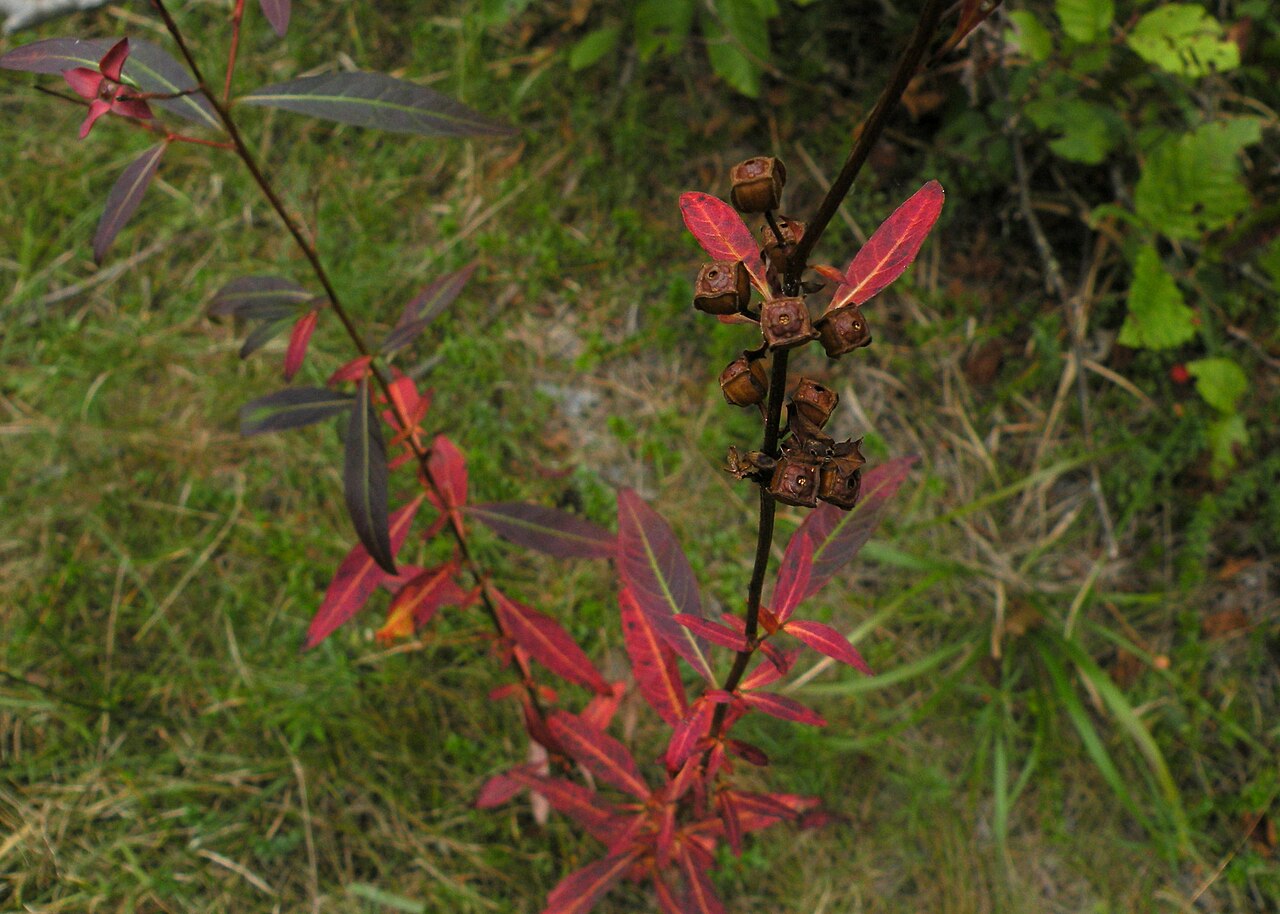
The flowers are pretty but short-lived; the real conversation piece is the fruit. Each flower leaves behind a small, almost perfectly cube-shaped capsule with a round pore on top. As the capsules dry in fall, the tiny seeds inside rattle when the stems are shaken, which gives the plant its common names seedbox and rattlebox. The dried stems with their rows of little boxes are prized in dried flower arrangements.
Seedbox is an easy, adaptable plant for rain gardens, pond edges and wet meadows. It tolerates seasonal flooding, attracts small bees, and its leaves often turn red in fall. Because it is a short-lived perennial that reseeds, it works best in naturalistic plantings where it can come and go.
Identification
Seedbox is easiest to identify by its square capsules, which persist on the stems from late summer into winter. In bloom, look for single yellow flowers with four petals and four green sepals in the leaf axils.
Growth Form
Seedbox is an upright, bushy perennial 2 to 4 feet tall, with a much-branched upper half. Stems are smooth or slightly hairy and often reddish. It grows from a crown with thickened roots and is fairly short-lived, but it reseeds in suitable sites.
Leaves
The leaves are alternate, as the species name alternifolia says, and lance-shaped, about 2 to 4 inches long and 1/2 inch wide, with short stalks and smooth or slightly wavy edges. They often turn red to purple in fall.
Flowers
From June to September, single flowers appear on short stalks in the upper leaf axils. Each is about 1/2 to 3/4 inch across, with four rounded yellow petals and four pointed, green sepals about as long as the petals. The petals fall within a day, often by afternoon, so plants usually show only a few open flowers at a time, with green sepals and young capsules below.
Fruit & Seeds
The capsule is about 1/4 inch long and wide, nearly cube-shaped, with four slightly winged corners and the four sepals on top at first. When mature it turns brown and opens by a round pore at the top. The many tiny seeds rattle inside and are shaken out by wind and passing animals. The empty capsules stay on the stems well into winter.
Look-alikes
Other Ludwigia species, often called primrose-willows or water-primroses, also have four yellow petals, but most either lack the cube-shaped capsule, have long cylindrical capsules, or creep and float in water. Hairy seedbox (Ludwigia hirtella) of the Southeast is densely hairy with larger flowers. Evening primroses (Oenothera) have yellow flowers with a long tube between the ovary and petals and grow in drier places.
Quick Facts
| Scientific Name | Ludwigia alternifolia |
| Family | Onagraceae (evening primrose family) |
| Plant Type | Herbaceous wetland perennial (short-lived) |
| Mature Height | 2–4 ft |
| Mature Spread | 1–2 ft |
| Growth Rate | Fast |
| Sun Exposure | Full sun to partial shade |
| Water Needs | High; moist to wet soil, tolerates shallow flooding |
| Soil Type | Wet loam, clay, sand or muck |
| Soil pH | About 5.0–7.5 |
| Bloom Time | June–September |
| Flower Color | Yellow |
| Fall Color | Red to purple leaves |
| Fruit | Cube-shaped capsule with a top pore; rattles when dry |
| Deer Resistant | Moderately |
| USDA Hardiness Zones | 4–9 |
Native Range
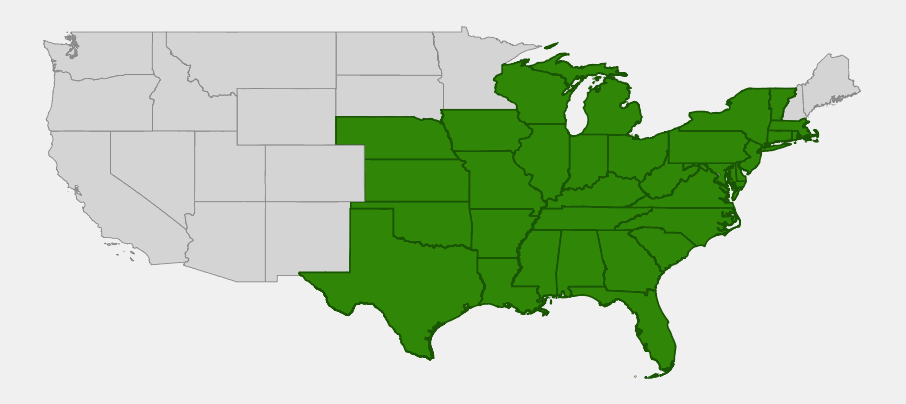
Seedbox is native to the eastern and central United States and southern Canada. USDA PLANTS records it from 32 states and the District of Columbia, from Vermont, Massachusetts and southern Michigan and Wisconsin south to Florida and Texas, and west to Iowa, Nebraska, Kansas and Oklahoma. In Canada it grows only in southern Ontario and Quebec; NatureServe ranks it critically imperiled in Ontario. USDA also lists Colorado, but no Colorado population is supported by NatureServe or modern collections, and it is not treated as a Colorado native here.
It is most common in the Coastal Plain, Piedmont and Mississippi and Ohio River valleys, and becomes scattered toward the north and west. It is ranked rare in Nebraska, Wisconsin and Ontario at the edges of its range. In Texas it grows in the eastern part of the state, in the Piney Woods and Post Oak Savannah. The Atlas of Florida Plants lists it as native in Florida.
Typical habitats are wet meadows and prairies, marsh and pond edges, swamp openings, wet ditches, stream banks, wet pine flatwoods and seasonally flooded ground, usually in full sun or light shade.
📋 Regional plant lists featuring Seedbox: New York, Pennsylvania & Northern New Jersey · Ohio & Indiana · Michigan, Wisconsin & Eastern Minnesota · Kentucky & Tennessee · Nebraska, Kansas & Eastern Colorado · Connecticut, Massachusetts & Rhode Island · New Hampshire, Maine & Vermont · Maryland, Virginia & West Virginia · Delaware, Southern New Jersey & Long Island · Illinois, Iowa & Missouri · Alabama, Georgia & Mississippi · North & South Florida · North & South Carolina · Arkansas, Louisiana, Eastern Oklahoma & Eastern Texas
Growing & Care Guide
Seedbox is an easy plant for any consistently moist, sunny spot. It is not fussy about soil, tolerates seasonal flooding, and reseeds modestly, so it slowly fills in gaps in a wet meadow or rain garden.
Light
Full sun gives the bushiest plants and the most flowers and capsules. It also grows in partial shade, but becomes taller and sparser.
Soil & Water
Grow it in moist to wet soil: loam, clay, sand or muck. It does well in rain gardens, at pond and stream edges, in wet ditches and in low spots that flood in spring. It can stand in a few inches of water for part of the season but should not be permanently submerged. It does not tolerate long dry periods.
Planting Tips
Plant in spring in groups of three or more, about 1 1/2 feet apart. It looks best mixed with other wetland wildflowers and grasses, such as swamp milkweed, blue vervain, cardinal flower, sedges and rushes, which hide its rather sparse lower stems.
Pruning & Maintenance
Leave the stems standing in fall and winter; the capsules are attractive, and the seeds will provide the next generation. Cut the old stems down in early spring. Since plants are short-lived, allow some seedlings to grow each year. Remove extra seedlings by hand if it spreads too much.
Propagation
Sow the tiny seeds on the surface of moist soil in fall, or in spring after a month of cold, moist stratification; they need light to germinate. Plants can also be divided in early spring. Nursery-grown plants are available from many native plant nurseries in the East and Midwest.
Landscape Uses
- Rain gardens: thrives in low spots that flood after storms
- Pond and stream edges: a natural-looking wetland wildflower
- Wet meadow restoration: common in native wet meadow seed mixes
- Dried arrangements: the stems of cube-shaped capsules are long-lasting
- Children’s gardens: the rattling “seed boxes” are fun to find
Wildlife & Ecological Value
Seedbox is a modest but useful plant for wildlife in wet places, especially for small native bees.
For Pollinators
The flowers are visited mainly by small bees, including sweat bees and other short-tongued native bees, which collect pollen and nectar. Small flies and other insects also visit. Because each flower lasts only a day but plants keep blooming for weeks, it provides a steady supply of pollen through the summer.
For Birds
Seed-eating birds forage occasionally on the tiny seeds, and the dense stands provide cover for wetland birds such as common yellowthroats and swamp sparrows. Seedbox is not a major bird food plant.
For Mammals
Mammals rarely eat seedbox. Deer may browse it lightly. The plant’s main value to mammals is as part of the cover in wet meadows and marshes.
Ecosystem Role
Seedbox colonizes wet, open ground and helps stabilize the edges of ponds, ditches and streams. Its seeds remain in the soil and germinate when water levels drop and expose bare mud. It is a characteristic plant of healthy wet meadows and marsh margins in the eastern United States.
Cultural & Historical Uses
The genus Ludwigia was named by Carl Linnaeus in honor of Christian Gottlieb Ludwig (1709–1773), a German physician and botanist. Linnaeus described Ludwigia alternifolia himself in 1753, making it one of the first North American plants given a modern scientific name.
The common names seedbox and rattlebox both describe the fruit. The capsules are often compared to tiny dice or salt shakers. Florists and crafters still use the dried stems in fall and winter arrangements.
Seedbox is part of a large, mostly aquatic genus that includes several invasive species, such as water-primroses that clog ponds and waterways in parts of the United States. Native seedbox, by contrast, is a well-behaved, non-aggressive wetland wildflower recommended by native plant societies for rain gardens and wetland restoration.
Frequently Asked Questions
Why is it called seedbox?
The fruit is a small, nearly cube-shaped capsule that looks like a little box. When it is dry, the tiny seeds rattle inside, which is why it is also called rattlebox.
Is seedbox invasive?
No. Seedbox is a native wetland wildflower that reseeds modestly. It should not be confused with non-native creeping water-primroses, which are invasive in some areas.
Does seedbox need standing water?
No. It grows best in moist to wet soil and tolerates brief flooding, but it should not be permanently submerged. A rain garden or pond edge is ideal.
How long do the flowers last?
Each flower lasts only about a day, but the plant produces new flowers for much of the summer, from about June to September.
Can I use the dried stems in arrangements?
Yes. Cut the stems in fall once the capsules turn brown and hang them to dry. They keep their shape for a long time.

Looking for a nursery that carries Seedbox?
Browse our native plant nursery directory: Alabama & Arkansas · Connecticut, Delaware, Florida & Georgia · Illinois, Indiana, Iowa & Kansas · Kentucky, Louisiana, Maryland, Massachusetts, Michigan, Mississippi & Missouri · Nebraska, New Jersey, New York, North Carolina, Ohio & Oklahoma · Pennsylvania, Rhode Island, South Carolina, Tennessee, Texas, Vermont & Virginia · West Virginia & Wisconsin